
Our readers keep the lights on and the weekend projects moving. As an Amazon Associate, I earn from qualifying purchases.
Specs are compiled from manufacturer listings and verified buyer reviews and can change over time — please confirm the key details on the product page before buying.
Upgrading your car’s factory speakers is the single biggest audible improvement you can make, and the choices below cover the full spectrum — from wallet-friendly coaxials that drop straight into your door to premium component systems with separate tweeters for true audiophile staging. Your choice hinges on your amplifier’s power output and whether you prefer the simplicity of a coaxial or the staging of a component system.
I’m Rikta — the founder and writer behind FitlyFast. This guide is built by comparing the manufacturers’ published specifications and the patterns across verified customer reviews, so you get each pick’s real strengths and trade-offs instead of marketing spin.
You don’t need to be an audiophile to hear the difference, and our breakdown of the best car loudspeakers shows you which upgrade delivers the clearest highs and cleanest bass for your budget.
Our Picks at a Glance


How To Choose The Best Car Loudspeakers
The first decision you face is shape: 6.5-inch round speakers are the modern standard for most doors, while 6×9-inch ovals trade a round footprint for a bigger cone that moves more air, favoring rear decks and stronger bass. Measure your factory speaker’s cutout diameter before you buy, because a perfect fit saves you the headache of cutting metal or drilling new holes.
Match Power to Your Head Unit
A speaker’s power rating tells you what it can safely handle, and you’ll see two numbers: RMS (root mean square) is the continuous wattage it can endure, while Peak is the brief burst. Factory head units typically deliver around 15 to 20 watts RMS, so a speaker rated for 30W RMS like the Kenwood KFC-1666R plays cleanly without an amplifier, whereas a pro-style 300W RMS unit demands an external amp to shine.
Coaxial or Component
A coaxial speaker mounts the tweeter right on top of the woofer for a simple one-hole install, which is what you want for a direct factory swap. A component system separates the tweeter from the woofer with a crossover, letting you mount the tweeter up on the dash or sail panel for a more lifelike soundstage — the choice of anyone serious about imaging.
Quick Comparison
| Model | Best For | Type | Power Handling (RMS) | Sensitivity | Amazon |
|---|---|---|---|---|---|
| KICKER 46CSC654★ Best Overall | Factory-Upgrade Value | 6.5″ Coaxial (2 Pairs) | — | — | Amazon |
| RECOIL MS65-4PBudget Champion | High-Output Midbass on a Budget | 6.5″ Midrange | 300W | — | Amazon |
| Hifonics ZS-693Rear-Deck Powerhouse | 6×9 Power & Depth | 6″x9″ 3-Way Coaxial | 120W | 88 dB | Amazon |
| Kenwood KFC-1666R | Easy Drop-In Upgrade | 6.5″ 2-Way Coaxial | 30W | — | Amazon |
| Kenwood KFC-6966S | Rear-Deck 6×9 Punch | 6″x9″ 3-Way Coaxial | 90W | — | Amazon |
| ORION Cobalt CM654 | Loud Midrange for Amped Systems | 6.5″ Midrange | 250W | 96.67 dB | Amazon |
| Rockford Fosgate R165-S | Audiophile Staging on a Budget | 6.5″ Component | 40W | — | Amazon |
| HERTZ K-165 | Loud, Clear Component Sound | 6.5″ Component | — | — | Amazon |
| JBL GTO629 | Versatile Bass & Clarity | 6.5″ Coaxial | — | — | Amazon |
In-Depth Reviews
1. KICKER 46CSC654 6.5-Inch Coaxial Speakers (2 Pairs)
Our pick — over 4.5★ from 300+ verified ratings; the strongest balance of quality and price.
The two-pair value play that upgrades every door in your car with Kicker’s clean, full-range sound.
This two-pair bundle covers all four doors in most cars and SUVs with 6.5-inch (160mm) coaxial speakers. What wins people over is the combination of sound quality and easy installation, with owner after owner noting how these drop into factory locations and instantly sound better than the stock drivers they replaced.
The shallow mounting depth ensures a drop-in fit in nearly every make and model. You also get zero-protrusion PEI tweeters, which means the tweeter sits flush so it won’t interfere with a factory grille, and a UV-treated poly-foam surround that resists heat and direct sunlight — a thoughtful touch for trucks and convertibles that bake in the sun. Reviews are full of comments about how “easy to install” they are, with one truck owner reporting a perfect fit and another noting the vocals are loud and clear, even before adding an amp.
There are two honest caveats to weigh. The heavy-duty motor structure with Extended Voice Coil is designed for deeper bass, but a few owners note you’ll want an amp to really open up the low end. And while most buyers are thrilled with reliability, a small number mention mixed durability experiences, so treat them gently during install.
What Owners Rave About
- Sound quality is the runaway favorite, with 27 buyers singling it out for praise.
- Value for money gets strong backing — 11 owners call them a great deal.
- Installation and fit are both rated positively, making this a stress-free swap.
The Trade-Offs
- Bass depth really opens up with an amplifier; stock head units leave some on the table.
- Reliability gets mixed feedback — most are happy, a few mention issues.
Reach for this if: you want to replace all four factory speakers at once with a proven, easy-install upgrade that sounds dramatically better than stock.
Look elsewhere if: you’re chasing heavy sub-bass without adding an amp — these need power to really dig deep.
2. RECOIL MS65-4P 6.5-Inch Midrange Pro Audio Speakers
A pro-audio style midrange that punches far above its price, built for amped systems.
This is a different kind of speaker — a dedicated midrange driver built for the heart of the music, not a full-range do-it-all. The MS65-4P handles an impressive 600W Max Power with 300W RMS at 4 ohms for the pair, which means it’s engineered from the ground up to be fed by a real amplifier, not a factory radio. Owners describe the sound as clear, crisp, and powerful, with one buyer crowing that a budget set like this beats speakers costing far more.
The key to that performance is the 1.5-inch high-temperature Kapton voice coil, a material that shrugs off extreme heat and keeps its shape so your speakers survive long, loud listening sessions. High-strength ferrite magnets produce a wider range of tones and handle serious power at high volume. The catch is these are midrange speakers, so they play the critical middle of the spectrum exceptionally well but leave deep bass and very top-end highs to other drivers — owners recommend pairing them with an 8-inch midbass and a decent amplifier.
Fit is the other thing to check: this driver needed a small 1/8-inch trim to slide into an Audi S6 basket, so measure your mounting depth and opening carefully. Another owner sums up the value simply: “Worth every penny.”
Built to Play Loud
- Sound quality leads overwhelmingly — 89 owners praise the clear, loud output.
- Value for money is the second-most-praised feature, with 35 buyers impressed.
- The 1.5″ Kapton voice coil handles heat for long, hard use.
Know Before You Buy
- This is a midrange driver — you’ll want a sub and tweeters for full-range sound.
- Fit gets mixed feedback; some cars need trimming, and a few buyers report durability concerns.
Best for: budget builders running an aftermarket amp who want crisp, loud midrange and don’t expect deep bass from one speaker.
Not for: anyone doing a simple stock-replacement swap without an amplifier — these demand real power.
3. Hifonics ZS-693 Zeus 800W 6″ x 9″ 3-Way Coaxial Speakers
A big 6×9 that fills a rear deck with punchy midbass and clear, open highs.
If your car has 6×9 openings, this Hifonics pair is a serious contender because that larger cone simply moves more air than a round speaker can, translating to fuller bass and more presence. The specs tell the story: 800W maximum power, 120W RMS handling, and a 4-ohm impedance that’s friendly to most amplifiers. A 1-inch soft neo mylar dome tweeter resists impact and delivers smooth highs, while the alpha cellulose cone stays light yet rigid for deep, punchy sound.
The engineering details are purposeful. A pure copper voice coil with a lightweight Kapton former conducts well and stands up to heat, and an epoxy-infused natural fiber spider adds flexibility and strength. The anti-resonant stamped steel basket minimizes harmonics and distortion, and the strong ferrite magnet field lets this fit nearly any application. One owner reports these sound “perfectly” after years of use and would buy them again, while another praises them as “near-headphone quality” when paired with a proper enclosure and sub.
Be honest about what you’re getting: sound quality is a mixed bag in the owner data — many praise the clear, loud treble and punchy midbass, but some find the lows fall off without a subwoofer. One enthusiast notes the bass benefits from a proper enclosure, and mentions removing a plastic diffuser for clearer highs. These are solid for the money, just not a replacement for a real subwoofer.
The Upside
- Value for money is the top praise, with 30 owners calling them solid for the price.
- The copper voice coil and Kapton former add durability and clean power handling.
- Grills are included, saving you extra hardware costs.
The Honest View
- Sound quality is genuinely mixed — loud and clear for many, underwhelming bass for others.
- Reliability draws mixed feedback, with a few units reportedly stopping work.
Grab these if: you want big 6×9 presence and punchy midbass on a budget and you’re pairing them with a sub for the deep stuff.
Think twice if: you expect thumping bass from these alone — they’re excellent mids and highs, not a subwoofer replacement.
4. Kenwood KFC-1666R Road Series 6.5″ 2-Way Coaxial Speakers

The classic factory replacement that sounds great straight from your stock head unit.
This is the pick for anyone who wants better sound without touching an amplifier, because the KFC-1666R runs happily on factory power. Specs show 300W peak power with a nominal 30W RMS, and a 4-ohm impedance that conducts power evenly to keep the speakers at an appropriate level. The 40Hz–22kHz frequency response delivers “pristine highs, deep lows, and powerful bass” without compromising clarity, and the heavy-duty magnet design keeps the tweeter height low and mounting depth shallow for an easy fit.
That easy fit is the standout story here. The hole pattern lines up with a Honda Element’s stock 3-screw positions with no drilling, and a 2013 Tacoma double cab owner reports zero issues in the rear doors. The balanced dome tweeter reproduces detailed highs, and the included grilles add protection. Owners consistently report “perfect fit and easy installation,” with one buyer so impressed they bought a second pair.
Perspective matters on this one: sound quality is the most-praised feature by far, with 89 owners highlighting it, and 16 more specifically call out the fit. The trade-offs are minor — a few owners note that they’re not bass monsters, so manage expectations for deep sub-bass; one mentions hearing tambourines and drumsticks clearly, which is exactly the kind of detail these deliver. There are 8 durability complaints in a large pool, so treat the grilles gently.
What stands out: You get a brand-name, quality-built 6.5″ speaker that drops into factory holes with zero modifications and runs clean on a stock head unit.
The fit note: They’re clear and detailed across mids and highs, but for real sub-bass you’ll still want a dedicated subwoofer.
5. Kenwood KFC-6966S 800W Max 6″ x 9″ 3-Way Coaxial Speakers

A big 6×9 with genuine full-range presence that turns a rear deck into a stage.
This Kenwood 6×9 handles 800W peak and 90W RMS at 4 ohms, with a 35Hz–20kHz frequency response for deep bass. That low 35Hz figure means this speaker reaches deeper into the bass than most round 6.5-inch units, which is exactly what you want from a rear-deck install. The polypropylene mid-woofer cone keeps weight down while staying rigid, and the foam/rubber surround helps it move freely.
Owners are genuinely impressed that a budget 6×9 delivers this much. One buyer expected them to be “janky and crap” but found they “fit amazingly” and sound good, and another replaced the stock speakers in a 1995 Dodge Ram 1500 and loved the result. The consensus is clear: sound quality leads the praise with 89 owners mentioning it, and 42 more call out the value for money. A 3-way design adds a dedicated super-tweeter for extended highs.
The honest caveat is fit, which draws 36 mixed mentions — more than any other aspect. Some owners say they fit perfectly, while others needed spacers or found the mounting holes didn’t line up, including a 2003 Camry rear deck and a 2005 Dodge 2500 front door. A 30-minute install that includes a rewire is typical. Check your mounting depth and hole pattern, and budget for spacers if needed.
Big Sound, Big Value
- Sound quality dominates — 89 owners praise the good highs and mids.
- 42 buyers flag it as great value for the money.
- The 35Hz bass response adds depth you won’t get from a 6.5″.
Measure Twice
- Fit is the most-discussed catch — 36 calls, some positive, some needing spacers.
- You may need to rewire the speaker for these, adding install time.
Reach for this if: you have 6×9 openings in the rear deck and want full-range sound with real bass presence on a budget.
skip it if: you expect a perfect bolt-in with factory holes — flexibility with spacers and a little wiring is part of this install.
6. ORION Cobalt CM654 6.5″ Mid-Range Bullet Loudspeakers

The bullet-tweeter midrange that fills a Jeep roll bar or motorcycle fairing with ear-ringing clarity.
This is a pro-audio driver for builds that prioritize sheer output and midrange punch. The headline number is a 96.67 dB sensitivity rating, which is extremely high — it means these play loud with far less power than most speakers, making them perfect for open-air builds where ambient noise fights your music. With 1000W Max Power and 250W RMS on tap, they have huge headroom, and the 1.5-inch high-temperature voice coil keeps them alive under stress.
The bullet design is what sets these apart, letting the speaker reach high-range frequencies without sacrificing the low-to-mid range. Owners mention they’re “really loud for the price” and “worth the money,” with one running them on a motorcycle in lower fairings and another installing them in a Jeep roll bar — “these will have your ears ringing with a good aftermarket head unit.” Sound quality leads the praise with 97 positive mentions, and build quality follows closely with 96.
There are two serious fit considerations. These will not drop into factory speaker enclosures without trimming, as a Jeep JK owner found out — you may need to cut plastic for the magnets. And they’re power-hungry, needing an amp with careful tuning; one owner fried voice coils in two minutes by bridging a 4-channel amp, so run one channel per speaker and set gains carefully.
The Payoff
- Sound quality is the top praise with 97 owners, and build quality is nearly as loved at 96.
- The 96.67 dB sensitivity means big output even on modest power.
- The bullet tweeter extends highs while keeping midrange punch.
The Caution
- Factory enclosures often need trimming to fit the deep magnet structure.
- These need an amplifier with careful gain tuning — bridging can kill the voice coils.
Best for: custom builds — Jeeps, boats, and bikes — where loud, clear midrange cuts through wind and road noise.
Not for: a simple factory swap; these need an amp, careful tuning, and room for big magnets.
7. Rockford Fosgate Prime R165-S 6.5″ 2-Way Component System

Rockford’s budget component set that puts the tweeter where it belongs — up high, aimed at your ears.
Component systems separate the tweeter from the woofer for dramatically better sound staging. The R165-S pairs two 6.5-inch woofers with two 1-inch tweeters and integrated crossovers, rated at 40W RMS and 80W peak — modest power that runs fine on a factory head unit, which is a major plus. The Mica-injected polypropylene cone extends frequency response, while the Mylar balanced dome tweeter reproduces crisp highs.
The in-line crossover directs frequencies to the right driver and simplifies installation. The tweeters accommodate flush, surface, and angle mounting, so you can point them across the dash for that lifelike soundstage. One owner replaced all eight factory speakers without a head unit or amp upgrade and found the sound “crisp and clear,” while another simply calls it “a good old school speaker that does what it has to do.” Sound quality leads with 95 positive mentions, and build quality follows with 82.
The recurring owner note is that these deliver “plenty of treble and midrange, not much bass” — they’re voiced for clarity, not boom. Fit gets mixed feedback, with some calling it perfect but others saying the 6.5-inch drivers ran smaller than expected. They’re best partnered with a sub for full-range output.
Why It Wins
- Sound quality is the top praise — 95 owners highlight the clear, crisp output.
- The component design with separate tweeters creates genuine sound staging.
- Runs clean on a factory head unit — no amp required.
Keep in Mind
- Bass is adequate, not thumping — pair with a sub for full-range sound.
- Fit is mixed: some find them smaller than expected for a 6.5″.
Choose this if: you want crisper highs and true stereo imaging and don’t want to add an amplifier.
Look elsewhere if: you need heavy bass without a subwoofer — this is a clarity speaker, not a bass cannon.
8. HERTZ UNO Series K-165 6.5″ Two-Way Component System
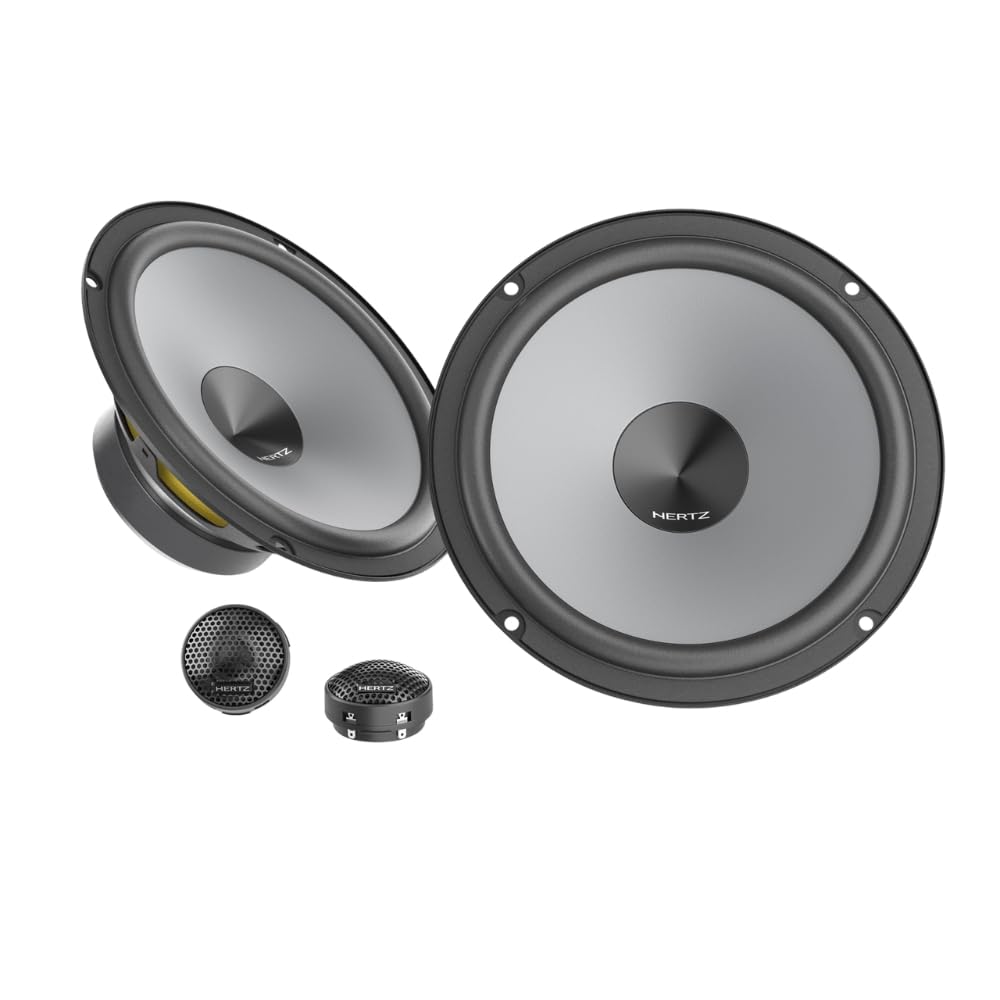
Italian-engineered component clarity that makes a factory system sound expensive.
The Hertz K-165 2-way component system is a dramatic step up from stock, per owner reviews. The build sheet tells the story: a neodymium tweeter magnet delivers lightweight, powerful high-frequency output, while a water-repellent pressed paper woofer cone keeps weight low and response articulate. The PEI tweeter dome reproduces clean, natural highs, and the ferrite woofer magnet provides solid motor strength.
The real-world results are striking. Customers note this set plays “louder at any given wattage” and delivers “full and articulate bass blending well.” One driver swapped out Alpine and Kenwood sets for these and got “super crisp highs, clean punchy mids,” pairing them with a sub for a setup that “sounds like expensive equipment.” Another simple summary: “The sound is natural and clean,” and they deliver an immediate volume and quality jump in a 2019 Accord Hybrid.
The honest note is that these want power — one owner admits “they do require power to sound good.” On a factory head unit they’ll shine, but they truly open up with an amplifier. There’s also a tuning tip from owners: if you’re using a stock amp system, remove the Hertz tweeter crossovers to avoid filtering conflicts. Build quality and sound quality both get unanimous praise, with 14 and 10 positive mentions respectively.
The verdict: A premium component set that rewards you with loud, articulate, full-range sound — especially when fed by an amp.
The honest catch: They need real power to sound their best, and a small tuning tweak is required on some stock amp systems.
9. JBL GTO629 Premium 6.5-Inch Co-Axial Speaker (Pair)
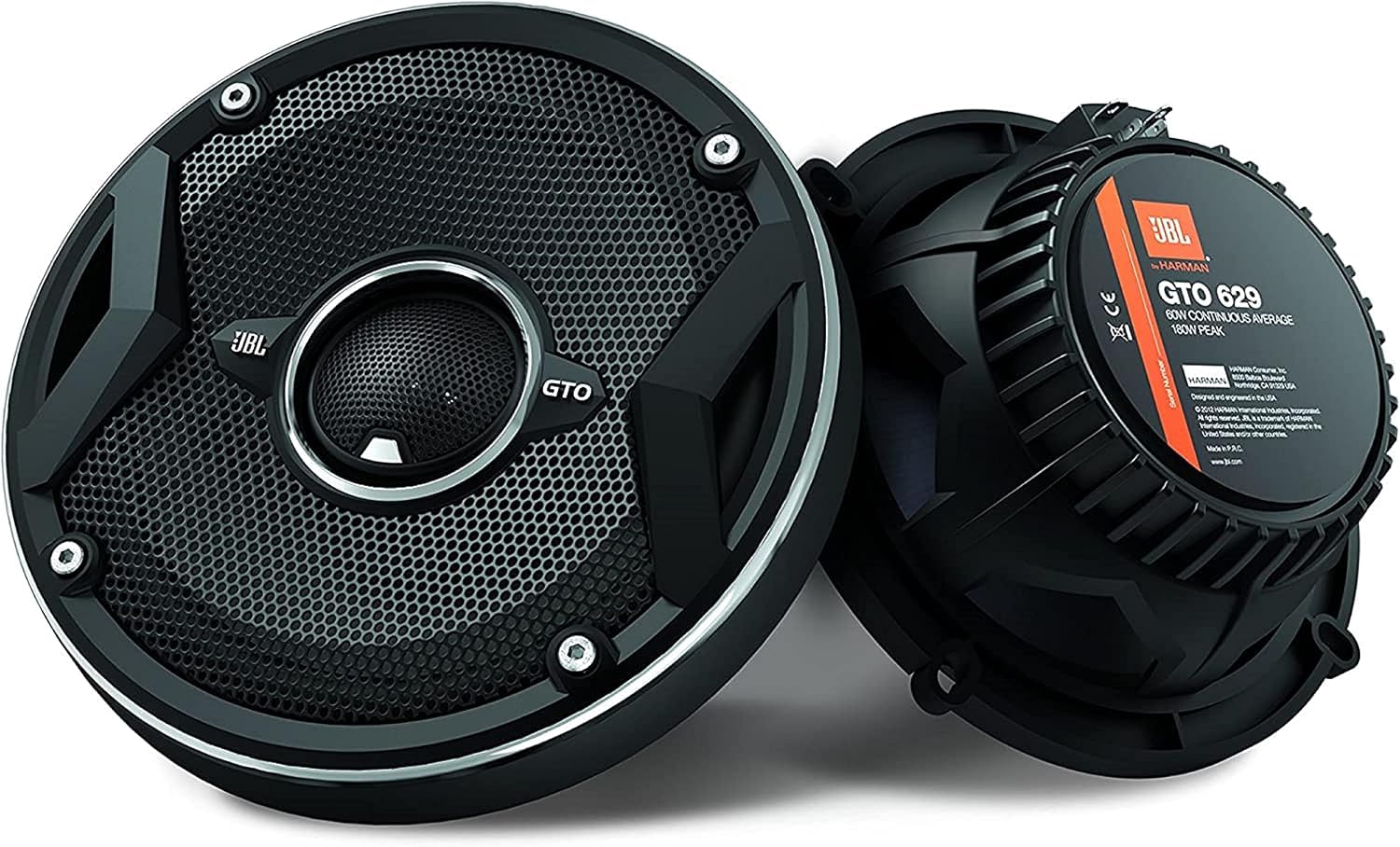
JBL’s clever tweeter design aims the highs straight at your ears, even from low door mounts.
The GTO629 is a thinking person’s coaxial speaker, with two standout engineering features that solve real-world install problems. The patented UniPivot tweeter lets you aim the sound at your ears even when the speaker’s mounted down low in the door, fixing a classic problem where highs get lost at your ankles. There’s also a dual-level tweeter volume adjustment, so you can compensate for imperfect placement or just dial in your preferred brightness.
The bass story is driven by Carbon-injected Plus One cones, which are physically larger than other speakers in their size class — meaning they move more air and produce more bass. The low-impedance 3-ohm design compensates for the undersized wires found in many modern cars, making the most of every watt your stereo delivers. Dedicated 12dB/octave crossover components direct highs and lows cleanly. The mounting depth is a shallow 2 inches, with a 5-1/16-inch cutout and 6-1/4-inch external diameter.
Owners are emphatic about the sound: “the sound quality outweighs this” was the verdict from a Honda Element owner who needed minor cover mods, and a 1999 Toyota Tacoma owner was stunned by the difference from the old separates. Sound quality gets 68 positive mentions and is the clear leader. The honest caveats: durability draws the most concern, with several owners reporting they didn’t last a year — and fit is mixed, with the Honda Element and a 2024 Ram ProMaster needing bracket or cover adjustments.
The Brilliant Bits
- Sound quality leads the praise — 68 owners call them a major upgrade.
- The UniPivot aimable tweeter fixes the classic low-door-mount problem.
- The 3-ohm design squeezes more volume from factory wiring.
Understand the Risks
- Durability is the top concern — several reviewers point out these didn’t last a year.
- Fit is mixed, with some vehicles needing minor trims or bracket adjustments.
Choose this if: you value crisp, aimable highs and strong mid-bass and are comfortable with a possible trim for a perfect fit.
Be cautious if: long-term durability is your top priority — you may prefer the Kicker’s stronger ownership record.
Understanding the Specs
Power Handling: RMS vs Peak
You’ll see two numbers on every speaker. RMS (root mean square) is the continuous wattage a speaker can handle safely, and it’s the number that matters — match this to your amplifier’s output. Peak is the brief burst a speaker can survive, which is mostly marketing. A 30W RMS speaker works perfectly on a factory radio, while a 300W RMS unit demands a real amplifier to sound good and avoid damage.
Sensitivity: How Loud on Less Power
Measured in decibels (dB), sensitivity tells you how efficiently a speaker converts power into volume. A rating around 88 dB is average, while the ORION CM654’s 96.67 dB is exceptional — it plays much louder on the same wattage. This number matters most if you’re running a stock head unit with limited power, because a high-sensitivity speaker gets loud without an amp.
FAQ
Will 6.5-inch speakers fit in my car’s factory door openings?
Do I need an amplifier to replace my factory speakers?
What is the difference between coaxial and component speakers?
What does the ohm rating of a speaker mean?
How long should car speakers last?
Can I use 6×9 speakers in my rear deck?
Why do midrange speakers need a subwoofer?
What does a crossover do in a component speaker system?
Final Thoughts: The Verdict
For the majority of shoppers, the car loudspeakers winner is the KICKER 46CSC654 because it delivers four quality speakers in one box that drop into factory locations almost everywhere, and owners rate the sound and value among the best in class. If you want the clearest possible highs and true audiophile staging for the money, grab the Rockford Fosgate R165-S component set. And for those building a loud, amped system, the ORION Cobalt CM654 brings bullet-tweeter efficiency and 96.67 dB sensitivity to cut through road noise.
How We Picked
We do not accept paid placement. Every pick is matched to a real buyer and a real use-case; we do not hands-on test units.
Sources & Methodology
Specifications: manufacturer listings and product documentation. Review insights: verified customer reviews, as of August 2026. Pricing: not shown on this page (it changes often); check the current price via the retailer link.
As an Amazon Associate, FitlyFast earns from qualifying purchases. This does not affect which products we feature.