
Our readers keep the lights on and the weekend projects moving. As an Amazon Associate, I earn from qualifying purchases.
Specs are compiled from manufacturer listings and verified buyer reviews and can change over time — please confirm the key details on the product page before buying.
Before you buy clay, ask yourself one question: do you want a permanent piece or a reusable material? A 2-part epoxy that hardens like a rock suits a finished sculpture, while a non-drying plasticine stays workable for months for temporary molds. This guide covers 9 clays, sorted by how they cure, how they handle fine detail, and which buyer each one fits.
I’m Rikta — the founder and writer behind FitlyFast. This guide is built by comparing the manufacturers’ published specifications and the patterns across verified customer reviews, so you get each pick’s real strengths and trade-offs instead of marketing spin.
From self-hardening epoxy compounds to reusable oil-based plasticine, this breakdown of the top clay for molding helps you match the right material to your project type.
Our Picks at a Glance


How To Choose The Best Clay For Molding
Clay is not one material with one personality. The biggest mistake first-time buyers make is grabbing whatever is on sale, then discovering it either hardens before the shape is finished or never hardens at all. Your project type — a permanent sculpture, a reusable mold, or a kids’ craft session — should drive the choice, not the packaging.
Decide if you want it to harden at all
This is the fork in the road. Self-hardening epoxy clays cure into a permanent, durable object without an oven. Non-drying oil-based plasticine stays soft and reusable for months, which makes it ideal for mold making and stop-motion animation. Air-dry clay sits in between, firming up over days without heat. If you want a finished keepsake, choose a clay that cures. If you want to reuse the material, choose one that never dries.
Count your working time
Working time is the window you have to sculpt before the clay sets. A short window — around 45 minutes to a couple of hours — suits experienced hands that work fast. Beginners and kids need more forgiving material that stays soft, like non-drying plasticine that never sets at all. Always read the timing on the listing before you commit to a project that needs hours of detailed work.
Match the material to the final use
A waterproof, self-hardening compound survives outdoor displays and aquarium props. A sulfur-free clay is what you want when casting platinum silicone molds, because sulfur can interfere with the curing process. A low-fire pottery clay needs a kiln to become durable. The setting — outdoors, in a kiln, or in a silicone mold — determines which material is safe to pick.
Quick Comparison
| Model | Best For | Hardening | Weight | Working Time | Amazon |
|---|---|---|---|---|---|
| Aves Apoxie Sculpt★ Best Overall | Permanent detailed sculptures | Self-hardening | 4 pounds | 1-3 hours | Amazon |
| Pepy PlasticineMold Master | Silicone mold making | Non-drying | 2 pounds | Unlimited | Amazon |
| OAIEGSD Epoxy PuttyFix-It Pick | Repairs and touch-ups | Self-hardening | 16 ounces | ~45 minutes | Amazon |
| Aestd-ST Polymer Clay | Kids and beginner crafts | Oven bake | 52 blocks (20g each) | Unlimited until baked | Amazon |
| FlyFlag Air Dry Clay | Kids’ creative play | Air dry | 2.2 pounds | Days to dry | Amazon |
| Pepy Plastilina Set | Long-lasting kids’ clay | Non-drying | 2.12 pounds | Unlimited | Amazon |
| Old Potters Low Fire Clay | Wheel throwing and hand building | Kiln fire | 10 pounds | Moist, extended | Amazon |
| AMACO Air Dry White | All-purpose air-dry projects | Air dry | 10 pounds | Dries in days | Amazon |
| AMACO Air Dry Gray | Sculpting fine details | Air dry | 10 pounds | 24 hours dry time | Amazon |
In-Depth Reviews
1. Aves Apoxie Sculpt 2-Part Modeling Compound
Our pick — over 4.5★ from 750+ verified ratings; the strongest balance of quality and price.
The 4-pound two-part compound that hardens like rock and keeps fine detail without an oven.
This 4-pound compound is the top choice for sculptors who need a permanent, waterproof finish without an oven. You mix equal parts A and B, and the compound self-hardens with 0% shrinkage or cracking, meaning the size you sculpt is the size you keep forever. It cures to a hard, durable finish with a semi-gloss look, and it is waterproof — so it holds up for aquarium props, outdoor displays, and jewelry that gets real wear.
You get a generous 1-3 hour window to shape details, then it cures into something you can sand, drill, and carve. One owner planned to wrap the clay around a wire armature for thin pieces, which shows its durability. The general consensus is that it “works well molded or sculpted” — as long as you read the mixing instructions first.
This is a no-oven clay, so it avoids the hassle of baking entirely. The trade-off is that it is sticky on skin, so gloves are strongly recommended, and it can be brittle in very thin shapes. Compared to lighter options below, the 4-pound weight gives you serious volume for larger pieces, but it is a heavier box to store.
Why owners rave
- Hardens strong enough to sand, drill, and carve after cure
- Waterproof — safe for aquariums, outdoor, and jewelry projects
- No oven or kiln needed; cures at room temperature
The learning curve
- Sticky on bare skin — nitrile gloves are a must
- Thin, unsupported pieces can turn brittle
- Parts A and B look alike, so thorough mixing is essential
Reach for this if: you want a permanent, waterproof sculpture with professional detail and a 1-3 hour working window.
Think twice if: you hate wearing gloves or need material that stays soft for reuse — this clay is for finished pieces only.
2. Pepy Reusable Oil-Based Plasticine Clay
The soft-on-hands, sulfur-free clay that holds its shape for perfect platinum silicone molds.
This sulfur-free plasticine is purpose-built for platinum silicone mold making. It is oil-based and non-drying, so it stays pliable indefinitely and never cracks or crumbles. The defining trait for serious users is that it is sulfur-free, which is crucial because sulfur can prevent platinum silicone from curing properly. Buyers report it works “AWESOME for platinum silicone mold making” — soft enough to be easy on the hands, yet firm enough to hold its shape and stay in place.
The 2-pound bar is a meaningful upgrade over the 16-ounce epoxy putty above — 2 pounds versus 16 ounces means more material to work with. It softens slightly with hand heat, making it comfortable to shape for long sessions, and it is non-toxic and CPSIA-certified, so it is safe for kids and adults alike. Cleanup is simple with soap and water.
The honest trade-off is that it never hardens, so it is not for finished keepsakes. It also tends to sag in warm conditions unless kept cool, and the oil can stain fabric. For temporary molds and reusable sculpting, though, this is the material that keeps working for you.
Why it stands out
- Sulfur-free — safe for platinum silicone mold making
- Softens with hand heat but holds fine detail
- Never dries out, so it is reusable for months
Know the limits
- Sags in warm rooms unless kept cool
- Oil can stain fabric — keep it off clothes
- Not for permanent pieces since it never hardens
Grab this for: silicone mold making, stop-motion animation, or any project where you need reusable, non-drying clay.
Look elsewhere if: you want a finished sculpture that hardens — this clay stays soft by design.
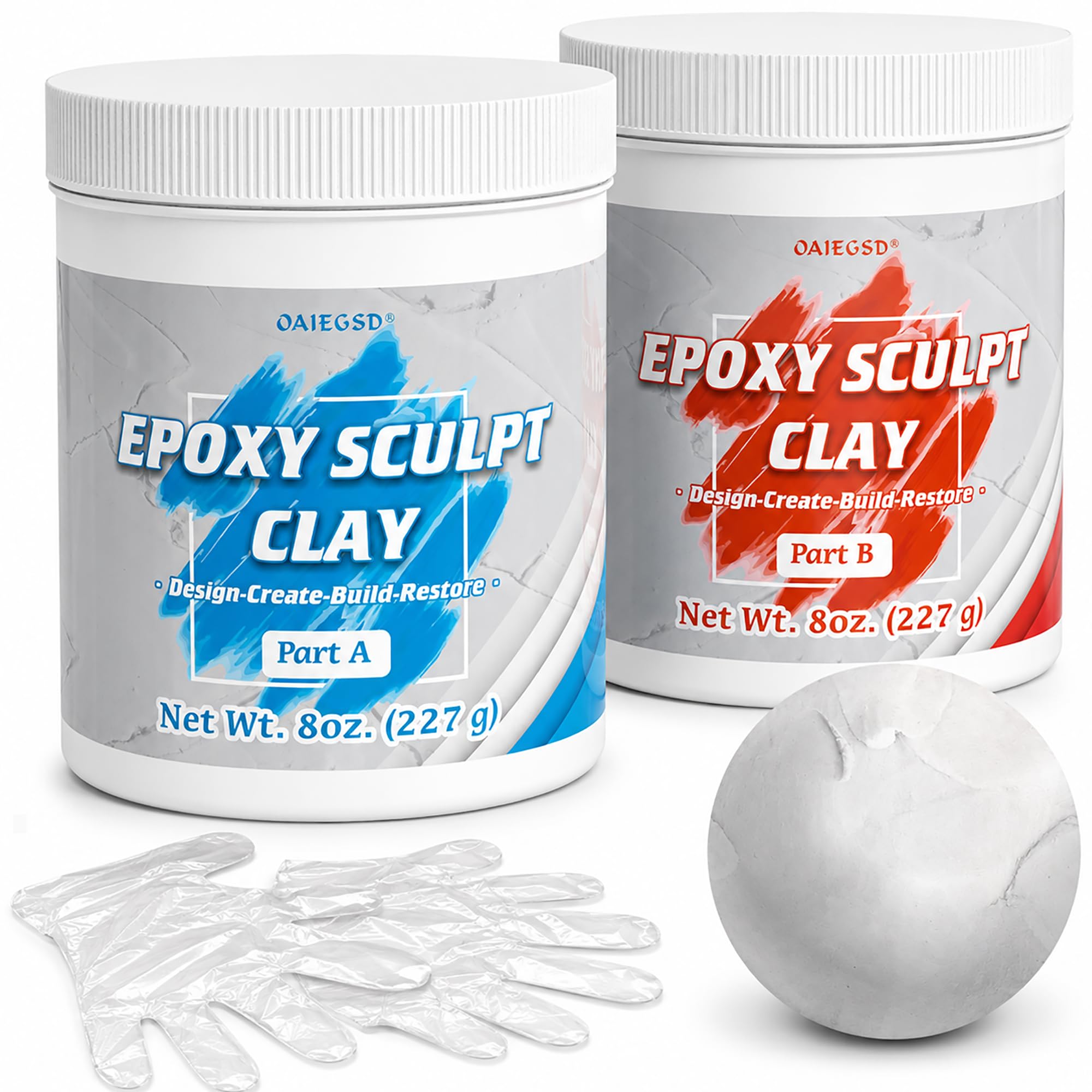
3. OAIEGSD 1 lb White Epoxy Putty Sculpt Clay
The compact 16-ounce repair clay that fills cracks, rebuilds missing sections, and dries opaque white.
This 16-ounce epoxy putty is the go-to for filling gaps and rebuilding chipped edges on hard surfaces. It combines sculpting texture with the filling and bonding power of epoxy putty, making it ideal for rebuilding chipped edges and filling gaps on wood, metal, ceramic, tile, stone, glass, concrete, and many rigid plastics. Owners used it to fix a cement goose beak, and the result held up through storms — proof of the durable bond.
The 16-ounce weight is the entry point here, at 16 ounces versus the 4-pound Aves above, so it is easier to store but gives you less material. It offers roughly 45 minutes of working time, which suits quick repairs and small figures. A standout trait is that it dries opaque white, so many owners skip painting altogether.
The catch is stickiness — it is very sticky during shaping, so gloves and a silicone mat are strongly advised. Owners note it can stick to the surface it dries on, but a silicone mat solves that. For beginners wanting an easy mix-and-apply experience for repairs, this delivers.
Why it works
- Dries opaque white — often no paint needed
- Strong enough for thread tapping after curing
- Bonds to wood, metal, ceramic, glass, and rigid plastics
Handle with care
- Very sticky while wet — gloves and a silicone mat help
- Short ~45-minute working window before it sets
- Small 16-ounce size limits large projects
Best suited for: household repairs, touch-ups, and small detailed sculptures where a strong bond matters more than volume.
Pass on it if: you need a large quantity for a big project — the 1-pound size runs out fast.
4. Aestd-ST Polymer Clay 52 Colors

The 52-color oven-bake set with tools and accessories that turns kids into creators for hours.
This 52-color oven-bake set bundles tools and accessories for a complete beginner craft kit. It includes 52 colors of modeling clay at 20 grams per block, plus a project manual, 20 sculpting tools, and 49 decorative accessories like bells, beads, earring hooks, and key rings. That breadth is what wins owners over — it gives young creators everything needed to make finished ornaments without buying extra supplies.
Unlike air-dry and self-hardening clays, this is an oven-bake polymer clay. It stays soft and workable until you heat it, so there is no rush to finish a shape before it sets. Owners bake it for about 15 minutes in a standard oven, and the result is durable with great color retention. It does not crack and does not stick to your hands, which keeps the mess to a minimum.
The texture starts firm but softens beautifully with kneading. One owner noted the clay is “harder to work with but as you played with it more it softened up.” For tiny parts, the manual warns they are not suitable for children under 3 years old. This is the social, hands-on pick that keeps kids entertained — and produces finished keepsakes.
The full package
- 52 colors plus 20 tools and 49 accessories included
- Stays soft until baked — no rushing to finish
- Bakes sturdy with excellent color retention
What to expect
- Starts firm — needs kneading to soften
- Requires an oven; not self-hardening
- Small parts are a choking hazard for under-3s
Great choice for: kids’ birthday gifts, school projects, and family craft time where variety and finished keepsakes matter.
skip it if: you want a clay that cures without an oven or one that stays reusable forever.
5. FlyFlag Air Dry Clay 100 Colors
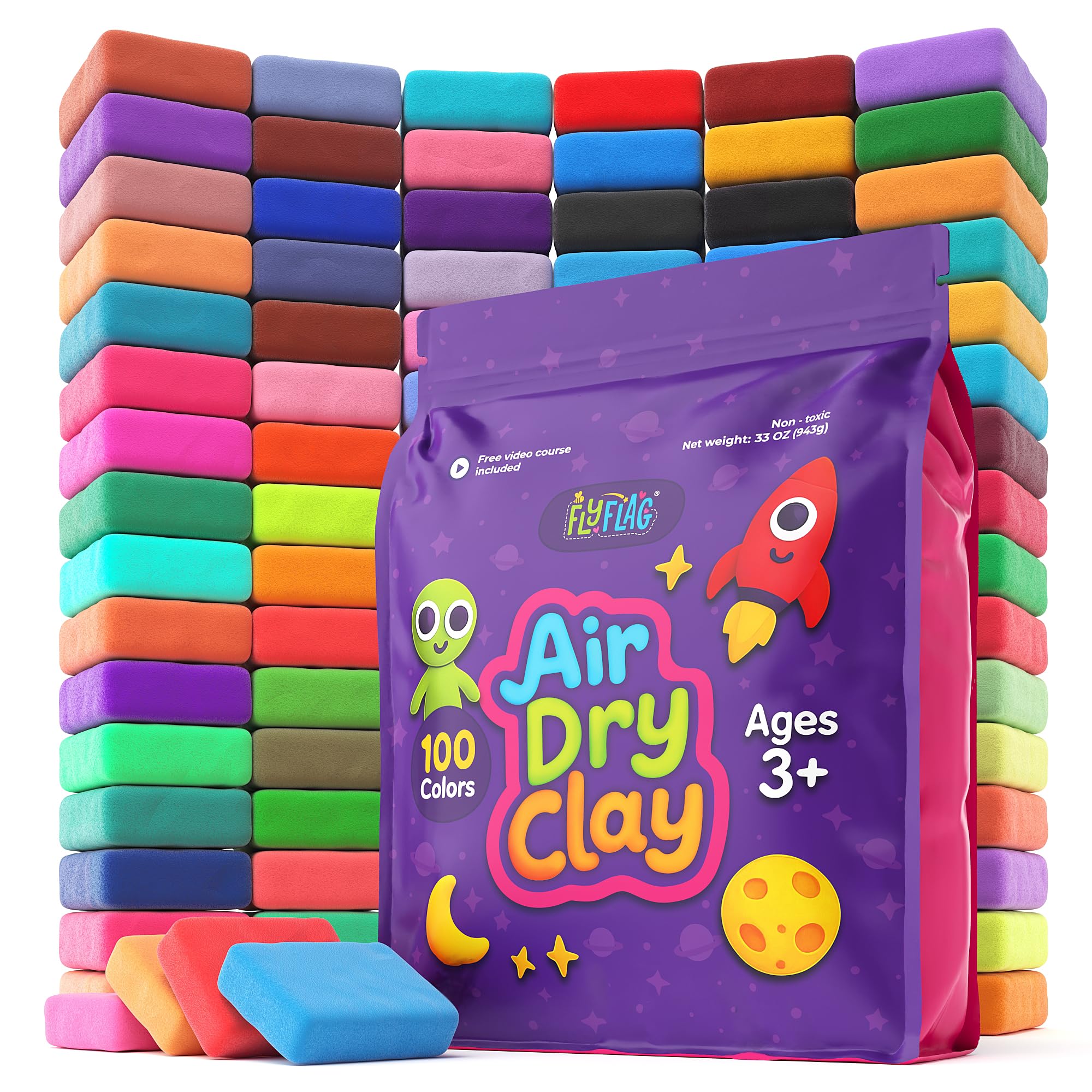
The extra-soft, airy 100-color clay that dries without cracking and keeps kids glued for hours.
This 100-color air-dry clay is the softest, most playful pick for kids’ creative sessions. The 100-color pack is ultra-light and soft, and the listing notes it takes days to dry out — which is a feature, not a bug, for parents who want long creative sessions. Owners confirm it stays pliable even after sitting out for a day or two, and the colors are vibrant without fading.
It air-dries at room temperature with no oven or kiln, and the formula is not greasy, so it stays firm and resists cracking. The set includes sculpting tools and an instruction guide, making it a complete starter kit. Owners mention it is “super soft, airy and bouncy,” and even older kids and adults joined in the fun. One 7-year-old stayed busy for hours, and a birthday party crowd was “glued to it like magnets.”
The trade-off is that air-dry pieces are lighter and less durable than oven-baked or epoxy clays, so they are best for decorative crafts rather than heavy-use items. The 2.2-pound total weight spreads across a huge number of small blocks, so individual pieces are small. For mixing colors and playful sculpting, this is the value champion for families.
Why kids love it
- Ultra-soft and airy — easy for small hands
- Takes days to dry, so projects stay workable
- Non-toxic and safe for kids
Fair warning
- Creates lighter, less durable pieces than epoxy or polymer
- Individual blocks are small, so big sculptures need lots of them
- Air dry takes days, not hours
Perfect for: kids’ parties, classroom projects, and family craft time where softness and color variety are the priorities.
Not ideal if: you need a hard, permanent result — air-dry pieces stay lightweight and fragile.
6. Pepy Plastilina Reusable Modeling Clay Gift Set

The vegetable-based, non-staining clay set that stays soft for months and keeps little hands busy.
This 24-bar vegetable-based set stays soft for months, making it the value pick for long-lasting kids’ play. The set includes 24 bars — 2 each of 12 colors — with a total clay weight of 2.12 pounds. It is vegetable-based, which means it delivers higher volume per ounce than traditional oil-based clays, and it does not stain like those oil-based options do.
Owners consistently praise how long it lasts. One notes it “stays soft and smooth even after days left out and months of use,” and another has repurchased twice. It is non-sticky, non-greasy, smells pleasant, and holds its shape when cooled. The non-drying nature is the headline feature, keeping it reusable indefinitely.
Compared to the single 2-pound bar of Pepy plasticine earlier, this set gives you color variety in smaller, kid-friendly portions. The trade-off is that it softens in heat and firms up when cool, so warm rooms can make it slump. For claymation fans, the details are hard but doable, and a fridge stint firms it up nicely.
What makes it valuable
- Non-drying — stays soft for months, fully reusable
- Non-staining and easy to clean up
- 24 bars across 12 colors for variety
Keep in mind
- Melts and sags in heat; firms up when cool
- Never hardens, so not for permanent keepsakes
- Small portions mean big projects need multiple sets
Choose this if: you want a long-lasting, reusable clay with color variety that will not dry out or stain hands.
pass on it if: you need a material that cures into a permanent object.
7. Old Potters Low Fire Pottery Clay White

The 10-pound, smooth earthenware clay that throws beautifully on a wheel and fires clean at cone 06.
This 10-pound earthenware is the authentic choice for wheel throwing and hand building with kiln access. It is a 10-pound block of low-fire earthenware fired at cones 06-04, and it is made in the USA. Owners describe it as the best-condition clay they have ever ordered — soft, pliable, air-free, and smooth with no grog (the gritty particles found in some clays).
The defining trait is its moisture content and plasticity. It stays damp and holds its shape during throwing and sculpting, and it cuts easily into chunks for smaller projects. One owner air-dried pieces for 5 days, then fired them at cone 06 in an electric kiln with no cracking and full maturation. Even kids’ beads and critters fired well and stayed sturdy after drops.
The honest caveat is that this clay needs a kiln to become durable — it is not an air-dry or self-hardening material. It also arrives in a 10-pound block, which is a serious weight for beginners to handle. If you already own or have access to a kiln, this is the quality choice. If not, the air-dry AMACO options below are easier paths.
Why potters pick it
- Smooth, pliable, and air-free — a joy to throw
- Fires clean at cone 06 with no cracking
- 10-pound block is generous for multiple projects
Before you buy
- Requires a kiln for durable, finished pieces
- Heavy 10-pound block to store and condition
- Moisture needs management to avoid drying out
Made for: wheel throwers and hand builders who have kiln access and want professional-quality earthenware.
Hold off if: you do not have a kiln — this clay will not harden on its own.
8. AMACO Air Dry Modeling Clay 10-Pound White

The versatile 10-pound air-dry clay that dries in days and takes paint or shellac for strength.
This 10-pound air-dry block is the versatile workhorse for sculpting, hand modeling, and wheel throwing without a kiln. The 10-pound block is an air-dry clay, so it needs no oven or kiln — you simply shape it and let it dry slowly and evenly on all sides. Customers note it dries in about 4 days and describe it as the strongest clay they have worked with.
The appeal is its simplicity and forgiving texture. It is soft, easy to shape, has no smell, and does not stick to your hands. After drying, you can paint it or seal it with shellac to add strength and waterproof it. Owners used it successfully for seed bombs and report no cracking when used properly — the key is avoiding added water.
The honest trade-offs are real. The color is not pure white — it dries to a grayish-white, which surprises some owners. Thin pieces break easily, and drying time gets mixed feedback: some find it quick, others slow. For a 10-pound block at a budget-friendly price, the versatility is tough to top.
The strengths
- No oven or kiln needed — air dries in days
- 10-pound block gives serious volume for the price
- Soft, easy, no smell, non-sticky
The quirks
- Dries grayish-white, not pure white
- Thin pieces break easily when dry
- Drying time varies — some find it slow
Best for: budget-conscious makers who want a large quantity of easy, no-oven clay for varied projects.
Not for: anyone needing pure white pieces or very thin, delicate structures.
9. AMACO Air Dry Modeling Clay 10-Pound Gray

The 10-pound air-dry clay that softens with water, holds fine details, and dries in about 24 hours.
This gray companion to the white AMACO above is the one for detail work. It starts tough but softens as you mold it, and owners describe it as “like adult Play-Doh” — soft enough for fine details yet durable enough to hold them. A 24-hour dry time makes it faster than the white version’s multi-day wait.
The standout trait is workability. Reviewers point out it softens with water, resists easy cracking, and has a pleasant earthy grass smell. One user sculpted a ball-jointed doll with it, noting cracks only appeared on thin, unsupported spots. Another compared it favorably to Crayola air-dry clay, calling it the best on the market for fine detail.
The subtle difference from the white version matters: this gray clay is praised for its detail retention, while the white is the all-purpose choice. The trade-off is that pure air drying can leave pieces brittle — owners recommend oven baking and sealing for the best results. It also dries slowly at neutral temperatures.
Why it impresses
- Softens with water and holds fine details well
- Dries in about 24 hours — faster than many air-dry clays
- 10 pounds of material for large projects
The catch
- Pure air drying can leave pieces brittle
- Thin unsupported spots may crack
- Dries slowly at neutral room temperatures
Pick this for: detailed sculptures and models where fine edges and smooth surfaces matter more than color.
Choose white instead if: you want a more all-purpose, paint-ready surface — the gray is tune for detail work.
Understanding the Specs
Working time
This is the window of minutes or hours you have to sculpt before the clay sets. Self-hardening epoxies give you roughly 45 minutes to 3 hours. Non-drying plasticine gives you unlimited time. Beginners and kids should favor longer windows, while fast, experienced sculptors can work within a short one.
Hardening method
Clays cure in three ways. Self-hardening compounds set at room temperature, air-dry clays firm up over days as moisture evaporates, and oven-bake or kiln-firing clays need heat to become permanent. Your access to an oven or kiln decides which category is practical for you.
Curing properties
This covers whether a clay shrinks, cracks, or stays waterproof after setting. A 0% shrinkage claim means your finished piece keeps its exact size. Sulfur-free clay is essential for platinum silicone molds, since sulfur can ruin the curing process. Waterproof compounds survive outdoor and aquatic use.
Reusability
Non-drying oil-based clays stay pliable and reusable for months, making them ideal for temporary molds and animation. Self-hardening and oven-bake clays produce permanent pieces that cannot be reused. So decide first: do you want a finished object or a reusable material?
FAQ
What is the difference between self-hardening and non-drying clay?
Which clay is best for making silicone molds?
How long does working time last before clay hardens?
Do I need an oven or kiln to cure molding clay?
Which clay is best for a permanent outdoor sculpture?
Is air-dry clay as strong as epoxy clay?
Can I reuse clay that has dried out?
What is the best clay for kids and beginners?
Why does my clay crack when it dries?
Final Thoughts: The Verdict
For the majority of shoppers, the clay for molding winner is the Aves Apoxie Sculpt because it combines a 1-3 hour working window with rock-hard, waterproof results and zero shrinkage. If you want reusable, non-drying material for mold making, grab the Pepy Plasticine. And for kids who need soft, colorful, mess-free fun, the Pepy Plastilina gift set keeps them entertained for months without drying out.
How We Picked
We do not accept paid placement. Every pick is matched to a real buyer and a real use-case; we do not hands-on test units.
Sources & Methodology
Specifications: manufacturer listings and product documentation. Review insights: verified customer reviews, as of August 2026. Pricing: not shown on this page (it changes often); check the current price via the retailer link.
As an Amazon Associate, FitlyFast earns from qualifying purchases. This does not affect which products we feature.