
Our readers keep the lights on and the weekend projects moving. As an Amazon Associate, I earn from qualifying purchases.
Specs are compiled from manufacturer listings and verified buyer reviews and can change over time — please confirm the key details on the product page before buying.
Choosing a climbing helmet means balancing how much weight you’re willing to carry on your neck against how much protection you want if rock falls or you take a swing into the wall. A well-fitted helmet disappears on your head, while a poor fit distracts on every route. This guide breaks down shell construction and fit-system feel so you pick the right helmet for your head and climbing style.
I’m Rikta — the founder and writer behind FitlyFast. This guide is built by comparing the manufacturers’ published specifications and the patterns across verified customer reviews, so you get each pick’s real strengths and trade-offs instead of marketing spin.
We’ve sized up the best climbing helmets across every budget so you can see which shell, fit system, and vent layout actually deliver.
Our Picks at a Glance
How To Choose The Best Climbing Helmet
Your helmet is your last line of defense against falling rock, wall impacts on lead falls, and chimney head knocks. Trade-offs hinge on weight, ventilation, and fit adjustability.
Hard Shell vs. In-Mold Construction
Hard shell helmets use a tough outer plastic layer (often ABS or polycarbonate) bonded to a foam liner, so they resist scuffs and dings from rock contact better. In-mold helmets fuse a thin polycarbonate shell directly onto the foam, which makes them noticeably lighter but means the shell is more cosmetic than structural — the foam does most of the work.
The Fit System Is the Real Test
A helmet only protects if it stays on your head during a fall. Look for a rear adjustment dial or wheel that you can tune while it’s on your head, and a chin strap that actually keeps the shell from rolling off. If the fit isn’t snug, the protection rating on the sticker is meaningless.
Quick Comparison
| Model | Best For | Shell Type | Weight | Ventilation | Amazon |
|---|---|---|---|---|---|
| Black Diamond Capitan★ Best Overall | All-around trad & sport | Hard ABS | 0.33 kg | Fixed ports | Amazon |
| Land Helmets ClimbProBest Value | Budget versatility | Polypropylene | 400 g | 10 zones | Amazon |
| Fusion Climb Meka IIRoomiest Fit | Large head sizes | Polycarbonate | 11.2 oz | Multiple ports | Amazon |
| CAMP Titan | Simple, burly builds | ABS | 435 g | Fixed vents | Amazon |
| Petzl BOREO | Caving & canyoning | Hard ABS | 16 oz | Large holes | Amazon |
| Mammut Skywalker 3.0 | Low-profile all-rounder | Hybrid | 334 g | 9 fixed vents | Amazon |
| Black Diamond Vector | Ultra-light climbing | In-mold | 1.3 lb | Large ports | Amazon |
| Petzl Meteor | Ski touring & alpine | In-mold | 240 g | Large vents | Amazon |
| Protos Integral | Arborist pros | Hybrid | 1.7 lb | Adjustable flow | Amazon |
In‑Depth Reviews
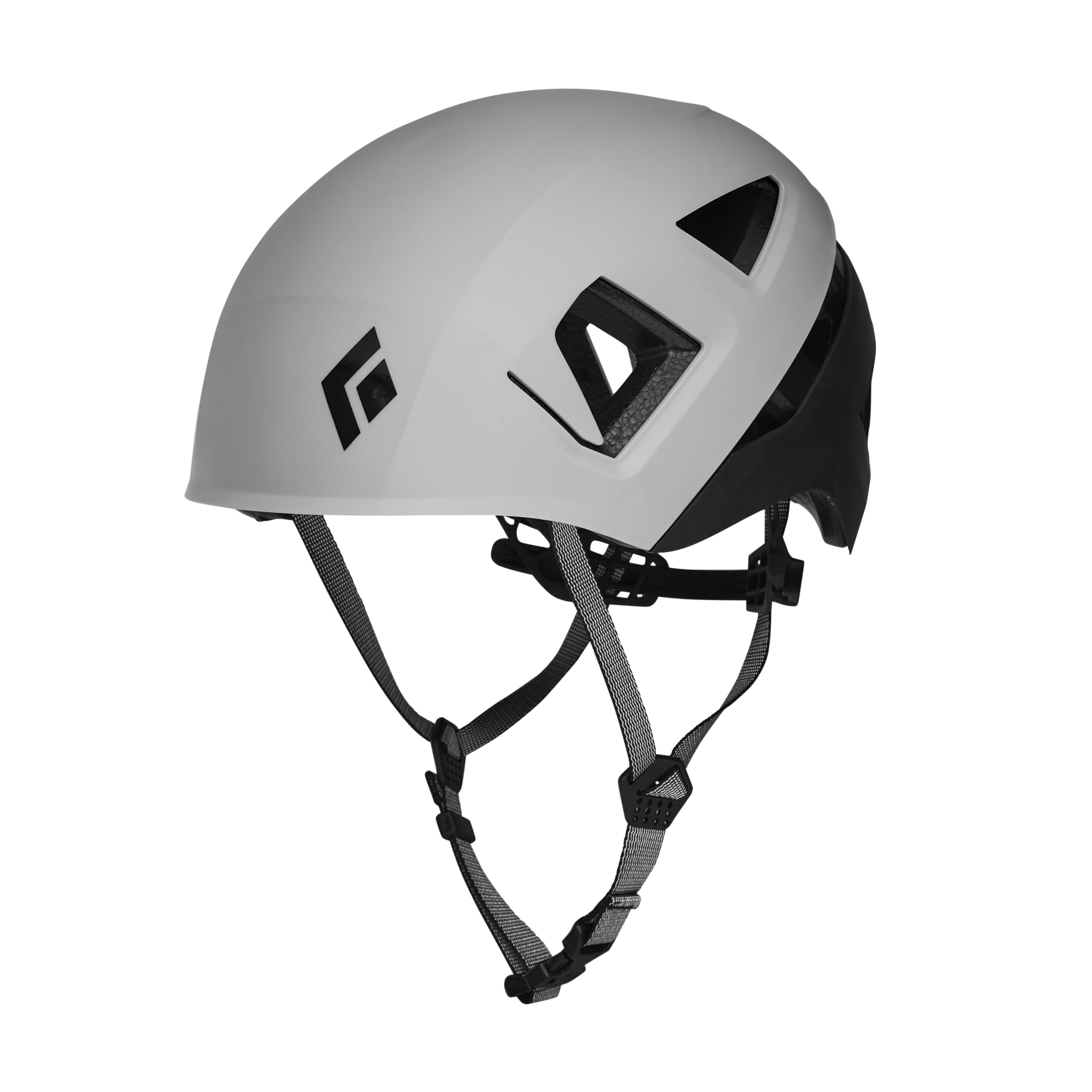
1. Black Diamond Capitan Helmet
Our pick — over 4.5★ from 150+ verified ratings; the strongest balance of quality and price.
The hard-shell workhorse that earned its reputation on trad routes and big walls
You get a helmet that survives rockfall and wall knocks without failing, thanks to a tough ABS outer shell (a hard plastic that absorbs impacts) and a suspension system with a rear dial for a quick, precise fit. It’s built for repeated hits from falling rock and wall contact, so you can focus on placing gear overhead while leading pitches.
It weighs 0.33 kg and measures 9.45 x 7.09 x 9.45 inches — compact enough to feel natural on your head during a long day. Integrated headlamp clips keep your light secure for early starts and late descents, so it suits sport climbing, trad routes, and big wall objectives alike. Buyers report it’s “super lightweight” and “easy to put on,” with the fit praised by most and called tricky by a few — sizing is the one thing to verify before you buy.
The thing everyone raves about is the build quality — it feels solid and like it will last, even if you can’t prove it until a real hit. It can also fit over hats or extra layers for year-round use, which extends its usefulness well beyond summer crags.
What owners love
- Hard ABS shell resists dings from rock contact
- Headlamp clips built in for alpine starts
- Rear dial makes one-handed fit tuning easy
What to check
- Fit runs large for some heads — try before you trust
- Fewer vents than airy in-mold competitors
Who it’s for: Climbers who want one durable, no-nonsense helmet for everything from gym laps to alpine epics.
Fit note: Head shape varies — a slightly snugger or looser feel is the main thing owners disagree on.
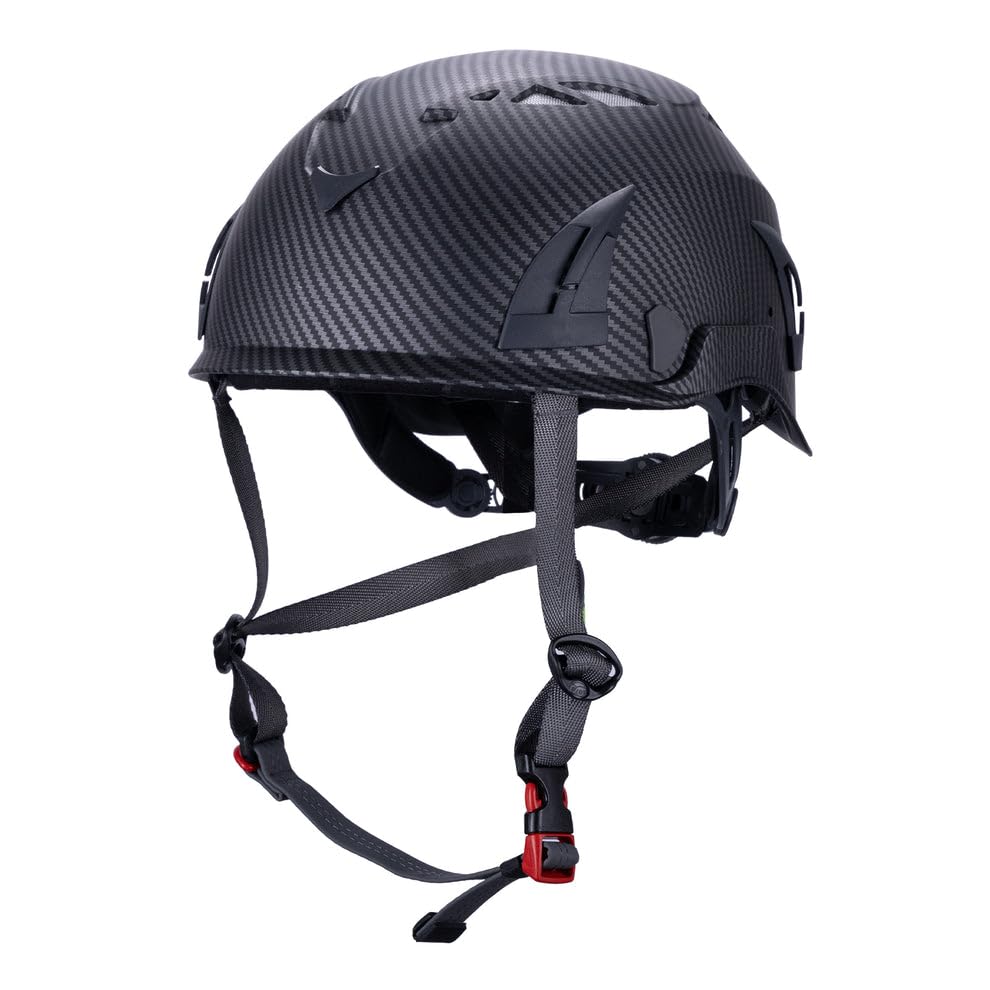
2. Land Helmets ClimbPro
A certified, airy helmet that proves you don’t have to spend big for solid protection
The ClimbPro earns its EN 12492 certification in both the US and EU, so you get trusted protection that meets strict international standards — the same standard many helmets twice the price carry. It pairs a durable polypropylene outer shell with an EPS foam core (the foam layer that absorbs impact energy), so it resists external force while reducing shock.
At 400 g, it’s no featherweight, but the 10 integrated ventilation zones keep air moving to reduce heat buildup during intense activity. The adjustable dial-fit system, secure chin strap, and removable sweat-wicking liners make it comfortable for long wear, and universal accessory slots add compatibility with other protective gear. Owners mention wearing it on a mountaineering trek and finding it “very comfortable” and “solid,” while a few note it’s not OSHA-approved for construction sites — this is a climbing and rescue tool, not a job-site hard hat.
If you want certified protection without the premium price tag, this is a hard pick to beat. It’s also suitable for rescue operations, arborist work, and rope access, so it’s genuinely multi-purpose.
Where it shines
- EN 12492 certified for US and EU standards
- 10 vents keep you cool on hot approaches
- Removable liners are easy to wash
Know before you buy
- Not OSHA rated — wrong tool for construction work
- Heavier than in-mold premium options
Grab it if: You want a certified, ventilated helmet for climbing and multi-use outdoor work without the premium markup.
Look elsewhere if: You need a site-compliant hard hat or the absolute lightest shell possible.
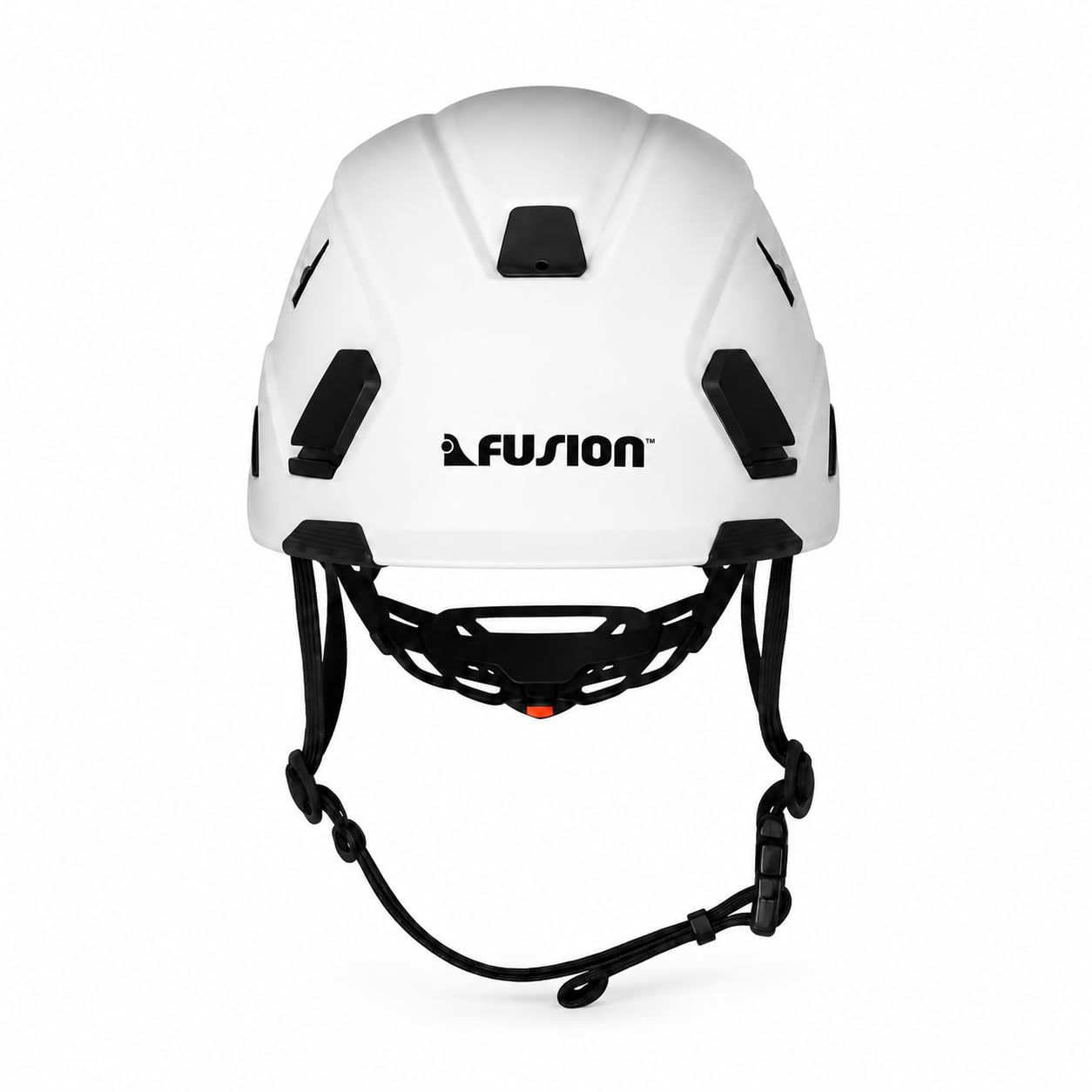
3. Fusion Climb Meka II
The dial-fit shell that finally gives big heads room to breathe and adjust
If most helmets squeeze your head, the Meka II fits you — its XL 20–26 inch range gives larger head sizes room to adjust, and a rear dial plus 6-point textile suspension (a fabric harness that cradles your head) lets you center it before climbing. Despite its polycarbonate shell (a lightweight plastic), it feels more forgiving than its 11.2-ounce weight suggests.
Multiple ventilation openings add airflow as you climb and organize gear, and the adjustable chin strap with a quick-release buckle lets you secure the fit and transition between tasks easily. Customers note it fits over a baseball cap, tucks the chin strap away neatly, and feels “very light” with “good venting” — several say they’d buy a second one. The main recurring gripe is the non-replaceable liner — once it’s worn, you can’t swap in a fresh one.
It measures 10.25 x 8.25 x 6.25 inches, which is a touch more generous than the Black Diamond Capitan’s 9.45 x 7.09 x 9.45 inches footprint — more interior room for taller or rounder heads. If adjustability is your priority and you have a larger head, this is the one to reach for.
Why it wins
- XL 20-26 inch fit range suits large heads
- Quick-release buckle makes on-off fast
- Stays put even without the chin strap
The trade-off
- Liner isn’t replaceable once it wears out
- Some reviewers point out hot spots after long wear
Reach for this if: You have a larger head or wear a hat and need generous adjustment range.
Think twice if: You want a helmet you can re-line or refresh over years of heavy use.
4. CAMP Titan Helmet

An Italian-built shell that skips the frills and focuses on burly basics
The Titan keeps things straightforward: an ABS injection-molded shell over a spider suspension framework, with four burly headlamp holder clips and a durable size adjustment wheel. It’s assembled without rivets or screws, which means fewer failure points and a cleaner, smoother exterior that slides past rock without snagging.
At 435 g, it’s on the heavier side, but that weight buys a rugged shell built for repeated abuse. Shoppers say the build quality is “excellent” and the helmet is “light and easy to adjust,” though one owner found the tightening wheel can slip — the adjustment mechanism is the weak point to watch. It’s a solid choice for climbers who want a no-nonsense hard shell that just works.
Four headlamp clips give you more light-mounting options than most competitors, which is a real plus for alpine starts or cave trips where you want your beam angled exactly where you need it.
A straight shooter: If you want a simple, durable shell with plenty of headlamp options and don’t mind a bit of extra weight, the Titan delivers.
Watch the wheel: The size adjustment is the one part a few owners found unreliable — test it before you trust it on a big wall.
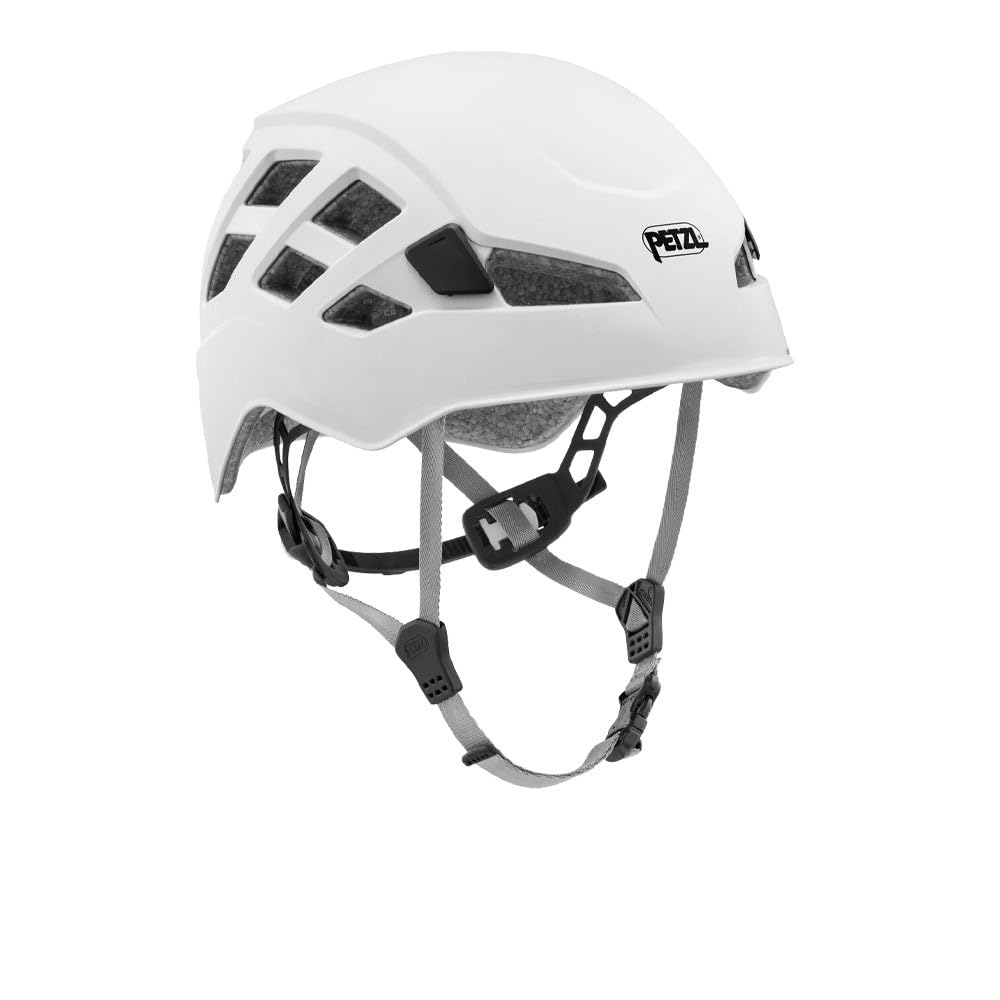
5. Petzl BOREO Helmet
A rugged hard shell with Petzl’s extended rear coverage for side and back hits
The BOREO is built for intensive use in caving, climbing, or canyoning, with a thick, hard ABS outer shell that resists scratches and impacts. Its hybrid protection uses a dual-foam liner — EPP (a tough, flexible foam) and EPS (the classic impact-absorbing foam) — encased in the shell, so it absorbs shock effectively while keeping a compact profile on your head.
Petzl’s “Top and Side Protection” label means the shell extends lower in the rear to guard against side, front, and back impacts. At 16 ounces, it’s mid-weight, with large vents for airflow; the soft headband molds to your head and folds into the shell for compact storage, and four clips hold a headlamp. Buyers report it fits petite heads “just fine” and has survived small falls with “barely a scratch.”
One owner credits it with saving their life in a bike accident, citing the suspension system as the difference. It’s a versatile, confidence-inspiring shell for mixed terrain.
Standout strengths
- Extended rear coverage for side and back impacts
- Dual-foam liner blends toughness with shock absorption
- Folds compactly for easy packing
Small caveats
- Vents can’t be opened or closed
- Heavier than in-mold alternatives
Choose it for: Canyoning, caving, or any climbing where side impacts and rock contact are real risks.
Note: If you want adjustable venting or the lightest possible shell, look to the in-mold options.
6. Mammut Skywalker 3.0

A low-bulk hybrid that suits weight-conscious climbers who want protection without extra heft
You feel the Skywalker 3.0’s weight savings on a long approach — at 334 g, it’s lighter than many hard-shell helmets, thanks to a hybrid construction (a mix of hard shell and foam) that protects without bulk. It’s low-profile and heavy-duty for all your climbing ventures.
Nine fixed vents allow ample airflow to stay cool on the wall, and a rear thumb dial gives a quick-and-easy precise fit. Headlamp attachment clips keep your light source stable and secure. Owners mention it’s “extremely light and well vented,” comfortable for long days, and that it includes different sized padding to fine-tune the fit. One owner uses it for outdoor stage work and noticed an “instant difference” in heat buildup compared to a darker helmet.
At 8 x 6 x 6 inches, it’s among the most compact options here, so you can clip it to a harness or stuff it in a pack without it snagging on gear.
The light middle ground: It splits the difference between heavy hard shells and featherweight in-mold helmets, giving you durability without the neck strain.
Keep in mind: Fixed vents mean you can’t close them for wet or cold conditions — a minor trade-off for the airflow you get.
7. Black Diamond Vector Helmet
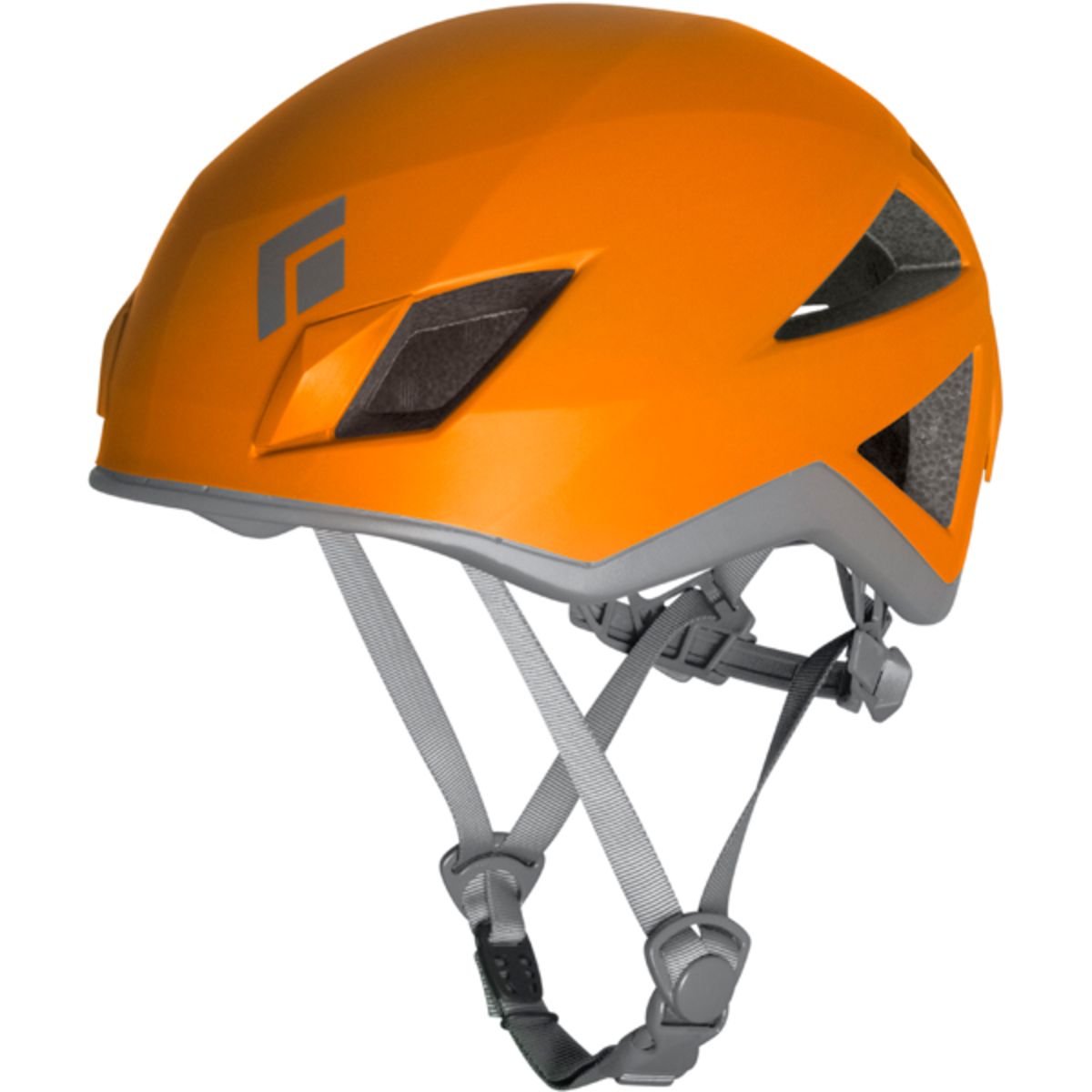
The ultra-light in-mold shell that climbers pick when every gram counts
The Vector is the helmet to grab when you’re counting grams on a long alpine mission. Its co-molded EPS foam with a polycarbonate shell keeps weight down to 1.3 pounds, so it’s easy to forget it’s on your head. Large ventilation ports provide maximum airflow, which makes it a favorite for summer multipitch climbs and ski touring alike.
Customers note it extends coverage about an inch lower on the back and temples than some Petzl models, which makes a real difference on lead falls where you might clip the wall behind you. The ratchet adjuster with molded push buttons is easy to use, even with gloves, and the tuck-away suspension makes for compact storage when it’s off your head.
In-mold headlamp clips keep your light secure and ultra-attached without adding bulk. The main trade-off is that in-mold shells are generally more disposable than hard shells — one owner called it “beautiful, comfortable… and disposable,” noting the foam shows wear faster even if the impact protection is solid.
Why climbers love it
- 1.3 lb weight disappears on your head
- Coverage extends lower on back and temples
- Large vents keep you cool on hot ascents
Things to know
- In-mold shell shows wear faster than hard ABS
- No vent adjustment for cold conditions
Pick it for: Alpine climbing and long routes where every ounce matters more than shell longevity.
Weigh this: If you expect heavy rock contact or want a shell that lasts years of abuse, a hard shell fits better.
8. Petzl Meteor Helmet
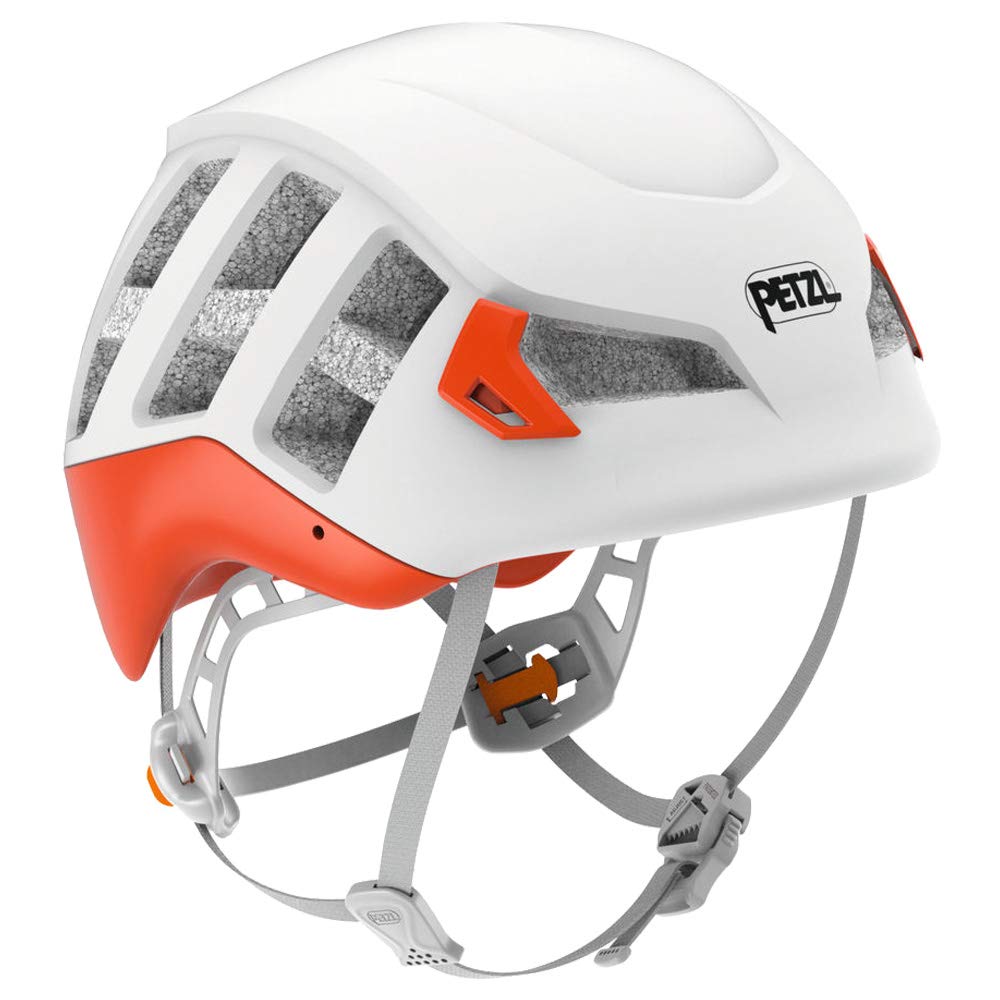
The 240-gram In-Mold marvel that bridges climbing and ski touring better than most
The Meteor is genuinely featherlight — it weighs only 240 g in size M/L thanks to In-Mold construction, which literally molds the polycarbonate shell directly into the EPS foam. That makes it comfortable for all-day wear and ideal for ski touring, where the helmet is CE-certified specifically for that use (PCSR-002) and designed for goggle integration.
It carries Petzl’s “Top and Side Protection” label, so it covers lateral, front, and rear impacts, not just the top of your head. Two front clips and a rear elastic band secure a headlamp, and it’s compatible with VIZION and SKREEN eye shields for extra coverage. Reviewers point out the magnetic buckle system clips together easily even with thick gloves on, and that it integrates well with ski goggles without fogging.
The trade-off is that one owner found the M/L sits “comically high” on their head, leaving the forehead exposed — so this is a helmet where fit really matters before you commit. For climbers who also ski tour, though, this dual-certified gem is hard to ignore.
What stands out
- 240 g is among the lightest helmets available
- Ski touring certified with goggle compatibility
- Magnetic buckle works with thick winter gloves
Fit caution
- Sits high on some head shapes, exposing the forehead
- Vents are fixed, not adjustable
Perfect for: Climbers who also ski tour and want one ultralight helmet for both sports.
Double-check: If you have an unusual head shape, try it on — the high-riding fit is a real complaint from some.
9. Protos Integral Arborist Helmet

The all-in-one pro shell with side impact protection that sets a new safety bar
The Protos suits specialists — it’s an arborist helmet with built-in hearing protection, an optional full face shield, and side impact protection that its makers claim makes it “arguably the safest climbing helmet ever.” It meets both EN 397 (industrial safety) and EN 12492 (climbing) standards, a rare dual certification here.
All functions — hearing protection, face shield, helmet adjustment, and vents — can be activated with just two fingers, which makes operation easy even mid-task. The “swept back” design offers an optimal field of view, and a discrete chin strap channel prevents the strap from slipping under the ear protector. At 1.7 pounds, it’s the heaviest on this list, but that weight buys serious multi-function protection.
Shoppers say it’s the “most comfortable helmet” they’ve worn, that it doesn’t get as hot as other helmets, and that professionals are willing to pay for it — one owner called it “buy once cry once” value. The mesh mask lets chips and dust through, so you’ll want safety glasses underneath, but for professional arborists, this is the gold standard.
Pro-grade strengths
- Side and rear impact protection, plus EN 12492
- Adjustable vents open or close for any weather
- Integrated hearing protection with two-finger operation
Consider this
- Heaviest pick at 1.7 lb
- Mesh mask lets debris through — wear glasses
Built for: Professional arborists and rope-access workers who need the most complete protection package money can buy.
Know this: It’s a premium investment — if you’re a weekend climber, a simpler shell gives you most of the protection for far less.
Understanding the Specs
Shell Material
Hard shells use ABS or polypropylene, which resist dings and abrasion from rock contact but add weight. In-mold helmets fuse a thin polycarbonate layer directly into the EPS foam, saving grams but offering less protection against sharp impacts. Hybrid builds combine a hard shell with dual-foam liners (like EPP and EPS) for a middle ground.
Fit System
The rear adjustment dial or wheel is what lets you fine-tune the fit while the helmet is on your head. A good system should be operable one-handed and hold its position securely. Chin straps with quick-release buckles make transitions faster, and a 6-point suspension spreads pressure more evenly than simpler designs.
FAQ
How do I know if a climbing helmet fits correctly?
What is the difference between EN 12492 and EN 397 certification?
Can I use a climbing helmet for ski touring?
How long does a climbing helmet last?
What is the difference between ABS and in-mold helmets?
Do I need a helmet with side impact protection?
Why does ventilation matter on a climbing helmet?
Can I wear a beanie or hat under my climbing helmet?
Final Thoughts: The Verdict
For most climbers, the climbing helmets winner is the Black Diamond Capitan because it pairs a durable ABS shell, a reliable fit system, and headlamp clips at a price that hundreds of owners favor. If you want certified protection without the premium markup, grab the Land Helmets ClimbPro. And for gram-counters heading into alpine terrain, the Black Diamond Vector is the one to reach for.
How We Picked
We do not accept paid placement. Every pick is matched to a real buyer and a real use-case; we do not hands-on test units.
Sources & Methodology
Specifications: manufacturer listings and product documentation. Review insights: verified customer reviews, as of August 2026. Pricing: not shown on this page (it changes often); check the current price via the retailer link.
As an Amazon Associate, FitlyFast earns from qualifying purchases. This does not affect which products we feature.