
Our readers keep the lights on and the weekend projects moving. As an Amazon Associate, I earn from qualifying purchases.
Specs are compiled from manufacturer listings and verified buyer reviews and can change over time — please confirm the key details on the product page before buying.
You can pick a sun-warmed lemon or lime from a tree that lives right inside your apartment, but only if you start with the right plant and treat it as a living project, not a set-and-forget houseplant. The best indoor citrus trees are dwarf varieties bred to flower and fruit in a living room, and this guide focuses on those that actually deliver.
I’m Rikta — the founder and writer behind FitlyFast. This guide is built by comparing the manufacturers’ published specifications and the patterns across verified customer reviews, so you get each pick’s real strengths and trade-offs instead of marketing spin.
You’ll see which varieties stay compact enough for a bright window, how long you’ll wait for fruit, and which pots and lights give you the best odds of success with indoor citrus trees.
Our Picks at a Glance


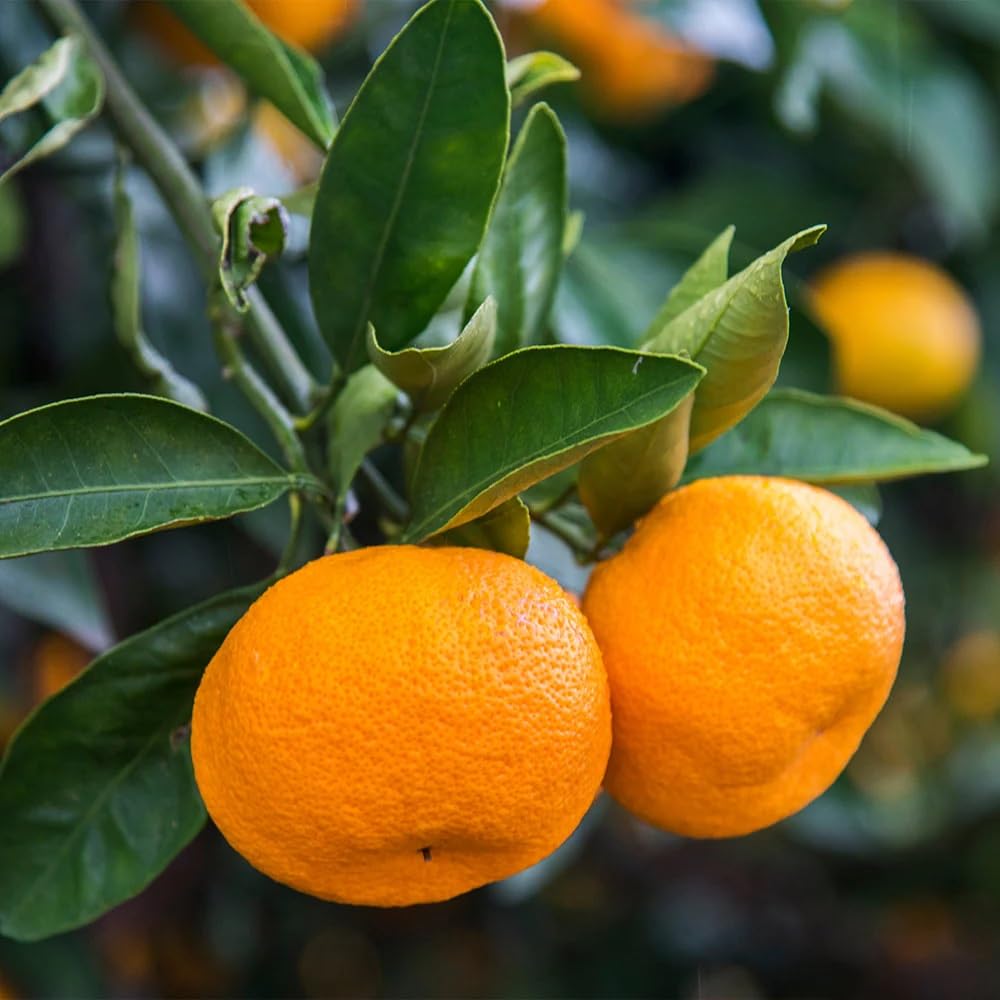
How To Choose The Best Citrus Trees For Indoors
Picking an indoor citrus tree starts with one honest question: how much sun can you give it? Most indoor citrus needs full sun to really thrive, so a bright south-facing window is your most important “accessory.” Without enough light, even the healthiest starter plant will sulk, drop leaves, and refuse to bloom.
Start with a grafted tree, not just any seedling
Look for trees that are described as self-pollinating and adapted to containers. A grafted dwarf tree, like a Meyer lemon or a calamondin orange, is bred to stay compact and fruit sooner. Seed-grown starters can take many years to mature and may not taste like the parent fruit, so read the description to know what you’re actually buying.
Match the tree to your patience level
Some varieties are famous for flowering and fruiting within their first year, while others are a multi-year project. If you want quick satisfaction, a mature tree with buds already on it is worth the higher price. If you enjoy watching something grow from a baby, a small starter plant is a budget-friendly way to begin, but you’ll need to be gentle with it.
Check the shipping restrictions before you fall in love
Many online nurseries cannot ship citrus to warm citrus-growing states like Florida, California, or Arizona due to federal and USDA regulations. Always check the product’s shipping restrictions first to avoid disappointment, because this is a hard rule for live plants.
Quick Comparison
| Model | Best For | Mature Height | Starting Size | Time to Fruit | Amazon |
|---|---|---|---|---|---|
| Garden State Bulb Meyer Lemon★ Best Overall | First-year fruit & instant presence | 8’–10′ outdoors | 1-gallon pot | Within first year | Amazon |
| Via Citrus Calamondin TreeBest Value | Year-round blooms & compact size | 22 inches | 13″–22″ tall | Already fruiting | Amazon |
| Brighter Blooms Calamondin OrangeBest for Beginners | A 2-ft tree that’s already blooming | 2+ ft. on arrival | 1–2 ft. tall | Blooms twice | Amazon |
| Via Citrus Meyer Lemon | Fragrant lemons from a hardy plant | 13″–22″ tall | 1-gallon pot | Arrived flowering | Amazon |
| Via Citrus Key Lime | A mature lime with blossoms on day one | 13″–22″ tall | 1-gallon pot | Arrived with fruit | Amazon |
| Brighter Blooms Meyer Lemon | Fast, vigorous growth in full sun | 2 ft. on arrival | 1–2 ft. tall | Fruit development seen | Amazon |
| Gerald Winters Key Lime Starter | Budget entry into a Florida classic | 10 feet | 3″–5″ tall | 2–3 years | Amazon |
| Gerald Winters Meyer Lemon Starter | A tiny, sweet-fruit project | 8 feet | 3″–5″ tall | About 5 years | Amazon |
| Gerald Winters Kumquat Starter | Drought-tolerant, eat-the-peel fruit | 15 feet | 3″–5″ tall | About 3 years | Amazon |
In‑Depth Reviews
1. Garden State Bulb Meyer Lemon Tree
Our pick — over 4★ from 600+ verified ratings; the strongest balance of quality and price.
The rare indoor citrus that skips the seedling wait and shows up already carrying fruit.
Most indoor citrus start as 3-inch seedlings that need years of patience, but this Meyer lemon from Garden State Bulb skips that wait — it ships as a tree in a 1-gallon growers pot, and the brand promises fruit within its first year. Owners praise the quality and appearance most, noting lush green leaves and a full silhouette that’s “larger than expected” straight from the start.
It’s genuinely self-pollinating, which is your ticket to indoor success since you won’t have bees buzzing through the living room. The care is straightforward — it wants to sit near a bright window with well-drained soil and moderate watering. Winter-hardy in zones 8-11 outdoors or 4-11 as a patio or indoor plant, it’s flexible enough to move outside on warm months and come back in before frost.
The honest trade-off: a few owners have watched their trees lose leaves shortly after flowering, which is a normal citrus stress response but can look alarming. Shipping can also snap a branch — one plant arrived a towering 28 inches tall but with a broken stem in transit. That’s the risk of buying a big, mature tree through the mail. At 1,000+ ratings, it has nearly four times the feedback of its closest rival, so if you want the least guesswork and the fastest path to a lemon on your counter, this is the one.
What wins people over
- Arrives with multiple lemons already growing — no multi-year fruit wait
- Self-pollinating, so one tree fruits alone indoors
- Larger and fuller than expected on delivery
What to expect honestly
- Some trees drop leaves after flowering — treat it as a stress sign, not a death sentence
- Occasional branch damage during shipping on taller plants
Reach for this if: you want a fruit-bearing tree this season, not a seedling project, and you have a bright window ready.
Look elsewhere if: you’re shopping on a tight budget or need a tiny plant for a very small shelf — this is a substantial 1-gallon tree.
2. Via Citrus Calamondin Tree
A compact tree that delivers fragrant flowers and sour oranges on a year-round schedule.
If you want the most “wow” per square inch of floor space, this calamondin is the compact champion. It arrives 13 to 22 inches tall with the plant quality being the single most-praised thing about it — owners describe it as “full of fruit and flowers” with hundreds of blossoms and a beautiful fragrance. Unlike the seedling starters, this tree shows up already carrying marble-sized fruit, so you get the payoff immediately.
The calamondin is practically made for small homes. Its compact nature means it fits on a balcony, patio, or a sunny corner without dominating the room. The fruit has a sour kick with a sweet peel, which makes it a favorite for jams, marinades, and cocktails. It wants sandy soil and moderate watering, plus a spot that gets real sunlight — and owners note it thrives even when it’s healthier than local nursery plants that never had to survive a shipping box.
The catch is the price — it’s a premium pick compared to a 3-inch starter, and some owners noted the plastic nursery pot is not show-worthy, so budget for a decorative ceramic cachepot. But for a beginner who wants a guaranteed-looking, already-fruiting tree that’s low-maintenance, this is the one the reviews keep coming back to.
Instant gratification: This is the fastest route to a flowering, fruiting indoor citrus tree without the multi-year seedling gamble.
3. Brighter Blooms Calamondin Orange Tree
A full 2-foot tree with healthy green leaves, delivered and blooming for gardeners of every level.
This calamondin orange from Brighter Blooms is the one to grab if you want a tree that already looks like a tree. While the starter plants are 3-to-5-inch babies, this one arrives over 2 feet tall with beautiful, nice green leaves. The quality and health of the plant are the top two things buyers mention most, and the reviews keep repeating the same story: the tree is growing and blooming, with some owners watching it bloom twice.
Don’t let the name confuse you — the calamondin is often called a Tangerine Tree, and its fruit is the size of a small tangerine, adding a tangy flavor to your cooking. It handles both indoor and outdoor life, so it can bask on a patio in summer and move to a bright window in winter. Fragrant is listed as a special feature, so you’re buying a tree that perfumes a room, not just decorates it.
The one detail to know before buying: the fruit stays small, with one owner noting the ripe fruit came in at just half an inch, which was smaller than they’d hoped. But if the tangerine-sized fruit and a fast-blooming habit matter more than huge harvests, this is a very reliable, happy-making tree. Just check the shipping restrictions — this one doesn’t go to Florida or California.
Ready-made presence: Skips the seedling stage entirely, giving beginners a forgiving, already-blooming tree.
4. Via Citrus Meyer Lemon Tree

A Florida-grown Meyer lemon whose dark green foliage and lemony scent arrive with zero drama.
The Via Citrus Meyer lemon is all about a healthy, well-packaged plant that shows up ready to grow. The thing everyone raves about is the foliage — dark green and plentiful, with the aroma listed as a positive again and again. One owner sent the tree as a birthday gift and the recipient’s only words were that it was “very aromatic” and smelled like lemons. It’s the kind of unboxing that makes you want to find a spot for it immediately.
This is a dwarf Meyer, so the 13-to-22-inch height is a finished product, not a starting point. It arrived flowering for some owners, and it adapts well to container growing or small outdoor spaces. You’ll want to give it full sun and well-drained loam soil, and it’s winter-hardy in zones 9-11, so in most of the country it’s an indoor plant first. The sweet-tart fruit is perfect for drinks, cooking, and desserts.
Two things to file away: this tree has thorns, and one owner on blood thinners got cut up trying to unwrap it — wear gloves. Some owners also note leaves falling after two weeks, which is normal citrus leaf-drop when a plant changes environments. The recommendation is nearly unanimous, making the Via Citrus Meyer among the most dependable lemon trees you can mail-order.
Glove warning: A fragrant, vigorous dwarf lemon that’s fantastic indoors — just unwrap it with thick gloves.
5. Via Citrus Key Lime Tree
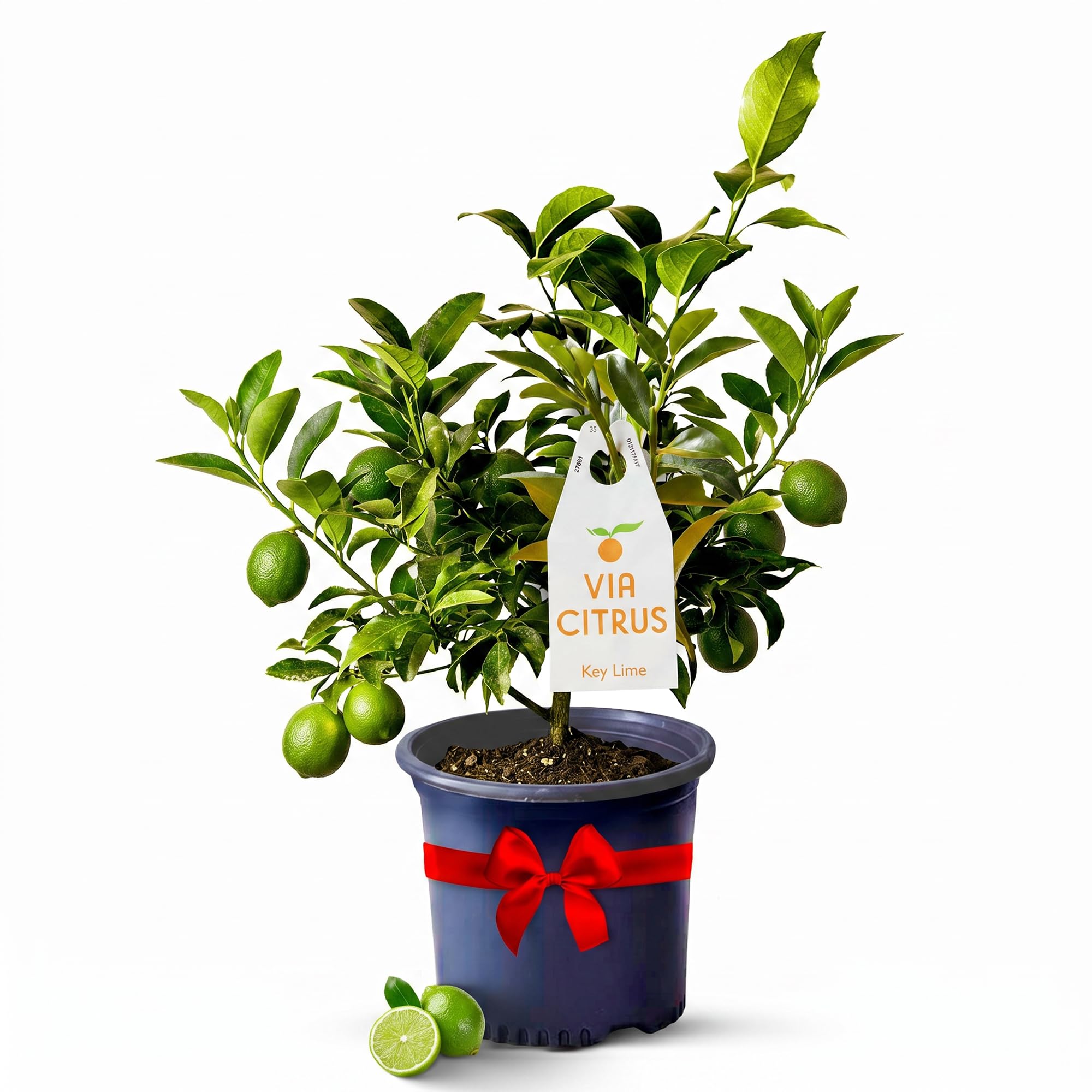
A mature key lime that arrives with blossoms and even a small fruit already forming.
This is the key lime for people who don’t want to wait. It ships as a 13-to-22-inch mature plant in a one-gallon pot, and the reviews say it arrives already holding blossoms and, in one case, a small lime. The taste of the fruit is the top-mentioned positive, which makes sense for a tree whose small, juicy limes are meant for pies, drinks, and marinades. It’s “more mature than I was expecting” — a repeated line from owners who braced for a twig and got a tree.
It’s a low-maintenance citrus that thrives in full sun and well-drained soil, making it forgiving for both new and seasoned growers. The key lime produces fragrant white blooms and a citrus aroma throughout the year, so even when it’s not fruiting, it’s perfuming your space. It’s compact enough for a patio, balcony, or sunny window without taking over the room.
The honest warning from the reviews: one owner reported their tree died when moved indoors, which is a reminder that sudden changes in light and temperature are the enemy of citrus. Ease it into its indoor spot over a week or two. With fewer ratings than the Via Citrus lemon, this is a slightly less proven pick, but the feedback that exists is glowing, and it’s the highest-rated key lime of the group.
Mature from the start: You get a tree with actual blossoms and fruit on day one, not a 3-inch seedling to nurse.
6. Brighter Blooms Meyer Lemon Tree

The mood-boosting lemon tree that goes from “few roots” to quadrupled leaves in a single month.
Buyers describe this Meyer lemon as a great-looking plant that genuinely lifts the mood of a room. Unlike grocery store lemons bred for shelf life, this tree produces thin-skinned fruit that bursts with a sweet-tart flavor perfect for juices and zest. It’s a hefty 1-to-2-foot specimen on arrival, and the reviews show it’s a fast, vigorous grower — one owner reported the leaves quadrupled in a month under full sun with watering every other day.
The tree is winter-hardy outdoors in spring and grows well in full sun to partial shade, so it can live happily on a sunny patio in warm months. The fruit development is a highlight, with one owner counting 6 lemons and many blossoms forming. It’s a self-contained fruit factory that rewards a little attention with a lot of lemons.
The trade-off is the classic mail-order gamble: a couple of owners received a plant far smaller than advertised, with one dramatic review describing “a twig” that lost its leaves within a week. That’s the exception, not the rule, but it’s a real risk when buying a larger, pricier tree blind. And returns on live plants don’t always include shipping, so read the fine print. For the majority who get a healthy one, this is a showpiece.
Fast & fragrant: A vigorous grower whose lemony scent and quick leaf production make it a favorite — but arrival size can vary.
7. Gerald Winters Key Lime Starter Plant

The most affordable way to bring the sweet scent of the Florida Keys into your living room.
At 3 to 5 inches tall above the soil, this starter key lime is the definition of a budget-friendly beginning. It’s grown from seed and nurtured for a minimum of 4 months before shipping, so it arrives well-rooted and healthy — one surprised owner even received a second tree free. The quality and healthiness are the two most-praised aspects, and it’s wrapped in bubble wrap to survive the trip.
The promise here is a fast-growing starter that will eventually reach 10 feet outdoors, but in a pot indoors it stays much smaller for years. The care instructions are detailed and clear, which buyers genuinely appreciate. For colder winter months, the seller notes you can swap direct sunlight for UV grow lights with no loss of development, which is a huge perk for northern growers with weak winter sun.
This is the pick with the biggest honesty gap: the size gets mixed feedback because 5 inches is genuinely small, and a few buyers report their tree died within a week despite following instructions. One careful owner rated it 4 stars, noting the soil was still decently moist after a 10-day trip — good sign — but that they didn’t receive the promised free seed. It’s a project, not a payoff, so buy it with patience and a grow light ready.
Seedling patience test: A low-cost, healthy way to start a key lime — perfect if you enjoy the grow-it-yourself process.
8. Gerald Winters Meyer Lemon Starter Plant

A tiny heirloom seedling that grows into a sweeter-than-store lemons, but only with real patience.
This is the starter plant for the classic Meyer lemon — a hybrid cross between a citron and a mandarin/pomelo that’s native to China. It’s sweeter than store-bought lemons, making it perfect for lemonade and baking, and it’s self-pollinating with fragrant white flowers that have a purple base. The trade-off is time: these starter plants produce fruit in about 5 years, which makes this a long-term gardening commitment, not a quick fix.
The plant arrives as a 3-to-5-inch seedling, and the care instructions matter enormously here. One experienced owner shared the full roadmap: start it in a 12-inch by 21-inch pot, move to an 18-inch by 18-inch pot in two years, and expect a mature potted size of about 2 feet tall and wide — versus 6 to 10 feet tall in the ground. They also warned to avoid cedar mulch and use citrus soil instead. The plant in their care survived and grew to 13.5 inches by October, proving it’s doable with the right attention.
The honest warning: because these are grown from seed, they can take 7 to 15 years to fruit and the resulting fruit may taste different from a true Meyer lemon. One owner followed care instructions exactly and reported the plant nearly dead after a month, so this is not the tree for people who want a low-risk, immediate harvest. It’s a lovely green seedling that smells great on arrival — the fragrance for one owner vanished the next day — but it demands a gardener’s patience.
For the bonsai-minded: A fragrant, healthy project that’s more about the journey to a 2-foot fruiting tree than the destination.
9. Gerald Winters Kumquat Starter Plant

The only citrus you eat whole, skin and all, from a drought-tolerant starter you can grow under a UV light.
If you want something different from the lemon-and-lime crowd, this Nagami kumquat is a genuinely unique indoor citrus. It’s the only citrus fruit that can be eaten in its entirety — skin and all — with a distinctive taste that’s perfect for marmalades, preserves, and dried fruits. The plant is a 3-to-5-inch starter grown from seed in Maine, and it’s famously drought-tolerant, pest-resistant, and disease-resistant, making it the most forgiving of the tiny starters.
It will produce fruit in approximately 3 years, which is faster than the Meyer lemon starter’s 5-year timeline. The kumquat is also a quick grower, so even a small plant will be considerably larger in a couple of weeks. One owner was thrilled it grew almost three times its original size. Full sun to partial sun is the requirement, but the seller highly recommends UV grow lights for indoor growing — with no loss of development — which is another nod to northern gardeners.
The catch: one owner’s tree died shortly after arrival, blaming too much synthetic fertilizer in the soil that fried the leaves in indirect sunlight. That’s a reminder that even “easy” citrus needs careful hardening off and rich soil. Another owner in California received a tree they described as better than the advertised picture, with the seller personally answering questions. If you want a conversation-piece citrus that’s genuinely low-maintenance once established, this is a great little project.
Eat-the-peel curiosity: A hardy, quick-growing starter for someone who wants the most unusual fruit on the windowsill.
Understanding the Specs
The 3-5 inch Starter vs. the 1-Gallon Tree
The single biggest source of “I got a twig” disappointment is not understanding what you ordered. A 3-to-5-inch starter plant is a seedling — a baby. It needs years of care, a good grow light, and lots of patience before it fruits. A 13-to-22-inch tree in a 1-gallon pot is a juvenile — it can arrive already flowering and fruiting. They’re both valid, but they are completely different purchases with different expectations.
Mature Height in a Pot
That tag on the listing — “mature height 10 feet” — is for a tree planted in the ground outdoors. In a container, citrus stays much smaller because the roots are restricted. A Meyer lemon that would hit 8 to 10 feet in your yard will top out around 4 to 6 feet in a pot. Don’t be scared off by a big number on a dwarf variety; read it as the outdoor ceiling, not your living-room reality.
FAQ
Will a Meyer lemon tree really grow and fruit indoors?
What is the difference between a starter plant and a 1-gallon tree?
How long until a starter plant produces fruit?
Do I need a grow light for indoor citrus?
Why can’t some of these trees ship to my state?
Which indoor citrus is easiest for a beginner?
Are these trees safe to put outdoors in summer?
Why are my tree’s leaves falling off?
Final Thoughts: The Verdict
For most people, the citrus trees for indoors winner is the Garden State Bulb Meyer Lemon because it skips the seedling gamble and delivers a self-pollinating tree that can fruit in its first year. If you want the most reliable compact plant with year-round blooms, grab the Via Citrus Calamondin. And if you’re on a budget and enjoy a growing project, the Gerald Winters Key Lime starter is the most affordable way to begin — just bring patience and a grow light.
How We Picked
We do not accept paid placement. Every pick is matched to a real buyer and a real use-case; we do not hands-on test units.
Sources & Methodology
Specifications: manufacturer listings and product documentation. Review insights: verified customer reviews, as of August 2026. Pricing: not shown on this page (it changes often); check the current price via the retailer link.
As an Amazon Associate, FitlyFast earns from qualifying purchases. This does not affect which products we feature.