
Our readers keep the lights on and the weekend projects moving. As an Amazon Associate, I earn from qualifying purchases.
Specs are compiled from manufacturer listings and verified buyer reviews and can change over time — please confirm the key details on the product page before buying.
Your trellis will only shine if the vine on it actually blooms, and clematis are the best at adding vertical color. To pick the right one, you need to match three things to your garden: how tall it grows, your hardiness zone (the climate range it survives in), and when it flowers.
I’m Rikta — the founder and writer behind FitlyFast. This guide is built by comparing the manufacturers’ published specifications and the patterns across verified customer reviews, so you get each pick’s real strengths and trade-offs instead of marketing spin.
You will find options here for a quick cover-up or a small showpiece, and each one balances real-world survival with the blooms owners praise.
Our Picks at a Glance

How To Choose The Best Clematis For Trellis
Clematis come in two basic shapes: vigorous climbers that want to swallow a whole fence, and compact growers happy with a small obelisk. The mistake most first-timers make is buying on flower color alone, then watching the vine either outgrow the support or never reach the top of it.
Match the mature height to your trellis
A towering variety can hit 12-15 feet, which is glorious on a pergola but overwhelming on a 4-foot obelisk. Compact types stay around 4-6 feet, perfect for patio containers and short lattice panels. Measure your support before you order.
Check your hardiness zone first
Zones tell you the coldest winter a plant can survive. A vine rated Zone 4-8 will shrug off harsh northern winters, while a Zone 6-9 pick needs milder conditions. Find your zone on the USDA map and match it to the plant’s rating before anything else.
Understand sun and soil needs
Most clematis want full sun on their leaves but cool, shaded roots — a classic “head in the sun, feet in the shade” setup. They also prefer well-drained, sandy soil and moderate watering, so avoid heavy clay that stays soggy.
Quick Comparison
| Model | Best For | Mature Height | Hardy Zones | Bloom Color | Amazon |
|---|---|---|---|---|---|
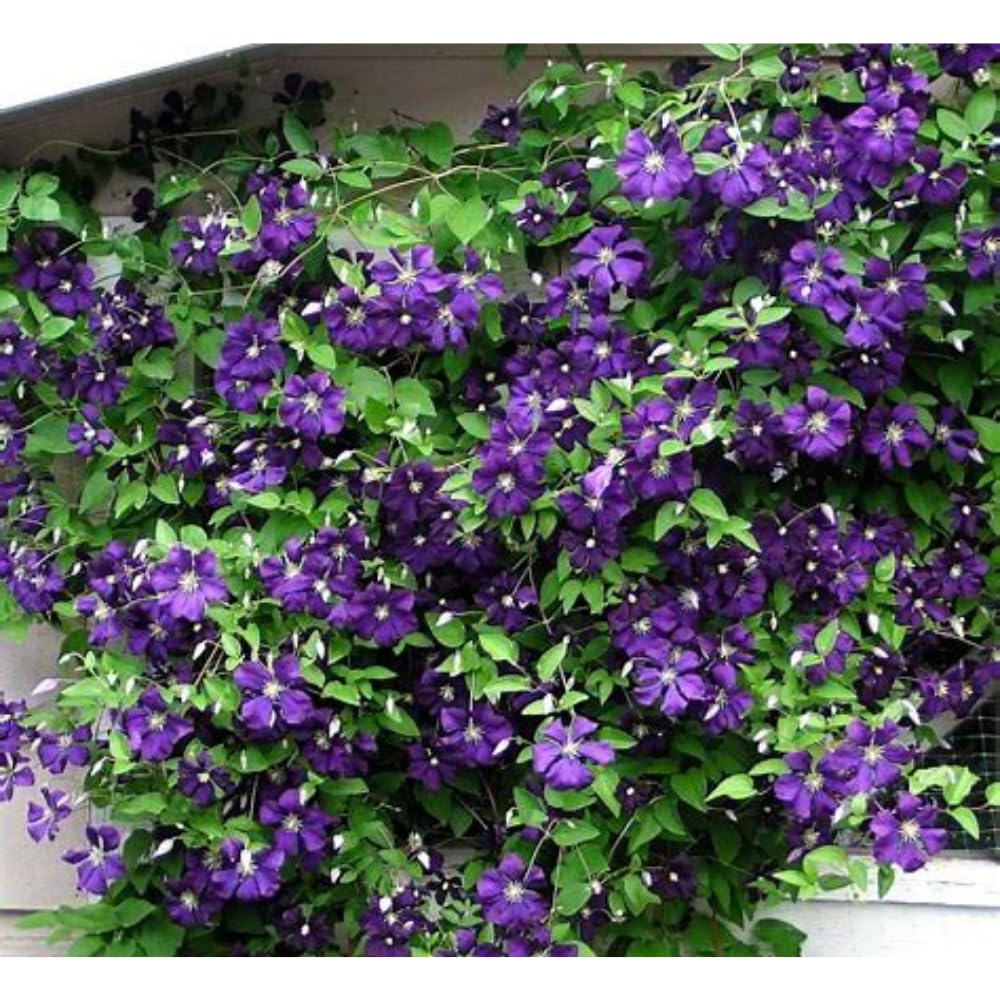
| Jackmani★ Best Overall | Big trellis coverage | 12-15′ | 4-8 | Velvet purple | Amazon |
| NiobeCompact Showpiece | Compact deep-red showpiece | 4-6′ | 4-8 | Dark velvet red | Amazon |
| Bees Jubilee | Re-blooming patio color | 6-10′ | 4-8 | Pink & red | Amazon |
| Piilu | Small spaces & containers | 72″ | 3-8 | Pale purple-pink | Amazon |
| Taiga | Double blooms, long season | 6-8′ | 6-9 | Purple with lime tips | Amazon |
In-Depth Reviews
1. Jackmani Clematis Vine
The classic vigorous climber that turns a bare fence into a velvet-purple wall.
This is the vine you choose when the trellis is big and the goal is coverage. Jackmani climbs to 12-15 feet, which is roughly triple the 4-6 feet of the compact Niobe below, so it suits pergolas, tall fences, and wide archways rather than small obelisks. The velvety purple flowers arrive across summer and into winter in warmer spots, giving you months of color on one plant.
Hardy in Zones 4-8, it survives cold northern winters reliably, and it asks for full sun with moderate watering in well-drained sandy soil. Buyers report it arrived leafed out and green even through a brutal 100°F heatwave, with packaging sturdy enough that the plant stayed healthy in a mailbox. It holds a 3.8-star average across 170+ owner ratings.
The honest trade-off is size at arrival — several owners describe the plant as tiny and note it can take time to establish. That is normal for a young clematis, but it means patience is part of the deal. Give it a season and the growth spurt is real.
vigorous bloomer
- Towering 12-15′ reach for major trellis coverage
- Heatwave-tested packaging keeps plants alive in transit
- Velvet purple blooms over a long season
needs heavy pruning
- Arrives small and needs a season to establish
- Not ideal for compact supports — it outgrows them
sunny walls: you have a tall structure and want maximum coverage from one vigorous vine.
shady spots: your support is under 5 feet — this climber wants room to run.
2. Niobe Clematis Vine
A deep ruby compact that brings drama to short trellises and patio pots.
If your trellis is modest, Niobe is the scale-matched choice. It tops out at 4-6 feet, so it suits obelisks, small lattice panels, and container planting where the 12-15 foot Jackmani would be chaos. The dark velvet red flowers are the deepest, richest tone in this lineup, perfect for anchoring a warm corner of the garden.
You can plant it in Zones 4-8 (the climate zones where it survives winter) in full sun to partial shade, so it works even where afternoon shade hits. Owners mention the plant arrived packed securely, very healthy and strong, and one owner said, “I put in my kitchen window after opening it and noticed growth within 2 days!” A repeat buyer has ordered six vines from this grower and found them all thriving on arrival.
The recurring note is size: several describe the young plant as very small, and one owner who babied it for 7 months lost it after planting out. That is the risk with young clematis, so treat tiny arrivals with extra care. The upside is that growth and value for money both come out positive in the owner chatter.
deep red flowers
- Compact 4-6′ frame fits small trellises and pots
- Rich dark velvet red for a bold color anchor
- Thrives in full sun or partial shade
slow to establish
- Arrives very small and needs gentle care early on
- Shorter reach means less fence coverage
focal points: gardeners with a compact support who want a deep, dramatic bloom color.
north faces: a young plant this size needs patient establishment — rush it and you may lose it.
3. Bees Jubilee Clematis Vine

A re-blooming stunner that delivers pink-and-red flowers twice a season.
This is the variety for gardeners who want a second act. Bees Jubilee flowers in May-June and then again in September, giving you an early flush and an autumn encore from the same vine. At 6-10 feet it lands between the towering Jackmani and the compact Niobe, making it the most flexible mid-size choice for a standard garden trellis.
It is also an heirloom variety that attracts pollinators, so it pulls double duty as a trellis centerpiece and a bee magnet. Customers note it arrived moist and flourished, with one owner’s plant “Bloomed 1 week after receiving” and another noting two vines that each grew up to 36 inches. In the owner consensus, growing and growth are the two most-praised qualities, with a healthy root system called out repeatedly.
The split in the reviews is about young-plant survival — some thrived, others died, which is the standard gamble with mail-order perennials. Plant it promptly on arrival in well-drained sandy soil with full sun and moderate water, and give it time to settle in.
bicolor spring show
- Blooms twice — May-June and again in September
- Heirloom variety that attracts pollinators
- Mid-size 6-10′ reach fits most trellises
fades in heat
- Young plants can arrive pale or struggling
- Needs prompt planting to thrive
cool borders: you want a pollinator-friendly vine with two bloom seasons from one plant.
hot zones: you cannot plant immediately on arrival — this one rewards prompt action.
4. Piilu Clematis Vine
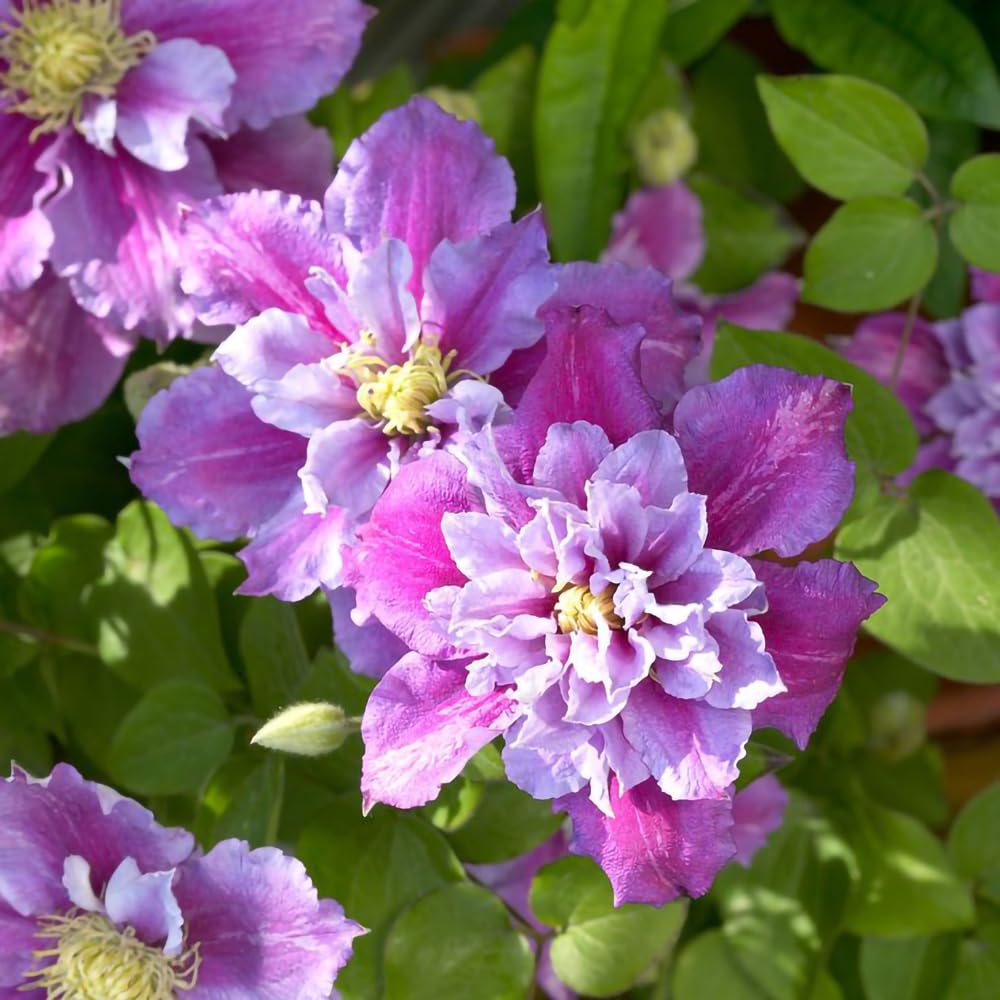
A cold-hardy petite bloomer that earns its “Little Duckling” name.
Piilu is marketed as the heaviest blooming clematis, and its pale purple-pink flowers offer a softer, more romantic look than the bold reds and purples above. Its standout trait is hardiness: it thrives in Zones 3-8, surviving a full zone colder than the Jackmani and Niobe, so it is the best choice for the coldest gardens in this lineup.
At 72 inches it sits right at the compact end, ideal for a short trellis, a balcony planter, or a container where you want a tidy vertical accent. Reviewers point out the plant stayed dark green and healthy even when it wasn’t growing fast, and one owner watched it “growing nicely all summer” after planting right away from its container.
The honest caution is that growth feedback runs mixed — several owners describe it as a very tiny, delicate arrival, and a few lost theirs within a week despite careful feeding. The heaviest weight in this list at 4.1 pounds means the pot and soil you get are substantial, which helps the plant settle in.
compact rebloomer
- Hardy down to Zone 3 for cold climates
- Compact 72″ size suits containers and small trellises
- Arrives in a substantial 4.1-pound pot
stake for support
- Arrival size can be very small and delicate
- Growth results vary — some plants stall or die young
containers: your winters get seriously cold and you need the most zone-hardy option here.
windy sites: you want instant coverage — this petite vine grows at its own pace.
5. Taiga Clematis Vine
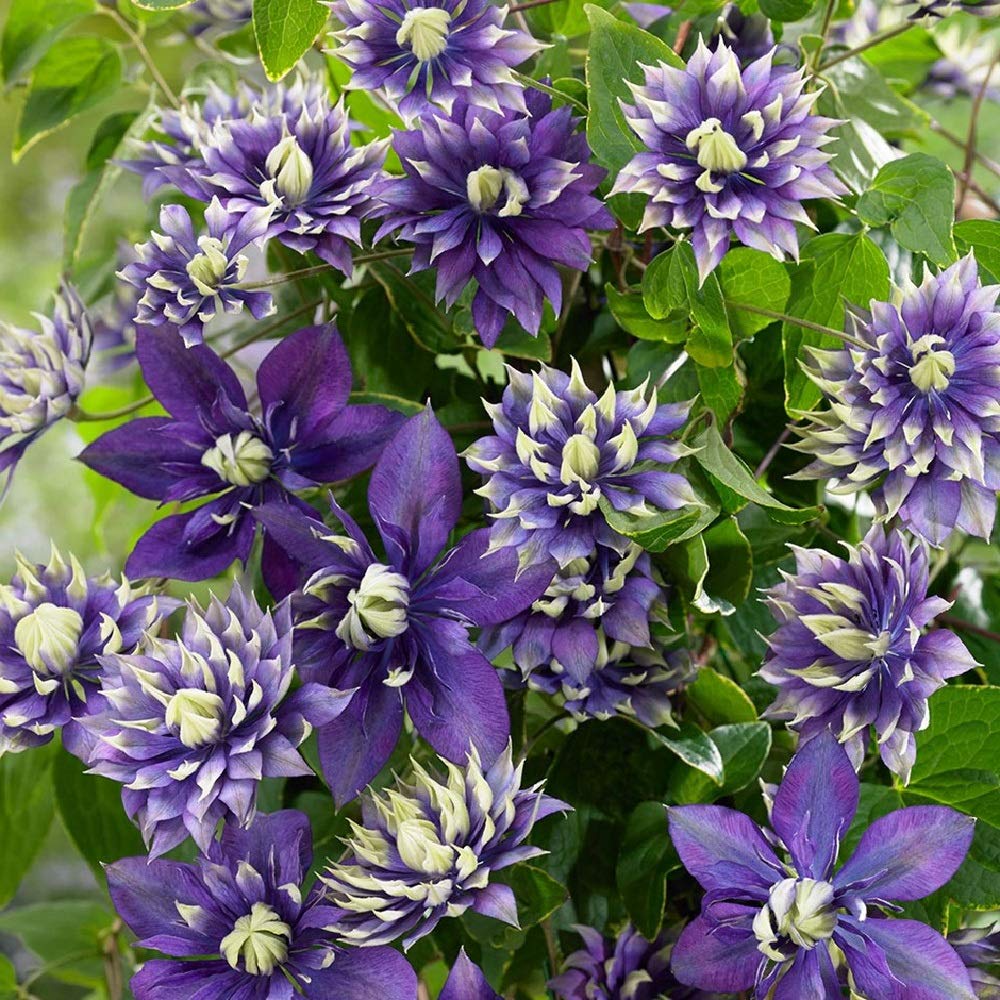
Double purple flowers with lime tips that keep coming from summer to fall.
Taiga is the showiest flower in the group — double purple blooms tipped in lime green make it a genuine conversation piece on a trellis. It blooms from spring through summer into fall, giving you one of the longest flowering windows of any pick here, which is a strong draw if you want color well past the peak season.
At 6-8 feet it slots neatly between the compact and the towering options, a solid middle-ground reach for a standard trellis or an entryway arch. It prefers full sun and well-drained soil with moderate watering. Shoppers say plants that “arrived in great condition” and were healthy when they got them, with several growing well after prompt planting.
The risk here is transit — a real share of buyers report vines arriving dead or nearly dead, often blaming summer heat during shipping. It is the most zone-limited pick too, rated Zones 6-9, so it is not for cold northern winters. Order early in cooler weather and plant the moment it lands.
double exotic blooms
- Unique double purple blooms with lime tips
- Long bloom window — spring through fall
- Healthy arrivals reported when shipped well
late season start
- Zones 6-9 only — skips cold climates
- Vines can arrive dead after hot-weather shipping
trellis accents: the longest bloom season and the most unusual double flowers in the lineup.
quick color: you garden in Zone 5 or colder, or you are ordering during a summer heatwave.
Understanding the Specs
Mature Height
This tells you how tall the vine will get at full size, which is the single most important number for trellis matching. A 12-15 foot variety will swallow a small obelisk but perfectly dress a tall fence or pergola. A 4-6 foot type stays tidy on compact supports and in containers. Measure your trellis before you order, then pick a vine whose mature height roughly matches it — a little taller is fine, a lot taller means constant pruning.
Hardy Zones
Hardiness zones are a map of winter cold tolerance, broken into numbered bands from coldest (Zone 1) to warmest (Zone 13). A plant rated Zones 4-8 will survive winters in any of those numbered regions, while a Zone 6-9 vine is for milder climates only. Find your zone on the USDA hardiness map and make sure your chosen clematis’s range includes it — this is the difference between a perennial that comes back and one that never wakes up.
FAQ
How tall will my clematis actually get on a trellis?
What is the best clematis for a small patio trellis?
Do clematis need full sun to bloom well?
How long does it take a young clematis to reach its full height?
Why did my clematis arrive so small?
What is the difference between a 12-15 foot clematis and a 4-6 foot one?
Will clematis come back every year in my climate?
How do I keep weeds from competing with my trellis clematis?
Which clematis blooms the longest on a trellis?
Can I plant two different clematis colors on one trellis?
Final Thoughts: The Verdict
If you want one dependable pick, the clematis for trellis winner is the Jackmani because its 12-15 foot reach delivers the biggest coverage and it survived a 100°F heatwave in transit, proving its toughness. If you want compact deep-red drama on a small support, grab the Niobe. And for the longest bloom season with eye-catching double flowers, the Taiga is the one to reach for.
How We Picked
We do not accept paid placement. Every pick is matched to a real buyer and a real use-case; we do not hands-on test units.
Sources & Methodology
Specifications: manufacturer listings and product documentation. Review insights: verified customer reviews, as of August 2026. Pricing: not shown on this page (it changes often); check the current price via the retailer link.
As an Amazon Associate, FitlyFast earns from qualifying purchases. This does not affect which products we feature.