
Our readers keep the lights on and the weekend projects moving. As an Amazon Associate, I earn from qualifying purchases.
Specs are compiled from manufacturer listings and verified buyer reviews and can change over time — please confirm the key details on the product page before buying.
The best card or board games for cognitive development do more than fill a game night — they quietly build the skills you actually want to strengthen. Whether it’s a 6-year-old learning spatial reasoning or a group of adults keeping their planning sharp, the right game turns mental work into something you genuinely look forward to. The picks below span solo puzzles, cooperative adventures, and competitive strategy, so you can match the challenge to the people at your table.
I’m Rikta — the founder and writer behind FitlyFast. This guide is built by comparing the manufacturers’ published specifications and the patterns across verified customer reviews, so you get each pick’s real strengths and trade-offs instead of marketing spin.
From spatial puzzles for ages 4 to deep engine-builders for adults, this lineup of card or board games for cognitive development focuses on play that exercises planning, problem-solving, and flexible thinking.
Our Picks at a Glance


How To Choose The Best Card Or Board Games For Cognitive Development
Each game on this list targets a distinct cognitive skill, from spatial reasoning to strategic planning. Aligning a game’s mechanics with your target skill and players’ ages turns a one-time purchase into a lasting favorite.
Match the mechanic to the skill
Tile-placement and space-dividing games like Harmonies and Smart Farmer sharpen spatial reasoning and foresight. Card-drafting and engine-building games such as Earth and Wyrmspan hone resource management and adaptive strategy. Cooperative titles like Horrified foster teamwork and joint problem-solving, while solo modes offer a self-paced mental challenge.
Consider age and learning curve
A game that’s simple for adults may frustrate a 6-year-old, while a child-friendly pick can underwhelm experienced players. Check the manufacturer’s age range, then verify real difficulty through owner reviews. Some games listed for ages 10 or 14 get picked up by younger kids surprisingly fast, while others genuinely need the maturity the box suggests.
Quick Comparison
| Model | Best For | Players | Playtime | Age Range | Amazon |
|---|---|---|---|---|---|
| Asmodee Harmonies★ Best Overall | Families & strategy fans | 1-4 | 30 min | 10+ | Amazon |
| Spin Master TetrisFamily Favorite | Classic puzzle lovers | 2-4 | 20 min | 8+ | Amazon |
| SmartGames Smart FarmerYoungest Pick | Young spatial thinkers | 1 | Varies | 4+ | Amazon |
| Ravensburger Horrified | Cooperative teams | 1-5 | 60 min | 10+ | Amazon |
| Avalon Hill Talisman | Epic fantasy quests | 2-6 | Varies | 12+ | Amazon |
| Inside Up Earth | Ecosystem builder fans | 1-5 | 90 min | 13+ | Amazon |
| Asmodee Civilization | Civilization strategists | 2-4 | 120 min | 14+ | Amazon |
| Stonemaier Wyrmspan | Dragon & engine builders | 1-5 | 90 min | 14+ | Amazon |
| Everdell | Woodland worker placement | 1-4 | Varies | 14+ | Amazon |
In‑Depth Reviews
1. Asmodee Harmonies Board Game
Our pick — over 4.5★ from 800+ verified ratings; the strongest balance of quality and price.
A poetic 3D puzzler with 120 wooden tokens that turns landscape-building into deep tactical thinking.
The crowd favorite in this lineup — 4.9 stars across 800+ owners — earns its top spot by balancing easy rules with genuinely deep play. You collect and place tokens to build habitats and score points, and the 42 beautifully illustrated cards guide each new challenge. The thing everyone raves about is the gameplay itself, which owners single out more than any other feature.
What makes it special for cognitive development is the 3D landscape creation and pattern development — you’re constantly planning ahead and adapting when the layout doesn’t work. It offers three levels of difficulty, so a 6-year-old can learn the basics while adults still find it challenging. The 30-minute playtime (50% longer than the Tetris game’s 20 minutes) keeps sessions satisfying without dragging.
Buyers report: “Top-3 board game; competitive but fun; luck+strategy,” and they love that it’s a favorite even in a 200+ game collection. The pieces feel high-quality and textured, and the art gets constant praise. The full package includes a rulebook, 120 tokens, 79 animal cubes, and 32 animal cards — plenty of variety for repeated plays.
Why owners love it
- Balances luck and strategy so every game feels different
- Three difficulty levels grow with your family
- Stunning art and sturdy, textured components
Who should think twice
- Minimal player interaction – feels like multiplayer solitaire
- Game ends abruptly for some
- Not ideal for groups who love direct conflict
Your best match: Families and nature/puzzle lovers who want a beautiful, thinky game that a 6-year-old can learn but adults won’t outgrow.
Worth knowing: If your group thrives on direct competition and blocking each other, this one is more about quiet, satisfying own-board strategy.
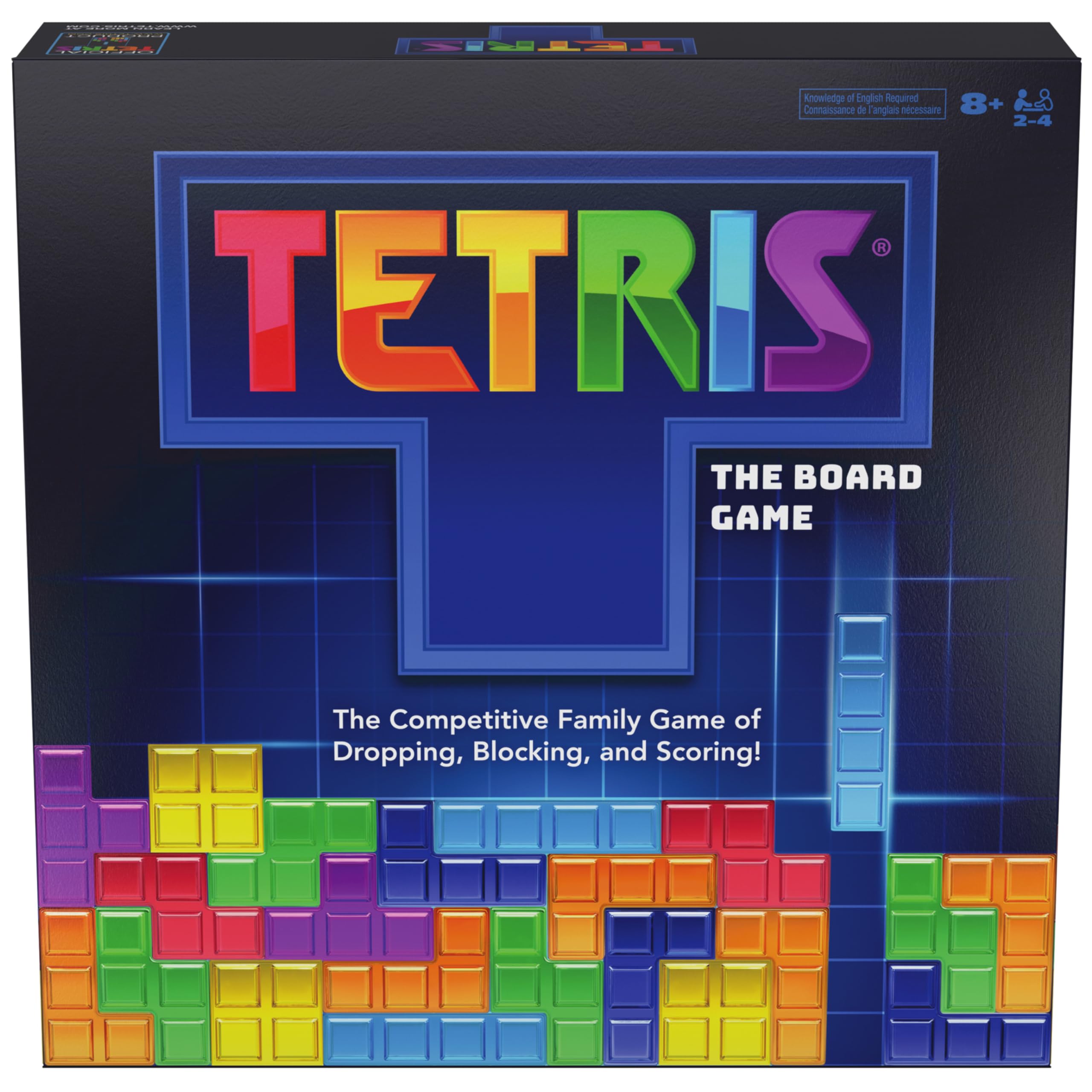
2. Spin Master Games Tetris: The Board Game
Brings the iconic falling-block puzzle to your table with a competitive blocking twist.
If you grew up on the video game, this is the nostalgic pick that actually delivers. The game swaps screen for tabletop, letting you drop semi-translucent pieces onto your grid to complete lines and score points. It’s designed for ages 8 and up and plays in about 20 minutes — perfect for a quick family round before bedtime.
The cognitive payoff is the spatial reasoning and problem-solving built into every rotation and placement. The competitive twist adds another layer: drop a piece on a black Garbage Drop Icon and you get to add a piece to an opponent’s grid, blocking their line and their path to victory. Owners mention: “This board game does a surprisingly good job of bringing the classic Tetris puzzle experience into a physical format.”
Families praise how easy it is to learn and how much kids enjoy it — a 10-year-old owner is a common theme. The box includes 4 Tetris grids, 4 grid bases, 4 player cards, 1 gameboard, 24 Tetrimino cards, and 128 Tetriminos, so four people can play at once. The recurring gripe is the sheer number of tiles to clean up and organize, so budget for sorting time.
What wins families over
- Captures the classic Tetris feel in physical form
- Competitive blocking mechanic adds strategy
- Quick 20-minute rounds keep kids engaged
The honest trade-off
- 128+ small Tetriminos mean tedious cleanup
- Instructions take a moment to understand
Reach for this if: You want a fast, tactile puzzle game the whole family can play — especially if Tetris already has a nostalgic place in your house.
Look elsewhere if: You dread sorting tiny pieces after every session; this one demands a bit of patience on cleanup.
3. SmartGames Smart Farmer
A barnyard spatial puzzle with 60 challenges that grows from age 4 all the way to adult.
This is the one to start your kids on early — it’s designed for ages 4 and up, and it’s a solo puzzle, not a competitive game. The task is beautifully simple: divide a field with just three fences so each animal type — horses, cows, sheep, pigs — gets its own meadow. Later challenges add a water trough to every meadow, ramping up the difficulty.
The educational objective is explicitly cognitive: spatial insight, planning, problem solving, concentration, and flexible thinking. An owner uses it with students who “absolutely LOVE the challenge,” and another parent reports their 5-year-old turned off the TV to keep playing. The 60 challenges come in four levels — Starter, Junior, Expert, Master — so it genuinely grows with the child.
One honest note from an adult owner: the early levels are easy, and only about 24 master-level challenges really test a grown-up, all solvable in under an hour. This makes it a phenomenal kids’ gift and a decent light adult brain-teaser, but not a deep solo challenge for seasoned puzzlers. It’s a sturdy board at 1.2 pounds with chunky, tactile 3D animals kids love to hold.
Why it’s a great first puzzle
- Five STEM cognitive skills in one simple premise
- 60 challenges across four difficulty levels
- Chunky, tactile animals appeal to young kids
Who it’s not for
- Adults seeking a deep solo challenge will solve it quickly
- Limited replay value once all 60 are done
Best for: Curious kids aged 4 to 8 just starting to build spatial reasoning — and grandparents wanting a light daily mental stretch.
skip it if: You’re a hardened adult puzzler expecting hours of challenge; this is aimed squarely at younger minds.
4. Ravensburger Horrified: Greek Monsters
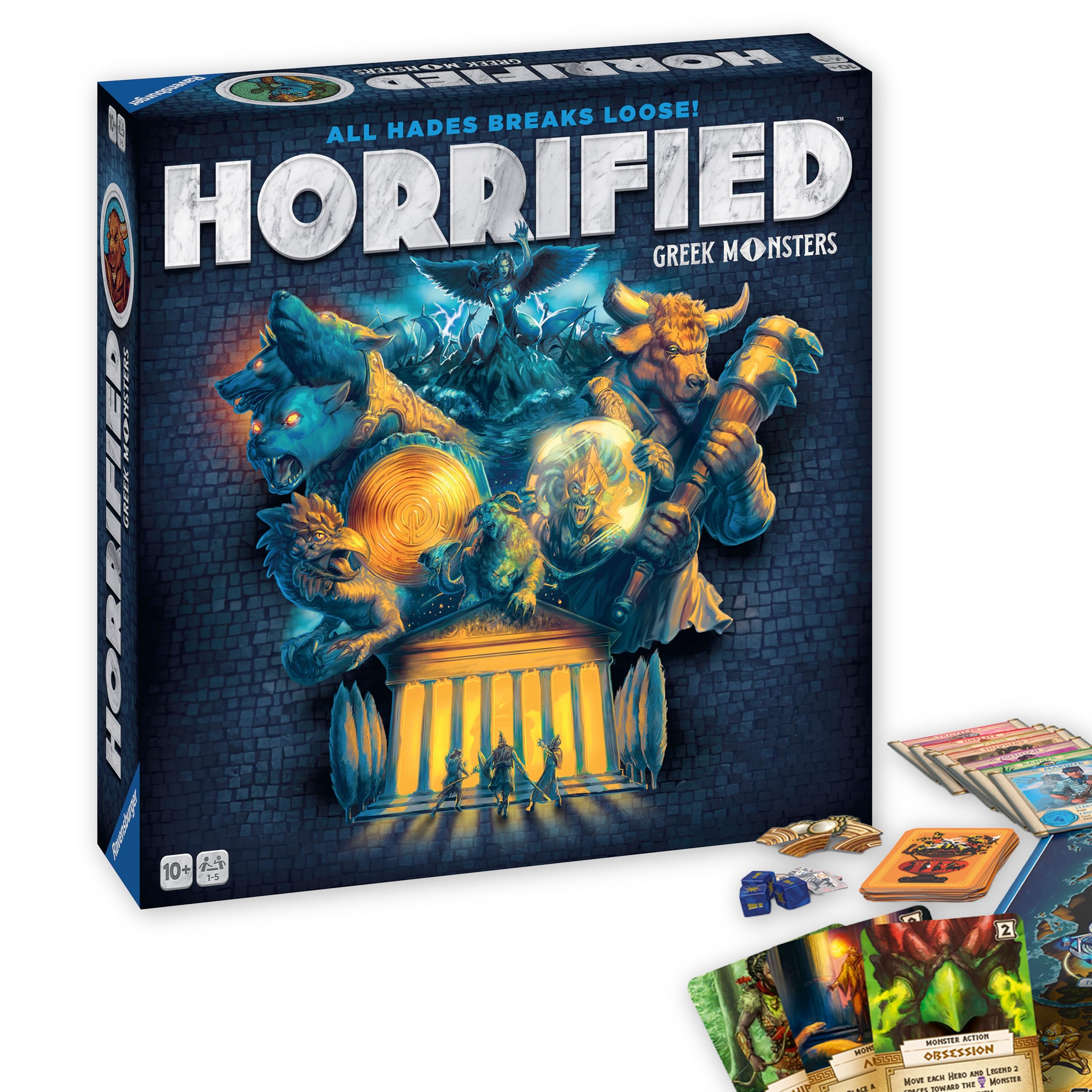
A cooperative monster-defense game where your whole group thinks and plans as one team.
If you want a game that builds teamwork alongside critical thinking, this is the standout. You and up to 4 others defend Elysium against 6 mythical monsters — Medusa, Cerberus, Chimera, and more — working together to survive. There are no winners and losers here; the group either defeats the monsters or doesn’t, which makes it ideal for teaching kids to communicate and plan.
The gameplay revolves around rescuing people and capturing monsters, with each monster offering a unique challenge that forces you to adapt your strategy. One owner notes it’s a “great RPG for those that don’t usually enjoy them,” and another highlights how it strikes a middle ground for mixed D&D and non-D&D groups. Sessions run about 60 minutes, and every game feels fresh thanks to the monster variety.
The cognitive work here is heavy on problem-solving and strategic planning under pressure. Owners praise the high-quality pieces and replayability, with the cooperative gameplay being the second-most-celebrated feature. The learning curve gets mixed feedback — some find it easy to learn, others call it a bit steep — so set aside a solid first session to absorb the rules. One reviewer notes the monster mats feel a little flimsy with annoying edges.
Why it shines
- Fully cooperative – everyone wins or loses together
- 6 unique monsters keep each game fresh
- Strong pick-up-and-deliver puzzle mechanics
Consider this first
- Learning curve can feel steep for the first session
- Monster mats are flimsier than the rest of the components
Your pick if: You want a game that forces your group to talk, plan, and solve problems together — the best team-builder on this list.
Worth noting: The same core structure repeats across the Horrified series, so pick the monster theme your group loves most.
5. Avalon Hill Talisman: The Magical Quest, 5th Edition

A streamlined fantasy roleplaying quest with 12 detailed characters and 100 illustrated adventure cards.
For older kids and teens ready for something epic, this is a simpler, approachable take on D&D-style storytelling. You race to climb the board, acquire a Talisman, reach the Crown of Command, and defeat its guardian dragon. The 5th edition streamlines the rules, making it easier for newcomers and fans alike to jump in.
The cognitive development here is broad — critical thinking, strategic planning, decision-making, and literacy skills all get a workout. The 100 illustrated adventure cards bring enemies, strangers, magical objects, and places that change with every play. With 12 characters to choose from — including a Prophetess, Wizard, and Thief — each game offers a different angle on strategy.
You get a fantasy adventure without the heavy rulebook, as owners call it a “fun, simpler d&d style game” (d&d stands for Dungeons & Dragons, a classic tabletop roleplaying game). The artwork is a big draw, but some customers note the game feels dated, with balancing quirks between characters. A session can last anywhere from 30 minutes to hours, depending on how many people play. The box lists ages 12 and up, so it suits teens and adults who enjoy fantasy roleplaying.
What makes it a great pick
- Simpler than D&D but captures the adventure spirit
- 100 adventure cards mean a different journey every time
- 12 unique characters offer varied strategies
The honest caveat
- Character balance feels uneven to some owners
- Game length varies wildly from 30 minutes to hours
Reach for this if: You’ve got fantasy-loving teens who find full D&D too heavy but want a real adventure with character growth.
Look elsewhere if: Your group wants tight, balanced competition each session — this one leans on luck and nostalgia more than precision.
6. Inside Up Games: Earth

An ecosystem-building engine with 350-plus unique cards and simultaneous play that kills downtime.
Earth is the 2023 Board Game of the Year for a reason — it keeps everyone involved all the time. The unique mechanic is simultaneous play: the active player picks a major benefit, and everyone else gains a minor benefit on the same turn. No one sits waiting, which makes the 90-minute sessions feel fast-paced and engaging throughout.
For cognitive development, this is a serious lesson in strategic planning and resource management. You’re drafting from over 350 unique cards — some double-sided — to grow your island with plants, habitats, and ecosystems that support wildlife. With over 25,000 possible starting setups, the variety and replayability are off the charts.
Owners who love Wingspan and Terraforming Mars rate this highly, with one calling it “better than Terraforming Mars” and praising the gorgeous photos across the cards. The educational objective is discovering synergies and connections between the cards you chain together. It takes 20-30 minutes to learn and demands real concentration — the difficulty gets mixed feedback, so it’s best for players ready for a mid-weight strategy challenge.
Why it stands out
- Simultaneous play means zero downtime
- 350+ unique cards for endless variety
- Works great for 2 players and solo alike
Be ready for
- Large table footprint – about 1.5 square feet per player
- Steep learning curve between Wingspan and Scythe
Choose this if: You’re an experienced gamer group wanting a deep, beautiful engine-builder that keeps everyone engaged no matter whose turn it is.
pass on it if: You want a casual, quick-to-learn game — Earth demands real commitment to master.
7. Asmodee Sid Meier’s Civilization: A New Dawn

The most faithful tabletop version of the beloved video game, with multiple victory paths to master.
If you want the deepest strategic challenge here, Civilization: A New Dawn delivers. It condenses the video game’s empire-building into a board format, and owners say it’s “as close as you can get to the computer version.” You’ll practice science and tactical thinking, making it a real workout for your planning and decision-making skills.
You can win in several ways, so you’re always weighing options and adapting to opponents. The box is packed with components: 224 small cards, 24 plastic army figures, 6 civilization sheets, and 6 economy dials. Most games run 2-3 hours, so each session feels substantial and rich.
Where it shines is replayability. Reviewers point out playing 2-3 rounds in one night and finding endless choices with random maps and fast turns. The honest trade-offs: a complex rulebook that demands patience, a 15-minute setup, and no built-in token storage (plan on ziplock bags). Similarly to the Horrified pick above, the complexity gets mixed reviews — it’s genuinely not for beginners of builder-type strategy games.
What draws players in
- Multiple victory paths keep each game fresh
- Faithful to the Civ video game experience
- Deep replayability with random maps
Who should hold off
- Complex rules and a steep learning curve
- No storage trays – you’ll need your own bags
Your pick if: You’re a Civ video game fan or an experienced strategist who wants a long, rewarding brain workout with layers of tactical choice.
Worth knowing: This one will gather dust if your group prefers light, quick games — it demands dedication and a solid understanding of rules.
8. Stonemaier Games: Wyrmspan

A dragon-collecting engine builder from the Wingspan team, with 183 dragon cards to discover.
If your family already loves Wingspan, Wyrmspan is the natural next step — it’s close enough to feel familiar but different enough to be a brand-new game. Designed by Connie Vogelmann and developed by Elizabeth Hargrave of Wingspan fame, this is a top-tier choice for gamers who want depth plus beauty. It’s a competitive engine-building strategy game for 1-5 players with a 90-minute playtime and just a 5-minute setup.
The cognitive objective covers concentration, decision-making, problem-solving, and strategic thinking. You excavate caves, chain dragon powers, and hatch eggs — the thematic mechanics make the strategy feel intuitive rather than dry. The included 183 dragon cards (148 full-grown dragons and 35 hatchlings) plus 75 cave cards give you enormous variety session after session.
Owners consistently praise the smooth, fast gameplay and gorgeous watercolor art. It works beautifully as a 2-player game, and there’s a solo Automa mode that simulates an opponent if you want to play alone. The box is heavy at 2200 grams, packed with 55 speckled egg tokens, 45 shiny cardboard coins, and wooden tokens that feel satisfying to handle. One owner calls it “quite possibly my favorite board game ever.”
Why it earns the praise
- Familiar to Wingspan fans but fresh mechanics
- 183 dragon cards offer massive replayability
- Excellent solo mode with the Automa system
The honest note
- Complicated – you’ll need to concentrate to master it
- Heavier box and premium feel come at a premium
Reach for this if: You’re a Wingspan fan or a medium-weight strategy lover who wants gorgeous, fast engine-building with endless combos.
Look elsewhere if: You want a light casual game — this one rewards focus and a willingness to learn its web of mechanics.
9. Everdell Board Game
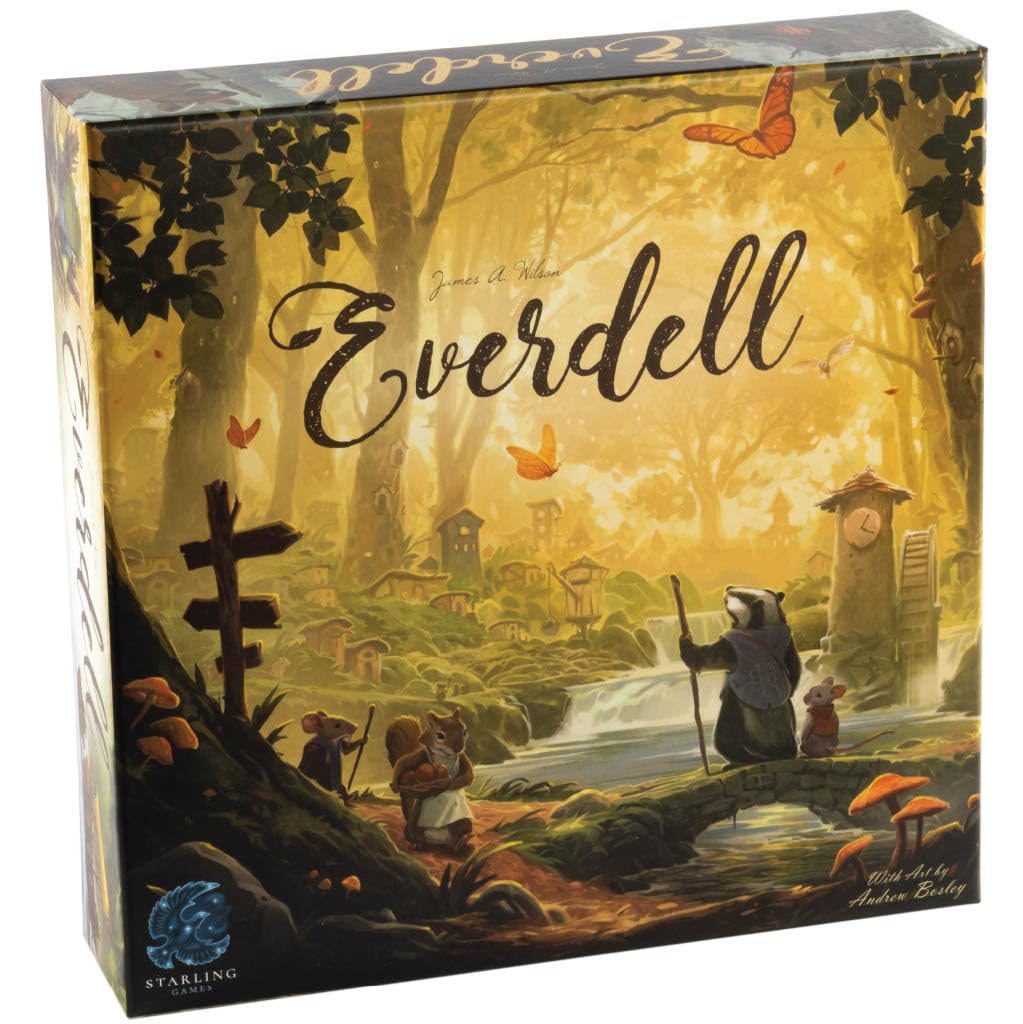
A cozy woodland city-builder ranked among the top board games of all time, weighing 3.9 pounds of pure charm.
Everdell is the pick for families who want approachable strategy wrapped in irresistible woodland charm. You build your own critter city beneath the Ever Tree, placing workers, constructing buildings, and welcoming adorable squirrel, mouse, and hedgehog residents. The gameplay combines tableau building and worker placement — you’re constantly deciding where to send your limited workers for the best return.
The educational objective focuses on strategic thinking, problem-solving, and creativity. Owners love that it offers “good strategy without being overly complicated,” making it a bridge between casual and hobby gamers. The box weighs 3.9 pounds and is packed with tactile components — food pieces, tiles, and the signature tall Ever Tree — that are “incredibly satisfying to the touch.”
The art style gets constant praise, and every play-through feels unique because the board is randomized, pushing you to pursue different strategies based on the cards dealt. A parent notes it’s playable by an 8-year-old despite the 14+ label. The honest trade-offs: no storage trays included, and the cardboard Ever Tree is fragile and hard to assemble and disassemble. The learning curve gets mixed feedback — some find it easy to teach, others say it’s a bit more complex than expected.
Why it’s beloved
- Approachable strategy that casual and hobby gamers both enjoy
- Stunning, whimsical art and high-quality tactile pieces
- Randomized board keeps every play-through unique
Set expectations
- Cardboard Ever Tree is fragile and tricky to assemble
- No storage trays – component organization is on you
Choose this if: You want a gorgeous, mid-weight strategy game that families and hobby gamers can genuinely enjoy together.
it’s not for you if: You hate fiddly assembly or want something you can play within 30 minutes — this one rewards a longer, cozier session.
Understanding the Specs
Players and Playtime
The player count tells you whether a game fits your usual group — some shine with 2, others need 4 to shine, and many now offer solo modes for single-player challenges. Playtime is just as important: a 20-minute round suits a quick family night, while a 90-120 minute epic demands a dedicated evening. Match both to your household’s rhythm before you commit.
Mechanics and Age Range
Game mechanics describe how you actually play — worker placement, tile placement, engine building, or cooperative play — and each trains slightly different cognitive skills. The listed age range is a manufacturer guide, but owner reviews often reveal the real floor. A game labeled 10+ might click with a sharp 8-year-old, while a 14+ label sometimes just means it rewards patience and concentration.
FAQ
What board games actually improve cognitive development in kids?
How do I choose a game for a 6-year-old versus a 14-year-old?
Are cooperative games as good for brain development as competitive ones?
Can these games be played solo for cognitive benefits?
What is the difference between engine building and worker placement?
How long does a typical game session last?
Are these games suitable for adults and seniors?
What does “replayability” mean and why does it matter?
Are there games that work well for just 2 players?
How difficult are these games to learn for beginners?
Final Thoughts: The Verdict
For most families, the winner is the Asmodee Harmonies — it delivers the best balance of easy-to-learn rules, genuine strategic depth, and a 30-minute playtime that fits busy evenings. If you want to start a young child on spatial reasoning, grab the Smart Farmer. And for a cooperative night where the whole group thinks together, the Ravensburger Horrified is the one to reach for. Each pick delivers a cognitive challenge that feels like play, not homework.
How We Picked
We do not accept paid placement. Every pick is matched to a real buyer and a real use-case; we do not hands-on test units.
Sources & Methodology
Specifications: manufacturer listings and product documentation. Review insights: verified customer reviews, as of August 2026. Pricing: not shown on this page (it changes often); check the current price via the retailer link.
As an Amazon Associate, FitlyFast earns from qualifying purchases. This does not affect which products we feature.