
Our readers keep the lights on and the weekend projects moving. As an Amazon Associate, I earn from qualifying purchases.
Specs are compiled from manufacturer listings and verified buyer reviews and can change over time — please confirm the key details on the product page before buying.
Swollen legs and feet can make every step feel heavier than the last. For anyone managing congestive heart failure, the right pair of knee-high socks helps push fluid back up toward the heart and takes real pressure off your calves — but only if the compression level (the pressure the sock applies) and the fit are right. This guide finds the pairs that deliver true graduated 20-30 mmHg support (firmest at the ankle, easing up the leg) without rolling down, pinching, or feeling impossible to pull on. If compression is part of your care plan, the 4 Pairs Plus Size Wide Calf pack earns the top spot because it fits calves up to 26 inches around and comes as a 4-pair set, so you can rotate socks daily while others wash.
I’m Rikta — the founder and writer behind FitlyFast. This guide is built by comparing the manufacturers’ published specifications and the patterns across verified customer reviews, so you get each pick’s real strengths and trade-offs instead of marketing spin.
Below are the best compression socks for congestive heart failure, judged on true graduated fit, all-day comfort, and wide-calf options that actually stay put. these compression socks for congestive heart failure ease swelling with genuine 20-30 mmhg support that stays comfortable all day.
Our Picks at a Glance


How To Choose The Best Compression Socks For Congestive Heart Failure
Compression socks are a daily tool — not a one-size-fits-all purchase. For congestive heart failure, the goal is gentle, steady pressure that starts firmest at the ankle and eases off as it climbs the leg. That gradient works with gravity to move fluid back up and stop it from pooling in your feet. A few key details separate a helpful pair from one that ends up in the drawer after a single day.
Compression level: why 20-30 mmHg is the balance
Mild support socks (around 15-20 mmHg) are fine for travel or light fatigue, but for true edema and circulation issues tied to heart failure, you want 20-30 mmHg. That level delivers firm, medical-grade pressure that measurably reduces ankle and calf swelling. Every pick below sits in that 20-30 mmHg range, except the full-strength 30-40 mmHg option for anyone whose doctor wants more aggressive support.
Fit: the real battleground for comfort
A compression sock only works if it fits. Measure the thickest part of your calf before ordering — not your shoe size. Wide-calf options that accommodate larger legs (up to and beyond a 26-inch circumference) are the difference between a sock that feels like a gentle hug and one that cuts off circulation. Also check length: a knee-high that’s too long rolls down and digs in by day’s end, while a too-short one slides below the knee and loses its benefit.
Fabric and features that make all-day wear possible
Look for breathable, moisture-wicking blends — nylon and spandex are the gold standard for holding compression through many washes. A reinforced heel and toe add durability where socks wear out first. And if you have sensitive skin, smooth designs and soft top bands prevent the itching and digging that make other pairs unwearable past lunchtime.
Quick Comparison
| Model | Best For | Compression | Calf Fit | Pairs | Amazon |
|---|---|---|---|---|---|
| 4 Pairs Plus Size Wide Calf★ Best Overall | Wide calves up to 26″ | 20-30 mmHg | 2XL-4XL | 4 | Amazon |
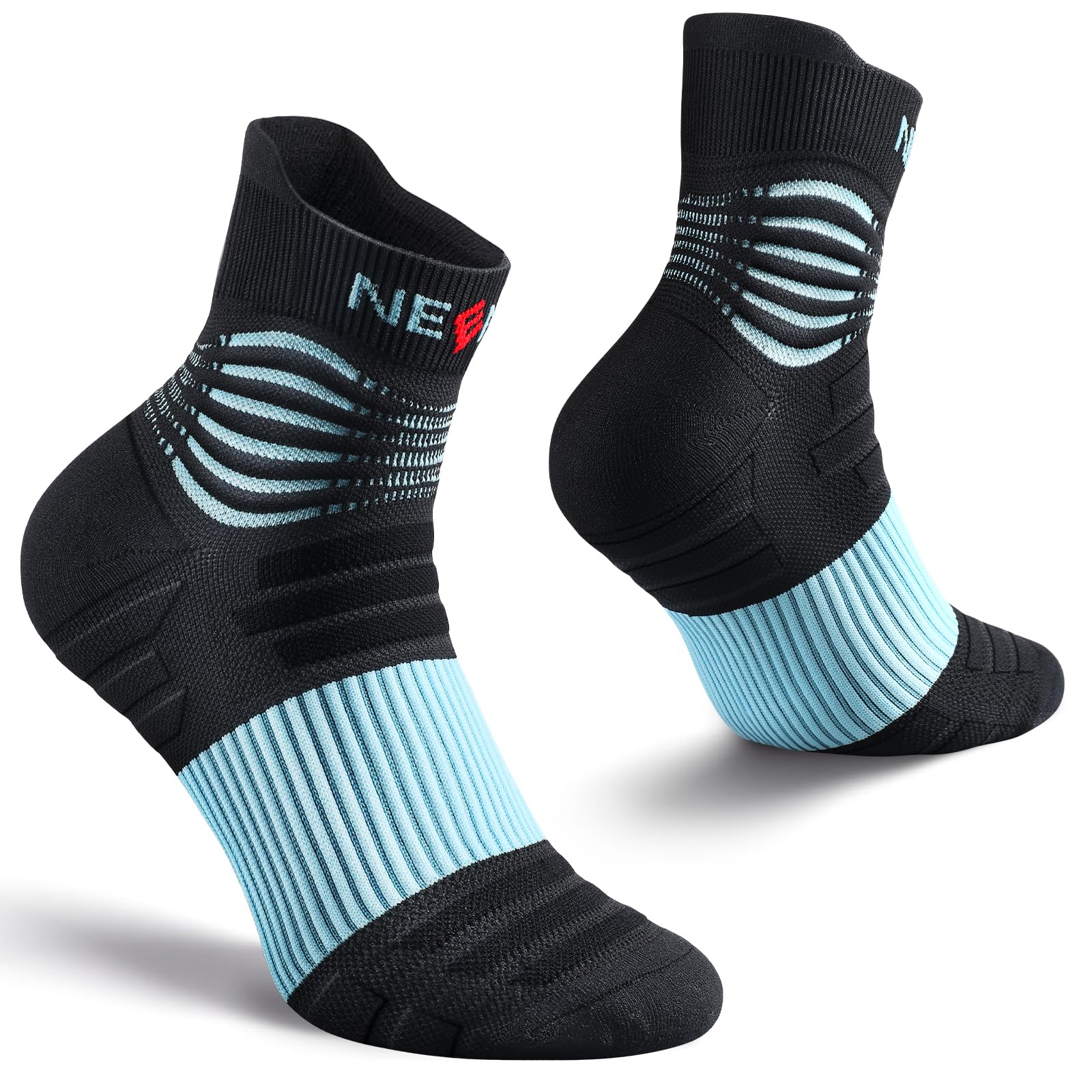
| NEENCA ProfessionalTop Performer | All-day standing & concrete shifts | 20-30 mmHg | Standard (unisex) | 1 | Amazon |
| TOFLY Open ToeComfort Pick | Toe comfort & recovery | 20-30 mmHg | Standard (unisex) | 1 | Amazon |
| THOXCARE Knee High | Travel & long flights | 20-30 mmHg | S/M to XXL | 1-2 | Amazon |
| WAKEFEET 3-Pack | Everyday rotation & gifting | 20-30 mmHg | Standard (unisex) | 3 | Amazon |
| Myshear Thigh High | Fuller leg coverage | 20-30 mmHg | Standard (thigh length) | 1 | Amazon |
| FULLSOFT 30-40 mmHg | Firmer prescribed support | 30-40 mmHg | L-XL | 3 | Amazon |
| Tekubig 3-Pack | Firm but comfortable daily wear | 20-30 mmHg | Standard (unisex) | 3 | Amazon |
| JOBST Relief | Trusted brand & proven fit | 20-30 mmHg | Standard (knee high) | 1 | Amazon |
In-Depth Reviews
1. 4 Pairs Plus Size Compression Socks Wide Calf
Our pick — 4.5★ from 600+ verified ratings; the strongest balance of quality and price.
This wide fit accommodates calves up to a 26-inch circumference, so larger legs finally get a sock that stays put.
The top pick earns its spot because it solves the two biggest problems in this category at once: it genuinely fits calves up to 26 inches around in sizes 2XL to 4XL, and buyers with big legs report this as the first pair that fits without hurting. That matters when evening swelling makes your legs larger. The fabric is 80% nylon and 20% spandex, which gives it a soft, cotton-like feel while still holding its shape through a 12-hour shift.
At 20-30 mmHg, this is genuine medical-grade graduated pressure — firmest at the ankle, easing up the leg — and the reviews back it up with a specific quote: “I work 12 hour shifts and these drastically reduce leg pain.” The four-pair pack means you can rotate through the week, which matters because compression socks need a day to recover their elasticity between wears. Buyers also love that they come in playful patterns — hearts, rainbow stripes, polka dots — so daily wear doesn’t feel like a hospital visit.
The honest trade-off: the 4XL runs long, so if you’re short-legged you may find them rolling down by day’s end — a few buyers wished the pair were shorter. And the embroidered prints can leave seams on the inside that press into skin; the solid black pair avoids that. These are volume sellers for a reason, with hundreds of ratings landing at 4.5 stars. Skip these if you are petite with shorter legs; the length may bunch and roll on you.
What wins people over
- Genuinely wide calf fit up to 26 inches — rare in this category
- 4 pairs in the pack means easy rotation between washes
- True 20-30 mmHg graduated compression that survives long shifts
Who should think twice
- Long length can roll down on shorter legs
- Embroidered prints may leave inner seams that indent skin
Reach for this if: you have larger calves and need a compression sock that genuinely fits all day without digging in.
Look elsewhere if: you’re petite with shorter legs — the length may bunch and roll on you.
2. NEENCA Professional Compression Socks
A patented ankle-tuck design with six compression rings targets the exact spots where foot fatigue and swelling hit first.
Buyers who spend their days on hard surfaces are remarkably loyal here. The reviews sum it up: when someone works on cement or clocks 20,000 steps in a day, these are “the ONLY socks” that get them through it. The air-knit fabric is thin and light, so it slips under work shoes easily, and the non-slip weave keeps them up all day. For anyone whose leg swelling flares after hours on their feet, this is exactly the scenario these were built for. You might find this firmer in the ankle than the Plus Size pack, but the trade-off is a snugger fit that not every wide calf can handle.
A couple of caveats worth knowing. The sizing runs small — buyers with larger calves report them too tight, so measure carefully and consider sizing up. And the fabric pills after several washes, a fixable nuisance with a fabric shaver but a real maintenance note. At 4.3 stars across nearly 900 ratings, the consensus is clear that the compression and comfort outweigh the fit quirks. Very wide calves should skip these; the snug sizing may be too tight.
The standout strengths
- Patented ankle-tuck design with six compression rings for targeted support
- Thin, breathable air-knit fabric that wears under any shoe
- Loyal following among nurses and concrete-floor workers
The honest caveats
- Sizing runs small — measure calves and consider sizing up
- Fabric pills after several washes
Best for: long shifts and heavy walking where foot and ankle support matter as much as calf compression.
Not for: very wide calves — the snug sizing may be too tight.
3. TOFLY 20-30 mmHg Open Toe Compression Socks
The toeless design gives your toes breathing room while your calf still gets full 20-30 mmHg support.
Not everyone can tolerate a sock that wraps the toes — bunions, sensitive feet, or just a preference for freedom make closed-toe compression miserable. TOFLY solves that with a toeless design that adapts to various foot shapes while still delivering 20-30 mmHg across five graduated zones. The smooth knit and soft top band keep it from digging in at the calf.
Buyers who have tried fake compression socks before are quick to confirm this one is the real deal — the pressure is genuine, hard to pull on, which is exactly how you know it’s working. It’s a solid value play for anyone who’d otherwise pay a premium for prescription-level hose. The moisture-wicking fabric and lightweight build make it a comfortable all-day companion for nurses, teachers, and retail workers.
The keep-in-mind notes: the length runs about two inches short for some, and sizing can be tricky — one pregnant buyer on the shorter side found the medium fit great for swelling but long enough to need rolling below the knee. The toeless design also means you’ll want to pair it with a toe sock or accept exposed toes under sandals. At 4.3 stars across 700+ ratings, the compression quality is the consistent theme.
Why it stands out: The open-toe style is a genuine relief for anyone whose toes can’t handle enclosed compression — and the 20-30 mmHg pressure is the real thing, not a fashion imitation.
The fit note: Measure your calf and add a couple inches of tolerance; length and size feedback is the most mixed part of the review history.
4. THOXCARE Compression Socks Knee High
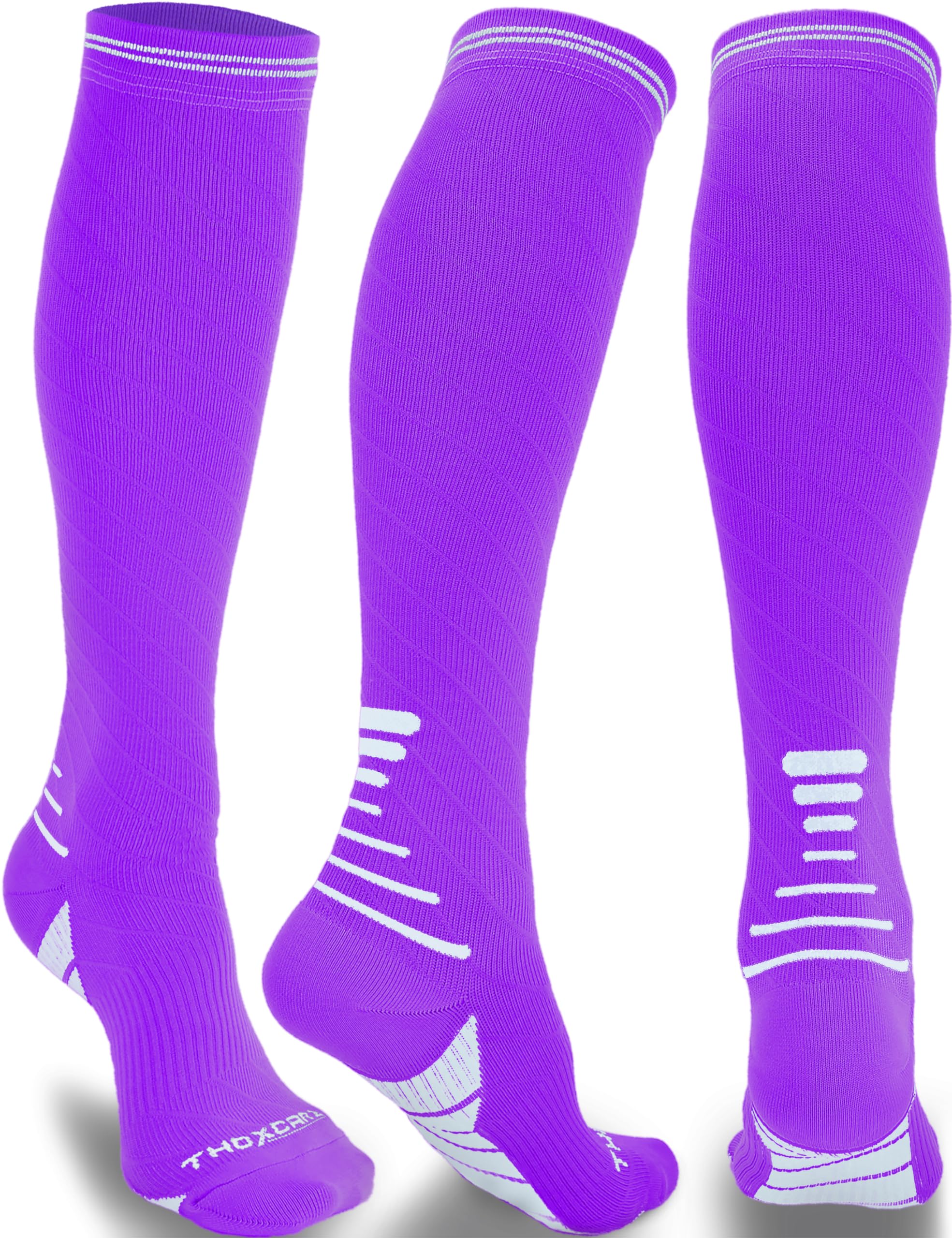
Three size ranges, from S/M for 9-15 inch calves to XXL for 18-22 inches, give you a precise fit that prevents sliding. These keep swelling in check when you’re stuck in a seat for hours.
THOXCARE sizes span three ranges — S/M for calves 9-15 inches, L/XL for 14-19 inches, and XXL for 18-22 inches — with clear guidance to prioritize calf measurement over shoe size when they conflict. That’s the kind of sizing detail that prevents the dreaded too-tight or sliding-down failure. The 20-30 mmHg graded compression is highest at the ankle and eases toward the knee to promote flow without cramping.
Buyers agree these deliver quality and fit at a fair price, with the top band notably less constricting than other brands—key for all-day wear. Buyers report the compression feels correct at 20-30 mmHg, with legs feeling “energized” and swelling “dramatically reduced.” and a nice color selection that makes them feel less clinical. For travel, the advice is clear: wear them on long flights and your legs will thank you.
The catch is sizing — a recurring note is that they run small, so “buy a size larger” shows up in the reviews. That’s manageable if you measure first, but worth flagging before you order. At 4.4 stars across 700+ ratings, the quality and comfort theme is strong and consistent. Follow the size-up advice in the reviews, and these will hold up better on a flight than the budget-priced WAKEFEET trio.
The honest read: The size-up advice is the single most repeated piece of guidance in the reviews — follow it and you’ll likely love these; ignore it and you may fight to get them on.
5. WAKEFEET 3 Pairs Compression Socks
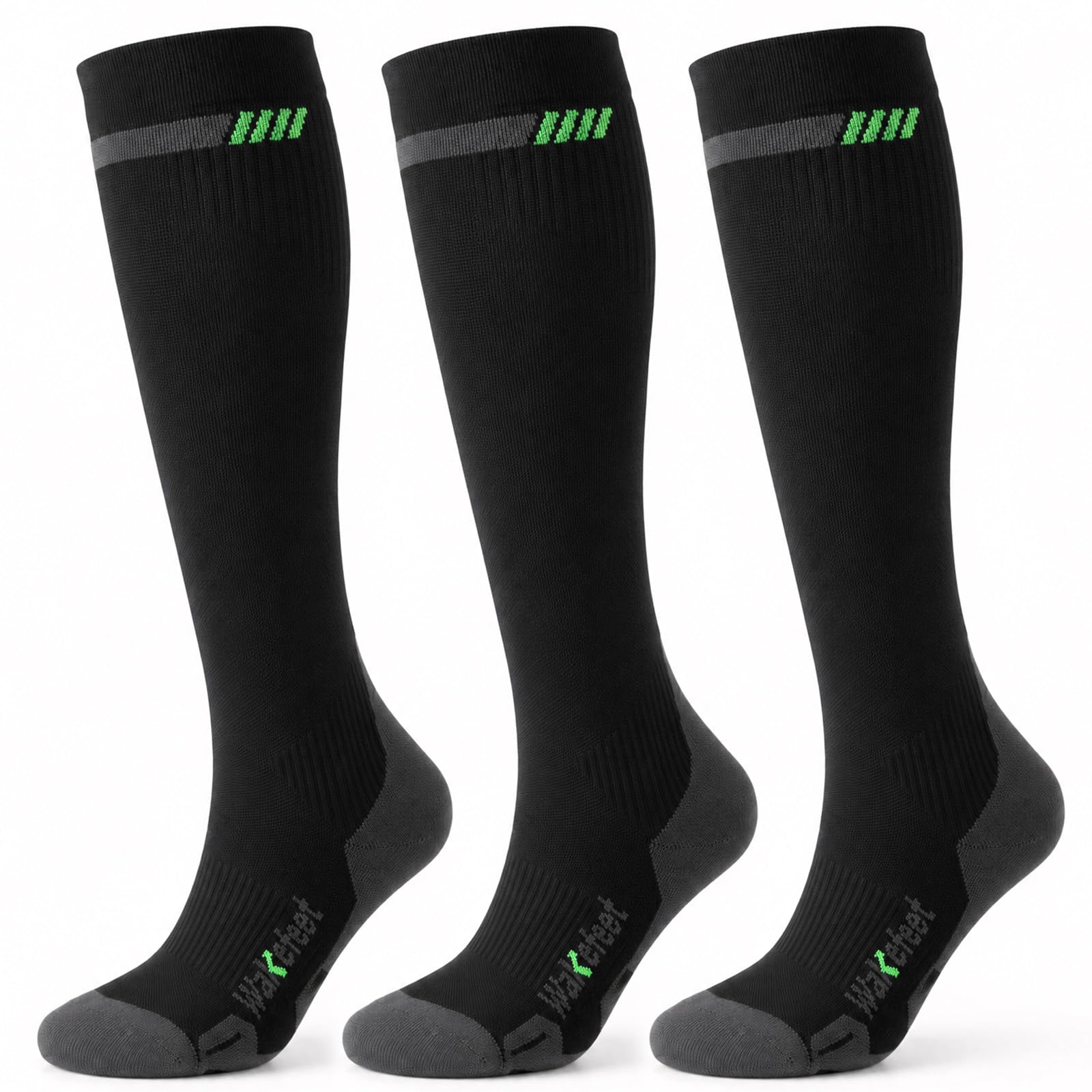
The three-pair set gives you a practical rotation, and the soft top band earns raves for never rolling or cutting in.
WAKEFEET packs three pairs into one elegantly designed gift box, which solves the rotation problem compression socks need to last — you always have a fresh pair while another launders. The pressure is graduated at 20-30 mmHg, firmest at the ankle with 20 mmHg at the calf, and the densely knit high-elasticity cuff fits a wide range of calf sizes while resisting slips. A smooth toe closure reduces friction and blister risk for all-day wear.
What owners rave about is the top band — it “doesn’t roll or cut in,” which is exactly the failure point that ruins most compression socks by hour four. The breathable knit and reinforced sole and heel add cushioning where you need it most. The fun twist: they come in scents like strawberry, lavender, and lemon, a lighthearted touch that makes daily wear feel fresher.
The honest note is fit tightness — some buyers find them very snug and need to take them off after several hours, and one report flagged the top band as too tight on a particular leg shape. These are strong budget-friendly performers for everyday rotation, with a 4.3-star consensus across nearly 500 ratings. Your calves need the snugness to work for you; at the larger end, the Plus Size pack is the safer bet.
Reach for this if: you want a practical three-pair rotation that feels comfortable at the top band — the most common comfort failure point.
Think twice if: your calves are at the larger end and you can’t find a size that takes the edge off the snugness.
6. Myshear Thigh High Compression Stockings
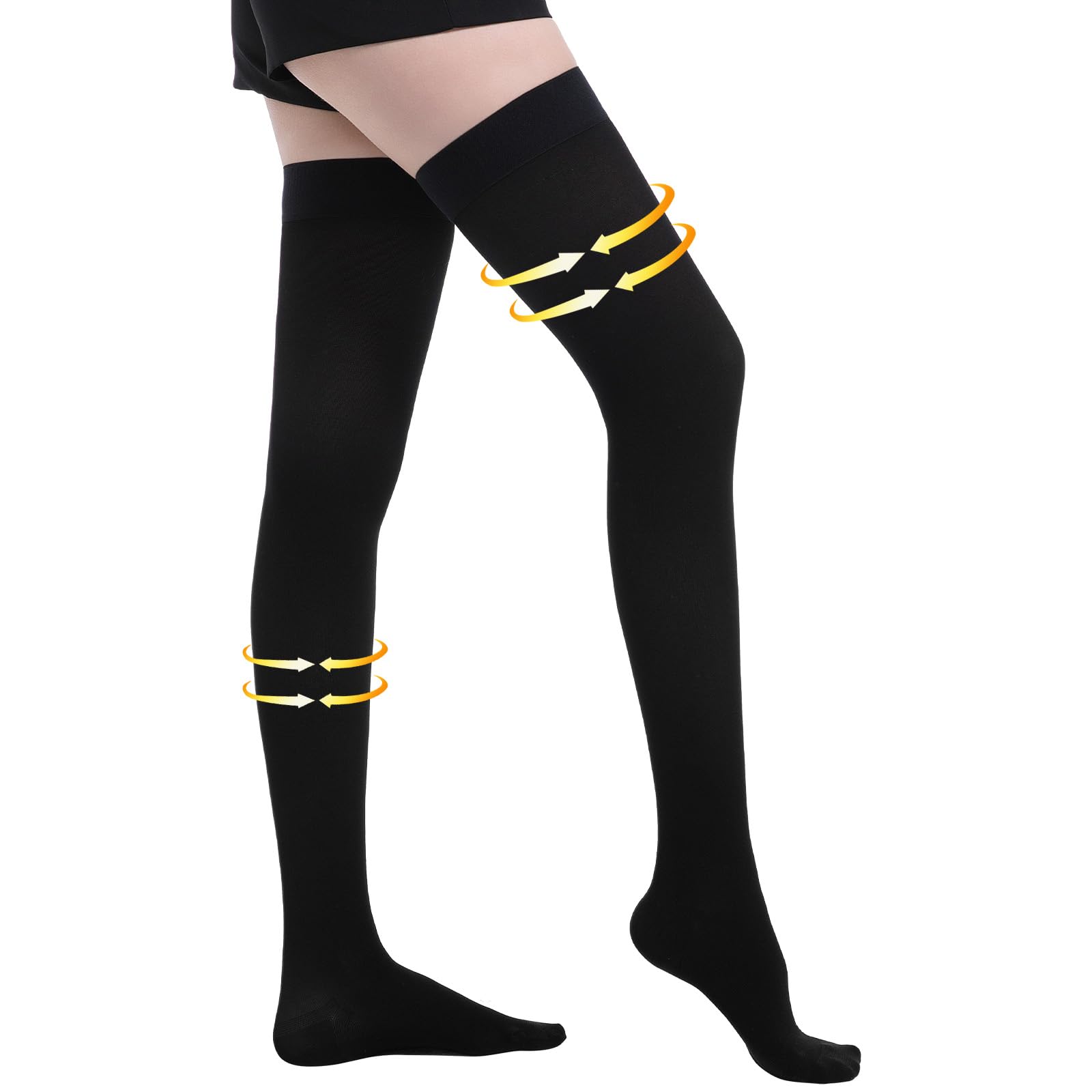
The silicone dotted grip strip at the top holds this thigh-high in place, so you are not tugging it up all day.
When knee-high just isn’t enough, Myshear extends compression all the way up the thigh with 20-30 mmHg across five precision-engineered zones — strongest at the ankle, tapering upward. The 75% nylon, 25% spandex blend gives a second-skin feel that’s snag- and tear-resistant, and the silicone dotted grip strip at the top is the secret weapon: it holds the stocking in place without the constant tugging that plagues other thigh-highs.
Buyers specifically praise that these “don’t constantly slide down like my other drug store compression stockings” — high praise from anyone who’s fought a slipping stocking all day. They held up on an 8-hour car ride with zero problems and stayed put on international flights. The closed-toe design adds foot support, and the opaque fabric offers discreet coverage under dress pants or skirts.
The realism check: fit can be polarizing. One reviewer who hated them described bunching at the back of the knees and a constant battle to keep them up — the opposite of the majority experience, but a signal that thigh-high fit is personal. They’re also genuinely hard to get over the feet initially; the snugness is part of the compression working. At 4.1 stars across 450+ ratings, the fit debate is real, but for the right leg shape these are excellent. Choose these over the knee-high Tekubig if your swelling climbs above the knee.
The decisive factor: If your swelling climbs above the knee, this is the coverage you need — just be ready for a fit that’s love-it or hate-it based on your leg shape.
7. FULLSOFT Medical 30-40 mmHg Compression Socks

At 30-40 mmHg, this is the highest compression level on the list, for when your doctor wants extra-strong pressure.
Most CHF-related swelling is managed at 20-30 mmHg, but some care plans call for more aggressive support — and that’s where FULLSOFT steps in at 30-40 mmHg. It’s the highest compression level on this list, designed for deep vein thrombosis (a blood clot in a deep vein), chronic leg fatigue, and severe swelling or edema. The graduated design is strongest at the ankle and eases up the leg for support without circulation cutoff.
The standout review here comes from hospital workers: someone who “spent too much time and money on the 15-20 mmHg socks” finally found these perfect for long shifts, noting they don’t slip down and keep legs from swelling, with durable material that holds firmness through many washes. Another buyer with lower leg edema reported reduced swelling and fewer nighttime bathroom trips after switching. The 3-pair pack (black, navy, and striped) handles the whole work week.
The important caveat: some buyers question whether the compression truly hits 30-40 mmHg, comparing the feel to their other socks and finding it less firm than claimed. One reviewer measured it against their existing pair and returned them. If you need precisely verified 30-40 mmHg pressure, that’s a real consideration — but for many, the firm-but-wearable feel is exactly right. It sits at 4.2 stars across 300 ratings. Verify the pressure matches your prescription before relying on these over the standard 20-30 mmHg NEENCA pair.
Choose this if: your doctor has indicated firmer-than-standard pressure and you want it in a practical 3-pack.
Verify before buying if: you need to be certain the pressure exactly matches 30-40 mmHg — some owners found the feel closer to a firm 20-30.
8. Tekubig 3 Pairs Medical Compression Socks
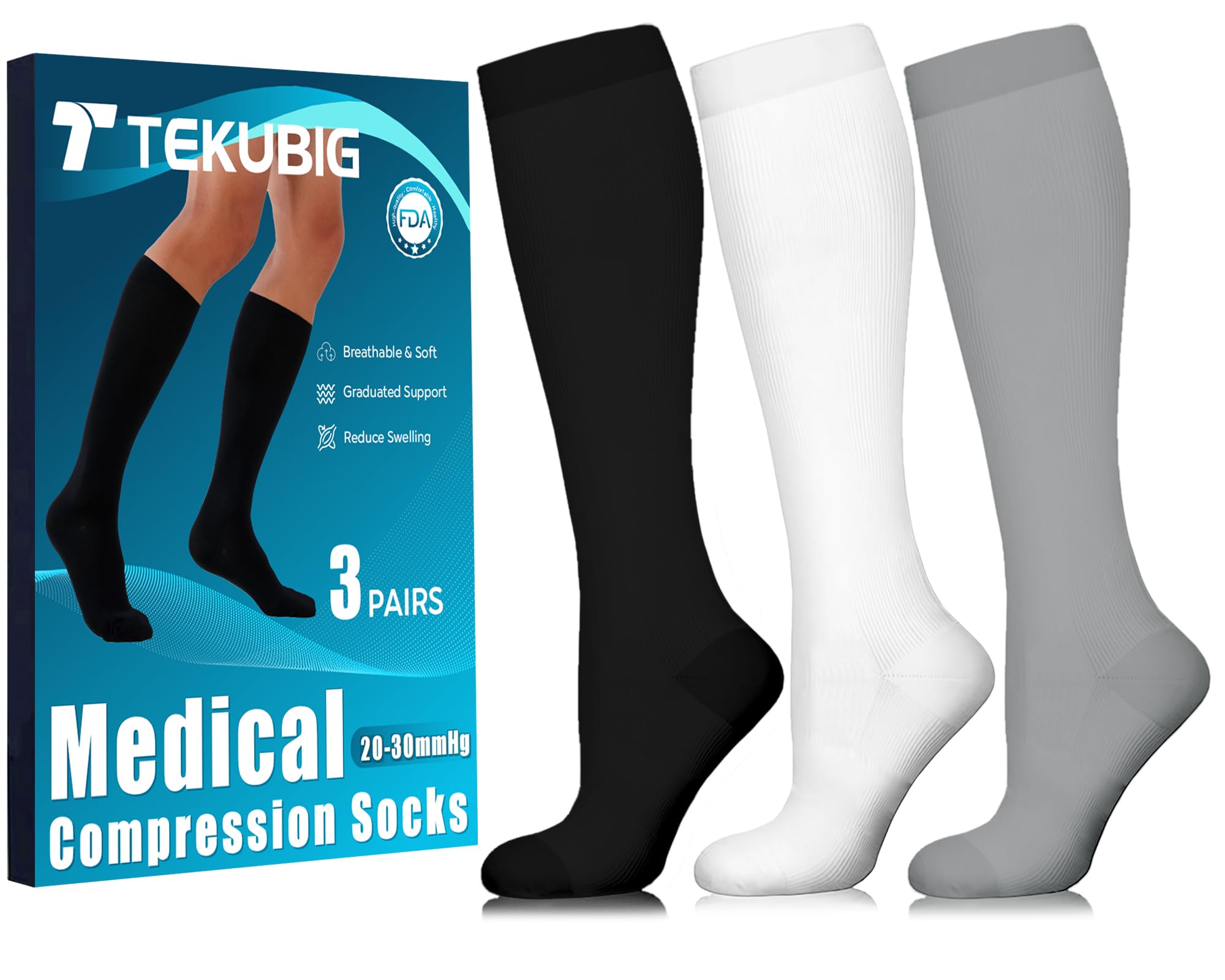
The firm-but-comfortable balance is the selling point here — noticeable 20-30 mmHg support without a suffocating squeeze.
Tekubig delivers 20-30 mmHg graduated compression in a three-pair set with a soft, breathable material that buyers consistently describe as comfortable even after hours of wear. The firmness is noticeable without being suffocating — several owners specifically praise the balance, noting the socks stay in place and don’t create an uncomfortable squeeze at the top. For anyone who wears compression daily, that balance is everything. These suit wide calves and thick ankles better than the snugger NEENCA pair.
A particularly moving review came from a cancer survivor who depends on compression socks as a daily necessity and praised these as well-priced with soft, comfortable material and good compression — noting only that they’d prefer them a couple inches longer. Buyers with wide calves and thick ankles also report these as a rare find that actually fits, calling them a “great value 3-pack.” The designs are genuinely more attractive than typical medical socks, which makes daily wear feel less clinical.
The length critique is the recurring theme — a few owners say they fall short of true knee-high, sitting a couple inches below the knee, and one noted the toe seam isn’t perfectly smooth. At 4.2 stars across 270+ ratings, the comfort and support story is solid, with the length being the main trade-off for taller legs.
Why it earns its spot: The firm-but-comfortable compression balance is hard to get right, and Tekubig nails it — just know the length runs short for taller wearers.
9. JOBST Relief 20-30 mmHg Knee High

The wide 2-inch top band is the standout here — it is designed to prevent rolling, and owners confirm it works.
JOBST is a name that’s been trusted in medical compression for decades, and the Relief line brings that pedigree to a ready-to-wear knee-high at 20-30 mmHg. The wide 2-inch top band is the standout comfort feature — it’s designed to prevent rolling, which owners confirm works well. The reinforced heel and toe add durability where socks typically wear out first.
Buyer consensus splits by experience: newcomers often find JOBST finally keeps swelling under control—”these make a big difference” after cheap alternatives “didn’t work at all.” But there are also strong voices warning about fit inconsistencies, including one podiatrist-flagged issue where a second pair reached only mid-leg and caused discomfort. Sizing up if you’re borderline is the consistent advice from experienced buyers.
The harshest criticism targets durability and thickness — some argue the material feels too thin for the claimed 20-30 mmHg, and a few report the stockings sliding down to the ankles during active wear like golf. It’s the premium-priced pick on this list, and for that money you’re paying for the brand’s reliability and the comfortable top band. At 4.1 stars across 850+ ratings, it’s a respected but not universally adored choice. If you are between sizes or need a sock that survives intense activity, the WAKEFEET trio gives you a more forgiving fit for less money.
Pick this if: you want a recognizable medical brand with a genuinely comfortable wide top band — the anti-roll design is the real highlight.
Skip this if: you’re between sizes or need a sock that survives intense activity — the fit and thinness complaints are the most common themes.
Understanding the Specs
What “20-30 mmHg” actually means
mmHg measures pressure — this is the compression level your sock applies to your leg. At 20-30 mmHg, the pressure is firm enough to push fluid out of tissues and back into veins—the level doctors typically recommend for edema and heart-failure-related swelling. It’s noticeably tighter than the 15-20 mmHg “travel” socks you’ll find at drugstores, and it should feel snug but never painful. If you need even firmer support, 30-40 mmHg exists, but that’s a prescription-level choice to confirm with your doctor first.
Graduated vs. uniform compression
“Graduated” means the sock is tightest at your ankle and gradually loosens as it goes up your leg. This design works with gravity — the strongest pressure at the bottom pushes fluid upward, and the easing pressure higher up prevents a tourniquet effect. Every legitimate medical compression sock is graduated. If a sock claims to be “compression” but is equally tight from ankle to knee, it’s not doing the medical job you need, and it can actually restrict circulation instead of helping.
FAQ
What compression level should I use for congestive heart failure?
Are compression socks safe for people with heart failure?
How do I measure my calf for wide-calf compression socks?
How long should I wear compression socks each day for swelling?
How many pairs of compression socks do I need?
What compression level is the difference between 15-20 mmHg and 20-30 mmHg?
Can I machine wash compression socks without ruining them?
Are open-toe compression socks as effective as closed-toe?
Why do my compression socks roll down or slide?
Is a knee-high or thigh-high sock better for heart failure swelling?
Final Thoughts: The Verdict
For most people, the winner is the 4 Pairs Plus Size Wide Calf pack because it solves the two biggest problems in this category at once: it genuinely fits larger calves up to 26 inches and it delivers real 20-30 mmHg graduated compression across a practical four-pair rotation. If you want the thin, athletic-feeling pair built for heavy walking and concrete-floor shifts, grab the NEENCA Professional. And for a premium everyday value in a three-pair set with a top band that never digs, the {“@context”: “https://schema.org”, “@graph”: [{“@type”: “ItemList”, “name”: “9 Best Compression Socks For Congestive Heart Failure”, “url”: “https://fitlyfast.com/best-compression-socks-for-congestive-heart-failure/”, “numberOfItems”: 9, “itemListElement”: [{“@type”: “ListItem”, “position”: 1, “name”: “4 Pairs Plus Size Compression Socks Wide Calf”, “url”: “https://fitlyfast.com/best-compression-socks-for-congestive-heart-failure/#product-1”}, {“@type”: “ListItem”, “position”: 2, “name”: “NEENCA Professional Compression Socks”, “url”: “https://fitlyfast.com/best-compression-socks-for-congestive-heart-failure/#product-2”}, {“@type”: “ListItem”, “position”: 3, “name”: “TOFLY 20-30 mmHg Open Toe Compression Socks”, “url”: “https://fitlyfast.com/best-compression-socks-for-congestive-heart-failure/#product-3”}, {“@type”: “ListItem”, “position”: 4, “name”: “THOXCARE Compression Socks Knee High”, “url”: “https://fitlyfast.com/best-compression-socks-for-congestive-heart-failure/#product-4”}, {“@type”: “ListItem”, “position”: 5, “name”: “WAKEFEET 3 Pairs Compression Socks”, “url”: “https://fitlyfast.com/best-compression-socks-for-congestive-heart-failure/#product-5”}, {“@type”: “ListItem”, “position”: 6, “name”: “Myshear Thigh High Compression Stockings”, “url”: “https://fitlyfast.com/best-compression-socks-for-congestive-heart-failure/#product-6”}, {“@type”: “ListItem”, “position”: 7, “name”: “FULLSOFT Medical 30-40 mmHg Compression Socks”, “url”: “https://fitlyfast.com/best-compression-socks-for-congestive-heart-failure/#product-7”}, {“@type”: “ListItem”, “position”: 8, “name”: “Tekubig 3 Pairs Medical Compression Socks”, “url”: “https://fitlyfast.com/best-compression-socks-for-congestive-heart-failure/#product-8”}, {“@type”: “ListItem”, “position”: 9, “name”: “JOBST Relief 20-30 mmHg Knee High”, “url”: “https://fitlyfast.com/best-compression-socks-for-congestive-heart-failure/#product-9”}]}, {“@type”: “Product”, “position”: 1, “name”: “4 Pairs Plus Size Compression Socks Wide Calf”, “image”: “https://m.media-amazon.com/images/I/817gH82GoPL.jpg”, “brand”: {“@type”: “Brand”, “name”: “4”}, “url”: “https://www.amazon.com/dp/B0C3TNCRLB/?tag=fitlyfast00-20”, “offers”: {“@type”: “Offer”, “url”: “https://www.amazon.com/dp/B0C3TNCRLB/?tag=fitlyfast00-20”}}, {“@type”: “Product”, “position”: 2, “name”: “NEENCA Professional Compression Socks”, “image”: “https://m.media-amazon.com/images/I/81eGrQXTYfL.jpg”, “brand”: {“@type”: “Brand”, “name”: “NEENCA”}, “url”: “https://www.amazon.com/dp/B09ZXHCSX3/?tag=fitlyfast00-20”, “offers”: {“@type”: “Offer”, “url”: “https://www.amazon.com/dp/B09ZXHCSX3/?tag=fitlyfast00-20”}}, {“@type”: “Product”, “position”: 3, “name”: “TOFLY 20-30 mmHg Open Toe Compression Socks”, “image”: “https://m.media-amazon.com/images/I/61am+LparGL.jpg”, “brand”: {“@type”: “Brand”, “name”: “TOFLY”}, “url”: “https://www.amazon.com/dp/B01M3R67CA/?tag=fitlyfast00-20”, “offers”: {“@type”: “Offer”, “url”: “https://www.amazon.com/dp/B01M3R67CA/?tag=fitlyfast00-20”}}, {“@type”: “Product”, “position”: 4, “name”: “THOXCARE Compression Socks Knee High”, “image”: “https://m.media-amazon.com/images/I/91bmTcC3qbL.jpg”, “brand”: {“@type”: “Brand”, “name”: “THOXCARE”}, “url”: “https://www.amazon.com/dp/B0CY2RMSPH/?tag=fitlyfast00-20”, “offers”: {“@type”: “Offer”, “url”: “https://www.amazon.com/dp/B0CY2RMSPH/?tag=fitlyfast00-20”}}, {“@type”: “Product”, “position”: 5, “name”: “WAKEFEET 3 Pairs Compression Socks”, “image”: “https://m.media-amazon.com/images/I/71ThpW0EzDL.jpg”, “brand”: {“@type”: “Brand”, “name”: “WAKEFEET”}, “url”: “https://www.amazon.com/dp/B0DGSQK75D/?tag=fitlyfast00-20”, “offers”: {“@type”: “Offer”, “url”: “https://www.amazon.com/dp/B0DGSQK75D/?tag=fitlyfast00-20”}}, {“@type”: “Product”, “position”: 6, “name”: “Myshear Thigh High Compression Stockings”, “image”: “https://m.media-amazon.com/images/I/51Cum88pdcL.jpg”, “brand”: {“@type”: “Brand”, “name”: “Myshear”}, “url”: “https://www.amazon.com/dp/B0F5BY52BD/?tag=fitlyfast00-20”, “offers”: {“@type”: “Offer”, “url”: “https://www.amazon.com/dp/B0F5BY52BD/?tag=fitlyfast00-20”}}, {“@type”: “Product”, “position”: 7, “name”: “FULLSOFT Medical 30-40 mmHg Compression Socks”, “image”: “https://m.media-amazon.com/images/I/815wZ3lvGWL.jpg”, “brand”: {“@type”: “Brand”, “name”: “FULLSOFT”}, “url”: “https://www.amazon.com/dp/B0D5Y3GNVD/?tag=fitlyfast00-20”, “offers”: {“@type”: “Offer”, “url”: “https://www.amazon.com/dp/B0D5Y3GNVD/?tag=fitlyfast00-20”}}, {“@type”: “Product”, “position”: 8, “name”: “Tekubig 3 Pairs Medical Compression Socks”, “image”: “https://m.media-amazon.com/images/I/71+oJ8fab2L.jpg”, “brand”: {“@type”: “Brand”, “name”: “Tekubig”}, “url”: “https://www.amazon.com/dp/B0FQMV8K2V/?tag=fitlyfast00-20”, “offers”: {“@type”: “Offer”, “url”: “https://www.amazon.com/dp/B0FQMV8K2V/?tag=fitlyfast00-20”}}, {“@type”: “Product”, “position”: 9, “name”: “JOBST Relief 20-30 mmHg Knee High”, “image”: “https://m.media-amazon.com/images/I/614R0fpw7GL.jpg”, “brand”: {“@type”: “Brand”, “name”: “JOBST”}, “url”: “https://www.amazon.com/dp/B0012041J8/?tag=fitlyfast00-20”, “offers”: {“@type”: “Offer”, “url”: “https://www.amazon.com/dp/B0012041J8/?tag=fitlyfast00-20”}}, {“@type”: “FAQPage”, “mainEntity”: [{“@type”: “Question”, “name”: “What compression level should I use for congestive heart failure?”, “acceptedAnswer”: {“@type”: “Answer”, “text”: “For CHF-related swelling, 20-30 mmHg is the standard medical-grade level — it’s firm enough to push fluid out of your lower legs without being uncomfortable for all-day wear. Some care plans call for 30-40 mmHg for more severe swelling, but that’s a level to confirm with your doctor before buying. The socks on this list are all 20-30 mmHg except the FULLSOFT option at 30-40 mmHg.”}}, {“@type”: “Question”, “name”: “Are compression socks safe for people with heart failure?”, “acceptedAnswer”: {“@type”: “Answer”, “text”: “Compression socks are commonly used as part of CHF management to reduce leg swelling, but they’re not right for everyone — particularly if you have peripheral artery disease or certain skin conditions. The safe move is to ask your cardiologist or care team before starting compression, especially at higher levels like 30-40 mmHg. When your doctor confirms, look for graduated 20-30 mmHg socks that feel snug but never painful.”}}, {“@type”: “Question”, “name”: “How do I measure my calf for wide-calf compression socks?”, “acceptedAnswer”: {“@type”: “Answer”, “text”: “Measure the thickest part of your calf with a soft tape measure while you’re sitting with your legs at a 90-degree angle — that’s the widest point and the size that matters most. Several brands on this list, like the Plus Size pack that fits up to 26 inches and THOXCARE with its S/M through XXL ranges, publish exact calf measurements. Always prioritize calf size over shoe size when they conflict.”}}, {“@type”: “Question”, “name”: “How long should I wear compression socks each day for swelling?”, “acceptedAnswer”: {“@type”: “Answer”, “text”: “For CHF-related swelling, the goal is typically to wear them during your waking hours and remove them before bed — though some people wear them longer on doctor’s advice. The socks on this list are designed for all-day wear, with breathable fabrics and comfortable top bands that hold up over 12-hour shifts. If your legs feel numb, tingly, or turn an unusual color, take them off and check with your care team.”}}, {“@type”: “Question”, “name”: “How many pairs of compression socks do I need?”, “acceptedAnswer”: {“@type”: “Answer”, “text”: “Because compression socks need to rest between wears to recover their elasticity, most buyers want at least two or three pairs in rotation. That’s why several picks here come as multi-packs — the Plus Size option includes 4 pairs, WAKEFEET and Tekubig include 3 pairs, and FULLSOFT includes 3 pairs. A single pair will wear out far faster and lose its pressure.”}}, {“@type”: “Question”, “name”: “What compression level is the difference between 15-20 mmHg and 20-30 mmHg?”, “acceptedAnswer”: {“@type”: “Answer”, “text”: “The numbers are the pressure in millimeters of mercury. The 15-20 mmHg range is mild — fine for travel, mild fatigue, or everyday tiredness. The 20-30 mmHg range is moderate-to-firm medical-grade compression, typically recommended for edema, varicose veins, and CHF-related swelling. You’ll feel the difference immediately; 20-30 mmHg is noticeably firmer, especially at the ankle.”}}, {“@type”: “Question”, “name”: “Can I machine wash compression socks without ruining them?”, “acceptedAnswer”: {“@type”: “Answer”, “text”: “Yes, but the washing method matters for preserving compression. Machine wash cold, inside out, and air dry — never use hot water or a dryer, since heat destroys the elastic fibers that create the pressure. The Plus Size pack’s care instructions specifically say to machine wash cold inside out, air dry, and never bleach or wring. Proper care is what keeps 20-30 mmHg socks at full strength for months.”}}, {“@type”: “Question”, “name”: “Are open-toe compression socks as effective as closed-toe?”, “acceptedAnswer”: {“@type”: “Answer”, “text”: “Yes — the compression that matters for edema is around the ankle and calf, not the toes. An open-toe design like the TOFLY option delivers the same 20-30 mmHg graduated pressure with the benefit of letting your toes breathe, which helps people with bunions, sensitive feet, or a dislike of enclosed toe compression. The trade-off is that your toes are exposed, so you’ll need toe socks or shoes that cover them.”}}, {“@type”: “Question”, “name”: “Why do my compression socks roll down or slide?”, “acceptedAnswer”: {“@type”: “Answer”, “text”: “Rolling usually means the sock is too long for your leg, the top band is too loose, or you’ve measured your calf incorrectly. That’s why length and top-band design get so much attention in reviews — the WAKEFEET top band \”doesn’t roll or cut in,\” while the Plus Size pack runs long on shorter legs. Measure carefully and look for options with wide top bands or silicone grip strips if sliding is your problem.”}}, {“@type”: “Question”, “name”: “Is a knee-high or thigh-high sock better for heart failure swelling?”, “acceptedAnswer”: {“@type”: “Answer”, “text”: “Knee-high socks are the standard starting point for CHF-related leg swelling because they cover the area where fluid pools most — the ankle and calf. Thigh-high options like the Myshear stockings become relevant when swelling extends above the knee or when your doctor wants fuller coverage. Most people start with knee-high and only move to thigh-high if the swelling or the care plan requires it.”}}]}]}