
Our readers keep the lights on and the weekend projects moving. As an Amazon Associate, I earn from qualifying purchases.
Specs are compiled from manufacturer listings and verified buyer reviews and can change over time — please confirm the key details on the product page before buying.
You know that oven-blast when you open your car door after it’s baked in the sun? That’s radiant heat pouring through the roof, firewall, and floor, making your AC fight a losing battle. The right car insulation for heat stops that transfer before it reaches the cabin, so your car stays cooler, your AC works less, and your drive gets quieter. Every pick here is a true automotive heat barrier, not household insulation, spanning budget foam rolls to premium multi-layer kits.
I’m Rikta — the founder and writer behind FitlyFast. This guide is built by comparing the manufacturers’ published specifications and the patterns across verified customer reviews, so you get each pick’s real strengths and trade-offs instead of marketing spin.
I’ve focused on materials that genuinely block radiant heat, comparing thickness, coverage, and the real-world performance buyers report. Here is my breakdown of the car insulation for heat.
Our Picks at a Glance


How To Choose The Best Car Insulation For Heat
The key is understanding that heat in a parked car comes from radiant energy — the sun beating on metal panels and the engine’s exhaust heat radiating outward. Effective insulation reflects that heat back or absorbs it before it conducts into the cabin. You want a material with a reflective foil surface and a dense foam core.
Thickness and Density Matter Most
Thicker material means more heat resistance. A 5mm or 6mm closed-cell foam is a solid all-rounder; a 3/8-inch (about 10mm) mat offers significantly more thermal blocking for engine bays and firewalls where heat is most intense. But thicker isn’t always better — it’s heavier and harder to mold around tight curves in door panels.
Coverage Area vs. Your Vehicle Size
Another critical factor is coverage area. A 16 sqft sheet will do a hood or a few door panels. A 36 sqft roll can handle a full van floor, firewall, and roof. If you’re doing a whole vehicle, buying a roll with more square footage is often better value than patching together smaller pieces.
Quick Comparison
| Model | Best For | Thickness | Coverage | Material | Amazon |
|---|---|---|---|---|---|
| Siless Hybrid 3in1★ Best Overall | Full-vehicle heat & noise | 5mm / 200 mil | 25 sqft | Butyl + Foam | Amazon |
| Siless LinerPROPremium Pick | Floors & firewall heat | 5mm / 200 mil | 36 sqft | PE Foam + Butyl | Amazon |
| VOISEN Sound DeadeningBest Value | Large-area value | 4mm / 157 mil | 36 sqft | Closed-Cell PE Foam | Amazon |
| 200mil 36.16 Sqft | UV & heat blocking | 5mm / 200 mil | 36.16 sqft | Aluminum PE Foam | Amazon |
| Abahub 236mil | Hood & firewall shields | 6.2mm / 236 mil | 16 sqft | Foil + Foam | Amazon |
| uxcell 236mil | Budget coverage | 6mm / 236 mil | 16.36 sqft | Aluminum Foil Foam | Amazon |
| Super Shield EZ Cool | Vans & RVs | 6.35mm / 1/4 inch | 100 sqft | PE Reinforced Foam | Amazon |
| Thermal Sound 3/8″ | Engine bays | 9.5mm / 3/8 inch | 50 sqft | Aluminum Foil | Amazon |
| HushMat Bulk Kit | Classic car restorations | 1.5mm | 58.1 sqft | Aluminum / Butyl | Amazon |
In‑Depth Reviews
1. Siless Hybrid 3in1 200 mil
Our pick — over 4.5★ from 850+ verified ratings; the strongest balance of quality and price.
The three-layer composite that attacks heat, vibration, and road noise in one pass.
This is the pick that does it all. Instead of buying a separate heat shield and a separate sound deadener, the Siless Hybrid combines a butyl mastic layer, PE foam, and a mass-loaded butyl membrane into one 5mm-thick sheet. That means you get the heat-blocking ability of a foam barrier and the vibration-damping weight of butyl without layering two products yourself. It covers 25 sqft, which is enough for a full van floor or a complete sedan interior.
The real-world results are hard to argue with. One van build logged an interior temp drop from 110°F to 97°F after installation. That’s the kind of measurable difference that makes summer driving bearable. The material is flexible, cuts easily with scissors, and uses a simple “peel and place” application, so you don’t need spray adhesives or special tools (though a roller helps). This is the one to reach for when you want maximum heat and noise control without a complicated multi-product install.
There is one quirk: the adhesive is very tacky, and in hot weather the backing paper can be stubborn to remove. Cooling the material first is the trick owners recommend. Also, the package doesn’t include a roller, so you’ll want to buy one separately to work the material flat and squeeze out air bubbles. It’s a small extra step for a product that genuinely outperforms pricier brands on the market.
Why It Wins
- Three-in-one design handles heat, noise, and vibration
- Proven results — interior temp dropped to 97°F in a van
- Flexible and easy to cut with scissors
Before You Buy
- Adhesive is tacky; cool the material before peeling
- Roller not included in the box
Who it’s for: Anyone doing a full interior insulation job who wants one product to solve heat and noise together.
Watch for: The tacky adhesive needs a steady hand and a cooler workspace to install cleanly.
2. Siless LinerPRO 2in1 200 mil
A heavyweight foam that pairs heat blocking with serious vibration damping.
If your main problem is heat radiating up through the floor or firewall, the LinerPRO is a masterstroke. It combines a 157 mil closed-cell foam layer with a 50 mil butyl layer, making it a true 2-in-1 thermal and vibration barrier at 5mm thick. The closed-cell polyethylene foam is waterproof and odorless, which is a huge win for floors that see moisture from wet boots or spills — it absolutely doesn’t absorb water.
Owners rave about the temperature difference it makes. A classic Jeep owner reported an immediate cabin temp change and called the sound improvement “night and day.” It sticks great, cuts easily with scissors, and at 36 sqft it covers a lot of ground — enough for the entire floor, firewall, and roof of most vehicles. It’s a versatile option that handles both heat and noise without compromise.
The 5mm thickness is substantial, and while it’s lightweight for what it offers, working with large pieces on vertical panels like the firewall takes patience. Owners recommend installing in the morning on a sunny day, vacuuming surfaces first, and working from the center outward to remove air bubbles. It’s a bit of a project, but the payoff is a noticeably cooler, quieter cab.
The Big Win: The waterproof closed-cell foam makes it perfect for floors and areas prone to moisture — it won’t degrade or hold smells over time.
The Trade-off: The thick build demands careful, patient installation on curved or vertical panels to get a bubble-free finish.
3. VOISEN Sound Deading Material
A massive 36 sqft roll of quality foam that gives you the most coverage for your dollar.
For sheer square footage, this is the smartest buy on the list. At 4mm thick and covering 36 sqft, the VOISEN roll delivers the most area per dollar spent, making it the go-to for covering large surfaces like van floors, roofs, and trunks while staying affordable. The high-density closed-cell foam blocks 98% of radiant heat transfer.
Real owners are impressed with how well it sticks to bare and painted metal, which is the foundation of a good insulation job. It’s flexible enough to conform to curves on door panels, and it pairs brilliantly with a separate butyl layer for maximum sound deadening. One 4Runner owner combined it with a basic deadener and reported dramatically reduced road noise and deeper, cleaner speaker sound. For an older vehicle needing some help, it holds to curves on a 30-year-old XJ and quiets cab rattle effectively.
The foil surface holds up in daily use but tears if you’re careless during installation, and the adhesive gets messy in heat, so install it in cooler conditions. Still, as a budget-friendly heat barrier that covers serious ground, this is tough to top — it’s the foundation you build a comfortable cabin on.
What You Get
- Exceptional coverage at 36 sqft
- Adheres firmly to bare and painted metal
- Blocks 98% of radiant heat transfer
Keep In Mind
- Foil layer can tear if handled roughly
- Not meant for floors per the manufacturer
Reach for this if: You have a large area to cover and want the best cost-per-square-foot for heat blocking.
Look elsewhere if: You need a single heavy butyl layer for floors — this foam is designed for panels, doors, and firewalls.
4. 200mil 36.16 Sqft Car Sound Deadener

Finished with premium 5A-grade foil to block UV radiation and heat all day long.
This roll takes the heat battle to the sun itself. The 5mm-thick closed-cell PE foam is finished with a 5A-grade aluminum foil that specifically blocks UV radiation — the part of sunlight that actually heats up your dash and seats. With 36.16 sqft of coverage, it’s built for tackling the roof, firewall, hood, and trunk in one go, and it resists oil and water for long-lasting use.
Owners note it cuts easily with a carpet knife and sticks well to clean, dry surfaces. One truck owner used it on doors, floors, and the back wall of a Ram 1500 alongside butyl matting, and the result was stunning — the AC at speed 2 became silent at 55 mph thanks to the huge noise reduction. That’s a real-world demonstration of how this foam transforms a driving experience.
There’s a learning curve with the strong adhesive: it cannot be repositioned once stuck, and the foam is a bit fragile if you’re not delicate. Owners stress using the largest pieces possible to reduce seams. It’s a trade-off for a product that delivers genuine, measurable results when you take your time.
The Standout: The 5A-grade foil is the defining feature, making this a top choice for fighting sun-induced cabin heat specifically.
The Hint: The adhesive is strong and unforgiving — plan your cuts carefully because you won’t get a second chance to reposition.
5. Abahub 236mil Heat Shield

A dense 6.2mm shield that stands up to engine-bay heat without collapsing.
When you’re insulating a hood or firewall, you want something that won’t sag or disintegrate under constant engine heat. The Abahub brings a beefy 6.2mm thickness — the thickest foam option here — wrapped in a reflective foil layer that rejects radiant heat and bonds securely to metal. It’s a three-layer structure (foil, dense foam, strong adhesive) that owners have used to replace deteriorating OEM hood shields with great success.
The real-world heat performance shines through. One owner replaced a corroded OEM shield on a turbo VW and the hood stayed cool after hard driving. Under a Polaris XP900 passenger seat, it cut seat heat from burning hot to merely warm. It’s a clear, practical heat win. At 16 sqft, it’s sized for focused jobs like a single hood, firewall, or seat area rather than full-vehicle builds.
The main downside is fragility during installation — the aluminum layer tears easily if you’re not careful, so owners recommend using foil tape on edges and holes. The adhesive is also extremely sticky, meaning placement must be exact the first time. But for dedicated heat shielding where thickness is critical, this compact roll is a strong, proven performer.
The Upside
- Thickest foam at 6.2mm for max heat blocking
- Proven to keep hoods cool on turbo engines
- Strong adhesive holds up under heat
The Downside
- Foil is fragile and tears easily if rushed
- Extremely sticky — no repositioning once placed
Who it fits: Anyone replacing a worn factory hood shield or lining a seat base to block engine heat.
The one thing to know: Its 16 sqft size is for focused areas, not whole vehicles.
6. uxcell 236mil 16.36sqft
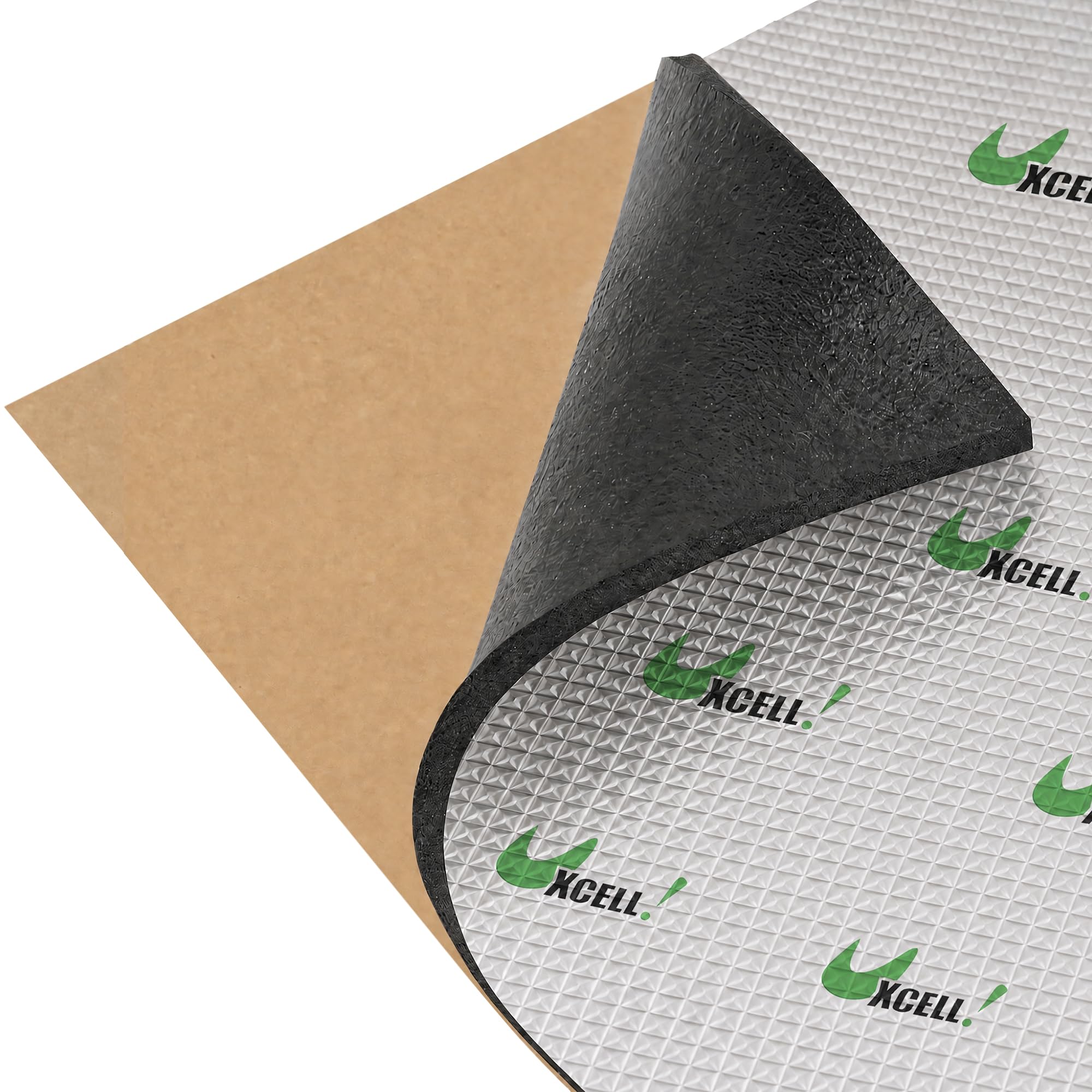
A thick, no-frills 6mm sheet that proves you don’t need to spend big to cut heat.
The most budget-friendly pick here delivers maximum thickness for the money. At 6mm thick, the uxcell sheet is actually thicker than the more expensive Siless Hybrid, and it covers 16.36 sqft in a single 60″x40″ sheet. The aluminum foil foam design is specifically made to block engine, exhaust, and transmission heat, plus it’s moistureproof and good for sealing against water — a solid range of protections at a no-frills price.
For its cost, the real-world results are impressive. An owner who installed it on UTV panels reported significantly reduced heat and noise, and it held up through rain and mud after 300 miles and 1-2 months of use. Another uses it on all their vehicles under construction, preferring it to messy spray-on undercoating. It’s easy to cut and molds well to contours, making it ideal for hoods, doors, wheel arches, and even boat or golf cart projects.
The honest trade-off is the adhesive, which owners describe as mediocre — some panels need holding or retaining clips to stay put over time. A few buyers also note the material can tear in pieces if stressed. This is not a “stick and forget” product; it rewards careful surface prep and patience. But as a thick, cheap heat barrier for a focused project, it’s a clever value pick.
The Smart Angle: You’re getting a 6mm heat barrier at a budget price — the thickness-per-dollar ratio is excellent.
The Reality: The adhesive is the weak link; expect to use a roller and possibly clips to keep panels firmly in place.
7. Super Shield EZ Cool

A massive 100 sqft roll built for vans and RVs where heat builds up everywhere.
For cargo vans, RVs, or trucks with big cabs, small 16 sqft sheets just won’t cut it. This Made-in-USA roll covers a huge 100 sqft (4 feet by 25 feet) in one continuous piece, making it the definitive choice for whole-vehicle insulation projects. It’s a 1/4-inch thick polyethylene closed-cell reinforced foam core that’s crush-resistant, extremely lightweight, and flexible enough to mold around ribs and contours in a cargo area.
It blocks 97% of radiant heat and also dampens sound and vibration. It also comes with a 25ft tape kit to seal seams, which is a thoughtful addition for keeping the vapor barrier continuous. Owners installing it in a Transit Connect cargo van found it easy to work with — crucial when you’re covering every inch of a large space.
This is a specialized pick: it’s not ideal for tight engine bays or complex curves where smaller sheets shine. But if you’re converting a van and want to keep the sun’s heat off a large metal roof and walls, this roll is the most efficient way to do it in one go.
The Big Picture: The 100 sqft of coverage in a single roll is class-leading here — perfect for van builds and RV roofs.
The Scope: This is a broad-coverage tool, not a precision piece for firewalls or small panels.
8. Thermal Sound 3/8″ Heat Shield
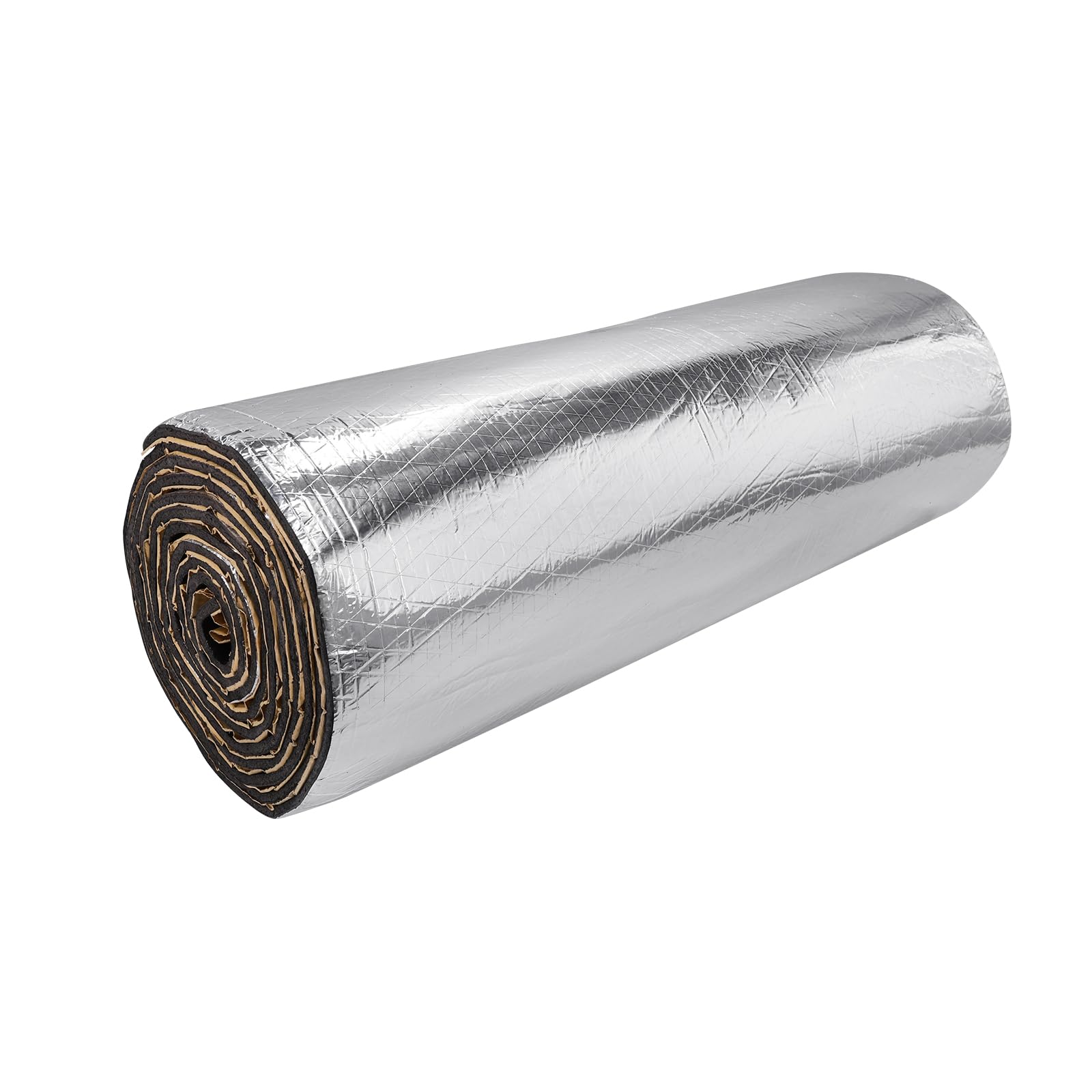
The thickest material in this lineup, built to crush heat in engine bays.
When heat is truly extreme — right next to the engine block or exhaust — you want the most insulation mass you can get. This 3/8-inch (about 10mm) thick aluminum foil mat is the heavyweight champion here, designed specifically for engine bays, firewalls, and floors where ordinary 5mm foam just isn’t enough. It blocks 93% of sun heat transfer, reducing AC load and keeping the cabin cooler.
What improve this kit is what’s in the box: it includes a sound deadening roller to work out air bubbles and aluminum foil tape to seal joints. The roller is a real accessory that makes a dramatic difference in getting a smooth, fully-adhered install — and it’s an item you’d otherwise buy separately. One owner installing it in a 1949 Ford F1 restomod found it to be a quality product that requires patience, noting that a very sharp blade and a slow peel of the backing paper are essential.
There’s a caveat: reviews are mixed, with some owners reporting the adhesive isn’t as sticky as expected and the material can tear rather than cut cleanly. A couple of buyers received the roll without the roller promised. This isn’t the easiest material to work with, but for a serious heat-blocking job on a firewall or engine bay, the 3/8″ thickness is the ultimate barrier. It’s a premium tool for a demanding task.
Why Choose It
- Maximum 3/8-inch thickness for extreme heat
- Roller and tape included for a professional install
- Blocks 93% of sun heat transfer
Be Prepared
- Material tears instead of cutting if blade isn’t sharp
- Adhesive strength has drawn mixed reactions
Best for: Hardcore heat-blocking jobs in engine bays and firewalls where nothing else is thick enough.
Better left alone if: You want a quick, forgiving install — this demands sharp blades and patience.
9. HushMat Bulk Kit

A premium US-made kit of 30 sheets that transforms classic car cabins.
This is the professional-grade kit for serious restorations. Instead of rolls, you get thirty 12″ x 23″ pre-cut sheets of butyl-based material (1.5mm thick with aluminum backing) that are dead simple to peel and stick. It withstands temperatures from -30°F to 550°F, covering winter commutes and engine-bay heat. At 58.1 sqft total, it’s enough to line an entire classic car interior.
The standout feature is the low-maintenance adhesion — no alcohol or acetone wash needed, and no special installation tools required. Owners confirm it’s almost impossible to remove once stuck, and it trims easily with a standard razor knife or household scissors. On a classic 1973 GMC C10, it solved both cab temperature and noise issues, keeping the cab cooler in summer and blocking loud exhaust noise from outside. A 70s Dodge Van owner described the transformation as “quiet like a Lexus.”
The trade-off is that the material is thin (1.5mm) compared to the 5mm and 6mm foams on this list. While it’s excellent for sound and vibration, it may not provide the same raw thermal mass for extreme heat applications. One owner on a Corvette FRC reported minimal road noise reduction. This is best used as part of a layered approach — butyl for mass and vibration, plus a foam layer for maximum heat blocking. For a classic car needing a complete interior treatment, this kit is the polished, easy answer.
The Appeal: The easiest install here — no surface prep, no tools, just peel and stick with guaranteed adhesion.
The Balance: At 1.5mm it’s thin, so pair it with a foam layer for serious heat blocking on top of sound deadening.
Understanding the Specs
Thickness (mil & mm)
Thickness is the single biggest factor in heat blocking. A “mil” is one-thousandth of an inch, so 200 mil equals 0.2 inches (about 5mm). The thicker the material, the more thermal resistance it provides. For general cabin use, 5mm (200 mil) is the balance. For engine bays or firewalls that face extreme heat, you’ll want 6mm to 10mm (about 3/8 inch).
Coverage Area (sqft)
Coverage tells you how much surface you can insulate. A 16 sqft sheet handles a hood or a few doors. A 36 sqft roll can do a floor, firewall, and roof. For whole-van conversions, you’ll need 100 sqft or more. Measure the flat surfaces you plan to cover and buy a roll that comfortably exceeds that — gaps in coverage create heat leaks.
FAQ
Will car insulation for heat actually keep my parked car cooler?
What is the difference between heat insulation and sound deadening?
How much car insulation for heat do I need for my vehicle?
Can I install car insulation myself, or do I need a professional?
What is the best thickness for blocking a lot of heat?
Does car insulation help keep the car warmer in winter too?
Will insulation make my car significantly quieter?
How do I install insulation on curved surfaces like door panels?
Is it worth paying more for “3-in-1” or “2-in-1” insulation products?
Final Thoughts: The Verdict
If you want one dependable pick, the car insulation for heat winner is the Siless Hybrid 3in1 because it solves heat and noise together in one easy-to-install sheet, with real-world proof of dropping cabin temps by over a dozen degrees. If you want maximum coverage for a large floor or van area, the Siless LinerPRO brings 36 sqft of waterproof heat blocking to the job. And for a focused, budget-friendly hood or seat project, the Abahub 236mil delivers serious 6.2mm thickness without the premium price tag. Choose based on your vehicle size and heat intensity, and you’ll feel the difference on your next summer drive.
How We Picked
We do not accept paid placement. Every pick is matched to a real buyer and a real use-case; we do not hands-on test units.
Sources & Methodology
Specifications: manufacturer listings and product documentation. Review insights: verified customer reviews, as of August 2026. Pricing: not shown on this page (it changes often); check the current price via the retailer link.
As an Amazon Associate, FitlyFast earns from qualifying purchases. This does not affect which products we feature.