
Our readers keep the lights on and the weekend projects moving. As an Amazon Associate, I earn from qualifying purchases.
Specs are compiled from manufacturer listings and verified buyer reviews and can change over time — please confirm the key details on the product page before buying.
Shooting interiors is a battle against dim corners and mixed lighting. The right camera pulls detail out of shadows without blowing out the window light behind it. This guide breaks down 11 cameras by sensor size, low-light reach, and lens flexibility so you can match a body to the rooms you shoot most.
I’m Rikta — the founder and writer behind FitlyFast. This guide is built by comparing the manufacturers’ published specifications and the patterns across verified customer reviews, so you get each pick’s real strengths and trade-offs instead of marketing spin.
Whether you stage homes, capture rentals, or document your own remodel, the smartest camera for interior photography balances a bright lens with a sensor that tames low light and a screen you can actually frame with.
Our Picks at a Glance

How To Choose The Best Camera For Interior Photography
Interior photography is really a test of three things: capturing a wide field of view, handling dim indoor light cleanly, and keeping vertical lines straight. A camera that excels at all three will make your rooms look bright, spacious, and true to life — a camera that falls short will leave you fixing crooked walls in editing.
Sensor Size Dictates Low-Light Quality
You get cleaner shadows and a wider dynamic range in dim rooms because a full-frame sensor captures more light per pixel than a smaller APS-C or Micro Four Thirds chip. This means you can hold onto both the bright window and the dark corner in a single frame, even when you rely mostly on natural light.
Your Lens Choice Shapes the Room
Every camera body here has an interchangeable lens mount, but your final image is only as good as the glass in front of the sensor. A wide-angle zoom in the 14–24mm range lets you capture an entire room from a corner, while a brighter aperture of f/2.8 or wider helps you shoot in low light without cranking up the ISO.
Articulating Screens Beat Squinting Through a Viewfinder
Most interior shots are composed at waist level or with the camera on a tripod, so a tilting or vari-angle touchscreen makes framing far more comfortable. A flip-out screen also lets you review your shots without crouching, and touch focus lets you tap the exact spot you want sharp.
Quick Comparison
| Model | Best For | Sensor | Autofocus Points | Image Stabilization | Amazon |
|---|---|---|---|---|---|
| Canon EOS 5D Mark IV★ Best Overall | Versatile full-frame DSLR | 30.4MP Full-Frame | 61 | None (lens-only) | Amazon |
| Sony Alpha 7 IVAlso Great | Pro hybrid stills & video | 33MP Full-Frame | 693 | In-Body 5-Axis | Amazon |
| Nikon D850Resolution King | Ultra-high resolution stills | 45.7MP Full-Frame | 153 | None (lens-only) | Amazon |
| Canon EOS R6 Mark II | Low-light action & video | 24.2MP Full-Frame | — | In-Body 5-Axis (8-stop) | Amazon |
| Ricoh Theta Z1 | 360° virtual tours | Dual 1″ BSI CMOS | — | 4K Video Stabilization | Amazon |
| Nikon D7500 | All-around APS-C DSLR | 20.9MP APS-C | 51 | None (lens-only) | Amazon |
| FUJIFILM X-M5 | Compact travel & color | 26.1MP APS-C | — | None (lens-only) | Amazon |
| OM SYSTEM E-M10 Mark IV | Compact in-body stabilization | 20MP Micro Four Thirds | 121 | In-Body 5-Axis (4.5 stops) | Amazon |
| Sony ZV-E10 | Vlogging & content creation | 24.2MP APS-C | 425 | None (lens-only) | Amazon |
| Canon EOS Rebel T7 | Budget starter bundle | 24.1MP APS-C | 9 | None (lens-only) | Amazon |
In‑Depth Reviews
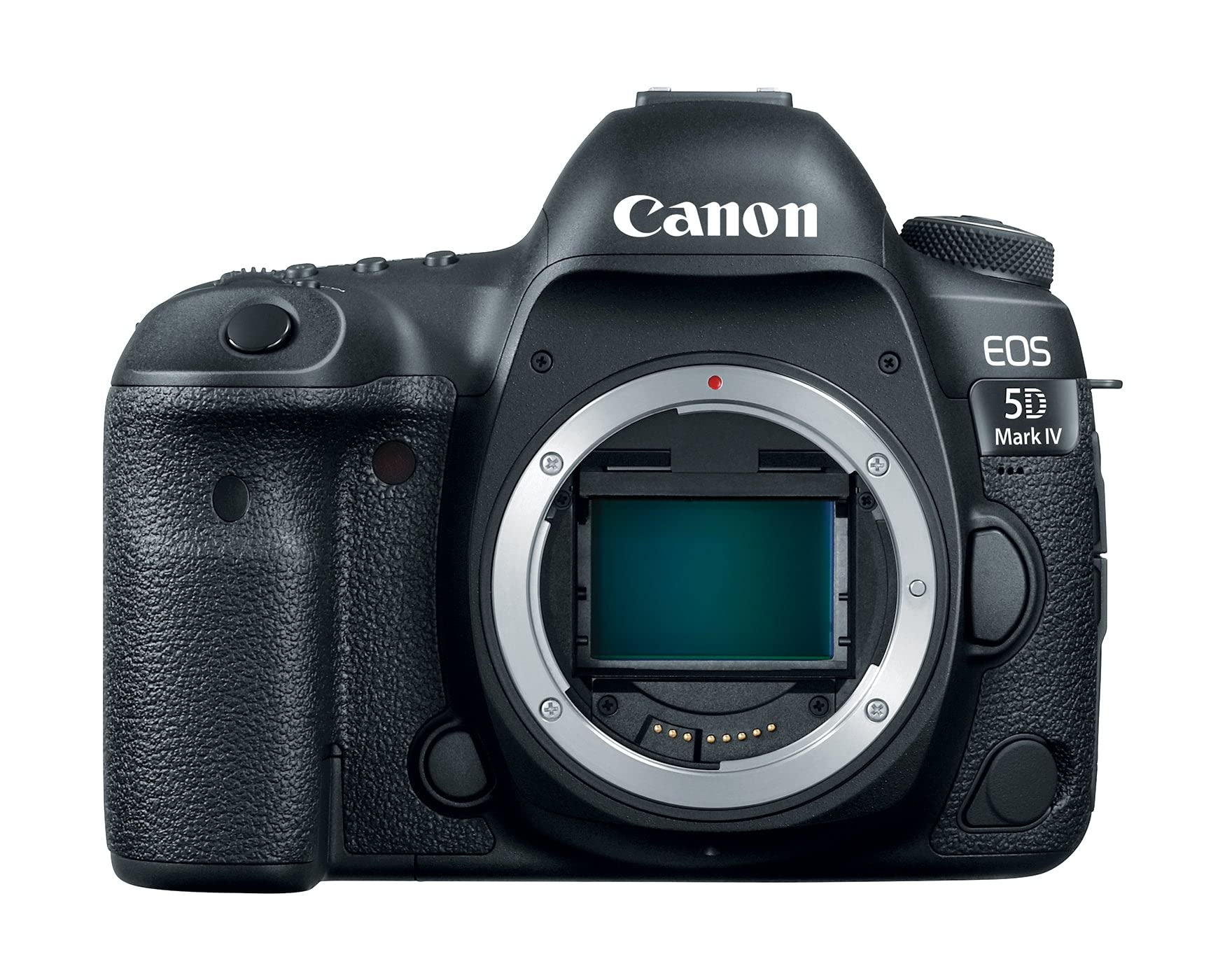
1. Canon EOS 5D Mark IV
Our pick — over 4.5★ from 850+ verified ratings; the strongest balance of quality and price.
The professional DSLR workhorse with 61 autofocus points and a 30.4MP sensor that just kept working.
You get more resolution than a dated 22MP body but without the file bloat of a 50MP one, which is why owners who upgraded from the Mark II and Mark III call this 30.4MP full-frame CMOS sensor “ideal.” The DIGIC 6+ processor pushes continuous shooting to 7.0 fps, which is 2.3x faster than the entry-level Rebel T7’s 3.0 fps.
What makes it a workhorse is the Dual Pixel CMOS AF with a full touchscreen interface — tap the exact spot on the LCD to focus during live view. The ISO range of 100–32000, expandable to 50–102400, handles low-light rooms admirably, and the 14-bit files give you plenty of latitude to pull shadows in editing.
The recurring trade-off is the fixed LCD — it doesn’t flip out like a vari-angle screen, so low-angle shots need a bit of contortion. Owners call it a potential break point, but the overwhelming consensus is that this is a camera they “trust completely” for professional work.
The trusted tool: A beautifully-built body with the huge EF lens ecosystem — pros call it their most reliable camera.
Who it’s for: Shooters who prefer an optical viewfinder and want a camera that’s been proven across hundreds of thousands of professional frames.
2. Sony Alpha 7 IV
The all-rounder that nails a bright window and a dark corner in one frame, every time.
The 33MP full-frame Exmor R back-illuminated CMOS sensor is the engine behind this pick, and it gives you the resolution to crop into a wall detail while still printing large. Its 15-stop dynamic range is what interior shooters actually feel — you can expose for the view through a window and still recover the shadow detail in the room without banding.
Autofocus here is the 693-point system with both contrast and phase detection, which locks onto a door frame or a sofa edge instantly. The BIONZ XR processor is rated 8x more powerful than its predecessor, which means 4K 60p 10-bit 4:2:2 video from a full pixel readout — no pixel binning — so listing videos look as crisp as your stills.
The S-Cinetone color profile gives you a film-like look straight out of camera, but the menu system is deep enough that it has a “steep learning curve” for beginners. A word on heat: a handful of buyers report overheating during long 4K sessions, though the crowd verdict is that this is the best do-everything body for the money.
What wins people over
- Stunning full-frame RAW quality and crisp, sharp files even at high ISO
- Autofocus is remarkably accurate — a strong reason it’s marked as a top positive
- Dual card slots (CFexpress Type A, SDHC, SDXC) for backup during shoots
The honest trade-offs
- Not beginner-friendly — there’s a steep learning curve from the sheer number of settings
- Occasional overheating reported during heavy 4K video use
- Battery life runs average if you shoot all day
The versatile pick: Best if you want one body that does high-res interiors, brand-listings video, and portrait work without compromise.
Budget reality: Skip if the price and learning curve feel steep — a capable APS-C body may be enough for your first year.
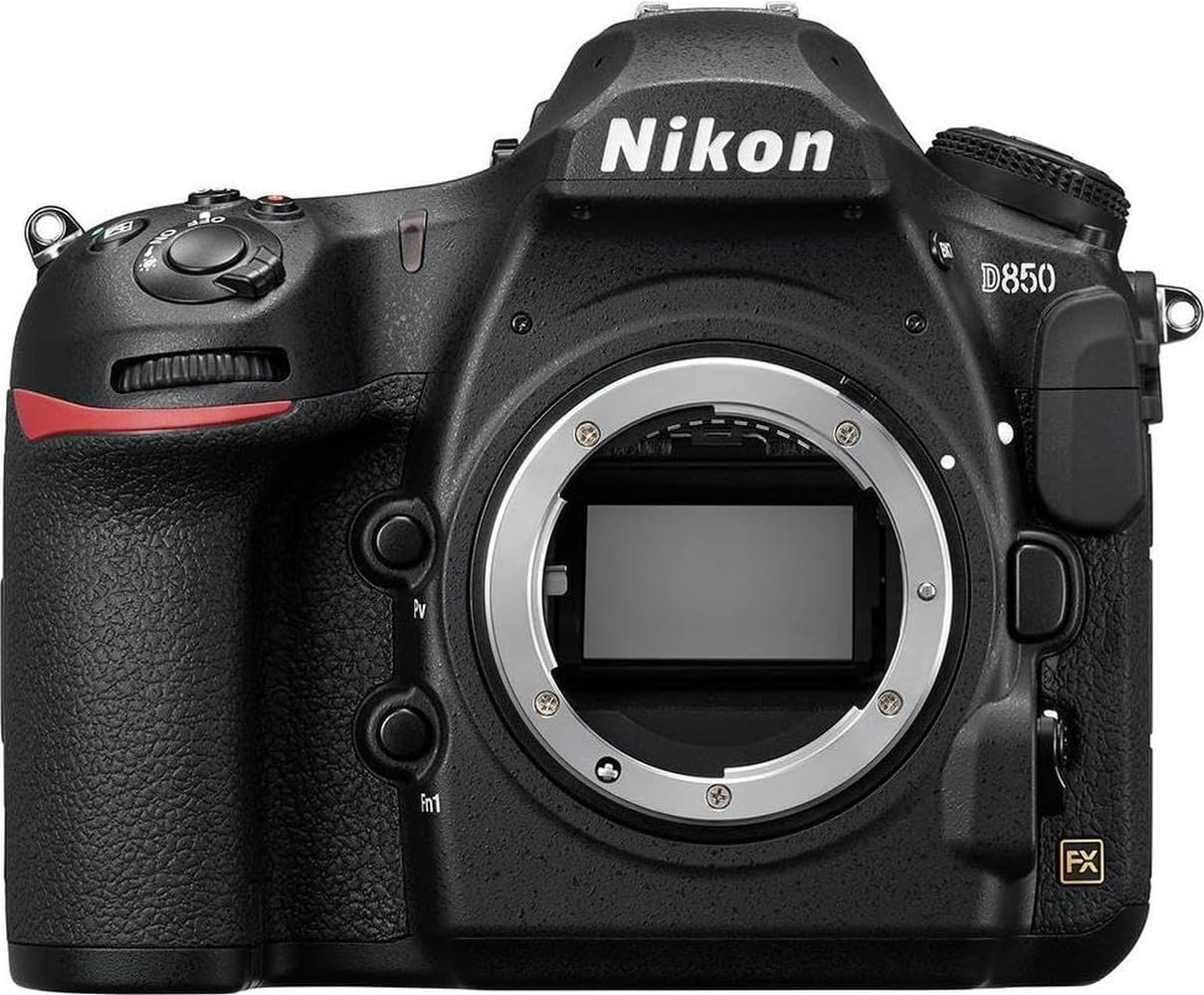
3. Nikon D850
The 45.7MP studio workhorse that gives real-estate and architectural clients detail they can zoom into for days.
You get maximum sharpness from the D850’s back-side illuminated (BSI) full-frame sensor with no optical low pass filter — exactly what you want when a client asks to see the grain of a wooden beam. Owners call the 45.7MP image quality a “standout” for its stunning contrast and detail., and the 153-point phase detection AF system is about as fast as DSLR autofocus gets.
For interiors, the tilting touchscreen is a quiet hero — you can frame a low-angle shot of a living room without lying on the floor. The focus shift shooting mode lets you stack focus for extreme close-ups of textures, and the in-camera 4K timelapse is a bonus for showing a room’s light moving through the day.
The honest limits: 45.7MP files are huge and will fill a 32GB card fast, and the camera is heavy. A few owners mention units that won’t turn on after a few months, though the overwhelming consensus is that this is one of the best DSLR bodies ever built.
The detail play: No other body here resolves texture like this — 45.7MP is near medium-format territory for stills.
Reach for it if: You shoot high-end homes or architecture where clients demand ultra-fine detail and you’re happy working with a heavy rig.
4. Canon EOS R6 Mark II

The mirrorless Canon with 8-stop stabilization that turns dim, hand-held room shots into crisp keepers.
You can shoot a dark room without a tripod and still get sharp edges, thanks to the 8-stop in-body image stabilization (IBIS) on this camera. The 24.2MP full-frame CMOS sensor with DIGIC X processor keeps noise minimal even when you push ISO high — owners say night shots look like sunset, with usable results at ISO 12,800 and even casual shots at ISO 56,000.
The advanced head, face, and eye detection tracks a person walking through a room, which is great for lifestyle shots. The 3.0-inch vari-angle touchscreen with 1.62 million dots flips out to any angle, and the 5GHz Wi-Fi plus Bluetooth 5 makes file transfer to your phone painless.
The caveat: battery life is worse than the old Rebel T7 it replaces — you’ll want a backup for a full shoot. The optical viewfinder is excellent even for glasses wearers, and the subject detection even covers horses and trains, should your interior work ever spill outside.
Why it stands out
- Insane low-light performance that owners rave about for indoor night shots
- Up to 40fps electronic shutter for catching fast movement
- 6K oversampled 4K video up to 60fps without overheating
Where it trips up
- Battery life is limited — carry spares for all-day shoots
- Body-only means budgeting for RF lenses or an EF adapter
- No built-in flash, so plan lighting separately
The low-light champ: Best if you shoot moody interiors, evening shots, or anywhere natural light is scarce.
Think twice if: You want a long battery life for a full day of back-to-back bookings — this one needs spares.
5. Ricoh Theta Z1

The pocket-sized 360° camera that’s a money-maker for realtors shooting virtual tours.
You get natural 360° images at 23MP from the Theta Z1’s two 1.0-inch back-illuminated CMOS sensors, making it a different beast for Matterport or Zillow scans. Owners say it beats the Insta360 X3 for real estate work — “blue skies, no blown windows,” with scan distance jumping from 3 feet to 6 feet or more.
The enhanced HDR processing is built for exactly the interior/exterior brightness mix you find in real estate, automatically suppressing overexposure in bright outdoor spots shooting through a window. The 51GB internal memory holds roughly 6350 JPEG stills, 900 RAW+ stills, or 110 minutes of 4K video — plenty for a full day of listings.
The magnesium alloy body feels premium, but the realities are a roughly 1-hour battery that’s non-replaceable and a lack of a touchscreen. The battery is the most flagged concern, so treat it as a session tool, not an all-day shooter.
The realtor’s edge
- Stellar HDR that keeps window views intact while holding interior detail
- High-speed USB 3.0 Type-C transfer and Wi-Fi control from your phone
- RAW 360° development possible in Adobe Photoshop Lightroom Classic CC
The limitation
- Battery life runs down fast and is not user-replaceable
- Occasional reports of glitchy behavior and charging issues after a month
- A single-purpose tool — it shoots 360° and not much else
The tour pro: Best if you make money from virtual tours and need reliable 360° captures with true-to-life color.
skip it if: You only need standard flat stills of rooms — a conventional camera gives you more flexibility for the same money.
6. Nikon D7500

The rugged DSLR with the 18-140mm lens that does wide room shots and detail close-ups without switching glass.
The D7500’s claim to fame is its image quality and ISO range, which Nikon says matches the award-winning D500. The 20.9MP sensor with a 51-point AF system (15 cross-type sensors) gives you fast, accurate focus, and the 3.2-inch tilting touchscreen makes tripod work at awkward angles much easier.
The bundled AF-S DX NIKKOR 18-140mm f/3.5-5.6G ED VR lens is the real selling point — owners call it “superb at all focal lengths,” covering a wide 18mm to a zoomed 140mm. That range means one lens handles a full living room shot and then a close-up of a fireplace mantel detail.
It’s a 2017 body, so it lacks the latest mirrorless tech, but it’s weather-sealed and built like a tank. The honest note: it’s “larger than compacts” and has a learning curve, with owners noting it’s not ideal for absolute beginners who want a simple manual guide.
The one-lens solution: The 18-140mm zoom covers wide to tele, making it a fantastic single-lens interior kit.
Know the limits: It’s bulkier than mirrorless rivals and the menu takes time to learn, but the image quality is genuinely class-leading for the price.
7. FUJIFILM X-M5

The 12.5-ounce mirrorless that slips in a bag and delivers gorgeous color straight out of camera.
At just 12.5 oz, the X-M5 is the smallest and lightest X-series body Fujifilm makes, which makes it a brilliant travel companion for scouting interiors. The 26.1MP X-Trans 4 CMOS sensor (the same as the X100V) delivers rich colors and superior low-light performance, and the X-Processor 5 handles autofocus and processing with speed.
The party piece for interior work is the 20 FUJIFILM Film Simulations — you can shoot a warm, cozy living room with a nostalgic film look and skip heavy editing entirely. The bundled XC 15-45mm f/3.5-5.6 OIS PZ lens covers a wide 15mm for full-room shots, with optical image stabilization for steady hand-held frames.
Owners love the “small but mighty” build and the film simulations (“can’t be beat”), but note the flip screen feels a bit flimsy and they wish it tilted instead. The app integration can be finicky, so plan on a card reader for quick imports.
The color-first choice: Film simulations give you beautiful, sellable interior images with almost no post-processing.
The trade-off: Build feels a little delicate and the screen mechanism is the weakest point — treat it gently.
8. OM SYSTEM E-M10 Mark IV

The pocket-friendly Micro Four Thirds with 5-axis stabilization that makes shaky rooms a non-issue.
You can hand-hold a dim room shot at a slower shutter speed without blur, thanks to the E-M10 Mark IV’s 20MP Live MOS sensor paired with in-body 5-axis image stabilization rated at 4.5 shutter speed steps — a huge advantage in windowless spaces. Owners love that it “fits in handbags and jackets.”
The flip-down monitor with a dedicated selfie mode is handy for over-the-head shots of high ceilings, and the 16 Art Filters (31 types) include an Instant Film look for quick, stylized deliverables. The bundled M.Zuiko Digital ED 14-42mm F3.5-5.6 EZ kit lens is a standard zoom that covers wide-angle room captures, and the 121-point contrast detection AF is plenty for static interior scenes.
Owners praise its macro capabilities, comfortable grip for large hands, and Bluetooth/OI Share smartphone connection. The honest caution: the kit lens isn’t as sharp as the pricier OM SYSTEM 12-45mm PRO, and a few customers note units that stopped working — so consider a warranty.
The compact advantage
- Superb in-body stabilization for dim, hand-held shots
- Light and small enough to carry anywhere, with a pop-up flash when you need fill
- Bluetooth & OI Share app for quick phone transfers
The small print
- Kit lens sharpness trails the premium PRO lenses
- Occasional reports of units failing — a warranty is wise
- Screen is unprotected and needs a sticker protector
The grab-and-go pick: Best if you want a tiny, stabilized body for quick real estate scouts or Airbnb shoots without dragging a heavy bag.
Consider otherwise: If you plan to print very large or crop deep into walls, a full-frame or higher-res APS-C body gives you more detail to work with.
9. Sony ZV-E10
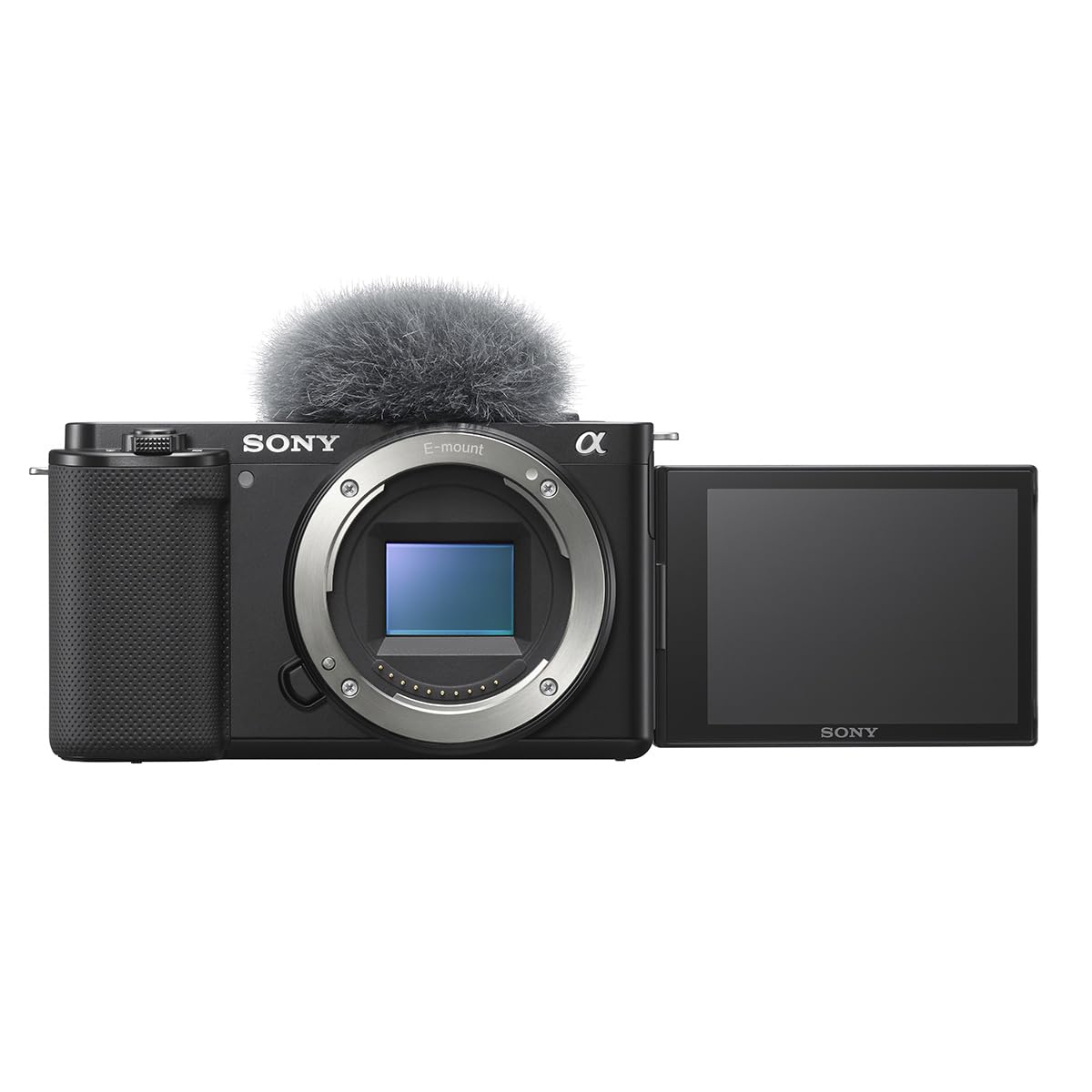
The 24.2MP APS-C body built for creators who shoot room tours and listing videos on the same rig.
The ZV-E10 is technically a vlogging camera, but its skill set maps perfectly onto interior video. The 24.2MP APS-C Exmor CMOS sensor with a BIONZ X processor delivers sharp 4K from a full pixel readout, and owners say it “doesn’t overheat” even during long sessions — a common issue with mirrorless rivals.
The Product Showcase Setting transitions focus from a face to an object instantly, which is ideal for highlighting a decorative vase or a kitchen counter detail in a tour video. The Background Defocus button toggles a blurred background effect with one tap, and the 425 autofocus points with eye detection keep your subject sharp.
It’s light and easy to use, and the interchangeable Sony E-mount system means you can mount a wide-angle lens when a room is too big for the kit lens. The honest limitations: there’s no in-body stabilization (IBIS), a severe rolling shutter on fast pans, and the tiny LCD really wants an external monitor for precise interior framing.
The hybrid value: Excellent for content creators who shoot walkthrough videos and stills on a budget without overheating.
The reality check: No IBIS and a small screen mean you’ll want a gimbal or tripod for smooth, well-framed room shots.
10. Canon EOS Rebel T7
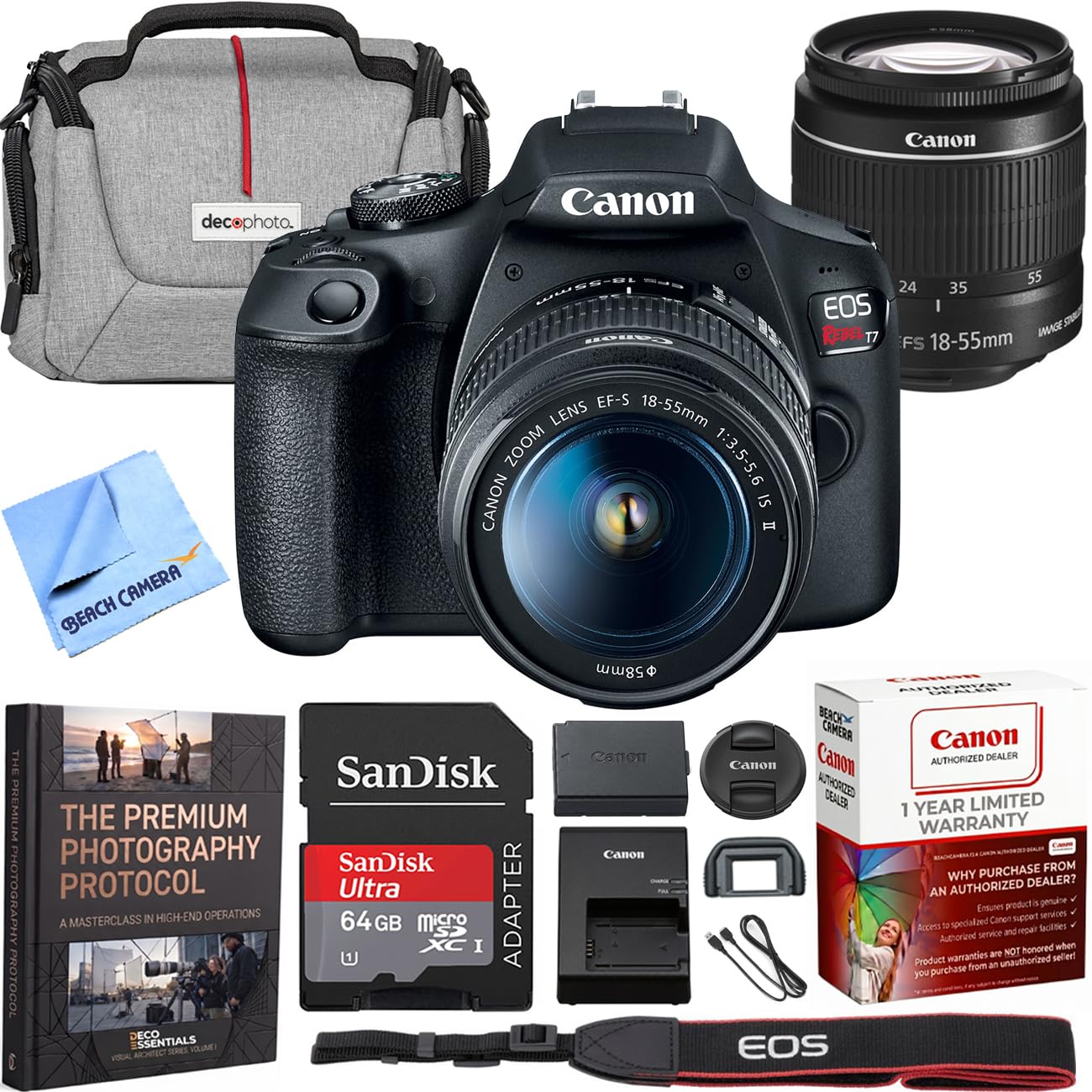
The 24.1MP starter bundle that gets you into interchangeable-lens interior shooting without the pro price.
The Rebel T7 is the classic entry point into DSLR photography, and for a first interior camera, it’s proven. The 24.1MP APS-C CMOS sensor with ISO up to 6400 (expandable to 12,800) handles decently-lit rooms well, and the 9-point AF system is simple and reliable for static scenes. The sensor resolution of 24.1MP holds its own against much pricier bodies in good light.
You can start shooting the day it arrives because the bundle includes the camera with an 18-55mm f/3.5-5.6 IS II lens, a Deco Gear camera bag, a SanDisk 64GB microSD card, and a microfiber cloth. Owners call it a great starter kit with “more than expected accessories” and appreciate the built-in Wi-Fi and NFC for quick transfers to a phone.
The most-discussed issue is the included slave flash that doesn’t work with the camera, so plan to shoot with natural light or buy a compatible flash separately.
The starter appeal
- Full DSLR bundle with bag, memory card, and lens — everything you need to begin
- Good image quality for the money, with clean shots in decent light
- Simple Scene Intelligent Auto mode for point-and-shoot confidence
The starter caveats
- The included slave flash doesn’t work with this camera — a known issue
- 9-point AF and 3.0 fps are very basic by modern standards
- Bundle accessories are decent but not Canon-branded
Best first camera: Choose this if you’re starting from zero and want to learn DSLR basics with a friendly, well-supported system.
pass on it if: You already shoot and need low-light muscle or fast autofocus — move up to a full-frame or modern mirrorless body instead.
Understanding the Specs
Sensor Size and Megapixels
Sensor size is the single biggest factor in how a camera handles indoor light. A full-frame sensor (like in the Sony a7 IV or Nikon D850) is physically larger than APS-C or Micro Four Thirds, so each pixel catches more light. That translates to cleaner shadows and less noise when you raise the ISO to brighten a dim room. Megapixels determine how much detail you capture and how far you can crop — 24MP is plenty for most real estate work, while 45.7MP gives you deep zoom-in ability but creates larger files.
ISO Range and Dynamic Range
ISO measures the sensor’s light sensitivity — a higher ISO lets you shoot in dimmer conditions, but pushes noise into your image. For interiors, look for a camera that stays clean at higher ISOs like 3200 or 6400. Dynamic range is how well a sensor holds detail in both the brightest and darkest parts of a scene at once, which matters when you have a bright window right next to a shadowed corner. A body with 15 stops of dynamic range gives you far more flexibility to recover shadows in editing without blowing out the highlights.
FAQ
What is the best camera lens for interior photography?
Is full-frame worth the extra cost for interior shots?
What does dynamic range mean for shooting rooms with windows?
How important is image stabilization for interior photography?
Is a 360-degree camera better than a standard camera for real estate?
What is a good ISO range for shooting indoors without a flash?
Does a flip-out touchscreen matter for interior photography?
Should I get a DSLR or a mirrorless camera for interiors?
Can a beginner use a professional full-frame camera?
How much memory do I need for interior photo shoots?
Final Thoughts: The Verdict
For most interior shooters, the winner is the Sony Alpha 7 IV because its 33MP sensor, 15-stop dynamic range, and 693-point autofocus cover every room and lighting scenario in one premium body. If you want ultra-fine detail for large wall prints, the Nikon D850 is the resolution king. And if your work is all about virtual tours, the Ricoh Theta Z1 is the specialist that pays for itself.
The Canon EOS R6 Mark II is the best low-light companion when you rarely shoot in bright rooms, while Sony a7 III delivers pro-grade results for less. If you’re starting outs on a budget, the Canon EOS Rebel T7 bundle gets you into interchangeable lens territory without the pro price tag.
How We Picked
We do not accept paid placement. Every pick is matched to a real buyer and a real use-case; we do not hands-on test units.
Sources & Methodology
Specifications: manufacturer listings and product documentation. Review insights: verified customer reviews, as of August 2026. Pricing: not shown on this page (it changes often); check the current price via the retailer link.
As an Amazon Associate, FitlyFast earns from qualifying purchases. This does not affect which products we feature.