
Our readers keep the lights on and the weekend projects moving. As an Amazon Associate, I earn from qualifying purchases.
Specs are compiled from manufacturer listings and verified buyer reviews and can change over time — please confirm the key details on the product page before buying.
You bought a camcorder to capture moments, but the built-in mic picks up every rustle, hum, and echo except the person talking. That is the single biggest reason your videos sound amateur. The fix is a dedicated shotgun microphone that points at your subject and ignores everything else, and this guide breaks down the best camcorder microphone options for every budget and shooting style.
I’m Rikta — the founder and writer behind FitlyFast. This guide is built by comparing the manufacturers’ published specifications and the patterns across verified customer reviews, so you get each pick’s real strengths and trade-offs instead of marketing spin.
Find the best camcorder microphone for your rig by comparing pickup patterns, power needs, and connectivity options that actually fit your shooting workflow.
Our Picks at a Glance

How To Choose The Best Camcorder Microphone
You need a mic that matches your camera, your location, and your subject. A vlogger filming inside a coffee shop needs different gear than a filmmaker recording dialogue in a park. Answer those three questions and the right mic reveals itself.
Pickup Pattern: The Heart of a Shotgun Mic
A shotgun microphone uses a highly directional pickup pattern, often called supercardioid, to capture sound from the front while rejecting noise from the sides and rear. This is what cleans up your audio on a busy street or a crowded event. Mics like the Sennheiser MKE600 are engineered to “effectively attenuate noise coming from the sides and rear,” which means your subject’s voice stays front and center.
Power Source: Battery, Plug-In, or Phantom
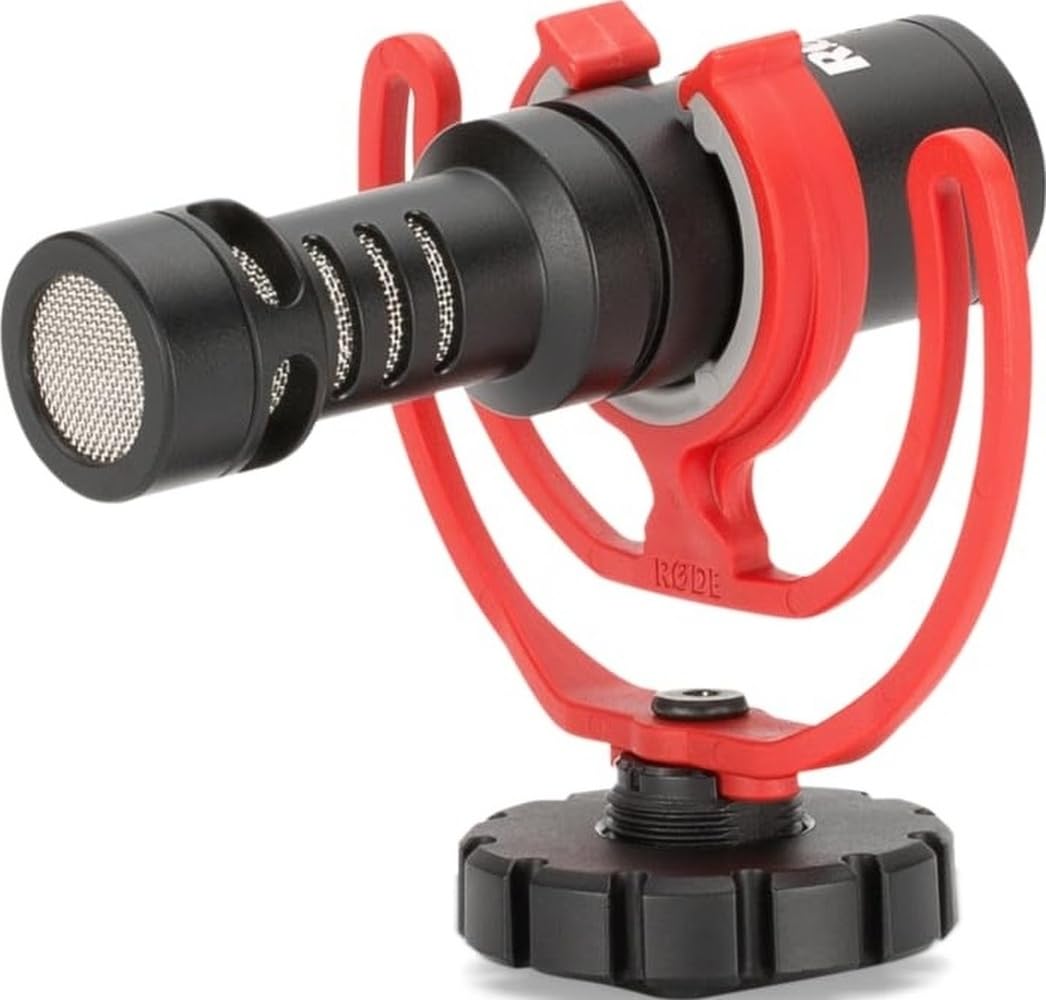
Your camera determines how you power the mic. Some cameras send small amounts of power through the 3.5mm jack (plug-in power), which is perfect for compact mics like the Rode VideoMicro. Others lack that feature, so you need a battery-powered mic like the Sennheiser MKE600, or a phantom-powered condenser like the Audio-Technica AT875R. Match the power type to your camera or you will get no signal at all—a classic mistake for new buyers.
Connectivity and Compatibility
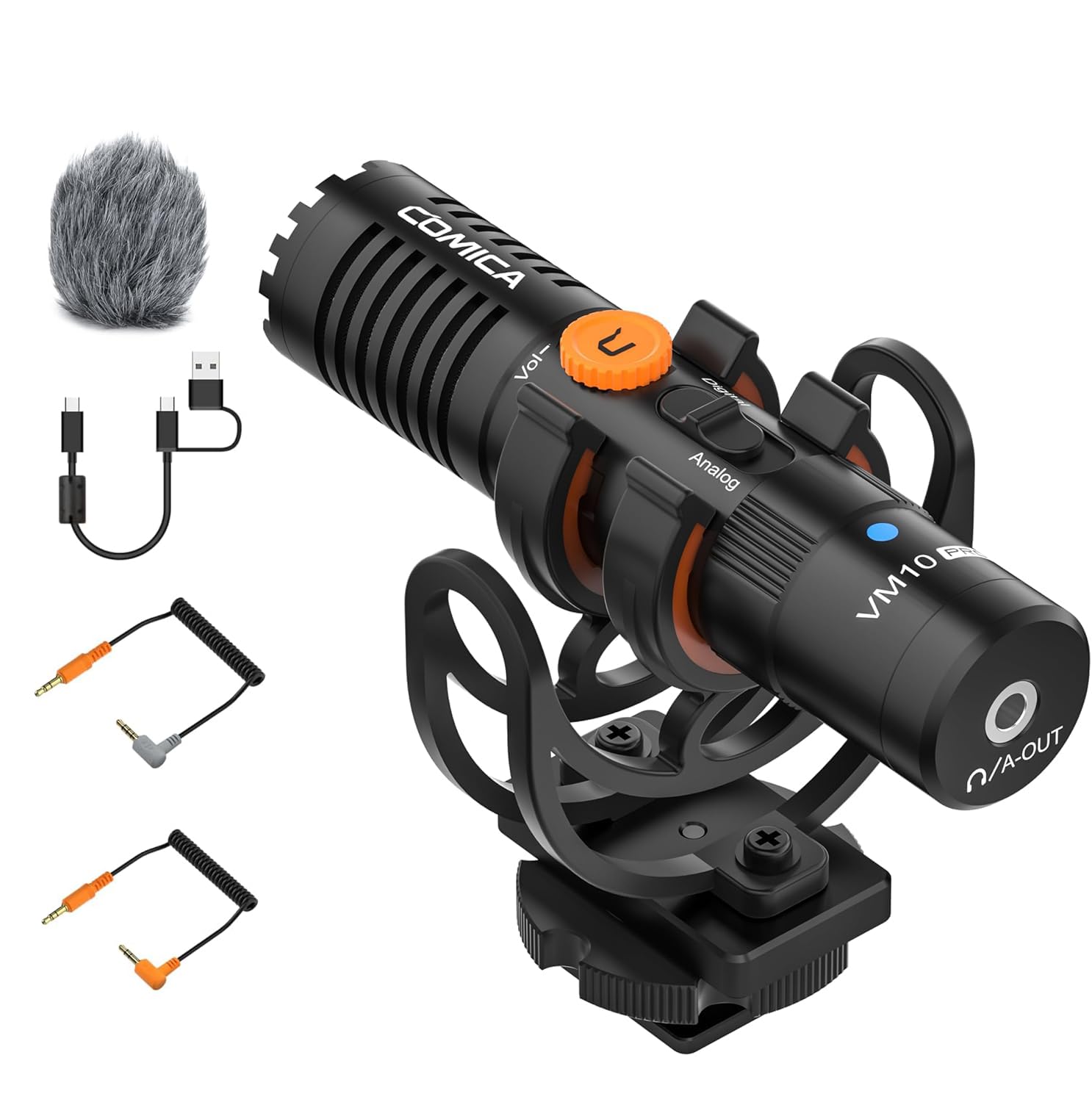
Most on-camera mics plug into your camera’s 3.5mm TRS jack (a standard audio input), but many now also offer USB-C for phones and computers. The COMICA VM10 PRO and the RØDE VideoMic GO II both give you this dual-output flexibility. Check your camera’s input and if you need an adapter for your smartphone before you commit.
Quick Comparison
| Model | Best For | Pickup Pattern | Power Source | Connectivity | Amazon |
|---|---|---|---|---|---|
| Sennheiser MKE600★ Best Overall | Pro filmic dialogue | High directivity | AA battery or phantom | XLR-3 to 3.5mm | Amazon |
| COMICA VM10 PROMost Versatile | Phones and cameras | Super cardioid | Battery-free | 3.5mm and USB-C | Amazon |
| Rode VideoMicroCompact Champ | Compact vlogging | Cardioid | Plug-in power | 3.5mm | Amazon |
| Movo X1-Mini | Multi-device creators | Supercardioid | Battery-free | 3.5mm and USB-C | Amazon |
| RØDE VideoMic GO II | Plug-and-play clarity | Shotgun | Battery-free | 3.5mm and USB-C | Amazon |
| COMICA VM20 | Long battery shoots | Super-cardioid | Built-in lithium (60hr) | 3.5mm TRS/TRRS | Amazon |
| Audio-Technica AT875R | Narration and dialogue | Narrow acceptance angle | 48V phantom | XLR | Amazon |
| Sennheiser MKE 400 | On-the-go monitoring | Super-cardioid | Battery | 3.5mm TRS and TRRS | Amazon |
| RØDE VideoMic Pro+ | Run-and-gun reliability | Shotgun | Rechargeable, AA, USB | 3.5mm and Micro USB | Amazon |
In‑Depth Reviews
1. Sennheiser MKE600
Our pick — over 4.5★ from 800+ verified ratings; the strongest balance of quality and price.
The pro-grade choice that matches mics costing three times as much, right on your camera shoe.
The MKE600 is the gold standard for demanding filmic work, its high directivity locking onto your subject and stripping away side and rear noise. It is a shotgun microphone with an XLR-3 to 3.5mm connector, so it slides onto camcorders and DSLRs alike. Buyers report the included shock mount “just works,” and the AA battery lasts a remarkably long time—so long that owners say the battery “lasts forever.”
You get a switchable “Low Cut” filter to tame wind rumble and a foam windshield and shock mount in the box. It runs on phantom power or a single AA battery, which is a lifesaver when your camera lacks plug-in power. Its 132 dB audible noise spec is low enough for clean dialogue, and owners mention excellent voice pickup even from a few feet away.
Voiceover artists rate this as a standout for narration, praising its tight pickup and effective off-axis rejection (the way it ignores sounds from the sides). It is the rare on-camera mic that blends smoothly with professional studio mics, making it the obvious top pick for serious audio work.
What seals the deal
- Runs on AA or 48V phantom power for total flexibility
- Switchable low-cut filter minimizes wind noise
- Shock mount and foam windshield included
- Audio quality rivals professional mics
What to know before you buy
- It is a larger shotgun, so it reads as “pro gear” on a small camera
- At 10.08 x 0.79 x 4.02 inches, it needs bag space
Grab it if: you want broadcast-level dialogue on camera without moving to a boom setup.
Think twice if: you only vlog from a phone—this needs a camera or recorder input.
2. COMICA VM10 PRO
One tiny 37-gram mic that hops from your DSLR to your Android or laptop without a battery.
The VM10 PRO’s headline trick is a switchable digital and analog output, letting you use USB-C for phones and computers or 3.5mm for cameras. It is battery-free, drawing power straight from your device, so there is nothing to charge. The super cardioid pattern is what buyers praise most—it “eliminates bar noise” and stays clear at 20 feet from a PA with gain at 50%, per one owner’s karaoke test.
Weighing just 37 g and measuring 3.62 x 1.18 x 0.87 inches, it is dramatically more compact than a pro shotgun. The all-aluminum body and shock mount cut handling noise, and the stepless gain control in digital mode lets you dial in volume while monitoring recording in real time. Sound quality is the top-mentioned positive, with owners noting it beats stock mics on phones and captures audio effectively.
The trade-off: on a PC, analog output runs quieter and may need a boost, and the gain knob behaves differently in analog mode. Keep it on a phone or camera for the best experience, where owners say it focuses on what’s in front instead of the crowd behind.
Why owners like it
- Digital and analog modes cover nearly every device
- Battery-free plug-and-play design
- Aluminum build fights interference
- Sound quality is the most-praised feature
Where it stumbles
- PC analog output is quieter than expected
- An iPhone adapter cable is not included
Reach for this if: you switch between a camera and a phone or laptop and want one mic that covers both.
Look elsewhere if: your entire workflow is PC-based—the analog quirks will frustrate you.
3. Rode VideoMicro
A featherlight 42-gram mic that needs no battery and still blocks sound from the back really well.
The VideoMicro is the classic starter shotgun because it pulls power from your camera’s plug-in power (minimum 3V), so there is no battery to charge or replace. At only 80mm long and 42gm (1.5oz), it vanishes on a small rig. Owners pair it with GoPro Hero 8 cameras for quality sound and easy setup, calling the included “dead cat” wind protection a real bonus.
Its rear sound rejection is exceptional—customers note it “blocks sound from the back really well,” making it a bargain with a shock mount and windscreen included. The design is an all-metal body from Australia, and it includes a shoe mount, deluxe wind screen, and SC2 patch cable. For indoor or outdoor shooting, the sound quality rivals larger Rode models.
This mic is best within 2–3 feet of the speaker, and vloggers may need to speak a bit louder compared to pricier mics. The included cord fits cameras only, so phone users need an adapter. It is the pairing pick for a new shooter.
Why it wins: It is the cheapest path to dramatically better audio—no battery, no learning curve, just plug in and record. Owners call it reliable for years with zero issues.
A fair caveat: best within a few feet of the subject, so it is not built for long-distance pickup.
Pick it for: first-time vloggers and GoPro users who want a massive audio upgrade for a tiny footprint.
Pass if: you need long-range dialogue capture—this is a close-range mic.
4. Movo X1-Mini

A complete kit with dual Rycote shockmount and every cable you need, delivering 24-bit clarity.
The X1-Mini is the “everything included” shotgun mic, offering up to 24-bit resolution in digital mode for broadcast-quality audio. It works with iPhones, Android devices, cameras, camcorders, tablets, and laptops—the universal compatibility is the headline. The supercardioid pattern isolates the voice well, and owners confirm it rejects side sounds and is wonderfully plug-and-play.
It is battery-free and built from durable aluminum with a sturdy integrated shock mount. The kit includes a Rycote Shockmount, foam and furry windscreens, separate TRS and TRRS cables, a USB-C output cable, and a hard-sided carrying case. For gaming and meetings, reviewers point out clear, loud pickup up to 5 feet and even use it on a boom arm.
The only real knock is being very sensitive, so placement matters to avoid peaking and distortion. As one owner put it, the clarity is there—you just need to manage positioning. For travel, it is a versatile replacement for a lapel setup, though the full pack demands some bag space.
What stands out: No other mic at this level ships with a hard case and both TRS and TRRS cables, so it truly is ready for any device you own.
Fair warning: its sensitivity means you must watch your levels and distance to keep audio clean.
Best for: multi-device creators who want one mic that works on a camera today and a phone tomorrow, all wrapped in a protective case.
Skip if: you want a set-and-forget mic—this one rewards careful placement.
5. RØDE VideoMic GO II

No switches, no batteries, no fuss—just clear voice isolation that rivals mics twice the price.
The VideoMic GO II is built for simplicity: a 3.5mm TRS output for cameras and a digital USB output for smartphones, tablets, and computers, with no battery and no complicated controls. The included HELIX isolation mount system protects your audio from knocks, bumps, handling noise, wind noise, and plosives (the popping sounds from “p” and “b” consonants). Weighing just 57 g, it disappears on a cold shoe.
Owners say sound quality is excellent, with voice coming through very clear and background noise noticeably reduced. It is the top-mentioned positive by far, with owners calling it a budget alternative that matches + mics. It works with RØDE Connect podcasting software and RØDE Central to open up advanced features like a high-pass filter, high-frequency boost, and pad.
The catch is that, unlike a true shotgun, it picks up more of the room—adjusting gain does not tighten the pattern much. It is an omnidirectional-leaning shotgun for those who want to capture a full scene naturally.
The appeal: It is the easiest possible upgrade to good audio—plug it into a camera or iPhone and it just works, with stable mounting on a cold shoe.
The trade-off: if you need to isolate one voice in a noisy room, a tighter shotgun like the MKE600 will serve you better.
Choose it if: you want a painless, budget-friendly path to clean voice audio on both camera and phone.
Look elsewhere if: you need aggressive background rejection for loud environments.
6. COMICA VM20

The only mic here with an OLED screen, 60-hour battery, and ten-level gain in an 84-gram body.
The VM20 sets itself apart with an OLED display for real-time battery monitoring and a built-in 300mAh rechargeable lithium battery that lasts up to 60 hours from a 3-hour charge. It is one of the few 3.5mm shotgun mics you can use while charging via USB-C, which is a lifesaver on all-day shoots. The 10-level gain knob ranges from -43dB to -23dB sensitivity, giving fine control over your recording level.
Two low-cut filters (75 Hz and 150 Hz) let you switch with one click to reduce hum from outside noise, even on windy days. Owners praise the sound quality as the standout feature, saying it easily picks up voices at moderate volumes and is a “perfect replacement” for built-in camera microphones. The all-metal design weighs only 84 grams and blocks external signal interference.
The kit includes 3.5mm TRS and TRRS adapter cables, a carrying case, a USB-C charging cable, and both windscreen and wind muff. Some shoppers say unit-to-unit variability—most love it, a few received units that never worked. It is brilliant for interviews, vlogging, and outdoor events where battery life matters.
Owners rave about
- Sound quality is the top-praised feature
- 60-hour battery outlasts DSLR batteries
- Ten-level gain with OLED power display
- Full metal build in a compact 84g frame
Watch out for
- Mixing reports of excellent and defective units
- Wind noise reduction is solid but not total
Go with this if: you shoot long events or documentaries and cannot afford a dead battery mid-interview.
Think twice if: you want guaranteed reliability from the start—quality control is inconsistent.
7. Audio-Technica AT875R

A 2.88-ounce broadcast shotgun whose narrow beam finds the balance about two feet out.
The AT875R is built for video production and broadcast ENG/EFP audio (electronic news gathering and electronic field production). Its body is under 7 inches long, so it fits compact digital cameras without awkward overhang. The narrow acceptance angle picks up sound from a tight beam, ideal for long-distance recording, and owners confirm it excels at excluding off-axis sound. the balance sits around 2 feet from the speaker, making it perfect for commercial or narration work and church audiences.
Sound quality is the most-praised feature, with owners noting rich mids, tight lows, and a crisp top end. It needs 48V phantom power, so it pairs with a mixer, recorder, or audio interface rather than a bare camera. The tailored response minimizes camera and handling noise. Owners call it an excellent budget shotgun for ADR, film, and YouTube work.
There is no low-cut filter or pad, so you will need post-EQ, and it will not eliminate loud ambient noise like traffic or kids. It is not MKH 416-class, but it delivers broadcast-quality audio that blends well with pricier mics.
The verdict: This is a serious studio tool for dialogue and narration, not a grab-and-go vlog mic. Owners say it is worth twice the price.
The limitation: phantom power requirements mean it stays off simple on-camera rigs.
Reach for this if: you record narration, ADR, or interviews in a controlled space and want a compact broadcast-grade mic.
skip it if: you shoot outdoors on a plain camera without phantom power.
8. Sennheiser MKE 400

A compact Sennheiser shotgun with a headphone jack, so you hear exactly what you are recording.
The MKE 400 is a highly directional super-cardioid shotgun designed for isolated, enhanced in-camera audio. Its standout feature is an integrated headphone output jack with volume adjustment, letting you monitor audio on the fly—a huge bonus for run-and-gun shooters and vloggers. The built-in low-cut filter and 3-step sensitivity switch give you flexible control in any environment.
Owners call it a clear upgrade from entry-level mics, praising its compact, lightweight design and professional-grade audio. The interchangeable 3.5mm TRS and TRRS connectivity means it works on DSLR/mirrorless cameras and mobile devices. The integrated wind protection and internal suspension mount minimize handling noise, keeping your audio clean while moving.
Noise cancellation gets mixed feedback, with some reporting a higher noise floor than expected, especially when the low-pass filter is active. It is a solid performer when the camera is steady and pointed at the subject. For parents recording kids’ performances or creators needing on-the-fly monitoring, this is a versatile pick.
Why it stands out: the headphone jack is a rare, practical feature that saves you from discovering bad audio after the shoot is over.
The honest trade-off: noise floor performance is not class-leading, so quiet rooms are its best friend.
Pick this if: you need to monitor audio live while shooting events, vlogs, or performances.
Pass if: you demand the absolute lowest noise floor at this price—the MKE600 is quieter.
9. RØDE VideoMic Pro+

An auto-powering shotgun with a rechargeable LB-1 battery and a top-tier Rycote Lyre suspension.
The VideoMic Pro+ is the run-and-gun shooter’s dream because it automatically turns off when unplugged from the camera, saving battery life. It is powered by the included RØDE LB-1 Lithium-Ion Rechargeable Battery, 2 x AA batteries, or continuously via Micro USB—three power options in one mic. The built-in battery door makes swapping the battery easy and prevents losing it.
It keeps the top-tier Rycote Lyre suspension system, which isolates handling noise and bumps. It also adds a high-pass filter (cuts low rumble), a high-frequency boost, and a pad (a switch that reduces input level to prevent distortion). Owners praise its ability to isolate desired sounds and its premium clarity, calling it a “serious standout” for video production. It works with video cameras, DSLR cameras, and portable audio recorders.
The Digital Switching feature captures audio at the source, reducing post-production time. The size is a bit big, and it is not ideal for direct phone use without extra adapters. For dedicated camera users, this is a top-tier workhorse.
What makes it pro
- Auto power function preserves battery life
- Three power options: LB-1, AA, or Micro USB
- High-pass filter, high-frequency boost, and pad
- top-tier Rycote Lyre suspension
The trade-offs
- Size is noticeably larger than compact mics
- Phone use requires multiple adapters
Best for: filmmakers who want reliable, broadcast-ready audio with flexible power and automatic shutoff.
Not for: smartphone-only creators who do not want to fuss with adapters.
Understanding the Specs
Audible Noise and Sensitivity
Audible noise is the mic’s own hiss, measured in decibels (dB); lower is cleaner—the Rode VideoMicro sits at 20 dB, while the Sennheiser MKE600’s 132 dB spec is misleadingly high, yet it still sounds quieter in practice. Sensitivity tells you how efficiently the mic converts sound into a signal, also in db, and matters for how much gain you need from your camera.
Power Delivery
Shotgun mics get power three ways: plug-in power from a camera’s 3.5mm jack (used by the Rode VideoMicro and COMICA VM10 PRO), built-in batteries (like the COMICA VM20’s 300mAh lithium cell or the Sennheiser MKE600’s AA), or 48V phantom power from a mixer or recorder (required by the Audio-Technica AT875R). Match this to your gear before buying, or you may find the mic silent.
FAQ
Will a shotgun mic work with my smartphone?
What is the difference between a supercardioid and cardioid pickup pattern?
How long does the battery last on a camcorder microphone?
What is phantom power and do I need it?
Why does my microphone pick up so much wind noise outside?
What is a shock mount and why does it matter?
Can I use a camcorder microphone for podcasting or voiceovers?
Why is my microphone so quiet when I plug it into my camera?
Is a longer shotgun microphone always better for picking up distant sound?
Final Thoughts: The Verdict
Across the board, the camcorder microphone winner is the Sennheiser MKE600 because it delivers professional-grade dialogue on camera with both AA and phantom power flexibility, and its audio quality genuinely matches mics costing three times as much. If you want a battery-free, do-everything mic that hops between camera and phone, grab the COMICA VM10 PRO. And for all-day event shoots where a dead battery is not an option, the COMICA VM20 with its 60-hour runtime and OLED display is the one to reach for.
How We Picked
We do not accept paid placement. Every pick is matched to a real buyer and a real use-case; we do not hands-on test units.
Sources & Methodology
Specifications: manufacturer listings and product documentation. Review insights: verified customer reviews, as of August 2026. Pricing: not shown on this page (it changes often); check the current price via the retailer link.
As an Amazon Associate, FitlyFast earns from qualifying purchases. This does not affect which products we feature.