
Our readers keep the lights on and the weekend projects moving. As an Amazon Associate, I earn from qualifying purchases.
Specs are compiled from manufacturer listings and verified buyer reviews and can change over time — please confirm the key details on the product page before buying.
Your bike’s temperature gauge creeping toward the red means the fluid inside your radiator is not doing its job. The right coolant for bikes pulls heat away from the engine to keep power consistent on long rides, not just freeze protection for winter. This guide compares nine ready-to-use options, from track-focused formulas to factory-fill blends, so you can match one to your machine and riding style.
I’m Rikta — the founder and writer behind FitlyFast. This guide is built by comparing the manufacturers’ published specifications and the patterns across verified customer reviews, so you get each pick’s real strengths and trade-offs instead of marketing spin.
Finding the best coolant for bikes means knowing which premixed formula protects your aluminum engine without mixing mistakes.
Our Picks at a Glance

How To Choose The Best Coolant For Bikes
Your bike’s cooling system is a closed loop that moves heat away from the engine block. The fluid inside that loop does three jobs at once: it carries heat, it protects metal parts from corrosion, and it raises the boiling point so the system can run hot without turning to steam. Choosing the right coolant for bikes depends on matching the chemistry to your engine and your riding conditions.
Premixed vs. Concentrate
Premixed coolant arrives in the bottle already diluted with water — you pour it straight into the reservoir with no measuring. Concentrate requires you to mix it with distilled water yourself, which leaves room for error if you guess the ratio wrong. If you want simplicity and a guaranteed mixture, premixed options remove the guesswork entirely.
Ethylene Glycol vs. Propylene Glycol
Ethylene glycol is the traditional base for most motorcycle coolants and provides excellent heat transfer. Propylene glycol is a less toxic alternative that some riders prefer for off-road use, since it poses a lower risk if spilled. Both work well, but your choice may come down to track rules or personal preference about toxicity.
OEM vs. Universal Formulas
Factory-made coolant from brands like Kawasaki, Yamaha, or KTM is formulated specifically for that brand’s aluminum engines and cooling systems. Universal options like Engine Ice or Motul are designed to work across many makes. If you want the confidence of a factory match, OEM fluid is the direct route.
Quick Comparison
| Model | Best For | Base Chemistry | Volume | Premixed | Amazon |
|---|---|---|---|---|---|
| Engine Ice★ Best Overall | Heat reduction | Propylene glycol | 4.53 lb bottle | Yes | Amazon |
| Maxima CoolanolTop Performer | Sport bikes | Ethylene glycol | 64 fl oz | Yes | Amazon |
| KPO KawasakiKawasaki Fit | Kawasaki top-offs | — | 32 oz | Yes | Amazon |
| Kawasaki Aluma Cool | Ninja owners | — | 1 liter | Yes | Amazon |
| Motorex M3.0 | Vespa scooters | Ethylene glycol | 1 liter | Yes | Amazon |
| KTM Motorex | KTM owners | Ethylene glycol | 1 liter | Yes | Amazon |
| Motul Motocool Expert | Track bikes | — | 1 liter | — | Amazon |
| Yamaha Yamalube | Yamaha models | Ethylene glycol | 2 quarts | Yes | Amazon |
| EVANS Waterless | Overheating fixes | Waterless | 1/2 gallon | Yes | Amazon |
In‑Depth Reviews
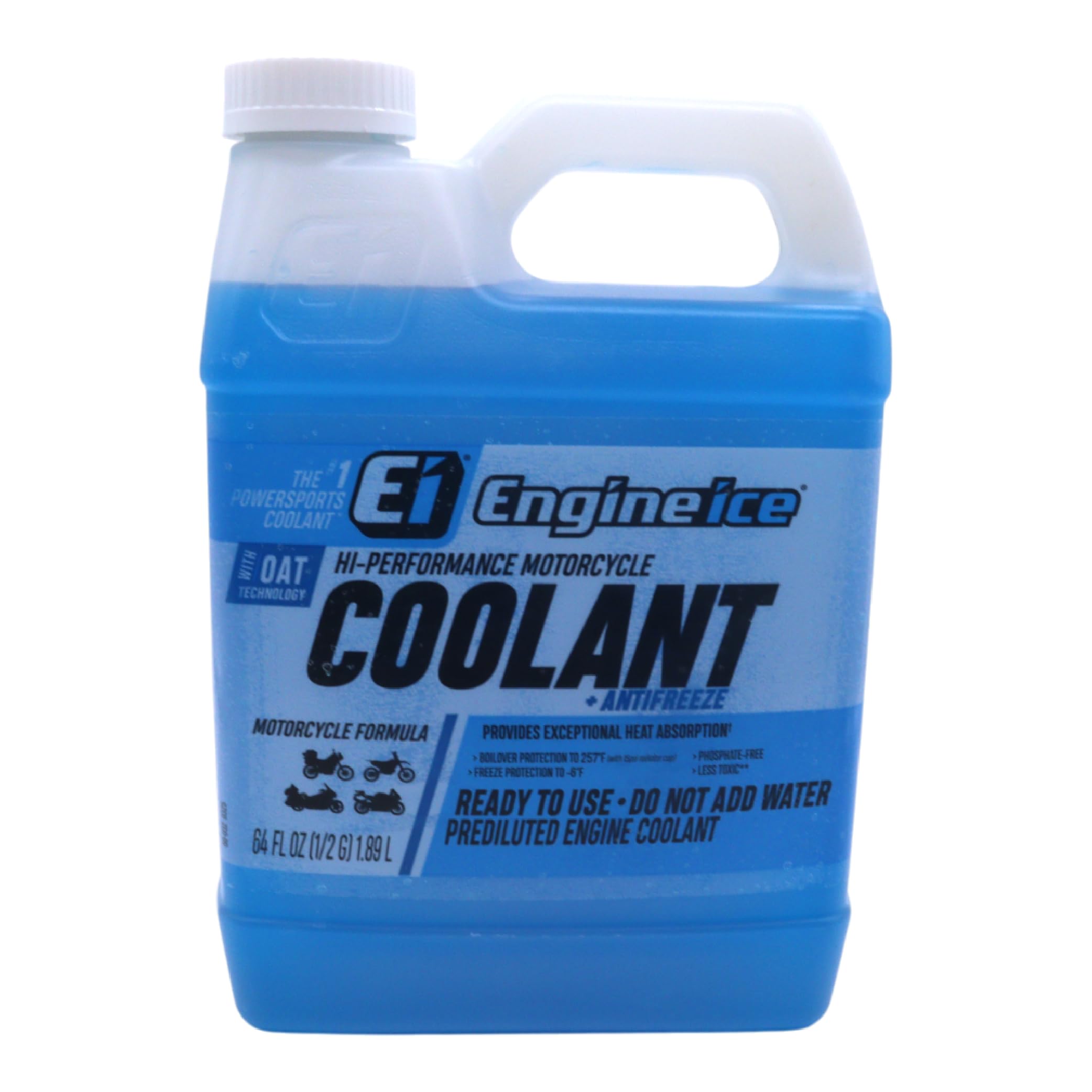
1. Engine Ice High-Performance Motorcycle Coolant
Our pick — over 4.5★ from 600+ verified ratings; the strongest balance of quality and price.
Riders report this coolant drops operating temperature on the very first ride.
Engine Ice earns the top spot because buyers report the temperature gauge changes on the first ride, not after a season of use. It is a propylene-glycol based antifreeze (a less toxic base than traditional ethylene glycol) that is biodegradable, phosphate free, and non-toxic, engineered to disperse heat so your engine holds its optimum operating temperature instead of losing power to excess heat. It arrives pre-mixed, so you pour it straight from the bottle with no water math.
The proof shows up on the temperature gauge. Owners mention seeing the change in operating temperature on the first ride, and the reviews consistently describe a gauge that runs cooler and engines that stay consistent. It holds a 4.9-star average across 600+ owners, with quality as the most-praised trait.
At 4.53 pounds per bottle, this is noticeably heavier than the 2.4-pound Kawasaki KPO option above, but you are paying for a formula that has a long track record of reducing operating temperatures across a wide range of vehicles. The one honest caveat: it is ethylene-glycol free, so if your track explicitly bans glycol-based coolants, check the rules before you commit.
What Owners Love
- Superior corrosion protection for aluminum engines
- Pre-mixed and ready for immediate use
- Non-toxic propylene glycol base is safer if spilled
Worth Knowing
- Some race tracks restrict glycol-based coolants
- Heavier bottle than compact OEM options
Reach for this if: you ride off-road or on the street and want proven heat reduction on the first ride.
Look elsewhere if: your local track bans glycol-based fluids entirely.
2. Maxima Coolanol 50/50 Blend Treatment
The ethylene-glycol workhorse that sport bike riders have trusted for years.
Maxima Coolanol is built for riders who want maximum horsepower by keeping engine temperatures in check. It arrives premixed with pure, deionized water, so the 50/50 blend is already exact. The advanced formulation protects against rust, corrosion, and cavitation — the tiny vapor bubbles that can erode metal over time.
This is the fluid that keeps showing up in sport bike conversations, with owners recommending it specifically for water-cooled machines. Customers note long-term trust—one ran it for 2 years in all temperatures with no issues, another uses it in a GSXR 750 and calls the cooling excellent. It holds a 4.8-star average across 700+ ratings, with functionality as the most-praised trait.
At 64 fluid ounces, this bottle gives you more volume than the 1-liter Kawasaki Aluma Cool, making it a strong value for a full flush. It is nitrate, amine, and borax free, and it safely mixes with most OEM glycol-based coolants if you are topping off rather than starting fresh.
Long-term pick: The 2-year owner reports with zero issues make this a set-and-forget choice for daily riders.
Compatibility note: If switching from another coolant, flush with distilled water first to avoid mixing chemistries.
Best for: sport bike owners who want a proven ethylene-glycol blend with generous volume.
The trade-off: Green dye means you will see it clearly in the reservoir, but mixing with other brands is not advised.
3. KPO Pre-Diluted Engine Coolant for Kawasaki
The factory-matched top-off that Ninja owners keep in their ride-day kit.
This KPO bottle is the direct replacement for Kawasaki part K63G-301-01Q, and it comes pre-diluted with a bittering agent (a safe chemical that tastes awful so kids or pets won’t drink a spill) so it is ready to pour. At 32 ounces and 2.4 pounds, it is the lighter, more compact option compared to the 4.53-pound Engine Ice bottle — small enough to toss in a bag for a ride-day emergency kit.
Reviews emphasize simplicity. A Ninja 250R owner running low on coolant called it perfect for topping off, and another with a vintage Kawasaki 600 found it an easy replacement. The factory recommendation gives Kawasaki riders confidence, and the compact size earns repeated mentions as the right companion for the trail or track.
Unlike the universal Engine Ice, this is a vehicle-specific fit for Kawasaki machines. If you ride a different brand, this is not the bottle for you — but for Kawasaki owners who want the OEM match without the bulk, it is hard to argue with the convenience.
Compact convenience: At 2.4 pounds, this is the easy-carry option vs. the 4.53-pound Engine Ice bottle.
Factory trust: Kawasaki-recommended fluid means no guessing about compatibility with your cooling system.
Grab this if: you ride a Kawasaki and want a pre-diluted, factory-matched top-off.
skip it if: you need a full-system flush volume — 32 oz is a top-off size.
4. Kawasaki Aluma Cool QT Coolant

The genuine Kawasaki factory fluid that Ninja owners trust for aluminum systems.
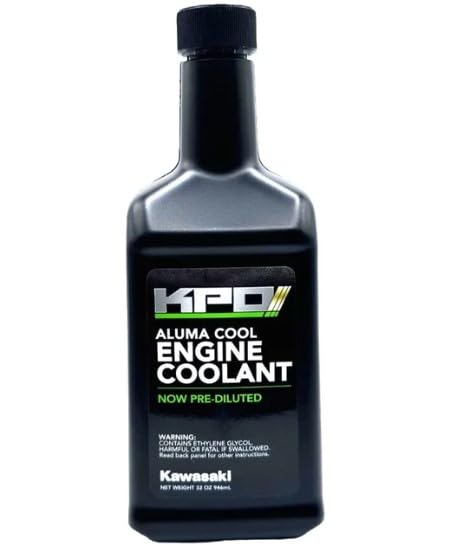
Kawasaki Aluma Cool is the OEM part — part number K61081-004A — designed specifically for Kawasaki motorcycles. It is pre-diluted, and the instructions are blunt: do not add water. Pour it in and go, which makes it an ideal choice for riders who want zero guesswork.
The name Aluma Cool points at its purpose: protecting aluminum coolant systems from corrosion. Owners of a 1996 Ninja 500 and a KLR650 both reported satisfaction, with the KLR650 owner noting better temperature control than the previous fluid in the bike. The fact that it is made by Kawasaki carries weight with buyers who want the factory match.
Sizing is where this one differs from the pack. The listing shows it as a 1-liter bottle with an 11-count unit figure — a quirk of Amazon’s listing system, but the takeaway is you get a genuine OEM fluid in a convenient liter size.
Factory Assurance
- Genuine Kawasaki OEM part number K61081-004A
- Pre-diluted — no water to add
- Formulated for aluminum cooling systems
Keep in Mind
- Vehicle-specific fit for Kawasaki motorcycles
- Pricier than generic coolants per liter
Choose this for: Kawasaki Ninja and KLR owners who want the genuine factory fluid.
Think twice if: you ride a non-Kawasaki brand and need a universal option.
5. Motorex M3.0 Ethylene Glycol Coolant

The Swiss-formulated coolant that Vespa riders call the right stuff.
Motorex M3.0 comes from the Swiss brand behind KTM’s factory fluids, and this ready-to-use 1-liter bottle is formulated to be free of silicates, nitrites, amines, borates, and phosphates. That clean chemistry makes it a strong match for modern engines with aluminum components.
The review pages tell a Vespa story. Owners of Vespa 300 GTS scooters praise both the cooling and the compatibility, and the pour spout earns repeated mentions for being easy to use without spilling. One owner summed up the sentiment: “use the right stuff for your Vespa.” It holds a 4.7-star average across 300+ owners, with quality as the most-praised trait.
Volume is a real advantage here. At 1 liter, reviewers point out it has enough to fill multiple times, which makes it a better value than a single top-off bottle. The value-for-money read is mixed in the reviews — some call the price excellent, others find it spendy — but the quality consensus is strong.
Multi-fill value: One liter stretches across several top-offs, per buyer reports.
Clean chemistry: Free of silicates, nitrites, amines, borates, and phosphates for modern engines.
Reach for this if: you ride a Vespa or scooter and want a clean, easy-pour coolant.
The catch: Value perceptions vary — some riders find the per-liter cost higher than bulk options.
6. KTM Motorex Coolant M3.0

The genuine KTM PowerParts fluid engineered for Ready to Race machines.
This is the exact coolant KTM designs into its bikes — a genuine KTM Factory PowerParts Technical Accessory, bottled by Motorex, the Oil of Switzerland. It is an ethylene glycol-based M3.0 formula that protects against frost, corrosion, limescale deposits, and overheating, with a bittering agent (a safe additive that tastes terrible to deter kids or pets from drinking a spill) added for safety.
The engineering story is about thermal performance. The formula offers excellent thermal conductivity and extended usage duration, which translates to consistent engine temperatures over longer intervals between changes. It is ready to use straight from the 1-liter bottle with no mixing.
At 2.57 pounds, it is lighter than the 4.53-pound Engine Ice bottle, making it easier to carry as a spare. Reviews are straightforward — owners call it quick and easy, and one reviewer running it in a KTM Duke reports excellent cooling. It holds a 4.6-star average across 100+ ratings.
Race pedigree: Genuine KTM PowerParts engineering with Motorex Swiss formulation.
Safety touch: Contains a bittering agent to discourage accidental ingestion.
Best for: KTM owners who want the exact factory fluid their bike was designed around.
Not for: riders of other brands seeking a universal coolant — this is a KTM-specific fit.
7. Motul Motocool Expert
The track-day coolant that a Ducati 1199 owner swears by.
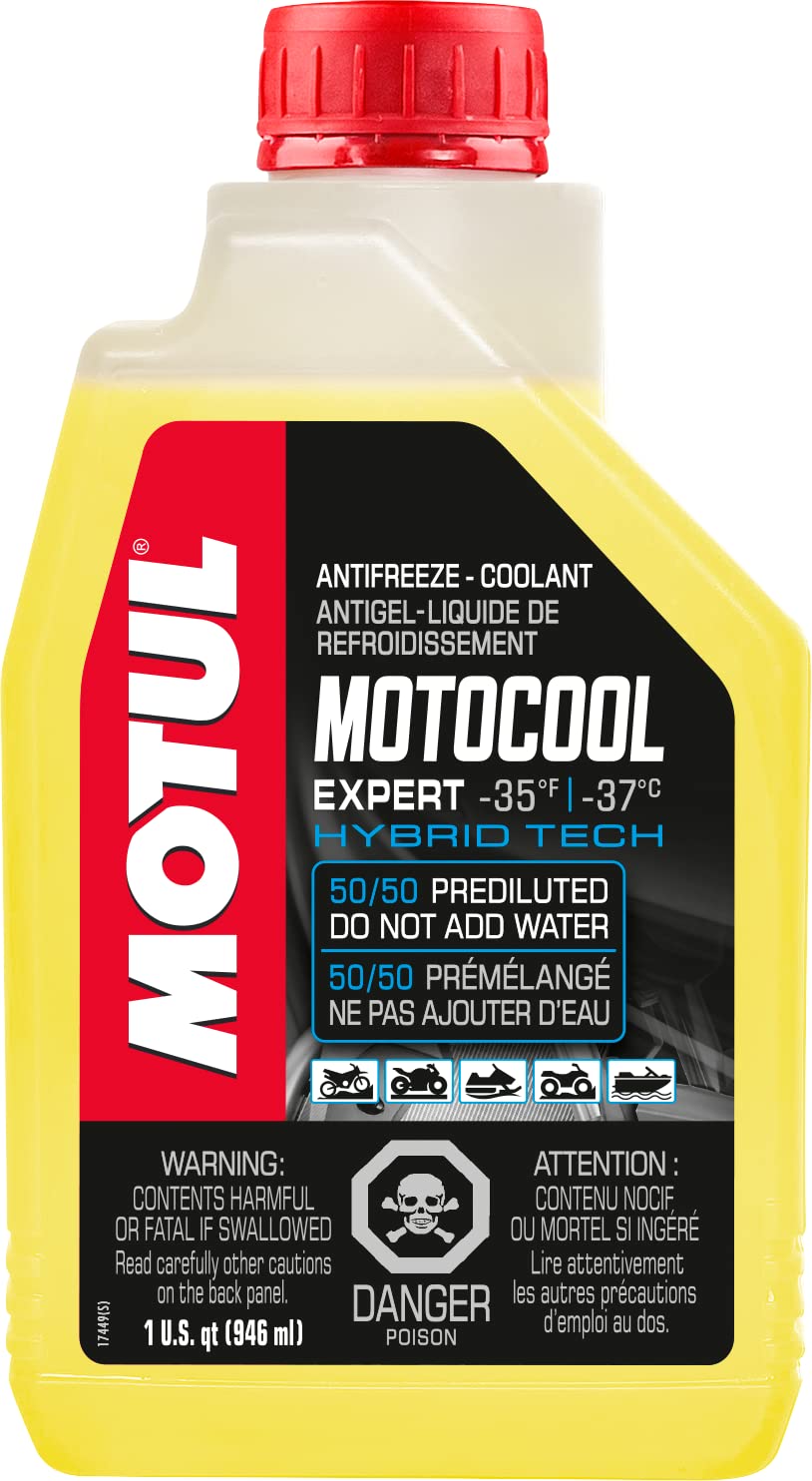
Motul Motocool Expert is the choice for riders who push their machines hard. The review pages show it in action on a Track Ducati 1199 and a hard-working KTM Duke, with owners calling it great and awesome in equal measure. One buyer summed it up as “the best protection for any motorcycle or scooter cooling system.”
This 1-liter can comes from Motul, a brand with deep roots in motorsport lubricants and fluids. While the listing keeps the spec sheet lean, the real-world reports are consistent: it cools well under hard use, which is exactly what a track bike needs.
It holds a 4.8-star average across ratings, and the praise is direct and enthusiastic. The one hiccup in the reviews was a delivery mix-up — an address issue, not a product problem — so the fluid itself draws no complaints.
Why Track Riders Choose It
- Proven on track bikes like the Ducati 1199
- Strong protection for motorcycle and scooter systems
- Reliable cooling under sustained hard use
Minor Note
- Occasional delivery hiccups reported — check your address
Pick this if: you track your bike or ride hard and want a coolant with proven high-load performance.
Consider elsewhere if: you prefer a universal brand with a longer spec sheet.
8. Yamaha Yamalube Pre-Diluted Antifreeze

The Yamaha factory blend with a 60/40 mix that includes two quarts per pack.
Yamaha Yamalube Yamacool is the original OEM antifreeze for Yamaha machines, and this package includes two quarts. It uses a specially formulated ethylene glycol base with a 60/40 coolant-to-water ratio — slightly more concentrated than the common 50/50 — and includes a bittering agent for safety.
The 60/40 blend is the standout detail here. A higher coolant ratio can offer stronger corrosion protection, and Yamaha engineered it specifically for their cooling systems. The review pages show owners using it in side-by-sides and Kodiak ATVs, with one Kodiak owner praising the simplicity of not measuring water.
At 1 pound for the two-quart set, this is the lightest option in the lineup by a wide margin. It is also pre-diluted, so you flush with distilled water and fill — no math required.
Two quarts included: Enough volume for a fill or multiple top-offs, at just 1 pound total.
Factory ratio: The 60/40 blend is Yamaha’s specific formulation for their engines.
Reach for this if: you own a Yamaha bike, side-by-side, or ATV and want the exact factory blend.
pass on it if: you ride a non-Yamaha brand — this is a vehicle-specific formula.
9. EVANS Waterless Engine Coolant

The waterless formula that eliminates corrosion by removing water entirely.
EVANS takes a different approach: this coolant contains no water at all. By removing water from the equation, it eliminates corrosion, liner erosion, and water pump cavitation — the vapor-bubble damage that slowly eats metal parts. It is designed for motocross, trail, enduro, and street bikes, plus quads, ATVs, UTVs, and snowmobiles.
The overheating stories are the most compelling evidence. A Suzuki C50 Boulevard owner had the warning light come on during highway traffic and bought this to stop it. An ATV owner who flushed and replaced with EVANS “never had any more issues.” Off-road racers report using it for years and call it the best coolant available.
The catch is in the installation. EVANS requires that all old water-based coolant be completely removed before install — you cannot just pour it in over what is already there. That extra step is the trade-off for the waterless protection.
The Waterless Advantage
- Eliminates corrosion and water pump cavitation erosion
- Used by race teams for years in harsh conditions
- Minimizes electrolysis issues and maintenance costs
The Installation Catch
- All old water-based coolant must be fully drained first
- Higher upfront cost than conventional coolants
Choose this if: you battle recurring overheating and want the long-term protection of a waterless system.
Think twice if: you want a simple pour-and-go top-off — this requires a full system flush first.
Understanding the Specs
Ethylene Glycol vs. Propylene Glycol
Ethylene glycol is the traditional coolant base, offering strong heat transfer and frost protection. Propylene glycol is a less toxic alternative that is safer if spilled, which is why off-road riders often prefer it. Both do the same core job of moving heat away from the engine.
Premixed vs. Concentrate
Premixed coolant arrives already diluted with water, so you pour it straight in with zero measuring. Concentrate requires you to add distilled water yourself. Premixed removes the risk of a wrong ratio, which is why most bike coolants in this guide are ready to use.
The Bittering Agent
A bittering agent is a safe chemical added to make the fluid taste awful. It is a safety feature that discourages children or pets from drinking a spilled puddle of coolant. Several OEM coolants, including KPO and KTM Motorex, include it.
Corrosion and Cavitation Protection
Corrosion is the slow rusting of metal parts inside your cooling system. Cavitation is different — it is the damage caused by tiny vapor bubbles that collapse against metal surfaces. Good coolants include additives that fight both, protecting your engine’s internal passages and water pump.
FAQ
Can I use car antifreeze in my motorcycle?
What does premixed coolant mean?
How often should I change my bike’s coolant?
Can I mix different coolant brands?
What is a bittering agent in coolant?
Is propylene glycol coolant safer than ethylene glycol?
What happens if I use straight water instead of coolant?
Why does the Engine Ice bottle weigh more than others?
Do I need OEM coolant for my specific bike brand?
What is a waterless coolant and is it worth it?
Final Thoughts: The Verdict
For most riders, the best coolant for bikes is the Engine Ice because it delivers the most consistent heat-reduction results right out of the bottle, backed by a crowd favorite rating. If you ride a Kawasaki and want the factory match, grab the Kawasaki Aluma Cool for genuine OEM confidence. And if overheating has been a recurring battle, the EVANS Waterless is the one to reach for — just be ready for the full flush it demands.
How We Picked
We do not accept paid placement. Every pick is matched to a real buyer and a real use-case; we do not hands-on test units.
Sources & Methodology
Specifications: manufacturer listings and product documentation. Review insights: verified customer reviews, as of August 2026. Pricing: not shown on this page (it changes often); check the current price via the retailer link.
As an Amazon Associate, FitlyFast earns from qualifying purchases. This does not affect which products we feature.