
Our readers keep the lights on and the weekend projects moving. As an Amazon Associate, I earn from qualifying purchases.
Weak sprinkler pressure turns a lush lawn into a patchy headache. A dedicated 1.5 HP sprinkler pump solves that by pulling from a well, pond, or even your city line and delivering the steady flow your irrigation system was designed for.
I’m Rikta — the co-founder and writer behind FitlyFast. I’ve spent countless hours dissecting the specs on these pumps — comparing flow curves, build materials, voltage options, and real-world durability reports to separate the workhorses from the headaches.
After sifting through the data on nine models, this guide narrows down the strongest 1.5 hp sprinkler pump choices so you can buy with real confidence instead of guesswork.
How To Choose The Best 1.5 HP Sprinkler Pump
Picking a sprinkler pump isn’t about grabbing the biggest horsepower sticker. You need to match the pump’s actual flow curve, build materials, and voltage requirements to your specific sprinkler layout and water source. Here’s what separates a smart buy from a return.
GPM and Total Dynamic Head
A 1.5 HP motor can produce drastically different gallons per minute depending on the pump’s impeller design. A centrifugal-style sprinkler pump might deliver 45 GPM at zero lift but drop to 25 GPM at 40 feet of head. Count your sprinkler heads and check the manufacturer’s flow chart at your actual operating head.
Housing Material and Longevity
Cast iron volutes like those on the AQUASTRONG or WAYNE models offer serious durability and vibration absorption, but they add weight. Stainless steel heads resist corrosion better in outdoor, high-moisture environments. Thermoplastic pumps are lighter and never rust, but they can be more vulnerable to impact and UV exposure over many years.
Self-Priming and Check Valve Requirements
Most sprinkler pumps are not designed to run dry. A self-priming pump allows the system to pull water from a source below the pump level after an initial fill. You still need a foot or check valve on the intake line to hold prime between cycles. Models without a built-in check valve require you to purchase one separately.
Dual Voltage and Wiring Setup
Many 1.5 HP pumps offer both 115V and 230V operation. Running at 230V draws half the amperage, which means you can use a smaller gauge wire and a less expensive breaker. If you are wiring into an existing sprinkler system with a long cable run, the 230V option is almost always the better choice.
Quick Comparison
On smaller screens, swipe sideways to see the full table.
| Model | Category | Best For | Key Spec | Amazon |
|---|---|---|---|---|
| K2 IRP15001K | Centrifugal | Budget replacement for lake/pond systems | 47 GPM at 0′ lift | Amazon |
| VEVOR Shallow Well Pump | Jet Pump | Portable well water and hose boosting | 87 PSI max pressure | Amazon |
| FOTING 1.6HP Shallow Well | Jet Pump | Lightweight pond-to-lawn transfer | 1600 GPH max flow | Amazon |
| FOTING 1.5HP w/ Pressure Tank | Jet Pump | Automatic domestic water boosting | 5 Gal pressure tank | Amazon |
| Flotec FP5172 | Centrifugal | High-volume multi-zone sprinkler systems | 67 GPM max flow | Amazon |
| AQUASTRONG SPRK150 | Centrifugal | Large area cast iron durability | 4250 GPH max flow | Amazon |
| Flotec FP5172-08 | Centrifugal | Proven long-term daily cycling | 67 GPM, 25′ max lift | Amazon |
| WAYNE WLS150-1 | Centrifugal | Heavy-duty cast iron reliability | 45.8 GPM, cast iron volute | Amazon |
| DEEKOOL EF5500-BOX | Diaphragm | Soft wash and chemical spraying | 5.5 GPM, 60 PSI | Amazon |
In‑Depth Reviews
1. Flotec FP5172 1-1/2 HP Sprinkler Pump

The Flotec FP5172 is a workhorse designed for large sprinkler systems. With a published max flow of 67 GPM, it can handle up to 30 sprinkler heads in a well-planned layout. The glass-filled thermoplastic body resists corrosion, and users report running it daily throughout entire summers without a hitch. It offers dual-voltage operation (115/230V), giving you wiring flexibility, though it ships pre-wired for 230V.
One experienced owner noted operating eight impact sprinklers with better pressure than their city water supply provided for a single hose. The pump is self-priming after the initial fill, and the 1-1/2″ NPT suction and discharge ports keep flow restrictions minimal. At 33 pounds, it is lighter than cast iron alternatives but still feels solidly built.
The plastic base is the weakest point — several users caution against prolonged direct sunlight exposure. A small number of early failures have been reported, but the majority of owners highlight multi-year reliability. It is a proven design that often outlasts pricier cast iron pumps in the same role.
Why it’s great
- Exceptional 67 GPM flow supports large zone counts
- Corrosion-proof thermoplastic resists rust indefinitely
- Dual-voltage motor adapts to existing wiring
Good to know
- Plastic base needs protection from UV exposure
- Wiring compartment is tight for larger gauge cables
2. K2 Pumps IRP15001K 1-1/2 HP Sprinkler Pump
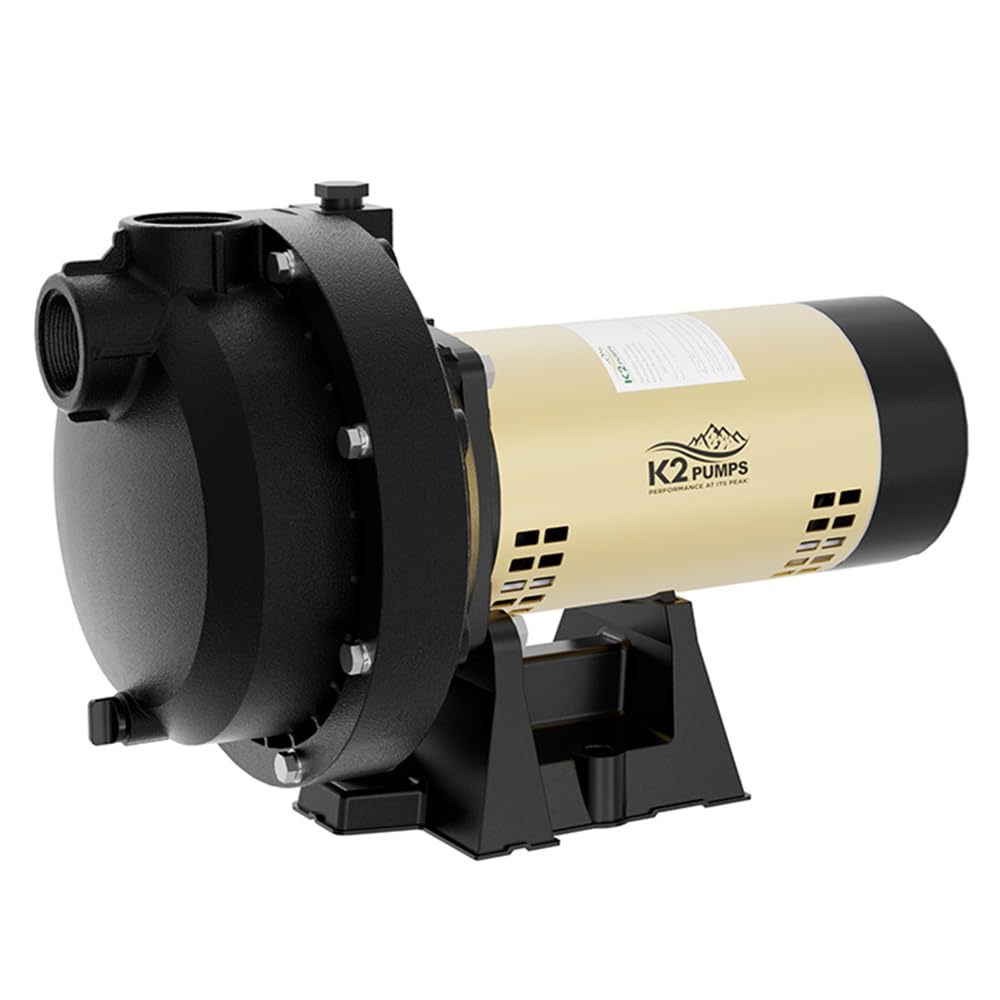
The K2 IRP15001K is a solid mid-range centrifugal pump that matches the performance of big-box store brands at a noticeably lower price point. Its 47 GPM flow at zero lift is enough for 10 to 12 sprinkler heads, and the glass-filled thermoplastic construction keeps it light and rust-free. Owners using it as a lake-water replacement pump report identical performance to units costing significantly more.
The pump is pre-wired for 230V but can be switched to 115V if your setup demands it. It requires an external check or foot valve to hold prime, which is common for this class. Installation is straightforward with 1-1/2″ NPT connections, and the included switch makes operation simple.
Durability reviews are mixed — several units ran reliably for years, while a smaller number failed within a year due to loud operation or seized motors. The 1-year warranty provides basic coverage, but the low entry price makes it a reasonable gamble for budget-conscious buyers. It is best suited for sprinkler systems with moderate head requirements.
Why it’s great
- Excellent price-to-flow ratio for its class
- Corrosion-resistant thermoplastic body
- Simple wiring with dual-voltage support
Good to know
- No power cord included — buyer must supply
- Some units have reported premature motor failure
3. VEVOR Shallow Well Pump 1.5 HP

The VEVOR Shallow Well Pump packs a 1.5 HP motor into a portable stainless steel and cast aluminum package. It delivers a max pressure of 87 PSI — significantly higher than many competitors — along with a 164-foot max head. This makes it ideal for pulling from deeper wells or boosting city water pressure for car washing and high-pressure hose work.
The ETL certification and IPX4 water resistance rating add credibility to its build quality. The stainless steel head resists rust, and the carry handle makes it easy to move between water sources. It comes with two garden hose adapters, simplifying the initial hookup for users who want a quick setup.
Reviews are largely positive for its pressure output, but a few owners note that the pump is loud enough to require earplugs during extended operation. There are isolated reports of failure after winter storage, so proper seasonal draining is essential. It is a strong choice for users who need high pressure from a portable unit.
Why it’s great
- High 87 PSI pressure for tough boosting tasks
- ETL certified with IPX4 splash protection
- Stainless steel head for corrosion resistance
Good to know
- Notably loud during operation
- Must be fully drained before freezing storage
4. FOTING 1.6HP Shallow Well Pump
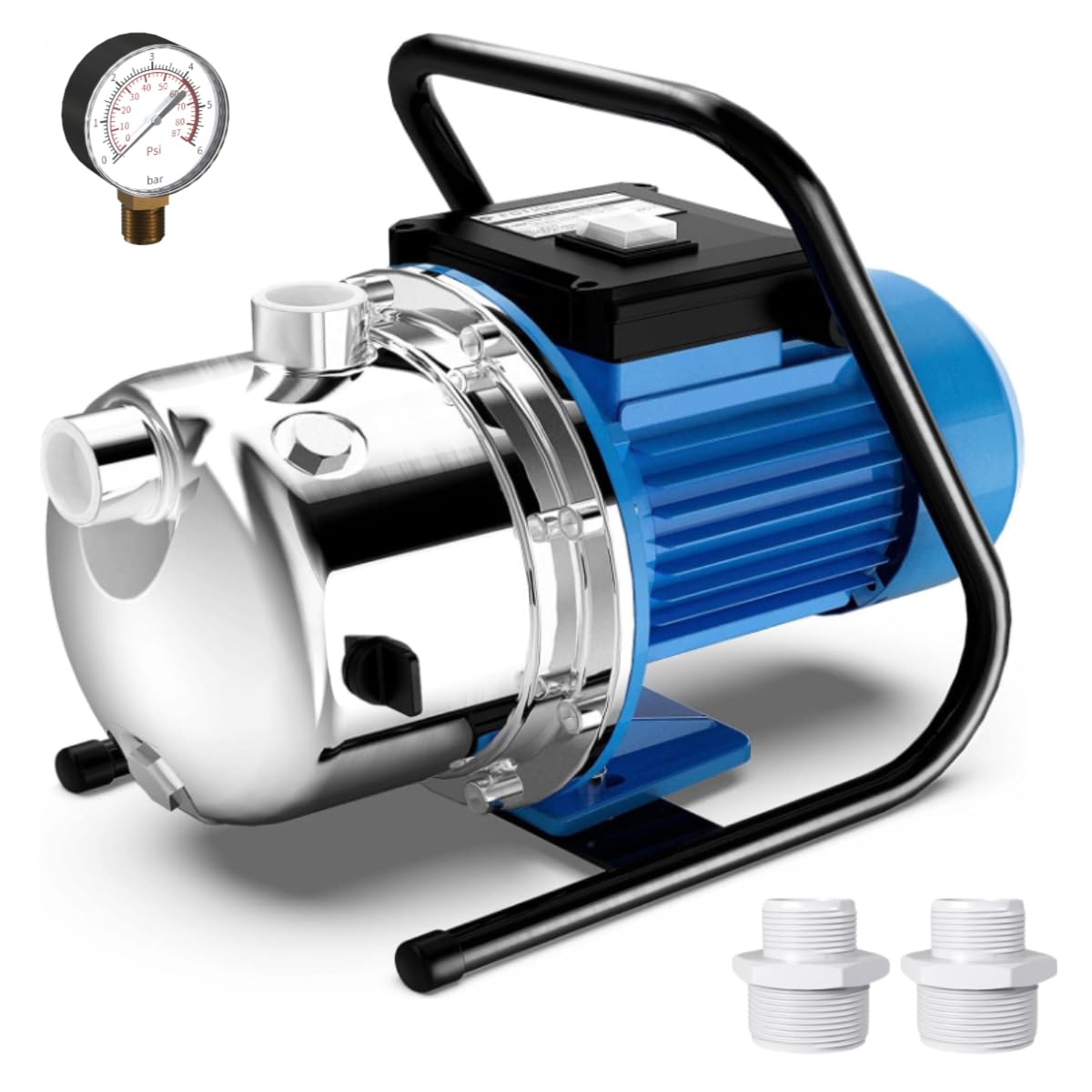
This FOTING pump uses a 1.6 HP motor rated for 1600 GPH, making it a compact option for lighter-duty irrigation tasks. The stainless steel head and aluminum body provide better corrosion resistance than full plastic builds while keeping the weight low enough for easy portability. The built-in carry handle and 6.6-foot power cord make it convenient for moving between a pond, rain barrel, or pool.
The 26-foot max suction depth is sufficient for most shallow well applications up to 25 feet deep. Users report that it is notably quieter than many jet pumps in this class and delivers strong pressure even over long hose runs. The automatic thermal overload protection shuts the motor down if it overheats, which is a useful safety feature.
Some owners have measured actual flow rates significantly lower than advertised — one user recorded only 12-13 GPM at the pump outlet. This suggests the 1600 GPH rating may be optimistic under real-world conditions. It is best suited for moderate watering needs where absolute peak flow is not critical.
Why it’s great
- Quieter operation than many competitive jet pumps
- Lightweight and portable with a convenient handle
- Thermal overload protection for safety
Good to know
- Real-world flow may be lower than advertised
- No hose fittings included in the box
5. FOTING 1.5HP Shallow Well Pump with Pressure Tank
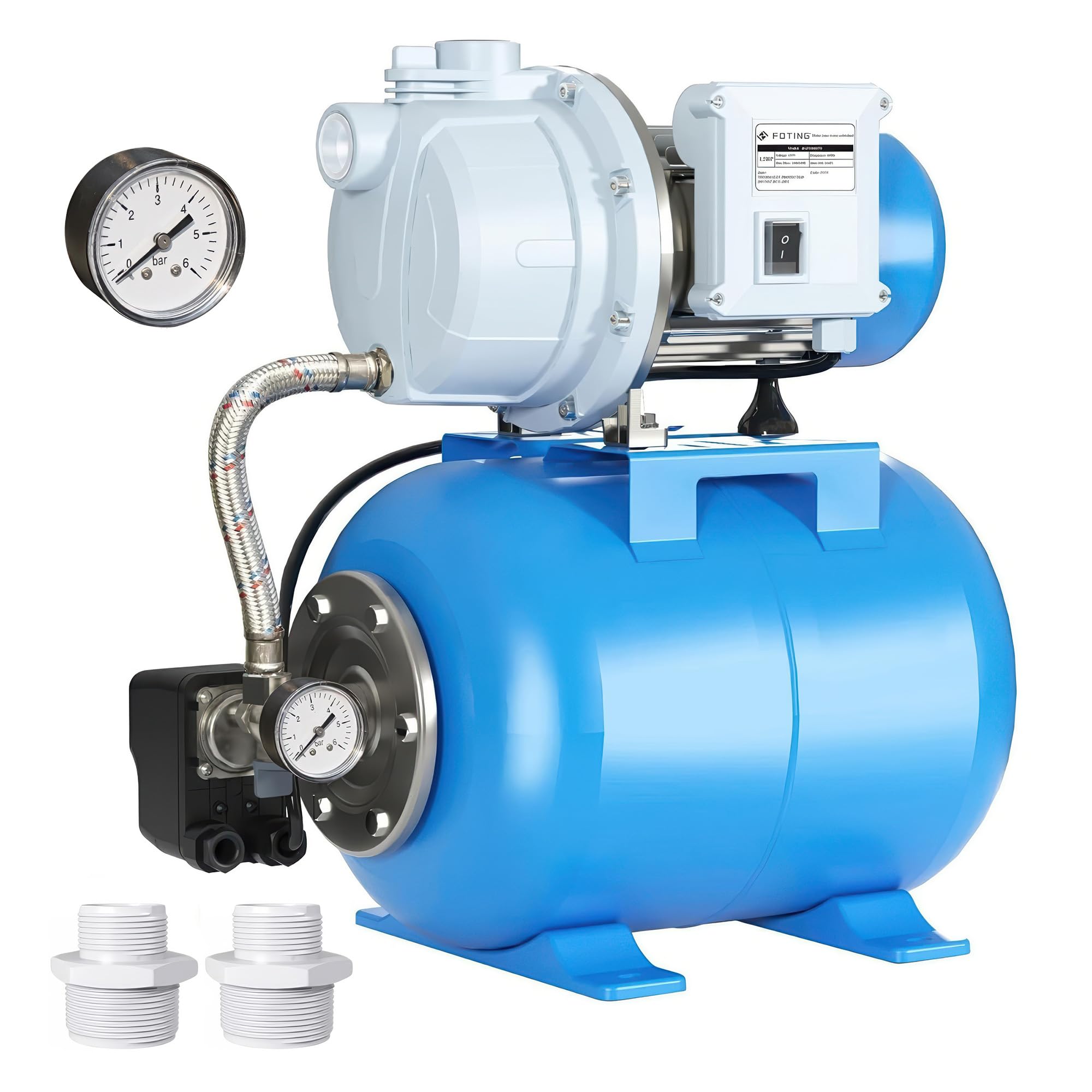
This FOTING system integrates a 5-gallon pressure tank directly into the pump assembly, eliminating the need for a separate tank purchase. The automatic pressure switch starts the pump at 1.5 bar and shuts it off at 3 bar, preventing the short-cycling that damages motors over time. The 1340 GPH flow and 164-foot max head are appropriate for homes, gardens, and small farms.
The reinforced thermoplastic structure resists corrosion, and the iron tank provides long-term durability. Owners with shallow wells report it handles hundreds of feet of hose without noticeable pressure drop. The included 1-inch NPT adapters simplify connection to standard plumbing.
The factory pressure switch calibration has been inconsistent across units. Several buyers found the cut-in/cut-out settings wrong out of the box and had to adjust the tank bladder pressure to 20 PSI to fix cycling issues. The advertised customer support has also been difficult to reach. It is a great concept for automation but requires careful setup.
Why it’s great
- Integrated 5-gallon tank prevents short cycling
- Good flow and head for household irrigation
- Corrosion-resistant hybrid build
Good to know
- Pressure switch may need recalibration at setup
- Customer support has been inconsistent
6. AQUASTRONG 1.5 HP Centrifugal Pump

The AQUASTRONG SPRK150 is built around a durable cast iron volute that dampens vibration and withstands the rigors of daily irrigation. It pushes a max of 4250 GPH (roughly 69 GPM) through its 2-inch NPT suction and 1.5-inch NPT discharge ports. The reinforced impeller and diffuser maximize flow efficiency, making it suitable for large lawns and 6-zone sprinkler systems.
The dual-voltage motor ships factory-set at 230V but can be rewired to 115V if your breaker panel prefers it. Built-in automatic thermal overload protection adds a layer of safety. Several owners running it on shallow wells report steady pressure around 45 PSI at the hose bib — more than enough for impact and rotary sprinklers.
The first unit for one buyer had trouble priming, but the company replaced it quickly with no hassle. On the other hand, at least one owner experienced a complete failure after just 18 months, far short of the 15-year lifespan of the pump it replaced. The cast iron construction is robust, but the long-term reliability appears variable.
Why it’s great
- Heavy-duty cast iron volute for long life
- High 4250 GPH max flow for large systems
- Quick replacement service from manufacturer
Good to know
- Some units have failed prematurely within 2 years
- PVC inlet/outlet fittings may need metal upgrades
7. Flotec FP5172-08 Self Priming Sprinkler Pump

This Flotec variant shares the core design of the FP5172 but is listed with a 25-foot maximum lift and a 67 GPM flow rate, making it nearly identical in performance. Owners report remarkable longevity — one user ran their unit daily for 10 years in the Texas heat before upgrading. The glass-filled thermoplastic housing has proven durable against both corrosion and physical stress over long-term use.
The pump handles pond water with ease, running 8 hours a day for irrigation without issues. It is self-priming after the initial fill, and the dual-voltage motor adapts to either 115V or 230V. The 1-1/2″ NPT connections are standard, and installation is straightforward for anyone comfortable with basic plumbing.
A small number of buyers experienced premature motor failure. One reported the motor froze in under a month, with a loose centrifugal switch screw found inside — the likely culprit. The mostly plastic construction means longevity depends heavily on proper installation, including a correctly sized check valve and thermal protection.
Why it’s great
- Proven 10-year lifespan in demanding conditions
- Corrosion-proof glass-filled thermoplastic
- Excellent value for high-flow applications
Good to know
- Some units have QC issues causing early failure
- Mostly plastic build raises durability questions
8. WAYNE WLS150-1 Cast Iron Sprinkler Pump

The WAYNE WLS150-1 is a heavy-duty cast iron pump assembled in the USA with a reputation for exceptional longevity. Owners consistently report 10-year service lives, with one user’s unit finally failing only because a freeze cracked the housing — the motor itself never quit. The 45.8 GPM flow and 100-foot max head are well-suited for underground sprinkler systems and large lawn coverage.
The pump features a 2-inch NPT suction and 1.5-inch NPT discharge, maximizing water movement. It supports both 115V and 230V wiring, though it ships factory-set at 230V. The cast iron volute adds significant weight (57 pounds), which helps dampen noise and vibration but makes installation a two-person job.
The design lacks a built-in priming port, so users pulling from a source below the pump must install a T-fitting per the manual. A few buyers received defective units, including one with a cracked volute within the first month of use. The 1-year warranty is standard, but the brand’s track record for reliability is far better than most competitors at this price level.
Why it’s great
- Assembled in USA with trusted build quality
- Cast iron volute provides outstanding durability
- Proven 10+ year lifespan in real-world use
Good to know
- No priming port — requires manual T-fitting setup
- Heavy 57-pound unit difficult to move alone
9. DEEKOOL EF5500-BOX 12V Diaphragm Pump
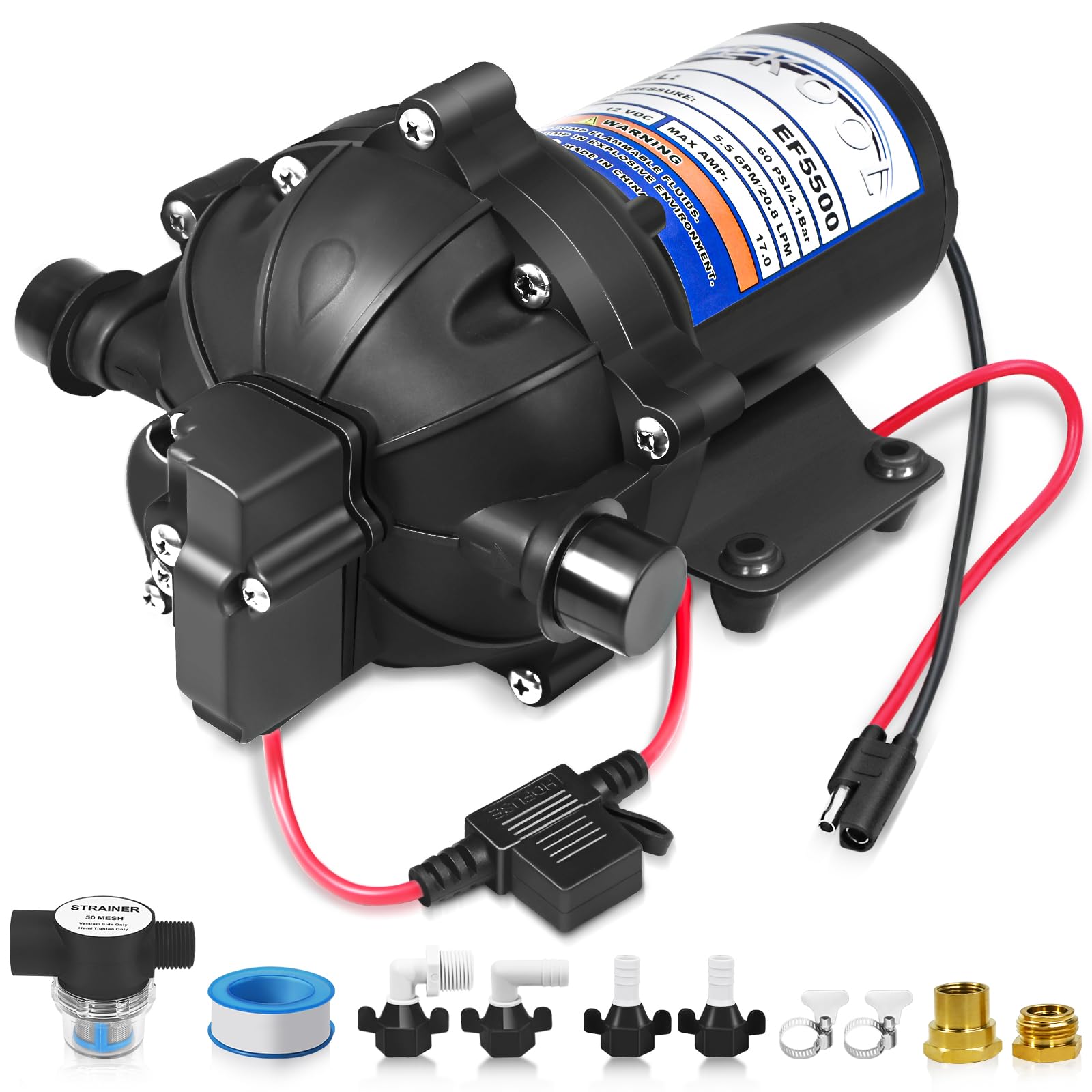
The DEEKOOL EF5500-BOX is a 12V DC diaphragm pump, not a traditional AC sprinkler pump. It is best suited for mobile soft-wash systems, RV water delivery, and chemical spraying. With a 5.5 GPM flow and a built-in pressure switch set to 60 PSI, it works well for roof washing and bleach applications where chemical resistance matters more than raw volume.
The all-copper motor and thermal overload protection reduce the risk of burnout during extended spray sessions. The pump is self-priming up to 8 feet and includes an automatic stop-start function that saves battery power in mobile setups. Owners building DIY soft-wash rigs report it matches the performance of commercial units costing significantly more.
A few buyers received units that burned out after a single use, which suggests quality control is inconsistent. The 12V power requirement means you need a substantial battery or a vehicle power source — it will not plug into a standard wall outlet. This pump fills a very specific niche and should not be mistaken for a traditional lawn sprinkler pump.
Why it’s great
- Chemical-resistant diaphragms for bleach systems
- Automatic stop-start saves power
- Compact and lightweight for mobile rigs
Good to know
- Low 5.5 GPM unsuitable for lawn sprinklers
- No AC power — requires 12V battery setup
FAQ
How many sprinkler heads can a 1.5 HP pump run?
Do I need a pressure tank with a sprinkler pump?
Can I run a 1.5 HP pump on a normal household outlet?
Why does my sprinkler pump lose prime after shutting off?
Final Thoughts: The Verdict
For most users, the 1.5 hp sprinkler pump winner is the Flotec FP5172 because it delivers exceptional 67 GPM flow at a reasonable investment, with a proven track record of handling large multi-zone systems for years. If you want a cast iron workhorse that can survive a decade of tough use, grab the WAYNE WLS150-1. And for a budget-friendly option that still delivers reliable pressure, the K2 IRP15001K is a solid pick.