
Our readers keep the lights on and the weekend projects moving. As an Amazon Associate, I earn from qualifying purchases.
A sub-11-foot fishing kayak solves a hard equation: how to get a stable, fishable platform that still fits in a pickup bed, a garage corner, or a car trunk with the seats down. The trade-off is real—shorter hulls are less built for speed and open-water tracking—but the best 10‑foot designs use wide beams, deep tunnel hulls, and well-placed rods and rails to make every inch count for the angler who needs compact storage without giving up a day on the water.
I’m Rikta — the co-founder and writer behind FitlyFast. My process for this guide involved cross-referencing hull weight, capacity, seat design, and angler-specific features across 11 models, from pure paddle platforms to premium pedal drives, to find the build that matches how you actually fish.
Whether you are loading a kayak alone before dawn or stepping into a pedal drive for hands-free casting, the 10 foot fishing kayak market now offers a clear path from budget entry to feature-rich rig.
How To Choose The Best 10 Foot Fishing Kayak
Short kayaks require sharper decision-making. You cannot hide a weak hull or a bad seat behind more length. The following factors separate a purpose-built fishing machine from a recreational boat that happens to float.
Hull Stability vs. Portability
The single defining trade-off in a 10-foot kayak is beam width. A 34-inch hull like the Pelican Catch Mode 110 gives you a stand-up-capable platform that feels locked in, but the extra width adds weight and drag. A narrower 30-inch hull paddles easier and loads faster but will feel less planted when you shift your weight to cast. Match the beam to your primary fishing style—sitting and casting into structure needs less stability than standing to sight-fish.
Seating System and Center of Gravity
Lawn-chair-style seats—adjustable, framed, and raised—keep your back fresh for hours but push your center of gravity higher, which amplifies any side-to-side wobble on a short hull. Low-profile seats keep you closer to the water and feel more stable, but most anglers suffer back pain after three hours. The compromise is the Ergoboost or Phase 3 Air Pro systems that lift you without sacrificing thigh support.
Pedal Drive vs. Paddle Only
Pedal drives free your hands for casting and allow precise positioning in current or wind. They add weight and require a wider, more stable hull to accommodate the drive well. Propeller drives deliver smooth, low-effort forward and reverse propulsion but need more depth. Fin drives are snag-resistant in weeds but generate less forward thrust. If you fish shallow rivers or heavy cover, a fin drive or a clean paddle hull might be more practical.
Weight Capacity and Gear Load
Add up your body weight, a cooler, a tackle crate, rods, and a battery if you run a trolling motor. Many 10-foot kayaks claim 300-400 pounds capacity, but usable capacity is about 75 percent of the rated number if you want the boat to sit high enough for scupper holes to drain. A 375-pound-rated hull like the Catch Mode 110 realistically handles a 200-pound angler with a moderate gear load without wallowing.
Quick Comparison
On smaller screens, swipe sideways to see the full table.
| Model | Category | Best For | Key Spec | Amazon |
|---|---|---|---|---|
| Pelican Catch Mode 110 | Tunnel Hull | Stand-up fishing & stability | 34.5″ beam, 375 lb capacity | Amazon |
| Perception Pescador Pro 10 | Sit-on-Top | All-day seating comfort | Lawn chair seat, 325 lb capacity | Amazon |
| Wilderness Systems Tarpon 105 | Recreational | Tracking & storage versatility | Phase 3 Air Pro seat, 325 lb capacity | Amazon |
| Pelican Sentinel 100X | Lightweight | Easy transport & storage | 44 lb, 9’6″, ExoPak compartment | Amazon |
| Reel Yaks Recon | Modular | Compact storage & pedal drive | Modular 2-piece, 400+ lb capacity | Amazon |
| BKC Brooklyn 10.5 Pro | Pedal Drive | Affordable propeller drive kayak | Propeller drive, 440 lb capacity, 65 lb hull | Amazon |
| Perception Showdown 11.5 | Pedal Drive | Premium pedal drive & stability | 36″ beam, 450 lb capacity, pedal drive | Amazon |
| Lifetime Tamarack Pro 103 | Fishing Ready | Value fishing kayak with rod holders | 10’3″, 1 adjustable + 2 flush rod holders | Amazon |
| INTEX Dakota Quest | Inflatable | Ultimate portability & storage | 10.5′ inflatable, 352 lb capacity, backpack | Amazon |
| Emotion Spitfire | Budget | Entry-level recreational paddling | 9′, 45 lb, 350 lb capacity | Amazon |
| Lifetime Lotus | Budget | Budget-friendly paddle starter | 8′, 39 lb, comes with paddle | Amazon |
In‑Depth Reviews
1. Pelican Catch Mode 110

The Catch Mode 110 uses a tunnel hull that deadens side-to-side rocking, giving you the most stable stand-up platform in this roundup. A 34.5-inch beam and 375-pound capacity let a 200-pound angler stand and cast without the constant micro-adjustments shorter hulls demand. The Ergoboost seating system lifts you high enough to see over reeds while keeping a supportive EVA pad under your thighs for all-day sits.
Pelican packs three flush-mount rod holders, twin 4-inch rigging tracks, and a non-slip deck carpet into the deck layout. The removable skeg helps the 10.5-foot hull track straight enough for lake drifts, though it pops off on hard impacts. The weight stays manageable at 67 pounds, and the wide hull fits easily in a short truck bed. Water intrusion into the hull is minimal thanks to the sealed scupper design.
Shipping can stretch past two weeks, and the side carry handles feel less robust than the rest of the build. The skeg retention could be more secure for rocky launches. Overall, for an angler who wants to stand and fish from a sub-11-foot hull without upgrading to a 100-plus-pound barge, this is the clear benchmark.
Why it’s great
- Stand-up stable at 200+ pounds with gear
- Ergoboost seat reduces back fatigue on long days
- Rigging tracks and rod holders ready out of the box
Good to know
- Skeg can detach on hard ground strikes
- Side handles mount to thin plastic
- Shipping delays reported
2. Perception Pescador Pro 10

The Pescador Pro 10 earned its reputation on comfort: the adjustable lawn-chair seat lifts you off the deck with a breathable mesh back that eliminates the lower-back ache typical of paddle-bent positions. At 32 inches wide and 57 pounds, it strikes a balance between stability and car-top portability that recreational anglers appreciate. The 325-pound capacity handles a large cooler and a full tackle crate without sinking the scuppers.
Storage is well-sorted with generous front and rear tank wells and molded-in gear recesses. Forward accessory tracks let you mount rod holders or a fish finder without drilling into the deck. The included rod holders in the rear are positioned wide, which allows rods to swing during transport—a minor but common complaint.
The higher seating position makes entry and exit easy even for paddlers with limited hip mobility, but it raises the center of gravity enough that new users may tip once before adjusting their lean. Packaging from the factory has been inconsistent, with some units arriving scratched. If you prioritize seat comfort and paddling ease over raw standing stability, this is a strong mid-range choice.
Why it’s great
- Best-in-class adjustable seat for all-day sessions
- Easy re-entry from the water for anglers with mobility concerns
- Forward mounting tracks simplify accessory setup
Good to know
- Higher seat requires a short learning curve for balance
- Rear rod holders are wide and shallow
- Some units arrive with cosmetic damage
3. Wilderness Systems Tarpon 105
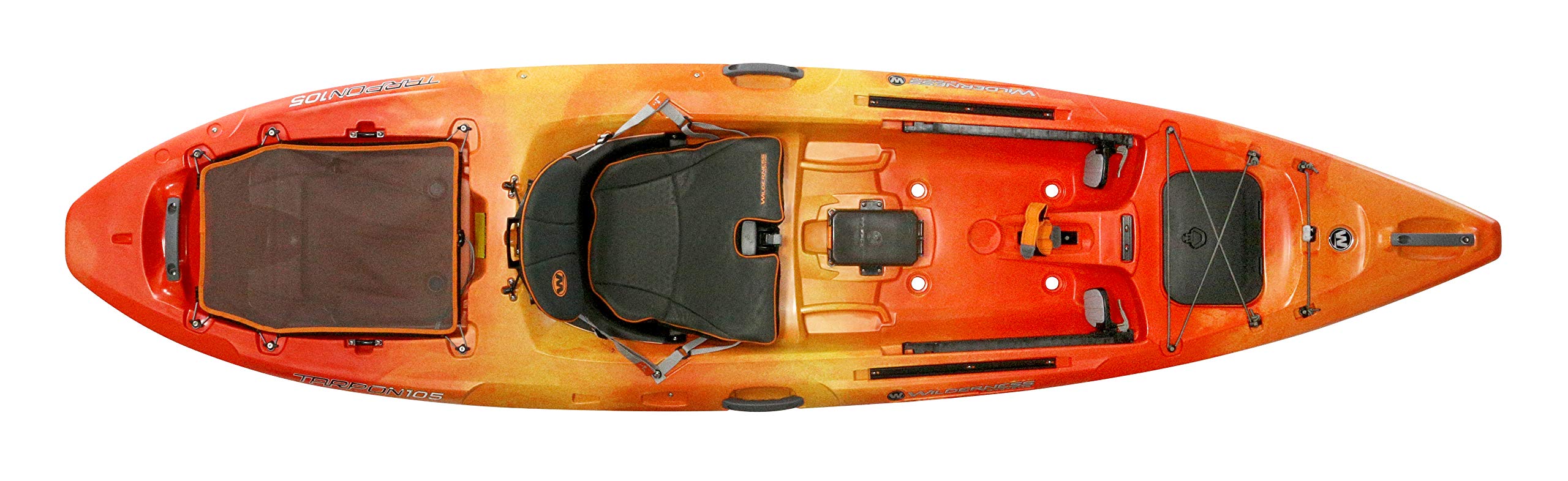
The Tarpon 105 refines the sit-on-top formula with the Phase 3 Air Pro seating system, which uses a breathable mesh that keeps your back cool in direct sun and adjusts into multiple recline positions. The hull carries forward the Tarpon lineage of efficient tracking—the 10.5-foot length and shallow keel line produce noticeably less yaw than most sub-11-foot boats, making it viable for longer paddles between spots. At 55 pounds, it is light enough for one person to lift onto a roof rack.
Storage is well-shared between a large rear tank well that accepts standard milk crates and a bow dry hatch with a removable Dry Tec box for phones and keys. Side accessory rails let you mount a GoPro, a rod holder, or a cup holder without drilling. The magnetic water bottle strap and padded footrests show the design maturity that makes this a trusted platform for both fishing and touring. The hull feels solid and doesn’t oil-can even when pushed.
The main downside is quality-control variability: some units shipped with a 2.5-year-old mold date and defective foot supports. The price sits in the mid-to-upper range, and at that level, buyers expect consistent fit and finish. If you get a clean unit, the Tarpon 105 is the most well-rounded 10.5-foot hull available for anglers who also paddle for pleasure.
Why it’s great
- Exceptional tracking for a sub-11-foot hull
- Phase 3 seat stays cool and adjusts easily
- Dry storage hatch with removable organizer box
Good to know
- QC issues with old stock and foot support defects
- Premium price does not guarantee perfect delivery
- Magnetic bottle strap is convenient but not secure in rough water
4. Pelican Sentinel 100X
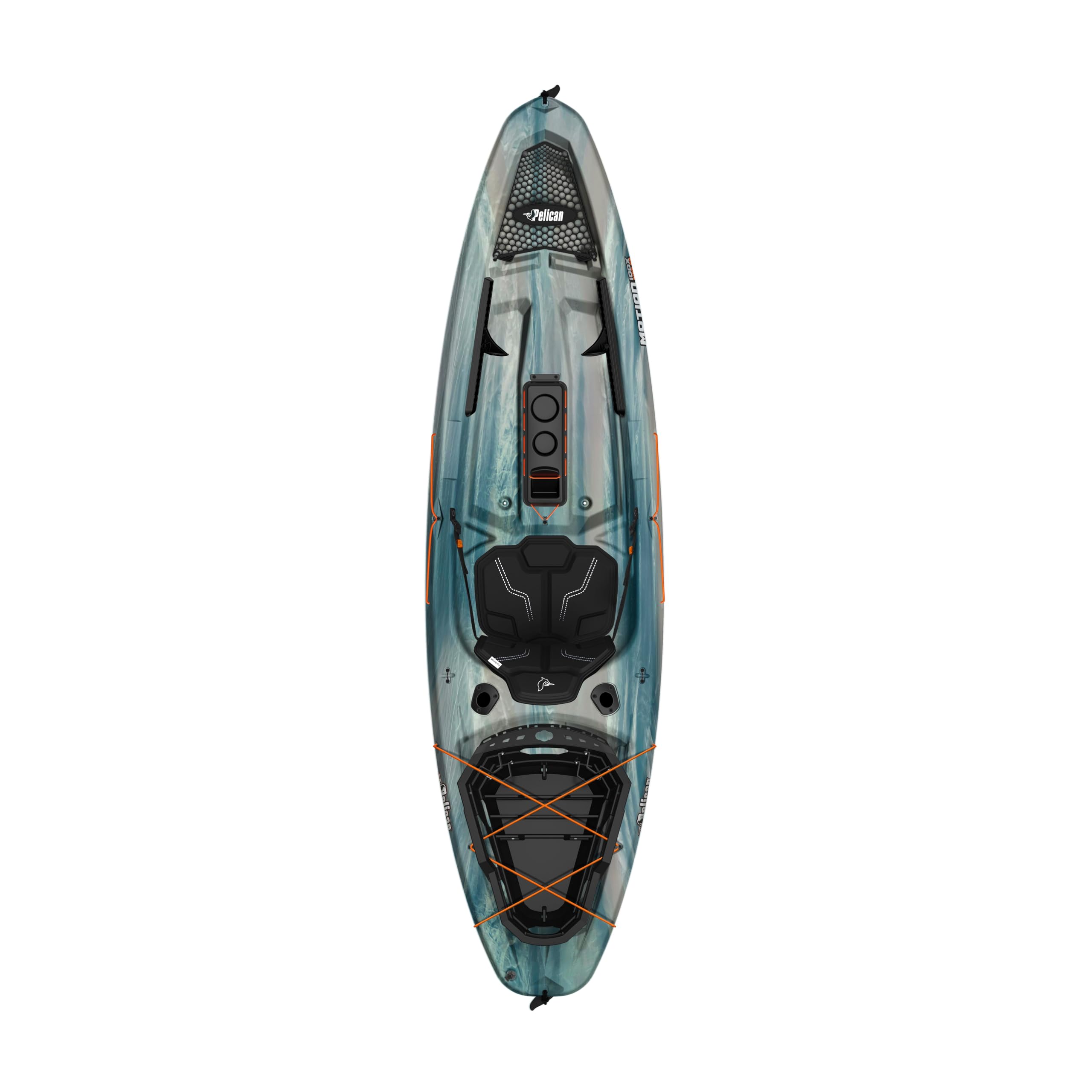
The Sentinel 100X packs dedicated fishing features into a lightweight 44-pound, 9.5-foot hull that one person can load without a cart. The ExoPak removable storage compartment lets you pack tackle at home and drop it into the kayak at the water—a workflow that saves time and keeps gear organized. Four rod holders (two flush-mount, two vertical in the ExoPak) mean you can run multiple setups without aftermarket modifications.
The Ergolounge seating system uses extra-thick cushioning and a high, wide padded backrest that keeps you comfortable for several hours, though the seat well does not drain, so you sit in any water that splashes in. The hull is stable for its width and tracks well on flat water, but the low freeboard makes it feel tippy in boat wake or wind chop. At 44 pounds and 9.5 feet, it fits in the trunk of a sedan with the seats down.
No paddle is included, and the 44-pound weight is heavier than some smaller paddlers expect. The non-draining seat well is the most persistent annoyance. For the angler who wants a ready-to-fish kayak that won’t dominate storage space, this offers the best feature-to-weight ratio in the mid-range.
Why it’s great
- ExoPak removable storage streamlines gear management
- Lightweight 44 lb hull is easy to transport solo
- Four rod holders included out of the box
Good to know
- Seat well collects water
- Low freeboard feels less secure in chop
- Paddle not included
5. Reel Yaks Recon Modular
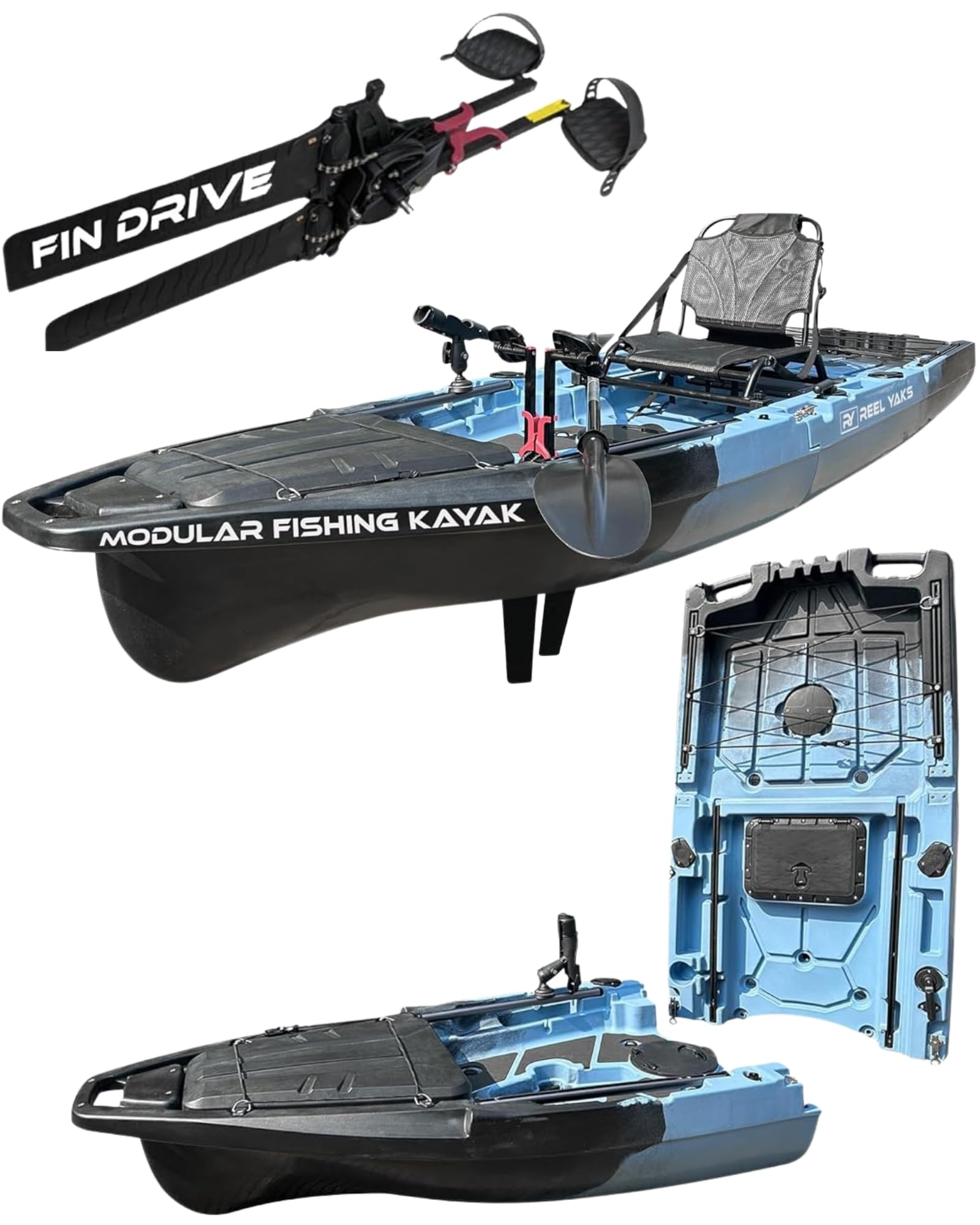
The Recon solves the storage problem by splitting into two 44-pound sections that fit in a car trunk or a closet. Assembly takes four steps and no tools—align the tongue-and-groove joint, latch, and launch. The W-hull design provides seated stability that rivals one-piece kayaks, and the fin pedal drive is knee-friendly and snag-resistant in weedy water. The 400-plus-pound capacity leaves room for a second angler’s gear or a large cooler.
The 11-pound fin drive pushes the boat at a steady trolling speed, and the rudder gives decent directional control once properly tuned. The included 360-degree rod holder and stadium seat add convenience for an all-in-one package. Some users report the actual length is under 10 feet (closer to 9 feet 10 inches), and the cockpit feels cramped for larger paddlers. The assembly instructions for the rudder are incomplete, and the fin drive lacks enough travel for aggressive acceleration.
The modular build introduces failure points: latches need periodic tightening, and the hull can leak at the seam if not assembled correctly. Customer support has been responsive for upgrade parts, but return issues after 30 days are difficult. For the angler who literally cannot store a one-piece 10-footer, the Recon is a genuinely innovative solution with real trade-offs.
Why it’s great
- Breaks down into two 44 lb sections for trunk storage
- Fin drive is quiet and weed-resistant
- High weight capacity handles heavy gear loads
Good to know
- Actual length is shorter than advertised
- Rudder setup instructions are incomplete
- Modular seam can leak if not properly latched
6. BKC Brooklyn 10.5 Pro
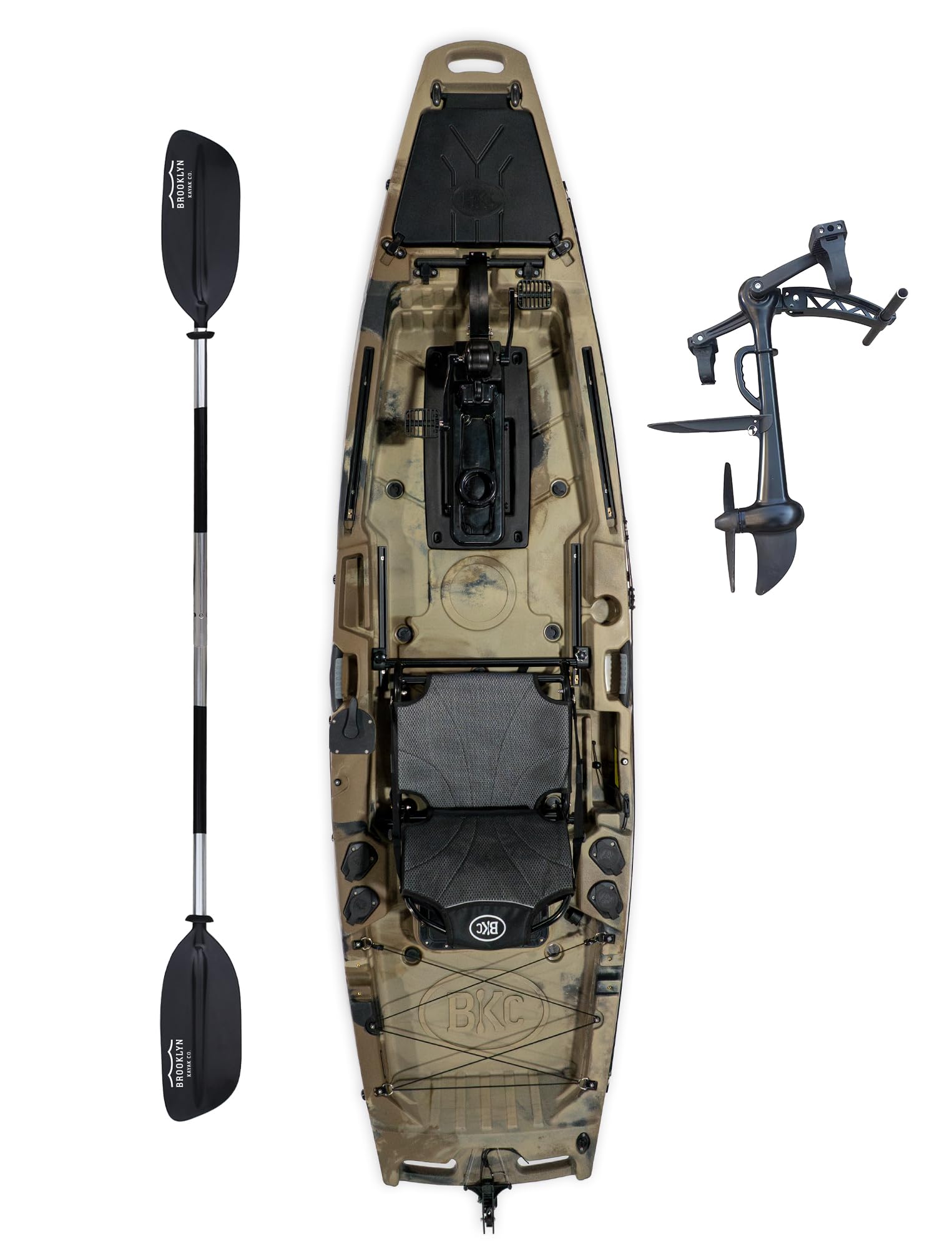
The Brooklyn 10.5 Pro brings a propeller pedal system to the sub-11-foot category at a price well below premium rivals. The upgraded drive unit delivers smooth forward and reverse propulsion with bicycle-style pedals and adjustable foot straps, letting you work different muscle groups during a long day. At 65 pounds, the hull is light enough for one person to car-top, and the 440-pound capacity means you can load gear without constantly checking the scuppers.
The hand-operated rudder keeps the short hull tracking in wind and current, though the turning radius is wider than a fin drive system. Multiple sealed storage hatches and bungee-covered rear deck space give you places for a tackle box, rods, and a small cooler. The aluminum-frame seat is elevated and supportive, though it lacks the breathable mesh of premium seats and can get sweaty in hot weather. The hull is motor-ready, so adding a trolling motor later is straightforward.
Some units arrive with minor assembly issues, and the kayak does not include a dedicated battery compartment, so you will need to rig your own solution if you add a motor. Pedal drive performance is good but not as refined as dedicated pedal kayaks from Perception or Hobie. For a budget-conscious angler who wants hands-free propulsion and a stable deck, this delivers disproportionate value.
Why it’s great
- Propeller drive provides smooth forward and reverse
- 440 lb capacity handles heavy angler plus gear
- Motor-ready hull simplifies future upgrades
Good to know
- No built-in battery compartment for trolling motor
- Seat can get hot in direct sun
- Some units need minor assembly adjustments
7. Perception Showdown 11.5

The Showdown is the pedal-powered evolution of the Perception Outlaw, built on a 36-inch beam that makes standing feel natural even on a sub-12-foot hull. The pedal drive responds instantly in forward and reverse, letting you hold position in current without touching a paddle. The fold-away lawn-chair mesh seat lifts you high for visibility while keeping the back cool, and the wide flat deck is covered in silent traction pads that dampen foot noise for stealth approaches.
Storage is generous: a bow pod, integrated gear recesses, double-barrel rod holders, and molded-in rod notches let you carry multiple setups. The 450-pound capacity is the highest in this roundup, accommodating a 250-pound angler plus a battery, cooler, and crate with margin to spare. Side handles double as gear tracks, so you can mount accessories without drilling. The hull feels planted even when turning at speed.
The pedal drive has quality concerns: some units arrive poorly greased and noisy, and the rudder control can be finicky to adjust. Customer service responsiveness has been inconsistent. At this price point, the competition from Hobie and Native Watercraft is intense, but the Showdown delivers a comparable feature set at a lower entry cost for anglers who want a pedal-drive fishing machine.
Why it’s great
- 36-inch beam supports confident standing and casting
- 450 lb capacity accommodates the largest anglers and gear loads
- Pedal drive offers instant forward and reverse control
Good to know
- Pedal drive may need regreasing out of the box
- Rudder system requires careful setup
- Customer support can be slow to respond
8. Lifetime Tamarack Pro 103

The Tamarack Pro 103 delivers fishing-specific features at a price that makes it easy to justify for a first dedicated angler kayak. One adjustable rod holder and two flush-mounted holders keep your rods within reach, and the built-in ruler on the deck lets you measure catch without fumbling for a tape. Deep hull channels help the 10.3-foot hull track straighter than the standard Tamarack, and the chine rails add secondary stability when you lean to net a fish.
The adjustable framed seat is a major upgrade from sitting on plastic—it keeps your back supported for hours and makes entry and exit easier. The center storage hatch with a bucket gives dry space for electronics or lunch, and the rear tank well is deep enough for a standard crate. The paddle keeper and front and rear bungee cords keep your gear secured. The 57-pound weight is manageable for one person with a cart.
Quality control is inconsistent: some units arrive with loose foot brace hardware or plastic shavings inside the hull. The kayak does not include a paddle. For the angler who wants a purpose-built fishing kayak without crossing into premium pricing, this is a solid mid-range step up from entry-level rec boats.
Why it’s great
- Built-in rod holders and ruler ready for fishing
- Adjustable framed seat improves all-day comfort
- Deep hull channels enhance tracking for a short kayak
Good to know
- QA can be spotty with loose hardware
- Paddle not included
- Wind pushes the bow more than a longer kayak
9. INTEX Dakota Quest 10.5ft
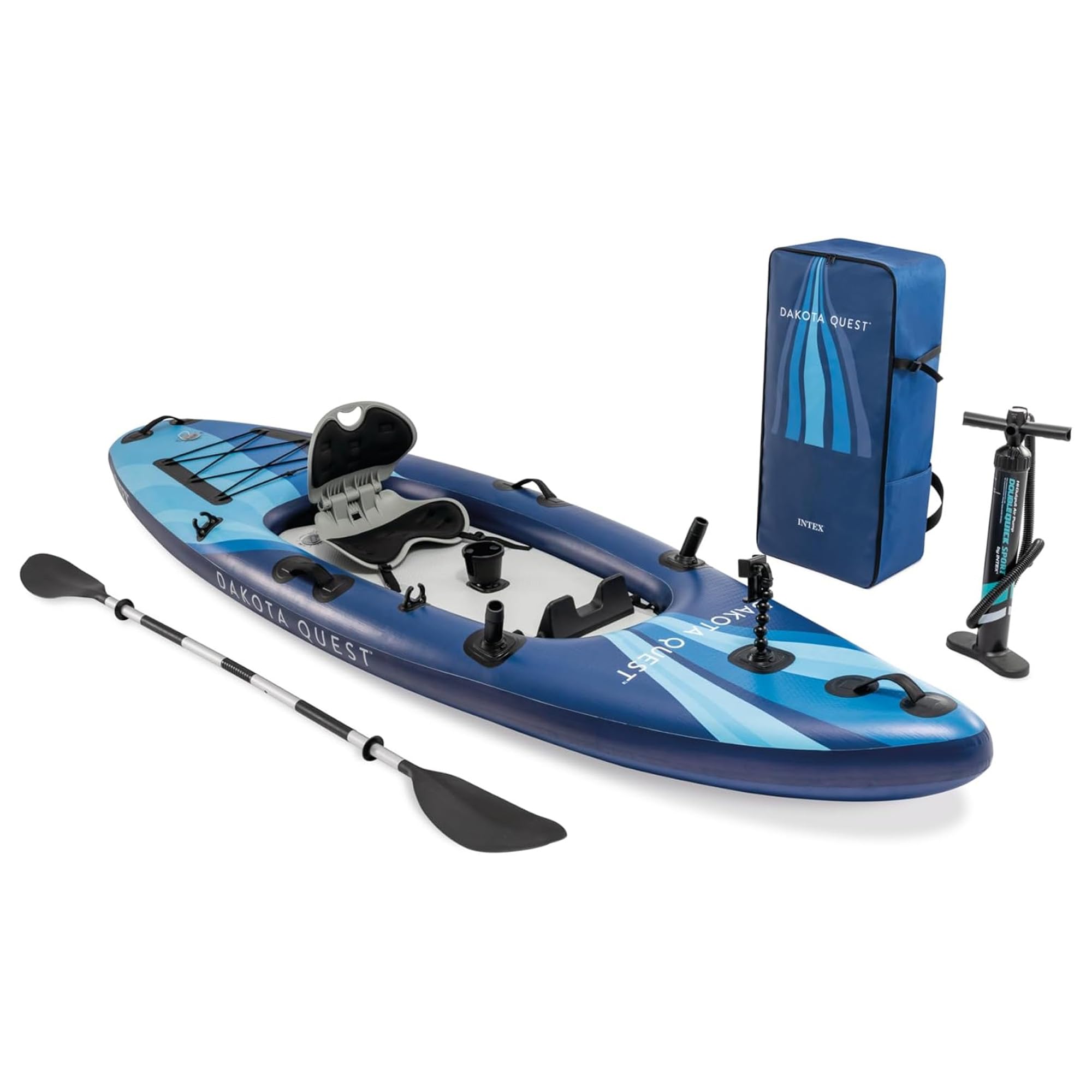
The Dakota Quest uses drop-stitch PVC construction that inflates to 12 PSI, creating a rigid floor that feels closer to a hardshell than a pool toy. At 10.5 feet by nearly 3 feet wide, it offers surprising stability for an inflatable, with a 352-pound capacity that fits an adult, a child, or a full fishing load. The complete kit includes a high-pressure hand pump, an 86-inch adjustable paddle, a collapsible seat, two detachable rod holders, a phone/action camera mount, and a backpack—everything except the fish.
The removable skeg improves directional tracking, and the raised seat keeps you above the waterline for comfortable paddling posture. Setup takes about 10-15 minutes with the double-action pump, and breakdown is just as fast for storage in a closet or car trunk. The material is thick and resists punctures from normal use, though sharp rocks or oyster shells can still cause damage. The included paddle is functional but heavy, and the backpack zipper is a weak point.
Inflatable kayaks always trade puncture resistance for packability—this one manages the trade-off better than most. The 90-day limited warranty is shorter than hardshell options, and you must dry the kayak thoroughly after every trip to prevent mold. For apartment dwellers, travelers, or anyone who cannot store a rigid hull, the Dakota Quest is the most capable inflatable fishing platform at this size.
Why it’s great
- Drop-stitch floor creates a rigid, stable platform
- Complete kit with pump, paddle, rod holders, and backpack
- Sets up in 10-15 minutes and packs into a carry bag
Good to know
- Must dry thoroughly after each use to prevent mold
- Included paddle is heavy and basic
- Shorter 90-day warranty compared to hardshells
10. Emotion Spitfire Sit-On-Top
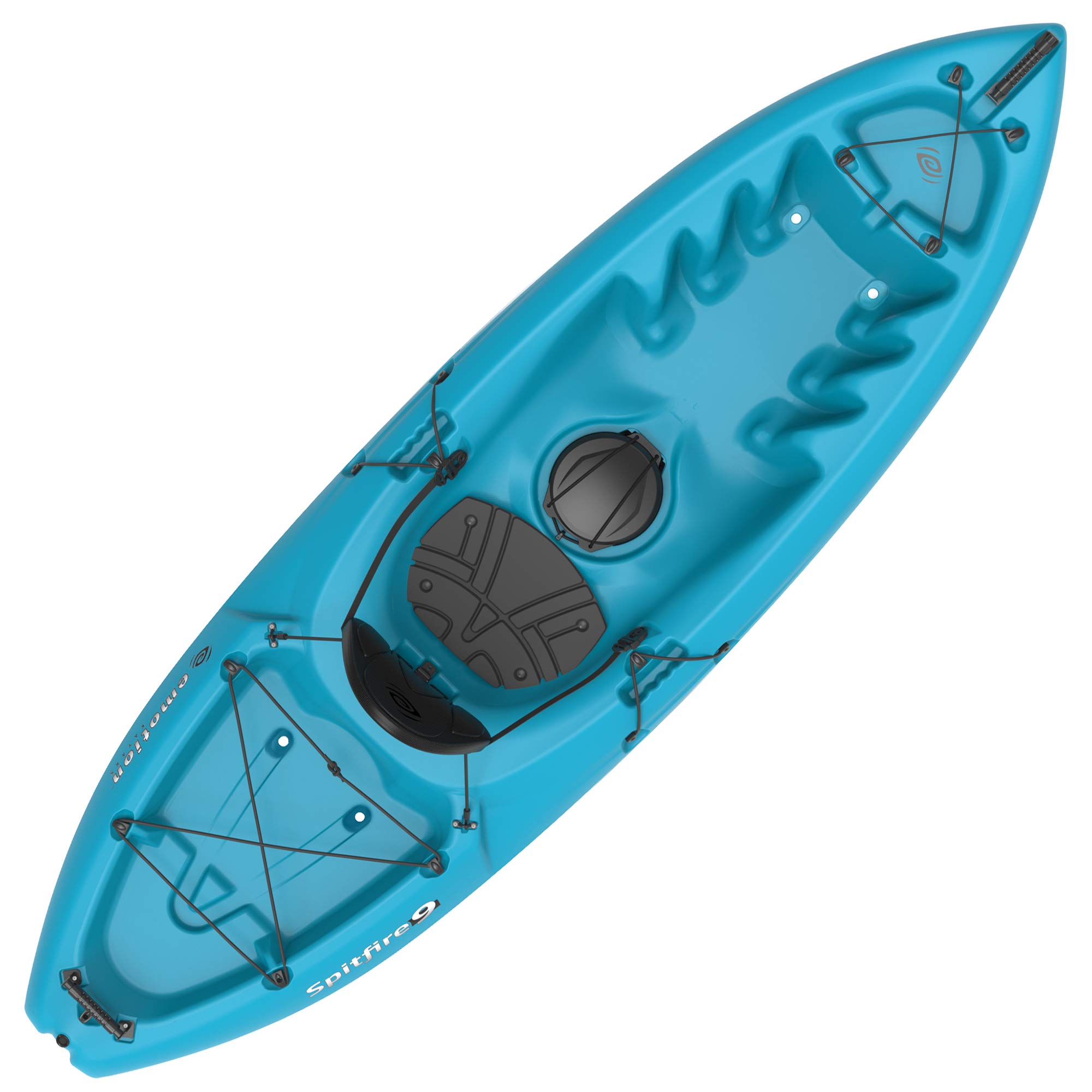
The Spitfire is a pure recreational sit-on-top that happens to be fishable, thanks to its stable 31-inch beam and self-bailing scupper system that keeps the deck dry between casts. The 45-pound weight and molded-in side handles make it the easiest kayak in this roundup for one person to carry from car to shore. The padded CRS seat with an UltraLite base provides reasonable comfort for two-hour sessions, and the rear tank well with cargo lacing secures a small tackle crate or a dry bag.
The hull is UV-protected and built from rotational-molded HDPE that handles scrapes and sun exposure without issue. It tracks decently for a 9-foot boat—owners report 5 to 8 inches of torque correction per stroke—and fits in a Honda Civic trunk with the back seat down. The molded-in paddle keepers and freedom footwells keep your gear organized and your feet braced. Some users report the seat attachment is fiddly to install and remove.
The Spitfire’s biggest weakness is the seat durability for larger paddlers. Despite a 350-pound capacity, the seat clips can break under sustained use by heavier anglers, and tracking on the water requires constant attention in wind. The storage hatch beneath the deck does not stay dry. For the casual angler who wants a simple, portable platform for small lakes and slow rivers, this is the cheapest way onto the water that still floats and fishes.
Why it’s great
- Very lightweight at 45 lb—easiest to transport solo
- Stable enough for relaxed casting on calm water
- Self-bailing scuppers keep the deck dry
Good to know
- Seat clips may fail for larger paddlers
- Requires constant paddle correction in wind
- Under-deck storage is not waterproof
11. Lifetime Lotus Sit-On-Top

The Lotus is an 8-foot recreational kayak that includes a paddle, making it the lowest-barrier entry point for someone who wants to try fishing from a kayak without a big upfront investment. It weighs only 39 pounds, so a teenager can carry it to the water, and the self-bailing scuppers drain any water that splashes over the deck. The adjustable quick-release seat back provides lumbar support that is better than sitting on plastic but not as comfortable as a framed seat.
The hull is surprisingly stable for its short length—it supports easy re-entry from the water and does not swamp when you lean to the side. Tracking is decent for an 8-foot hull on calm lakes, though it is slow compared to any 10-footer. The included double-sided Lite Elite paddle is functional but basic, and the seat straps tend to slip during use, requiring periodic re-tightening. The maximum user height is about 6 feet 2 inches with legs flat.
The primary concern is quality control: some units arrive with holes or missing parts, and warranty claims can be difficult. The 8-foot length limits your range and speed, making it unsuitable for large lakes or rivers with current. For the absolute lowest cost to get a paddle-ready fishing platform, the Lotus works—but the Tamarack or Spitfire offer a meaningful upgrade in fishability for a small step up.
Why it’s great
- Lowest price—includes paddle and basic seat
- Very lightweight at 39 lb, easy for anyone to carry
- Stable and easy to re-enter from the water
Good to know
- 8-foot hull is slow and limits distance fishing
- Seat straps slip and need frequent adjustment
- QC inconsistent—some units arrive with defects
FAQ
What is the best hull shape for standing in a 10-foot fishing kayak?
How much should I spend on a 10-foot fishing kayak?
Can I stand and fish from a 10-foot kayak?
Final Thoughts: The Verdict
For most users, the 10 foot fishing kayak winner is the Pelican Catch Mode 110 because it combines a stable tunnel hull, a comfortable elevated seat, and ready-to-fish features at a price that undercuts premium competitors. If you want the most comfortable seat for long paddling days, grab the Perception Pescador Pro 10. And for hands-free pedal propulsion in a compact package, nothing beats the BKC Brooklyn 10.5 Pro for value.