
Our readers keep the lights on and the weekend projects moving. As an Amazon Associate, I earn from qualifying purchases.
If you have a large household with multiple bathrooms, running the dishwasher while someone showers shouldn’t mean a sudden blast of cold water. That’s the promise of a high-flow tankless unit: endless hot water delivered at a rate that keeps pace with simultaneous demand. But not every model labeled “10 GPM” actually delivers that flow under real-world inlet temperatures, which is where the difference between a smart buy and a costly mistake lives.
I’m Rikta — the co-founder and writer behind FitlyFast. I’ve spent hundreds of hours combing through technical specifications, real-user feedback, and market pricing to sort the units that actually perform from those that overpromise on peak flow.
After analyzing BTUs, heat exchanger materials, modulation ranges, and elevation limits across dozens of models, I’ve built this guide to help you find the best 10 gpm tankless water heater that fits your home’s exact demands without wasting money on excess capacity or undersized burners.
How To Choose The Best 10 GPM Tankless Water Heater
Choosing a high-flow tankless water heater means matching the unit’s thermal output to your home’s coldest incoming water temperature, not just the advertised peak flow. A model that delivers 10 GPM in Florida may struggle to produce 7 GPM in Minnesota during winter. You also need to decide between condensing (higher efficiency, more complex venting) and non-condensing (simpler, slightly lower efficiency) based on your existing setup and long-term energy goals.
Understand the BTU-to-GPM Relationship
A unit’s BTU rating determines how much temperature rise it can achieve at a given flow rate. To get a true 10 GPM with a 50°F rise (typical for cold groundwater), you need at least 180,000 BTUs. At 199,000 BTUs, you get a safety buffer for colder climates. If the BTU is too low, the unit will throttle flow to maintain the set temperature, so your actual GPM will be lower than the sticker number.
Condensing vs. Non-Condensing Efficiency
Condensing units reuse exhaust heat to preheat incoming water, reaching UEF ratings above 0.95. They require stainless steel venting and produce acidic condensate that needs a drain. Non-condensing units are simpler, cheaper, and use standard PVC or metal venting, but their efficiency tops out around 0.82. For whole-home use, the gas savings from a condensing model often recoup the higher upfront cost within 2-3 years.
Check for Recirculation and Modulation
Built-in recirculation pumps eliminate the “cold water sandwich” and reduce wait time at distant faucets. A wide turndown ratio (1:20 or better) and multi-stage modulation let the unit maintain stable temperatures even during low-flow uses like hand washing. These features separate a premium, comfortable experience from a budget unit that fluctuates when a shower runs alongside a dishwasher.
Quick Comparison
On smaller screens, swipe sideways to see the full table.
| Model | Category | Best For | Key Spec | Amazon |
|---|---|---|---|---|
| Rinnai RXP199iN | Condensing | Whole-home with recirculation | 11.1 GPM, 0.98 UEF | Amazon |
| Rinnai RU199iN | Condensing | 11 GPM continuous flow | 11 GPM, Circ-Logic ready | Amazon |
| Rinnai CX199iN | Condensing | Commercial-grade reliability | 11.1 GPM, 97% efficiency | Amazon |
| Rinnai RX180iN | Condensing | Dual-fuel flexible install | 10 GPM, 0.98 UEF | Amazon |
| Westinghouse 10.3 GPM (NG) | Non-Condensing | Smart home integration | 10.3 GPM, WiFi + voice | Amazon |
| Westinghouse 10.3 GPM (LP) | Non-Condensing | Propane whole-home | 10.3 GPM, ±1°F stability | Amazon |
| MIZUDO 10.3 GPM | Non-Condensing | WiFi control at mid-tier | 10.3 GPM, 6-stage modulation | Amazon |
| Rheem RTG-95DVLN-3 (NG) | Non-Condensing | Trusted brand, 9.5 GPM | 9.5 GPM, 199,900 BTU | Amazon |
| Rheem RTG-95DVLP-3 (LP) | Non-Condensing | Propane, 2-3 bath homes | 9.5 GPM, hot-start program | Amazon |
| Ranein 8.5 GPM | Non-Condensing | Budget 4-6 outlet points | 8.5 GPM, 190,000 BTU | Amazon |
| Stiebel Eltron Tempra 36 Plus | Electric | Smaller homes, electric only | 36 kW, 1.5 GPM | Amazon |
In‑Depth Reviews
1. Rinnai RXP199iN

The Rinnai RXP199iN is the most complete package for a large household that demands both performance and convenience. It delivers up to 11.1 GPM with 199,000 BTUs, and its condensing design achieves a UEF of 0.98, meaning nearly all the gas you burn turns into hot water. The built-in recirculation pump with Smart-Circ technology learns your usage patterns and sends hot water to remote faucets faster without wasting water waiting for the temperature to climb.
Installation is flexible — it can run indoors or outdoors using Versa Vent, and the Smart Sense gas control automatically adjusts for natural gas or propane. The unit is quiet during operation, though the recirculation pump is audible from 70 feet away according to users. A family of five adults replaced a 2004 tank with this unit and reported never running out of hot water, even with simultaneous dishwasher, washer, and shower use.
DIY installation is possible for those with basic skills, but professional installation is recommended to protect the warranty and ensure safe venting. The Controlr module for WiFi monitoring is sold separately, which is a minor inconvenience for a premium unit. Overall, this is the best choice for anyone who wants endless hot water with minimal energy waste and the fastest possible delivery.
Why it’s great
- Built-in recirculation pump reduces wait time dramatically
- 0.98 UEF condensing efficiency saves significant gas over years
- Dual-fuel and indoor/outdoor flexibility
Good to know
- WiFi module sold separately
- Recirculation pump can be noisier than expected
- Professional installation recommended for warranty
2. Rinnai RU199iN

The Rinnai RU199iN is a workhorse condensing unit that delivers up to 11 GPM — enough to handle seven fixtures at once. It uses Circ-Logic technology, which allows pairing with an external recirculation pump to minimize the cold water wait time, though the pump is not included. The unit is ENERGY STAR qualified and has been on the market long enough to develop a strong reputation for reliability among plumbers and homeowners alike.
Users report excellent temperature stability with no fluctuations, even when running multiple showers and appliances simultaneously. The unit is quiet and compact, fitting easily into a garage or utility closet. One reviewer noted a 50% reduction in gas usage compared to their previous year’s water heating costs. However, the cold startup delay is about 10-15 seconds, which is standard for condensing tankless units.
Professional installation is strongly advised, and some Amazon installation services have refused to install units they didn’t supply. The RU199iN is a proven performer for whole-home applications, but the lack of a built-in recirculation pump means you’ll need to factor that into your setup if instant hot water is a priority.
Why it’s great
- Proven track record with long-term reliability
- Very quiet operation and stable water temperature
- Dual-fuel compatibility (NG or LP)
Good to know
- No built-in recirculation pump
- Cold start delay of 10-15 seconds
- Professional install required for optimal performance
3. Rinnai CX199iN

The Rinnai CX199iN is a commercial-grade tankless water heater that offers residential durability with extra headroom for heavy use. It pushes up to 11.1 GPM with 199,000 BTUs and boasts a thermal efficiency of 97%. This model uses a condensing design and is compatible with both natural gas and propane via the Smart Sense system, which automatically detects the fuel type.
Users upgrading from older Rinnai units report a noticeable improvement in efficiency, with one household of eight people seeing a jump from 82% to 98% efficiency. The unit is taller than some residential units, so you may need to adjust plumbing connections during installation. It features a quick flush system for easy maintenance and Bluetooth connectivity for setup via the Rinnai Central App.
An optional conversion kit enables recirculation, giving you the flexibility to add instant-hot-water features later. While the upfront cost is higher, the energy savings can offset the difference within a couple of years for large families. The commercial build quality means this unit is likely to outlast typical residential heaters, making it a strong choice for those who prioritize longevity.
Why it’s great
- High 97% thermal efficiency for maximum gas savings
- Commercial-grade components for extended lifespan
- Bluetooth setup via Rinnai Central App
Good to know
- Taller form factor may require plumbing adjustments
- Recirculation kit sold separately
- Professional install recommended for warranty
4. Rinnai RX180iN
The Rinnai RX180iN is a versatile condensing tankless water heater that delivers up to 10 GPM with 180,000 BTUs. Its standout feature is the Versa Vent system that allows installation indoors or outdoors using a single vent cap (sold separately for outdoor setups). The Smart Sense gas control automatically handles both natural gas and propane, making this a true dual-fuel unit that adapts to whatever fuel you have available.
With a UEF of 0.98, it’s among the most efficient models you can buy. The Quick Flush feature simplifies descaling, reducing maintenance time. Users consistently praise its reliable performance and compact size — it’s about the size of a small suitcase. One reviewer noted hot water at a third-floor faucet within 30 seconds, which is impressive for a non-recirculating setup.
Professional installation is recommended, and the Controlr module for WiFi connectivity is sold separately. The RX180iN strikes a great balance between efficiency, flexibility, and cost, making it ideal for homes that want condensing-level savings without needing the highest possible flow rate of 11 GPM.
Why it’s great
- Indoor/outdoor installation flexibility
- 0.98 UEF for excellent efficiency
- Compact size fits tight spaces
Good to know
- WiFi module sold separately
- Outdoor vent cap purchased separately
- Professional installation recommended
5. Westinghouse 10.3 GPM (NG)
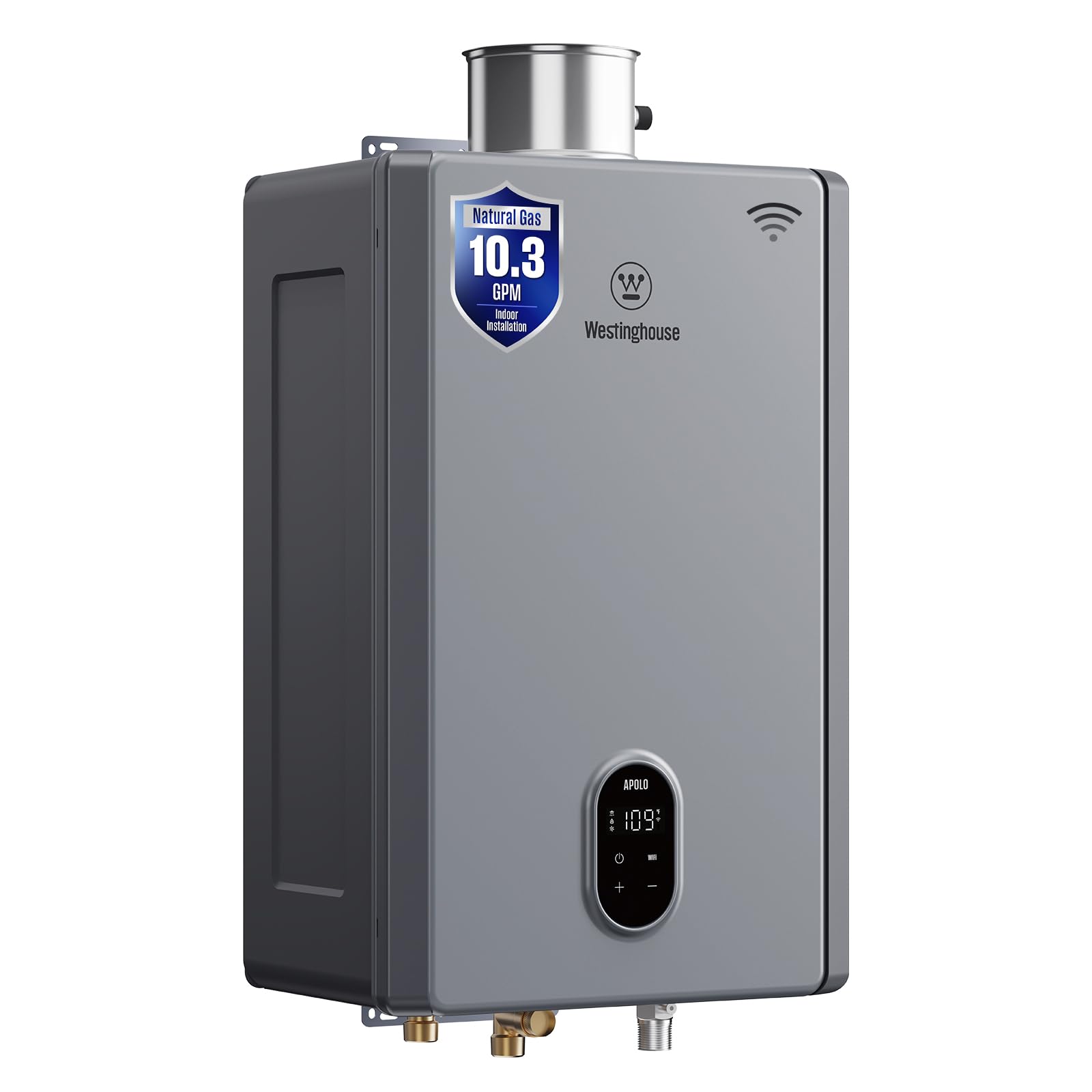
The Westinghouse 10.3 GPM natural gas model is a non-condensing unit that offers a compelling mix of smart features and high flow. It delivers up to 10.3 GPM with 199,000 BTUs and includes built-in WiFi and voice control, allowing you to adjust temperature, monitor status, and receive fault alerts from your phone. The 1:20 turndown ratio and 6-stage combustion system maintain temperature within ±1°F, minimizing cold bursts during simultaneous use.
Users report easy setup and immediate hot water after installation. The freeze protection rated down to -13°F makes it suitable for colder climates, and the phosphorus-deoxidized copper heat exchanger is resistant to corrosion. One reviewer noted that setting the thermostat to 116°F meant never needing to mix cold water — the delivered temperature was exactly right straight out of the tap.
Some users found it challenging to locate a contractor willing to install a customer-supplied unit. The non-condensing design means efficiency is lower than condensing models, but for those who want app control and a proven brand without the higher price tag of Rinnai, this is a strong contender. The warranty is solid, with 15 years on the heat exchanger.
Why it’s great
- Built-in WiFi and voice control for remote management
- ±1°F temperature stability with 6-stage modulation
- Freeze protection down to -13°F
Good to know
- Non-condensing; efficiency lower than condensing models
- Potential difficulty finding contractor to install
- May need additional parts for complete install
6. Westinghouse 10.3 GPM (LP)
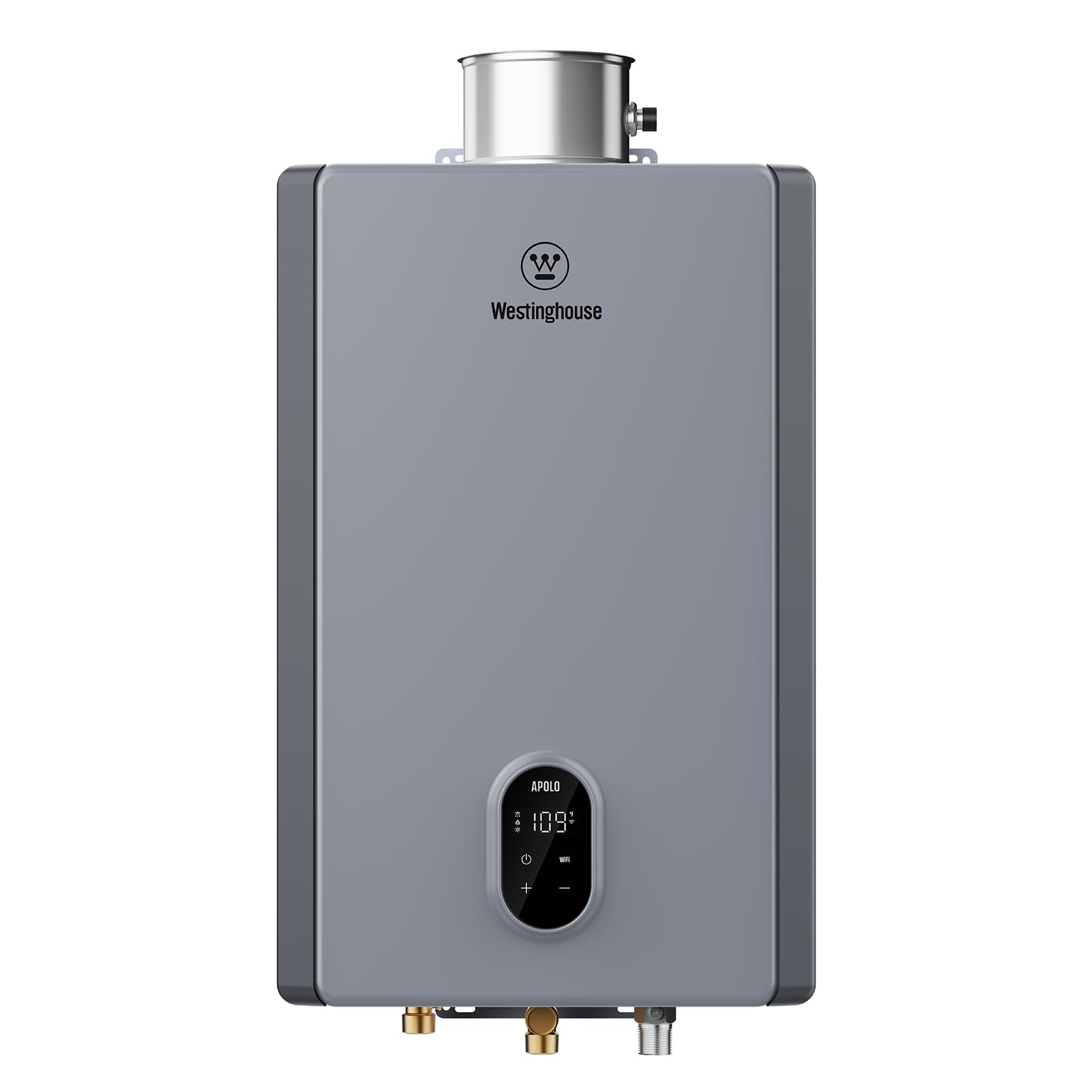
The Westinghouse 10.3 GPM propane model shares the same chassis and internal components as its natural gas sibling but is pre-configured for liquid propane. It delivers 199,000 BTUs and can handle up to 10.3 GPM, sufficient for four or more bathrooms. The ±1°F temperature stability and 6-stage combustion system are identical, ensuring consistent hot water even during peak demand.
Users note that the installation is straightforward with clear instructions, and the unit fires up quickly. The self-modulating technology adjusts gas and water flow in real time to prevent temperature spikes. The CSA certification and freeze protection down to -13°F provide peace of mind for year-round use in colder regions. The compact dimensions (15.9″W x 24.8″H) save significant wall space compared to a tank.
Like the NG version, this is a non-condensing unit, so it needs standard venting and won’t reach the same efficiency as condensing models. The included warranty coverage is good, but you’ll need to ensure your propane line has adequate capacity — some users had to upgrade their gas line size for full flow. For homes already on propane, this is a reliable, smart-ready choice.
Why it’s great
- Propane-optimized for homes off natural gas grid
- ±1°F temperature stability with 6-stage combustion
- Compact size saves wall space
Good to know
- Non-condensing; lower efficiency than condensing
- May require propane line upgrade
- WiFi features not as polished as premium brands
7. MIZUDO 10.3 GPM
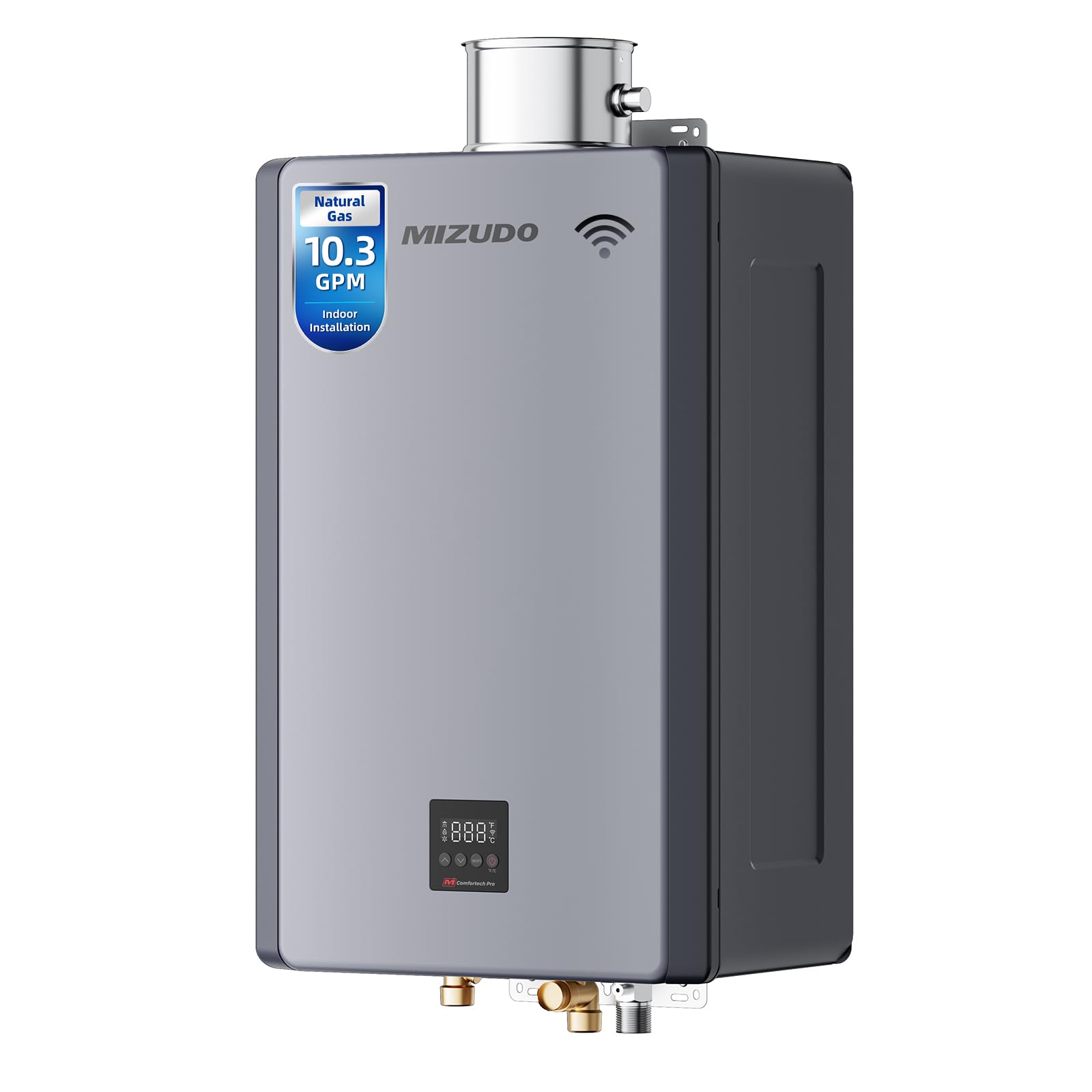
The MIZUDO 10.3 GPM offers WiFi app control and a 199,000 BTU heat output at a price point that undercuts many competitors. It’s a non-condensing unit designed for indoor installation, featuring 6-stage gas modulation that maintains water temperature within ±1°F. The unit supports up to 5-7 fixtures simultaneously, making it suitable for large families with multiple bathrooms.
Users report a quick installation process, with one reviewer noting the unit was set up in minutes — though they had to purchase an adapter for the non-standard gas fitting. The mobile app allows temperature adjustments and scheduling, though some users found the app interface less polished than Westinghouse or Rinnai solutions. The sealed direct vent design draws external air for combustion, preserving indoor air quality.
The integrated freeze protection operates down to -13°F, and the phosphorus-deoxidized copper heat exchanger resists corrosion. The warranty includes 2 years full coverage and 5 years on the heat exchanger. Some users expressed concerns about long-term reliability, as MIZUDO is a newer brand compared to Rheem or Rinnai. For the price, it’s a capable unit, but you may want to budget for a professional install to avoid gas fitting headaches.
Why it’s great
- Competitive price for 10.3 GPM with WiFi control
- 6-stage modulation for stable temperature
- Sealed direct vent for indoor air quality
Good to know
- Non-standard gas fitting may need adapter
- Newer brand with less long-term track record
- App interface less polished than competitors
8. Rheem RTG-95DVLN-3 (NG)
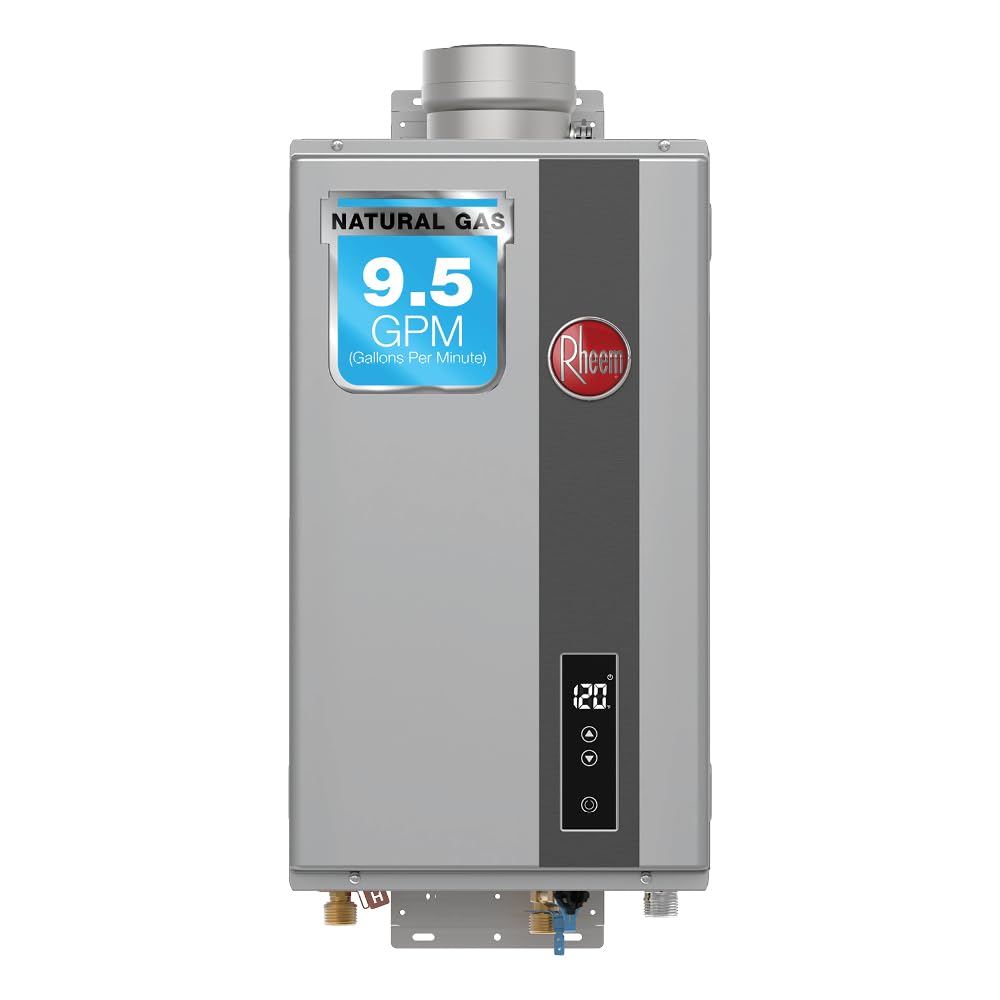
Rheem is a household name in water heating, and the RTG-95DVLN-3 delivers 9.5 GPM with 199,900 BTUs. It’s a non-condensing unit designed for indoor installation, featuring hot-start programming that prevents cold water bursts between back-to-back showers. This model is best suited for 2-3 bathroom homes where the demand rarely exceeds 9 GPM.
Users upgrading from an older Rheem tankless unit found the installation straightforward because the hoses and venting were identical. One reviewer reported their previous Rheem tankless lasted 13 years, which speaks to the brand’s durability. However, the unit does not come with all necessary installation parts — you’ll need to purchase water, gas, and exhaust fittings separately, which can add to the total cost.
Some users noted a slower warm-up time compared to expectations, and one unit failed before the one-year mark. The warranty is standard: 15 years on the heat exchanger, 5 years on parts, and 1 year on labor. For those who value brand reputation and plan to hire a contractor who stocks Rheem parts, this is a safe choice, though the 9.5 GPM rating may not quite satisfy the highest-demand scenarios.
Why it’s great
- Trusted Rheem brand with proven long-term reliability
- Hot-start programming prevents cold bursts
- Good support network for parts and service
Good to know
- Installation parts not included; separate purchase required
- 9.5 GPM may be limiting for very large homes
- Some reports of slow warm-up or early failure
9. Rheem RTG-95DVLP-3 (LP)
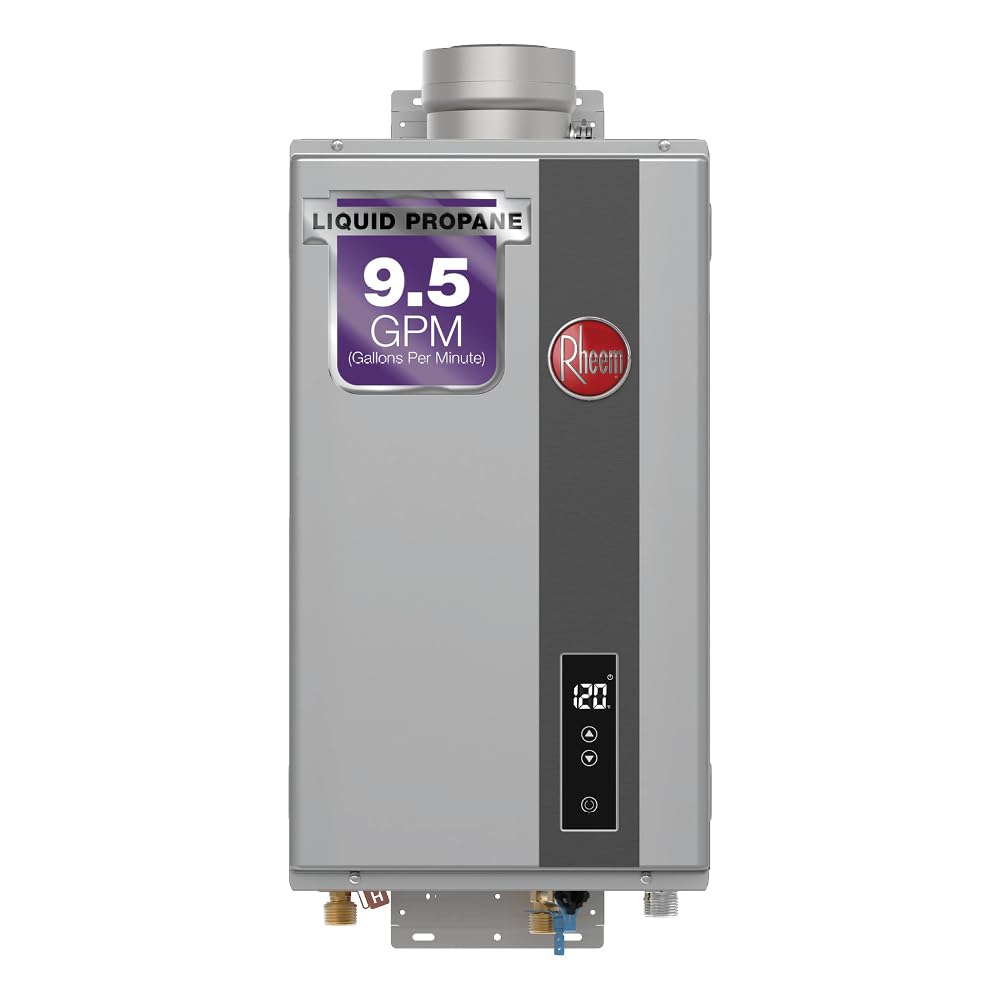
The Rheem RTG-95DVLP-3 is the liquid propane version of the RTG-95DVLN-3, offering the same 9.5 GPM flow and 199,900 BTUs. It’s designed for indoor installation and comes with hot-start programming to prevent temperature drops between uses. It’s a solid choice for homes that run on propane and need a reliable, efficient unit without the complexity of condensing technology.
Users report easy DIY installation, with one reviewer and their father completing the setup in a few hours using PEX piping. The unit has operated without issues for over eight months, maintaining stable hot water even during simultaneous use. However, several users noted that the unit is noticeably louder than expected — one described it as louder than a low-end dishwasher. This may be a factor if the heater is installed near living spaces.
The warranty is robust: 15 years on the heat exchanger, 5 years on parts, and 1 year on labor. The unit also performed well at 8,000 feet elevation in one user’s report, which is an important consideration for mountain homes. If noise sensitivity is not a concern, this Rheem provides reliable propane-powered hot water with excellent brand support.
Why it’s great
- Great warranty coverage (15yr heat exchanger)
- Easy DIY installation with PEX
- Works at high elevations (tested at 8000ft)
Good to know
- Noticeably louder than competing models
- Installation parts not included
- 9.5 GPM may not suit biggest households
10. Ranein 8.5 GPM (Propane)
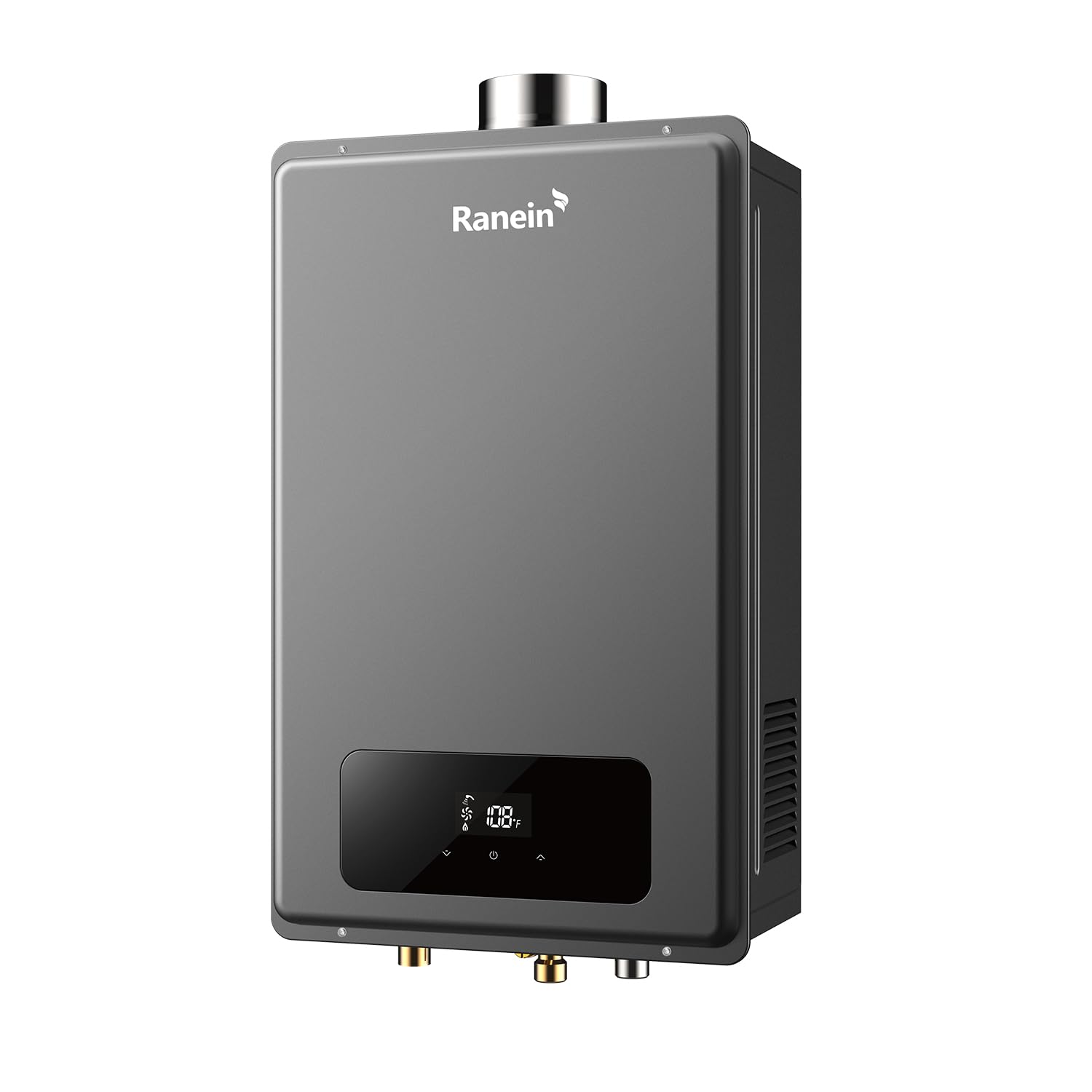
The Ranein propane tankless water heater is a budget-conscious choice that delivers up to 8.5 GPM with 190,000 BTUs, suitable for 4-6 outlet points. It’s a non-condensing indoor unit with a compact design (24.25″ x 15.08″ x 8.07″) that saves considerable space compared to a traditional tank. The unit includes a blower that automatically adjusts speed based on external wind pressure and water temperature, ensuring full combustion and safety.
Users consistently praise its value, with one family of eight reporting a monthly reduction in bills after switching from a tank. The installation is straightforward with standard 3/4″ NPT fittings, and DIY users completed the job in 2 hours with a friend — though they needed about in additional parts. The unit survived winter freezes that burst other pipes, which is a strong endorsement of its freeze tolerance when properly drained.
The 2-year warranty is shorter than market leaders, and the unit is not recommended for areas above 2,000 feet elevation. Some users noted that the gas inlet is not standard 1/2″ MIP, requiring an adapter. While the Ranein is not a true 10 GPM unit, it’s a capable performer for smaller homes or as a supplementary heater. For those on a tight budget, it provides reliable hot water with impressive energy savings.
Why it’s great
- Excellent value proposition with fast payback via savings
- Survived winter freezes without damage
- Low noise and compact footprint
Good to know
- Not recommended for elevations over 2,000 feet
- Only 2-year warranty
- May need adapter for gas fitting
11. Stiebel Eltron Tempra 36 Plus
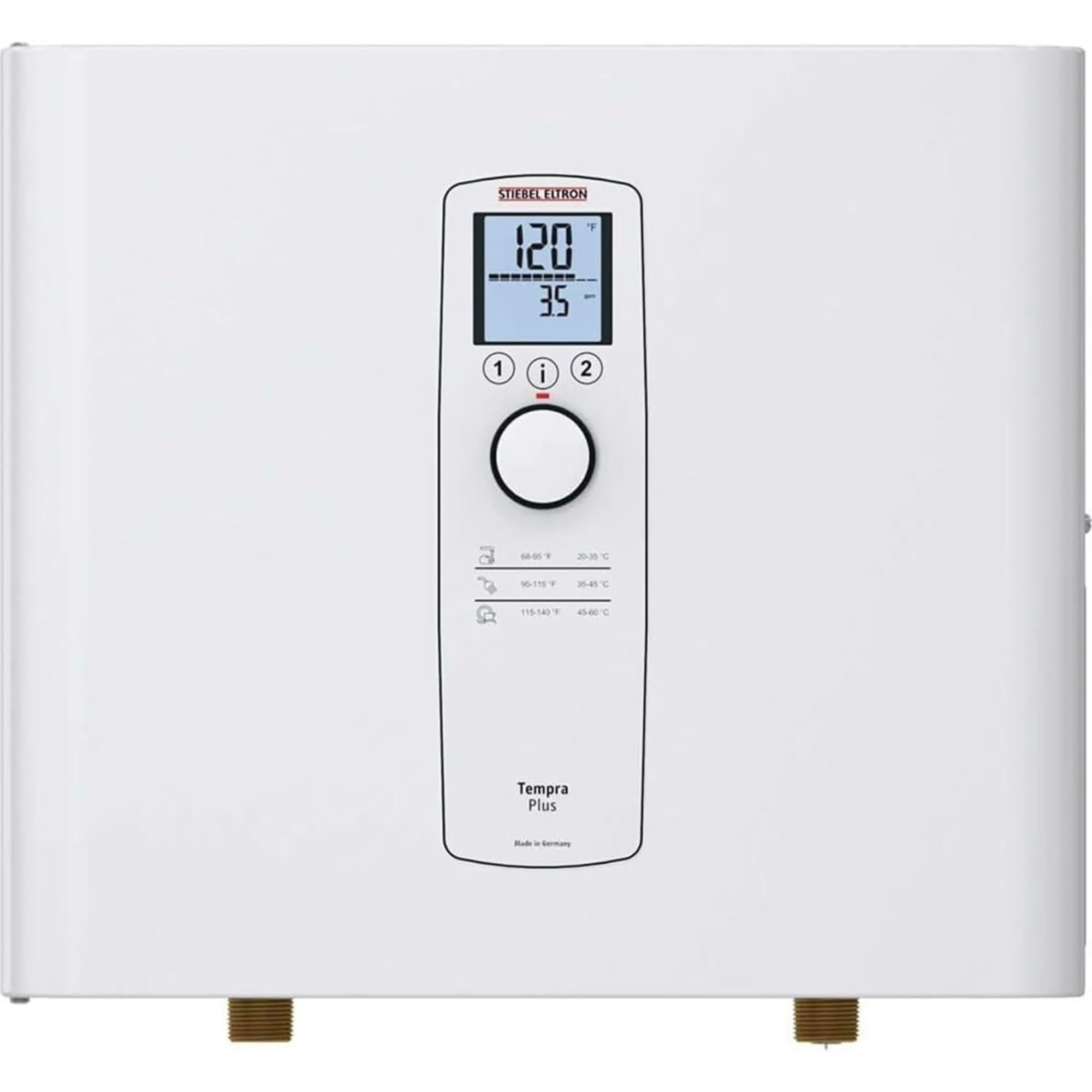
The Stiebel Eltron Tempra 36 Plus is an electric tankless water heater that delivers a continuous supply of hot water using 36 kW of power. Made in Germany, it features Advanced Flow Control and self-modulation energy technology that adjusts power usage based on flow rate and inlet temperature. The digital display allows precise temperature setting, and the compact design (16.63″ x 14.5″) weighs only 19 pounds, making it easy to wall-mount.
Long-term users report excellent reliability, with one reviewer replacing their previous Tempra after 14 years of service. The unit requires three 50A double-pole breakers and 6 AWG wiring, which is a significant electrical requirement. Users with solar panels and battery storage noted that the heater can draw 10-15 kW during showers and up to 30 kW when filling a bathtub, potentially leading to high electric bills if not carefully managed.
The main limitation is the flow rate — while it can produce hot water quickly, the actual GPM depends heavily on the temperature rise needed. In colder climates, the flow will be significantly reduced. Some users experienced inconsistent water temperature and reduced water pressure. This unit is best suited for smaller homes or apartments in warmer climates where the temperature rise demand is lower. For whole-house use in cold regions, a gas-powered model is far more practical.
Why it’s great
- German engineering with proven long-term reliability
- Compact and lightweight; easy wall mounting
- Digital display for precise temperature setting
Good to know
- Very high electrical draw (3x 50A breakers)
- Flow rate limited in cold climates
- Can cause high electric bills with heavy use
FAQ
Will a 10 GPM tankless water heater work in a cold climate?
What size gas line do I need for a 199,000 BTU tankless water heater?
Do I need a recirculation pump with a tankless water heater?
Can I install a 10 GPM tankless water heater myself?
Final Thoughts: The Verdict
For most users, the best 10 gpm tankless water heater winner is the Rinnai RXP199iN because its built-in recirculation pump, 0.98 UEF efficiency, and dual-fuel flexibility cover every base for a large family. If you want the highest flow with proven commercial-grade reliability, grab the Rinnai CX199iN. And for a more accessible price point while still hitting 10.3 GPM with smart home features, nothing beats the Westinghouse NG model.