
Our readers keep the lights on and the weekend projects moving. As an Amazon Associate, I earn from qualifying purchases.
A 10-inch chop saw is the backbone of any serious trim, framing, or hobbyist shop. The decision isn’t about power alone—it’s about how that motor pairs with a rigid base, a clear cut line, and a fence that stays true after every angle change. A saw that drifts 0.5 degrees on a 45° bevel ruins a run of crown molding, wasted material, and wasted time. The right saw eliminates that risk.
I’m Rikta — the co-founder and writer behind FitlyFast. I’ve spent hundreds of hours analyzing miter saw specifications, comparing motor torque curves, bevel stop accuracy, rail system rigidity, and dust collection effectiveness across dozens of models to build this guide.
Whether you are trimming out a basement or building decks on a crew, finding the best 10 inch chop saw means balancing cut capacity against portability and precision against price, without compromising on any of them.
How To Choose The Best 10 Inch Chop Saw
A 10-inch chop saw is a compromise between portability and power. The saws in this class range from basic direct-drive units to advanced sliding saws with multi-material capability. To pick the right one, you need to assess three things: how much crosscut capacity you actually need, whether you will cut materials beyond wood, and how often you will move the saw between work sites.
Miter vs. Bevel: Single or Double?
A single-bevel saw tilts the blade only to one side (typically left). This is fine for 90% of trim work, but if you cut crown molding nested against the fence, a double-bevel saw saves you from flipping the workpiece. The price difference is significant. Most budget-friendly and mid-range options are single-bevel. Premium options offer double-bevel for faster production work.
Sliding vs. Fixed: The Rail Factor
A fixed 10-inch chop saw cuts up to about 6 inches wide. A sliding saw uses rails to pull the blade forward, cutting up to 12 inches or more. Sliding saws are heavier and more expensive, but necessary for crosscutting 2×12 lumber or deck boards. The rail system design matters: linear ball bearings glide smoother than exposed rods, and some saws have compact rails that let you set the saw flush against a wall.
Cut-Line Technology: Laser vs. Shadow
Laser guides project a red line on the kerf. Shadow-line systems use an LED to cast a shadow of the blade onto the wood. The shadow line is always perfectly aligned because it uses the blade itself as the template, whereas lasers require calibration. For precision work, the shadow line is generally superior. For quick rough cuts, either works.
Motor Specs and Material Range
Most 10-inch saws use a 15-amp motor spinning at 4,500-5,000 RPM. That is enough for hardwood, pressure-treated lumber, and composite decking. For cutting steel or aluminum, you need a saw with a dedicated multi-material blade and a lower speed setting (around 3,200 RPM) to prevent burning the blade. Standard saws will cut non-ferrous metal but will dull the blade quickly.
Quick Comparison
On smaller screens, swipe sideways to see the full table.
| Model | Category | Best For | Key Spec | Amazon |
|---|---|---|---|---|
| DOVAMAN 10-Inch Sliding Miter Saw | Sliding | Multi-material & dual-speed cuts | Dual-speed 5000/3200 RPM | Amazon |
| DEWALT 20V MAX XR 10″ (DCS714B) | Cordless | Jobsite portability & cordless freedom | Double bevel, 20V MAX* cordless | Amazon |
| Evolution Power Tools R255SMS+ 10″ | Sliding | Heavy multi-material cutting (steel/wood) | 15A motor, 50° miter range | Amazon |
| Makita LS1040 10″ Compound | Fixed | Trim work & precision carpentry | 15A motor, machined aluminum base | Amazon |
| Metabo HPT C10FCG2 10″ | Fixed | Lightweight jobsite portability | 24 lbs, shadow line guide | Amazon |
| SKIL MS6306-00 7-1/4″ Miter Saw | Sliding | Compact sliding for tight shops | Fixed compact rail, shadow line | Amazon |
| Genesis GMS1015LC 10″ Compound | Fixed | Budget-friendly home projects | Laser guide, 9 positive miter stops | Amazon |
| Evolution Power Tools R185SMS+ 7-1/4″ | Sliding | Compact general multi-material cutting | Multi-material TCT blade & laser | Amazon |
| MarvTool (B0F9KMPTZF) 10″ Sliding | Sliding | Budget sliding saw for DIY crosscuts | Sliding 2-extension tables, 15A motor | Amazon |
In‑Depth Reviews
1. DOVAMAN Updated 10-Inch Sliding Miter Saw

The DOVAMAN saw is a compelling mid-range option because it introduces a dual-speed setting (5,000 RPM for wood and 3,200 RPM for soft metals) typically found on far more expensive machines. The 15A pure copper motor delivers consistent torque across both speeds, and the 13-inch sliding rail extends the crosscut capacity beyond what fixed 10-inch saws can manage. The ambidextrous design with dual lock switches makes it genuinely usable for left-handed operators without awkward reaching.
The laser guide, while appreciated by reviewers, is a secondary selling point compared to the three included TCT blades (40-tooth and 48-tooth configurations). The blades are entry-level, and experienced users recommend upgrading to a Diablo or Irwin for cleaner cuts in hardwoods. The saw accepts standard 10-inch blades, so replacement is straightforward.
Setup is simple out of the box, and the saw arrives well packed. The positive stops at nine common miter angles click securely into place. The main drawback reported by users is that the stock blades are mediocre for fine finish work, but the saw itself cuts square and with minimal vibration. For the price, this is the most feature-rich sliding 10-inch chop saw available.
Why it’s great
- Dual-speed motor adapts to wood and metal cutting
- Includes three TCT blades for immediate multi-material use
- Ambidextrous design with dual lock switches
Good to know
- Stock blades are adequate but not premium; upgrade recommended for hardwoods
- Laser guide requires occasional calibration
2. DEWALT 20V MAX XR 10″ Double Bevel Fixed Miter Saw (DCS714B)
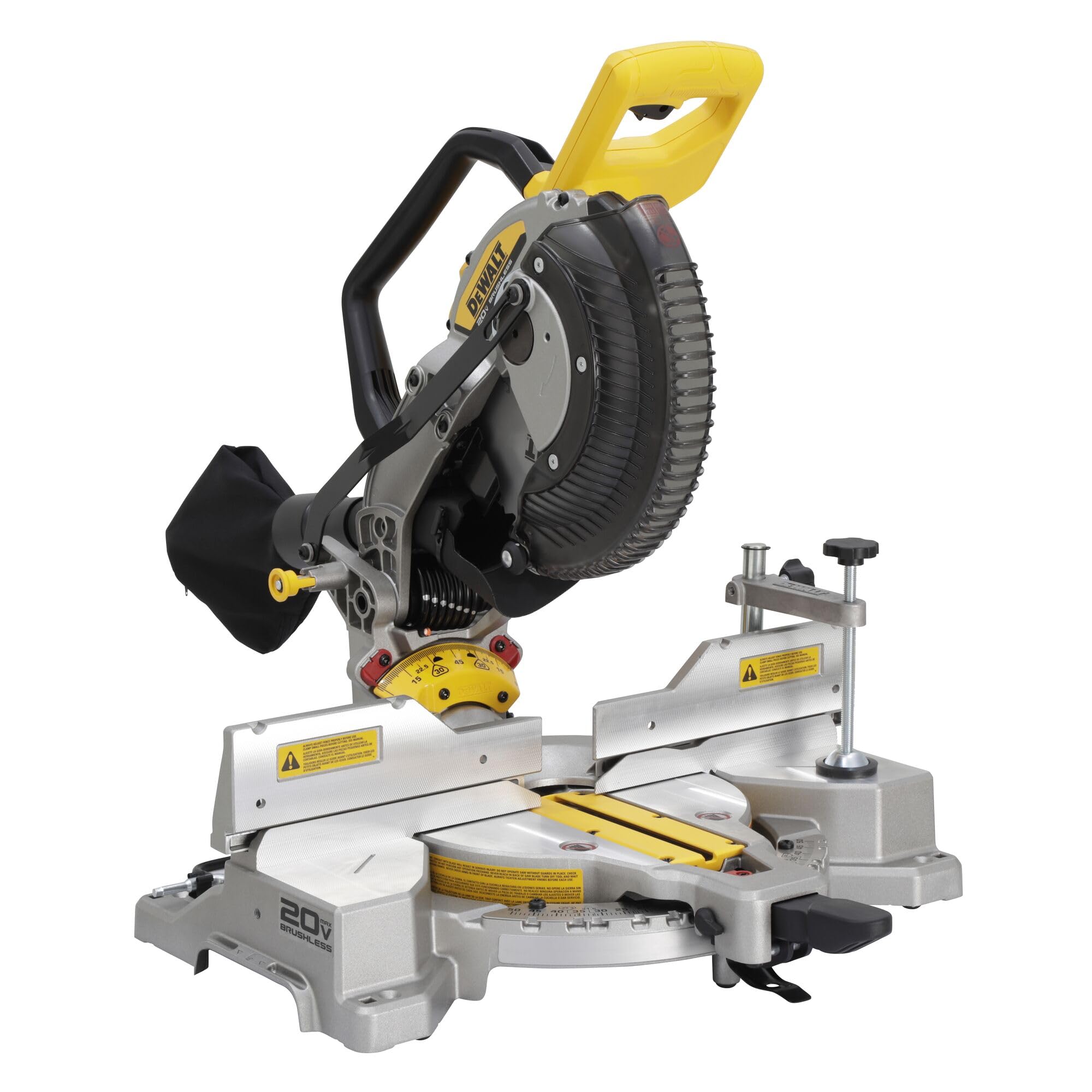
The DCS714B is DEWALT’s first 10-inch miter saw designed for the 20V MAX system, and it marks a genuine shift in cordless chop saw capability. The bevel gear transmission maximizes runtime by minimizing power loss, and the saw is rated to make up to 434 cuts in 3-1/4-inch MDF base molding on a single charge. The double-bevel function lets you tilt the blade left or right without flipping the workpiece—critical for crown molding and compound cuts.
Dust collection is rated at 97% efficiency, which is exceptional for a miter saw and keeps the work area clean. The cutline blade positioning system is an adjustment-free shadow line that never needs calibration. The saw cuts up to 6 inches horizontally and 5-1/4 inches vertically, which covers most baseboard and casing work. At 34 lbs (tool only), it is portable but not the lightest cordless saw on the market.
User feedback highlights the smoothness of the double-bevel detents and the accuracy of the cutline system. The main limitation is that the saw is fixed (non-sliding), so crosscut capacity is limited to 6 inches. You cannot cut a 2×12 in one pass. The saw also requires batteries sold separately, adding to the upfront investment. For pros who already own DEWALT 20V batteries, this is a powerful cordless option that genuinely competes with corded saws.
Why it’s great
- Double-bevel cuts without flipping workpiece
- 97% dust collection efficiency is class-leading
- No-calibration shadow line cutline system
Good to know
- Fixed (non-sliding) limits crosscut capacity to 6 inches
- Batteries sold separately; tool-only purchase
3. Evolution Power Tools R255SMS+ 10-Inch Sliding Miter Saw

The Evolution R255SMS+ is purpose-built for cutting wood, metal, plastic, and composite decking without changing the blade. The patented TCT blade cuts mild steel with virtually no sparks and remains cool to the touch. The 15-amp motor and optimized gearbox deliver smooth power through the cut, even on 1/4-inch steel. The sliding rail extends to crosscut wider boards, and the 50° miter range in both directions covers all common angles for framing and trim.
The plus version includes dual quick-release clamps, taller fences that improve material support, a slide rail protector, and a 3-meter cable. The clamps are functional but not pro-grade—users report they work well for most materials but may feel a bit plastic. The dust collection bag is included but is less effective than connecting a shop vac. The saw weighs 41.8 lbs, putting it firmly in the heavy sliding category.
User reviews consistently praise the saw’s ability to cut metal cleanly without the blade grabbing. The soft-start feature prevents breaker tripping on startup. The only consistent criticism is that the supplied blade, while effective for metal, drags fibers on wood and leaves a slightly rougher finish than a dedicated wood blade would. Many owners keep a separate wood-cutting blade for fine carpentry. The 3-year warranty adds peace of mind for the investment.
Why it’s great
- Cuts steel, aluminum, and wood with one blade
- Soft-start motor prevents breaker trips
- 3-year manufacturer warranty included
Good to know
- Supplied blade drags on wood; swap for a wood blade for fine work
- Heavy at 41.8 lbs; less portable than fixed saws
4. Makita LS1040 10″ Compound Miter Saw

The Makita LS1040 is a shop staple that has been a favorite among trim carpenters for years. It uses a dual-post compound pivoting arm that eliminates side-to-side play, resulting in incredibly accurate cuts even after years of use. The 15-amp direct-drive motor spins at 4,600 RPM, delivering enough torque for hardwoods, PVC, and composite trim. The machined aluminum base is durable and remains flat over time, unlike stamped steel bases that can warp.
Miter cuts cover 0°-45° left and 0°-52° right, with positive stops at nine common angles. The bevel cuts up to 45° to the left, which is sufficient for most crown molding applications when nested properly. The saw weighs only 27 lbs, making it one of the lightest 10-inch saws in its class and genuinely portable. The included 40-tooth micro-polished blade cuts clean out of the box.
The main limitation is the fixed (non-sliding) design—crosscut capacity is about 6 inches. The base is also not compatible with most universal portable stands without modification, as the mounting slots are shaped differently than DEWALT or Metabo HPT. Users praise the saw’s repeatable accuracy and smooth pivot action. It is a dedicated wood saw; it will struggle with metal cutting unless you swap to a ferrous-metal blade.
Why it’s great
- Dual-post pivot arm eliminates head wobble
- Machined aluminum base ensures long-term flatness
- Lightweight 27 lbs; easy to move between sites
Good to know
- Fixed design limits crosscut capacity; not for 2x12s
- Base mounting incompatible with some universal stands
5. Metabo HPT 10-Inch Single Bevel Compound Miter Saw (C10FCG2)
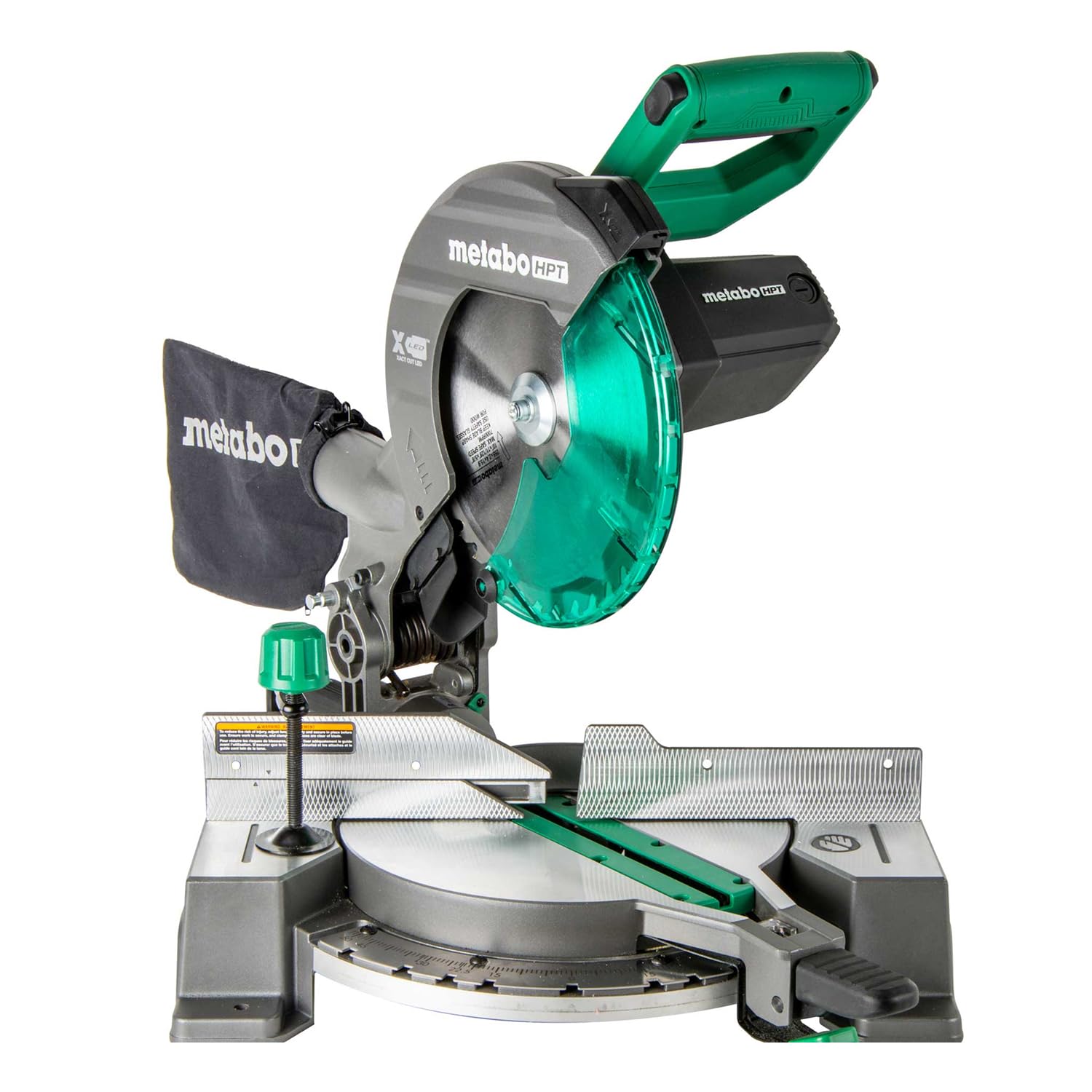
The Metabo HPT C10FCG2 is built around portability. At just 24.2 lbs, it is the lightest full-size 10-inch chop saw in this guide, and it still packs a 15-amp motor and a shadow line cut guide. The shadow line is a distinct advantage over laser guides at this price level—it uses the blade itself to cast a shadow, so alignment is always perfect. The miter scale is improved from previous generations, with clearer markings and a positive detent system.
The saw cuts square out of the box, with several reviewers confirming that no adjustment was needed for 90° cuts. The bevel range goes 0-45° left, and the miter range is 0-52° in both directions. The vice clamping system holds the material securely, though some users note the clamp could be more robust for heavy materials. Dust collection is adequate but not exceptional; a shop vac connection improves it significantly.
Customer reviews are overwhelmingly positive, with consistent praise for the weight, accuracy, and shadow line. The 5-year warranty is the longest in the category. The saw is not sliding, so it will not cut wide boards in a single chop. But for trim, baseboards, crown molding, and 2x framing lumber, this saw is a fantastic value that does not compromise on cut quality.
Why it’s great
- Shadow line guide never needs calibration
- 24.2 lbs makes it genuinely portable for jobsite work
- 5-year warranty is best-in-class
Good to know
- Fixed design; cannot crosscut wide dimensional lumber
- Dust collection bag is adequate but shop vac recommended
6. SKIL 10 Amp 7-1/4″ Single Bevel Miter Saw (MS6306-00)

The SKIL MS6306-00 uses a fixed compact rail system that lets the saw sit flush against a wall, saving significant benchtop footprint. The 10-amp motor delivers up to 4,800 RPM, which is sufficient for cutting 2x10s in a single pass. It uses a 7-1/4-inch blade, not the standard 10-inch format, so blade selection is slightly different, but 7-1/4-inch blades are widely available and often cheaper. The shadow line guide is on par with more expensive saws.
Miter detents hit the common angles (0, 15, 22.5, 31.6, 45) on both sides. The quick miter lock snaps into position quickly but users note it could be more robust. The quick work clamp is functional but basic. The saw weighs under 25 lbs, making it genuinely portable. The single-bevel range is 0-45° left only, which limits compound cutting but covers most renovation work.
Reviews highlight the saw’s accuracy and the convenience of the compact rail system. It cuts 10-inch boards in one chop, which surprises many owners. The main downside is the smaller blade size means you give up some depth of cut compared to a 10-inch saw. It also uses a 10-amp motor rather than 15-amp, so it may bog down slightly in dense hardwoods. For a lightweight sliding saw designed for tight spaces, it is an excellent choice.
Why it’s great
- Compact rail system saves benchtop space
- Shadow line provides accurate cut indicator
- Lightweight and genuinely portable under 25 lbs
Good to know
- Uses 7-1/4-inch blade, not standard 10-inch
- 10-amp motor less powerful than 15-amp alternatives
7. Genesis GMS1015LC 15-Amp 10-Inch Compound Miter Saw

The Genesis GMS1015LC is a budget-friendly entry-level saw built around a 15-amp motor and a laser guide. It includes a 60-tooth carbide blade, which is a higher tooth count than many saws in this class and delivers reasonably clean cuts on softwood and plywood. The nine positive miter stops lock firmly at common angles, and the die-cast aluminum base is durable enough for home workshop use. The electric brake stops the blade within seconds, a safety feature not always present at this level.
The single-bevel range reaches 45° left only. The laser guide runs on two AAA batteries and is a simple red-line projection. It does help alignment, but it requires calibration out of the box and can drift over time. The dust collection bag is included but is largely ineffective at this angle—most users connect a shop vac to the exhaust port to keep the mess under control. The saw is loud at full speed, so hearing protection is essential.
User reviews note the saw cuts 2x4s and 4x4s easily and handles trim work well. The main compromises are the plastic components, lightweight feel, and the fact that the laser is not a shadow line. For a homeowner tackling weekend projects like baseboards, picture frames, and small furniture, this saw provides enough power and accuracy without straining the budget. It is not built for daily contractor use.
Why it’s great
- 15-amp motor with electric brake for safety
- Nine positive miter stops for quick angle setting
- Includes 60-tooth carbide blade for cleaner cuts
Good to know
- Laser guide requires manual calibration
- Dust collection bag is not effective
8. Evolution Power Tools R185SMS+ 7-1/4″ Sliding Miter Saw

The Evolution R185SMS+ is the smaller sibling of the R255SMS+, using a 7-1/4-inch blade instead of a 10-inch. The smaller blade reduces weight and improves portability while retaining the multi-material cutting capability. The 1500W optimized gearbox drives the blade at high speed, and the included TCT blade cuts steel, aluminum, wood with nails, and plastic with virtually no sparks. This saw is ideal for a finishing carpenter who occasionally needs to cut metal conduit or rebar.
Miter angles cover 50° in both directions, and the bevel range is 0-45°. The laser guide is integrated and runs on batteries. The sliding rail system uses ball bearings for smooth operation. The saw includes a dust collection bag, a clamp, and a carry handle. Build quality is suited for finish work and light to medium-duty use—it is not designed for heavy production framing but performs well in a workshop or on a remodeling site.
User feedback consistently highlights how effectively it cuts metal without heat buildup or burrs. The soft-start motor is gentle on circuits. The main downsides are the smaller blade size (7-1/4 inches limits depth of cut compared to 10-inch) and the fact that the laser guide is not as precise as a shadow line. The saw also lacks a ground plug on the cord, which some users note as a minor electrical concern. Overall, it is a versatile, compact multi-material saw with an excellent warranty.
Why it’s great
- Cuts steel, aluminum, wood, and plastic without sparks
- Soft-start motor for safe startup on sensitive circuits
- 3-year warranty adds long-term value
Good to know
- 7-1/4-inch blade limits depth of cut vs. 10-inch saw
- Laser guide less precise than a shadow-line system
9. MarvTool 10-inch Sliding Compound Miter Saw (B0F9KMPTZF)
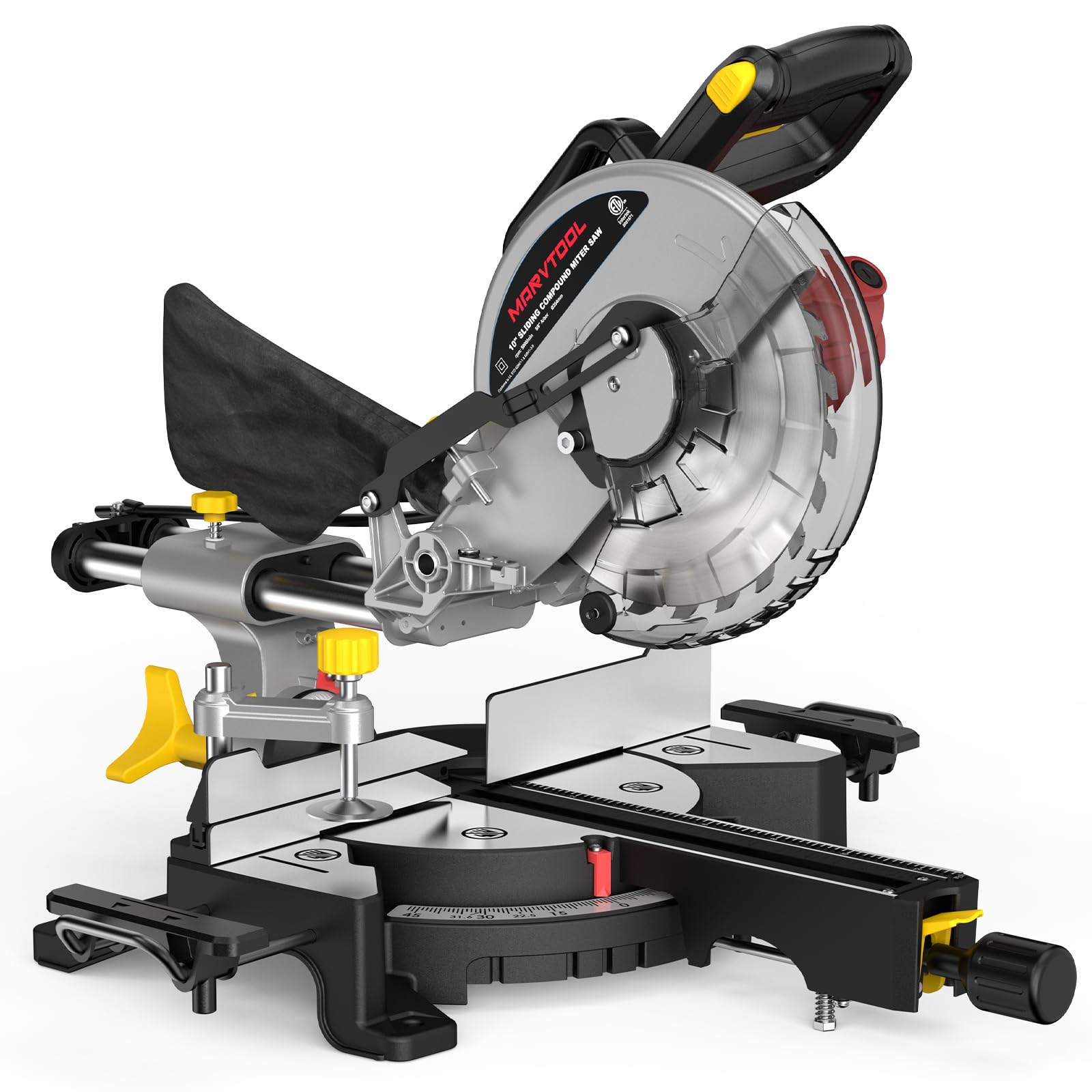
The MarvTool 10-inch sliding saw enters the market targeting DIYers who want a sliding saw without paying premium prices. It uses a 15-amp motor that reaches 5,000 RPM, and it includes two extension tables to support longer workpieces. The sliding rail system allows crosscutting wider boards, and the bevel range is 0-45° on both sides. The saw includes a 36-tooth TCT blade that handles general wood cutting adequately.
Build quality feels solid for the price level. The transparent blade guard provides good visibility during cuts, and the dust collection bag is included but is best supplemented with a shop vac. The vise clamp holds material securely enough for most cuts, though it is not as substantial as on premium saws. The saw weighs 25.6 lbs, which is surprisingly light for a sliding saw and makes it portable for home shop use.
User reviews note that the saw cuts straight, flush, and slides smoothly. Some users mention the blade could be sharper out of the box—upgrading to a Diablo or similar blade improves finish quality noticeably. The saw does not have a laser guide, which some users miss, but the blade visibility is good enough for alignment. For a budget-conscious buyer who needs a sliding 10-inch saw for furniture, shelving, and general carpentry, this is a capable entry point.
Why it’s great
- Sliding rail expands crosscut capacity for wider boards
- Includes two extension tables for material support
- Lightweight 25.6 lbs for a sliding saw
Good to know
- Stock blade is entry-level; upgrade for better finish
- No laser guide; rely on blade visibility for alignment
FAQ
Can a 10-inch chop saw cut a 4×4 in one pass?
What is the difference between a miter saw and a chop saw?
Do I need a sliding miter saw or a fixed one?
Is a laser guide worth having on a chop saw?
Final Thoughts: The Verdict
For most users, the 10 inch chop saw winner is the DOVAMAN 10-Inch Sliding Miter Saw because it offers dual-speed motor control, a sliding rail for wider crosscuts, and a laser guide—all at a mid-range price that undercuts traditional premium brands. If you need cordless flexibility and double-bevel precision for crown molding, grab the DEWALT DCS714B. And for heavy multi-material cutting that includes steel and aluminum, nothing beats the Evolution R255SMS+ with its 3-year warranty and no-spark metal cutting.