
Our readers keep the lights on and the weekend projects moving. As an Amazon Associate, I earn from qualifying purchases.
The pursuit of high-fidelity sound in a portable package has never been more accessible. The market for sub-$100 in-ear monitors is crowded with technical achievements that once belonged to the kilobuck club, but separating genuine performer from hype-train noise demands a ruthless filter: driver configuration, tuning philosophy, and build integrity. This guide delivers exactly that filter.
I’m Rikta — the founder and writer behind FitlyFast. My analysis of the IEM market focuses on matching driver topology, impedance curves, and material science to real-world listening scenarios, ensuring every recommendation is backed by measurable specs and community-validated performance.
Whether you’re a competitive gamer chasing footsteps or a musician needing accurate stage monitoring, this deep dive into the best $100 iems will help you find your perfect sonic tool.
How To Choose The Best $100 IEMs
The $100 price point sits at a fascinating crossroads: entry-level buyers graduate from budget sets, while seasoned listeners seek secondary reference pairs. To navigate this tier, you must understand three pillars: driver architecture, tuning target, and physical ergonomics. Ignore any of these, and your new IEMs will sit in a drawer.
Driver Configuration: Speed vs. Weight
Single dynamic drivers (DD) offer cohesive, natural bass and treble transition but can struggle with micro-detail layering at this price. Hybrid designs (DD + Balanced Armature) split the load: the DD handles low-end weight and slam, while BA drivers deliver articulate highs and precise imaging. Planar magnetic drivers, though rarer at $100, provide blistering transient speed and airy top-end extension. The trade-off is always complexity — more drivers mean more crossover tuning required to avoid phase cancellation.
Tuning Targets and Your Music Library
Many manufacturers now tune to established target curves like the IEF Neutral or H-2019 (which emphasizes upper-mid presence for vocal clarity and gaming cues). Others favor a warm, consumer-friendly V-shape with elevated bass and treble. Your library dictates the winner: bass-heavy genres (EDM, hip-hop) reward a DD that delivers sub-bass extension without bleeding into the midrange, while acoustic and vocal-centric tracks demand a neutral-warm signature with controlled treble to avoid sibilance.
Nozzle, Cable, and Comfort for Long Sessions
A metal nozzle with replaceable tuning filters allows you to fine-tune treble energy without swapping IEMs. The cable must be detachable (2-pin 0.78mm or MMCX) for stage reliability and easy replacement. Ergonomics are non-negotiable for sessions exceeding an hour — look for lightweight resin or polycarbonate shells derived from ear-scan databases, as they prevent hotspots in the concha and reduce listener fatigue.
Quick Comparison
On smaller screens, swipe sideways to see the full table.
| Model | Category | Best For | Key Spec | Amazon |
|---|---|---|---|---|
| Fosi Audio IM4 | Open-Back DD | Spacious soundstage & long sessions | Beryllium-coated diaphragm, open-back | Amazon |
| Simgot EW300 | Hybrid (DD+Planar+PZT) | Gaming & versatile tuning | Replaceable nozzles, tri-matrix architecture | Amazon |
| TRUTHEAR Hexa | Hybrid (1DD+3BA) | Neutral reference & competitive gaming | DLP-3D printed cavity, medical-grade resin | Amazon |
| KZ ZAR | Hybrid (7BA+1DD) | Musicians & detail retrieval | 8-driver setup, lightweight aluminum shell | Amazon |
| Sennheiser IE 100 Pro | Single DD | Stage monitoring & durable build | 10mm broadband transducer, stage-proof cable | Amazon |
| Kiwi Ears Cadenza II | Single DD | Value & balanced neutral tuning | KARS 2.0, titanium-coated PET diaphragm | Amazon |
| BASN MMCX | Hybrid (2DD+1BA) | Bass lovers & monitor mixing | Triple driver, 12 pairs of eartips included | Amazon |
In‑Depth Reviews
1. Fosi Audio IM4
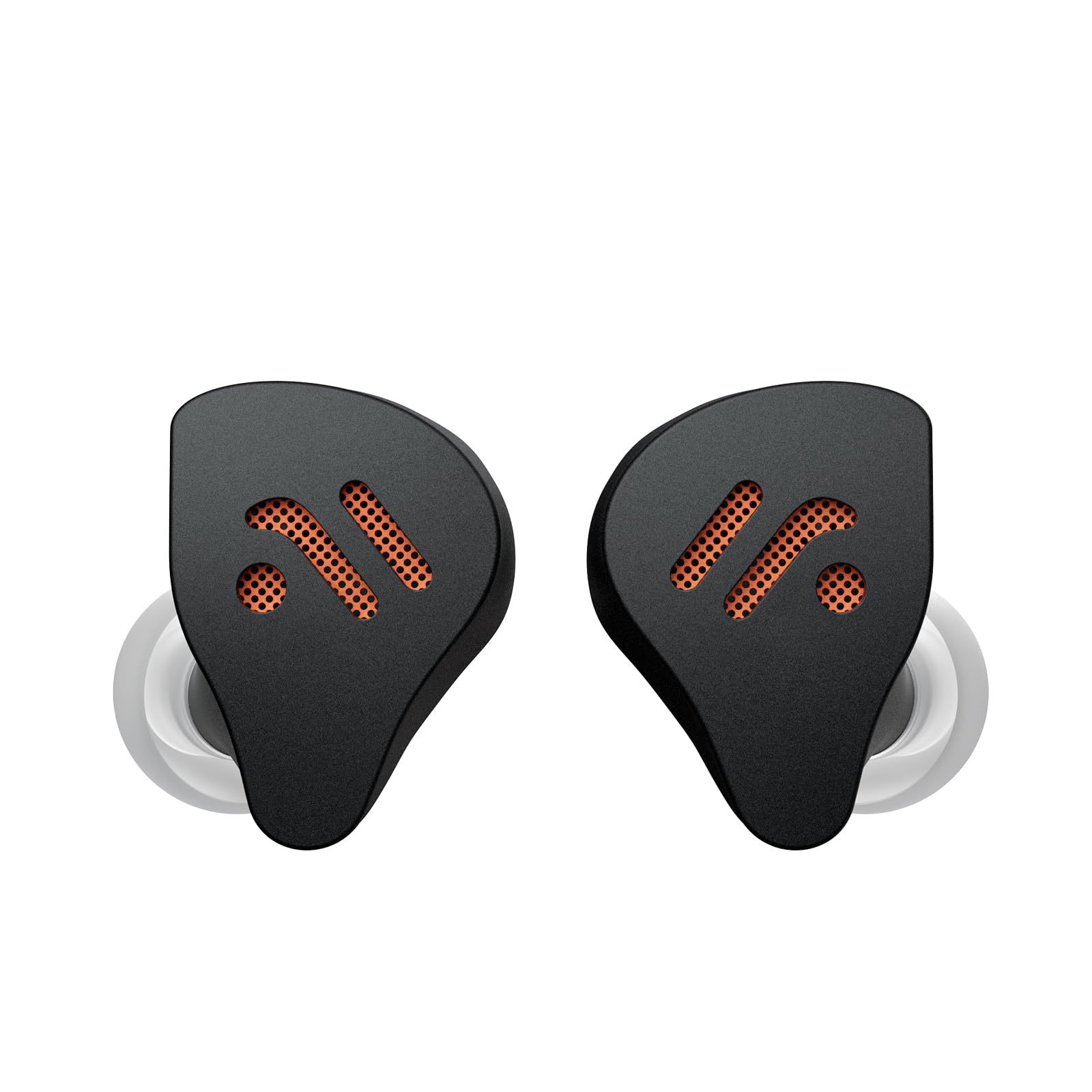
The Fosi Audio IM4 achieves something rare at this price: an open-back IEM that genuinely breathes. The 10mm beryllium-coated dynamic driver, paired with N52 dual magnets, delivers a spacious soundstage that rivals many over-ear headphones. The dual-chamber structure ensures the low-end is clean and textured rather than boomy, while the open design prevents any feeling of boxed-in claustrophobia during long listening sessions.
Ergonomically, the IM4 is a marvel. The full-aluminum alloy shell, precision CNC-machined and sand-blasted to a smooth finish, weighs just 7 grams per earbud. The large ear-shape database used in its design ensures a natural, barely-there fit that accommodates small ear canals without pressure points. The included three ear tip sets (balanced, bass, deep-bass) paired with brass and aluminum alloy nozzles let you dial in the treble energy to your preference — a rare level of customization at this tier.
The only compromise is the non-swappable cable termination, which locks you into a 3.5mm jack. However, the detachable 2-pin 0.78mm connector on the IEM side remains standard, so aftermarket cables are an easy upgrade if you need balanced or USB-C output. For pure, fatigue-free listening with an airy, wide-open soundstage, the IM4 is the class leader in this roundup.
Why it’s great
- Spacious, open-back soundstage with excellent instrument separation
- Ultra-light metal shell (7g per bud) for all-day comfort
- Interchangeable brass/aluminum nozzles and three types of ear tips for custom tuning
Good to know
- Cable termination is fixed at 3.5mm — no balanced output out of the box
- Open-back design offers minimal noise isolation, unsuitable for noisy environments
2. Linsoul SIMGOT EW300

SIMGOT packs a tri-matrix architecture into the EW300 — one dynamic driver, one planar driver, and one piezoelectric ceramic driver per side. This combination is engineered to balance the lightning-fast transient response of the planar with the natural decay of the DD, while the PZT adds shimmer in the upper registers. The result is a U-shaped sound signature that can be tweaked via the detachable nozzle system, which offers two distinct tuning styles: a Gold Copper nozzle (for gaming) and a Silver nozzle (for neutral reference).
The metal casing, CNC-machined from a high-density alloy with a mirror-plating process, feels substantial without being overly heavy. The ergonomic fit, derived from 3D ear contour analysis, locks in securely for gaming sessions. The gold copper nozzle with purple silicone ring is tailored for the H-2019 target curve, which elevates upper-mid presence — making footsteps and gunfire in competitive shooters starkly clear. The silver nozzle, referencing the SIMGOT-Golden2023 curve, provides a more balanced presentation for music listening.
A minority of users report the metal casing separating over extended use, which is a durability flag. The nozzle rings can also stain silicone ear tips over time. However, for a sub-$100 hybrid that delivers both gaming precision and musical versatility through swappable nozzles, the EW300 remains a standout.
Why it’s great
- Three-way hybrid driver delivers exceptional detail and speed for gaming
- Detachable nozzles enable instant tuning swap between gaming and music
- High-purity silver-plated OFC cable enhances signal clarity and separation
Good to know
- Some units have reported metal casing separation after months of use
- Nozzle rings can discolor silicone ear tips over time; use foam tips to avoid
3. TRUTHEAR Hexa

The Hexa is a polarizing entry in the $100 space because it refuses to flatter. Its 1DD+3BA hybrid setup, tuned toward a neutral-warm target, avoids the common V-shaped consumer tuning pitfalls. The polyurethane suspension liquid crystal dome dynamic driver handles sub-bass with textbook impact, while the three balanced armatures — one of which is a custom unit resembling the WBFK series — deliver smooth, detailed highs without the sharp peaks that cause ear fatigue. This makes it a go-to for competitive Valorant or CS players who need precise directional audio without bass masking.
The shell is where TRUTHEAR flexes manufacturing muscle: DLP-3D printed from medical-grade high-transparency resin by HeyGears. This process allows complex internal acoustic waveguides that would be impossible with injection molding, and the resulting fit is lightweight and skin-friendly. The CNC-anodized aluminum faceplate is secured with self-tapping screws and glue, so accidental drops won’t pop it off. The included silver-plated copper cable has a thicker strand diameter than most stock cables in this tier, reducing microphonics.
The narrow soundstage is the Hexa’s main trade-off for its pinpoint imaging. If you crave an airy, expansive presentation, the Hexa’s intimate stage may feel claustrophobic. But for those who need accurate instrument placement and a tuning that doesn’t need immediate EQ correction, the Hexa is a top-tier analytical tool.
Why it’s great
- Neutral-warm reference tuning perfect for competitive gaming and critical listening
- Medical-grade DLP-3D printed cavity ensures a precise, comfortable fit
- Custom WBFK-style BA driver delivers smooth, non-fatiguing treble extension
Good to know
- Intimate soundstage lacks the spaciousness of open-back designs
- Mid-bass roll-off may leave bass-heavy genres feeling anemic without EQ
4. KZ ZAR

KZ throws eight drivers per side at the ZAR — seven balanced armatures paired with one dynamic driver — in a configuration that would have cost several hundred dollars a few years ago. The sheer driver count translates to exceptional imaging and separation, with the balanced armatures handling every frequency band from mids to ultra-highs while the DD focuses solely on sub-bass weight. The 8-strand high-definition decoding cable is wear-resistant and low-noise, critical for stage use where cable slap can ruin a monitor mix.
The aluminum billet shell is surprisingly lightweight despite housing eight drivers — KZ claims it weighs less than their own ZS10 Pro, which has fewer drivers. The ergonomic design, reflecting pressure points from thousands of ear scans, provides a secure fit for drummers and bassists who need to block out stage noise without resorting to excessive volume. The noise isolation is rated up to 30 dB, making it one of the most isolating IEMs in this roundup.
No storage case is included, which is a significant oversight for a $100 IEM. The cable’s sheath near the earbuds can cause discomfort at the top of the ear if not rotated forward. But for the sheer resolving power and isolation, the ZAR earns its spot for musicians who demand clarity in loud environments.
Why it’s great
- Eight-driver hybrid configuration provides exceptional detail retrieval and layering
- Lightweight aluminum shell despite high driver count, comfortable for stage use
- Up to 30 dB of passive noise isolation blocks out loud band environments
Good to know
- No carrying case included; requires aftermarket storage solution
- Cable sheath near earbuds may cause pressure on top of the ear; adjust rotation
5. SENNHEISER Professional IE 100 Pro
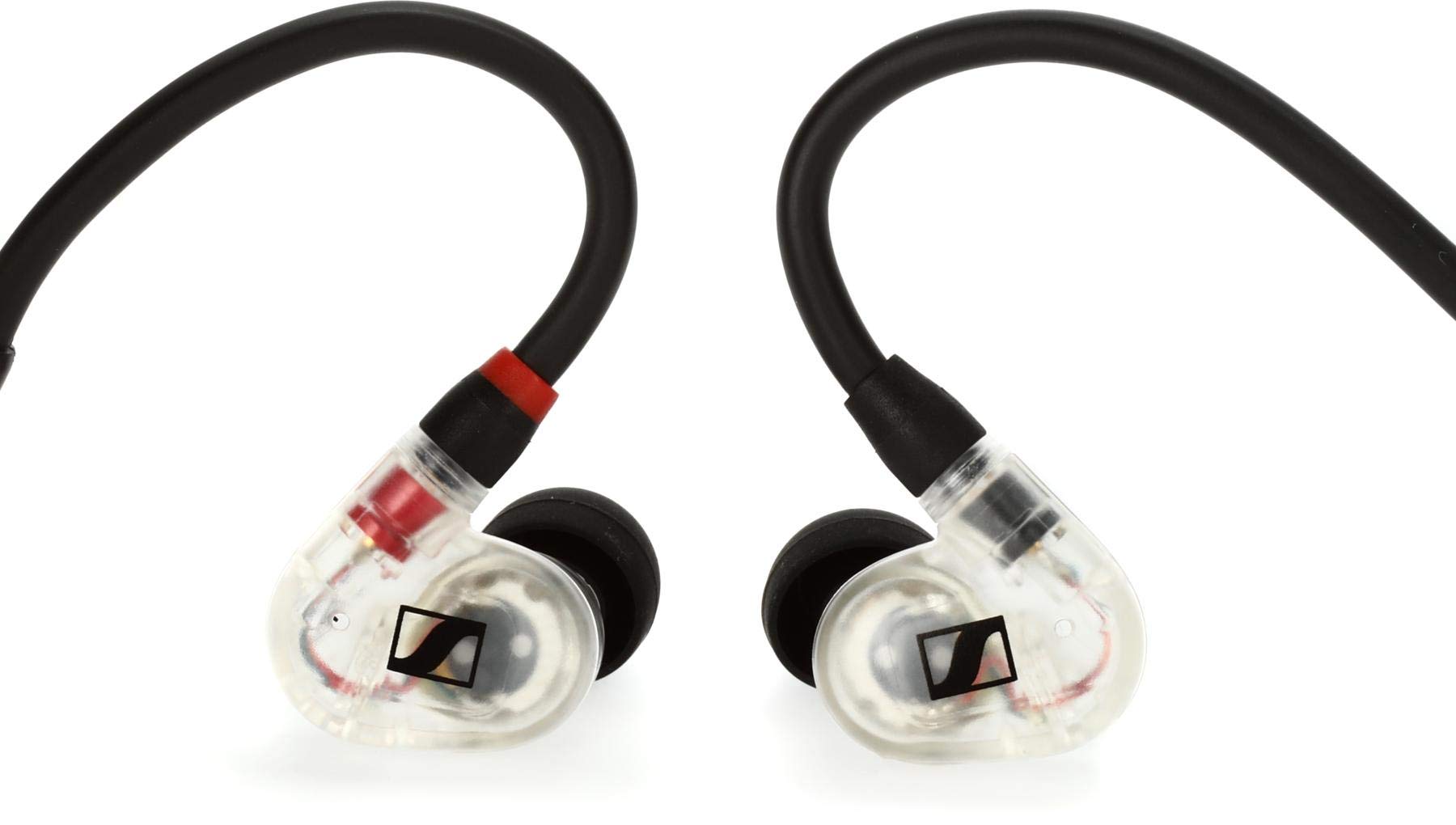
Sennheiser’s IE 100 Pro is a purpose-built stage monitor that sacrifices consumer-friendly tuning for reliability and consistency. The single 10mm dynamic transducer delivers a fairly flat frequency response with a slight treble boost, designed to cut through stage noise and let vocalists or horn players hear themselves accurately. The sound is detailed and revealing — it will expose poor recordings mercilessly — but it is not a fun, bass-forward listening experience for casual enjoyment.
Build quality is where Sennheiser’s engineering pedigree shines. The earpiece shell is compact and ergonomic, designed to fit flush against the ear even under a helmet or behind a guitar strap. The stage-proof cable features an internal cable duct that routes the wire over the ear, with reinforced strain relief at every connector point. The included foam and silicone ear tip selection is generous, and the foam tips provide exceptional passive isolation for loud stage environments.
The treble can be sibilant on certain “S” and “T” sounds, particularly at higher monitoring volumes. Some users find the top end too brittle for extended listening. However, for its core purpose — reliable, accurate stage monitoring with a proven brand backing — the IE 100 Pro remains a trusted choice for live performers who need to hear their mix without coloration.
Why it’s great
- Pro-grade build with reinforced cable duct designed for stage abuse
- Compact, flush-fitting shell works under stage gear and helmets
- Distortion-free dynamic driver provides clear, reliable monitor mix
Good to know
- Treble boost can cause sibilance on sibilant vocals at high volumes
- Not a fun or bass-heavy tuning; best for critical monitoring duty
6. Linsoul Kiwi Ears Cadenza II
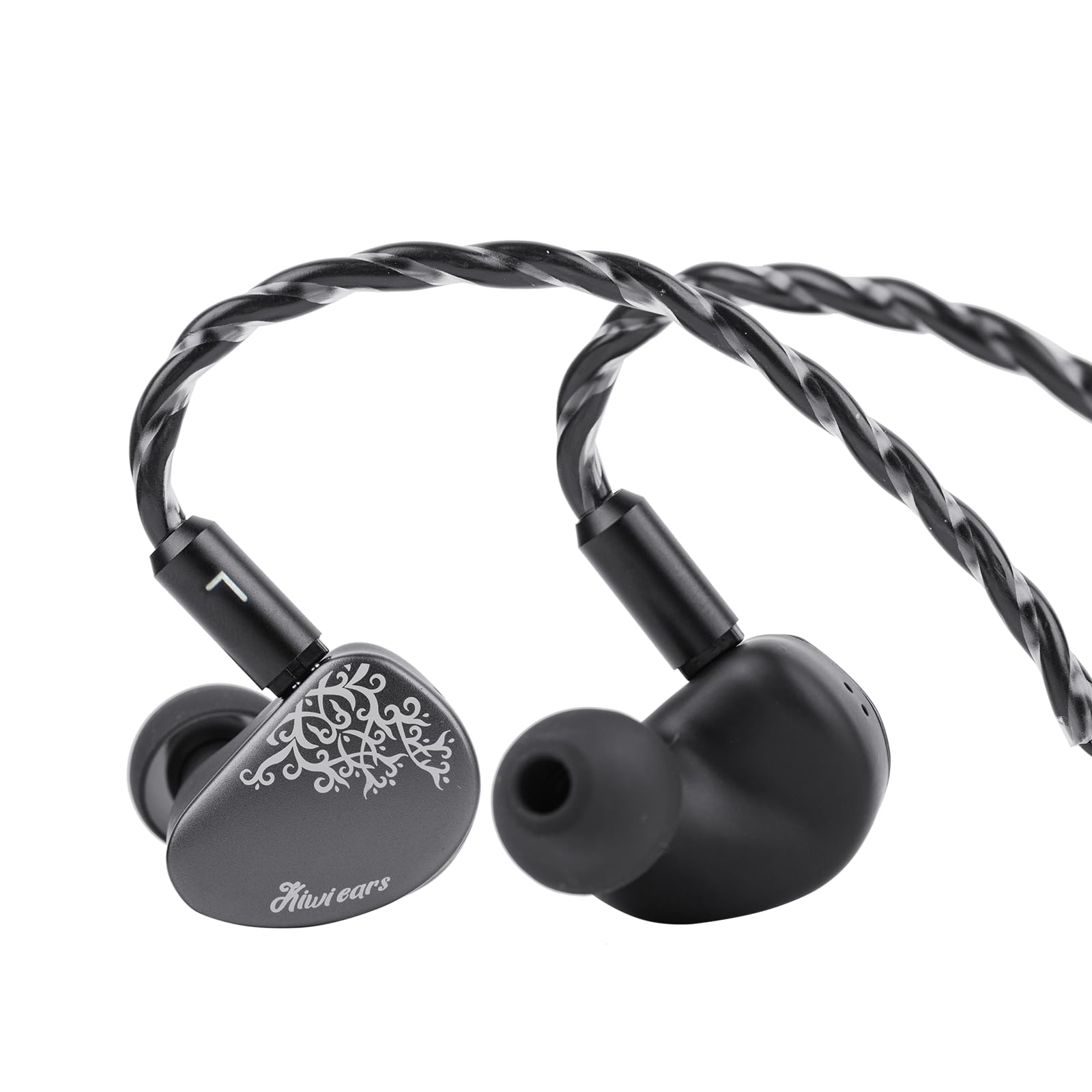
The Cadenza II represents the pinnacle of what a single dynamic driver can achieve under $100. The new titanium-coated PET diaphragm combines the rigidity of titanium with the compliance of PET, allowing it to stay pistonic at higher excursions for distortion-free bass. The KARS 2.0 acoustic resonance system is a standout: it precisely tunes the sub-bass to peak at 200Hz and then cuts cleanly, preventing any mid-bass bleed into the lower midrange. The result is bass that thumps with authority yet leaves vocals and instruments pristine.
The shell is a polycarbonate composite, which feels more premium than typical resin designs — it has a soft, velvet-like texture that reduces skin friction. The CNC-machined aerospace aluminum faceplate with a laser-engraved honeycomb pattern adds visual flair without adding weight. The stock cable, composed of single-crystal oxygen-free copper, is widely considered the best stock cable in this tier, offering noise-free transmission right out of the box.
The Cadenza II does not include L/R markings on the earpieces, requiring a visual check of the cable connector orientation. The silicone tips are not pre-attached, which can be fiddly for users with less dexterity. Once set up, however, the tune is remarkably balanced — smooth mids, extended yet fatigue-free treble, and pinpoint sub-bass control. For pure value per dollar, the Cadenza II is nearly impossible to beat.
Why it’s great
- KARS 2.0 delivers precise sub-bass extension without midrange bleed
- Titanium-coated PET diaphragm provides exceptional transient speed for a single DD
- Best-in-class stock cable with single-crystal oxygen-free copper
Good to know
- No L/R markings on earpieces; requires careful initial assembly
- Silicone tips not pre-attached — needs patience to install correctly
7. BASN MMCX Triple Driver

BASN’s triple-driver IEM uses two dedicated dynamic drivers for bass and low-mids while one balanced armature handles the high-frequency extension. This configuration is designed specifically for drummers and bassists who need tactile low-end feedback without clouding the upper register. The bass is rich and punchy — the separate DD approach allows each low-frequency driver to work within its optimal bandwidth, reducing distortion at high SPLs.
The MMCX connector is a notable choice over the more common 2-pin, offering a more secure locking mechanism that can swivel 360 degrees for a perfect fit. The package includes two detachable cables: one with an in-line microphone for daily use, and one upgraded silver-plated cable for higher-fidelity listening. Twelve pairs of eartips (nine silicone, three memory foam) are included, allowing you to fine-tune both fit and bass response by choosing deeper or shallower insertion depths.
There are durability concerns: some users report channel failure after a few months, though the seller has been responsive with replacements. The overly lavish packaging (cardboard-heavy) is a minor irritation. But if your priority is impactful, separate-driver bass that doesn’t encroach on the rest of the frequency range, the BASN delivers at a price point that leaves room for cable upgrades.
Why it’s great
- Two dedicated DDs deliver powerful, separated bass without midrange smear
- MMCX connector provides a secure 360° rotating fit for stage use
- Exceptional accessory package: two cables and 12 pairs of eartips for custom fit
Good to know
- Right channel may fail prematurely in some units; check warranty coverage
- Overly large packaging feels wasteful and eco-unfriendly
FAQ
Can I use a USB-C or lightning adapter with these wired IEMs?
What’s the difference between a 2-pin and MMCX connector?
Should I buy open-back or closed-back IEMs for gaming?
Final Thoughts: The Verdict
For most users, the best $100 iems winner is the Fosi Audio IM4 because it delivers a spacious, open-back soundstage and exceptional comfort that makes it the best all-rounder for music listening and long gaming sessions. If you want a hybrid driver powerhouse with customizable tuning for competitive gaming, grab the SIMGOT EW300. And for a neutral reference that excels in analytical detail, nothing beats the TRUTHEAR Hexa.