
Our readers keep the lights on and the weekend projects moving. As an Amazon Associate, I earn from qualifying purchases.
A silent blackout companion that breathes no fumes, sips sunbeams, and keeps your refrigerator humming through a three-day storm is the modern promise of a capable solar generator. But separating a true workhorse from a glorified laptop battery requires you to look past marketing wattage at the three real pillars: battery chemistry (LiFePO4), inverter quality (pure sine wave), and recharge speed in hours, not days.
I’m Rikta — the founder and writer behind FitlyFast. I cross-reference BMS cell-balancing algorithms, MPPT controller efficiency curves, and real-world cycle-life degradation data to find which 1kWh-class stations deliver reliable power without draining your patience.
Solar generator buyers often mistake peak output for usable capacity, then discover their fridge won’t start. I built this guide to match real appliances with real battery specs so you can trust your backup. This is the definitive list of the best 1000 watt solar generator options for homes, RVs, and campsites that demand honest power, not inflated numbers.
How To Choose The Best 1000 Watt Solar Generator
A 1000-watt solar generator lives in a sweet spot — big enough to run a refrigerator, lights, and a laptop, but small enough to carry. The problem is that “1000 watts” on the box can refer to surge output, continuous output, or solar input, and buyers often confuse the three. Here is exactly what to check before buying.
Battery Chemistry — LiFePO4 vs. NMC vs. Lead-Acid
Lithium Iron Phosphate (LiFePO4) is the gold standard for this category. It delivers 3000 to 6000 charge cycles to 80% capacity versus roughly 500 cycles for NMC (nickel-manganese-cobalt) batteries. LiFePO4 also tolerates higher temperatures without thermal runaway, making it safe for RV storage and garage use. Avoid any budget unit that still uses sealed lead-acid — it will weigh twice as much and die in two years.
Inverter Type — Pure Sine Wave Is Non-Negotiable
Cheaper generators use modified sine wave inverters that create “dirty” power. This causes humming in audio equipment, overheating in motor-driven appliances (CPAP fans, refrigerators, pumps), and erratic operation in digital timers. Every product in this guide uses a pure sine wave inverter. If you see a price that seems too low, check the inverter type first — it is the single most common cost-cutting corner.
Real-World Recharge Speed
A generator with a 1000Wh battery but only 100W AC charging takes 10 hours to refill from a wall outlet. Modern mid-range units can do 80% in under an hour using 1500W+ AC input. Solar recharge speed depends on your panel wattage and the station’s MPPT (Maximum Power Point Tracking) efficiency. Look for an MPPT controller that accepts at least 500W of solar input so your panels don’t bottleneck the charge.
UPS Function — Milliseconds Matter
If you plan to use the generator as a home backup for computers or network equipment, the switchover time from grid power to battery matters. A 20ms or faster transfer keeps your PC running without a reboot. Stations with 10ms or sub-10ms switchover are preferred for sensitive electronics like NAS drives or medical devices.
Quick Comparison
On smaller screens, swipe sideways to see the full table.
| Model | Category | Best For | Key Spec | Amazon |
|---|---|---|---|---|
| EF ECOFLOW DELTA 3 Plus | Mid-Range | Home UPS & camping | 1024Wh LFP / 10ms UPS | Amazon |
| Jackery 2000 v2 + 2×200W | Premium | Lightweight 2kWh camping | 2042Wh LFP / 39.5 lbs | Amazon |
| Jackery HomePower 3000 + 2×200W | Premium | Whole-home backup | 3072Wh / 7200W surge | Amazon |
| Anker SOLIX C1000 + 200W | Mid-Range | All-in-one kit buyer | 1056Wh / 2400W SurgePad | Amazon |
| BLUETTI Elite 100 V2 + 200W | Mid-Range | Ultra-portable 1kWh | 1024Wh / 25 lbs | Amazon |
| BLUETTI Apex 300 | Premium | 240V split-phase power | 2765Wh / 3840W AC | Amazon |
| Anker SOLIX F3000 + 400W | Premium | Pass-through charging | 3072Wh / 6000W input | Amazon |
| DABBSSON 2000L | Value | Budget 2kWh power | 2048Wh / semi-solid LFP | Amazon |
| IEE P3200 | Value | High-wattage budget pick | 2048Wh / 3200W output | Amazon |
| PECRON F3000LFP | Budget | Expandable 3kWh system | 3072Wh / 3600W output | Amazon |
| ABOK Ark3600 + 200W | Premium | Expandable cart-style backup | 3840Wh / 11520Wh max | Amazon |
| OSCAL PowerMax 6000 + 3×400W | Premium | High-power solar bundle | 3600Wh / 6000W output | Amazon |
| EF ECOFLOW DELTA Pro 3 + 2×400W | Premium | Whole-home 120V/240V | 4096Wh / 48kWh expandable | Amazon |
In‑Depth Reviews
1. EF ECOFLOW DELTA 3 Plus

The DELTA 3 Plus leads the 1kWh class with a genuine 10ms UPS transfer speed and dual MPPT inputs accepting up to 1000W of solar. In real-world use, a standard refrigerator runs for over 12 hours on a single charge, while the 1500W AC input pushes the unit from empty to 80% in just 40 minutes — faster than most competitors manage with their wall chargers.
The IP65-rated battery pack provides splash and dust protection, a rare feature in a portable station at this capacity point. Owners running small business server racks report the 10ms switchover prevents any network dropouts, and the Storm Guard feature automatically tops up the battery when weather alerts trigger, giving genuine peace of mind during hurricane season.
At 27 pounds, it is light enough to carry one-handed between rooms but still packs enough ports to power 13 devices simultaneously. The LFP chemistry guarantees 4000 cycles to 80% capacity, translating to roughly 10 years of daily use before any noticeable degradation.
Why it’s great
- Fastest AC recharge in class (80% in 40 min)
- Sub-10ms UPS protects sensitive electronics
- IP65-rated battery resists dust and moisture
Good to know
- High AC idle phantom drain when left on
- App required for some advanced features
2. Jackery Explorer 2000 v2 + 2×200W Solar Panels
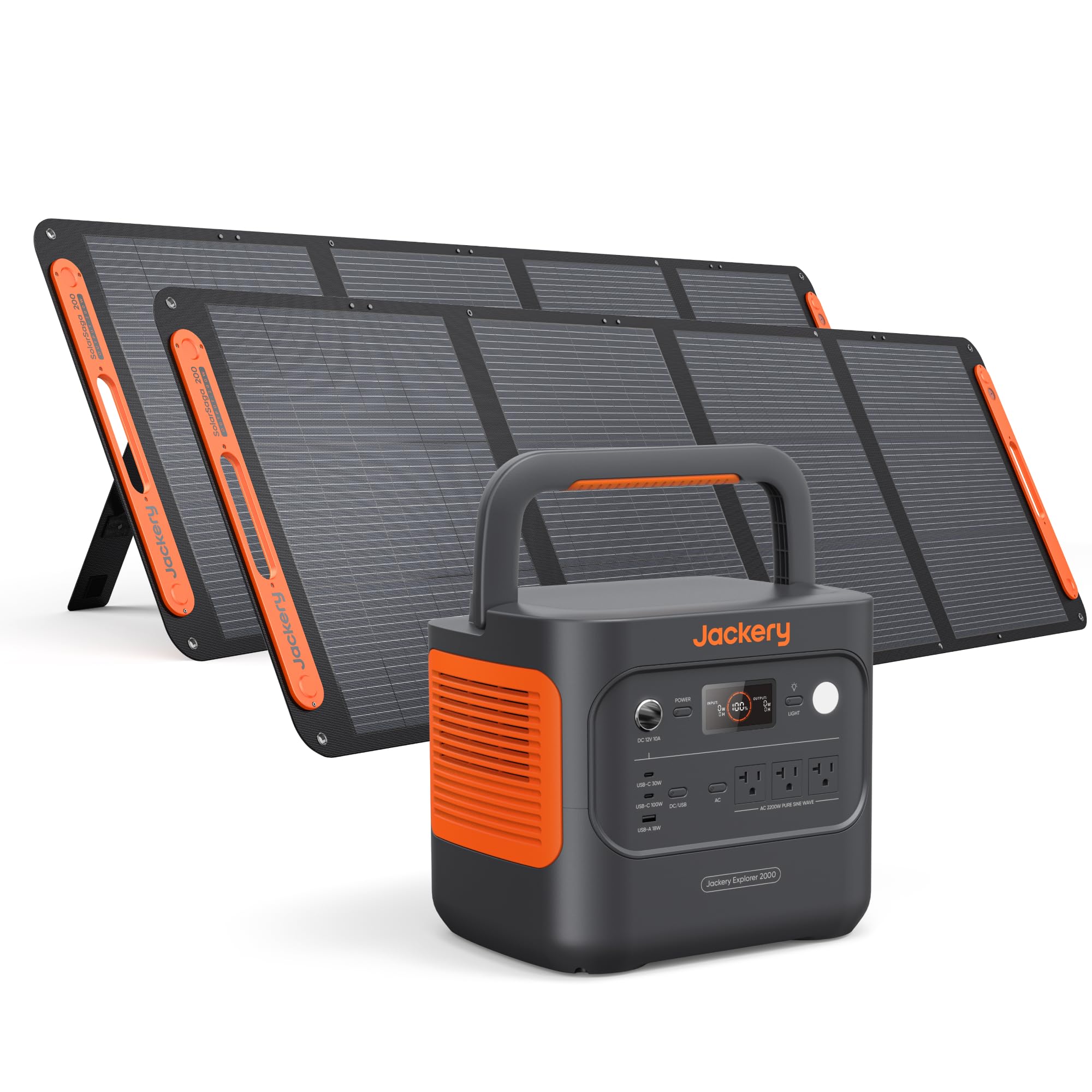
Jackery’s CTB (Cell-to-Body) technology makes the 2000 v2 the lightest 2kWh station on the market at just under 40 pounds. The 2200W pure sine wave inverter handles most household appliances, including window air conditioners — real-world testing showed a 5000 BTU unit running for 3.5 hours before dropping to 45% battery.
The included pair of 200W SolarSaga panels deliver a combined 400W in full sun, fully recharging the station in about 6 hours. A 20ms UPS transfer protects connected devices during grid flickers, and the CTB construction reduces internal wiring and improves impact resistance compared to traditional frame designs.
Owners praise the silent charging mode that operates at 30dB, letting the generator recharge overnight in a bedroom without disrupting sleep. The app-activated Emergency Super Charging mode refills the battery in under 90 minutes from a wall outlet, making this a versatile choice for both planned camping trips and unexpected outages.
Why it’s great
- Lightest 2kWh station at 39.5 lbs
- CTB construction improves durability
- Silent 30dB charging mode
Good to know
- Panel and station ship separately
- L-shaped DC7909 plug needs swapping to DC8020
3. Jackery HomePower 3000 + 2×200W Solar Panels
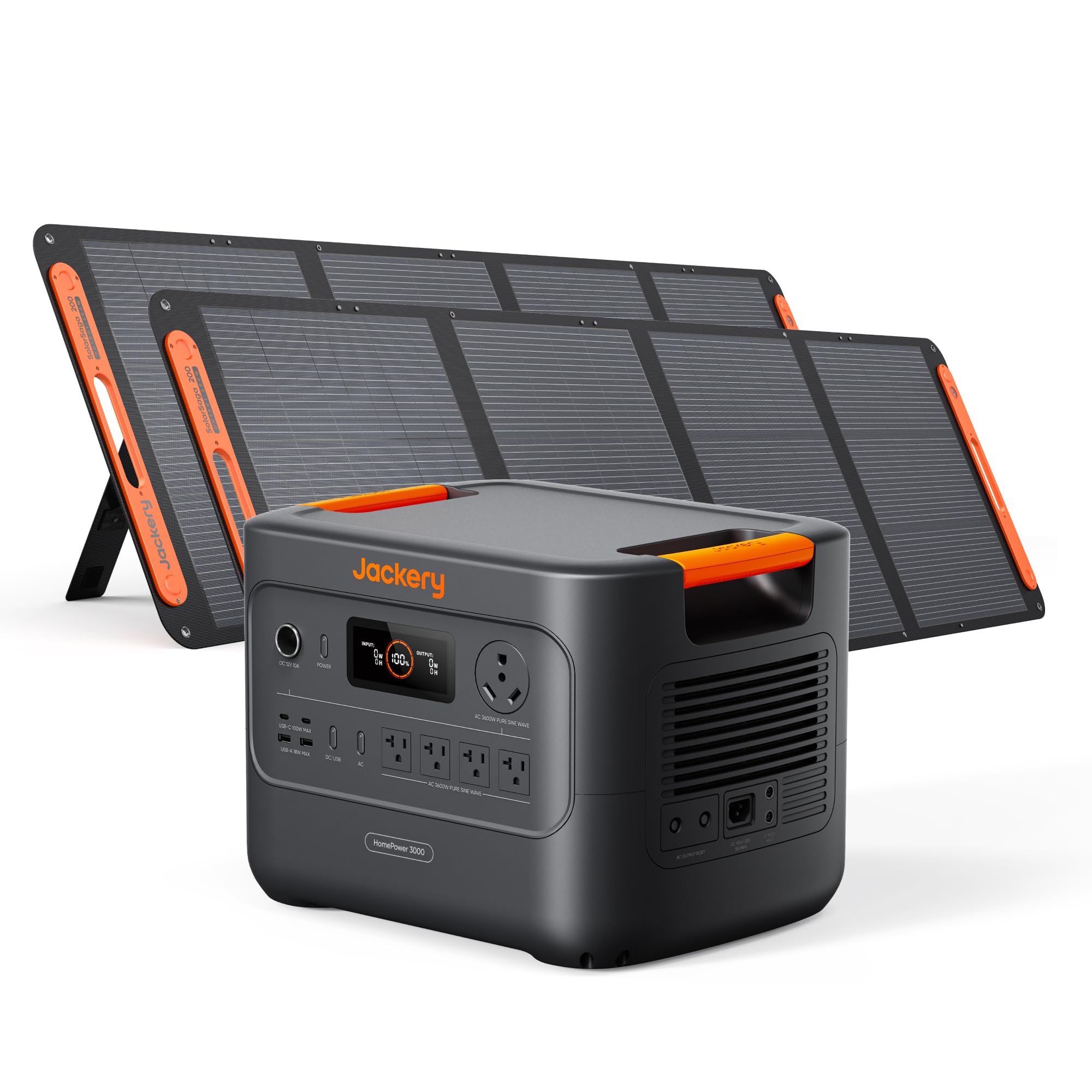
The HomePower 3000 is Jackery’s answer to whole-home backup without gas fumes. Its 3072Wh LFP battery keeps a full-size refrigerator running for 1 to 2 days, and the 7200W surge output handles startup loads from sump pumps and well pumps without tripping. The UL-certified 20ms UPS meets the strictest standards for medical and network equipment.
ChargeShield 2.0 technology uses AI algorithms to optimize charging current based on temperature and battery state, extending cycle life beyond the rated 4000 cycles to 70% capacity. The hybrid AC+DC recharge mode fills the battery in just 1.7 hours, and the integrated TT-30 RV port means you can plug directly into a camper’s shore power inlet.
At 59.5 pounds, it is not light, but Jackery’s CTB technology reduces volume by 47% compared to conventional 3kWh stations, making it easier to stow in a closet or under a counter. The dual 100W USB-C PD ports charge modern laptops at full speed without needing a separate adapter.
Why it’s great
- UL-certified UPS for sensitive devices
- ChargeShield 2.0 extends battery lifespan
- TT-30 RV port included
Good to know
- Heavy — wheel kit recommended
- Battery not expandable beyond main unit
4. Anker SOLIX C1000 + 200W Solar Panel

Anker’s SOLIX C1000 achieves 80% charge in just 43 minutes via AC input, making it the fastest-refilling 1kWh station available. The SurgePad technology pushes output to 2400W, enough to start and run most residential refrigerators and sump pumps without tripping the internal breaker. The 1056Wh LFP battery delivers 3000 cycles to full capacity.
The bundled PS200 200W solar panel is IP67 waterproof, surviving heavy rain and dust storms while maintaining 23% monocrystalline conversion efficiency. The panel’s adjustable stand offers 30°, 40°, 50°, and 80° tilt angles for optimal sun tracking, and the 1.5X higher conversion efficiency compared to standard panels means you get usable power even under partial cloud cover.
The unit weighs 27.6 pounds and includes 11 ports including two USB-C 100W PD outputs for high-speed laptop charging.
Why it’s great
- Fastest AC recharge in category (80% in 43 min)
- IP67 waterproof solar panel included
- 2400W SurgePad handles motor startups
Good to know
- Panel and station ship in separate boxes
- Single 200W panel has limited cloudy-day output
5. BLUETTI Elite 100 V2 + 200W Solar Panel
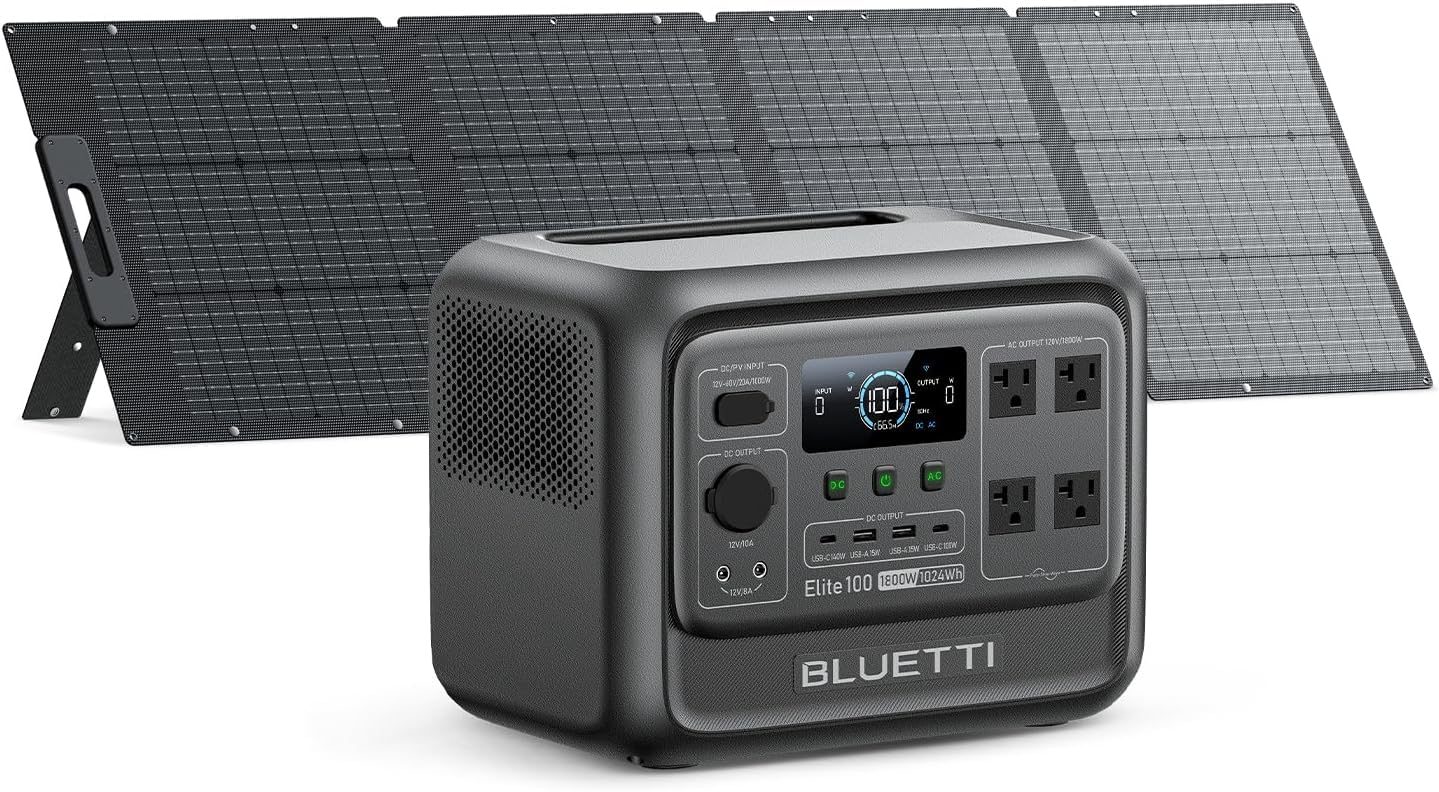
At just 25 pounds and 17 liters of volume, the Elite 100 V2 is the lightest 1kWh station you can buy without sacrificing pure sine wave quality. The hidden carry handle lets you grab it one-handed, and the 1800W AC output (3600W surge via Power Lifting mode) powers CPAP machines, refrigerators, and tools without audible strain.
The 200W bundled solar panel fully recharges the 1024Wh battery in about 7 hours in full sun, and the AC input refills to 80% in 45 minutes. The ≤10ms UPS transfer keeps computers and network gear running through power blips, and the 30dB fan noise is quieter than a library — perfect for bedside CPAP backup or office use.
BLUETTI rates the LFP cells for 4000+ cycles to 80%, giving this compact unit a decade-long service life. The app provides real-time power monitoring and charge scheduling, and the 11-port layout includes dual USB-C 100W PD for modern laptops and tablets.
Why it’s great
- Lightest 1kWh station at 25 lbs
- Silent 30dB operation
- Sub-10ms UPS transfer
Good to know
- Bundled 200W panel maxes at ~106W in some tests
- A few units reported DOA — check upon arrival
6. BLUETTI Apex 300
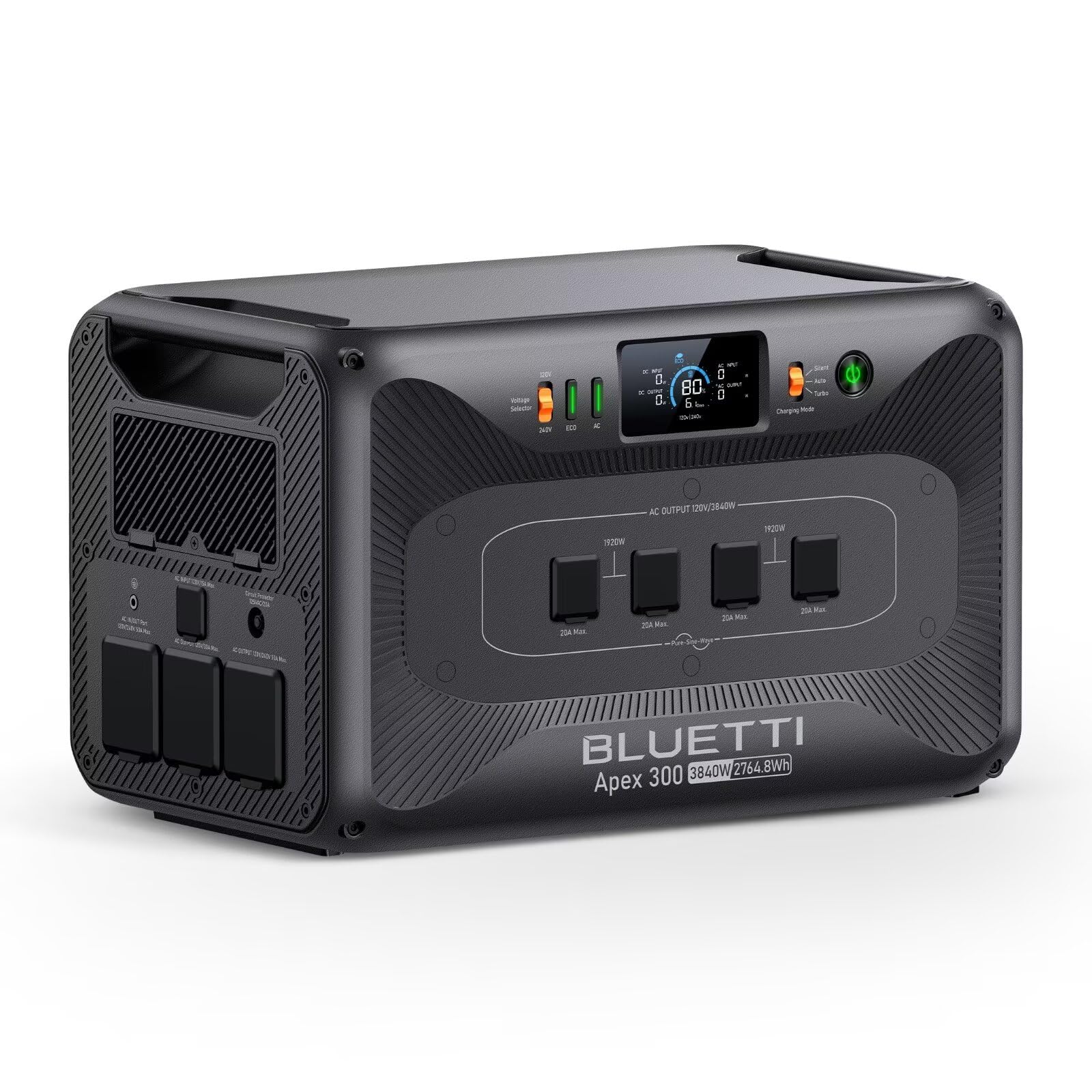
The Apex 300 is BLUETTI’s first station to offer true 120V/240V split-phase output from a single unit, letting you power well pumps, garage heaters, and RV 50A loads without pairing two stations. The 3840W continuous output handles a washer and gas dryer simultaneously, and the 7680W surge covers compressor startup spikes without a hitch.
The BLUETOPUS AI-BMS actively balances cells and monitors temperature across all 6000+ rated cycles, and the 2000W TurboBoost AC input recharges the 2765Wh battery in under 90 minutes. The 0ms UPS switchover exceeds medical-grade requirements, making this suitable for life-support equipment and sensitive lab instruments.
Expandability is a key strength — you can add B300K or B500K expansion batteries to scale capacity without replacing the base unit. The Apex 300 weighs 66 pounds, and the Smart App controls let you configure charging schedules, view real-time consumption, and switch between 120V and 240V output modes.
Why it’s great
- True 120V/240V split-phase output
- 6000+ battery cycle lifespan
- Expandable with B300K/B500K batteries
Good to know
- 60Voc PV input limit — cannot use high-voltage arrays
- Lacks dedicated DC5525 ports
7. Anker SOLIX F3000 + 400W Solar Panel
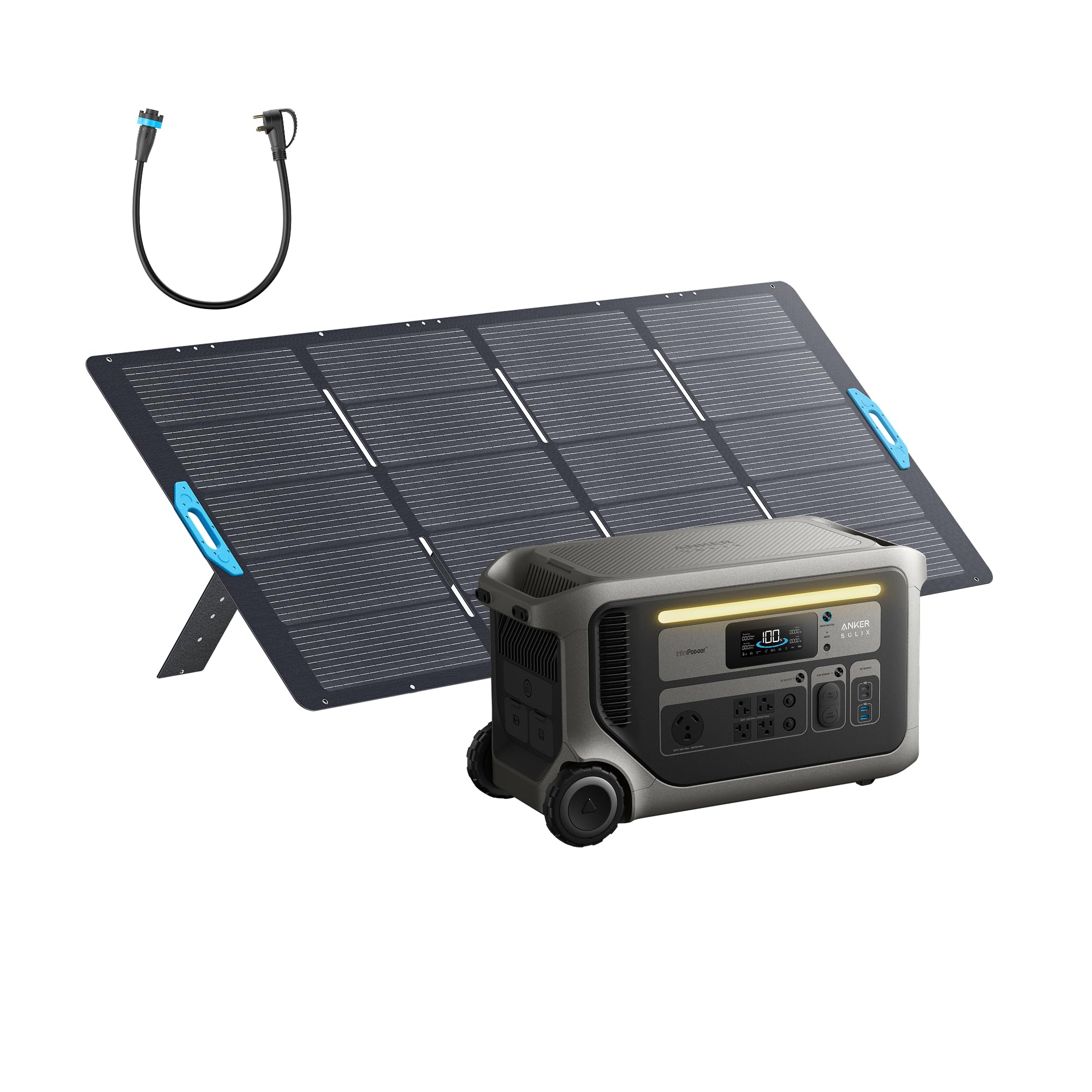
The F3000 is uniquely capable of 3600W pass-through charging — it can accept 2400W of solar input while simultaneously outputting 3600W, making it ideal for refilling from a gas generator during extended outages without interrupting your loads. The 3072Wh LFP battery delivers 125 hours of AC idle standby time, and a 190W refrigerator runs for 42 hours between charges.
Pairing two F3000 stations creates a 240V/7200W system capable of powering large appliances like a 3-ton central air conditioner or a 1 HP well pump. The Bi-Directional Inlet Box and Smart Meter let you store free solar energy or low-cost off-peak grid electricity automatically, maximizing savings on your monthly bill.
The unit weighs 91.5 pounds but includes a wheeled cart for mobility. The included PS400 400W panel delivers up to 2400W in full sun when paired with additional panels, and the 30A TT-30 plug connects directly to RV shore power for campground use.
Why it’s great
- 3600W pass-through charging while in use
- Expandable to 24kWh total capacity
- 120V/240V dual-unit pairing
Good to know
- Included 400W panel underperforms (160W actual in tests)
- Wi-Fi connectivity drops periodically
8. DABBSSON Portable Power Station 2000L
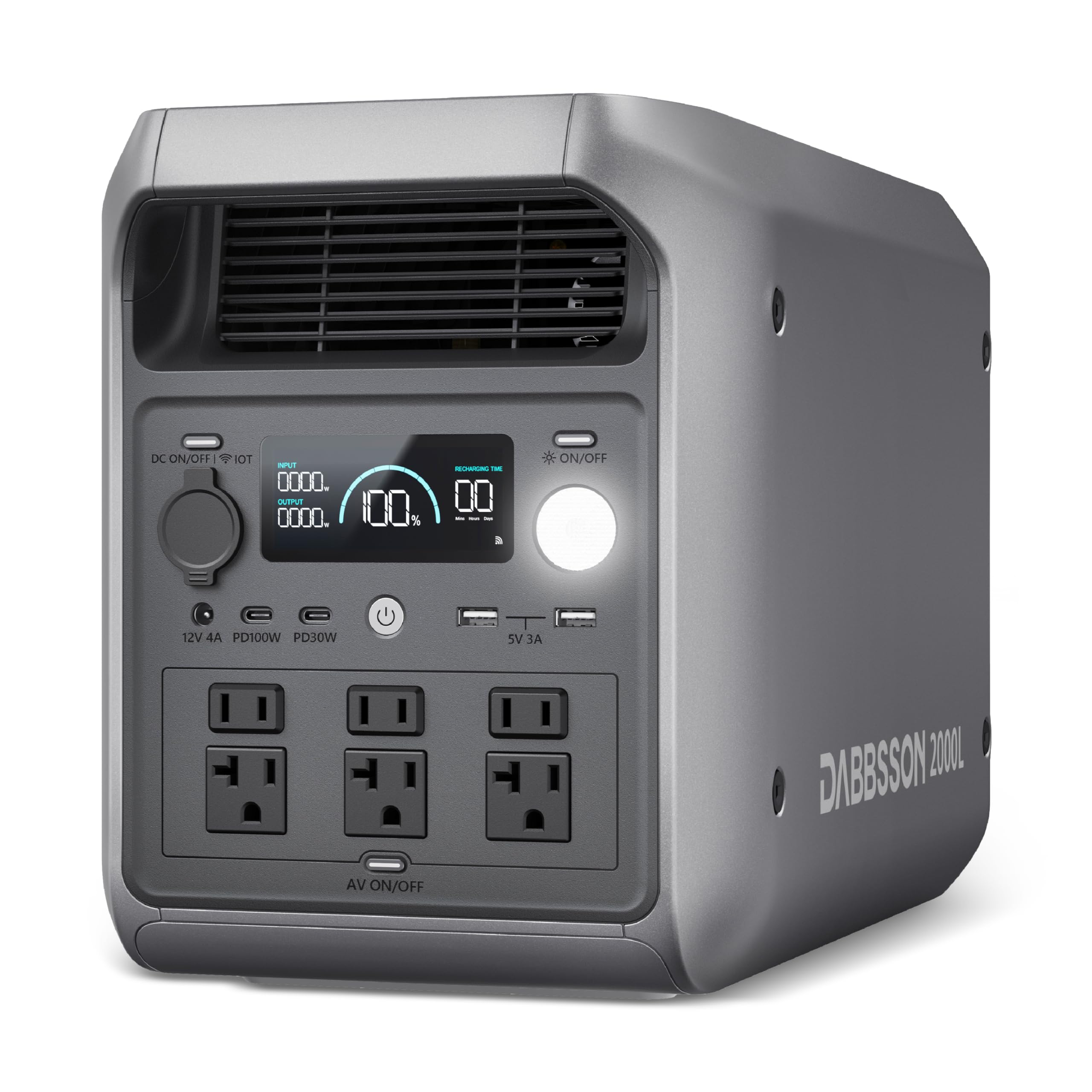
Dabbsson’s 2000L packs 2048Wh of semi-solid LiFePO4 capacity into a 41-pound chassis, making it one of the lightest 2kWh stations for its capacity class. The 3300W Power Boost surge handles heavy-duty devices like refrigerators and power tools, while the six AC outlets let you run multiple loads simultaneously without worrying about port distribution.
The semi-solid electrolyte technology provides higher thermal stability than standard LFP cells, and the UL94-V0 flame-retardant housing adds a genuine safety layer for indoor use. AC charging fills the full 2048Wh in just 1 hour, which is remarkably fast for this capacity tier. The 800W MPPT solar input accepts up to 800W of panels for a complete off-grid recharge in about 3 hours of full sun.
Smart app control via Wi-Fi or Bluetooth lets you adjust charging speed, set schedules, and monitor real-time consumption. The ≤15ms EPS switchover protects computers and NAS devices from data loss, and the 5-year warranty (with extended registration) provides long-term reassurance for a value-priced unit.
Why it’s great
- Ultra-light 41 lbs for 2048Wh capacity
- Semi-solid LFP for extra safety
- Full recharge in just 1 hour AC
Good to know
- Outer plastic shell feels less premium
- Extended warranty requires registration
9. IEE P3200 Portable Power Station
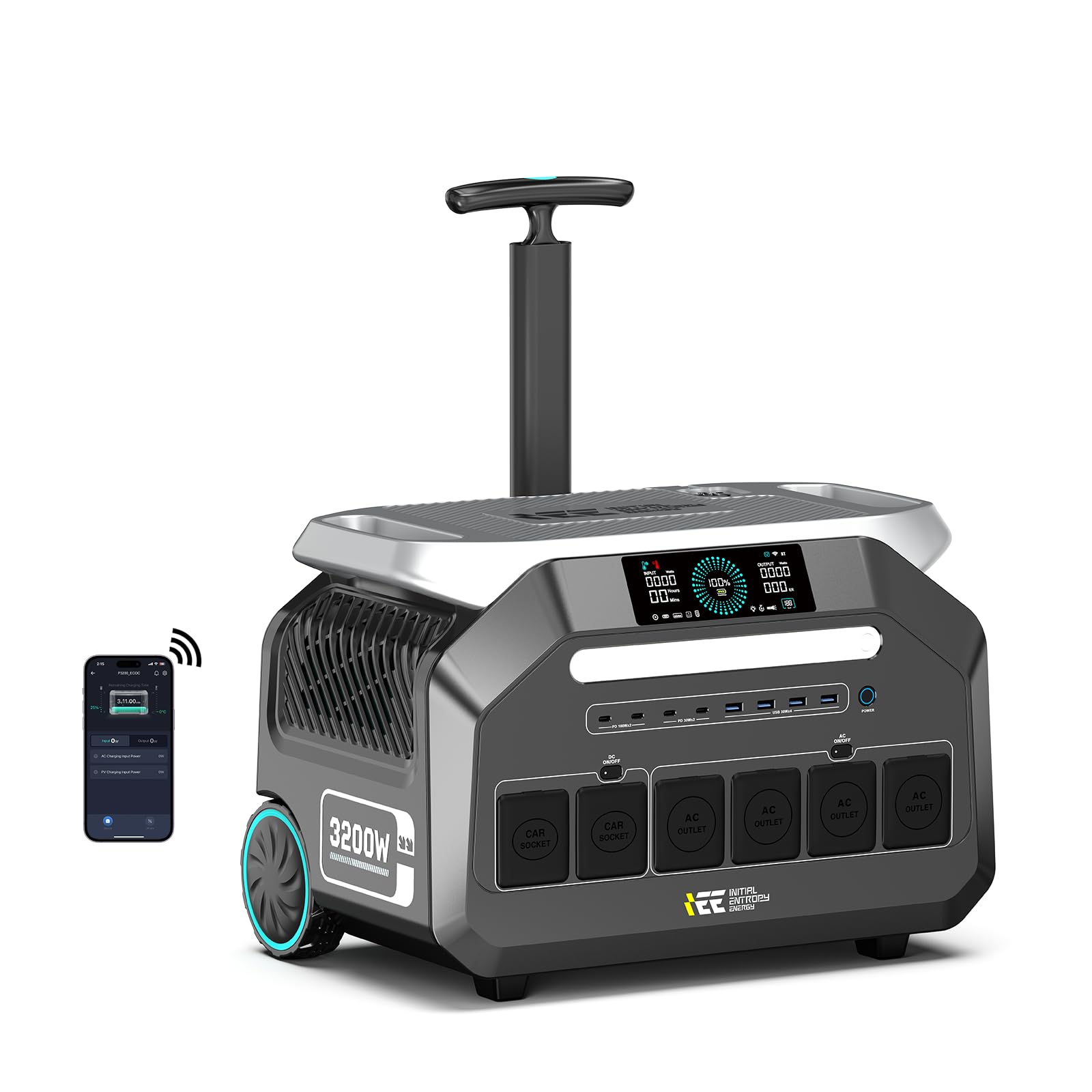
The IEE P3200 delivers an impressive 3200W continuous output from a 2048Wh LFP battery, enough to run a 1/2 HP sump pump continuously for over 4 hours with only 10% battery drain according to owner testing. The 6400W peak surge handles motor startup loads from well pumps and circular saws without tripping the inverter.
AC fast charging fills the battery from empty to full in just 1.2 hours using the 1800W AC input, and the 1000W MPPT solar input can achieve 0-80% in about 1.6 hours with adequate panels. The unit weighs 52 pounds with integrated wheels and a handle, making it easier to move than most 2kWh stations in its bracket.
The IEE P3200 powers 16 devices simultaneously through its 4 AC outlets, 4 USB-A, 4 USB-C PD ports, and 2 DC5525 outputs. The EPS auto switchover operates in under 10ms, and the smart app provides remote monitoring and power scheduling. Owners report using the unit to run CPAP machines, refrigerators, and cooking appliances during outages with zero issues.
Why it’s great
- 3200W continuous output for heavy loads
- Fast 1.2-hour AC recharge
- Integrated wheels for easy transport
Good to know
- Supplied 14AWG AC cord is undersized
- App interface has translation issues
10. PECRON F3000LFP Portable Power Station
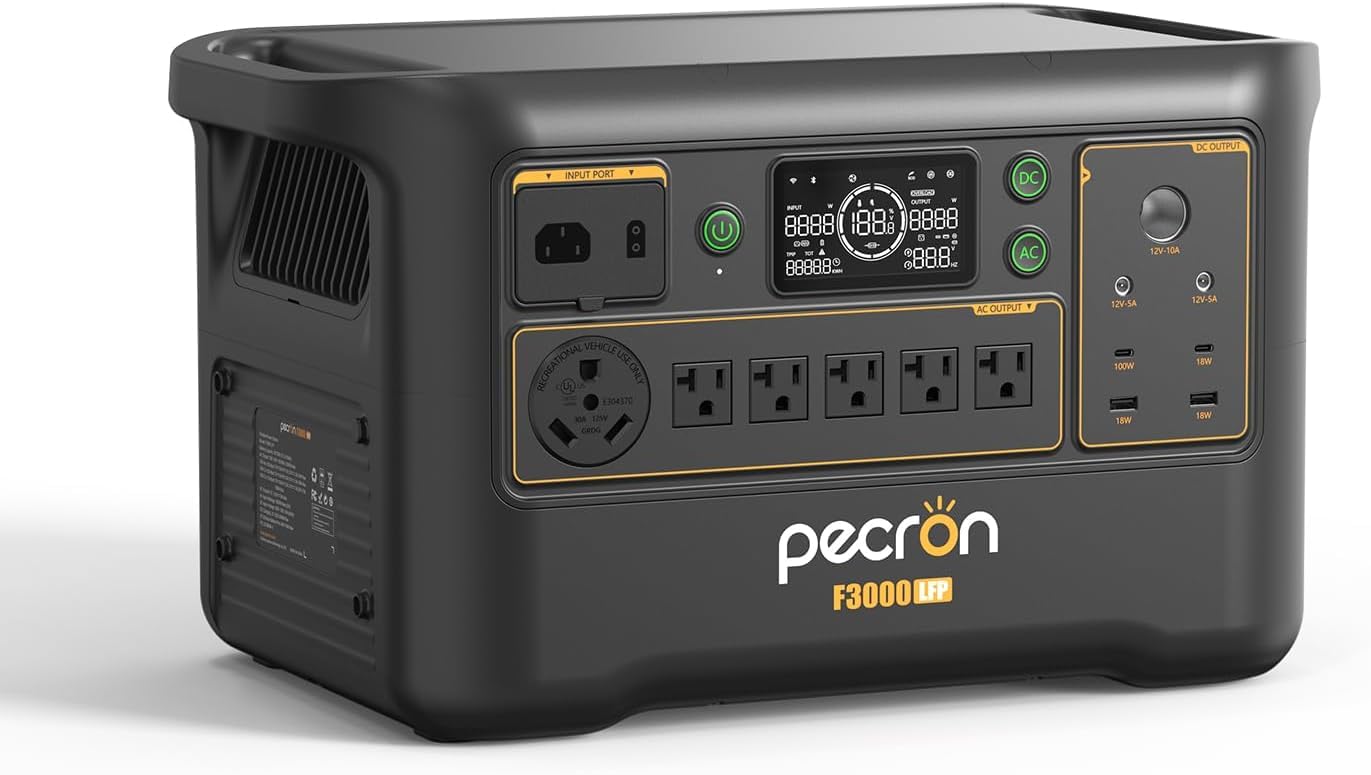
Pecron’s F3000LFP provides 3072Wh of LFP capacity with the ability to expand to 10752Wh using EP3800-48V external batteries, making it the most budget-friendly path to a 10kWh+ home backup system. The 3600W pure sine wave output handles two refrigerators plus a freezer simultaneously, and the 1800W AC input refills the main unit in just 2 hours.
The triple charging system accepts AC (1800W max), solar (1600W max), and car charging simultaneously for maximum flexibility. The UPS function switches in 8-20ms, and the smart app provides real-time consumption monitoring with charge scheduling capabilities. The 13 ports include 6 AC outlets, 2 USB-C 100W PD ports, and a 30A RV-ready outlet.
Owners report excellent performance running Starlink systems and security cameras for extended off-grid periods. The unit weighs 63 pounds and has a compact footprint at 19.3 x 11.6 x 11.1 inches. Pecron backs the station with a 5-year warranty and 24/7 customer service, though the idle power draw of 30W/hr is higher than some premium competitors.
Why it’s great
- Expandable to 10752Wh total capacity
- 1800W AC input charges in 2 hours
- 6 AC outlets with 30A RV port
Good to know
- Idle drain of 30W/hr when powered on
- Expansion cable sold separately
11. ABOK Ark3600 + 200W Solar Panel
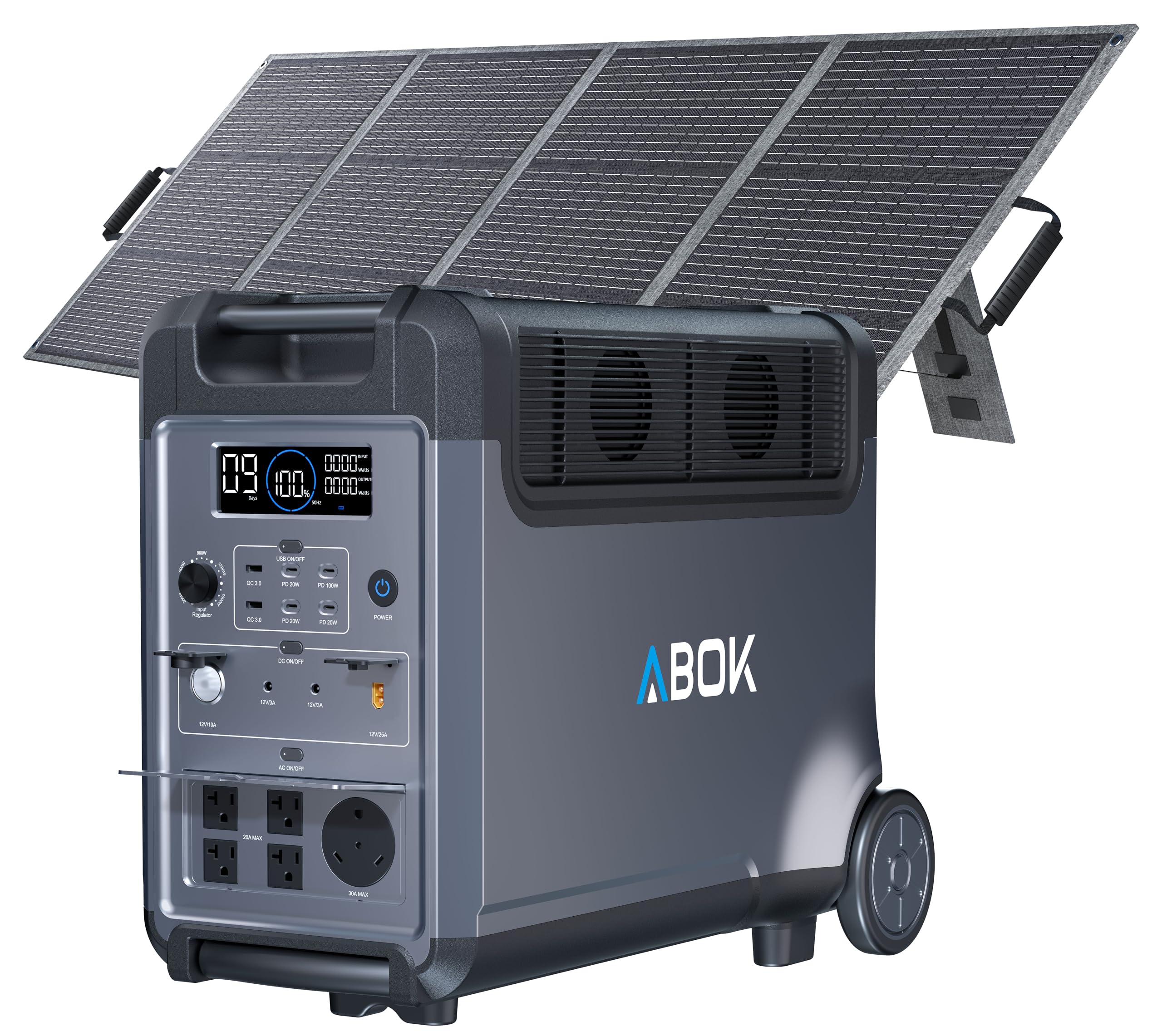
The ABOK Ark3600 is built for those who need serious capacity without a permanent installation. Its 3840Wh LFP battery expands to 11520Wh via additional Ark3600 units, and the telescoping handle with durable wheels makes it easy to roll around a garage or workshop. The 3600W rated output (4500W peak) powers 99% of household appliances including heavy-draw tools like heat guns and SDS-Max drills.
Charging options include AC at 1500W, PV solar at 2000W, and 120W car charging. Hybrid AC+PV charging fills the battery in just 1.29 hours. The 15 output ports include a 30A AC outlet plus four 20A AC outlets, three USB-C ports (one 100W PD), and a dedicated XT60 port for 12V/25A DC loads.
Real-world owner feedback confirms the Ark3600 runs a wet vacuum, heat gun, and power tool charger simultaneously for a full work day while only dropping to 22% battery. The Bluetooth app provides remote monitoring, and the LiFePO4 cells are rated for 4000 cycles with a 10-year lifespan. The unit weighs 92 pounds, but the wheel and handle system makes one-handed transport feasible.
Why it’s great
- Massive 3840Wh expandable to 11520Wh
- Wheeled cart design for easy movement
- 30A AC outlet for heavy loads
Good to know
- Heavy at 92 pounds
- Return shipping for defects is expensive
12. OSCAL PowerMax 6000 + 3×400W Solar Panels
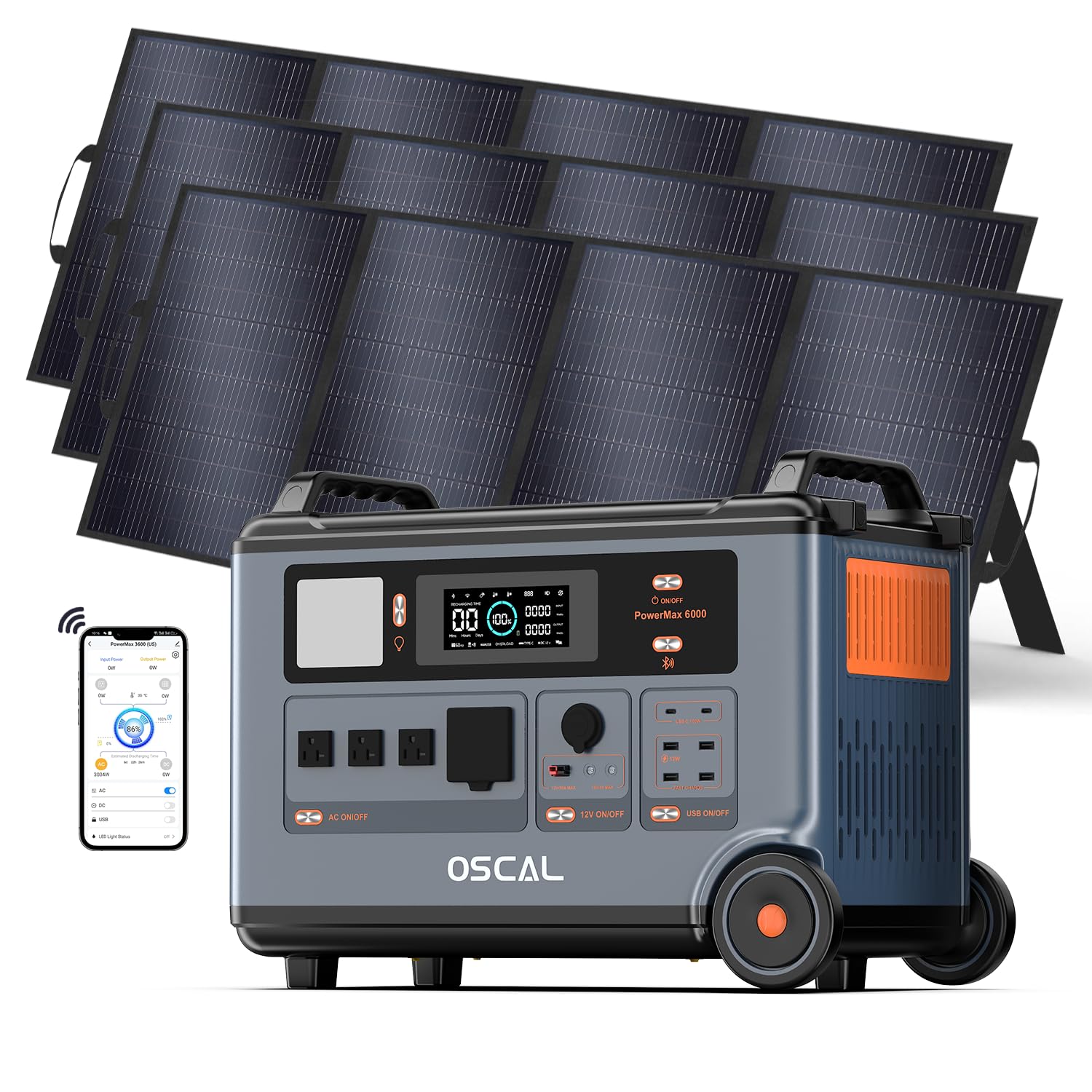
The PowerMax 6000 is a solar powerhouse that includes three 400W panels for a combined 1200W of solar input, making it the only unit in this guide that can fully recharge its 3600Wh battery in a single day under decent sun without needing the AC input. The 6000W output (9000W surge) supports both 120V and 240V split-phase operation, powering well pumps, central AC, and RV 50A loads.
The 2200W bi-directional inverter gives AC charging from 0-100% in just 1.44 hours, and the advanced eight-layer BMS manages temperature, voltage, and current across all 3500 rated cycles. The EPS switchover happens in 5-8ms, which is among the fastest in its class and suitable for medical equipment and network infrastructure.
Owners praise the quiet fan operation and the extensive port selection with 14 outlets including 4 AC, multiple USB-C, and dedicated DC ports. The OSCAL app provides full remote control and power monitoring. The unit weighs 100 pounds, but the wheeled base and extendable handle make garage-to-driveway transport manageable.
Why it’s great
- Three 400W solar panels included (1200W total)
- 120V/240V dual voltage output
- Fastest EPS switchover at 5-8ms
Good to know
- Panels underperform listed wattage in real-world tests
- Charge cord is short at about 4 feet
13. EF ECOFLOW DELTA Pro 3 + 2×400W Solar Panels
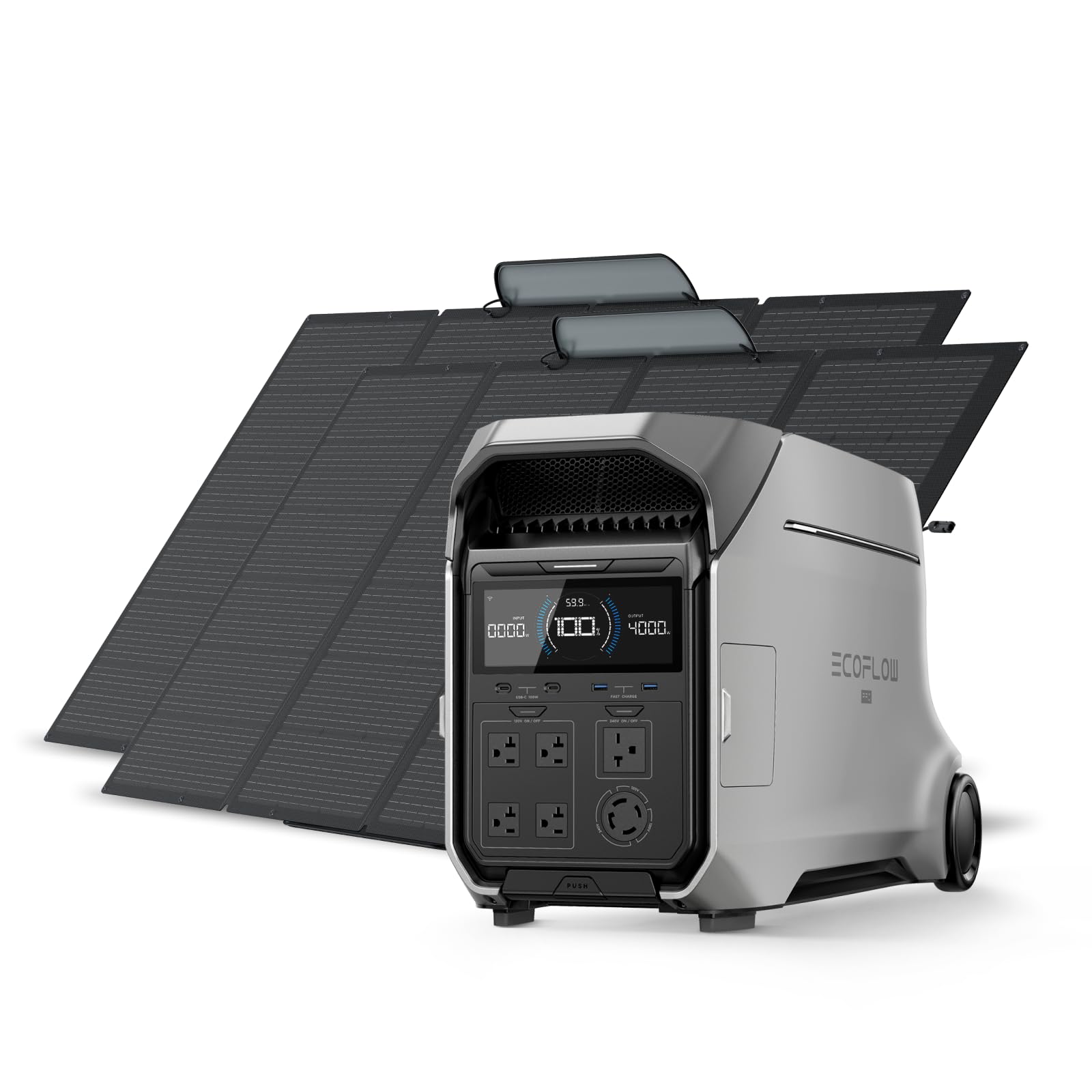
The DELTA Pro 3 is the flagship of EcoFlow’s lineup, offering 4096Wh of automotive-grade LFP capacity expandable to a staggering 48kWh with extra batteries and smart generators. The 4000W output (6000W with X-Boost, scalable to 12000W) runs a 3-ton central AC or a 1 HP water pump, and the 120V/240V output covers all household circuits through the Smart Home Panel 2.
The IP65-rated CTC (Cell-to-Chassis) battery pack integrates the cells directly into the structural frame, improving thermal management and impact resistance while reducing weight. The X-Quiet technology keeps operation at 30dB, making it silent enough for bedroom use. The 10ms UPS switchover protects servers and entertainment equipment seamlessly.
The included pair of 400W portable solar panels deliver 800W in full sun, and the station accepts up to 2400W of solar input for a full recharge in about 4 hours. The DELTA Pro 3 provides 7 unique charging methods including AC, solar, gas generator, EV charging pile, and EcoFlow smart generator. At 115 pounds with integrated wheels and an extendable handle, it is the heaviest unit here but remains mobile for installation.
Why it’s great
- Expandable to 48kWh total capacity
- 4000W / 120V-240V whole-home output
- IP65 CTC battery for safety and longevity
Good to know
- 115 pounds — wheel cart is essential
- Customer service responsiveness reported as mixed
FAQ
Can a 1000 watt solar generator run a refrigerator?
How long does it take to charge a 1000Wh solar generator from a wall outlet?
What size solar panel do I need for a 1000 watt generator?
Is LiFePO4 better than standard lithium-ion for solar generators?
Do I need a pure sine wave inverter for my CPAP machine?
Final Thoughts: The Verdict
For most users, the best 1000 watt solar generator pick is the EF ECOFLOW DELTA 3 Plus because it combines the fastest AC recharge in its class, a genuine 10ms UPS for sensitive electronics, and IP65-rated durability that most portable stations lack. If you want the lightest possible 2kWh system for camping and RV travel, grab the Jackery 2000 v2 with 2×200W panels. And for whole-home backup that can scale to 48kWh, nothing beats the EF ECOFLOW DELTA Pro 3 — it is the closest you can get to whole-home solar backup without hiring an electrician.