
Our readers keep the lights on and the weekend projects moving. As an Amazon Associate, I earn from qualifying purchases.
A trimmer line that snaps on the first tough weed, welds inside the head, or frays after ten minutes of edging turns a quick yard tidy-up into a frustrating chore. The difference between a clean, efficient cut and constant re-spooling comes down to the line’s diameter, material blend, and cross-section shape—three factors that separate commodity string from serious cutting gear.
I’m Rikta — the co-founder and writer behind FitlyFast. I’ve analyzed hundreds of user reports and technical specs to find which .105 lines actually hold up against thick brush, concrete edges, and fast-spinning gas heads.
Whether you maintain a suburban lawn or clear acreage, finding the right balance of durability, feed reliability, and noise reduction is essential. This guide breaks down the top performers to help you choose the best .105 trimmer line for your specific conditions.
How To Choose The Best .105 Trimmer Line
The .105-inch diameter sits in a sweet spot—thicker than standard .095 line for tackling dense weeds and small brush, yet still compatible with most gas and electric trimmer heads. Choosing the right line comes down to three physical characteristics that determine real-world performance.
Line Shape: Round, Twist, or Square
Round line is quiet and feeds smoothly but lacks cutting aggression. Twisted designs (spiral or rope-like) create sharp edges that slice through grass faster while reducing noise. Square lines offer the most aggressive cutting edge for heavy brush and thick weeds, but they can be louder and slightly harder to feed through the head. For most users, a good-quality twisted or square line delivers the best balance of speed and durability.
Material Quality and Nylon Grade
Commercial-grade co-polymer nylon resists heat buildup and impact better than basic nylon. Premium lines include a softer inner core for flexibility and a harder outer layer for abrasion resistance. Lines that feel brittle or stiff at room temperature tend to snap at the eyelet under high-rpm use. Look for lines described as “heavy-duty,” “commercial,” or “professional grade” to avoid frequent breakage.
Spool Length and Refill Value
Longer spools (300+ feet) reduce how often you need to buy replacements, especially for large properties. Shorter spools (around 165 feet) are easier to handle and lighter but may run out quickly if you trim regularly. The price per foot varies significantly, so compare total footage, not just spool cost, when evaluating value.
Quick Comparison
On smaller screens, swipe sideways to see the full table.
| Model | Category | Best For | Key Spec | Amazon |
|---|---|---|---|---|
| KAKO Square 105 | Premium | Heavy brush & large properties | 628 ft, square shape | Amazon |
| Efrozen Square Twist | Premium | Quiet, fast cutting | 302 ft, square twist | Amazon |
| Hipa 3-Pound Twist | Mid-Range | Commercial-grade durability | 3 lb, twist shape | Amazon |
| Rotary Black Vortex | Mid-Range | Quiet operation | 185 ft, vortex shape | Amazon |
| Arnold Xtreme Pro | Mid-Range | Hardened edges on concrete | 165 ft, square shape | Amazon |
| MaxPower Premium Twisted | Mid-Range | Noise reduction & long wear | 165 ft, twisted shape | Amazon |
| Hipa Round Twist | Budget | Budget-friendly refill | 262 ft, round twist | Amazon |
In‑Depth Reviews
1. KAKO 105 Square Trimmer Line
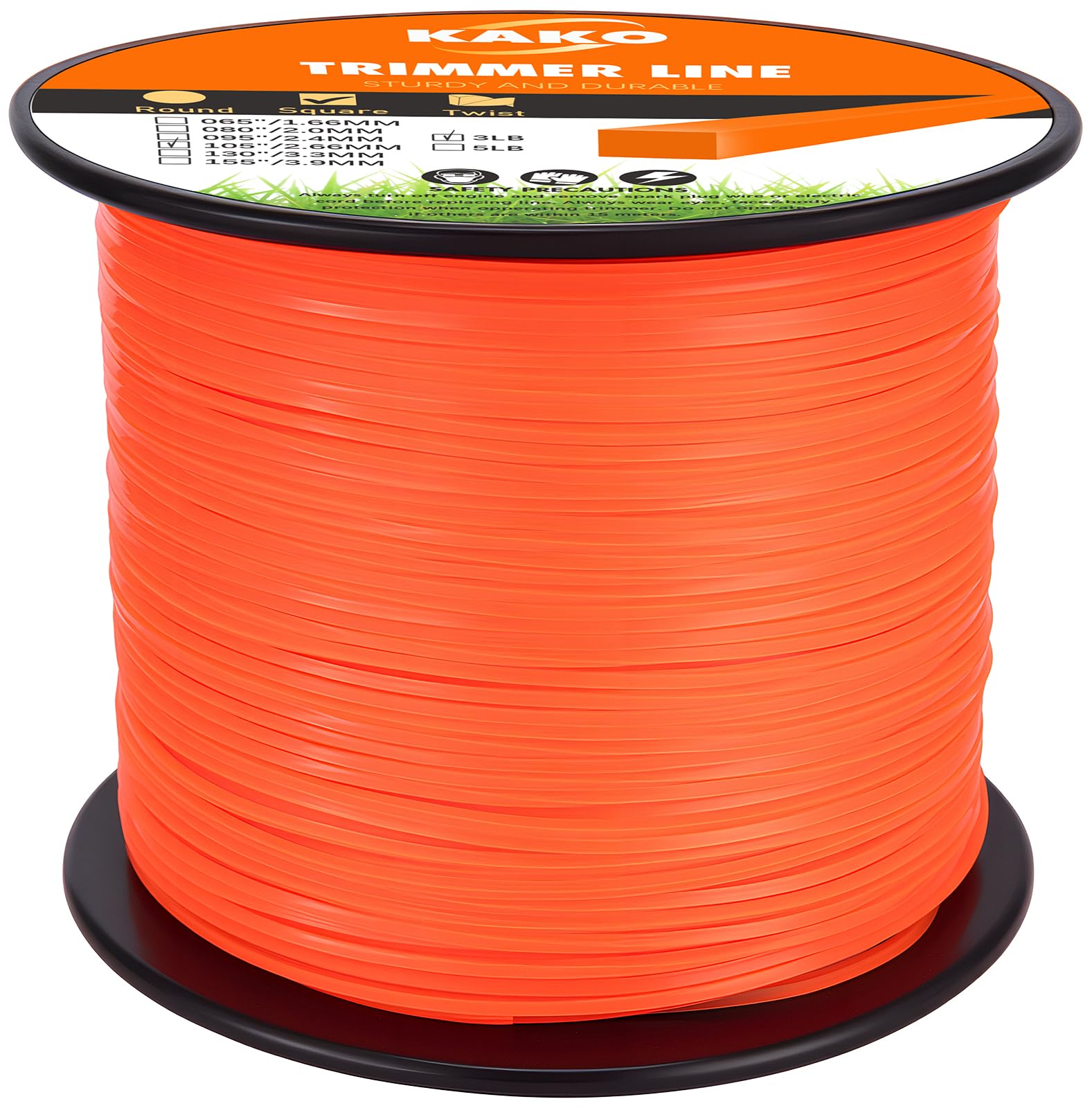
The KAKO line uses a commercial-grade plasticized nylon polyamide that delivers exceptional impact resistance for a .105 line. Its square cross-section creates sharp cutting edges that tear through thick weeds and small brush faster than twisted or round equivalents, and user reports confirm it handles dense overgrowth without frequent breakage.
The 628-foot spool is the longest in this roundup, making it ideal for users who trim large properties or run multiple machines. The bright orange color is a practical touch—it’s easy to see where the line is cutting and simplifies reloading in low light. The notch on the box doubles as a dispenser, so you don’t need a separate tool to cut the line.
One user noted that after five uses the line showed no jamming or unspooling issues, and others highlight that it feeds better than the standard line sold at big-box retailers. For heavy-duty residential use or commercial landscaping, the KAKO delivers the highest footage and consistent toughness at a reasonable per-foot cost.
Why it’s great
- Massive 628-ft spool provides many refills
- Square shape cuts aggressively through thick brush
- Commercial nylon resists breakage at the eyelet
Good to know
- Square line can be slightly louder than twisted options
- May not feed as smoothly in some trimmer heads
2. Efrozen Square Twist Trimmer Line

The Efrozen line combines the cutting aggression of a square shape with the reduced noise of a twisted design—users report operating sound dropping by 30 to 50 percent compared to standard round lines. The square twist edges create razor-sharp contact points that the manufacturer claims deliver 41 percent faster cutting speed, and real-world reviews confirm it handles heavy brush well.
This commercial-grade line comes on a 302-foot spool, offering a strong mid-point between budget-friendly short spools and the massive 628-foot KAKO spool. The bright orange color makes the cutting path easy to track, and the spool design prevents tangling during storage. Multiple users mention the line seems to “last forever” even with frequent use across several trimmers.
One reviewer specifically noted it holds up beyond the spec of their Ryobi weed trimmer, and another praised its strength on larger grasses without the fraying common to cheaper nylon. If noise reduction is a priority—especially in residential neighborhoods—this is the best .105 trimmer line for a quieter trimming session without sacrificing cutting power.
Why it’s great
- Square twist design cuts fast while reducing noise
- 302-ft spool offers good value per foot
- Bright orange color aids visibility
Good to know
- Some users found it slightly less durable than pure square lines on concrete
3. Hipa 3-Pound Twist Trimmer Line

Hipa’s 3-pound twist line focuses on pure durability, with a high-strength inner core that resists breakage at the eyelet and cuts through dense weeds, berry vines, and other thick plants. The twisted shape reduces drag and noise compared to round lines, and the red color provides decent visibility during use. Users report it performs like a “steel cable” and lasts noticeably longer than standard lines.
One reviewer running an Echo SRM-225 found the line comparable to commercial-grade string costing significantly more, and another noted it handled brush cutting without breaking where previous lines failed. The 3-pound spool provides ample material for continuous trimming, though some users wish it came on a proper spool rather than being zip-tied in a coil.
It’s worth noting that the line may require soaking before use to maximize elasticity—this is a common recommendation for nylon lines in colder or drier climates. For users who prioritize raw toughness and don’t mind a slight extra prep step, this is a strong mid-range contender that punches above its weight class.
Why it’s great
- Extremely tough nylon core resists breakage
- Twisted shape reduces noise and drag
- 3-pound spool provides heavy-duty volume
Good to know
- Coil is zip-tied, not on a spool—can be messy to handle
- Soaking recommended for best flexibility
4. Rotary Black Vortex Trimmer Line

The Rotary Black Vortex line uses a proprietary “vortex” shape—a twisted profile designed specifically to reduce operator noise and vibration. Users consistently report it runs quieter than standard twisted lines, and the parallel rotation helps reduce head wobble. One reviewer noted it lasted 45 minutes of trimming on half an acre of grass, concrete edges, and rocks without significant wear.
At 185 feet per spool, this is on the shorter side, but the commercial-grade nylon still holds up well against 1/4-inch vines and tough Louisiana-style brush. The bump feed works reliably, and several users mention the line does not fray or turn gray at the ends after extended use, a common sign of cheap nylon overheating.
The primary caveat is that some users found it less durable than the RedMax branded twisted line, so if you’re pushing through very heavy brush daily, you might prefer a longer-lasting option. For suburban yards and occasional tough spots, the smooth, quiet operation makes this a satisfying choice.
Why it’s great
- Vortex shape reduces noise and vibration
- Feeds reliably through bump heads
- Does not fray or gray at the tips
Good to know
- Shorter 185-ft spool may run out faster
- Not as durable as top-tier commercial twisted lines
5. Arnold Xtreme Pro Trimmer Line

Arnold’s Xtreme line uses a dual-compound construction—a hardened outer edge for cutting durability and a softer inner core for flexibility. This combination makes it particularly effective on hard surfaces like concrete pavers, stone edging, and fences where other lines wear down fast. One user reported using it on a two-wheel brush cutter without a single break while clearing small trees and dense growth.
At 165 feet per spool with 11 refills included, it offers solid value for suburban yards. The square shape creates aggressive cutting edges that slice through tough weeds, and long-term users (10+ years) swear by it as their go-to line. The inclusion of a cutting tool in the package is a nice convenience for on-the-go trimming.
The main limitation is that some users on very large rural acreage found the line wears down faster than expected, with chunks flying off during heavy use. It’s best suited for well-maintained lawns with periodic tough spots rather than non-stop commercial brush clearing. For most homeowners, the dual-compound design offers excellent longevity on hard edges.
Why it’s great
- Hardened outer edge lasts on concrete and stone
- Soft inner core prevents snapping
- Includes a cutting tool for easy trimming
Good to know
- Some users report wear on heavy rural brush
- May spit small chunks at high RPM
6. MaxPower Premium Twisted Trimmer Line

MaxPower’s twisted line is made from commercial-grade co-polymer resins and has earned a reputation as one of the toughest .105 options available. Users report it handles tropical brush and tough weeds without breaking or welding inside the trimmer head—one reviewer compared its performance to “a soft metal blade.” The twisted shape also delivers significant noise reduction, with the manufacturer claiming up to 50 percent less noise.
The 165-foot length provides about 11 refills, and the line is noticeably thicker and stiffer than standard offerings. This stiffness means you load less line per refill (4 feet vs. 6-8 feet), but it lasts longer so you don’t need to feed as often. One user specifically said it outperforms Stihl and Husqvarna branded lines on tough brush.
The main learning curve is that because it’s so tough, it can weld to itself inside the head if you run it too long without bump-feeding. Several users recommend keeping the line slightly longer than you think you need to prevent binding. Once you adjust your technique, this line delivers exceptional value for heavy-duty trimming.
Why it’s great
- Extremely tough co-polymer nylon resists breakage
- Noise reduction up to 50%
- Lasts longer than many premium brand lines
Good to know
- Can weld inside head if line runs too short
- Stiffer line requires slower bump-feed rhythm
7. Hipa Round Twist Trimmer Line
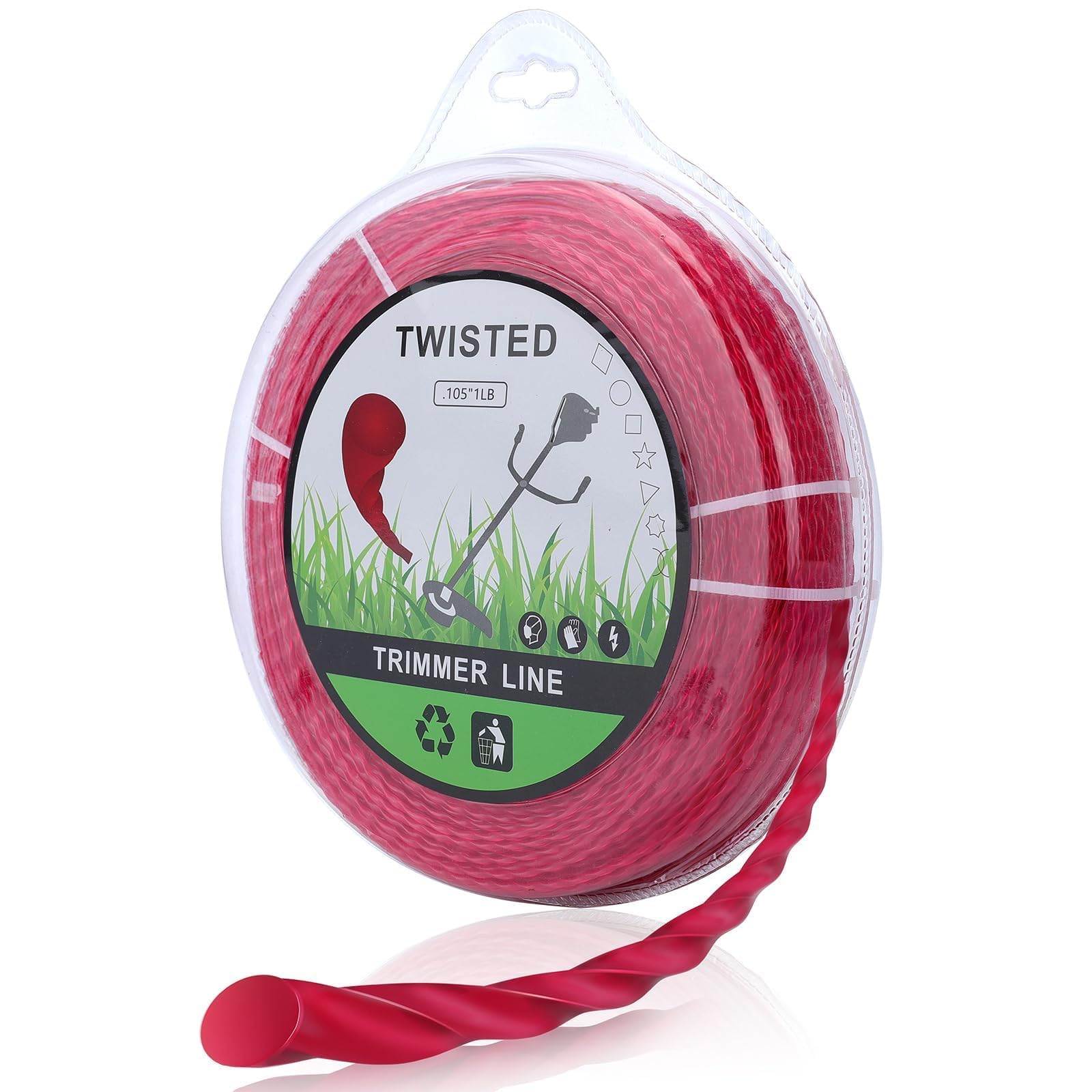
The Hipa Round Twist line is the most affordable entry point in this roundup, offering a 262-foot spool of .105 line at a price that competes with basic round lines. The round twist shape provides modest cutting efficiency improvement over pure round lines, and the nylon material is flexible enough to feed easily through most trimmer heads. Users report it holds up well against large weeds and small bushes when soaked beforehand.
The manufacturer recommends a 24-hour soak in water before first use to increase elasticity and reduce breakage. This is a common practice for nylon lines, and several users confirm it makes a noticeable difference in durability. The line works with all standard brands including Husqvarna, Ryobi, Black & Decker, Stihl, Makita, Greenworks, and Echo.
One review noted that while the .105 thickness feels stronger than .095, it wears down more quickly than premium lines—about 15 feet used to finish a single yard. For occasional trimming and light-to-medium weeds, the Hipa offers solid value. For daily heavy brush or commercial use, stepping up to a premium option will save time in the long run.
Why it’s great
- Very affordable per-foot cost
- Flexible and easy to feed into heads
- Wide compatibility with most trimmers
Good to know
- Wears faster than mid-range and premium lines
- Soaking recommended before use for best performance
FAQ
Should I soak my .105 trimmer line in water before use?
Will .105 line fit my trimmer head?
Why does my trimmer line weld inside the head?
How does line shape affect noise levels?
Final Thoughts: The Verdict
For most users, the best .105 trimmer line winner is the KAKO Square 105 because its 628-foot spool and commercial-grade nylon provide the best balance of cutting aggression, durability, and value per foot. If you want quieter operation without sacrificing speed, grab the Efrozen Square Twist. And for tough brush and large properties where raw toughness matters most, nothing beats the raw durability of the Hipa 3-Pound Twist.