
Our readers keep the lights on and the weekend projects moving. As an Amazon Associate, I earn from qualifying purchases.
Choosing a compact 10×32 binocular means walking the line between portability and pure optical horsepower. A well-sorted pair lets you track a warbler through dense canopy or scan a ridgeline for hours without arm fatigue, while a poor choice leaves you with a dim, shaky image that ruins the experience. The right build, lens coatings, and prism quality determine whether your investment delivers crisp, bright views or ends up gathering dust.
I’m Rikta — the co-founder and writer behind FitlyFast. I’ve spent countless hours analyzing spec sheets, comparing field-tested optics, and cross-referencing real user feedback to separate the best 10×32 binoculars from the also-rans.
This guide focuses on models that balance weight, weatherproofing, and glass quality so you can buy with confidence. The goal is to help you find the best 10×32 binoculars for how you actually use them, whether that’s birding, hiking, or general nature observation.
How To Choose The Best 10×32 Binoculars
A 10×32 binocular offers ten times magnification delivered through a 32-millimeter objective lens, creating a 3.2-millimeter exit pupil. This form factor is prized for its lightweight build and adequate low-light performance, but choosing the wrong one means accepting dim edges, internal fogging, or a focus wheel that slips in cold weather. Focus on the coatings, prism type, and build materials to make a smart pick.
Lens Coatings Make the Image
Fully multi-coated optics, where every air-to-glass surface receives multiple anti-reflective layers, maximize light transmission and reduce glare. Models with phase-correction coatings on roof prisms eliminate a soft, hazy image, while dielectric coatings further boost brightness and color accuracy. Without these, a 10×32 binocular can feel dim even on a cloudy afternoon.
Prism Glass and Phase Correction
BaK-4 prisms produce a round, well-defined exit pupil, while BK-7 prisms create a clipped, dimmer view. Phase-corrected coatings on the roof prism are essential for high-resolution viewing, preventing interference that softens image detail. This combination directly determines whether you can distinguish a bird’s feather pattern or just its silhouette.
Weather Sealing and Build Quality
Waterproof and fogproof construction, typically achieved through O-ring seals and nitrogen purging, prevents moisture and internal condensation. A magnesium alloy chassis keeps weight low while providing durability that polycarbonate bodies can’t match. For anyone using binoculars in rain, humidity, or rapid temperature shifts, these features are non-negotiable.
Quick Comparison
On smaller screens, swipe sideways to see the full table.
| Model | Category | Best For | Key Spec | Amazon |
|---|---|---|---|---|
| Opticron Explorer WA ED-R | ED Glass | Mid-range excellence | ED glass, PC phase coatings | Amazon |
| Zeiss Terra ED | Premium Compact | Bright low-light views | 88% light transmission | Amazon |
| Kowa BD II XD | XD Fluorite | Color accuracy | Fluorite-rich XD lenses | Amazon |
| Leupold BX-4 Pro Guide HD | Open-Bridge | Ultra-light hiking | Calcium-fluoride lenses | Amazon |
| Pentax AD 10×32 ED | ED Optics | Versatile viewing | ED glass, JIS6 waterproof | Amazon |
| Nikon PROSTAFF P7 | Reliable Mid | Everyday hiking | Dielectric prism coating | Amazon |
| Celestron TrailSeeker | Best Value | Budget birding | Mg alloy, phase coatings | Amazon |
| Nocs Provisions Field Issue | Compact Rugged | Travel and carry | IPX7 waterproof | Amazon |
| Hawke Nature-Trek | Entry Level | First-time buyers | Phase-corrected BaK-4 | Amazon |
In‑Depth Reviews
1. Opticron Explorer WA ED-R 10×32

The Opticron Explorer WA ED-R delivers the best balance of optical sophistication and field-ready design in this class. Extra-low dispersion (ED) glass objectives virtually eliminate chromatic aberration, producing edge-to-edge clarity that rivals more expensive glass. The wide-angle eyepieces with 16-millimeter eye relief make this a natural fit for spectacle wearers who still want a full field of view.
Nitrogen waterproof construction and full-body rubber armor mean this binocular handles rain, snow, and rough handling without complaint. The phase-corrected roof prisms with R-type multi-coating push light transmission high enough for comfortable dusk viewing, a weak point for many budget-friendly 10×32 models. Users consistently report that it performs well in extreme cold without condensation forming on the internal lenses.
The focus wheel is smooth and precise, and the overall weight stays low enough for extended neck carry. While the included soft case is basic, the optics themselves punch well above their price tier. Owners note that this is a genuine upgrade from entry-level glass and one that may satisfy for years without needing to jump to a premium tier.
Why it’s great
- ED glass provides near-zero chromatic aberration
- Waterproof and fogproof for all-weather use
- Long 16 mm eye relief works well with glasses
- Compact and lightweight build
Good to know
- Basic carrying case with minimal padding
- Neck strap is functional but not premium
2. Zeiss Terra ED 10×32
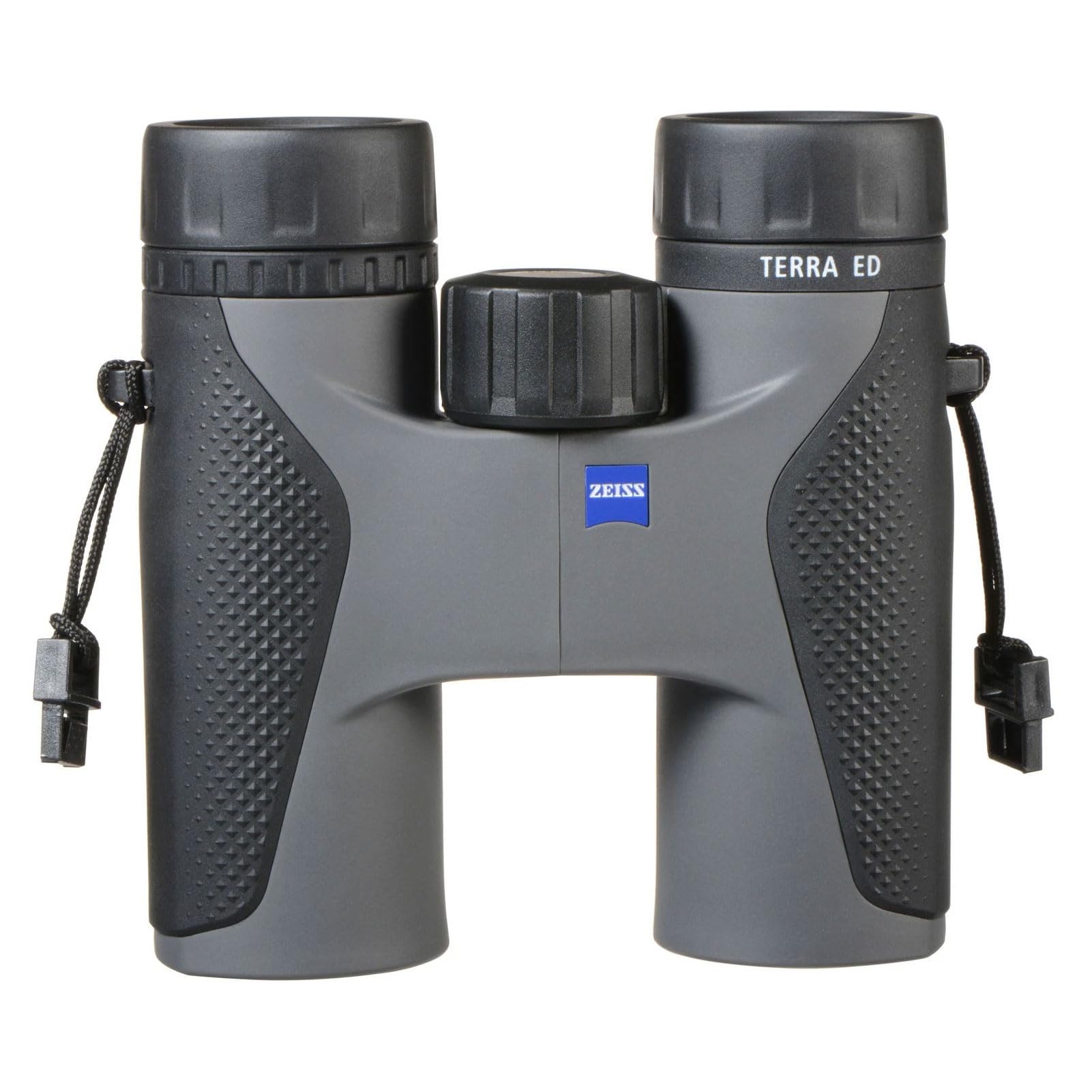
The Zeiss Terra ED brings German optical engineering into a compact 10×32 package at a more accessible price point than the company’s flagship lines. Its Schmidt-Pechan prism system with ED glass and hydrophobic multi-coating achieves 88 percent light transmission, delivering bright, high-contrast images even in twilight or shaded forest understory. The anti-reflective coatings minimize ghosting, a common issue in low-cost optics.
The fiberglass-reinforced polycarbonate housing is fully waterproof and surprisingly tough for its light weight. The large focus wheel is positioned perfectly under the index finger, enabling fast adjustments without taking your eye off the target. With 16.5 millimeters of eye relief, eyeglass wearers get a full field of view without vignetting, a detail many budget options get wrong.
Users consistently rank the Terra ED above similarly priced Vortex models for brightness, color accuracy, and overall clarity. The included neoprene strap and hard case add real value for daily carry. The only compromise is the plastic eyecups, which feel less robust than the all-metal assemblies on higher-end Zeiss models, but for most birders and hikers, the optical quality justifies the choice.
Why it’s great
- High 88% light transmission for low-light clarity
- Hydrophobic coating sheds rain and fingerprints
- Fast, intuitive focus wheel
- Lightweight and durable fiberglass body
Good to know
- Plastic eyecups are serviceable but not premium
- Focus wheel has no locking mechanism
3. Kowa BD II XD 10×32

Kowa’s BD II XD uses fluorite-rich extra-low dispersion glass to deliver color fidelity and sharpness that competes with optics costing twice as much. The 6.7-degree field of view is genuinely wide for a 10×32, making it easier to track fast-moving birds or scan open terrain. The KR coating on the exterior lenses repels dirt, oil, and water, keeping the view clear in less-than-ideal conditions.
The magnesium alloy body keeps weight down while providing a rigid platform for the optical path. A tactile, knurled metal focus wheel gives precise control, and the multi-stop twist-up eyecups offer three distinct positions for fine eye relief adjustment. The close focus of roughly 4.5 feet is excellent for examining butterflies, flowers, or small artifacts at near distances.
Users praise the natural color rendition and edge-to-edge clarity, though some note the stiff diopter adjustment requires deliberate effort. The strap grommets sit in a way that causes the binoculars to tip forward when hanging, a minor ergonomic quirk. Overall, this is a pro-tier viewing experience in a compact body that rewards deliberate use.
Why it’s great
- Fluorite-rich XD glass for vivid, accurate color
- Wide field of view for easy target tracking
- Metal focus wheel with precise feel
- Excellent close focus distance
Good to know
- Strap grommets cause awkward hanging angle
- Diopter ring is stiff out of the box
4. Leupold BX-4 Pro Guide HD 10×32

The Leupold BX-4 Pro Guide HD combines a lightweight open-bridge, dual-hinge design with premium calcium-fluoride HD lenses that deliver exceptional edge-to-edge sharpness. The 10×32 configuration keeps the package trim enough for day hikes and travel, while the aluminum body and rubber armor provide genuine protection against drops and weather. The locking diopter ring prevents accidental adjustments, a thoughtful touch for anyone who shares binoculars or moves through dense brush.
BaK-4 prisms with phase coating produce a perfectly round exit pupil and crisp image with virtually no edge distortion. The eye relief accommodates glasses comfortably, and the focus wheel turns smoothly even in cold conditions. Users report that the optical quality comes very close to Swarovski-level performance at a fraction of the weight, though low-light performance trails slightly behind larger-format competitors.
The open-bridge design improves grip and heat dissipation, making these comfortable for extended sessions. Waterproof and fogproof construction is backed by Leupold’s reliable customer care. For backpackers who count every ounce, the BX-4 Pro Guide HD hits a sweet spot between performance and portability that few 10×32 binoculars match.
Why it’s great
- Calcium-fluoride HD glass for edge-to-edge clarity
- Locking diopter prevents setting drift
- Lightweight, open-bridge design aids grip
- Backed by industry-leading customer support
Good to know
- Low-light performance trails larger objectives
- Premium price reflects the build quality
5. Pentax AD 10×32 ED
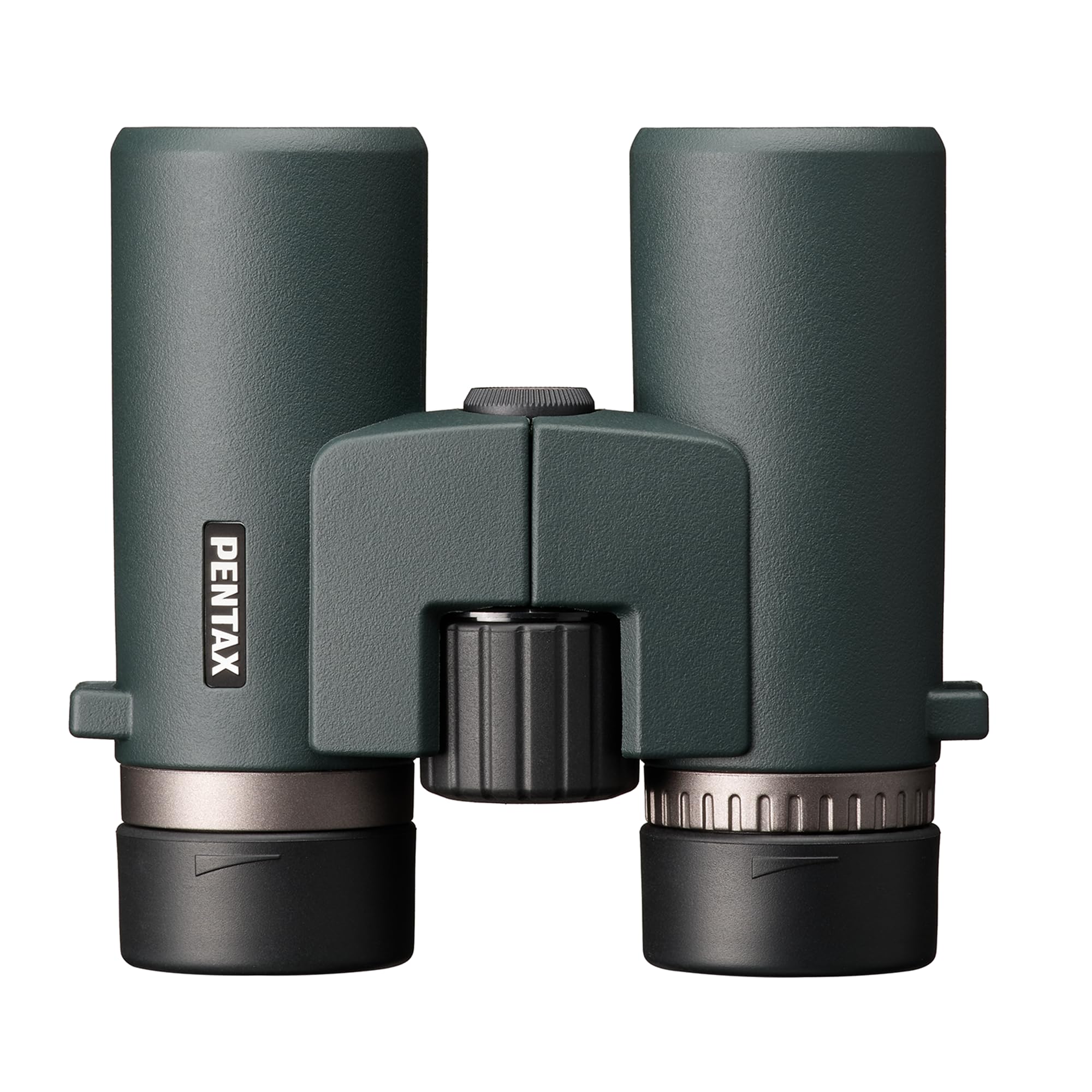
The Pentax AD 10×32 ED brings extra-low dispersion glass and full multi-coating to a well-priced package that performs well across a wide range of conditions. The ED optical elements effectively suppress chromatic aberration, delivering a sharp, high-contrast image with minimal color fringing around bright objects like white herons or distant power lines. The full multi-coating on all lens surfaces reduces glare and ghosting, improving clarity in harsh midday light.
Waterproof construction meets JIS Class 6 standards, meaning these binoculars can handle heavy rain and immersion. Nitrogen filling prevents internal fogging when moving between temperature zones. The ring-type diopter adjuster is easy to grip and adjust, even with gloves on. Users frequently note that the image quality surpasses expectations at this level, with some comparing it favorably to pricier European glass.
The focus wheel is stiffer than some competitors, offering precise but slower adjustments. Close focus is around 5 feet, good for nature study. The 25-year warranty adds significant long-term value. For someone who wants ED glass performance without stepping into the highest price tier, the Pentax AD is a strong contender.
Why it’s great
- ED glass for sharp, aberration-free views
- JIS Class 6 waterproof for serious weather
- 25-year warranty provides peace of mind
- Good close focus for nature study
Good to know
- Focus wheel is stiffer than average
- Weight is slightly higher than magnesium competitors
6. Nikon PROSTAFF P7 10×30

The Nikon PROSTAFF P7 10×30 is a slightly smaller objective variant (30mm vs 32mm) that still delivers the brightness and clarity expected from a major optics brand. Nikon’s advanced multilayer coating and dielectric high-reflective prism coating maximize light transmission, producing vivid images with strong contrast. The phase-correction coated roof prisms ensure fine details remain sharp, whether you’re scanning treetops for birds or watching wildlife at a distance.
The fiberglass-reinforced polycarbonate body is wrapped in shock-resistant rubber armor for secure handling in wet conditions. Waterproof and fogproof construction makes it dependable in the field. The locking diopter ring protects your focus setting, and the turn-and-slide eyecups offer a customizable fit. Users consistently praise the smooth focusing mechanism and the value this binocular provides against more expensive options.
The field of view is 346 feet at 1,000 yards, which is generous for a 10x optic. Eye relief of 15.4 millimeters works for most eyeglass wearers, though users with thick frames may wish for a bit more. The oil- and water-repellent lens coating makes cleaning simple. For a reliable daily driver that won’t break your budget, the PROSTAFF P7 is hard to beat.
Why it’s great
- Dielectric prism coating for bright, vivid images
- Smooth, precise focus wheel
- Locking diopter maintains settings
- Oil- and water-repellent lens coatings
Good to know
- 30mm objective slightly limits low-light performance vs. 32mm
- Eyecups lack a firm lock at maximum extension
- Rubber armor attracts fingerprints
7. Celestron TrailSeeker 10×32

The Celestron TrailSeeker packs phase and dielectric coatings on BaK-4 prisms into a magnesium alloy body at a price point that undercuts many competitors. The result is a bright, sharp image with enhanced contrast and resolution that punches above its weight. All other optical surfaces are fully multi-coated with anti-reflective layers, further boosting low-light performance and reducing internal reflections.
The magnesium frame keeps weight manageable while providing the rigidity needed for accurate collimation. Metal multi-stop twist-up eyecups are a rare find at this tier and offer a longer lifespan than plastic alternatives. The 6.5-foot close focus is helpful for examining flowers, frogs, or small insects at near range. The included harness strap distributes weight evenly, making extended carry more comfortable.
Users note that the dust caps fall off easily and the neck strap slips on some fabrics, but the optical quality more than compensates. Celestron backs this with a limited lifetime warranty and US-based tech support. For anyone who wants premium features like phase coatings and a magnesium body without paying a premium price, the TrailSeeker is a standout value.
Why it’s great
- Phase and dielectric coatings on BaK-4 prisms
- Lightweight magnesium alloy body
- Metal multi-stop eyecups for durability
- Limited lifetime warranty from a trusted brand
Good to know
- Dust caps are loose and easily lost
- Neck strap can slip on some clothing
8. Nocs Provisions Field Issue 10×32
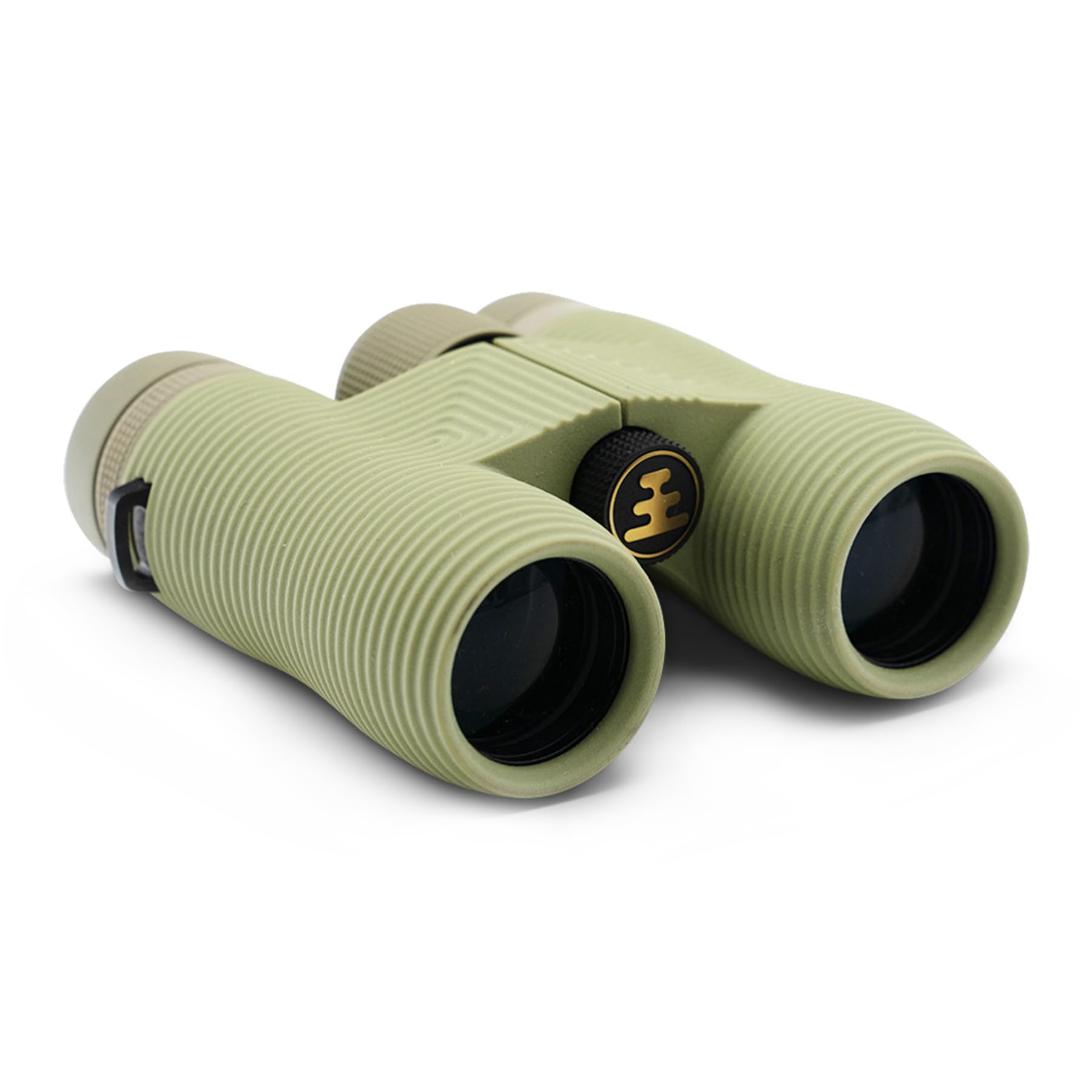
The Nocs Provisions Field Issue 10×32 stands out for its rugged, adventure-ready design at a mid-range price. IPX7 waterproofing means it can be submerged in three feet of water for up to 30 minutes, making it a top choice for kayakers, rafters, or anyone who faces wet conditions. The nitrogen-filled body prevents fogging, and the patented Rugged Wave Grip provides a no-slip hold even in wet or gloved hands.
The Swiss-designed BaK-4 prism system with fully multi-coated optics delivers rich color representation and a wide field of view of 315 feet at 1,000 yards. The oversized focus wheel is easy to operate with gloves, and the close focus of 9.3 feet is sufficient for most nature observation. The multi-stop twist-up eyecups offer three distinct positions, accommodating eyeglass wearers and bare eyes equally well.
Users consistently praise the compact size and optical quality for the price. The included protective drawstring sack is minimalist, but the “No-Matter-What” lifetime warranty adds confidence for outdoor enthusiasts. Some users note that the case and strap feel less premium than the binoculars themselves, but the optics are prioritized correctly. For a compact, go-anywhere tool, the Field Issue delivers.
Why it’s great
- IPX7 waterproof for submersion protection
- Secure wave-grip housing in wet conditions
- Oversized focus wheel for gloved use
- Lifetime warranty encourages outdoor use
Good to know
- Case and strap are basic compared to optics
- Close focus is adequate but not exceptional
9. Hawke Nature-Trek 10×32
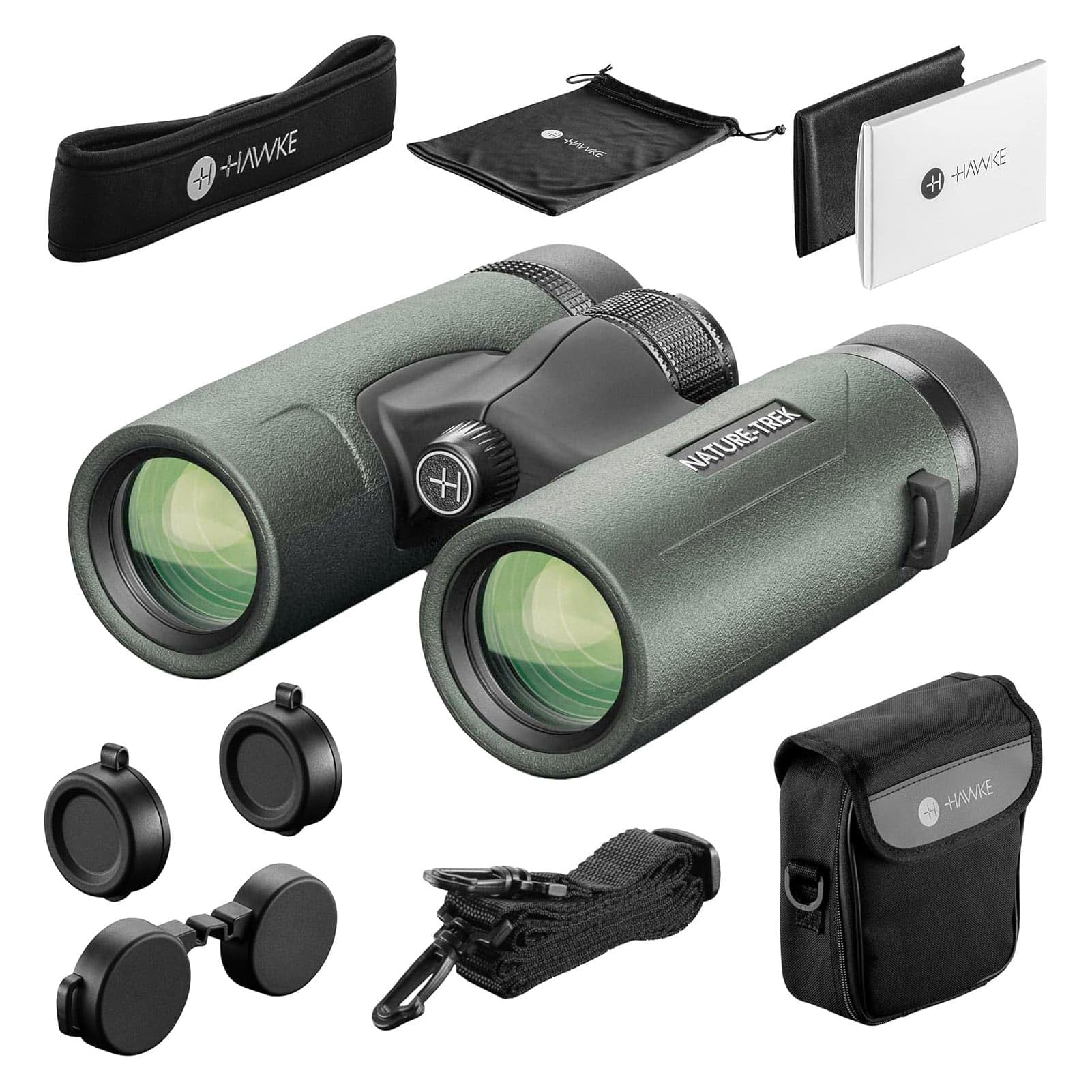
The Hawke Nature-Trek 10×32 offers a solid entry point for new binocular buyers who want phase-corrected BaK-4 roof prisms without a high investment. The multi-coated optics deliver sharp image quality for general use, and the streamlined top-hinge design is easy to handle. The close focus capability comes into its own in just two turns of the focus wheel, making it quick to adjust from distant landscapes to nearby subjects.
The rubber-coated polycarbonate chassis provides adequate protection for casual field use. Stay-on lens covers protect the glass when not in use, and the twist-up eyecups with position stops help users find a comfortable view. The lightweight build makes it easy to pack for day trips or keep in the car for spontaneous wildlife viewing.
Users note that the eyecups on earlier models had a tendency to retract under light pressure, but newer versions have resolved this with a positive twist-lock mechanism. The 5.8-degree field of view is narrower than some competitors, but the overall value proposition is strong for someone starting out. For a budget-conscious buyer seeking a capable first pair, the Nature-Trek fits the bill.
Why it’s great
- Phase-corrected BaK-4 prisms at an accessible price
- Quick close focus in two wheel turns
- Lightweight and easy to carry
- Stay-on lens covers for protection
Good to know
- Narrower field of view than competitors
- Earlier eyecup issues fixed in newer versions
FAQ
Is a 10×32 binocular good for low-light birding?
What does phase coating do in roof prism binoculars?
How important is waterproofing for 10×32 binoculars?
Final Thoughts: The Verdict
For most users, the best 10×32 binoculars winner is the Opticron Explorer WA ED-R because it combines ED glass, phase-coated prisms, and waterproof construction at a price that undercuts many competitors. If you want the absolute brightest low-light performance and a premium brand, grab the Zeiss Terra ED. And for ultralight backpacking with top-tier clarity, nothing beats the Leupold BX-4 Pro Guide HD.