
Our readers keep the lights on and the weekend projects moving. As an Amazon Associate, I earn from qualifying purchases.
The 110 film camera is the pocket-sized key to a grainy, nostalgic aesthetic that 35mm simply can’t replicate. That tiny cartridge format forces you to embrace its limitations, making every shot a deliberate act of creativity in a world obsessed with perfection.
I’m Rikta — the co-founder and writer behind FitlyFast. I’ve spent countless hours analyzing the market for compact film formats, researching emulsion behavior in tiny negatives, and comparing the hardware quirks that separate a dreamy, usable 110 shooter from a frustrating paperweight.
You are here because you want a reliable, fun 110 film camera that captures that authentic retro look without breaking the bank. This buying guide breaks down the top options to help you find the best 110 film camera for your creative projects.
How To Choose The Best 110 Film Camera
Choosing a 110 camera isn’t about megapixels—it’s about understanding the format’s inherent charm. You’re trading absolute sharpness for a unique, miniature negative that produces a distinct, nostalgic look. The key is to find a camera that reliably handles the basics so the film can do the rest.
Lens Quality and Coating
Because the 110 negative is so small, lens quality is critical. A coated glass lens will provide noticeably better contrast and sharpness than a bare plastic element. Look for terms like “coated lens” in the specs—this is the single biggest factor separating a soft, hazy image from a charmingly vintage one.
Flash and Battery Reliability
Many 110 cameras rely on built-in flash to be usable indoors or in low light. Check if the camera uses a common battery (like AAA) or a hard-to-find cell. A reliable flash system is a huge advantage, especially since 100-400 ISO film is the standard for this format and needs all the light it can get.
Build and Portability
The entire point of 110 is its pocket-sized convenience. A camera that is too bulky defeats the purpose. Look for a robust plastic or metal build that can handle being tossed in a bag. A smooth film advance mechanism and a secure cartridge door are non-negotiable for a frustration-free experience.
Quick Comparison
On smaller screens, swipe sideways to see the full table.
| Model | Category | Best For | Key Spec | Amazon |
|---|---|---|---|---|
| Kodak EKTAR H35N | Mid-Range | Half-Frame 35mm & 110 Feel | Coated glass lens | Amazon |
| Kodak Ultra F9 | Mid-Range | Simple 35mm Starter | Built-in flash | Amazon |
| Holga 120N | Value | Unpredictable Lo-Fi Lomo | 60mm f/8 plastic lens | Amazon |
| Vintage Digital Camera | Entry | Digital Retro Feel | 64MP digital sensor | Amazon |
| Fujifilm Instax Mini 11 | Premium | Instant Gratification | Instax Mini film format | Amazon |
| Ilford HP5 Plus 120 | Film Stock | B&W Medium Format | ISO 400/27° speed | Amazon |
| Portta Film Scanner | Accessory | Digitizing 110 Negatives | 22MP output resolution | Amazon |
In‑Depth Reviews
1. Kodak Ultra F9

While not a native 110 camera, the Kodak Ultra F9 is the affordable, durable workhorse for anyone wanting to explore film without the premium of a dedicated mini shooter. Its simple automatic exposure and reliable built-in flash make it an ideal “gateway” camera for getting comfortable with the process.
The plastic build is light but has proven to be surprisingly robust, surviving thousands of shots and a few drops according to long-term users. It pairs perfectly with Kodak 200 ISO film or black and white 400TX, producing a consistent vintage vibe that 110 shooters also appreciate.
Its compact dimensions (5.12 x 2.56 x 1.65 inches) are genuinely pocketable for a 35mm camera. The flash uses a single AAA battery, which is easy to find, and the film advance is smooth. It’s a perfect “always in the bag” camera for spontaneous, lo-fi shots.
Why it’s great
- Very durable and lightweight for the price
- Built-in flash is reliable and easy to use
- Simple one-button operation for beginners
Good to know
- Not a true 110 camera; uses 35mm film
- Plastic lens can be soft in corners
2. Kodak EKTAR H35N

The EKTAR H35N brilliantly mimics the 110 experience by doubling the number of shots per roll with its half-frame format, giving you 72 exposures on a standard 36-exposure roll. This is the closest you’ll get to the 110 shooting mindset of maximizing every frame without needing a dedicated cartridge.
Its coated glass lens is a major upgrade from budget plastic lenses, providing noticeably better contrast and less flare. The built-in star filter adds a unique creative element, producing four-beam flares on light sources that add to the retro aesthetic 110 fans love.
The camera body is compact and lightweight at 110 grams, making it truly pocket-friendly. It has a bulb function for long exposures and a tripod hole, features rarely seen at this price point. The stiff film advance is the only minor annoyance, but the output is charmingly sharp.
Why it’s great
- 72 shots per roll is fantastic value
- Coated glass lens for sharper images
- Unique star filter and bulb mode included
Good to know
- Film advance wheel can be stiff
- Plastic build, though sturdy for it
3. Holga 120N
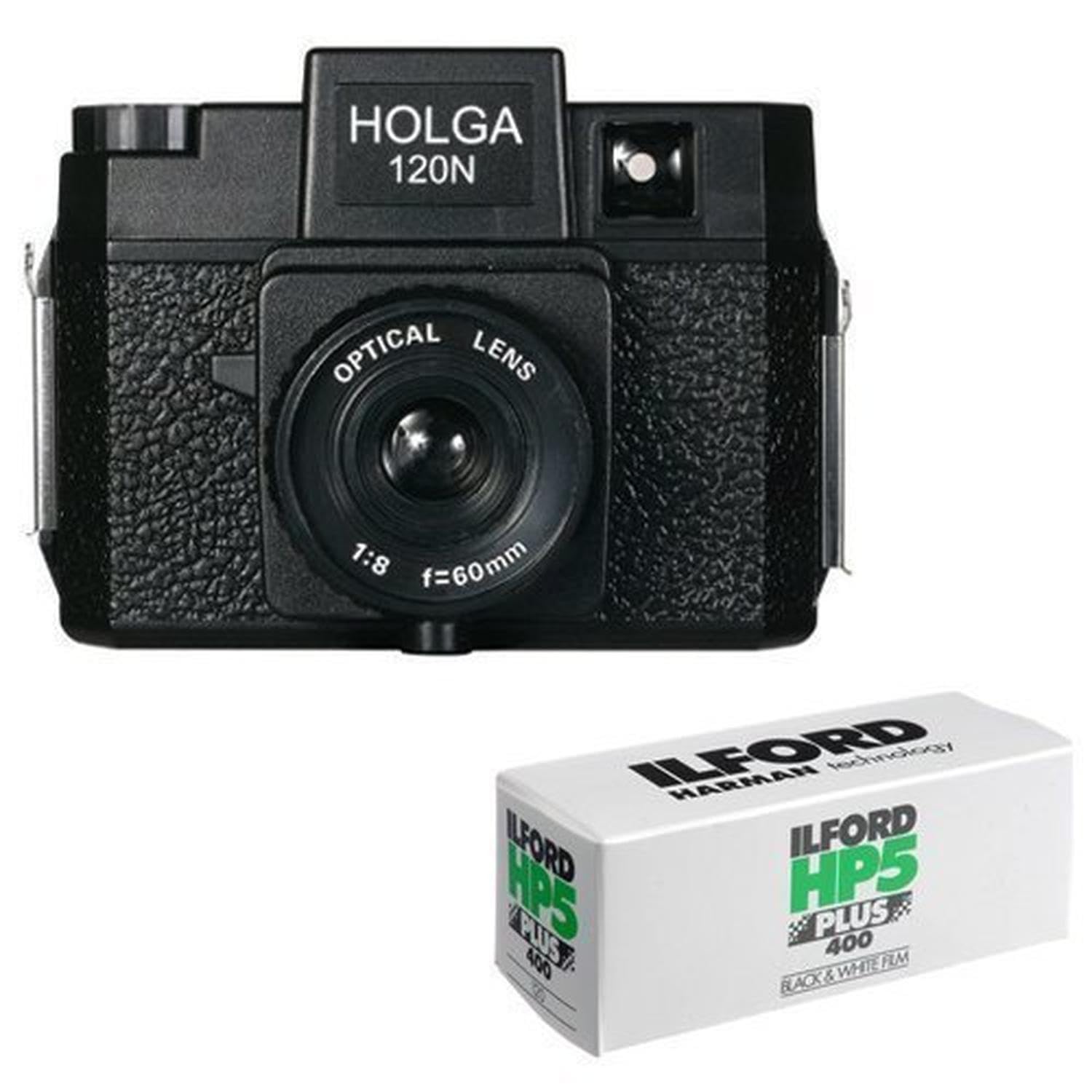
For the price, the Holga 120N is a legendary gateway to lo-fi, medium-format photography that directly mirrors the unpredictable charm of 110 film. Its 60mm f/8 plastic lens produces intense vignetting, soft focus, and unpredictable light leaks that define the “toy camera” aesthetic.
The camera uses zone focusing and has two shutter speeds: 1/100 sec. and bulb. This simplicity forces you to slow down and guess your composition. Many reviewers praise its ability to free you from perfectionism, making photography fun again through deliberate double and triple exposures.
It includes a roll of Ilford HP5 Plus 120 film, which is a great starting point. The build is durable plastic, but some units may have winding issues, so check return policies. It is a true “character” camera that produces images no modern phone can replicate.
Why it’s great
- Classic, unpredictable lo-fi aesthetic
- Easy to do double/triple exposures
- Great value with included film
Good to know
- Focusing is purely guesswork
- Not every unit is perfectly reliable
4. Vintage Digital Camera
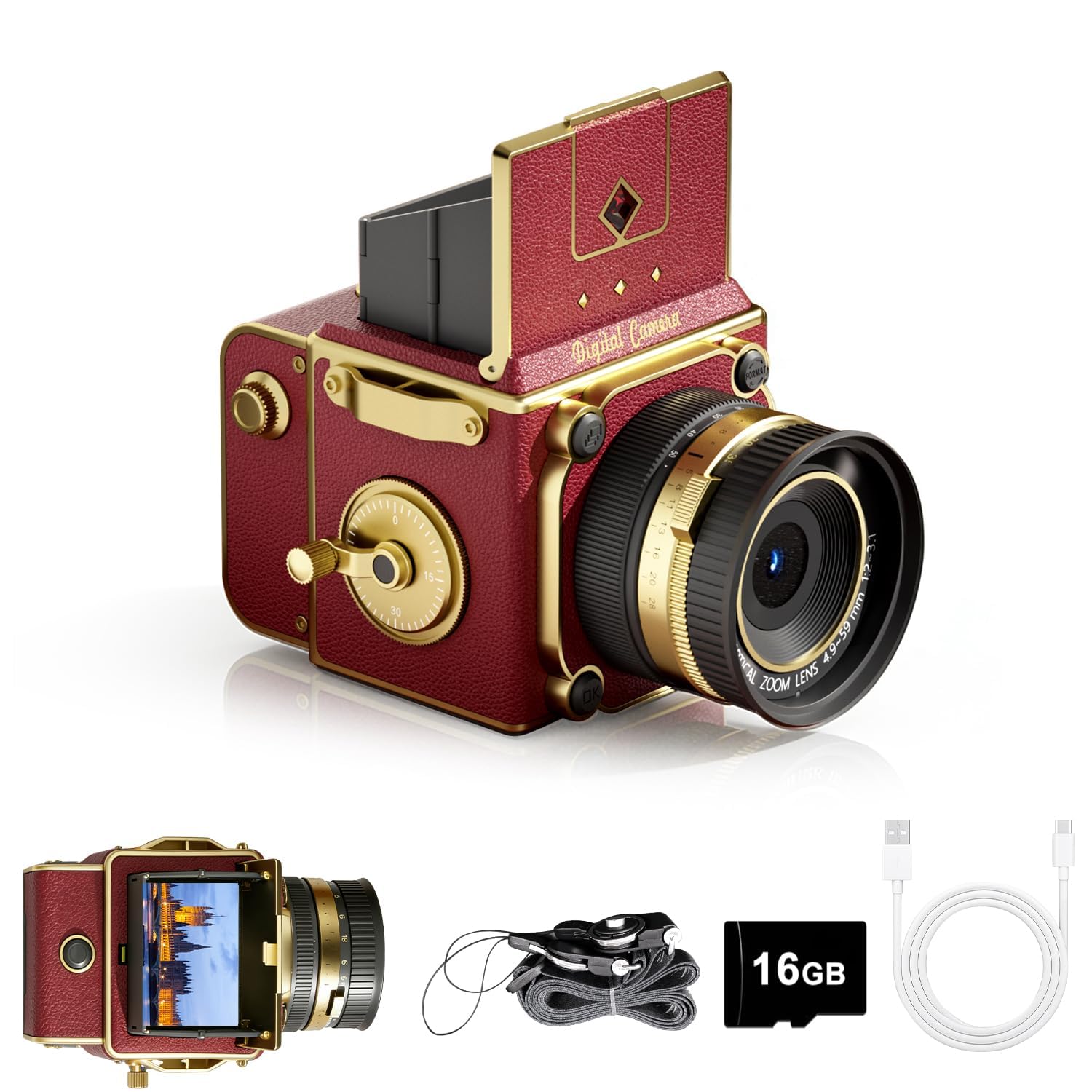
This camera captures the spirit of 110 photography—small, quirky, and retro—without the hassle of film development. Its 2″ waist-level LCD screen forces you to compose from the hip, mimicking the candid, low-angle shooting style that 110 pocket cameras excel at.
The 64MP sensor and 16x digital zoom are more marketing specs than pristine optics, but the resulting images have a soft, early-digital look that appeals to the same crowd that loves 110 film grain. It includes a 16GB card, a bag, and a USB cable, making it a complete kit out of the box.
It’s a perfect tool for teens or beginners who want the aesthetic of a film camera but need the instant feedback of digital. The vintage filters (Original, Vintage, Black & White) further customize the look. It’s a fun, low-stakes way to learn composition.
Why it’s great
- No film costs, instant image review
- Unique waist-level viewfinder
- Complete kit with accessories included
Good to know
- Digital zoom degrades image quality
- Lacks an optical viewfinder
5. Fujifilm Instax Mini 11

The Instax Mini 11 is the ultimate modern equivalent of the 110 experience—a small, easy-to-use camera that produces instant, tangible prints. Its automatic exposure system ensures bright results in most environments, eliminating the guesswork that can frustrate new film users.
The built-in selfie mode with a dedicated macro lens and mirror makes it incredibly social. You pull out the lens barrel to activate it, and the transparent ring flashes to let everyone know you’re ready. It’s a camera designed for sharing moments, not just capturing them.
The compact dimensions (4.24 x 4.77 x 2.65 inches) fit in most bags, and the camera is very durable, with many users reporting years of reliable use. The only ongoing cost is the Instax Mini film, which is easy to find. It’s an excellent choice for parties and family events.
Why it’s great
- Instant prints provide immediate gratification
- Easy-to-use automatic exposure system
- Durable build with long-term reliability
Good to know
- Film refill costs add up over time
- No self-timer feature available
6. Ilford HP5 Plus 120 Film

For 110 shooters wanting to experiment with a larger negative, or for anyone running a Holga 120, this 10-pack of Ilford HP5 is the gold standard of black and white film. Its ISO 400 speed handles mixed lighting beautifully, exactly the kind of flexibility a 110 camera demands.
The film’s wide exposure latitude means it’s forgiving of the manual guesswork that 110 and toy cameras require. It can be pushed to 3200 for low-light work or pulled to 200 for finer grain, giving you enormous creative control during development.
This pack is a serious investment in your photography journey. Many users buy in bulk to keep a stock in their fridge. The result is the classic, contrasty black and white look that defines the lo-fi, street-photography aesthetic that 110 fans adore.
Why it’s great
- Classic B&W film with beautiful grain
- Very forgiving exposure latitude
- Excellent value per roll in bulk pack
Good to know
- Requires development by lab or at home
- Bulk pack is a significant upfront cost
7. Portta Film Scanner
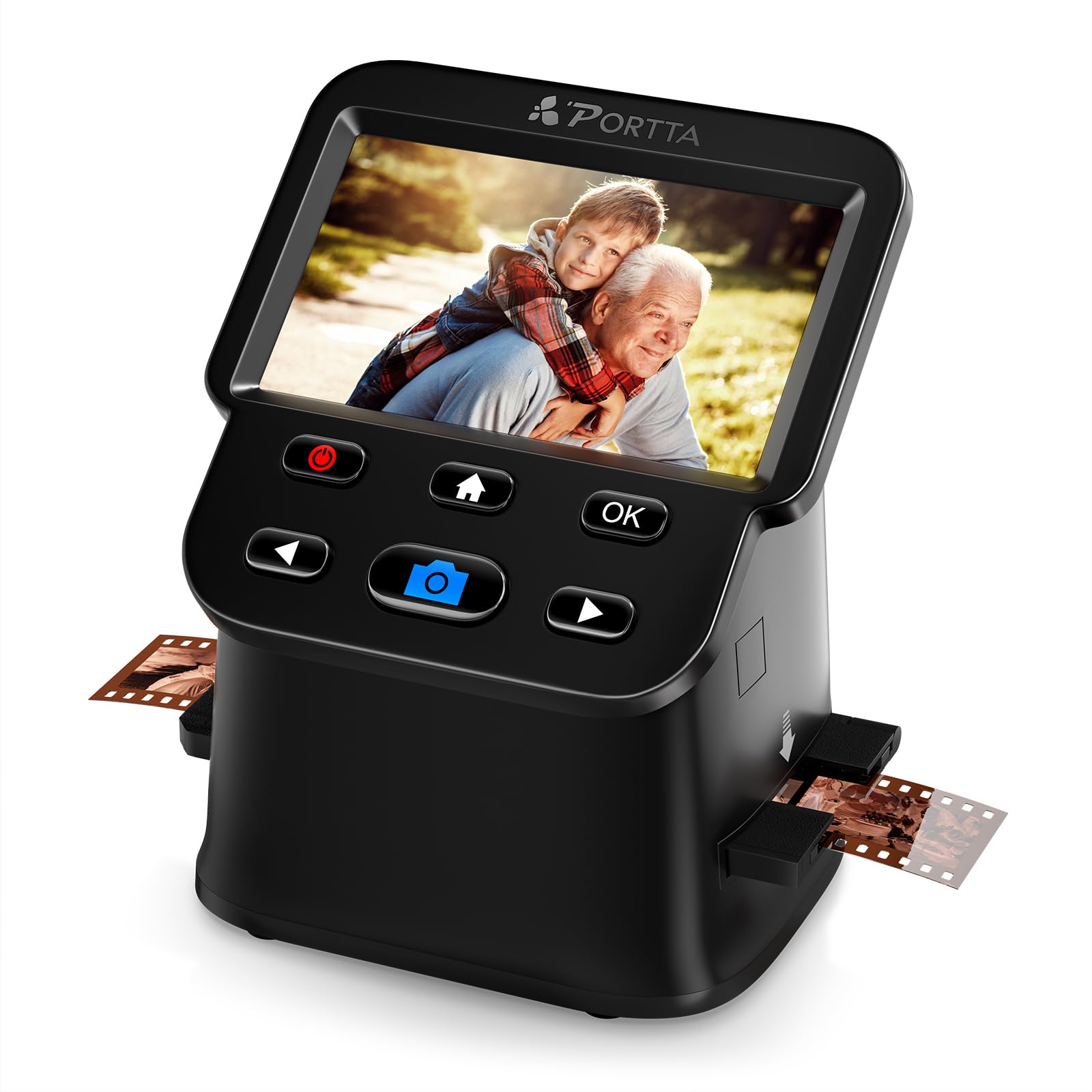
This scanner is practically essential for any 110 film shooter. Its support for 110 film, alongside 135 and 126 formats, makes it the perfect tool for digitizing your tiny negatives without needing a computer. The 5″ LCD screen lets you preview and align each frame before scanning.
The 22MP output resolution is more than enough for social media sharing and small prints, which is the realistic use-case for most 110 negatives. The standalone design means you can scan while traveling or sitting on the couch, simply saving to an SD card.
It has built-in image adjustment tools for brightness and color, helping you rescue underexposed or faded frames. It’s a sensor-based scanner, not a flatbed, so don’t expect lab-grade scans, but for the price, it’s a huge leap forward from trying to photograph your negatives.
Why it’s great
- Direct support for 110 film format
- No computer needed, standalone workflow
- Large 5″ preview screen for easy alignment
Good to know
- Not lab-grade quality; sensor-based
- Needs a large SD card for high-res scans
FAQ
Is film still available for 110 cameras?
How does 110 image quality compare to 35mm?
Can I get 110 film developed at any lab?
Final Thoughts: The Verdict
For most users, the best 110 film camera experience begins with the Kodak EKTAR H35N because its half-frame format and coated glass lens deliver the 110 shooting ethos—maximizing shots per roll with charming, sharp images—without needing the rare cartridge. If you want instant, tangible prints to share right now, grab the Fujifilm Instax Mini 11. And for pure, unpredictable lo-fi art that celebrates imperfection, nothing beats the Holga 120N paired with a roll of Ilford HP5.