
Our readers keep the lights on and the weekend projects moving. As an Amazon Associate, I earn from qualifying purchases.
Pushing magnification to 12x brings distant wildlife, lunar craters, and far-off landscapes into stunning detail, but that same power amplifies every hand tremor and optical flaw. A poorly built 12x pair delivers a shaky, dim image that defeats the purpose of zooming in. The right pair, however, locks onto the target with enough light-gathering ability and mechanical stability to make the view feel steady and immersive.
I’m Rikta — the co-founder and writer behind FitlyFast. After analyzing dozens of technical spec sheets, customer performance reports, and real-world field notes, I’ve broken down what separates a functional 12x binocular from a frustrating one.
This guide covers seven models spanning entry-level to premium, each evaluated for the specific optical traits that matter most at this magnification, to help you confidently choose the best 12x binoculars for your exact needs.
How To Choose The Best 12x Binoculars
12x magnification sits at a critical tipping point: you get more reach than 10x, but you also introduce more shake and demand better optical quality. Focusing on three technical pillars will help you avoid the common pitfalls.
Objective Lens Size and Exit Pupil
The 12x designation pairs with an objective lens diameter (42mm, 50mm, 60mm) that determines exit pupil: divide lens size by 12. A 50mm objective yields a 4.17mm exit pupil, which suits most daylight and early-dusk viewing. A 42mm objective drops to 3.5mm, which works in good light but dims noticeably in low-light conditions. A 60mm objective pushes exit pupil to 5mm, making it the strongest choice for astronomy and dusk observation.
Prism Glass: BaK-4 vs BK-7
At 12x, the prism glass quality directly influences image sharpness and brightness. BaK-4 glass produces a perfectly round exit pupil with better light transmission, while BK-7 glass often clips light at the edges, creating a squared-off pupil and dimmer image. For 12x binoculars used in low light, BaK-4 is the non-negotiable standard that serious buyers check first.
Field of View and Stability
Higher magnification narrows the field of view, making it harder to locate and track moving targets like birds or game. A 12x binocular typically offers a 280-360 foot field of view at 1,000 yards. If you plan to hand-hold the binoculars, prioritize models under 2.5 pounds or consider image stabilization. For tripod-mounted use, weight becomes irrelevant and water resistance or fog-proofing take priority.
Quick Comparison
On smaller screens, swipe sideways to see the full table.
| Model | Category | Best For | Key Spec | Amazon |
|---|---|---|---|---|
| Nikon Aculon A211 12×50 | Mid-Range | General Use | 58.4° Apparent FOV | Amazon |
| Bushnell R5 12×50 | Mid-Range | Hunting | IPX7 Waterproof | Amazon |
| Nikon Prostaff 5 12×50 | Premium | All-Weather Use | 15.5mm Eye Relief | Amazon |
| Leupold BX-4 Pro Guide HD 12×50 | Premium | High-End Clarity | Calcium-Fluoride Lenses | Amazon |
| Canon 12×36 IS III | Premium | Handheld Stability | Image Stabilization | Amazon |
| Celestron SkyMaster 12×60 | Mid-Range | Astronomy | 5mm Exit Pupil | Amazon |
| Occer 12×50 | Budget | Beginners | 800g Weight | Amazon |
In‑Depth Reviews
1. Nikon PROSTAFF 5 12x50mm Binoculars
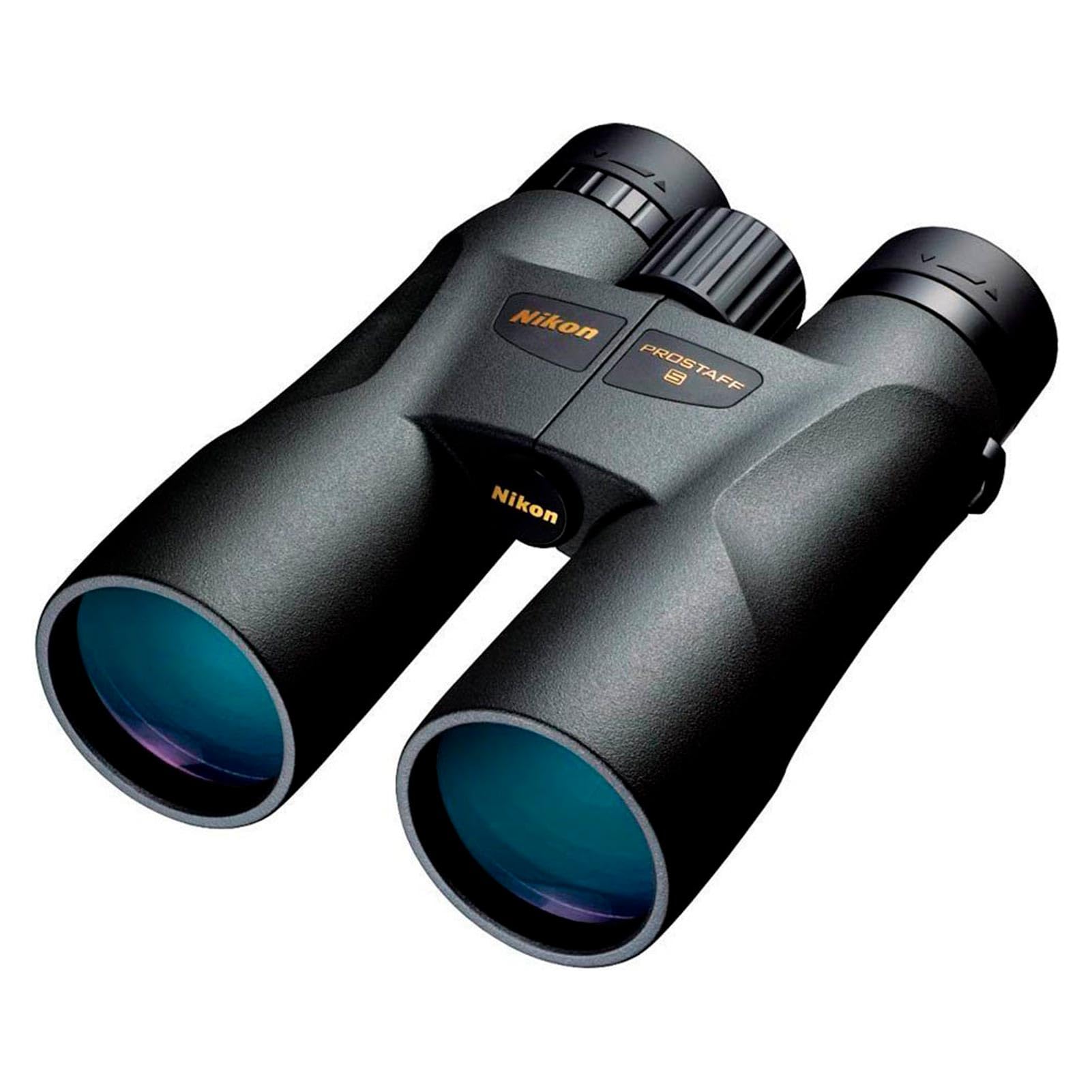
The Nikon PROSTAFF 5 delivers a near-perfect balance of optical performance and portability at 12×50. Its multilayer-coated lenses and BaK-4 prisms produce bright, color-accurate images with minimal glare, while the fiberglass-reinforced polycarbonate body keeps weight manageable for extended hikes. The 15.5mm of eye relief provides comfortable viewing for eyeglass wearers, and the nitrogen-filled, O-ring sealed build guarantees fogproof performance in rapid temperature shifts.
Users consistently praise the sharp, distortion-free image quality over years of use, and many note this model outperforms heavier, more expensive competitors in the same class. The turn-and-slide multi-click eyecups allow quick adjustment for perfect eye relief, and the smooth central focus knob shifts cleanly from near to distant subjects. At roughly half the weight of older Nikon “Extreme” models, this is the sweet spot for spot-and-stalk hunting and all-day birding.
The only compromise is the field of view: 246 feet at 1,000 yards is narrower than some roof-prism competitors, but the clarity and steady low-light performance more than compensate. It is a rugged, dependable choice for anyone needing reliable glass across variable weather and terrain.
Why it’s great
- Lightweight for a 12×50 at under 1.5 lbs
- Excellent multilayer coatings deliver vivid, glare-free views
- Nitrogen-filled and O-ring sealed for true waterproof/fogproof performance
Good to know
- Field of view (246 ft) is narrower than some roof-prism 10x models
- Rubber armor can feel slightly rigid in very cold conditions
2. Leupold BX-4 Pro Guide HD 12x50mm

The Leupold BX-4 Pro Guide HD sets a benchmark for high-definition glass at 12×50. Its calcium-fluoride objective lenses deliver exceptional edge-to-edge clarity and near-total elimination of chromatic aberration. The open-bridge, dual-hinge design keeps overall weight low while providing an ergonomic grip, and the DiamondCoat 2 lens coating boosts light transmission and scratch resistance. Guard-ion coating on external lenses repels water and dirt, making it ideal for harsh environments.
Users comparing this against Swarovski and Vortex Razor models report that the BX-4 delivers nearly identical image brightness and sharpness at a significantly lower investment. The locking diopter ring and generous eye relief make it a favorite for active hunting trips where range and speed matter. In low-light conditions, the 4.17mm exit pupil maintains a bright image deep into twilight, outperforming many 10×42 alternatives.
The trade-off is that this is a premium-priced instrument, and the included neck strap is basic for the class. The tripod-adaptable mount works well for long glassing sessions, but most owners prefer hand-held use thanks to the lightweight chassis. If edge-to-edge resolution and rugged field reliability top your priority list, this is the benchmark.
Why it’s great
- Calcium-fluoride HD lenses eliminate color fringing
- Extremely lightweight (1.5 lbs) for a premium 12×50 roof prism
- DiamondCoat 2 and Guard-ion coatings for durability and weather resistance
Good to know
- Premium pricing targets serious hunters and birders
- Neck strap quality is below what this price tier typically includes
3. Canon 12×36 Image Stabilization III

The Canon 12×36 IS III solves the single biggest problem of 12x magnification: hand shake. Using a Vari-Angle Prism system derived from Canon’s EF lens technology, this binocular stabilizes the image electronically, turning a normally jittery 12x view into a rock-steady observation. The 36mm objective lens keeps the unit compact and lightweight (roughly the size of a standard 8×32), and the doublet field-flattener lenses produce sharp, distortion-free images across the entire frame.
Battery life is excellent, and the Super Spectra multi-coating delivers bright, contrast-rich images despite the smaller objective. Users consistently report that the stabilization makes 12x usable for handheld astronomy, long-range bird identification, and boat-based whale watching where vibration is unavoidable. The Porro II prism design maximizes light transmission, and the long 14.5mm eye relief accommodates eyeglass wearers comfortably.
The main drawback is the continuous-press IS button: the stabilization only activates while held, which can cause fatigue over long sessions. The 3mm exit pupil is small, limiting low-light performance compared to 50mm models. For anyone prioritizing steady, sharp handheld viewing over maximum brightness, this unit is a category-defining choice.
Why it’s great
- Electronic stabilization eliminates hand shake at 12x
- Compact and lightweight for easy carry
- Doublet field-flattener lenses produce edge-to-edge sharpness
Good to know
- 3mm exit pupil reduces brightness in low light
- IS button must be held continuously; no lock option
4. Nikon ACULON A211 12×50

The Nikon ACULON A211 12×50 is a classic porro-prism design that balances durability and optical quality at a mid-range investment. Its aspherical multilayer-coated eco-glass lenses deliver bright, crisp images with minimal distortion, and the large 60mm objective lens option also exists in the family, but the 12×50 variant hits an excellent sweet spot for general terrestrial viewing. The turn-and-slide rubber eyecups provide comfortable extended-use positioning, and the rubber-armored coating ensures a secure grip even when wet.
Owners consistently note this model’s exceptional clarity for astronomy use, with sharp stars and the ability to reveal clusters and nebula details. The wide 58.4-degree apparent field of view feels spacious for a 12x porro prism, and the center focus knob operates smoothly for fine adjustments. At 2 pounds, it’s noticeable on the neck after an hour, but the durable build and bright views make it a reliable field companion for birding and hiking.
The main drawbacks are the relatively short 11.5mm eye relief, which may not suit all eyeglass wearers, and the lack of waterproofing beyond a basic weather-resistant coating. It works well in light rain and humid conditions, but it’s not fully submersible. For a dependable, traditional 12×50 that prioritizes optical clarity over waterproof specs, this is a strong mid-range contender.
Why it’s great
- Sharp, bright images with excellent color accuracy
- Wide 58.4° apparent FOV for a 12x porro prism
- Durable rubber-armored grip and smooth focus mechanism
Good to know
- 11.5mm eye relief may be insufficient for some eyeglass users
- Not fully waterproof; avoid heavy rain or submersion
5. Bushnell R5 12×50 Binoculars
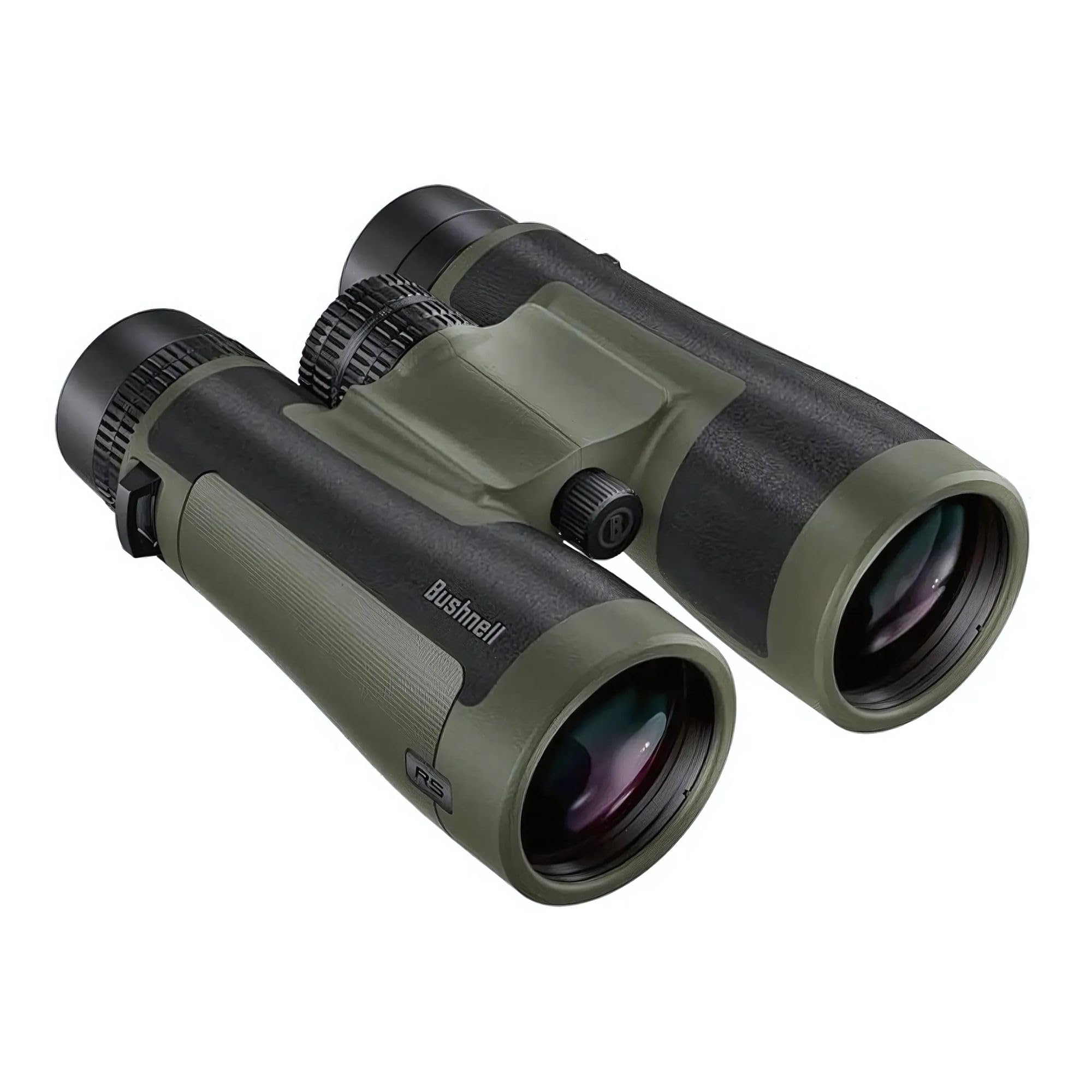
The Bushnell R5 12×50 brings advanced dielectric and Phase 3 prism coatings to a mid-range price point, delivering vivid colors and sharp resolution for long-range hunting and wildlife observation. The EXO Barrier lens coating repels water, oil, fog, and dust, keeping the glass clear in adverse conditions, and the IPX7 waterproof rating means the body can survive accidental submersion. This is a fully sealed binocular built for real outdoor punishment.
Users highlight the bright, clear image quality at last light, with some comparing it favorably to premium Vortex models in comparable magnifications. The included Vault Lite chest harness is a practical addition for hunting and hiking, eliminating the neck strain of a traditional strap. The shockproof rubber overmold provides a secure grip, and the ergonomic body feels balanced in the hand during extended glassing sessions.
The biggest issue reported is the stiff rubber lens caps, which can be difficult to seat properly. The fixed-focus system (manual focus, not auto) is smooth but not as fast as some competitors. For a rugged, fully weatherproof 12×50 that includes a quality harness, the R5 offers a strong value proposition.
Why it’s great
- Phase 3 and dielectric coatings for bright, vivid images
- IPX7 waterproof and EXO Barrier protected for extreme weather
- Includes Vault Lite chest harness for comfortable all-day carry
Good to know
- Lens caps are stiff and difficult to seat
- Manual focus is smooth but not the fastest
6. Celestron SkyMaster 12×60

The Celestron SkyMaster 12×60 is purpose-built for low-light observation and wide-field astronomy, leveraging large 60mm objective lenses and BaK-4 prisms to maximize light throughput. The 5mm exit pupil delivers bright, detailed images even near dawn, dusk, and for night-sky viewing. Users report seeing Jupiter’s Galilean moons, Saturn’s ring shadow, and the Andromeda galaxy with hand-held stability, though a tripod adapter is recommended for extended sessions.
The multi-coated optics provide crisp, sharp views with minimal color aberration relative to the price point, and the water-resistant rubber-armored housing protects against unexpected weather. At 2.4 pounds, it’s manageable for short handheld periods, but the weight becomes noticeable during prolonged use. The wide field of view makes it a strong grab-and-go option for telescope owners who want a wider perspective.
Celestron does not include a tripod adapter or a high-quality neck strap in the box, which is a notable omission at this price. The included accessories (lens caps, rainguard, case) are functional but basic. For the money, it offers the most light-gathering capability in the 12x class, making it a solid entry point for anyone focused on astronomy over general terrestrial use.
Why it’s great
- 5mm exit pupil provides excellent low-light performance
- BaK-4 prisms deliver bright, sharp images for astronomy
- Wide field of view for tracking celestial objects
Good to know
- No tripod adapter included
- 2.4 lbs is heavy for extended handheld use
7. Occer 12×50 Bird Watching Binoculars

The Occer 12×50 is an entry-level binocular that delivers surprising clarity for its price tier, featuring an 18mm BaK-4 prism and fully multi-coated optics that produce bright images in good daylight conditions. The 50mm objective lens provides adequate light gathering for dawn and dusk use, and the center-focus mechanism operates smoothly for quick adjustments. The package includes a carrying case, neck strap, lens cloth, and eyepiece cover, making it a complete starter kit.
User reviews consistently note the exceptional clarity and sharp details for the investment, with many describing it as perfect for cruises, wildlife viewing, and beginner birding. The IPX7 waterproof rating ensures it survives rain and accidental splashes, a feature rarely found at this price point. At 800 grams (1.76 lbs), it’s lightweight enough for travel and day hikes, and the non-slip grip provides comfortable handling in wet conditions.
The optical quality naturally doesn’t match premium glass: expect mild color fringing at the edges and reduced low-light performance compared to the Celestron or Nikon models. The field of view is decent but narrower than dedicated astronomy binoculars. For someone looking to test 12x magnification without a large commitment, this is a functional and well-priced starting point.
Why it’s great
- BaK-4 prism and fully multi-coated optics at entry-level pricing
- IPX7 waterproof rating for wet weather use
- Lightweight and easy to carry for beginners
Good to know
- Some chromatic aberration at the edges under bright light
- Low-light performance is adequate but not exceptional
FAQ
Is 12x magnification too shaky for hand-held use?
What field of view should I expect from a 12x binocular?
What does “BaK-4 prism” mean for 12x binoculars?
Final Thoughts: The Verdict
For most users, the 12x binoculars winner is the Nikon PROSTAFF 5 12×50 because it delivers a near-perfect blend of lightweight build, premium multilayer coatings, and reliable fogproof performance that handles everything from dawn birding to late-afternoon hunting. If you want electronic image stabilization that eliminates hand shake at 12x magnification, grab the Canon 12×36 IS III. And for astronomy-focused low-light viewing where light gathering is paramount, nothing beats the Celestron SkyMaster 12×60 for its 5mm exit pupil and wide-field capability.