
Our readers keep the lights on and the weekend projects moving. As an Amazon Associate, I earn from qualifying purchases.
Finding a board game that thrives with exactly two players and forces true teamwork rather than parallel play can be a challenge. Many “cooperative” titles devolve into one player quarterbacking the entire strategy, leaving the other as a passive participant. The best co-op games for two build a bridge of communication, trust, and shared decision-making where every move matters to both players.
I’m Rikta — the co-founder and writer behind FitlyFast. I’ve spent hundreds of hours analyzing game mechanics, component quality, and player dynamics to identify the titles that deliver genuine collaborative tension without the alpha-player problem.
Whether you are looking for a quick dice-rolling session or an epic campaign, this guide breaks down the top options to help you find the perfect pair. Discover the very best 2 player cooperative board games that put shared strategy at the heart of every session.
How To Choose The Best 2 Player Cooperative Board Games
The best two-player cooperative board games feel like a shared puzzle rather than a solo exercise with help. When selecting, look for mechanics that require both players to contribute meaningfully — simultaneous action selection, hidden information, or asymmetric responsibilities prevent one person from dictating every move. Also consider session length: games that play in 20-30 minutes are easier to table regularly than multi-hour campaigns, though epic expansions offer unmatched depth for dedicated duos.
True Co-op Versus Multiplayer Solitaire
Many games marketed as cooperative actually let each player optimize their own board with minimal interaction. For a two-player experience, seek titles where your decisions directly affect your partner’s options. Games with shared resources, combined objectives, or communication restrictions force real collaboration. Tile-laying games that build a shared space and dice-placement games where each player controls part of a single machine are excellent examples.
Protecting Against the Alpha Player
The biggest risk in co-op gaming is one player taking over the strategy. Games that limit communication during turns, use simultaneous action reveals, or split responsibilities into distinct roles naturally prevent quarterbacking. A game where one player manages speed while the other handles direction forces both to trust and coordinate — no single person can solve the puzzle alone.
Quick Comparison
On smaller screens, swipe sideways to see the full table.
| Model | Category | Best For | Key Spec | Amazon |
|---|---|---|---|---|
| Sky Team | Dice Placement | Intense 20-min sessions | 8 Custom Dice & 20 Scenarios | Amazon |
| Harmonies | Tile-Laying | Relaxed strategic building | 120 Wooden Tokens | Amazon |
| Splendor Duel | Card Drafting | Head-to-head engine building | 25 Plastic Gem Tokens | Amazon |
| The Lord of the Rings: Duel | Asymmetric Strategy | Thematic conflict duels | 44 Pawns & 69 Cards | Amazon |
| 5-Minute Dungeon | Real-Time Chaos | Fast-paced family fun | 275 Cards & 10 Heroes | Amazon |
| Scythe: Rise of Fenris | Campaign Expansion | Epic 8-session campaigns | 13 Plastic Miniatures | Amazon |
| The Night Cage | Tile-Laying Horror | Atmospheric escape puzzles | Candlelit Vision Mechanic | Amazon |
In‑Depth Reviews
1. Scorpion Masqué Sky Team

Sky Team is a masterclass in genuine two-player cooperation. You and your partner are pilot and co-pilot working together to land a plane — but once the dice are rolled, you cannot speak about your specific placement. This silent communication mechanic eliminates the alpha-player problem entirely. Each of the twenty airport scenarios introduces new rules and obstacles, from kerosene leaks to icy runways, keeping the challenge fresh across many sessions.
The components are thoughtfully designed: a control panel board, altitude and approach tracks, player aid screens, and eight custom dice. Games run a tight 15-20 minutes, making it easy to play multiple rounds in one sitting. The coffee token mechanic allows you to mitigate bad dice rolls, adding a layer of resource management to the core dice-placement puzzle. Every decision feels weighty because your partner is counting on you to handle your assigned dials and switches.
Winning the Spiel des Jahres 2024 is no accident — Sky Team delivers tension, teamwork, and replayability in a compact box. The rulebook is clear, setup is fast, and the escalating difficulty curve ensures that beginners and veterans alike will find their perfect challenge level. For any duo looking for the pinnacle of cooperative gaming, this is the benchmark.
Why it’s great
- Designed exclusively for two players, no scaling compromises
- Silent dice placement forces real, non-verbal teamwork
- Twenty varied airport scenarios offer high replayability
- Quick 20-minute sessions are easy to table regularly
Good to know
- Can be stressful for players who dislike time pressure
- Some scenarios require multiple attempts to master
- The base game includes only eight dice, limiting variety
2. Asmodee Harmonies

Harmonies offers a more contemplative cooperative experience, where you and your partner build a shared 3D landscape using wooden tokens and animal cubes. The goal is to create habitats that attract specific animals, scoring points through terrain patterns and elevation. The tactile pleasure of stacking the wooden pieces and the gorgeous illustrated cards make every session feel like a shared art project rather than a competitive struggle.
While the game supports up to four players, it scales beautifully to two, with each player managing their own personal board while contributing to a shared central landscape. The rules are straightforward — you can teach it in under five minutes — but the scoring conditions force deep tactical thinking. Each animal card has unique placement requirements, so you must coordinate with your partner to ensure both of your boards complement each other without blocking key patterns.
The component quality is exceptional for its range: 120 wooden tokens, 79 animal cubes, and thick card stock that feels premium. The solo mode is also well-implemented if you want to practice. For couples or friends who prefer a relaxed, thinky puzzle over frantic time pressure, Harmonies delivers a satisfying cooperative challenge that stays engaging across many plays.
Why it’s great
- Beautiful 3D wooden components create a tactile experience
- Simple rules with deep strategic scoring layers
- Three difficulty levels increase replay value
- Includes a fully functional solo mode
Good to know
- Minimal direct player interaction outside shared board
- Game can end abruptly when the card deck runs out
- Some players find the scoring system complex at first
3. Splendor Duel
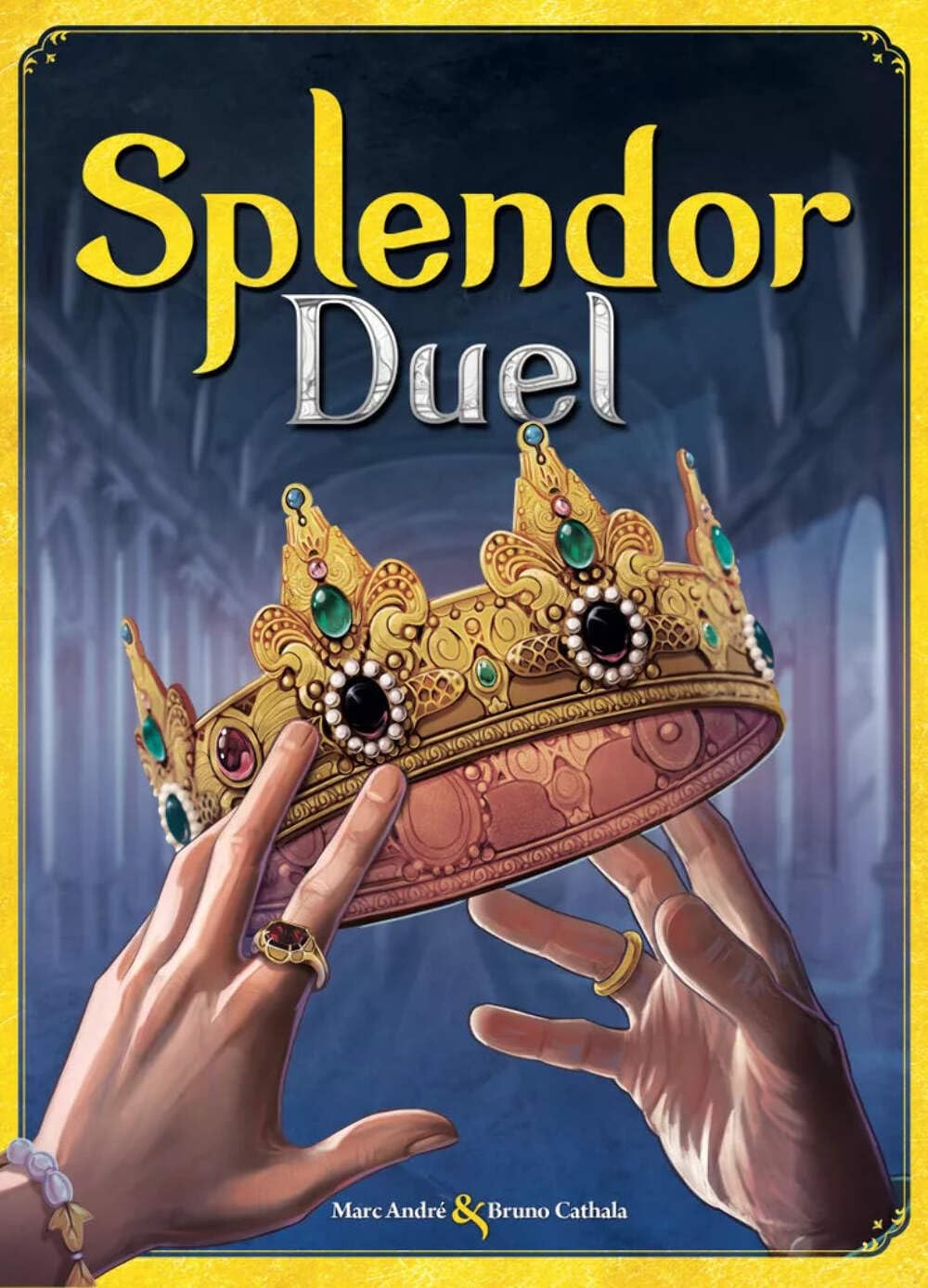
Splendor Duel is a head-to-head competitive game, not a traditional cooperative one, but it deserves mention because its tight two-player design creates an intense shared experience. Each player races to collect gemstones and development cards, with three distinct win conditions: reach ten prestige points, collect four nobles, or gain ten points in a single color. The competitive tension is palpable as you block your opponent’s key moves while building your own engine.
The game is built on a refined version of the Splendor system, with a common board that holds a rotating market of gem tokens and cards. New elements like privilege scrolls and royal cards add strategic depth without bloating the rules. The compact box and 30-minute playtime make it easy to take anywhere. The components are premium — thick card stock, solid plastic gem tokens, and a cloth bag for random draws.
While it is competitive rather than cooperative, Splendor Duel is one of the best-designed two-player games on the market. The interaction is direct and meaningful — every card you take denies your opponent an opportunity. For duos who enjoy sharp strategic battles with clear win conditions, this is a top-tier choice.
Why it’s great
- Designed exclusively for two players, no filler mechanics
- Three alternate win conditions keep games varied
- High-quality components with solid token feel
- Fast to learn but offers deep replayability
Good to know
- Competitive rather than cooperative gameplay
- Can feel repetitive after many plays without expansions
- The rulebook may require a second read for new players
4. Asmodee The Lord of the Rings: Duel for Middle-Earth

The Lord of the Rings: Duel for Middle-Earth adapts the acclaimed 7 Wonders Duel system into a richly thematic two-player game where one player controls the Fellowship and the other commands Sauron. This asymmetry creates a naturally cooperative tension even in a competitive framework — each side has distinct goals, cards, and strategies. The game plays across three chapters, with victories determined by completing the Ring quest, forming alliances, or dominating the board.
The component quality is outstanding: 69 cards, 44 pawns, 30 coins, and a dual-layered board that holds everything in place. The artwork is drawn directly from Tolkien’s world, with beautifully illustrated cards and tokens that fans will appreciate. The rules strike a perfect balance — accessible enough for new players but with enough strategic depth to satisfy veterans. Games typically run 20-30 minutes, making it easy to play multiple rounds in one evening.
Reviewers consistently praise the balance and the tension of every decision. The area control mechanics, tower building, and dynamic bonuses create a tight, tactical puzzle. For duos who love thematic immersion and sharp strategy, this is a must-have addition to any collection.
Why it’s great
- Asymmetric factions create unique replayability
- Three win conditions keep every game unpredictable
- Stunning LOTR artwork across all components
- Quick 30-minute sessions with deep strategic layers
Good to know
- Competitive rather than cooperative gameplay
- Requires familiarity with the 7 Wonders Duel system
- Some players may find the asymmetry unbalanced
5. Wiggles 3D 5-Minute Dungeon

5-Minute Dungeon is a chaotic, real-time cooperative card game where players work together to defeat a series of dungeons — each in exactly five minutes. The pressure is immediate: symbol cards must be matched to clear obstacles, and every player must act simultaneously, making quarterbacking impossible. The game includes 275 cards, five double-sided hero mats, and three double-sided boss mats for a total of ten heroes and six bosses.
The real-time element is the key differentiator. Using the free timer app (with six themed narrators), players race against the clock, frantically matching symbols and coordinating attacks. The chaos is part of the fun — games often devolve into shouting and laughter rather than quiet strategy. Despite the speed, there is genuine teamwork: each hero has a unique special ability that must be used strategically to overcome the dungeon’s obstacles.
This is an excellent entry-level cooperative game for families or groups that want high-energy fun without complex rules. The 5-minute rounds mean even short attention spans stay engaged, and the escalating difficulty of the six bosses provides a clear progression arc. For duos who want a break from quiet strategy games, 5-Minute Dungeon delivers pure adrenaline.
Why it’s great
- Real-time play prevents alpha-player domination
- Quick 5-minute rounds are ideal for casual sessions
- Ten unique heroes offer variety across plays
- Great for families and non-gamers
Good to know
- May feel too chaotic for strategy-focused players
- Limited depth after repeated plays
- The artwork is too fast-paced to appreciate during play
6. Stonemaier Games: Scythe: The Rise of Fenris

The Rise of Fenris is an expansion for the base Scythe game that adds a fully cooperative module along with an eight-episode campaign. This is the ultimate choice for duos who want a long-term, narrative-driven experience. The campaign introduces branching storylines, secret unlockable components stored in five tuckboxes, and persistent upgrades that carry over between sessions. The cooperative mode works exceptionally well with two players, as each person controls a faction and must coordinate resource sharing and territory control against the AI opponent.
The component count is staggering: 13 plastic miniatures, 62 wooden tokens, two custom dice, 25 tiles, and over 100 cardboard tokens. The game is designed for 1-5 players (up to 7 with the Invaders from Afar expansion), but the cooperative module shines at two. Each session runs about 90-120 minutes, making it a commitment but one that pays off with rich storytelling and evolving gameplay. The Automa system handles the AI opponent smoothly, providing a consistent challenge without requiring a human player to maintain it.
Reviewers consistently note that the campaign avoids the “reset problem” — you can play through the entire narrative and still have a complete modular game afterward. The eleven modules can be mixed and matched for endless replayability. For duos who already own Scythe and want a deep, cooperative campaign experience, The Rise of Fenris is an essential addition.
Why it’s great
- Eight-episode campaign with branching narrative and secrets
- Fully cooperative module works perfectly for two players
- Eleven modular components for endless replayability
- Premium miniatures and tokens elevate the experience
Good to know
- Requires the base Scythe game to play
- Campaign sessions run 90-120 minutes
- Rules can be complex, especially with campaign modules
7. The Night Cage

The Night Cage is a cooperative tile-laying game where players navigate a dark, shifting labyrinth lit only by a single candle. The core mechanic is brutally simple: each player can only see the tiles adjacent to their candle, and tiles are constantly removed from the board as darkness consumes the maze. You must collect keys, locate the gate, and escape together before the labyrinth collapses entirely. The game supports 1-5 players but is especially tense and effective with two, as each player controls a separate explorer with limited vision.
The “candlelit” gimmick is executed beautifully — the game literally uses a candle-shaped token to track vision, and the board is designed so that most of it is hidden at any given time. Wax Eaters (monster tokens) stalk the shadows, adding a pressing threat that forces players to move quickly. The tile system is innovative: each tile is double-sided, and when darkness takes a tile, it is flipped to a “void” side, permanently removing that section of the maze. This creates a shrinking play area that steadily increases tension.
The component quality is solid, with thick cardboard tiles and a large 10.75-inch square board. The artwork is eerie and minimalist, perfectly matching the horror theme. Advanced game modes introduce new monsters and obstacles, adding depth after the base game is mastered. For duos who want a highly thematic, tense cooperative experience with a strong atmosphere, The Night Cage delivers a memorable escape-puzzle every time.
Why it’s great
- Innovative tile vision mechanic creates genuine tension
- Shrinking board forces urgent teamwork and communication
- Adjustable difficulty and advanced modes for replayability
- Strong atmospheric theme with high-quality components
Good to know
- Rulebook can be confusing for new players
- Best with 4 players for optimal tension
- Not a “forever” game — novelty wears after 5-10 plays
FAQ
What is the difference between a cooperative game and a competitive game for two players?
How do I prevent one player from taking over all the decisions in a cooperative board game?
Can I play campaign-focused games like Scythe: Rise of Fenris as a one-time session?
Final Thoughts: The Verdict
For most users, the 2 player cooperative board games winner is the Sky Team because it delivers a perfect blend of tense communication, quick sessions, and genuine two-player design that prevents one person from dominating the strategy. If you want a relaxed, beautiful tile-laying puzzle, grab the Harmonies. And for an epic campaign with deep narrative and evolving mechanics, nothing beats the Scythe: The Rise of Fenris expansion.