
Our readers keep the lights on and the weekend projects moving. As an Amazon Associate, I earn from qualifying purchases.
The best two-player strategy games don’t compromise on depth just to fit a smaller player count. They create a focused, head-to-head pressure cooker where every single card you draft or token you place directly denies your opponent a path to victory. Whether you’re choosing sides in a historical scandal, building a gemstone empire, or landing a plane through silent teamwork, the right game turns a single box into a competitive ritual you’ll return to again and again.
I’m Rikta — the co-founder and writer behind FitlyFast. I’ve spent countless hours analyzing boutique and mainstream game mechanics, digging into rulebook specifics, and comparing card drafting loops, area control layers, and victory path balance across dozens of titles to highlight what truly separates a one-night wonder from a shelf staple.
This guide cuts through the noise to help you find the perfect 2 player strategy board games for your game night, whether you crave pure abstract logic or a rich thematic duel with multiple win conditions.
How To Choose The Best 2 Player Strategy Board Game
Picking a two-player strategy game means looking past the theme and checking the core loop. Does the game force you to interact directly with your opponent’s plans, or are you both playing separate solitaire puzzles? The best games create a tight feedback loop where your best move is also the one that most hurts your rival’s position.
Evaluate the Victory Paths
Games with a single win condition can feel like a straight race. Those with multiple paths — military conquest, scientific breakthrough, or pure points — offer richer tension because you must stay flexible. A game like 7 Wonders Duel or Lord of the Rings: Duel for Middle-Earth forces you to watch three fronts at once, which increases decision weight without adding rules bloat.
Consider the Interaction Style
Some duels are all-out attack. Others are indirect, where you steal resources or block card access. If you want quiet thinking, an abstract like Yinsh gives you pure spatial logic with zero luck. If you prefer dramatic swings, a card-driven game with shared drafting pools creates constant, tense trade-offs. Knowing your preferred style — cold logic vs. tactical chaos — narrows the field fast.
Check Playtime and Setup Speed
A 30-minute game you can play twice in a row often beats a 90-minute epic that stays on the shelf. Fast setup and reset matter because two-player games get played in smaller windows — after dinner, on a work night, or during a lunch break. Look for games that teach in under five minutes but reveal layers after a dozen plays.
Quick Comparison
On smaller screens, swipe sideways to see the full table.
| Model | Category | Best For | Key Spec | Amazon |
|---|---|---|---|---|
| 7 Wonders Duel | Premium | Three win condition strategy | 30 min playtime, 3 victory paths | Amazon |
| Lord of the Rings: Duel | Premium | Thematic asymmetric duel | 69 cards, 3 chapter rounds | Amazon |
| Sky Team | Mid-Range | Cooperative silent dice placement | 20 min playtime, 20 scenarios | Amazon |
| Splendor Duel | Mid-Range | Fast gem drafting battles | 67 jewel cards, 3 win conditions | Amazon |
| Yinsh | Premium | Pure abstract zero-luck strategy | 30 min playtime, ring removal | Amazon |
| Watergate | Mid-Range | Asymmetric historical card play | 60 min playtime, asymmetric decks | Amazon |
| Mandala | Budget | Abstract tactical color scoring | 108 cards, fabric play mat | Amazon |
In‑Depth Reviews
1. 7 Wonders Duel

7 Wonders Duel takes the beloved multi-player engine and rebuilds it exclusively for two. Cards are arranged in a face-up and face-down pyramid, creating a risk-reward tension where grabbing a card for yourself also reveals new options for your opponent. The three distinct victory paths — military conquest, scientific breakthrough, or highest civilization score — keep every game dynamic and prevent any single dominant strategy from emerging.
The military track works as a tug-of-war: ignore it and your capital falls, but over-investing leaves your science or economy vulnerable. Wonders require you to sacrifice cards to build them, but offer powerful one-time effects and an extra turn token that can disrupt the opponent’s sequencing. The base game includes a mix of age cards that escalate in cost and power, ensuring the early rounds set up tense endgame decisions.
After dozens of plays, the freshness holds because the pyramid layout is random every game. You can’t memorize a perfect path. The card art is clean and informative, and the rulebook is tight enough that experienced gamers can teach it in under ten minutes. For a dedicated two-player strategy game that respects your time and rewards repeated plays, this is the benchmark.
Why it’s great
- Three meaningful win conditions create constant tension
- Random pyramid layout ensures high replayability
- Quick setup and 30-minute playtime
Good to know
- Some Progress tokens can create runaway effects if not countered
- Learning curve due to multiple card types and symbols
2. Lord of The Rings: Duel for Middle-Earth

Built on the framework of 7 Wonders Duel, this retheme adds area control, tower building, and faction-specific bonuses that dramatically shift the tactical feel. Playing as the Fellowship or Sauron changes your priorities: the Fellowship races to destroy the Ring, while Sauron conquers territory. The three-chapter structure escalates pressure, and the immediate win conditions — Quest for the Ring, alliances with six Peoples, or total domination — keep both players engaged every turn.
The tower mechanic adds a physical layer to the strategy. Placing cubes on the board claims territory and triggers bonuses tied to specific regions. Resource management is forgiving, which lowers the frustration ceiling for newer players, but the depth comes from timing your card plays and knowing when to sacrifice a turn to bury a critical card your opponent needs. The asymmetrical leader cards introduce unique abilities that change your approach without dominating the game.
Component quality is excellent: sturdy cards, detailed pawns, and a board that looks great on the table. The rulebook handles the asymmetric rules cleanly, and most rounds finish in under 30 minutes. For Lord of the Rings fans who want a competitive duel that feels genuinely different on each side, this is a must-play that stands on its own mechanical merits rather than relying on theme alone.
Why it’s great
- Asymmetric factions with distinct strategies
- Area control adds a spatial dimension to card play
- High quality components and beautiful artwork
Good to know
- Repeat turns are rarer than in 7 Wonders Duel
- Requires both players to know faction rules
3. Scorpion Masqué Sky Team

Sky Team flips the competitive script with a cooperative experience where you and your partner must land a plane together without speaking. The core mechanic revolves around silent dice placement: each player rolls their dice and places them on a shared cockpit board, but once the dice are set, you cannot talk about your choices. This creates a brilliant tension where you must infer your partner’s intent from the board state alone.
The game comes with 20 different airport scenarios, each adding unique challenges like ice on the tarmac, kerosene leaks, or a new intern. The difficulty curve is well-paced: the introductory scenario is straightforward, but later airports require precise coordination and adaptive planning. Coffee tokens allow you to reroll dice, adding a small luck mitigation layer that keeps bad rolls from ruining a good plan.
Physical components are high quality: a control panel, airplane axis disc, and ten switches that feel tactile and satisfying. The box is compact and travel-friendly. Games run 20 minutes, making it easy to play multiple rounds. For couples or friends who want a shared challenge rather than a zero-sum duel, Sky Team delivers a uniquely intense and rewarding experience that deserved its Spiel des Jahres recognition.
Why it’s great
- Silent dice placement eliminates quarterbacking
- 20 scenarios offer exceptional replay value
- Fast setup and 20-minute playtime
Good to know
- Cooperative only, not for head-to-head competition
- Dice luck can still frustrate on tight scenarios
4. Splendor Duel
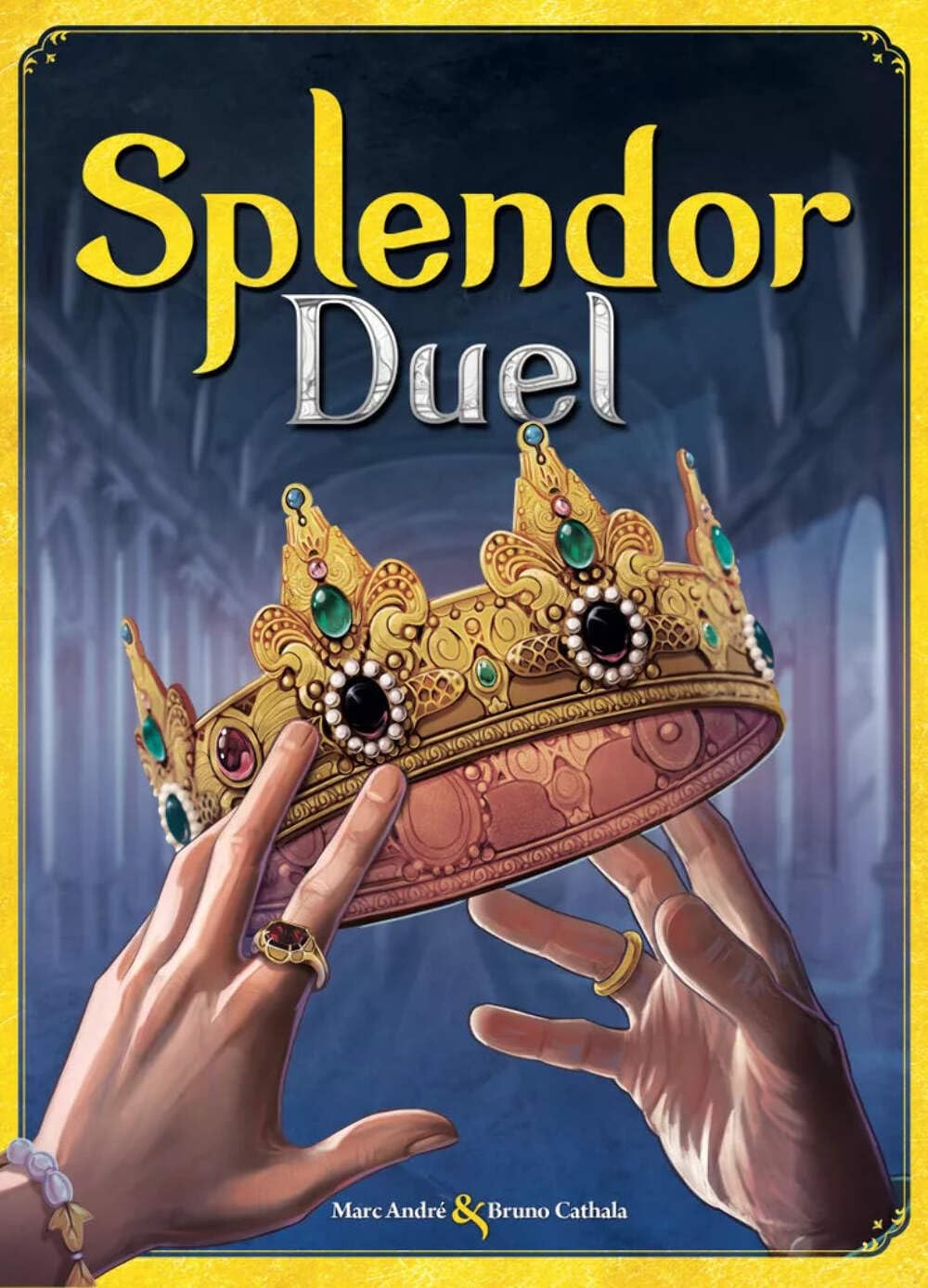
Splendor Duel adapts the original Splendor’s engine-building formula into a dedicated two-player experience with significant mechanical upgrades. The game adds new gem types, special powers on development cards, and three alternate win conditions: reach ten prestige points, collect seven bonuses in a single color, or gather four different noble tiles. This variety prevents the game from becoming a straight point race and forces you to adapt your strategy based on what your opponent leaves available.
The component quality stands out: thick plastic gem tokens that feel substantial, sturdy jewel cards with vibrant artwork, and a compact board that fits comfortably on a small table. The gem restrictions add a layer of scarcity — you cannot hoard gems, so you must spend efficiently. Special powers like privilege scrolls let you take extra actions, creating tactical windows that can swing the game.
Games average 30 minutes, and the learning curve is gentle enough for newcomers while offering enough depth for experienced players. The random setup of development cards ensures no two games play the same. For anyone who enjoyed the original Splendor but wanted a tighter, more confrontational two-player experience, this is a clear upgrade that justifies its own box.
Why it’s great
- Three win conditions keep strategies flexible
- Premium plastic gem tokens feel great
- Easy to learn with high replayability
Good to know
- Gem restrictions can feel limiting early on
- Slightly more complex than base Splendor
5. Yinsh

Yinsh is a pure abstract strategy game from the acclaimed Gipf project, offering a zero-luck, all-skill challenge for two players. The rules are deceptively simple: players take turns placing tokens on a hexagonal board and moving rings to flip tokens. The first player to remove three of their rings wins. However, each ring removal makes winning harder because you have fewer rings to move, creating a brilliant catch-up mechanism that keeps the game tense until the final move.
The board state shifts constantly. Every move has layered consequences — creating a line of five tokens might win the game, but it also opens up counterplay. The pieces are beautiful wooden rings and tokens that feel premium in hand. Setup takes under five seconds, and games typically run 20 to 30 minutes, making Yinsh an ideal choice for players who want deep strategy without lengthy resets.
Because there is no randomness, Yinsh rewards careful thinking and pattern recognition. Beginners can learn the rules in two minutes, but mastering the spatial logic takes many games. For purists who want a duel determined purely by outthinking the opponent, Yinsh is one of the finest abstract two-player games ever designed.
Why it’s great
- Zero luck, pure strategic skill
- Five-second setup, quick 30-minute games
- Brilliant catch-up mechanism via ring removal
Good to know
- Abstract theme may not appeal to narrative players
- Can feel unforgiving against a more skilled opponent
6. Capstone Games Watergate
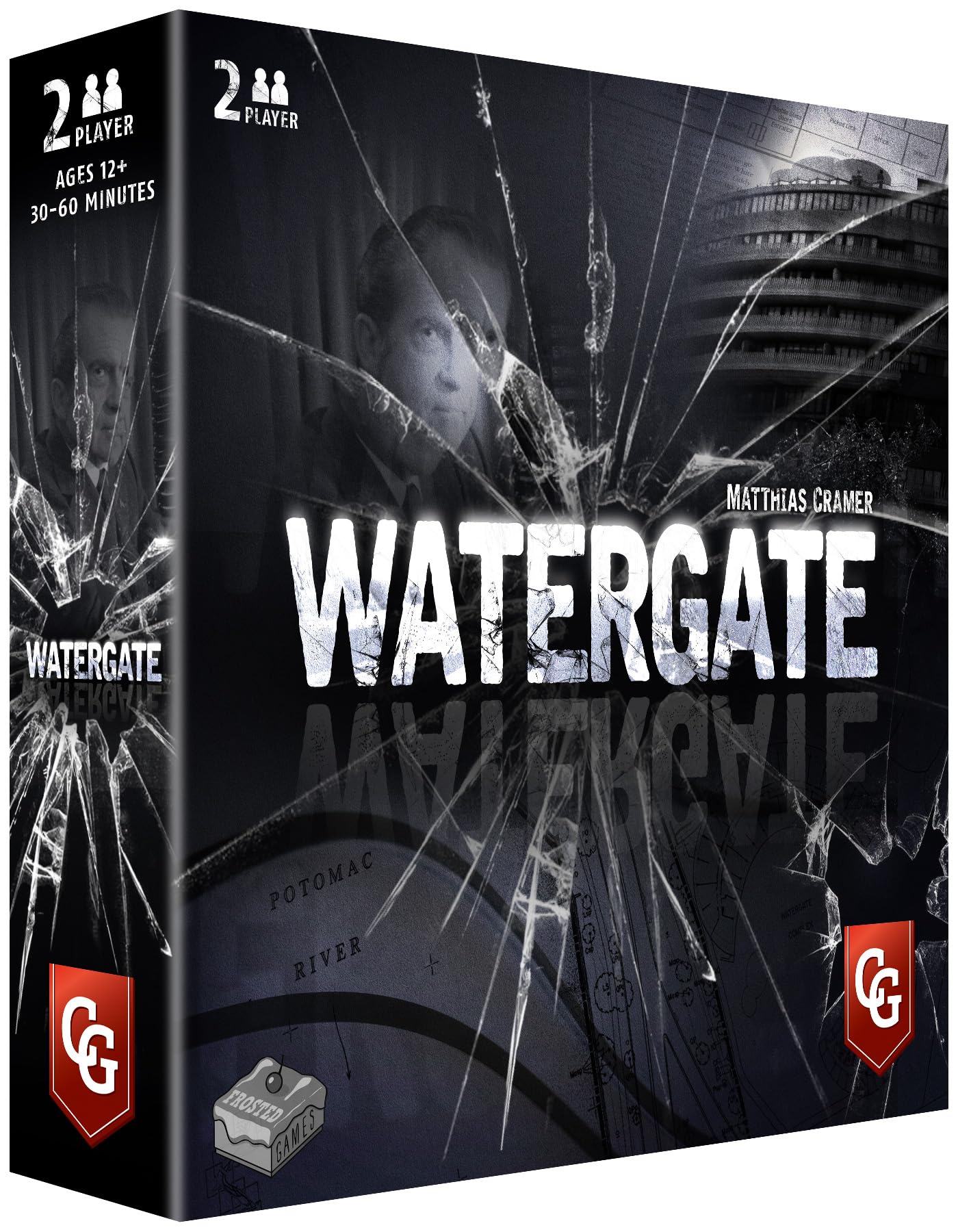
Watergate drops you into the heart of the 1970s political scandal with an asymmetric duel where one player controls the Journalist and the other plays as Nixon. Each side has a completely different deck of 30 cards and distinct objectives: the Journalist must connect evidence tokens to link Nixon to the break-in, while Nixon blocks connections and tries to survive until the end of the game. This creates a dynamic where both players are operating with different tools and constraints, forcing creative adaptation.
The tactical depth comes from the card actions themselves. Every card offers multiple uses, and you must make agonizing choices between advancing your own strategy or denying your opponent a critical move. The evidence bag and momentum track add layers of resource management. Games run 30 to 60 minutes, and the designers recommend switching sides between sessions to fully appreciate the asymmetric balance.
Component quality is solid: a clear game board, themed tokens, and card stock that stands up to repeated shuffling. The rulebook teaches the game well without requiring prior historical knowledge. For players who enjoy asymmetric card-driven strategy with real-world stakes, Watergate delivers a tense, replayable duel that rewards familiarity with your deck’s nuances.
Why it’s great
- Asymmetric decks create distinct strategies
- High replayability with balanced card interactions
- Educational historical theme integrated into mechanics
Good to know
- Cards prone to edge wear over time
- Not ideal for casual players due to medium complexity
7. Mandala

Mandala is an elegant abstract card game built around creating and destroying symbolic sand mandalas. Players build two central mountains of colored cards while simultaneously managing their personal fields. Once a mandala contains all six colors, players score the cards in the mountain based on the order those colors appear in their personal river. This scoring system is clever: the earlier a color appears in your river, the higher its point value, so you must constantly decide whether to add new colors or reinforce existing ones.
The tactical depth comes from the open information and contested play. Both players can see all the cards in the mountains and fields, so every move telegraphs intent. You must balance playing cards to the mountain to deny your opponent scoring opportunities while also building your own river. The game has a mean streak — taking a card from the mountain to deny your opponent a high-value color is often the correct play, which means Mandala is not a friendly, cuddly game.
The fabric play mat is a standout component, and the 108 cards are well-illustrated. Setup is fast, and games run about 20 minutes once both players understand the scoring. For players who want a quick, brain-burning abstract with a beautiful theme and high interaction, Mandala packs a surprising amount of strategy into a compact box.
Why it’s great
- Clever sliding-color scoring system
- Fast 20-minute playtime with deep tactics
- Compact box and beautiful fabric play mat
Good to know
- Square cards can be difficult to shuffle
- Not beginner-friendly due to aggressive denial mechanics
FAQ
What makes a two-player strategy board game different from a multi-player game played at two?
How important is replayability in a two-player board game?
What does asymmetric mean in a two-player strategy game?
Final Thoughts: The Verdict
For most players, the 2 player strategy board games winner is the 7 Wonders Duel because it packs three tense victory paths, a brilliant card pyramid mechanic, and fast 30-minute sessions into a single box that rewards dozens of plays. If you want a cooperative challenge that builds trust and tension without talking, grab the Sky Team. And for pure, zero-luck abstract logic with five-second setup, nothing beats the Yinsh.