
Our readers keep the lights on and the weekend projects moving. As an Amazon Associate, I earn from qualifying purchases.
The challenge with buying a digital camera under two hundred dollars is that the market is flooded with specs that promise the world but deliver blurry memories. You need a device that captures genuine detail, offers reliable autofocus, and doesn’t feel like a toy the moment you power it on.
I’m Rikta — the co-founder and writer behind FitlyFast. I’ve spent countless hours analyzing the optical zoom ranges, sensor resolutions, and real-world autofocus performance of budget cameras to separate the few winners from the many disappointments.
Whether you’re documenting a family vacation or starting a vlog without breaking the bank, this guide narrows the field to the seven most capable options for your search for a $200 digital camera that genuinely earns its place in your bag.
How To Choose The Best $200 Digital Camera
Within this budget bracket, the trade-offs between lens quality, sensor performance, and battery endurance define whether a camera becomes a reliable companion or a frustrating gadget. Focusing on a few key specifications will steer you toward the right decision.
Optical Zoom vs. Digital Zoom
Optical zoom uses physical lens elements to magnify the subject, preserving full resolution and clarity. Digital zoom simply crops and enlarges the image digitally, which introduces noise and softness. For any camera in this price range, prioritize optical zoom over inflated digital zoom numbers. A genuine 6x or 25x optical lens delivers far better results than a 100x digital-only claim.
Autofocus Speed and Accuracy
Contrast-detection autofocus is common at this level, but some models include phase-detection pixels that lock focus faster in dim conditions. Read real-world feedback on autofocus consistency, because a camera that hunts for focus in moderate light will miss candid moments and produce soft images half the time.
Build Quality and Portability
Plastic bodies are standard, but the feel of the grip, the responsiveness of the shutter button, and the sturdiness of the lens barrel matter for daily carry. A compact design that slips into a jacket pocket is far more likely to be with you when a great shot appears than a bulkier model that stays at home.
Quick Comparison
On smaller screens, swipe sideways to see the full table.
| Model | Category | Best For | Key Spec | Amazon |
|---|---|---|---|---|
| Kodak PIXPRO AZ255-BK | Premium | Long-range outdoor shots | 25x Optical Zoom | Amazon |
| FlyFrost 8K Digital Camera | Mid-Range | WiFi sharing and touch control | 8K Video / 88MP Photos | Amazon |
| Jukanur 5K 96MP Camera | Mid-Range | Beginner-friendly bundle | 6x Optical Zoom / 64GB Card | Amazon |
| Demofit 5K WiFi Camera | Mid-Range | Vlogging with flip screen | 18x Digital Zoom / 3″ Flip Screen | Amazon |
| Nsoela 5K Touchscreen Camera | Mid-Range | Intuitive touch operation | 6x Optical Zoom / 2.8″ Touch Screen | Amazon |
| Panasonic LUMIX ZS99 | Premium | Travel and concerts | 30x Optical Zoom / Leica Lens | Amazon |
| Sony RX100 VII | Premium | Advanced compact performance | 20.1MP / 1.0-Type Stacked CMOS | Amazon |
In‑Depth Reviews
1. Kodak PIXPRO AZ255-BK

The Kodak PIXPRO AZ255-BK brings a legitimate 25x optical zoom and a 24mm wide-angle lens to the sub-$200 bracket, a combination rarely seen at this tier. Its 16MP CMOS sensor and optical image stabilization work together to produce steady, clear images even when you are fully zoomed in on a distant subject. The 1080p Full HD video recording is solid for casual vlogging, though it does not reach 4K like some competitors.
The camera runs on AA batteries, which is a double-edged sword — you lose the convenience of built-in rechargeables, but you can swap in fresh alkalines anywhere in the world without hunting for a power outlet. The menu system is straightforward for beginners, and the dedicated mode dial makes switching between scene presets quick. Build quality feels appropriately rugged for a travel companion.
Some users report that the autofocus struggles slightly in very low contrast scenes, and the camera does not include an SD card in the box. For the price, the optical reach and image stabilization are unmatched, making this the top pick for anyone who needs to capture wildlife, sports, or stage performances without spending several hundred dollars more.
Why it’s great
- Class-leading 25x optical zoom with wide-angle coverage
- Optical image stabilization helps reduce blur at full zoom
- Easy AA battery replacement means no downtime waiting for a charge
Good to know
- Video is capped at 1080p; no 4K recording
- Autofocus can hunt in dim lighting
- Memory card not included
2. FlyFrost 8K Digital Camera
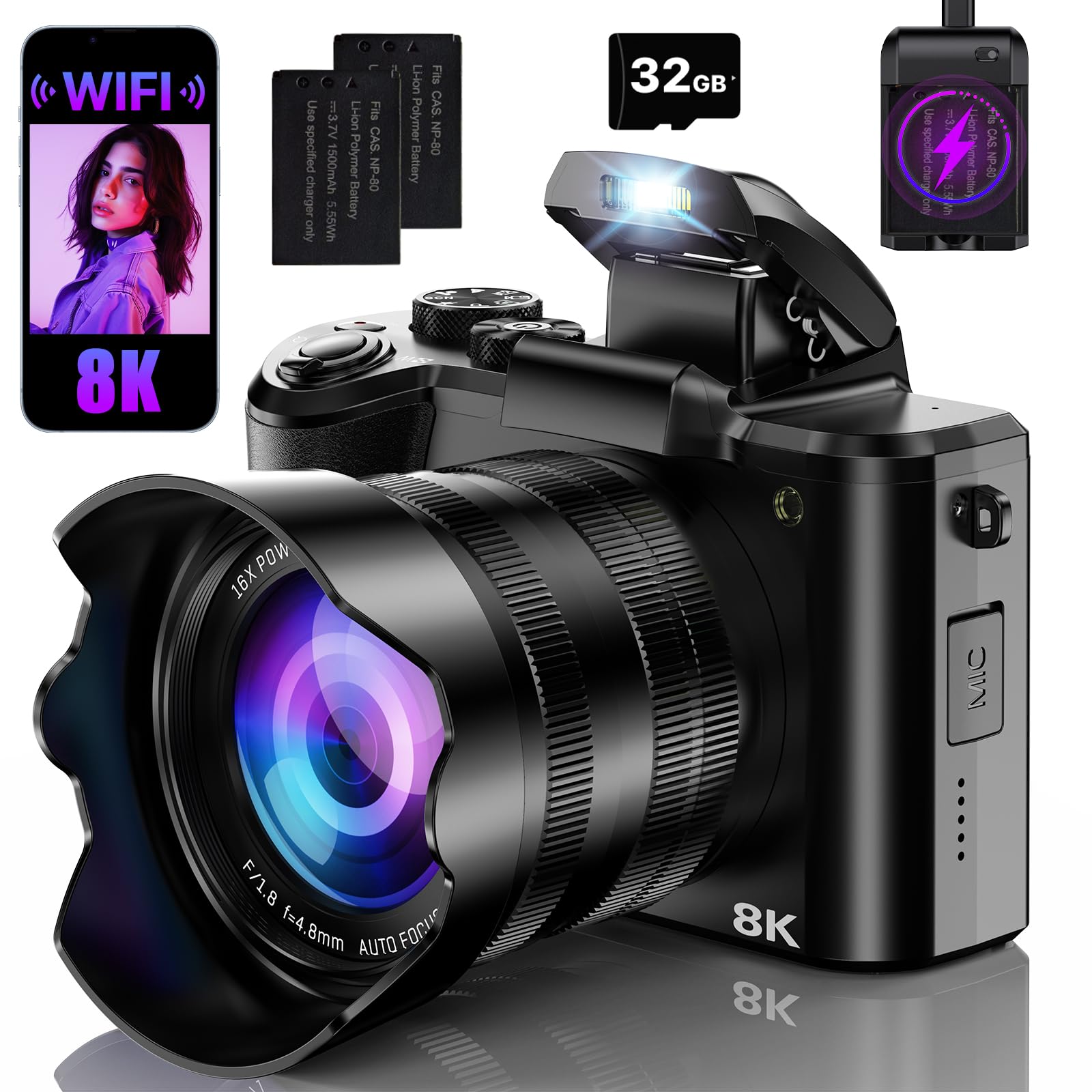
FlyFrost positions this 8K-rated compact as a modern content creation tool, and it delivers on that promise with a responsive 3.2-inch touchscreen, dual-lens design for selfies, and built-in WiFi for instant media transfers. The 88MP photo interpolation and 16x digital zoom are marketing numbers, but the real value lies in the smooth touch interface and the inclusion of two batteries plus a charging stand.
During daylight shooting, the camera produces sharp 8K-resolution video that holds up well on social media platforms. The 360-degree rotary dial gives quick access to eight shooting modes including slow motion and time-lapse, which adds creative flexibility without diving into deep menus. The anti-shake system is genuinely effective at minimizing handheld micro-jitters in well-lit conditions.
The fixed lens with digital-only zoom means you lose optical reach compared to the Kodak, making this a better fit for close-to-medium range shooting rather than distant subjects. Low-light performance shows visible noise above ISO 800. The FlyFrost is an excellent pick for vloggers and family documentarians who prioritize ease of use, WiFi sharing, and touch control over optical zoom power.
Why it’s great
- Large, bright touchscreen simplifies operation
- WiFi transfer lets you share images instantly
- Two batteries and charging stand included for extended sessions
Good to know
- Digital-only zoom cannot match optical zoom image quality
- Low-light performance degrades noticeably
- Build feels somewhat plasticky
3. Jukanur 5K 96MP Digital Camera
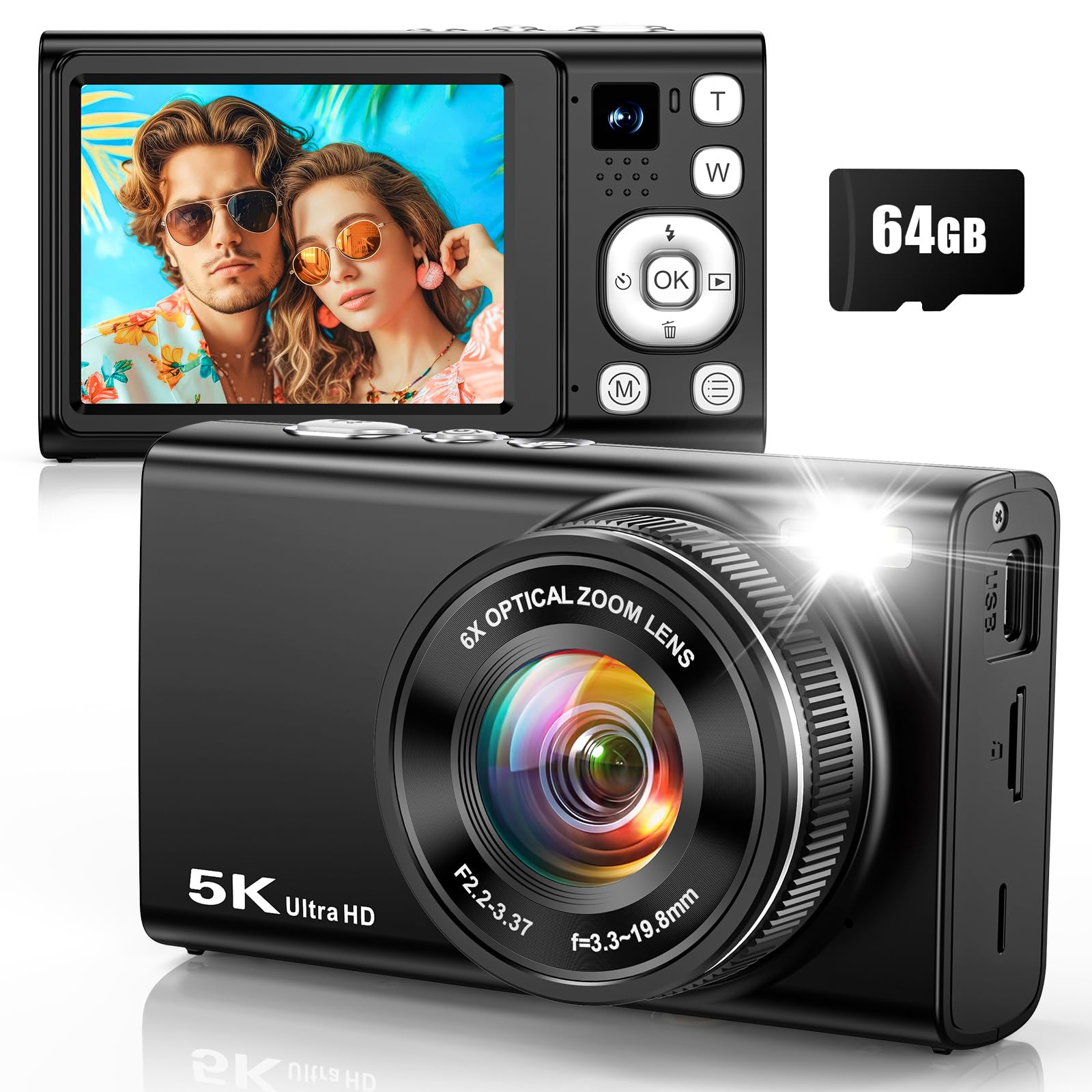
Jukanur packs an IMX415 CMOS sensor, 6x optical zoom, and a massive 64GB microSD card into a travel-friendly body that feels premium for its price bracket. The 5K video resolution outperforms many competitors that max out at 4K, and the dual-lens front-and-rear design is genuinely useful for self-portraits and vlogging without flipping the camera around.
Autofocus using contrast detection is generally snappy in good light, and the built-in flash helps fill in shadows during indoor or evening shooting. The anti-shake feature reduces jitter for handheld videos, though it won’t replace a gimbal for active walking shots. The camera comes pre-configured with helpful features like exposure compensation, white balance control, and smile detection that make it beginner-friendly straight out of the box.
Battery life hovers around two hours of continuous use, which is average for this class but manageable with the included built-in battery. Some units have reported autofocus inconsistencies, particularly in low light, so checking the return policy is wise. For the included storage capacity, optical zoom, and overall image clarity, this represents exceptional value for a first-time camera buyer.
Why it’s great
- Genuine 6x optical zoom with autofocus delivers sharp results
- Generous 64GB memory card included, ready to shoot immediately
- Dual-lens design works well for vlogging and selfies
Good to know
- Autofocus can be inconsistent in low-light conditions
- Battery life lasts roughly two hours per charge
- Maximum aperture narrows at full zoom, limiting light intake
4. Demofit 5K WiFi Vlogging Camera
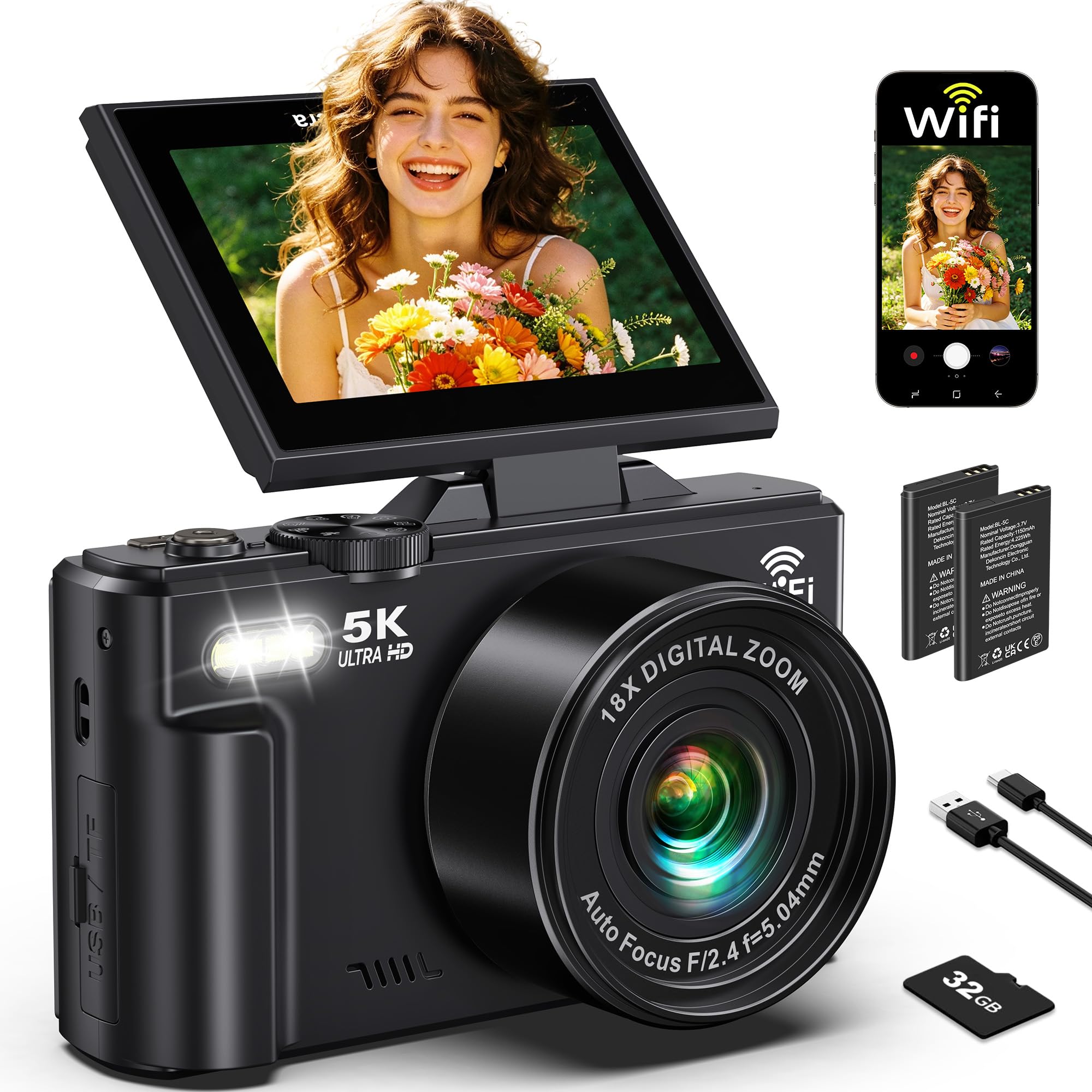
The Demofit 5K camera focuses on the vlogger experience with a 180-degree flip screen that lets you frame yourself during recording, plus built-in WiFi for cable-free image transfers to your phone. The 75MP photo resolution and 18x digital zoom are interpolated, but the 5K video capture produces genuinely detailed footage that looks clean on social feeds. Two included batteries and a 32GB card mean you can shoot for extended periods without stopping.
Autofocus performance is reliable for static subjects and moderate movement, though it struggles with fast action or sudden pans. The fill light built into the front of the camera helps compensate for the lack of a large aperture in dim environments, making indoor selfies usable without external lighting. The intuitive menu layout and lightweight chassis make this an easy recommendation for beginners who want to start a YouTube channel or document daily life.
The digital-only zoom is the main limitation here — you lose detail the further you zoom in, so this camera is best suited for subjects within 15 to 20 feet. Battery charging happens via USB-C, which is convenient for travel charging from a power bank. For the flip screen, WiFi convenience, and ready-to-shoot bundle, this is a solid choice for aspiring content creators on a tight budget.
Why it’s great
- 180-degree flip screen simplifies self-recording and vlogging
- WiFi connectivity enables quick sharing to smartphone
- Two batteries and 32GB card included for extended shooting
Good to know
- Digital zoom reduces image quality at longer distances
- Autofocus struggles with fast motion
- Low-light performance requires the built-in fill light for best results
5. Nsoela 5K Touchscreen Camera
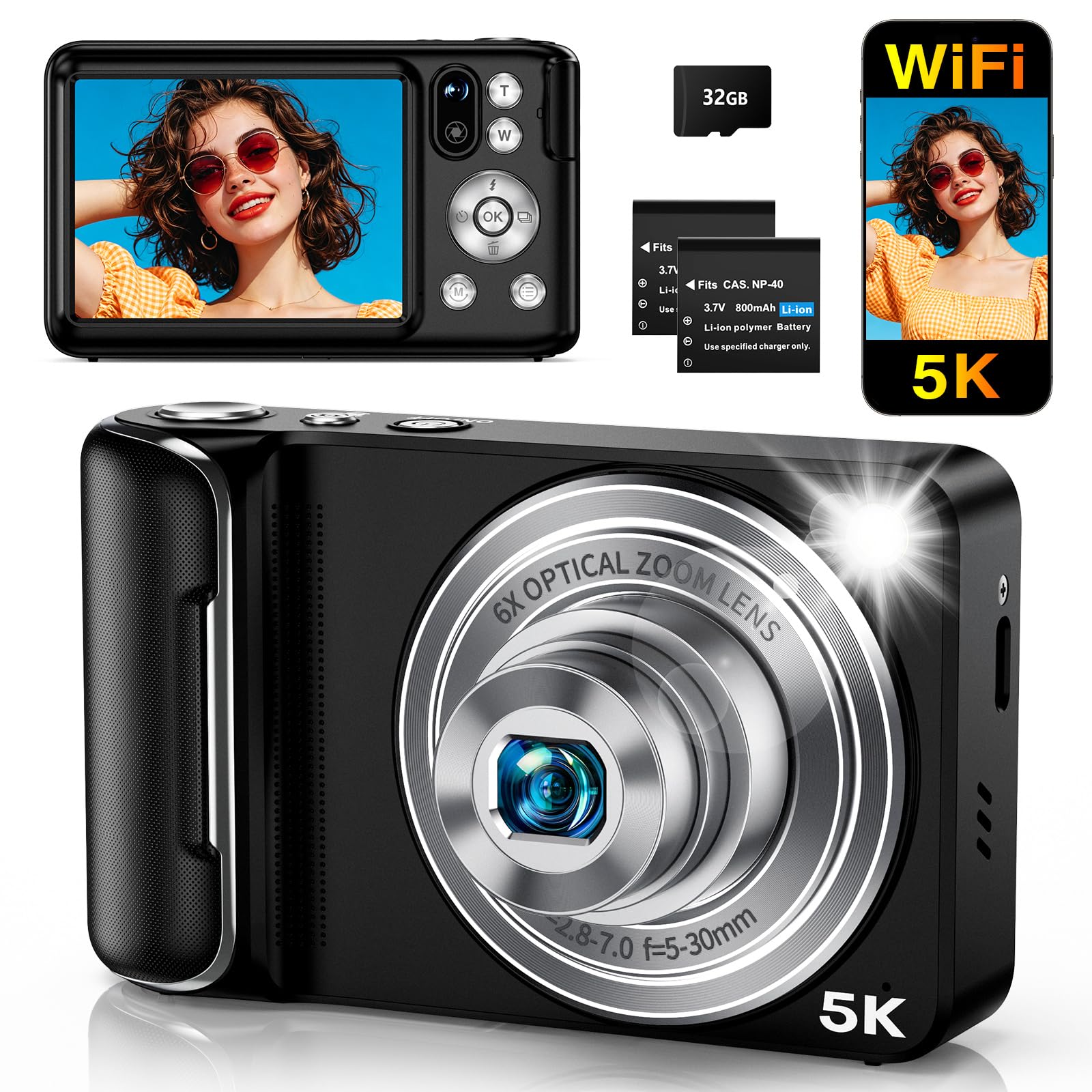
Nsoela distinguishes this 5K compact by pairing a 6x optical zoom lens with a 2.8-inch IPS touchscreen that supports pinch-to-zoom and swipe gestures for fast navigation. The 64MP sensor captures detailed stills, and the front-rear dual-camera setup eliminates the need to rotate the body for selfies. The lens cover opens automatically when powered on, protecting the glass from dust and scratches when stowed in a bag.
The built-in image stabilization reduces handheld shake noticeably, and the fast contrast-detection autofocus locks onto subjects quickly in good light. Record-while-charging support is a standout feature — you can plug into a USB-C power bank and keep filming without battery anxiety, which is rare at this price point. WiFi connectivity via the Viipulse app enables remote control and direct downloads to your phone.
Some users report that the menu layout takes a few sessions to learn, and autofocus may occasionally miss in very low contrast scenes. The build is lightweight but feels solid, and the two included batteries combined with the 32GB card provide ample shooting capacity. For touchscreen fluency, optical zoom fidelity, and uninterrupted recording capability, this camera punches above its price class.
Why it’s great
- Responsive touchscreen with pinch-to-zoom and gesture controls
- Record-while-charging via USB-C eliminates power downtime
- Automatic lens cover protects optics without a cap to lose
Good to know
- Menu system has a moderate learning curve
- Autofocus can struggle in very dim conditions
- Digital zoom beyond optical range loses detail
6. Panasonic LUMIX TZ/ZS99

The Panasonic LUMIX ZS99 (also known as the TZ99) brings a Leica-branded 24-720mm lens with 30x optical zoom into a jacket-pocket-friendly body, offering reach that no other sub-$200 camera can touch. The 20.3MP sensor captures detailed 4K video and photos, and the 5-axis Hybrid OIS effectively stabilizes the frame even when you’re zoomed in tight at a concert or sporting event. The tiltable 1840k-dot touchscreen is crisp and bright enough for outdoor framing.
Bluetooth 5.0 connectivity and a dedicated Send Image button streamline wireless transfer to your phone, and the USB Type-C port means you can charge using the same cable as your modern smartphone. The stepped zoom feature lets you jump between preset focal lengths instantly, which is invaluable when you need to reframe quickly. Macro mode delivers excellent close-up detail, making this a versatile companion for travel, nature, and event photography.
The autofocus system uses contrast detection and can be slower than phase-detection rivals in low light, and the maximum aperture narrows to f/6.4 at full zoom, requiring good light for sharp results at 720mm. Battery life is rated at roughly 300 shots, which is solid for a compact. The ZS99 offers the best lens quality and zoom reach in this guide, making it the premier choice for travelers who refuse to compromise on focal length.
Why it’s great
- 30x optical Leica zoom with 24-720mm equivalent focal length
- 5-axis Hybrid OIS keeps telephoto shots steady
- Compact body with tilt touchscreen and Bluetooth sharing
Good to know
- Aperture narrows significantly at full zoom, reducing low-light capability
- Autofocus uses contrast detection, which can lag in dim conditions
- No built-in electronic viewfinder on this model
7. Sony RX100 VII
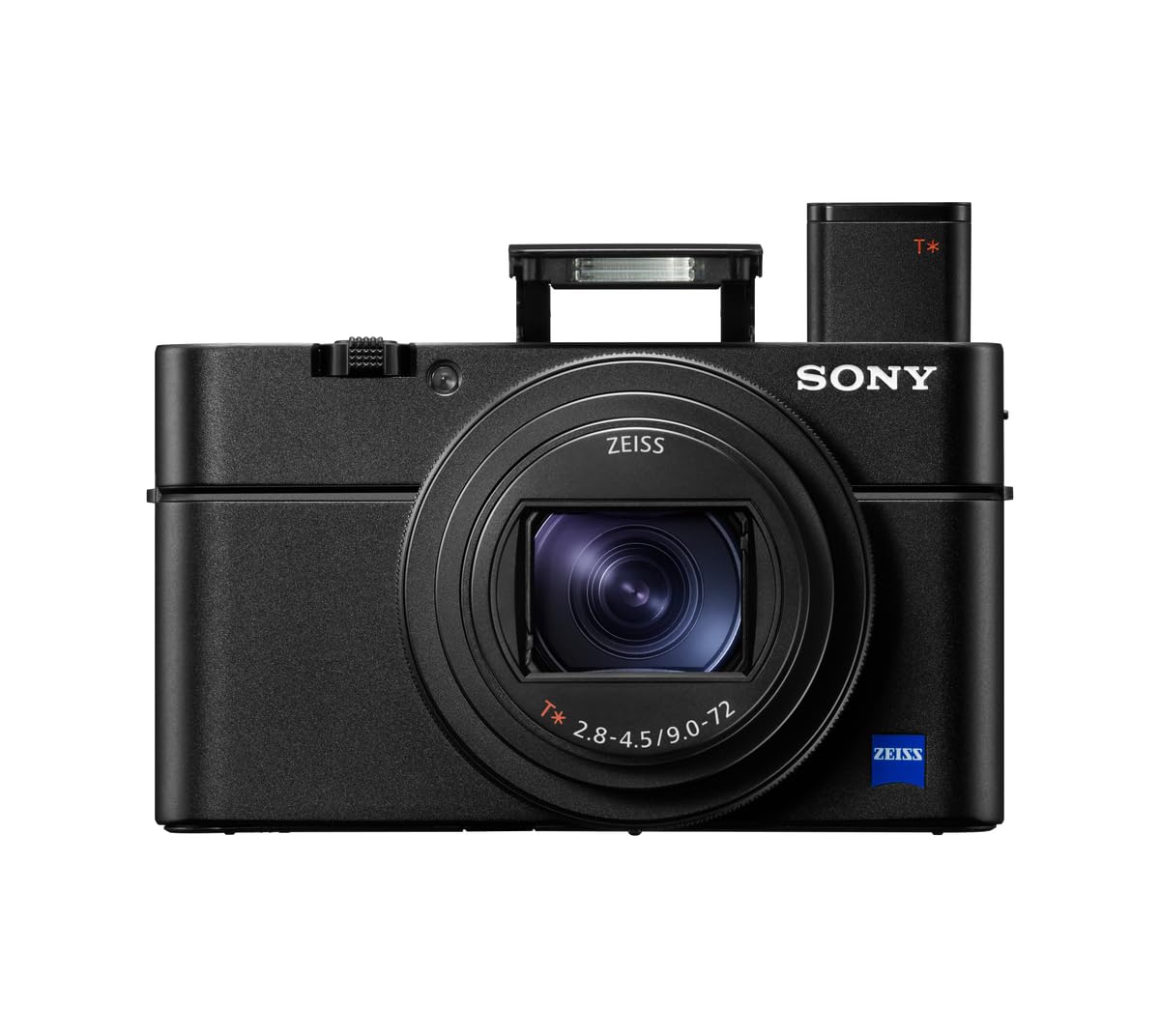
The Sony RX100 VII sits at the absolute top end of what can be considered a compact camera, featuring a 1.0-type stacked CMOS sensor that produces image quality far beyond any other entry in this guide. The 24-200mm f/2.8-4.5 Zeiss Vario-Sonnar T lens offers a versatile zoom range with a fast aperture that maintains brightness throughout. The phase-detection autofocus system with 357 points locks onto subjects in 0.02 seconds, making it the fastest-focusing camera here by a wide margin.
4K HDR video with support for S-Log3 and a microphone jack elevate this from a casual camera to a serious filmmaking tool. The 20 fps blackout-free burst shooting with real-time tracking and Eye AF for both humans and animals makes it capable of capturing action that would overwhelm lesser cameras. The pop-up electronic viewfinder and tilt screen give you flexible framing options in bright sunlight or awkward angles.
All of this performance comes at a premium that exceeds the budget bracket by a significant margin, and the lens does not have the extreme reach of the Panasonic ZS99. Battery life is rated at about 220 shots, which is below average. For photographers who want pocketable professional-grade image quality, autofocus speed, and video features, the RX100 VII is in a class of its own, though it demands a much higher investment.
Why it’s great
- 1.0-type stacked CMOS sensor produces exceptional image quality
- 0.02-second phase-detection autofocus with real-time Eye AF
- 4K HDR video with S-Log3 and external microphone input
Good to know
- Premium price far exceeds the standard budget camera class
- Battery life is limited to roughly 220 shots per charge
- Zoom range is shorter than the 30x Panasonic competitor
FAQ
How important is optical zoom for a budget camera?
Can a two-hundred-dollar camera replace my phone?
Do I need 4K video at this price point?
How long should the battery last on a budget digital camera?
Final Thoughts: The Verdict
For most users, the $200 digital camera winner is the Kodak PIXPRO AZ255-BK because its 25x optical zoom and optical image stabilization deliver reach and clarity that outperform any competitor near its price. If you want touchscreen convenience and WiFi sharing for quick social media uploads, grab the FlyFrost 8K Digital Camera. And for budget-conscious beginners who want optical zoom and a complete kit out of the box, nothing beats the Jukanur 5K 96MP Camera.