
Our readers keep the lights on and the weekend projects moving. As an Amazon Associate, I earn from qualifying purchases.
Specs are compiled from manufacturer listings and verified buyer reviews and can change over time — please confirm the key details on the product page before buying.
If you are shopping for a 200-watt solar panel, the real question is which one actually delivers that power when the sun hits your roof or campsite — because rated watts and real-world watts are often two different numbers. This guide breaks down the top options by build quality, efficiency tech, and actual buyer-reported output so you get the panel that earns its keep.
I’m Rikta — the founder and writer behind FitlyFast. This guide is built by comparing the manufacturers’ published specifications and the patterns across verified customer reviews, so you get each pick’s real strengths and trade-offs instead of marketing spin.
Whether you are powering an RV, a shed, or an off-grid cabin, the best 200 watt solar panel for you depends on how it handles shade, how much it weighs, and how much power it actually pumps out on a cloudy afternoon. 200 watt solar panel
Quick Picks
- Callsun N-Type 16BB 200W Bifacial Solar Panel — Best Overall
- STAR 200 Watt Solar Panel (Frameless) — Best Value
- HQST 200W Ultra-Light Portable Solar Panel — Lightest Portable
- Renogy 200W E.Flex Portable Solar Panel — Best Portable Features
- JJN Bifacial 200 Watt Solar Panel — Sleek Bifacial
- RICH SOLAR 200W 12V N-Type Panel — Built Tough
- BougeRV 24V N-Type 16BB 200W Bifacial Solar Panel — 24V Native
- SOKIOVOLA N-Type 16BB 200W Portable Solar Panel — Versatile Portable
How To Choose The Best 200 Watt Solar Panel
A 200-watt solar panel is a flexible building block for small off-grid systems, but not all 200W panels are built the same. Here are the specs that separate a great buy from a frustrating one.
Cell Technology: N-Type vs. P-Type
The solar cells inside the panel dictate its efficiency and long-term performance. N-Type cells (often paired with 16 busbars or “16BB”) resist light-induced degradation, perform better in high heat, and typically hold more than 80% of their output after 25 to 30 years. Older P-Type cells are cheaper but drop off faster and lose more power as the panel heats up.
Bifacial vs. Monofacial Design
A bifacial panel captures sunlight from both the front and the back, using reflected light off the ground or a white roof to add up to 30% more energy. A standard monofacial panel only generates from the top side. If you mount panels flat on a dark RV roof, bifacial gains shrink; if you ground-mount or use a reflective surface, bifacial is a big advantage.
Portable vs. Rigid Frame
Portable folding panels (weighing around 11 to 16 pounds) are meant for camping, tailgating, or emergency backup — you set them on the ground and angle them toward the sun. Rigid framed panels (23 to 24 pounds) are built for permanent roof mounting on an RV, van, or home and can withstand high wind and snow loads. Choose based on whether you carry the panel daily or bolt it down once.
Quick Comparison
| Model | Best For | Cell Type | Weight | Dimensions | Amazon |
|---|---|---|---|---|---|
| STAR 200W Frameless | Low-maintenance rooftop | Monocrystalline | 23 lb | 53.7″ x 30.3″ | Amazon |
| JJN Bifacial 200W | Maximizing ground-reflected light | N-Type 16BB | 23.15 lb | 30.3″ x 53.7″ | Amazon |
| HQST 200W Ultra-Light Portable | Car camping with a power station | N-Type 16BB | 11 lb | 3″ x 23″ x 26″ (folded) | Amazon |
| Callsun N-Type 16BB Bifacial | Tight van roofs & partial shade | N-Type 16BB | 23.8 lb | 51.3″ x 30.3″ | Amazon |
| SOKIOVOLA 200W Portable | Backup for multiple power station brands | Monocrystalline | 16.31 lb | 78.68″ x 23″ (unfolded) | Amazon |
| RICH SOLAR 200W N-Type | Permanent RV roof arrays | N-Type 18BB | 24 lb | 58.7″ x 26.8″ | Amazon |
| BougeRV 24V N-Type Bifacial | 24V battery systems & golf carts | N-Type 16BB | — | 50.7″ x 30.2″ | Amazon |
| Renogy 200W E.Flex Portable | Direct device charging while camping | N-Type 16BB | 13.9 lb | 23.72″ x 22.99″ (folded) | Amazon |
In‑Depth Reviews
1. Callsun N-Type 16BB 200W Bifacial Solar Panel

The bifacial panel that keeps generating even when half of it is in shade.
You get the dual benefit of N-Type 16BB cells for 25% efficiency and a transparent backsheet that lets the panel pull power from reflected light off the ground — boosting total output by up to 30%. That matters if you mount it on a light-colored van roof or a ground rack. Unlike the rigid single-zone panels, this one uses a TwinCell anti-shade design that splits the panel into two independent halves: if a vent or antenna shades one section, the other keeps pumping power. Buyers report that 7 of these panels average 275-300W each on sunny days, consistently overproducing their 200W rating.
At 23.8 pounds and 51.3 x 30.3 inches, it is compact enough for Class B vans yet carries a 25-year performance commitment that guarantees at least 84.5% output after 25 years. The IP68 waterproof rating (the highest dust and water seal) means rain and hose-downs are no concern. The catch: it is a rigid framed panel, so it is not the one you throw in the trunk for a weekend campout — that weight and size are meant for permanent or semi-permanent mounting.
Why It Stands Out
- Bifacial design captures up to 30% more energy from ground reflection
- TwinCell anti-shade technology keeps half the panel running when the other is blocked
- Low temperature coefficient of -0.3%/K (loses less power in summer heat)
One Trade-Off
- At 23.8 lb, it is too heavy for portable use — built for rooftop or ground-mount only
Reach for it if: you have a permanent mounting spot with some ground reflection and you hate losing power to afternoon shade.
Look elsewhere for: a panel you can fold up and carry to a campsite.
2. STAR 200 Watt Solar Panel (Frameless)
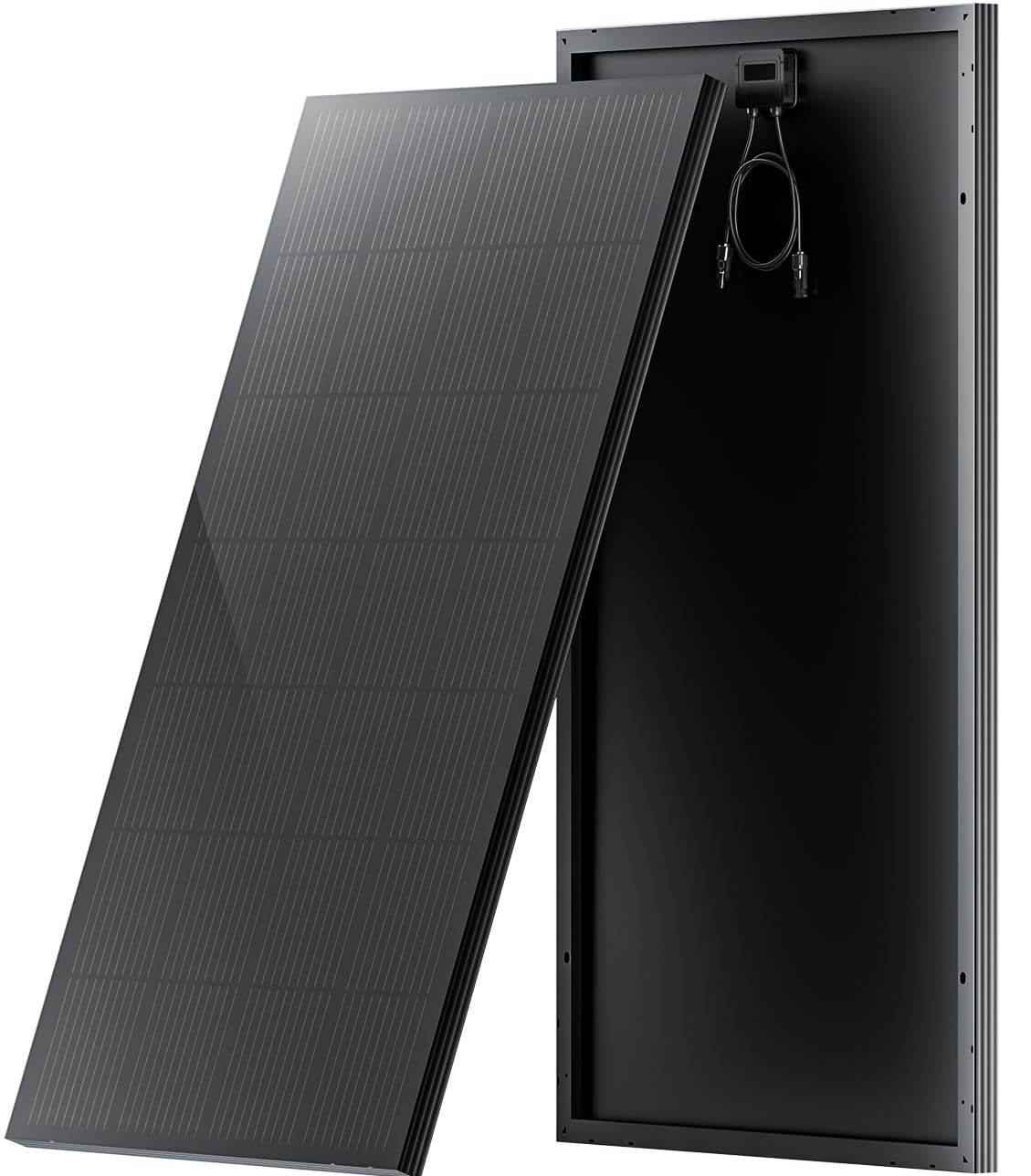
A frameless panel that uses rain to self-clean — saving you yearly maintenance work.
Unlike most panels with an aluminum edge where dust and water can pool, the STAR Cleanedge Series has no frame at all. That means rain washes debris straight off the glass, and the maker claims a 15% increase in power generation compared to normal solar panels simply because there is less dirt buildup blocking the light. Owners mention that 4 of these 200W panels in series peak at 965-988W (107-109V), so you are getting real-world output that matches the 200W rating. At 23 pounds and 53.7 x 30.3 inches, it is a standard rigid footprint that fits neatly on a Ram Promaster roof alongside an AC unit, according to one owner.
The 25% high-efficiency monocrystalline cells are ETL, ISO9001, and CE certified. You also skip the risk of climbing onto a roof to scrub panels — the maker claims this saves on cleaning costs, though that figure assumes professional cleaning rates. The trade-off: a few buyers noted the laminate at the corners began to separate after a few months, and some struggled to reach customer support. It is a strong value, but inspect it on arrival.
What Works
- Frameless design sheds dust and snow without manual cleaning
- Buyers measure 965-988W from four panels in series
- Light enough (23 lb) for one-person ladder installation
What to Watch
- Some reports of corner laminate separation after a few months
- Customer service contact is limited
Grab it for: a low-fuss rooftop array where you want zero cleaning hassle.
skip it if: you want a long track record of customer support for warranty claims.
3. HQST 200W Ultra-Light Portable Solar Panel
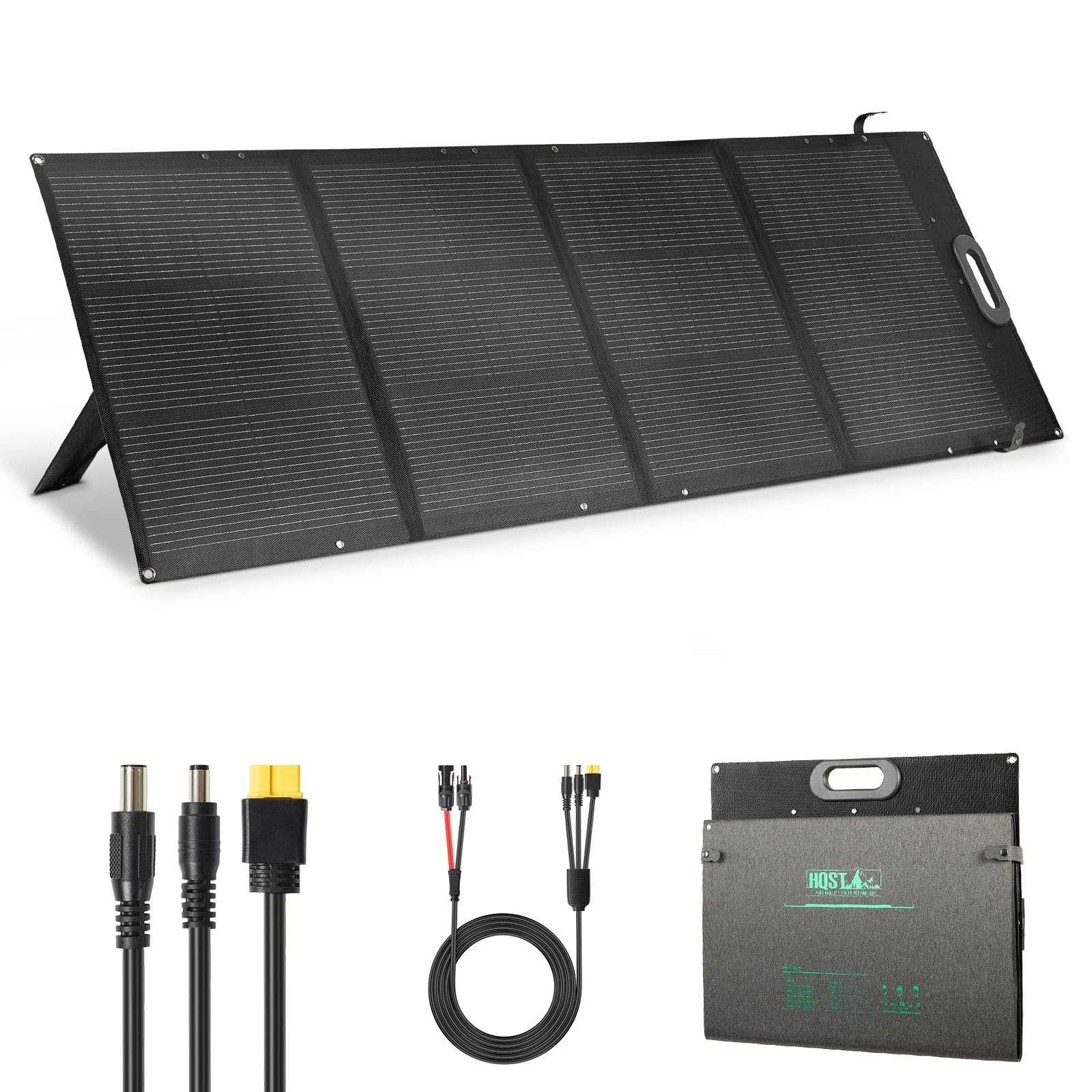
At 11 pounds, this folds down to just under two inches thick — lighter than a laptop bag.
This is the panel you grab with one hand on the way out to the campsite. The HQST uses next-gen 16BB N-Type cells to hit up to 25% efficiency, and it weighs 11 pounds versus the Callsun rigid panel at 23.8 pounds. When folded, it measures just 3 x 23 x 26 inches and 1.97 inches thick. It includes a 4.9-foot 3-in-1 adapter cable with XT60, DC7909 (8mm), and DC5521 connectors, so it works with most popular power stations including Jackery, EcoFlow, BLUETTI, and Goal Zero. The two adjustable kickstands let you set up at a 40-60 degree angle in seconds.
The durability here is surprising for something this light: the fully laminated construction with a PVDF coating resists scratches, and the IP67 waterproof rating handles rain and splashes. One long-term buyer reported that after 7 years, the panel still outputs up to 180W in parallel. The catch: the panel is 11 pounds, but the unfolded dimensions (3 x 23 x 26 inches) mean you still need a clear spot on the ground. It is not backpacking gear — it is car-camping or emergency kit territory.
Why It Wins
- 11 lb makes it the lightest 200W panel in this lineup
- 7-year buyer report shows it still outputs 180W — strong long-term performance
- IP67 rating and PVDF coating for rain and scratch resistance
The Catch
- You need ground space to unfold it — not for rooftop mounting
Perfect for: car-campers and emergency preppers who value light weight and fast setup.
Not for: anyone needing a bolt-down rooftop panel.
4. Renogy 200W E.Flex Portable Solar Panel
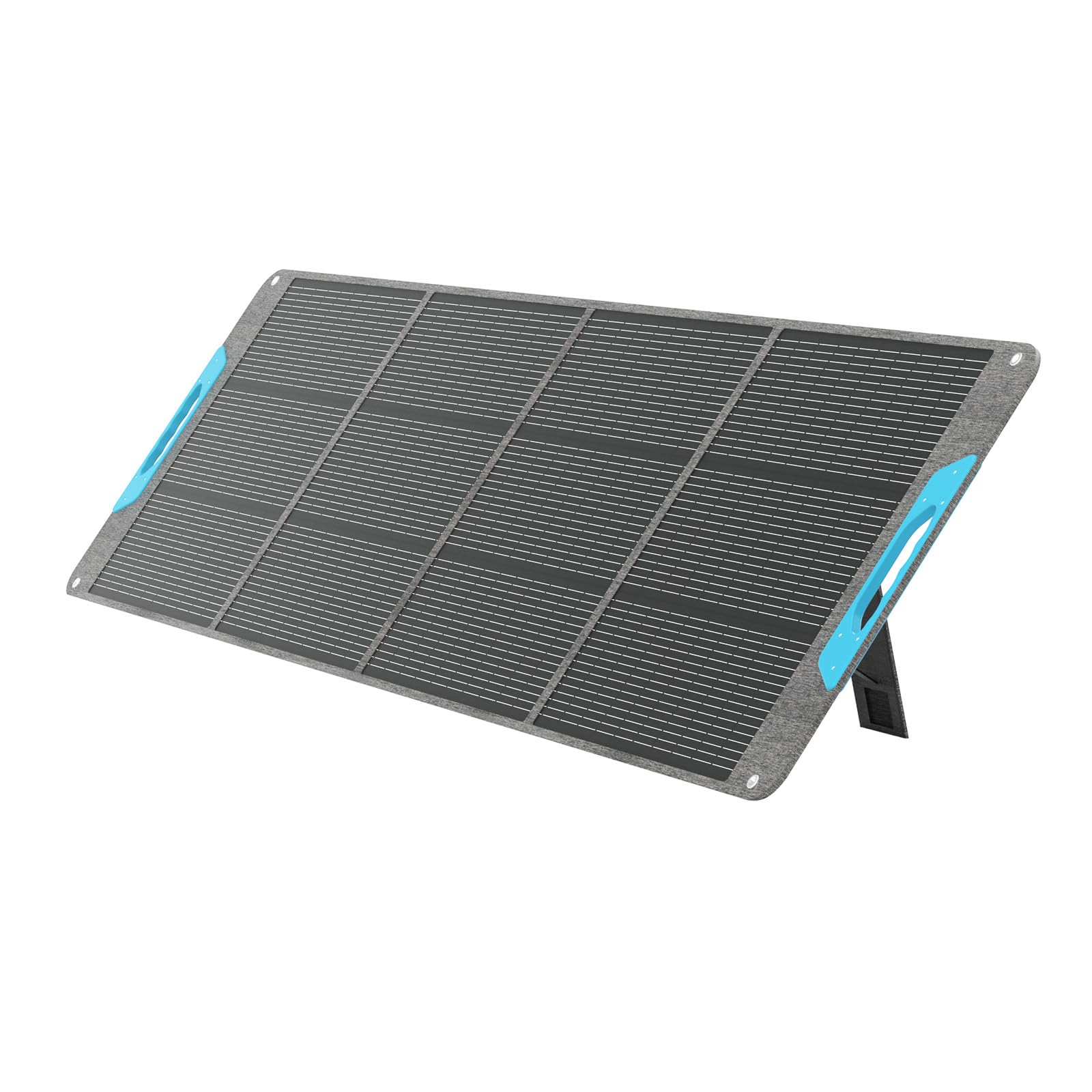
A foldable panel with built-in USB and USB-C ports so you charge devices directly from the panel itself.
Renogy’s E.Flex does something most portable panels skip: it packs a USB-C PD port (45W max) plus two USB-A ports (18W and 15W) right into the panel. That means you can charge a phone, tablet, and laptop straight from the panel without needing a separate power station in the middle. The 16BB N-Type cells deliver 25% efficiency, and it weighs just 13.9 pounds — heavier than the HQST but still light enough to carry. The folded size is backpack-friendly at 23.72 x 22.99 x 1.97 inches, and a magnetic closure replaces the usual snap or Velcro that wears out.
Customers note that in bright Florida sun, two panels in parallel exceed 469W and in series hit 579W, so the N-Type cells clearly over-deliver. The three-angle kickstand (40, 50, 60 degrees) helps you dial in the perfect sun angle. A 2-year material and workmanship warranty backs it, and it is UL 61730 certified for safety. The trade-off: real-world flat-on-truck output sits around 154W (77% efficiency with an extension cable), so expect less than 200W unless you angle it perfectly. Also, the leg pads tend to stick to the back of the panel during setup, which a few owners found annoying.
what separates it
- Built-in USB-C PD 45W and dual USB-A ports for direct device charging
- Magnetic closure and quadfold design for quick pack-and-go
- Reviewers point out over 200W output in ideal sun (469W parallel from two panels)
Real-World Reality
- Flat-mounted output drops to ~154W — angle it up for full power
- Kickstand leg pads stick to the panel back, making unfolding slightly frustrating
Best for: campers who want to charge phones and laptops straight from the panel without a power station.
Not ideal if: you need maximum wattage from a flat roof mount — a rigid panel performs better there.
5. JJN Bifacial 200 Watt Solar Panel

A transparent back lets this panel harvest sunlight from both sides — adding power without adding size.
The JJN bifacial panel uses 16BB N-Type cells to hit over 25% efficiency, and the transparent backsheet means it pulls energy from reflected light off the ground or a white roof. This is a genuine advantage over the HQST portable panel, which is monofacial and only captures light from the front. Shoppers say that 4 of these panels generate 880W (220W per panel, exceeding the 200W rating), so the bifacial effect is measurable. The black corrosion-resistant aluminum frame handles wind loads up to 2400Pa and snow loads up to 5400Pa, making it rugged for permanent installation.
At 23.15 pounds and 30.3 x 53.7 inches, it is essentially the same footprint as the STAR panel but with the bifacial advantage and a 10-year workmanship warranty plus an 88.9% output warranty at 30 years. The pre-drilled holes on the back make mounting straightforward. The catch: a few buyers spotted small dots of damaged micro-cells on the panel surface — they reported no loss in output, but the cosmetic imperfection bothered some. It is a detail check on arrival.
Why It Works
- Bifacial design delivers measured 220W per panel (above rated 200W)
- 30-year output warranty guarantees 88.9% of rated power at year 30
- 2400Pa wind and 5400Pa snow load ratings for harsh weather
Watch Out For
- Occasional micro-cell blemishes on the panel surface (cosmetic, not performance)
Choose it if: you want a bifacial panel with the longest output warranty in this list.
Pass if: you are picky about perfectly uniform cell appearance from the start.
6. RICH SOLAR 200W 12V N-Type Panel

A heavy-duty rigid panel that survived a 95 mph hailstorm with no damage, according to a buyer.
It pushes 10.9 amps of current, the highest amperage in this lineup, because it uses a slightly larger panel surface at 58.7 x 26.8 inches. The 1.3mm anodized aluminum frame with tempered glass and anti-reflective coating is built to handle wind, snow, and debris. One owner reported that their van roof panels survived a 95 mph storm with hail and debris that busted the windshield — the panels came out with zero scratches.
The 25-year limited power output warranty and 5-year material/craftsmanship warranty add confidence. The 14 pre-drilled holes make installation easy with standard Z-brackets or tilt mounts. Buyers report that on clear days the panel peaks at 188W, and on partly cloudy days it can spike to 220W due to cloud-edge effects. The trade-off: at 24 pounds, this is the heaviest panel here, compared with the STAR frameless at 23 pounds and the Callsun bifacial at 23.8 pounds, and the 58.7-inch length may overhang on smaller vans.
What You Get
- Highest amperage in the list at 10.9A for fast 12V battery charging
- 1.3mm aluminum frame and tempered glass survived 95 mph hail, per a buyer
- 18BB N-Type cells for improved crack resistance and current collection
What To Consider
- 58.7-inch length may be too long for some Class B vans
- 24 lb makes it the heaviest pick for rooftop mounting
Solid choice for: RV owners who drive through harsh weather and want a panel that can take a beating.
pass on it if: you have a short roof — the 58.7-inch length requires space.
7. BougeRV 24V N-Type 16BB 200W Bifacial Solar Panel

A single panel that charges a 24V battery directly — no series wiring needed.
Most 200W panels put out around 18V, so you need two in series to reach 24V. The BougeRV panel has an open circuit voltage of 36.4V, meaning one panel alone charges a 24V battery system without the extra wiring and current losses of series connections. That is a clean setup for golf carts, marine systems, or any 24V lithium battery bank. It is bifacial, so the transparent back captures reflected light for up to 30% more output, and the N-Type 16BB cells hit 25% efficiency. The panel also uses a parallel anti-shade design: if one half of the panel is shaded, the other half keeps generating independently, similar to the Callsun’s TwinCell design.
Owners mention that three panels on a Sprinter roof max out at 470W (78% of rated), and some experienced condensation inside the panels — though the seller replaced them after some back-and-forth. Other owners note that customer service can be slow, and one person received cables with swapped positive and negative connectors. The panel itself reaches roughly 170W in good sun, which is below the 200W rating but typical for real-world conditions. The 10-year product tech support is a nice safety net, but the inconsistency in support experience gives pause.
Biggest Advantage
- 36.4V open circuit voltage charges 24V batteries without series wiring
- Bifacial design and anti-shade parallel architecture
Honest Concerns
- Customers note ~170W output in real use (below 200W rated)
- Customer service is inconsistent; some received miswired cables
- Condensation inside panels reported by multiple owners
Best for: 24V system builders who want a single-panel solution without series wiring.
Not for: buyers who want reliable customer service and consistent output right at 200W.
8. SOKIOVOLA N-Type 16BB 200W Portable Solar Panel
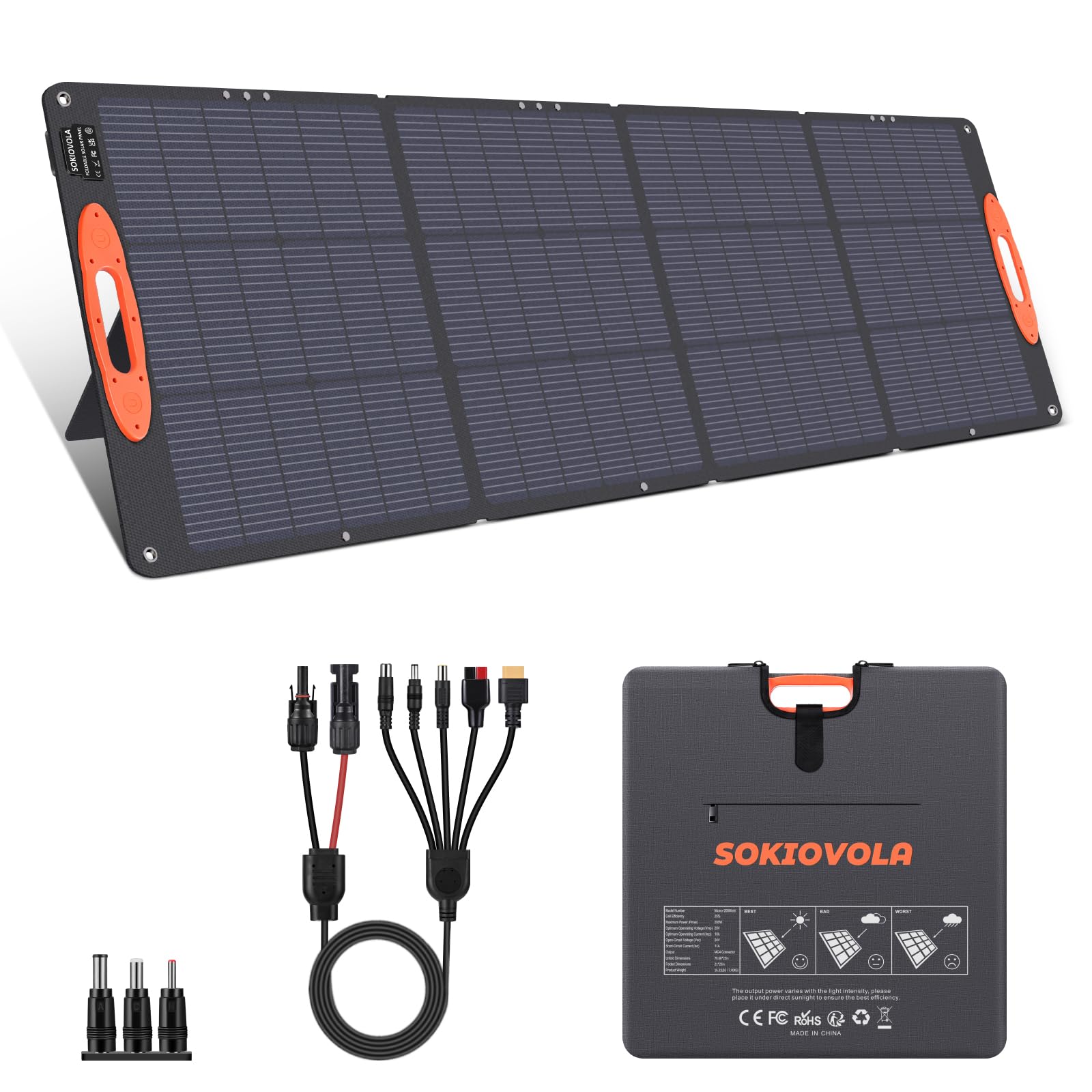
A foldable panel that comes with a carrying bag and five connector types so it fits almost any power station.
The SOKIOVOLA includes a 10.49-foot 5-in-1 solar extension cable with XT60, DC5521, Anderson, DC7909 (8mm), and DC8020mm connectors — you are unlikely to need an adapter for any modern power station. The A+ grade monocrystalline cells claim 25% efficiency, and at 16.31 pounds it is heavier than the HQST and Renogy portable options but still manageable with the built-in magnetic handle. The folded size is 21 x 23 inches, making it compact for trunk storage. Buyers in SoCal report the panel reaches 177W (88-89% efficiency) in full sun, and one owner noted it maxed 170-180W in 95°F heat — respectable for a portable.
The IP68 waterproof rating (better than IP67) means it handles submersion briefly, though you likely would not test that. The ETFE coating resists scratches and UV damage better than standard PET laminates. The 12-month warranty and 30-day refund guarantee are shorter than the rigid panels, and a few owners flagged that the plastic substrate feels thin and the kickstand legs retract very strongly, making them slightly awkward to deploy. Still, for the price, it undercuts premium name-brand portables while delivering similar real-world wattage.
What You Get
- 5-in-1 adapter cable fits virtually every portable power station brand
- IP68 waterproof rating (top-tier dust and water protection)
- Buyers see 170-180W in peak sun — solid for a portable panel
Trade-Offs
- 16.31 lb is heavier than the HQST (11 lb) and Renogy (13.9 lb) portables
- Some owners find the kickstand legs overly strong and the plastic backsheet a bit flimsy
Great for: anyone who wants a one-cable-solves-all portable panel and does not mind a few extra pounds.
Not for: ultralight backpackers who measure every ounce of their gear.
Understanding the Specs
N-Type vs. P-Type Cells
The cell type inside a panel determines how much power you lose as the panel heats up. That means on a hot summer roof, an N-Type panel will lose less power. N-Type also resists light-induced degradation (LID), so the panel stays closer to its original rating after years of use. Most premium and mid-range panels now use N-Type cells with 16 or 18 busbars (the thin metal strips that collect current from the cell), which also reduces micro-cracks from thermal expansion and handling.
Bifacial Gain
A bifacial panel collects sunlight from both sides. The front captures direct sun, and the back captures light that bounces off the ground, a white roof, or snow. This can add 10% to 30% more energy compared to a standard monofacial panel of the same wattage rating. Bifacial gain is highest when the panel is mounted at an angle above a reflective surface (like gravel or a white TPO roof) and lowest when it is laid flat on a dark surface. If you ground-mount or use a light-colored van roof, bifacial panels like the Callsun or JJN makes sense. If you are bolting panels flat on a black rubber RV roof, the bifacial benefit shrinks considerably.
FAQ
Can a 200W solar panel charge a 12V battery?
How much power does a 200W panel produce in a day?
Can I connect two 200W panels together?
What is the difference between a rigid and a portable 200W panel?
Do I need a special charge controller for a 200W panel?
How long do 200W solar panels last?
Can I use a 200W panel to run an RV air conditioner?
What does IP67 or IP68 mean on a solar panel?
Is a 200W panel enough for a CPAP machine on a camping trip?
Does a bifacial 200W panel really produce more than 200W?
Final Thoughts: The Verdict
If you want one dependable pick, the best 200 watt solar panel winner is the Callsun N-Type 16BB Bifacial because it combines the highest real-world over-performance with anti-shade technology and a 25-year output guarantee. If you need a portable panel that weighs next to nothing, grab the HQST 200W Ultra-Light Portable. And for a permanent RV roof array that takes a beating, the standout is the RICH SOLAR 200W N-Type.
How We Picked
We do not accept paid placement. Every pick is matched to a real buyer and a real use-case; we do not hands-on test units.
Sources & Methodology
Specifications: manufacturer listings and product documentation. Review insights: verified customer reviews, as of July 2026. Pricing: not shown on this page (it changes often); check the current price via the retailer link.
As an Amazon Associate, FitlyFast earns from qualifying purchases. This does not affect which products we feature.