
Our readers keep the lights on and the weekend projects moving. As an Amazon Associate, I earn from qualifying purchases.
Your next storage upgrade is a fork in the road. One path leads to a tired Gen4 drive that feels fast for a year. The other puts you behind a PCIe Gen5 monster that chews through 4K ProRes files and game assets faster than your CPU can ask for them. The deciding factor isn’t just capacity—it’s the interface generation and the NAND architecture underneath.
I’m Rikta — the co-founder and writer behind FitlyFast. I’ve spent dozens of hours dissecting controller specs, NAND type, TBW endurance ratings, and real-world thermal behavior across a broad spectrum of 2TB NVMe drives to separate the genuine performers from the spec-sheet mirages.
This guide ranks the top SSDs by real workflow value, helping you find the best 2tb nvme ssd for your desktop, laptop, or PS5 without wasting money on speed you cannot actually use.
How To Choose The Best 2TB NVMe SSD
A 2TB NVMe SSD is a multi-year investment in your computer’s responsiveness. To avoid buyer’s remorse, you need to look past the bold numbers on the front of the box and understand what actually drives real-world performance.
PCIe Generation: Gen4 vs. Gen5
This is the single most important decision. PCIe Gen 5 drives can reach sequential read speeds of up to 14,900 MB/s—more than double the Gen4 ceiling. However, they require a compatible motherboard and run hotter. If you are a video editor moving huge files or a gamer who wants the absolute fastest level loads, Gen5 is worth the premium. For the vast majority of users and PS5 upgrades (which are capped at Gen4), a fast Gen4 drive is the sweet spot.
NAND Type and TBW Endurance
Look for TLC (Triple-Level Cell) NAND. It offers a better balance of speed, endurance, and cost than the slower QLC (Quad-Level Cell) alternatives. The TBW (Terabytes Written) rating tells you how much data you can write to the drive over its lifetime before it’s likely to fail. A 2TB TLC drive should have a minimum of 600 TBW; premium models often exceed 1,200 TBW for heavy creative workloads.
Thermal Management
High-speed NVMe drives generate significant heat under load. If they hit their temperature ceiling, the controller throttles speed to protect itself, which defeats the purpose of a fast drive. Drives with built-in graphene heat spreaders, aluminum heat sinks, or advanced thermal control algorithms maintain peak performance longer. Ensure your motherboard has a dedicated M.2 heatsink, or budget for an aftermarket one.
Quick Comparison
On smaller screens, swipe sideways to see the full table.
| Model | Category | Best For | Key Spec | Amazon |
|---|---|---|---|---|
| WD_Black SN8100 | Gen5 Flagship | Content creators & power users | 14,900 MB/s Read | Amazon |
| Samsung 990 PRO | Gen4 Premium | High-end gaming & video editing | 1,200 TBW Endurance | Amazon |
| BIWIN Black Opal NV7400 | Gen4 High-Speed | Budget-conscious power users | 7,450 MB/s Read | Amazon |
| fanxiang S880E | Gen4 PS5 Choice | Gamers & PS5 upgrades | 7,100 MB/s Read | Amazon |
| Bestoss GM988 | Gen4 Value | Everyday multi-tasking & gaming | 7,350 MB/s Read | Amazon |
| Kingston NV3 | Gen4 Reliable | Budget-friendly upgrades | 6,000 MB/s Read | Amazon |
| Fikwot FX660 | Gen4 Entry | Entry-level Gen4 builds | 5,200 MB/s Read | Amazon |
| Crucial P310 | Handheld Console | Steam Deck & ROG Ally | M.2 2230 Form Factor | Amazon |
| Crucial P510 | Gen5 Entry | Gen5 performance on a budget | 11,000 MB/s Read | Amazon |
In‑Depth Reviews
1. WD_Black SN8100 2TB
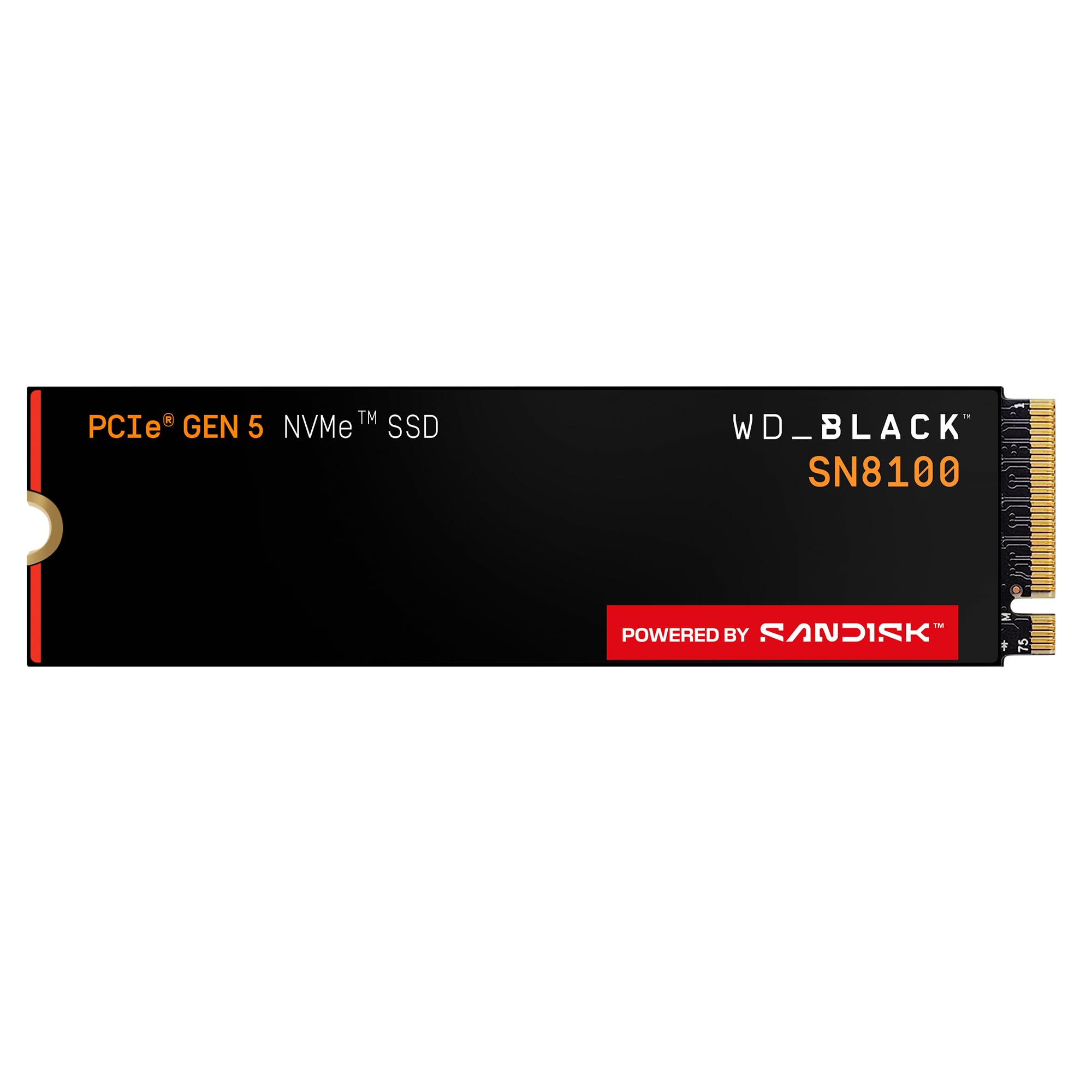
The WD_Black SN8100 represents the bleeding edge of consumer NVMe storage. Leveraging PCIe Gen 5.0×4 bandwidth, it delivers sequential reads of up to 14,900 MB/s and writes up to 14,000 MB/s on the 2TB model. That’s nearly double the throughput of the previous Gen4 flagship, which translates to near-instant game level loads and zero wait time when moving large video projects.
Built on BiCS6 TLC 3D NAND, the SN8100 offers a staggering 1,200 TBW endurance for the 2TB variant, ensuring longevity under heavy creative and AI workloads. The average operating power of just 7.5W also makes it one of the most power-efficient Gen5 drives on the market, keeping thermals in check without aggressive throttling.
Users report Windows boot times dropping to under three seconds and complete elimination of micro-stuttering in demanding games. It requires a Gen5 motherboard to hit full speed, but even installed in a Gen4 slot, it remains a formidable performer. This is the drive for anyone who wants to future-proof their build today.
Why it’s great
- Industry-leading 14,900 MB/s read speeds
- Power efficient under high load
- Excellent 1,200 TBW endurance rating
Good to know
- Requires PCIe Gen 5 motherboard for full speed
- Premium tier pricing reflects the cutting-edge tech
2. Samsung 990 PRO 2TB

The Samsung 990 PRO remains the gold standard for Gen4 NVMe storage. With sequential read speeds up to 7,450 MB/s and write speeds up to 6,900 MB/s, it saturates the PCIe 4.0 interface completely. For gamers and video editors running Gen4 systems, this drive offers no-compromise performance that competes directly with many entry-level Gen5 drives.
Samsung’s in-house V-NAND and a proprietary controller deliver an endurance rating of 1,200 TBW on the 2TB version, which is class-leading. The Nickel-coated controller and a built-in heat spreader keep thermal throttling at bay, allowing the drive to maintain peak speeds during sustained writes.
Customer feedback consistently praises its flawless reliability and the Samsung Magician software, which makes firmware updates and performance optimization effortless. While competitors now offer similar speed for less, the 990 PRO’s track record and thermal stability make it a safe, high-performance bet for any high-end Gen4 build.
Why it’s great
- Maximum Gen4 throughput
- Excellent thermal control
- Reliable Samsung Magician software suite
Good to know
- Premium pricing compared to newer Gen4 rivals
- Locked to Gen4—no future Gen5 upgrade path
3. BIWIN Black Opal NV7400 2TB

The BIWIN Black Opal NV7400 is a performance contender that matches the Samsung 990 PRO in sequential read speed (7,450 MB/s) while landing at a more accessible price point. It uses high-quality 3D TLC NAND and a PCIe Gen4x4 controller to achieve sustained write speeds of 6,500 MB/s, making it a strong choice for video editors who move large ProRes or BRAW files.
BIWIN implements a graphene-aluminum heat sink that keeps the drive running at a reported 42°C when used as an OS drive. The inclusion of PMIC power management and Host Memory Buffer technology ensures stable operation under heavy workloads, and the free Biwin Intelligence software provides easy firmware updates and health monitoring.
PS5 users report zero compatibility issues and seamless installation. For system builders who want Samsung-990-PRO-level speed without the brand markup, the NV7400 is a compelling alternative that doesn’t sacrifice on the critical endurance or thermal specifications.
Why it’s great
- Matches Gen4 speed ceiling at 7,450 MB/s
- Effective graphene-aluminum heat sink
- Comes with proprietary management software
Good to know
- Brand less established than Samsung or WD
- Heatsink may not fit all tight-clearance laptops
4. fanxiang S880E 2TB

The fanxiang S880E is built with gamers in mind, focusing on delivering consistent Gen4 speeds (7,100/5,300 MB/s read/write) that enhance level loading and DirectStorage asset streaming. It wipes out the stutter common when game engines swap textures from a slower drive, providing a smoother experience in open-world titles.
Its thermal management uses a multi-layer graphite-coated copper foil and aluminum foil sticker, which helps keep temperatures under control during marathon gaming sessions. The drive is fully PS5 compatible and supports NVMe 2.0, ensuring future-proofing with upcoming DirectStorage APIs.
Users running it in Ugreen NAS enclosures report a dramatic fivefold speed improvement over old SATA SSDs. For a mid-range Gen4 drive, the S880E strikes an excellent balance of price and real-world gaming performance, handling both PC and console upgrades with equal ease.
Why it’s great
- Strong Gen4 speeds ideal for gaming
- Effective thermal solution for sustained loads
- Fast compatibility with PS5 and DirectStorage
Good to know
- Not compatible with Mac OS
- Write speed (5,300 MB/s) lower than premium Gen4 rivals
5. Bestoss GM988 2TB
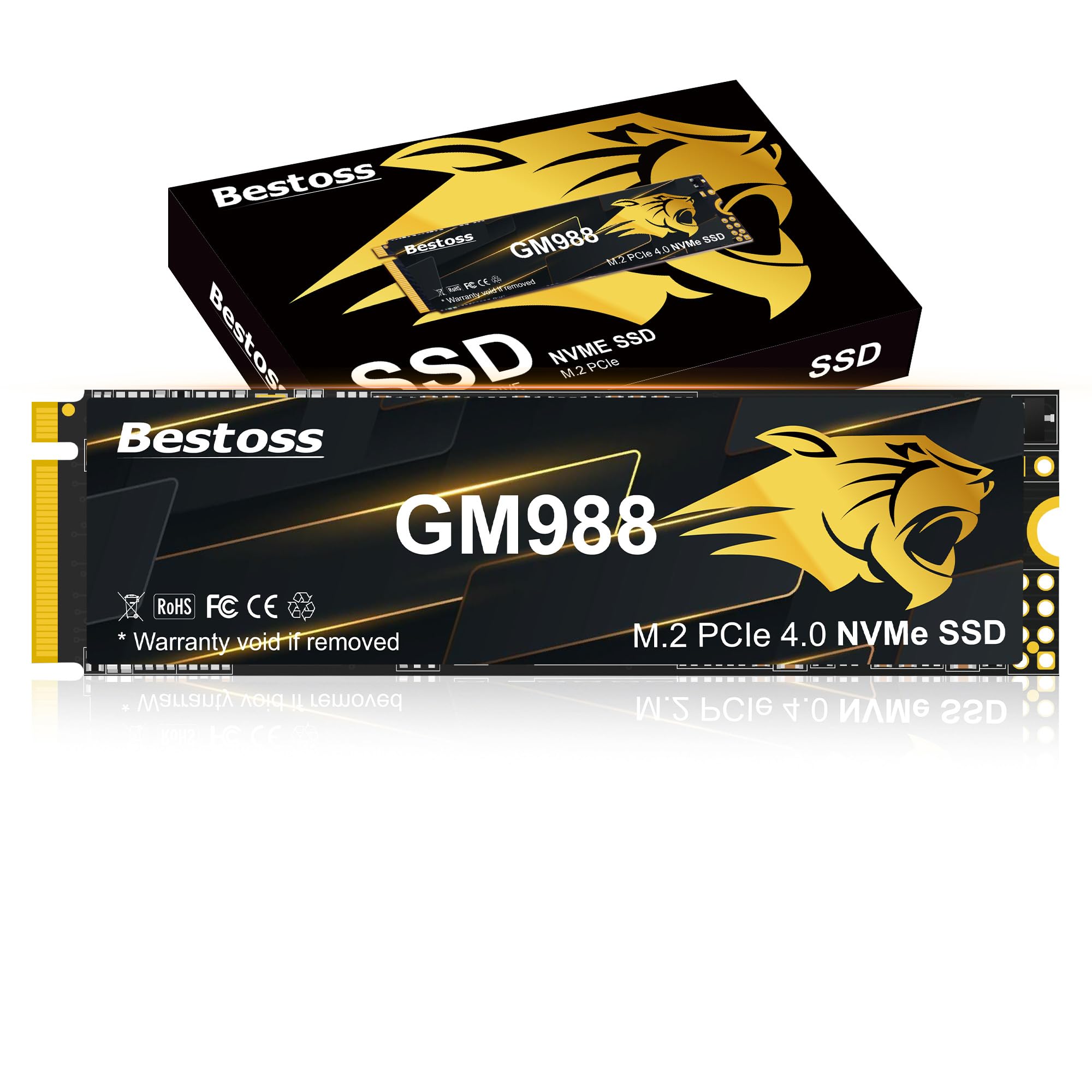
The Bestoss GM988 offers read speeds up to 7,350 MB/s and write speeds up to 6,600 MB/s, placing it near the top of the Gen4 performance curve. Its HMB (Host Memory Buffer) and dynamic SLC caching technology work in tandem to provide burst performance that handles 4K game loading and real-time 3D rendering without hiccups.
Bestoss equips the GM988 with a graphene-copper thermal pad designed to keep the drive cool under sustained load. The drive supports AHCI optimization and TRIM, ensuring long-term reliability across Windows and Linux systems. It’s also PS5 ready, making it a versatile choice for both desktop and console storage expansion.
Users installing it in Alienware laptops report seamless compatibility and formatting, with no issues accessing the full capacity. For a relatively new entrant in the space, the GM988 delivers strong performance that competes well with more established brands at a budget-friendly price point.
Why it’s great
- High read speeds for a value-priced Gen4 drive
- HMB technology for stable sustained performance
- Compatible with PS5 and Linux systems
Good to know
- 3-year warranty is shorter than some competitors
- Requires a PCIe 4.0 slot for advertised speeds
6. Kingston NV3 2TB

The Kingston NV3 positions itself as a reliable no-nonsense Gen4 upgrade for users transitioning from SATA SSDs or smaller NVMe drives. With sequential reads of 6,000 MB/s and writes reaching 5,000 MB/s, it offers a massive leap in boot times and application loading compared to older storage technologies.
Built with 3D TLC NAND, the NV3 maintains solid endurance for daily use. Kingston’s reputation for manufacturing consistency means fewer DOA units and fewer crashes down the line. It lacks a dedicated heatsink, but its power-efficient controller runs cool enough for most desktop and laptop scenarios.
Users report that after configuring the BIOS for PCIe Gen 4, the drive delivers on its promised throughput. The NV3 is a perfect choice for builders on a tight budget who still want a modern Gen4 interface. It may not top any speed charts, but it offers great value and consistent, snappy performance for everyday computing.
Why it’s great
- Trusted brand with strong reliability record
- Good price-to-performance ratio
- Power-efficient design for laptops
Good to know
- Slower than many competing Gen4 drives
- May require manual BIOS tweaking for max speed
7. Fikwot FX660 2TB

The Fikwot FX660 is a practical entry point into the Gen4 ecosystem. With read speeds of 5,200 MB/s and writes of 4,700 MB/s, it outperforms any Gen3 drive by a significant margin, but sits at the lower end of the Gen4 spectrum. Its dynamic SLC cache helps accelerate burst transfers, making game loading and file copies feel snappy.
Fikwot includes a graphene heat dissipation sticker for thermal management and integrates two intelligent systems: Auto-Adaptive Temperature Regulation and Power Efficiency Management. These features help reduce power draw in laptops, extending battery life in portable systems.
Users on Proxmox and TrueNAS have leveraged the FX660 in external USB enclosures for mirrored storage without heat or crash issues. When installed in a PS5, it works reliably and offers plenty of space for a modern game library. For budget-conscious shoppers who still want a Gen4 interface for PS5 compatibility, the FX660 is a competent choice.
Why it’s great
- Affordable way to get Gen4 speeds
- Adaptive temperature regulation
- Included mounting screws and screwdriver
Good to know
- Slower than high-end Gen4 drives
- No dedicated heatsink included
8. Crucial P310 2TB

The Crucial P310 solves a specific pain: the cramped M.2 2230 slot inside handheld gaming PCs like the Steam Deck, ASUS ROG Ally, and MSI Claw. Despite its tiny PCB, it delivers PCIe Gen4 speeds up to 7,100 MB/s read and 6,000 MB/s write, eliminating the storage anxiety of 256GB or 512GB base models.
Micron’s G8 NAND and a power-efficient controller keep the drive cool, which is critical in the thermally constrained environment of a handheld. Users upgrading their Steam Deck report lower operating temperatures than competing 2230 drives like the WD SN770M, alongside better battery efficiency—adding roughly 50 minutes of runtime in real-world use.
The P310 supports a wide range of devices beyond handhelds, including Microsoft Surface Pro and select Dell laptops. It’s the premier choice for anyone looking to double or quadruple their portable console’s storage without stepping up to the larger M.2 2280 size.
Why it’s great
- Best-in-class 2230 form factor speed
- Lower power draw improves battery life
- Runs cooler than competing 2230 drives
Good to know
- M.2 2230 form factor limits motherboard compatibility
- Not the best value for standard 2280 desktop builds
9. Crucial P510 1TB

The Crucial P510 is the most accessible path into PCIe Gen5 territory. It offers read speeds of 11,000 MB/s and writes of 8,500 MB/s, placing it well ahead of even the fastest Gen4 drives. For professionals handling huge data sets or gamers who want the fastest possible load times on a Gen5 board, this drive delivers a tangible upgrade.
Built with Micron’s advanced G8 NAND, the P510 includes robust thermal control management. The drive ships with a bundle that includes Acronis True Image cloning software and a one-month Adobe Creative Cloud subscription, adding real value for content creators planning an OS migration.
Users upgrading from older Gen3 systems report boot times dropping dramatically, with file transfers completing in a fraction of the previous time. Note that this particular SKU is 1TB, not 2TB. It serves as an ideal high-speed boot drive paired with a secondary large-capacity drive for bulk storage.
Why it’s great
- Fastest Gen5 performance in its price class
- Includes Acronis cloning and Adobe CC bundle
- Backward compatible with Gen4 systems
Good to know
- 1TB capacity only in current config
- Gen5 speeds require active cooling or a motherboard heatsink
FAQ
Do I need a PCIe Gen 5 SSD for gaming?
Will a Gen4 NVMe SSD work in a Gen3 motherboard?
How do I choose the right SSD for my PS5?
Final Thoughts: The Verdict
For most users, the best 2tb nvme ssd winner is the WD_Black SN8100 because it delivers unmatched Gen5 speed for future-proofed builds. If you want proven reliability and maximum Gen4 throughput, grab the Samsung 990 PRO. And for a handheld console upgrade where size constraints rule, nothing beats the Crucial P310.