
Our readers keep the lights on and the weekend projects moving. As an Amazon Associate, I earn from qualifying purchases.
A USB 3.0 flash drive is the single most effective upgrade you can make to eliminate the agonizing wait when transferring large video files, photo libraries, or work documents. The difference between USB 2.0 and USB 3.0 isn’t subtle — it’s the difference between stepping away for coffee and finishing the transfer before you stand up. But with read speeds ranging from 100MB/s to over 400MB/s and write speeds varying wildly, choosing the wrong drive wastes both time and money.
I’m Rikta — the co-founder and writer behind FitlyFast. I’ve spent countless hours analyzing the real-world read/write benchmarks, build materials, and storage reliability across dozens of USB 3.0 flash drives to separate the genuinely fast options from the ones that merely claim speed.
This guide cuts through the marketing to deliver a clear, data-backed selection of the best 3.0 flash drive for every type of user, from the budget-conscious student to the creative professional demanding maximum throughput.
How To Choose The Best 3.0 Flash Drive
Selecting a USB 3.0 flash drive goes far beyond storage capacity. The biggest mistake buyers make is prioritizing read speed alone, ignoring write speed — the metric that determines how long you actually wait to put files onto the drive. Additionally, the physical build affects thermal performance, and capacity pricing scales unevenly between brands.
Read Speed vs. Write Speed — Why Both Matter
Read speed dictates how fast you can access files already stored on the drive, which matters for launching applications or watching media directly from the drive. Write speed determines how long it takes to copy files onto the drive. Many budget drives advertise high read speeds (100-150MB/s) but deliver write speeds as low as 10-20MB/s. For heavy file transfers like backing up photo libraries, a drive with a write speed above 30MB/s makes a tremendous real-world difference.
Build Material and Thermal Performance
Plastic-cased drives are lightweight and cheap, but they trap heat during sustained writes, which can trigger thermal throttling and reduced performance. Metal housing, particularly aluminum or zinc alloy, acts as a heat sink, allowing the NAND flash to maintain peak speeds for longer transfer sessions. Metal casings also provide better physical protection against drops and pocket wear.
Capacity, File System, and Compatibility
Drives under 32GB are typically formatted as FAT32 out of the box, which imposes a 4GB single-file size limit — a dealbreaker for video editors or users moving large disk images. Drives 64GB and above often ship as exFAT, which handles files larger than 4GB seamlessly. If you need to store individual files exceeding 4GB, verify the default format before purchase or plan to reformat. Also confirm compatibility with your devices: older car audio systems or smart TVs may not recognize exFAT.
Quick Comparison
On smaller screens, swipe sideways to see the full table.
| Model | Category | Best For | Key Spec | Amazon |
|---|---|---|---|---|
| Samsung BAR Plus 128GB | Premium Metal | Max durability & speed | 400MB/s read, metal casing | Amazon |
| Lexar D50E 128GB | Dual USB-C/A | iPhone & modern laptop users | 400MB/s read, swivel design | Amazon |
| SanDisk Ultra Flair 128GB | Sleek Metal | Balanced performance & style | 150MB/s read, metal casing | Amazon |
| PNY Turbo Attache 256GB | High Capacity | Large storage on a budget | 256GB capacity, capless design | Amazon |
| Amazon Basics 128GB USB 3.1 | Retractable | Everyday reliable transfers | 130MB/s read, retractable connector | Amazon |
| Vansuny 128GB Metal | Waterproof Metal | Rugged outdoor & keychain use | 100MB/s read, waterproof housing | Amazon |
| SanDisk Ultra 32GB | Entry Level | Light file transfers | 100MB/s read, 32GB capacity | Amazon |
In‑Depth Reviews
1. Samsung BAR Plus 128GB USB 3.1 Flash Drive

The Samsung BAR Plus redefines what a flash drive can deliver with sustained read speeds up to 400MB/s, dwarfing typical 100-150MB/s drives. Its full metal body is not just for aesthetics — the aluminum housing pulls heat away from the NAND during prolonged writes, maintaining performance when transferring large 4K video files that would choke plastic alternatives. The integrated keyring loop keeps it secure on a keychain without compromising the sleek form factor.
Real-world sequential write performance hovers around 80-100MB/s in testing, putting it well ahead of most competitors in its class. The drive is waterproof, shock-proof, magnet-proof, and X-ray-proof, backed by a 5-year limited warranty from the world’s largest flash memory manufacturer. The silver champagne finish resists fingerprints and minor scratches better than glossier rivals.
For users who demand maximum transfer throughput, robust build integrity, and long-term reliability, the BAR Plus delivers a combination that few other USB 3.0 drives can match. It supports USB 3.2 Gen 1 and remains fully backward compatible with USB 2.0 ports, ensuring it works across older and newer equipment alike.
Why it’s great
- Exceptional 400MB/s read speed for rapid file access
- Rugged metal body withstands drops and daily abuse
- 5-year warranty signals long-term confidence
Good to know
- Write speed is good but not as class-leading as read speed
- Premium price reflects top-tier build and performance
2. Lexar D50E 128GB Solid State Dual Drive
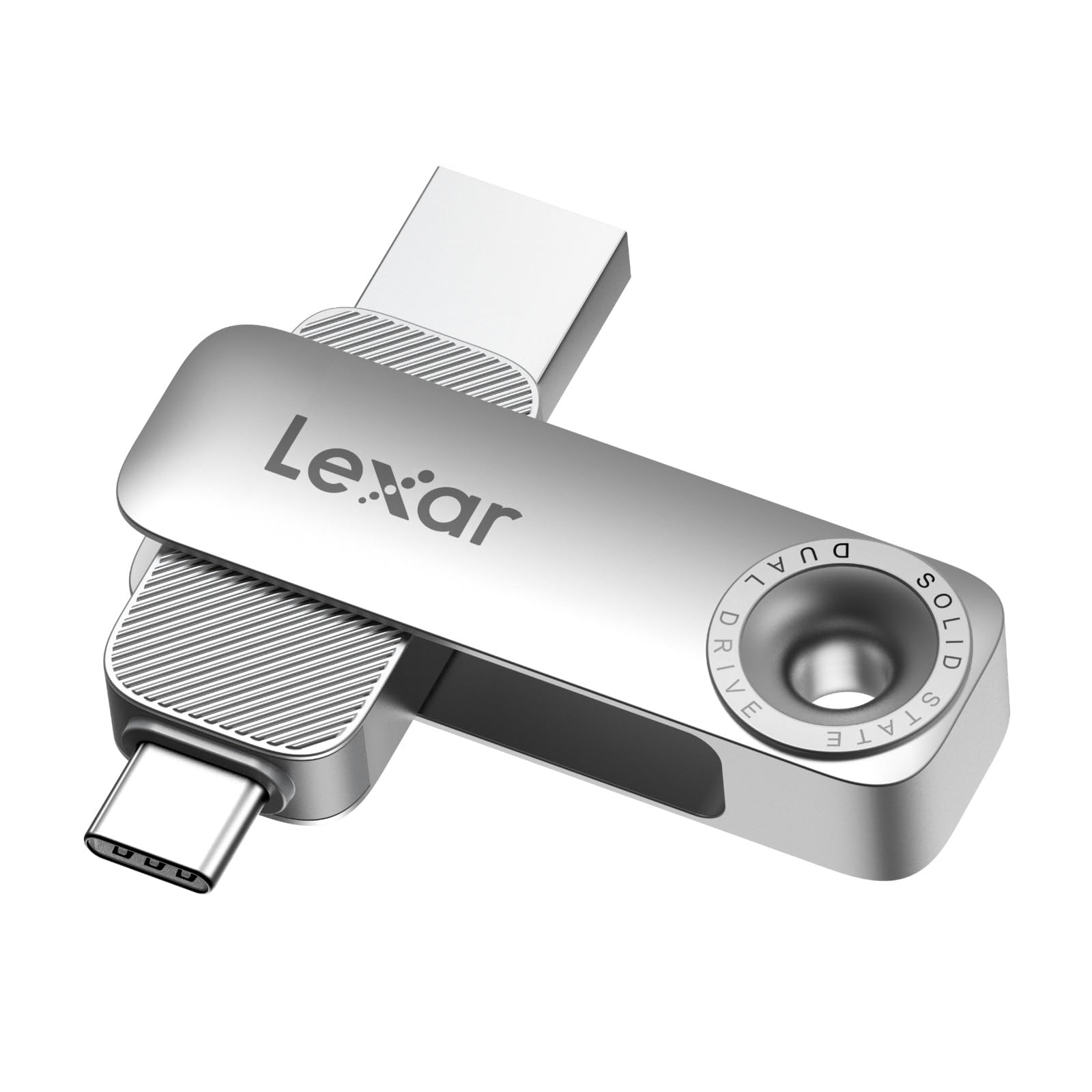
The Lexar D50E solves the single biggest compatibility headache modern users face: connecting to both USB-A desktop ports and USB-C laptop or smartphone ports without needing an adapter. Its swivel metal housing protects whichever connector is not in use, and the solid-state architecture delivers up to 400MB/s read and 360MB/s write speeds — truly high-performance numbers that place it in a different league from standard USB 3.0 drives.
Write speeds of 360MB/s are exceptional for a thumb drive, making this an ideal companion for video editors and photographers who regularly offload large files from cameras or smartphones. The free Lexar App enables photo backup directly from iOS and Android devices, bridging the gap between mobile and desktop workflows. The diecast metal body feels dense and premium in hand, with a smooth swivel mechanism that locks into position at both ends.
One trade-off is that the connectors fit snugly — some users report a tight initial insertion on certain ports. Additionally, neither connector has a dedicated dust cover, so pocket lint could accumulate over time. Still, for users juggling USB-C and USB-A devices daily, the D50E eliminates the need for dongles and delivers transfer speeds that rival external SSDs.
Why it’s great
- 360MB/s write speed for rapid large file offloading
- Integrated USB-C and USB-A in one compact body
- Metal swivel housing protects both connectors
Good to know
- Connectors fit tightly on some devices
- No dust cover for the unused connector
3. SanDisk Ultra Flair 128GB USB 3.0 Flash Drive
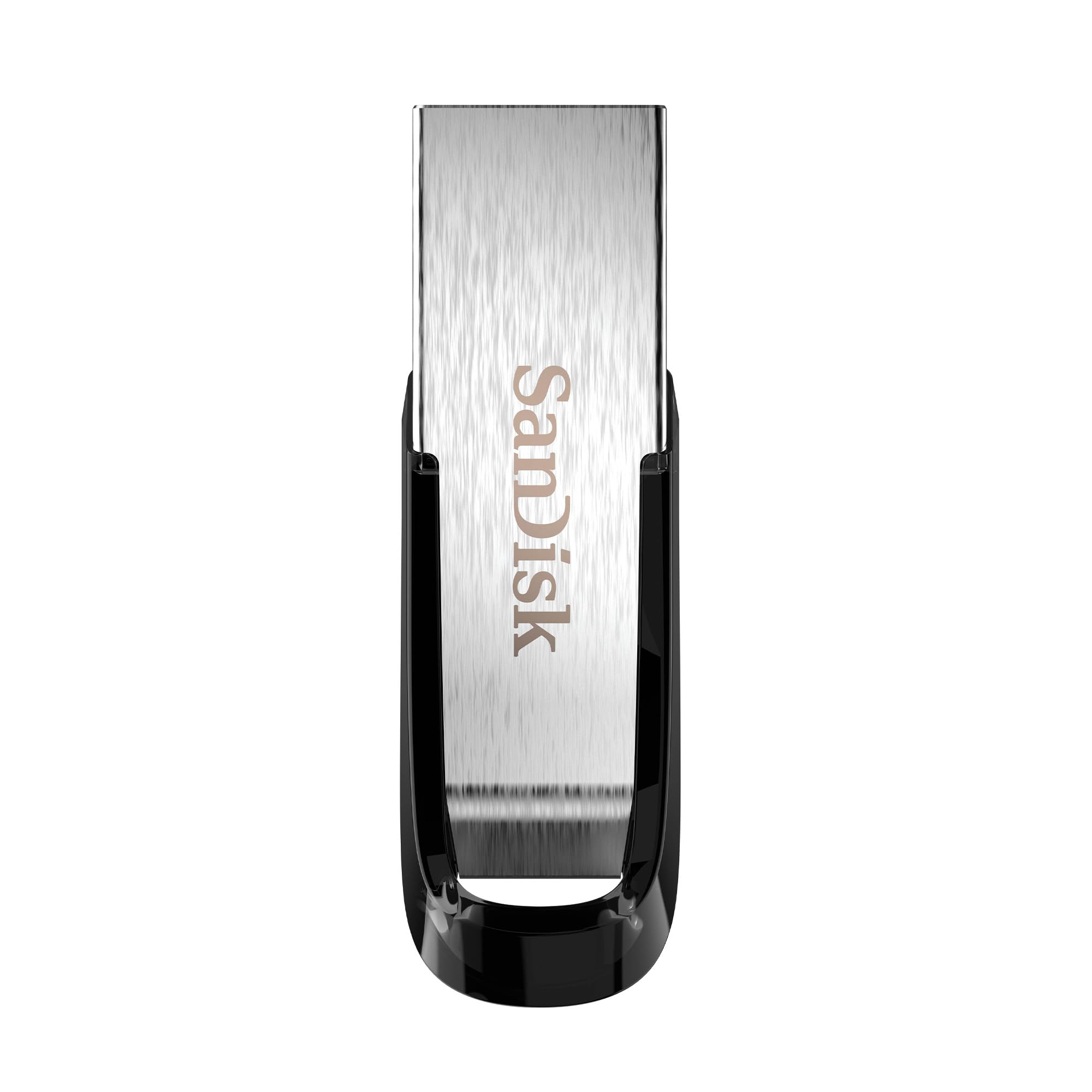
The SanDisk Ultra Flair strikes an excellent balance between everyday affordability and premium-feeling construction. Its brushed metal casing gives it a weight and tactile quality that plastic drives lack, while the 150MB/s read speed ensures you are not waiting around when accessing stored files. Sequential write speeds in real-world testing typically settle around 30-50MB/s, which is adequate for most document and photo library transfers but slower than the higher-end Samsung or Lexar options.
SanDisk includes SecureAccess software with 128-bit AES encryption for password-protecting sensitive folders — a genuine differentiator for users who carry work documents or personal data on the go. The drive runs warm during sustained heavy writes, but the metal body dissipates heat more effectively than the plastic SanDisk Ultra models, reducing the risk of thermal throttling during multi-gigabyte transfers.
At 128GB, it provides enough room for thousands of documents or hundreds of minutes of 1080p video. The sleek profile slides easily into a laptop’s side port without blocking adjacent ports, and the keyring loop adds carry convenience. Users who upgrade from USB 2.0 will find the performance jump dramatic — transferring a full-length movie in under 30 seconds as advertised.
Why it’s great
- Affordable metal build feels more premium than its price suggests
- 128-bit AES encryption software included for privacy
- Consistent read speeds of 150MB/s for snappy access
Good to know
- Write speed is mid-range compared to higher-end competitors
- Runs warm under sustained load, though within normal range
4. PNY Turbo Attache 3 256GB USB 3.0 Flash Drive

The PNY Turbo Attache 3 stands out by offering 256GB of storage — double the capacity of most other drives at its price tier — making it an ideal choice for users who need to carry large media libraries or system backup images. Its sliding collar, capless design eliminates the frustration of lost caps while keeping the USB connector protected when not in use. Real-world read speeds measure around 117MB/s and write speeds near 43MB/s in testing, providing solid USB 3.0 performance for its class.
The integrated loop on the sliding collar makes attaching it to a keychain or backpack straightforward. Performance is roughly ten times faster than USB 2.0, so moving a music library or photo collection happens in minutes rather than hours. The drive is compatible with most PC and Mac systems and works with USB 2.0 ports at reduced speeds when needed.
One consideration is that the plastic body does not dissipate heat as effectively as metal alternatives, so throughput may dip slightly during extremely large sustained transfers. However, for the combination of generous capacity, adequate speed, and a practical retractable design, the PNY Turbo Attache 3 delivers strong everyday value for users who prioritize storage size over raw transfer speed.
Why it’s great
- 256GB capacity holds massive file libraries at a reasonable cost
- Sliding collar prevents cap loss and protects the connector
- Keychain-compatible loop adds daily portability
Good to know
- Plastic shell runs warmer during sustained writes
- Write speed is satisfactory but not class-leading
5. Amazon Basics 128GB USB 3.1 Flash Drive

The Amazon Basics 128GB USB 3.1 flash drive delivers reliable performance with a retractable connector that eliminates the need for a separate cap — a practical design for users prone to losing small accessories. Read speeds are rated up to 130MB/s, with write speeds around 30MB/s, placing it squarely in the dependable mid-range territory. The telescopic mechanism slides smoothly and locks the connector in place when extended.
It ships formatted as FAT32 by default, so users transferring individual files larger than 4GB will need to reformat to exFAT or NTFS — a minor step that catches some buyers off guard. The plastic body is lightweight and compact, but the build feels less robust than metal alternatives; Amazon itself advises against attaching it to a keychain due to durability concerns. For desk use, car audio, or occasional file transfers, it performs reliably without surprises.
NAND flash chips from high-quality suppliers ensure data integrity during transfers, and backward compatibility with USB 2.0 ports works without issue. The 128GB capacity stores approximately 32,000 12MP photos or 488 minutes of 1080p video. The retractable design is especially convenient for laptop users who appreciate not fumbling with a cap when plugging in quickly.
Why it’s great
- Retractable design prevents cap loss and speeds up use
- Consistent read speeds meet published ratings reliably
- Large 128GB capacity at an accessible price point
Good to know
- FAT32 default limits single file size to 4GB
- Plastic casing is not rated for keychain abuse
6. Vansuny 128GB Metal Waterproof USB 3.0 Flash Drive

The Vansuny 128GB Metal flash drive positions itself as a rugged companion with a full metal housing and UDP packaging technology that allows it to survive accidental submersion — it can be used again after drying out completely. Read speeds hit around 100MB/s with write speeds up to 35MB/s, adequate for everyday file transfers. The slim profile, measuring just 0.1 inches thick, slides easily into a wallet pocket or alongside a phone case.
The small size and integrated keyring make it very portable, though the metal surface is prone to scratching from keychain abrasion — users report that the finish shows wear quickly when carried alongside keys. It ships formatted as exFAT by default, which handles large files without the 4GB limit, though older operating systems like Windows XP require reformatting to NTFS for recognition. The plug-and-play compatibility works across Windows, Mac, Linux, and even car audio systems and smart TVs.
For users who need a truly pocketable, water-resistant drive for outdoor work or travel, the Vansuny offers a compelling combination of ruggedness and capacity. The lack of a moving cap is an advantage, as the entire metal body slides into the port as one piece. Just be aware that the finish is not scratch-resistant, so this is best kept in a separate pocket compartment rather than loose with metal objects.
Why it’s great
- Waterproof construction survives accidental submersion
- Extremely slim profile fits tight spaces and wallets
- exFAT formatted out of the box for large file support
Good to know
- Metal surface scratches easily from keychain contact
- Write speed is modest compared to higher-tier drives
7. SanDisk 32GB Ultra USB 3.0 Flash Drive

The SanDisk 32GB Ultra USB 3.0 Flash Drive is the entry-level workhorse that proves USB 3.0 benefits are accessible even at small capacities. Read speeds up to 100MB/s make it significantly faster than any USB 2.0 drive, though write speeds hover around 15MB/s in real-world usage — a reminder that budget-tier drives prioritize read performance and capacity cost over write throughput. The compact plastic body is lightweight and unobtrusive, barely protruding from a laptop port.
SanDisk SecureAccess software is included for password-protecting files, adding a layer of security missing from many budget alternatives. The 5-year manufacturer warranty provides peace of mind, and the drive is compatible with both USB 3.0 and USB 2.0 ports. The 32GB capacity is well-suited for document backups, bootable operating system installers, or transferring a moderate photo collection, but video editors moving 4K footage will quickly outgrow the space and may find the write speed limiting.
This drive is ideal for users who need a reliable, low-stakes USB 3.0 upgrade from old USB 2.0 gear without paying for capacity they do not need. The small size makes it easy to leave plugged into a desktop for automated backups, and the speed improvement over USB 2.0 is immediately noticeable when reading files or launching portable applications. It is the most affordable way to experience USB 3.0 performance.
Why it’s great
- Lowest entry cost for genuine USB 3.0 read performance
- Includes file encryption software for basic privacy
- Compact size stays nearly flush in laptop ports
Good to know
- Write speed of ~15MB/s is noticeably slow for large transfers
- 32GB capacity limits suitability for media-heavy users
FAQ
Is a USB 3.0 flash drive backward compatible with USB 2.0 ports?
Why does my 128GB flash drive show less than 128GB of usable space?
Should I reformat my new USB 3.0 flash drive for better performance?
Final Thoughts: The Verdict
For most users, the best 3.0 flash drive winner is the Samsung BAR Plus 128GB because it combines industry-leading read speeds up to 400MB/s, a rugged metal casing that handles heat and drops, and proven long-term reliability backed by a 5-year warranty. If you need dual USB-C and USB-A connectivity without adapters, grab the Lexar D50E 128GB for its exceptional 360MB/s write speed and versatile swivel design. And for budget-conscious users who want the most storage per dollar, nothing beats the PNY Turbo Attache 3 256GB for its generous capacity and practical capless sliding design.