
Our readers keep the lights on and the weekend projects moving. As an Amazon Associate, I earn from qualifying purchases.
Yellowing leaves, stunted growth, and crispy leaf tips are clear signs your houseplant or garden is missing the precise nitrogen, phosphorus, and potassium balance it needs. A 3-1-2 NPK formula targets that exact deficiency, providing the higher nitrogen ratio required for lush vegetative growth without risking root burn or chemical salt buildup.
I’m Rikta — the co-founder and writer behind FitlyFast. I’ve spent years analyzing soil science research and cross-referencing hundreds of fertilizer formulations to understand how the 3-1-2 ratio performs across different plant species and growing mediums.
This guide covers the most effective 3-1-2 liquid and granular fertilizers available today, with a focus on organic ingredients, chelated micronutrient availability, and real-world feeding results. Here you’ll find the best 3-1-2 fertilizer options for fiddle leaf figs, vegetables, roses, and general indoor foliage.
How To Choose The Best 3-1-2 Fertilizer
The 3-1-2 NPK ratio is specifically formulated to support vigorous vegetative growth, making it a top choice for fiddle leaf figs, tomatoes in their early stages, peppers, and many flowering ornamentals. However, not all 3-1-2 fertilizers are created equal. The source of nitrogen, the presence of chelated micronutrients, and the organic certification all affect how well the formula performs in your specific growing conditions. Here are the key factors to evaluate before buying.
Nitrogen Source and Organic Certification
The first number in the NPK ratio — nitrogen — drives leaf and stem growth. Synthetic urea-based nitrogen releases quickly and can cause root burn if over-applied. Urea-free formulas, often derived from fish emulsion or plant-based proteins, provide a gentler, longer-lasting feeding. If you grow vegetables or herbs you intend to eat, look for an OMRI-listed organic formula that won’t leave chemical residues in your harvest. Organic options also feed soil microbes, improving long-term soil structure.
Chelated Micronutrients for Real Absorption
A 3-1-2 fertilizer that only contains NPK may still leave your plants deficient in calcium, magnesium, iron, and zinc. Chelated micronutrients are bonded to amino acids or EDTA, allowing them to be absorbed directly through plant roots without being locked up by soil pH. Formulas enriched with calcium and magnesium prevent blossom end rot in tomatoes and leaf tip burn in fiddle leaf figs. Check the label for elements like boron, copper, manganese, and molybdenum — these are often the difference between a plant that survives and one that thrives.
Liquid Concentrate vs Granular Formula
Liquid fertilizers offer immediate availability — the nutrients enter the soil solution quickly and are taken up by roots within hours. This makes them ideal for container plants and regular feeding schedules. Granular formulas release nutrients slowly over weeks, which works best for outdoor garden beds and established perennials. For indoor fiddle leaf figs or seedlings, a liquid 3-1-2 with a measuring cap or graduated dropper allows precise dosing and reduces the risk of over-fertilization.
Quick Comparison
On smaller screens, swipe sideways to see the full table.
| Model | Category | Best For | Key Spec | Amazon |
|---|---|---|---|---|
| FOLLOWIN Fiddle Leaf Fig Fertilizer | Liquid 3-1-2 | Fiddle leaf figs & ficus varieties | 7 chelated micronutrients | Amazon |
| Fiddle Leaf Fig Plant Food | Liquid 3-1-2 | Ficus lyrata & indoor trees | Triple-nitrogen extended release | Amazon |
| Urban Garden Outfitters Mission Grow | Organic Liquid 3-1-2 | Vegetables, herbs & container gardens | Fish-based organic blend | Amazon |
| Down To Earth Tomato & Vegetable Mix | Granular 4-6-2 | Tomatoes, peppers & garden beds | OMRI listed premium ingredients | Amazon |
| Espoma Organic Rose-Tone | Granular 4-3-2 | Roses & flowering ornamentals | Bio-tone formula plus calcium | Amazon |
| Alaska Fish Fertilizer | Liquid 5-1-1 | Heavy feeders & leafy greens | OMRI listed cold-processed | Amazon |
| FoxFarm Cultivation Nation Grow | Liquid 2-1-6 | Vegetative growth in controlled gardens | 3-part system compatible | Amazon |
In‑Depth Reviews
1. FOLLOWIN Fiddle Leaf Fig Fertilizer & Plant Food

This 3-1-2 liquid concentrate is specifically formulated for fiddle leaf figs but works across all ficus varieties. The nitrogen targets chlorophyll restoration in yellowing leaves, while the 1% phosphorus supports root strength and the 2% potassium locks in leaf resilience against tip burn. The key differentiator is the calcium enrichment at 1.8%, which prevents the cell wall collapse that causes new leaves to emerge deformed.
The EDTA chelation delivers iron, zinc, copper, and manganese directly to the root zone, bypassing pH lockup that often plagues indoor potting mixes. Each 21 fl oz bottle makes 98 gallons of finished feed, and the built-in graduated cap marks 5 mL increments for accurate mixing without extra tools. Users consistently report visibly greener leaves within two to three watering cycles.
One area to note: the induction foil seal under the cap can be stubborn to remove cleanly, and the formula is EPA registered for indoor use, meaning it’s non-toxic and safe around pets once diluted. However, like most liquid fertilizers, you must store it away from direct sunlight and extreme temperatures to preserve micronutrient stability.
Why it’s great
- Urea-free nitrogen prevents root burn and salt buildup
- Calcium and magnesium included to prevent leaf deformity
- Easy measuring cap eliminates guesswork
Good to know
- Foil seal can be difficult to remove without tearing
- Only 21 fl oz bottle — premium-tier cost per gallon
2. Fiddle Leaf Fig Plant Food – 3-1-2 Balanced NPK

This 8 oz bottle packs three forms of nitrogen for extended, consistent feeding that fuels photosynthesis and root development without the boom-and-bust cycle of single-source formulas. The 3-1-2 ratio is balanced specifically for ficus lyrata and audrey, but the gentle formulation makes it safe for every watering session — a rare convenience for growers who prefer a set-and-forget routine.
The product comes with a complimentary fiddle leaf fig care webinar and e-book, which adds real educational value for beginners who may be overwatering or under-lighting their plants without realizing it. The flip-top cap and induction seal keep the concentrate fresh, and the 1 teaspoon per 2 cups dilution ratio makes a single bottle last six months to a year depending on plant size.
Shipping reports are mixed — some customers receive bottles with damaged caps or partial leakage during transit, which can result in losing a third of the product before opening. Despite that, the formula itself has shown reliable results for curing transplant shock, encouraging multiple new leaves even in low-light winter conditions, and restoring deep green color to faded foliage.
Why it’s great
- Three nitrogen sources provide steady nutrition over time
- Safe for every watering with no burn risk
- Free educational resources included
Good to know
- Bottle may leak during shipping due to cap design
- Only 8 oz total — small volume for the price
3. Urban Garden Outfitters Mission Fertilizer Grow 3-1-2
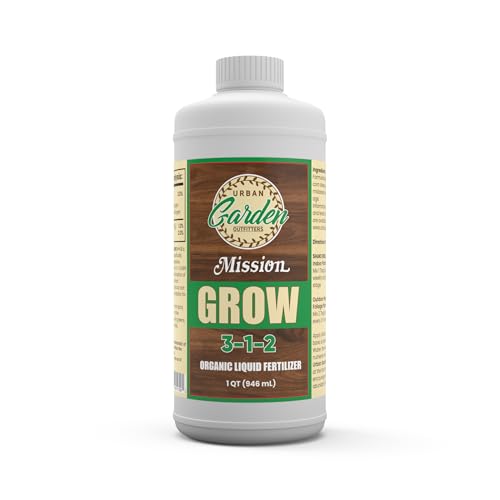
This 32 fl oz quart of organic liquid fertilizer uses fish tankage, beet extract, and molasses to deliver a 3-1-2 NPK ratio that feeds both the plant and the soil biology. The fish base provides a complete amino acid profile that supports microbial activity, while the molasses acts as a carbohydrate source for beneficial bacteria. This makes it a strong choice for rejuvenating tired potting mix in container gardens.
The dilution rate of 1 to 2 tablespoons per gallon of water is generous, and the quart bottle lasts several months even with weekly feeding. Users report excellent results with hot peppers, seedlings, and heavy-feeding vegetables — the organic nitrogen drives rapid leaf expansion without the chemical salt buildup that synthetic fertilizers cause. The formula is versatile enough for both indoor and outdoor use.
The overwhelming trade-off is the strong fishy odor. Multiple reviewers describe the smell as “awful” and recommend wearing gloves during mixing. The odor dissipates within a day after watering outdoor plants, but for indoor use it can be pungent for several hours. This is a normal characteristic of organic fish-based fertilizers and does not affect plant health or harvest quality.
Why it’s great
- Organic ingredients feed soil microbiome, not just the plant
- Large 32 oz bottle at a budget-friendly cost per feeding
- Excellent results for pepper plants and heavy feeders
Good to know
- Strong fish odor lingers for hours indoors
- Viscous liquid requires thorough shaking before each use
4. Down To Earth Organic All Purpose Tomato & Vegetable Mix 4-6-2

While this product carries a 4-6-2 ratio — slightly higher in phosphorus than a strict 3-1-2 — it belongs in this roundup because its organic ingredient profile closely mirrors the philosophy of balanced 3-1-2 feeding, with fish bone meal, blood meal, feather meal, rock phosphate, langbeinite, greensand, humates, and kelp meal. The slow granular release means you top-dress once and the nutrients become available over several weeks, which is ideal for outdoor tomato and pepper beds.
The 5 lb box covers roughly 50 square feet when applied at the recommended rate, and the OMRI listing guarantees it meets organic production standards. Users consistently report that pale, stunted tomato plants green up within two weeks of application, and the gentle formula won’t burn roots even if applied a bit heavily. The smell is noticeable for the first few days after application but fades as the granules break down into the soil.
A key limitation is that the 4-6-2 ratio means less nitrogen relative to phosphorus compared to a true 3-1-2, so it’s better suited for plants entering the flowering stage rather than early vegetative growth. For gardeners who want a single-bag solution for transplanting plus early bloom support, this works well, but strict ratio-keepers may want a dedicated 3-1-2 liquid for the vegetative phase.
Why it’s great
- High-quality organic ingredient list with kelp and humates
- Slow-release granular format reduces feeding frequency
- OMRI listed for certified organic gardens
Good to know
- 4-6-2 ratio is better for bloom stage than strict vegetative growth
- Unpleasant smell lingers for a few days after application
5. Espoma Organic Rose-Tone 4-3-2

Espoma’s Rose-Tone is a granular 4-3-2 formula enhanced with their proprietary Bio-tone, a blend of beneficial microbes and mycorrhizae that improve nutrient cycling in the root zone. The 5% calcium content is critical for preventing blossom end rot in roses and other flowering ornamentals, while the slow-release granules provide steady feeding throughout the growing season from May through September.
The 4 lb bag (sold in a pack of two) covers multiple rose bushes or a bed of clematis and bougainvillea. Users report that regular monthly application leads to faster growth, deeper green foliage, and noticeably more flower buds compared to synthetic fertilizers. The formula is OMRI-listed and made in the USA by a company with a long track record in organic gardening.
The granular format requires working it into the top inch of soil and watering thoroughly, which is slightly more labor-intensive than liquid feeding. Additionally, the 4-3-2 ratio has a higher phosphorus contribution than a true 3-1-2, so it’s optimized for flowering plants rather than leafy greens or foliage-focused houseplants.
Why it’s great
- Bio-tone microbes enhance long-term soil fertility
- High calcium content prevents bloom disorders
- Made in USA with OMRI-listed organic ingredients
Good to know
- Granular application requires soil incorporation and watering
- Best suited for flowering ornamentals, not foliage plants
6. Alaska Fish Fertilizer OMRI Listed 5-1-1
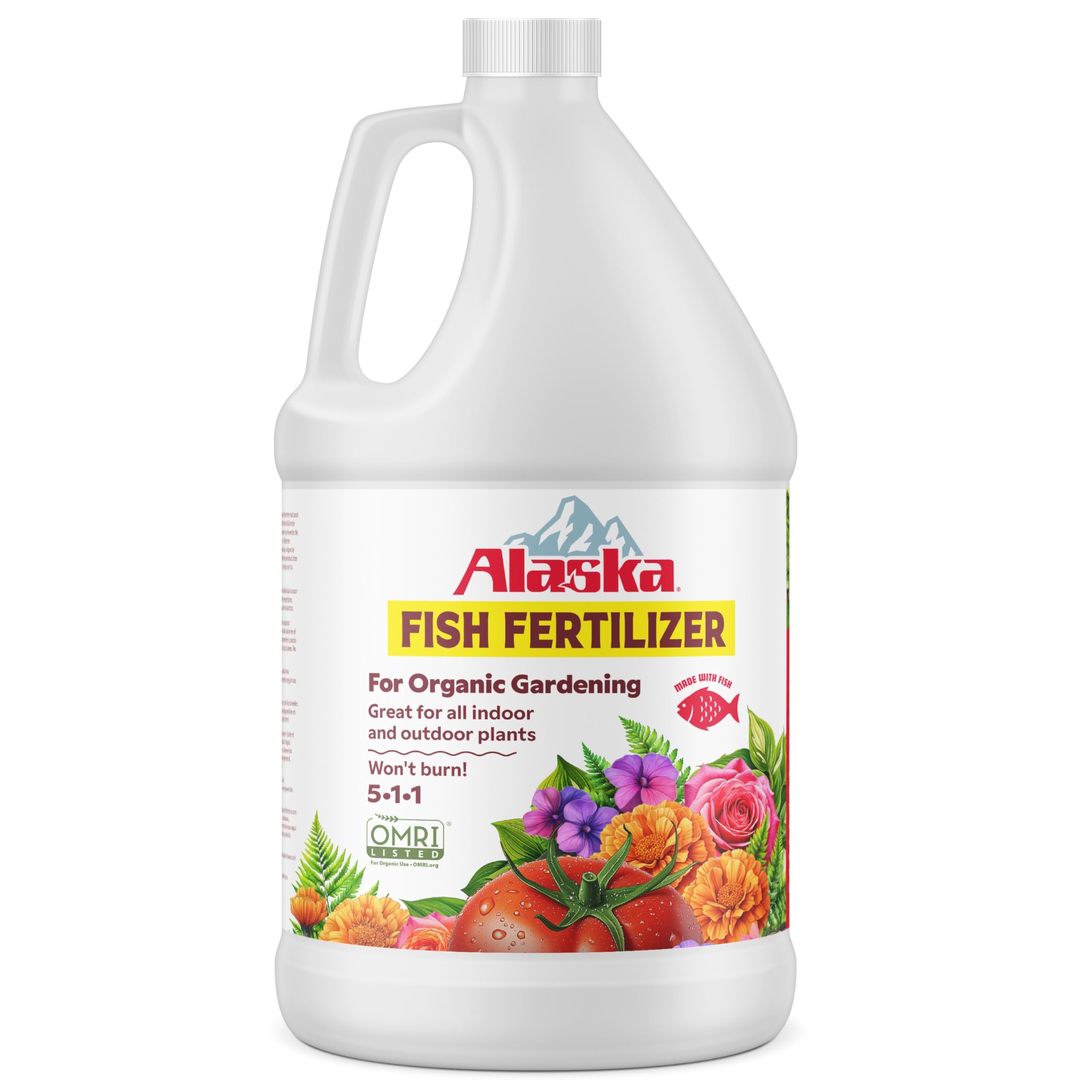
The Alaska Fish Fertilizer is a liquid 5-1-1 formula that provides a concentrated nitrogen boost for vegetative growth. The cold-processed production preserves micronutrients that are often lost in heat-based manufacturing, and the OMRI listing confirms its suitability for organic gardens. This is a heavy-duty option for leafy greens, fast-growing vegetables, and houseplants that need rapid green-up.
At 115 fl oz, this is the largest volume product in the roundup and offers the best cost per gallon for growers with multiple beds or a large container collection. The dilution rate is flexible, but the standard recommendation is 1 tablespoon per gallon of water every three weeks. Users note that the fishy smell is present but dissipates faster than other fish emulsions, typically within a day outdoors.
The high nitrogen content (5-1-1) means this is not a balanced 3-1-2 formula, so you’ll need to supplement with a bloom fertilizer once plants enter the flowering stage. Additionally, the formula lowers soil pH noticeably, which can be beneficial for acid-loving plants but may require monitoring if you’re growing in alkaline conditions.
Why it’s great
- Large 115 oz bottle provides many feedings
- Cold-processed retains delicate micronutrients
- OMRI listed and trusted for decades
Good to know
- 5-1-1 is higher in nitrogen than a true 3-1-2 ratio
- Fish odor, though deodorized, is still noticeable
7. FoxFarm Cultivation Nation Grow Liquid Plant Food 2-1-6
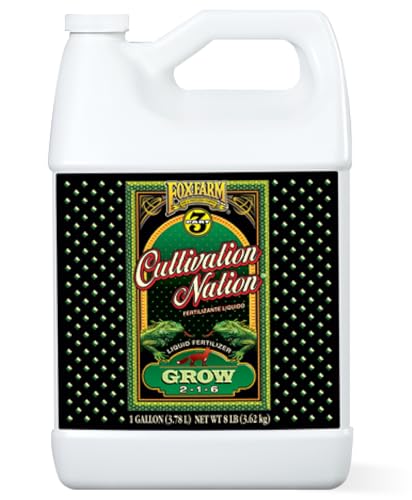
FoxFarm’s Cultivation Nation Grow is the first component of a 3-part feeding program designed for serious growers who want precise control over each growth phase. The 2-1-6 NPK ratio provides a higher potassium contribution than a strict 3-1-2, but it functions as a vegetative-phase nutrient when paired with the corresponding Micro and Bloom formulas. The 1-gallon size is cost-effective for large gardens and continuous feeding schedules.
The recommended feeding schedule — 1/2 teaspoon per gallon for seedlings and 3 teaspoons per gallon for established plants — allows fine-tuned dosing. Users report that even at reduced strength, the formula drives noticeable overnight growth in young plants. The brand has a strong reputation for consistency, and the liquid concentrate mixes cleanly without residue.
The 2-1-6 ratio means this is not a standalone 3-1-2 fertilizer; it’s designed to be used in combination with other Cultivation Nation products. Using it alone may leave plants deficient in phosphorus during early growth. Some shipping reports mention damaged bottles, though the product itself is generally well-regarded.
Why it’s great
- Large 1-gallon bottle offers excellent value for heavy users
- Precise dosing allows customization per growth stage
- Trusted brand with consistent quality since 1984
Good to know
- 2-1-6 ratio requires pairing with Micro and Bloom for full NPK balance
- Bottle may arrive damaged due to thin plastic
FAQ
Can I use a 3-1-2 fertilizer on all houseplants?
How often should I apply a liquid 3-1-2 fertilizer to my fiddle leaf fig?
What does “urea-free” mean in a 3-1-2 fertilizer?
Is a 3-1-2 fertilizer safe for seedlings?
Can I use a 3-1-2 granular fertilizer instead of liquid?
Final Thoughts: The Verdict
For most users, the best 3-1-2 fertilizer winner is the FOLLOWIN Fiddle Leaf Fig Fertilizer because it combines a precise urea-free NPK ratio with seven chelated micronutrients and a calcium boost, all in an easy-to-measure liquid format. If you want an organic option with soil-building benefits, grab the Urban Garden Outfitters Mission Grow. And for large outdoor gardens needing slow-release nutrition, nothing beats the value of the Down To Earth Tomato & Vegetable Mix.