
Our readers keep the lights on and the weekend projects moving. As an Amazon Associate, I earn from qualifying purchases.
That monthly rental fee on your internet bill is a silent drain on your budget, and the modem your provider gave you likely bottlenecks your connection during peak hours. Upgrading to a modern 3.1 DOCSIS modem eliminates that recurring cost and unlocks the full potential of your gigabit or multi-gig internet plan, delivering lower latency for gaming and smoother 4K streaming.
I’m Rikta — the co-founder and writer behind FitlyFast. I’ve spent countless hours analyzing the technical specifications, channel bonding architectures, and real-world compatibility data for 3.1 DOCSIS modems to build this guide.
Whether you are on Xfinity, Spectrum, or Cox, owning your own hardware pays for itself within a year and provides faster, more reliable performance. This guide breaks down the top contenders to help you choose the right 3.1 docsis modem for your home and speed tier.
How To Choose The Best 3.1 DOCSIS Modem
Selecting a DOCSIS 3.1 modem is a multi-year decision. The right choice depends on your internet plan speed, your provider’s network, and whether you need a simple modem or an all-in-one gateway. Focus on these three factors.
Ethernet Port Speed & Plan Matching
The Ethernet port is your modem’s only pipeline to your router or PC. A modem with a 1 Gbps port physically caps your wired connection at roughly 940 Mbps, even if your ISP plan delivers 1.2 Gbps. For anything above gigabit, a 2.5 Gbps Ethernet port is mandatory. If you plan to upgrade speeds in the next few years, spending extra for a 2.5 Gbps port now future-proofs your setup.
ISP Compatibility & OFDM Channel Count
Not every modem works with every cable provider. Xfinity, Spectrum, and Cox each maintain certified device lists — buying an uncertified modem can result in activation failures or limited speeds. Inside the modem, OFDM channels (typically 2 downstream and 2 upstream) determine how well the unit handles network congestion and high upload demands during peak hours. More OFDM channels generally mean better latency stability.
Modem-Only vs. Gateway (Modem + Router)
Modem-only units are the most common and offer the best long-term flexibility — you pair them with your preferred Wi-Fi router. Gateways (modem-router combos) save space and reduce cable clutter but lock you into one Wi-Fi system. If you upgrade your router separately, a gateway becomes obsolete faster. For most power users, a standalone modem is the smarter play.
Quick Comparison
On smaller screens, swipe sideways to see the full table.
| Model | Category | Best For | Key Spec | Amazon |
|---|---|---|---|---|
| Hitron CODA56 | Mid-Range | Multi-Gig Value | 2.5 GbE port, 2×2 OFDM | Amazon |
| NETGEAR Nighthawk CM2000 | Mid-Range | High-Speed Plans | 2.5 GbE port, 32×8 SCQAM | Amazon |
| Motorola B12 (MB8611 Gen 2) | Mid-Range | Compact Power | 2.5 GbE port, AQM | Amazon |
| ARRIS SB8200 | Premium | Dual-Link WAN | 2x 1 GbE ports | Amazon |
| ARRIS S33 (Renewed) | Premium | Renewed Savings | 2.5 GbE port, 4 OFDM | Amazon |
| Motorola MG8725 | Gateway | All-in-One Simplicity | AX6000 Wi-Fi 6, 2.5 GbE | Amazon |
| Hitron CODA (Renewed) | Budget | Entry-Level 3.1 | 1 GbE port, 2×2 OFDM | Amazon |
| Gryphon AX | Router | Parental Control | AX4300, no modem | Amazon |
| ARRIS G54 | Gateway | Wi-Fi 7 Future | BE18000, 10 GbE port | Amazon |
In‑Depth Reviews
1. Hitron CODA56

The Hitron CODA56 hits the sweet spot for multi-gig cable plans. Its single 2.5 Gbps Ethernet port matches Xfinity’s fastest tier and Spectrum’s gigabit offerings, while the DOCSIS 3.1 2×2 OFDM architecture keeps latency low during gaming sessions. Users on Xfinity report easy activation and consistent throughput that saturates their plan without drop-offs.
This unit runs cool even under sustained load and pairs well with Wi-Fi 6 or Wi-Fi 7 routers via the 2.5 GbE link. The setup is genuinely plug-and-play: connect coax, power on, call your ISP to provision, and you are online. There is no web interface for advanced tweaking, which keeps things simple but limits diagnostic options for power users.
As a modem-only device, it requires a separate router for Wi-Fi, but that separation gives you full control over your home network stack. The compact white chassis fits neatly on a shelf, and the price undercuts many rivals while delivering identical multi-gig throughput. It is the most balanced pick for most households.
Why it’s great
- Full 2.5 Gbps Ethernet eliminates plan bottlenecks.
- Stable, cool-running design with low latency.
- Easy ISP activation across major cable providers.
Good to know
- Modem-only — you must buy a separate router.
- Minimal user interface with no advanced diagnostic logs.
2. NETGEAR Nighthawk 32 x 8 DOCSIS 3.1 (CM2000)

The Nighthawk CM2000 is built for users who want headroom beyond current plan speeds. Its 2.5 Gbps Ethernet port and DOCSIS 3.1 32×8 channel bonding handle multi-gig tiers with ease, and the aggressive cooling fins keep the Broadcom chipset from throttling during heavy downloads. Xfinity and Spectrum users consistently hit full plan speeds with no bufferbloat.
Setup is straightforward via the Nighthawk app or a quick call to your ISP. The unit is physically larger than most competitors — it demands some shelf space — but the extra size translates to better thermal management. The front-panel LED array clearly indicates connection status, making troubleshooting simpler.
One notable limitation: Xfinity caps upload speeds for third-party modems on mid-split networks, so the CM2000 will not deliver the full 100-200 Mbps upstream that newer Xfinity plans promise. If you prioritize upload performance, confirm your ISP’s policy before purchasing. As a modem-only solution, it pairs best with a separate Wi-Fi 6 or 6E router.
Why it’s great
- Robust thermal design prevents speed drops.
- 2.5 Gbps port supports future plan upgrades.
- Excellent compatibility with major cable ISPs.
Good to know
- Larger footprint requires shelf space.
- Upload speeds capped on some ISP mid-split markets.
3. Motorola B12 (MB8611 Gen 2)
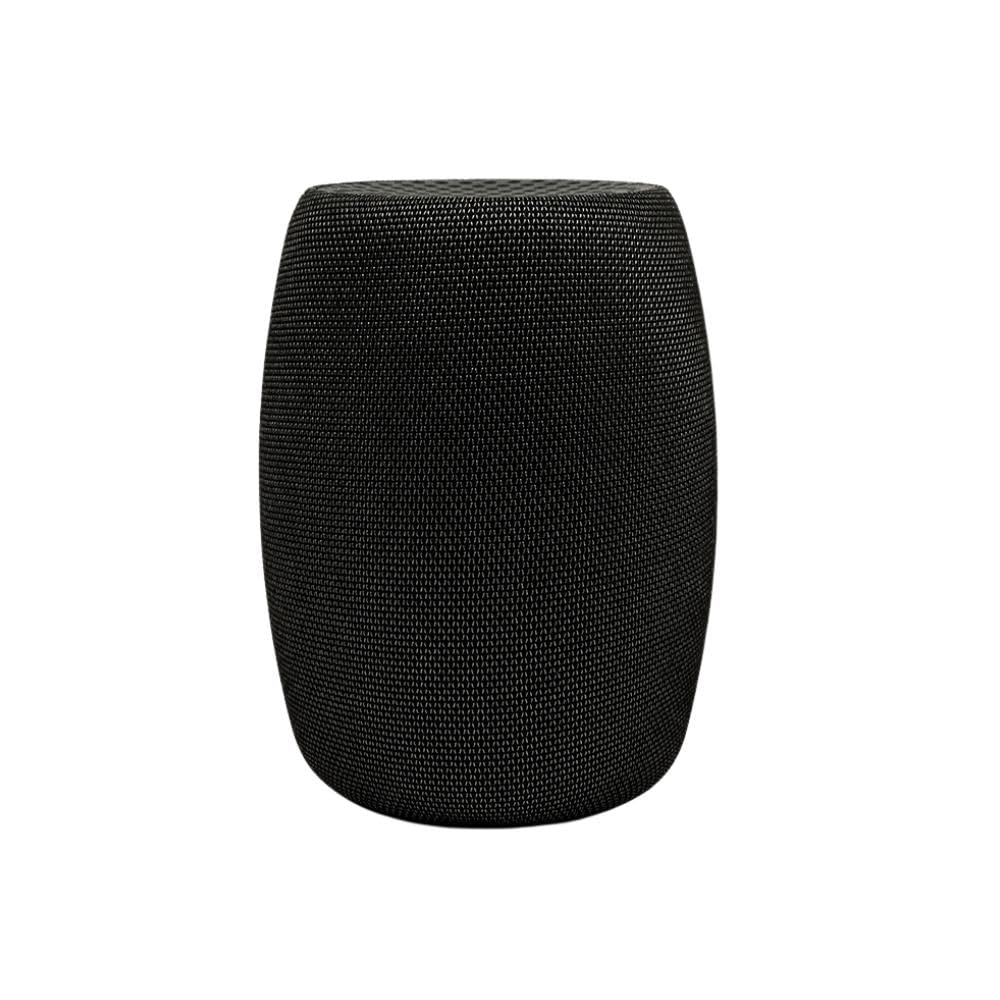
Motorola’s B12 is a surprisingly small modem that packs a 2.5 Gbps Ethernet port and Active Queue Management (AQM) for reduced latency. AQM is a rare find at this price tier — it actively buffers packets to minimize lag spikes during gaming or video calls, even when other devices on your network are downloading large files.
The unit is certified for Xfinity, Cox, Spectrum, RCN, and Astound, covering the vast majority of U.S. cable subscribers. Its chassis is roughly the size of a thick paperback book, making it one of the most space-efficient multi-gig modems on the market. Users report that the all-black, vented enclosure runs warm to the touch but does not overheat.
Setup requires the Motorola app or a manual ISP call — the lack of a built-in web UI means you rely on the app for status checks. Some early production units shipped in retail packaging with used hardware, so inspect the seals carefully upon delivery. For the feature set, the footprint is unmatched.
Why it’s great
- AQM reduces gaming and video call latency.
- Very compact form factor saves desk space.
- 2.5 Gbps port for multi-gig internet plans.
Good to know
- No web interface — app-only management.
- Some users report receiving used units in new boxes.
4. ARRIS SURFboard SB8200
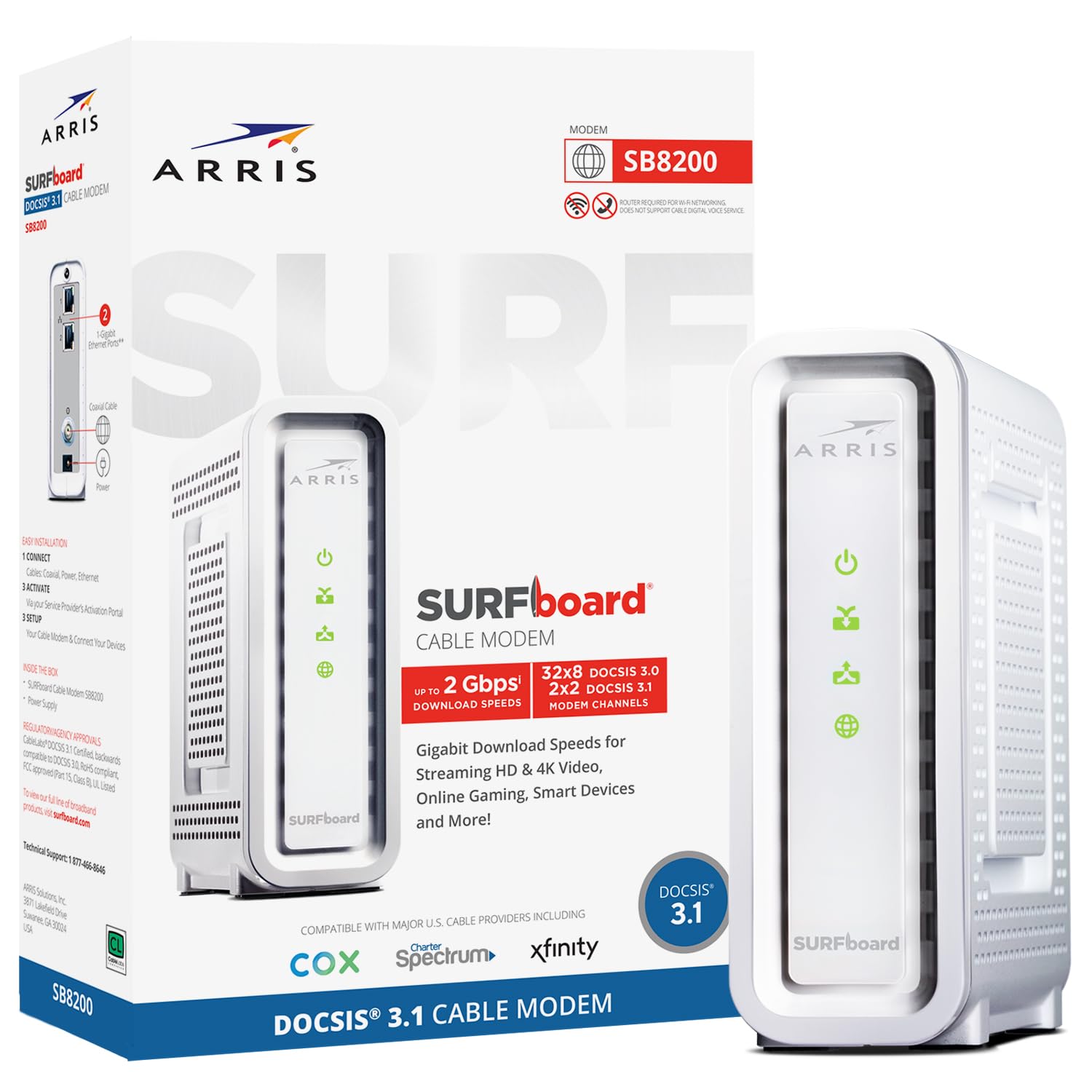
The ARRIS SB8200 remains a top seller years after launch because of its unique dual 1 Gbps Ethernet ports. While each port is limited to gigabit speeds, you can bond them together with a compatible router for a 2 Gbps WAN connection — a rare trick that makes it ideal for users on multi-gig plans who already own a dual-WAN router.
The built-in Broadcom BCM3390 chipset provides rock-solid stability, and the DOCSIS 3.1 32×8 SCQAM bonding handles peak-hour congestion well. Xfinity and Spectrum users praise the SB8200 for its consistent uptime and simple activation. The compact white chassis fits easily into tight media cabinets.
On the downside, the two Ethernet ports are limited to 1 Gbps each — there is no 2.5 GbE single-port option, so you need a dual-WAN router to exceed gigabit speeds individually. Some units are sensitive to line noise and T3/T4 timeouts if your coaxial signal is weak. For standard gigabit plans, this modem is a proven workhorse.
Why it’s great
- Dual 1 GbE ports enable 2 Gbps link aggregation.
- Proven Broadcom chipset with long-term stability.
- Compact, low-profile design fits any shelf.
Good to know
- No 2.5 Gbps single port — requires aggregation for multi-gig.
- Sensitive to coaxial signal quality and T3/T4 errors.
5. ARRIS SURFboard S33 (Renewed)

The ARRIS S33 is one of the most future-ready DOCSIS 3.1 modems available, featuring four OFDM channels (2 downstream, 2 upstream) and a single 2.5 Gbps Ethernet port. The 4 OFDM channel architecture provides superior latency performance under load compared to 2-channel designs, making it a strong pick for heavy multi-device households.
The renewed units look and perform like new, with many buyers reporting seamless activation on Xfinity, Spectrum, and Cox. The SURFboard Central app handles provisioning in minutes, and the web UI gives power users access to signal-to-noise ratios and power levels for line quality diagnostics. The chassis runs warm but within spec.
There is no voice support, and the modem lacks a secondary Ethernet port for link aggregation — but for most users, the single 2.5 GbE port is plenty. The renewed price brings premium multi-gig capability to a budget-friendly tier, though some users have reported random DHCP failures that require a power cycle. Factory-certified renewed units minimize that risk.
Why it’s great
- Four OFDM channels for superior latency stability.
- 2.5 Gbps Ethernet handles multi-gig plans.
- Functional web UI for signal diagnostics.
Good to know
- No voice support for bundled phone plans.
- Random DHCP failures reported on some firmware versions.
6. Motorola MG8725 (Wi-Fi 6 Gateway)

The Motorola MG8725 is a 2-in-1 gateway that combines a DOCSIS 3.1 modem with an AX6000 Wi-Fi 6 router. It was the first device to receive CableLabs Low Latency DOCSIS certification, meaning it is firmware-ready for when ISPs enable LLD features that reduce gaming lag to near-wired levels.
The modem side uses a 2.5 Gbps Ethernet WAN port internally, and the router side delivers 4×4 MU-MIMO on both 2.4 GHz and 5 GHz bands for whole-home coverage. Setup is done through the motosync app, which also provides parental controls, guest network access, and malware blocking. Users on Xfinity gigabit plans report full throughput with good wireless range.
However, Wi-Fi range is not class-leading — some users find coverage lacking in larger homes compared to dedicated mesh systems. The app interface is functional but not as polished as competitors like eero or Orbi. If you want the simplicity of a single box and already need a modem and router upgrade together, the MG8725 is a clean solution.
Why it’s great
- Low Latency DOCSIS certified for reduced gaming lag.
- AX6000 Wi-Fi 6 covers most medium homes.
- Single device eliminates cable clutter and saves space.
Good to know
- Wi-Fi range may not saturate large, multi-story houses.
- App experience is basic compared to dedicated router platforms.
7. Hitron CODA (Renewed)

The Hitron CODA is the most affordable way to get DOCSIS 3.1 technology into your home. It supports internet plans up to 1 Gbps with a single 1 Gbps Ethernet port and 2×2 OFDM channel bonding. For users on gigabit cable tiers who just want to eliminate the monthly rental fee, this modem delivers exactly what you need — nothing more, nothing less.
Compatibility covers Xfinity, Spectrum, Cox, CableOne, and several regional providers. The setup is as simple as it gets: connect coax, power on, and call your ISP. The chassis runs cool and the footprint is nearly square, fitting neatly next to a router. Several users report that the renewed units look indistinguishable from new.
The major trade-off is the 1 Gbps port — if you ever upgrade to a 1.2 Gbps or 2 Gbps plan, this modem will cap your speed. It also lacks a 2.5 GbE port, so it is not future-proof for multi-gig tiers. For the price, it is the best entry point into the DOCSIS 3.1 world, but serious speed chasers will outgrow it.
Why it’s great
- Lowest entry cost to DOCSIS 3.1 performance.
- Reliable 1 Gbps throughput for standard cable internet plans.
- Cool-running, compact design with broad ISP support.
Good to know
- 1 Gbps Ethernet port caps future multi-gig upgrades.
- No manual or warranty info included with some renewed units.
8. Gryphon AX (Mesh Wi-Fi 6 Router)

The Gryphon AX is not a modem — it is a dedicated Wi-Fi 6 mesh router that requires a separate DOCSIS 3.1 modem to connect to the internet. I include it here because its advanced parental controls and next-gen firewall make it the perfect companion for any modem on this list if family internet safety is your priority.
It delivers AX4300 tri-band speeds with coverage up to 3,000 square feet per node, and the Gryphon Connect app offers granular content filtering, screen time limits, and malware protection. Parents can pause the internet for specific devices with one tap and receive detailed usage reports. The built-in intrusion detection runs 24/7.
The catch: there is no web-based management interface — all configuration happens through the mobile app, which can be frustrating for users who prefer desktop control. The rubberized coating also attracts dust over time. If you already own a 3.1 DOCSIS modem and want best-in-class parental oversight, the Gryphon AX is a strong upgrade.
Why it’s great
- Excellent content filters and screen time controls.
- Tri-band AX4300 covers medium to large homes.
- Active malware and phishing protection for all devices.
Good to know
- No desktop web interface — app-only configuration.
- Router only — requires a separate cable modem.
9. ARRIS SURFboard G54 (Wi-Fi 7 Gateway)
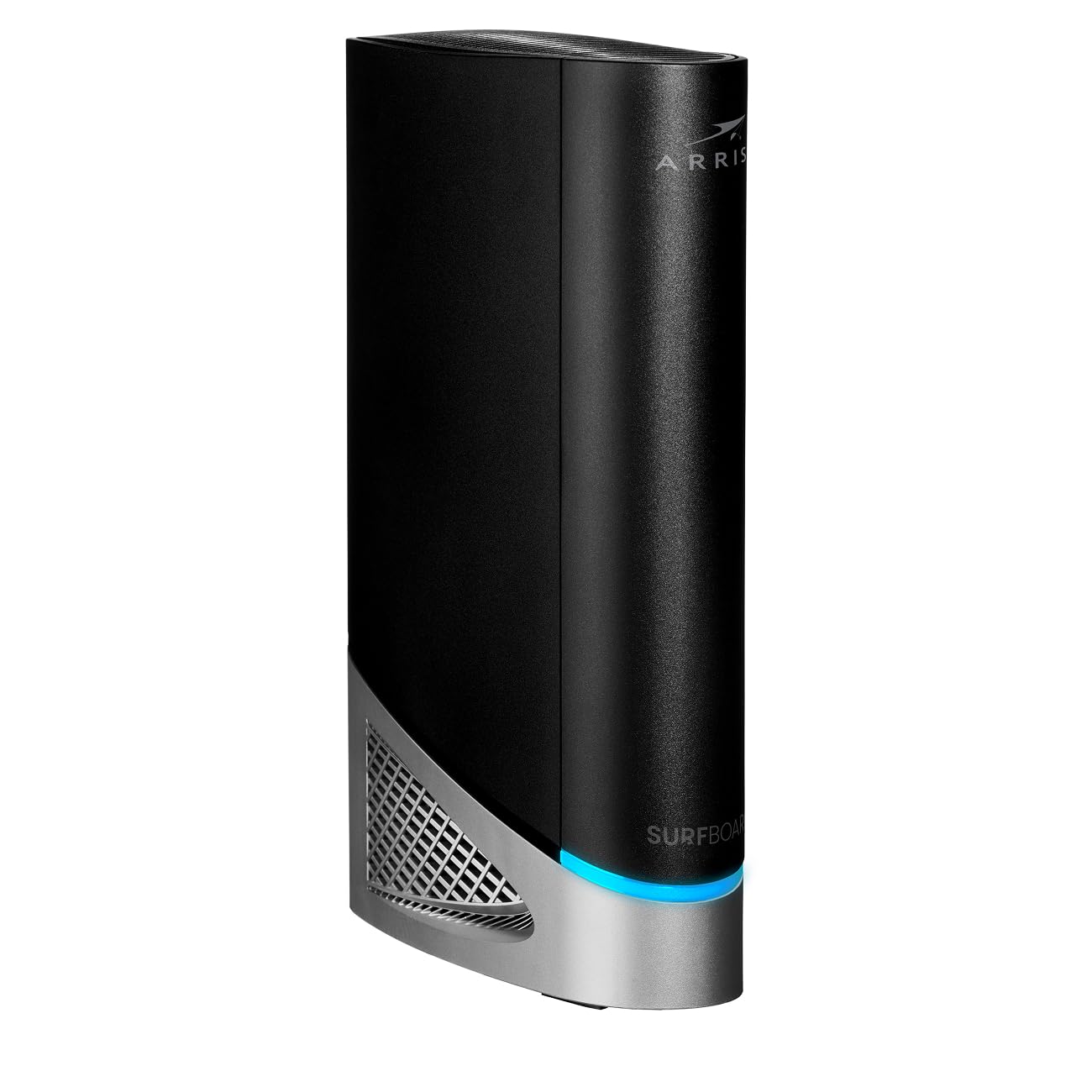
The ARRIS G54 is the most technologically advanced gateway on this list, combining a DOCSIS 3.1 modem with Wi-Fi 7 (BE18000) and a 10 Gbps Ethernet port. It supports internet plans up to 18 Gbps theoretically, with quad-band Wi-Fi 7 delivering blistering wireless speeds and coverage up to 5,000 square feet.
For users who want an all-in-one device that will not need an upgrade for years, the G54 is the ultimate choice. It is certified for Xfinity, Spectrum, and Cox, and the 10 GbE port can connect directly to a high-end NAS or gaming PC for near-instantaneous file transfers. The auto-reset feature restores the connection automatically if it detects an outage.
However, early adopter pains exist. Several users report poor Wi-Fi range in congested neighborhoods, Ethernet disconnections every 30 minutes, and a buggy app experience. The price is also significant, making this a bet on future ISP upgrades rather than a guaranteed improvement for current plans. If you need bleeding-edge tech and are willing to troubleshoot, the G54 delivers. Otherwise, wait for firmware maturity.
Why it’s great
- Wi-Fi 7 and 10 GbE port are future-proof.
- Combines modem and router in one high-end box.
- Up to 5,000 sq. ft. coverage rating.
Good to know
- High upfront cost with early firmware instability.
- Some units report Wi-Fi range issues in dense areas.
FAQ
Can I use a DOCSIS 3.1 modem with a DOCSIS 3.0 cable plan?
Why would I choose a modem with two Ethernet ports over one with a 2.5 Gbps port?
Does owning my own 3.1 DOCSIS modem void my ISP’s service warranty?
Will a 3.1 DOCSIS modem improve my Wi-Fi speed?
Final Thoughts: The Verdict
For most users, the 3.1 docsis modem winner is the Hitron CODA56 because it delivers full 2.5 Gbps Ethernet performance at a mid-range price with rock-solid stability across Xfinity, Spectrum, and Cox. If you want the most future-proof modem available today, grab the Hitron CODA56. And for the best entry-level value, nothing beats the Hitron CODA (Renewed).