
Our readers keep the lights on and the weekend projects moving. As an Amazon Associate, I earn from qualifying purchases.
Every time your wireless headphones cut out mid-track or die during a critical podcast recording, you feel that familiar sting of regret. The 3.5mm jack remains the simplest, most reliable connection for pure, uninterrupted audio—no pairing, no dropouts, no dead batteries.
I’m Rikta — the co-founder and writer behind FitlyFast. I’ve spent years analyzing audio hardware, driver configurations, and build quality across hundreds of wired headphone models to separate the marketing fluff from the specs that actually matter.
Whether you need studio monitors for mixing, gaming earbuds with stage separation, or everyday wired buds that outlast any Bluetooth set, this guide cuts straight to the models that earn their spot in your bag. You’ll find the best 3.5 mm headphones for every use case and budget.
How To Choose The Best 3.5 Mm Headphones
Picking the right wired headphones comes down to your primary use case—studio monitoring demands different specs than portable music listening. Focus on three pillars: driver configuration, impedance matching, and cable durability. Ignoring these leads to either weak volume, muddy sound, or a frayed cord within months.
Driver Size and Type
Larger drivers (40mm or 50mm) generally produce fuller bass and higher maximum volume, but driver type matters more. Dynamic drivers deliver punchy lows, while hybrid setups with balanced armatures add detail to mids and highs. For critical listening, seek multi-driver IEMs or over-ears with neodymium magnets.
Impedance and Sensitivity
Impedance (measured in ohms) determines how much power a headphone needs. Low-impedance models (16–32Ω) work perfectly with phones and laptops, while higher-impedance studio cans (63Ω or more) benefit from a dedicated headphone amp. Sensitivity (dB) tells you how loud they get per milliwatt—look for 100dB or higher for easy driving.
Build and Cable Considerations
A detachable cable is the single best longevity feature—when the wire fails, you replace just the cable, not the whole headphone. Braided or coiled cables resist tangling better than flat rubber ones. Also check if the ear cups swivel, fold, or offer replaceable pads, especially if you plan to wear them for hours daily.
Quick Comparison
On smaller screens, swipe sideways to see the full table.
| Model | Category | Best For | Key Spec | Amazon |
|---|---|---|---|---|
| Sony MDR7506 | Studio Monitor | Professional mixing and critical listening | 40mm drivers, 63Ω impedance | Amazon |
| Audio-Technica ATH-M20x | Studio Monitor | Studio tracking and gaming | 40mm drivers, copper-clad aluminum wire | Amazon |
| Linsoul KZ ZS10 Pro | Hybrid IEM | Audiophile listening and gaming | 4BA+1DD hybrid, 24Ω impedance | Amazon |
| OneOdio Pro-10 | DJ/Monitor | Podcasting and recording mixing | 50mm drivers, single-side monitoring | Amazon |
| PUPGSIS Studio Monitor | Studio Monitor | Dual-headphone sharing for podcast duos | 50mm drivers, dual 3.5mm/6.35mm plugs | Amazon |
| JBL Tune 500 | On-Ear | Daily portable listening with voice assistant | 32mm drivers, tangle-free flat cable | Amazon |
| Sony Wired Earbuds | In-Ear | Gaming handhelds and workout portability | 9mm drivers, in-line mic and remote | Amazon |
In‑Depth Reviews
1. Sony MDR7506 Professional Headphone

The Sony MDR7506 is the undisputed workhorse of recording studios worldwide—and for good reason. Its 40mm neodymium magnets and 63-ohm impedance deliver an exceptionally neutral, detailed sound signature that reveals flaws in your mix without flattering them. The frequency response from 10Hz to 20kHz provides tight, accurate bass and crisp top-end extension that professional engineers rely on.
Comfort is another strong suit: the closed-ear design provides excellent passive isolation, while the lightweight build (about 230 grams) allows all-day wear without fatigue. The 9.8-foot cord with a gold-plated 3.5mm plug and included 1/4-inch adapter covers every studio scenario. Earpads are replaceable, and the collapsible design stores neatly in the soft case.
The cable is permanently attached, which is the only real longevity concern—if the wire fails at the jack, repair is required. However, the overall ruggedness and component availability make this a ten-year investment for most users.
Why it’s great
- Industry-standard neutral reference sound for critical mixing
- Extremely comfortable for 8–12 hour sessions
- Excellent passive noise isolation for a closed-back design
Good to know
- Non-detachable cable—can’t swap if damaged
- Stock earpads may cause discomfort for larger ears; velour replacements recommended
2. Audio-Technica ATH-M20x Monitor Headphones

The Audio-Technica ATH-M20x brings the brand’s professional build philosophy to a more accessible tier. The 40mm drivers with copper-clad aluminum wire voice coils are tuned for enhanced low-frequency performance, producing a bass-forward sound that fills out EDM, hip-hop, and movie soundtracks without distorting. The soundstage is narrower than the M40x, but for gaming and video production tracking, the energy is welcome.
The circumaural design seals around the ears for decent passive isolation, though the stock ear pads can feel stiff during the first few weeks of use. The single-side cable exit reduces tangling, and the included 3.5mm to 6.35mm adapter covers studio interface connections. The overall construction uses sturdy ABS plastic, keeping weight manageable for long listening sessions.
The carrying case is not included, and the bass emphasis can mask subtle mid-range details for critical mixing tasks. If you need a largely neutral monitor for editing, consider spending up for the M40x. For daily gaming or casual production where thump matters, the M20x delivers strong value.
Why it’s great
- Bass-forward tuning that energizes genres like EDM and hip-hop
- Sturdy build with comfortable closed-back ear cups after break-in
- Included 3.5mm to 6.35mm adapter for studio interfaces
Good to know
- Bass can mask mid-range details unsuitable for critical mixing
- No carrying case included; stock ear pads may feel stiff initially
3. Linsoul KZ ZS10 Pro Hybrid IEM

The Linsoul KZ ZS10 Pro packs a five-driver hybrid array—four balanced armatures for highs and mids paired with a second-generation Tesla double magnetic dynamic driver for lows—into a compact in-ear monitor shell. The result is a wide soundstage with crisp treble extension beyond 40kHz, articulate mids, and punchy bass that stays controlled. With 24-ohm impedance and 111dB sensitivity, these are easily driven by any phone or laptop DAC to deafening volumes.
The cavity is molded from ear-cochlea data for a secure fit, and the detachable gold-plated 0.75mm two-pin cable allows full upgradability. The 304 stainless steel faceplate looks striking and resists scratches. Passive noise isolation reaches about 26dB, and users consistently report comfort for 7+ hour sessions with the included silicone tips—foam tips can improve isolation further.
The stock cable is short (around 1.2 meters) and prone to tangling, so a replacement cable is a worthy upgrade. The right ear monitor’s shape may cause discomfort for some after extended wear. If you want IEM-level detail and stage separation for gaming or portable audiophile listening, these outperform many models costing several times more.
Why it’s great
- Five-driver hybrid design delivers exceptional clarity and bass punch
- High sensitivity (111dB) works easily with phones and laptops
- Detachable cable enables easy replacement and upgrades
Good to know
- Stock cable is short and tangles easily; consider an aftermarket replacement
- Right ear nozzle shape may cause pressure for some users after long wear
4. OneOdio Wired Over Ear Headphones Pro-10

OneOdio’s Pro-10 combines 50mm dynamic drivers with neodymium magnets to deliver powerful bass, clear vocals, and crisp highs that suit podcast monitoring, keyboard recording, and DJ mixing. The bass emphasis is noticeable but not overwhelming—enough to make electronic music enjoyable without clouding vocal clarity. The sound signature is lively and engaging, not neutral.
The self-adjusting headband and soft padded ear cushions are designed for long sessions. The 90-degree swiveling ear cups allow single-ear monitoring, a feature DJs and recording engineers rely on. The shared audio port lets you connect a second pair of headphones without a splitter, handy for co-listening. The detachable cable adds longevity, and the included 6.35mm adapter covers studio gear compatibility.
The build uses mostly plastic, which keeps weight low but raises long-term durability questions. Several users report the ear cushion coating peeling after a couple of years. The coiled cable is long and heavy, which some find inconvenient for portable use. For home studio podcasting, recording, or casual mixing, the comfort and bass response are tough to beat at this tier.
Why it’s great
- 50mm drivers deliver powerful bass and clear vocals for monitoring
- 90-degree swiveling ear cups enable single-ear DJ monitoring
- Shared audio port lets two listeners connect without a splitter
Good to know
- Ear cushion coating can peel after 1–2 years of regular use
- Coiled cable is heavy and less convenient for on-the-go use
5. PUPGSIS Wired Over Ear Headphones
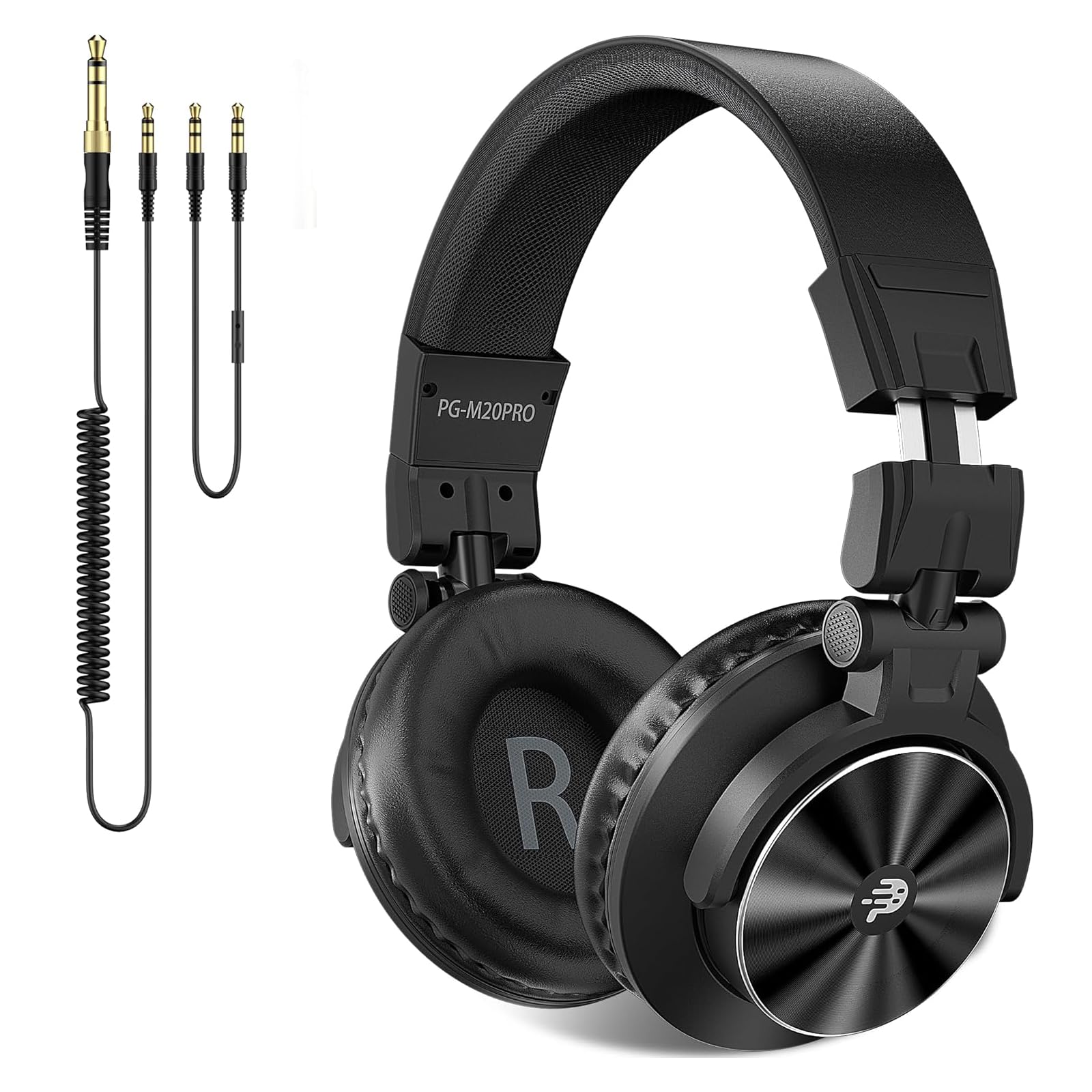
The PUPGSIS Studio Monitor Headphones are purpose-built for podcast duos who need a splitter-free monitoring setup. The 50mm drivers produce a dynamic, wide frequency range from 20Hz to 20kHz, with balanced mids and precise treble that help you hear vocal sibilance and plosives during recording. The sound is not perfectly neutral but is tuned for practical voice monitoring.
The standout feature is the dual-3.5mm output system: plug one headphone into your interface, then daisy-chain a second unit for your co-host with zero latency. The 4D floating headband distributes weight evenly across the crown, and at 270 grams the headphones are lighter than many competing over-ears. The foldable design collapses to palm size and ships with a protective case and both 3.5mm and 6.35mm cables.
Build quality is acceptable for the price, though the plastic frame does not feel as premium as higher-end studio monitors. The 3-meter retractable cable is sturdy but can be cumbersome for travel. If you record with a partner and want reliable, low-latency shared monitoring, this solves the splitter headache elegantly.
Why it’s great
- Dual-headphone sharing port eliminates need for external splitter
- Lightweight (270g) with floating headband for long recording sessions
- Includes protective case, dual cables, and 6.35mm adapter
Good to know
- Plastic build lacks the durability of metal-framed studio monitors
- 3-meter cable is long for portable use; may require cable management
6. JBL Tune 500 Wired On-Ear Headphones

The JBL Tune 500 brings the brand’s iconic Pure Bass sound to a compact on-ear wired format. The 32mm dynamic drivers produce the characteristic JBL warmth—punchy, resonant low end with clear vocal reproduction that suits pop, rock, and podcasts. The bass is present but not overwhelming, making these a solid choice for daily commutes or office listening where you want energy without distortion.
The lightweight foldable design (well under 200 grams) and flat tangle-free cable make these highly portable. The in-line one-button remote controls playback, calls, and activates Siri or Google Assistant on compatible devices. The ear cups are cushioned but on-ear, meaning they press against the ears rather than enclosing them—comfortable for most, but may feel tight during extended wear, especially for those with larger ears or glasses.
The build uses plastic throughout; while lightweight, it does not feel as robust as over-ear studio options. The 32mm drivers also cannot match the bass depth and clarity of 40mm or 50mm models. For a lightweight, zero-latency portable headphone with reliable voice assistant access and JBL’s signature tuning, the Tune 500 hits the mark.
Why it’s great
- Signature JBL Pure Bass sound with energetic lows and clear mids
- Ultra-lightweight foldable design for easy daily portability
- Flat cable resists tangling; one-button remote controls calls and assistant
Good to know
- On-ear design presses against ears; may feel tight for glasses wearers
- 32mm drivers lack the low-end depth and headroom of larger driver models
7. Sony Deep Bass Wired Earphones (MDR-XB55AP)

Sony’s Deep Bass Wired Earphones use 9mm neodymium dynamic drivers to deliver a surprisingly potent low end in a tiny package. The bass is pronounced but controlled—perfect for workouts, commutes, or gaming on a Nintendo Switch or Steam Deck where you need a compact, secure fit. The sound signature is warm and engaging, with decent instrument separation for the driver size.
The in-line remote and microphone allow call control and voice assistant access, though the mic quality is below average and better suited for calls than recording. The earbuds sit securely in the ear and are comfortable enough to wear while lying down. The cable wraps around the included carrying tool to prevent tangles, a thoughtful touch for portable use. Durability is excellent—many users report these surviving laundry cycles unscathed.
The cable is permanently attached, so if the wire fails near the earbud, the unit is not repairable. The bass focus can overpower mid-range details in complex tracks. For a cheap, durable wired earbud with deep bass and a microphone that prioritizes durability over fidelity, these remain a top choice among handheld gamers and daily commuters.
Why it’s great
- Deep, punchy bass in a compact and secure-fitting earbud design
- Excellent durability—known to survive laundry and daily abuse
- Comfortable to wear lying down; cable wraps neatly into included tool
Good to know
- Non-detachable cable—damage near the bud means replacing the whole unit
- In-line microphone quality is poor for calls and recording
FAQ
Can I use 3.5mm headphones with my phone if it has no headphone jack?
Do 3.5mm headphones sound better than Bluetooth headphones?
What does 3.5mm TRS vs TRRS mean for headphones?
Are 50mm driver headphones always better than 40mm driver models?
Final Thoughts: The Verdict
For most users, the best 3.5 mm headphones winner is the Sony MDR7506 because it delivers an industry-standard neutral reference sound that works for studio mixing, gaming, and everyday listening with proven durability. If you want a compact audiophile IEM with exceptional detail and stage separation, grab the Linsoul KZ ZS10 Pro. And for zero-latency podcast duo monitoring with built-in headphone sharing, nothing beats the PUPGSIS Studio Monitor Headphones.