
Our readers keep the lights on and the weekend projects moving. As an Amazon Associate, I earn from qualifying purchases.
You are shoulder-to-shoulder inside a tent built for three, and the rain has been hammering the fly for the last four hours. The fabric above your head is sagging with water weight, and you are running a fingertip along the floor seam, wondering if the seam-sealing job is going to hold until dawn. This is the moment where every decision you made about that 3-man tent — the pole gauge, the floor waterproof rating, the vestibule depth — either saves your night or ruins it. Picking the wrong shelter means condensation dripping on your sleeping bag, stakes pulling out of soft ground, and a cramped interior that turns a weekend trip into a claustrophobic endurance test.
I’m Rikta — the co-founder and writer behind FitlyFast. I have spent hundreds of hours analyzing spec sheets, comparing seam-sealing methods, and cross-referencing real-user durability reports so you do not have to guess which 3-man tent actually delivers on its promises.
A 3 man camping tent must balance interior floor dimensions, pole material, waterproof coatings, and packed weight — a combination that determines whether your group sleeps dry or spends the night hunched against a leaky wall.
How To Choose The Best 3 Man Camping Tent
A 3-man camping tent is a cross-category compromise: light enough for a short carry but spacious enough for a small group. The first mistake most buyers make is assuming the “3 person” label means three adults, sleeping bags, and gear will all fit it comfortably. In reality, most manufacturers rate a tent for sleeping bodies packed side-by-side with zero extra room. The real-world capacity for a comfortable trip is closer to two adults plus gear or two adults and one small child. Understanding this upfront saves you from buying a tent that feels more like a bivy sack than a shelter.
Floor Dimensions and Peak Height
The floor area is the single most important spec for a 3-man tent. Look for a width of at least 70 inches — this allows two standard sleeping pads side-by-side with a narrow gap. Length should exceed 86 inches so a six-foot-tall sleeper does not touch the end wall. Peak height matters for sitting up to change clothes; anything above 45 inches lets you sit upright without your head pressing into the mesh. A tent with steeper walls, achieved through pre-bent poles, creates more usable headroom and reduces the claustrophobic feel of a shallow dome.
Pole Material and Gauge
Poles are the skeleton of your tent. Aluminum alloy (most commonly 7001 or 7000 series) is the standard for durability and weight. Aluminum also resists splintering in wind, unlike fiberglass poles which can snap under repeated stress. For a 3-man tent, look for pole diameters of at least 8.5 mm. Thinner poles might save a few ounces but will flex more in gusty conditions, reducing the tent’s overall stability. Pre-bent poles, as seen in higher-tier designs, increase wall angle and interior volume without adding significant weight.
Rainfly Waterproof Rating and Coverage
The rainfly hydrostatic head rating, measured in millimeters (mm), tells you how much water pressure the fabric can handle before leaking. For a reliable 3-man tent, a rainfly rating of 2000 mm is a safe baseline, and 3000 mm or higher provides serious confidence in heavy downpours. Full-coverage rain flies that extend to the ground offer the best protection, though they can reduce airflow. Partial-coverage flies trade some weather protection for improved ventilation and a view of the sky. Look for fully taped seams on both the fly and the floor — seam sealing is non-negotiable for keeping water out where fabric panels join.
Ventilation and Condensation Management
Condensation is the number one moisture complaint in 3-man tents, especially when three warm bodies exhale all night inside a sealed shelter. A double-wall design — where the inner tent is mostly mesh and the rainfly sits on top — creates an air gap that allows moisture to escape rather than drip onto your bag. Look for tents with two doors (cross ventilation) and at least two roof vents on the rainfly. Mesh density also matters: B3 mesh (standard) balances airflow with bug protection, while finer mesh blocks smaller insects but restricts air movement.
Packed Weight and Portability
A 3-man camping tent occupies a middle ground between basecamp luxury and backpacking efficiency. If you plan to carry the tent more than a mile, keep the packed weight under 8 pounds. Anything over 10 pounds becomes a burden for one person to carry, even if split among three hikers. The packed size also matters — a tent that compresses to under 22 inches in length fits horizontally inside most 60-liter packs. Nylon and polyester fabrics with lower denier numbers (15D to 40D) save weight but require careful site selection to avoid punctures, while 75D polyesters offer more abrasion resistance for car camping scenarios.
Quick Comparison
On smaller screens, swipe sideways to see the full table.
| Model | Category | Best For | Key Spec | Amazon |
|---|---|---|---|---|
| Toogh Hexagon Pop Up | Instant | Ultra-fast setup & wind resistance | 66 in peak height, dual doors | Amazon |
| ALPS Mountaineering Zephyr | Premium | Humidity & hot-weather camping | Pre-bent poles, full mesh walls | Amazon |
| Naturehike Cloud Up 3 | Ultralight | Backpacking & weight-conscious trips | 6.3 lbs packed, footprint included | Amazon |
| Naturehike Cloud River 3 | Budget-Friendly | Budget-friendly backpacking | 7001 aluminum poles, 360° mesh | Amazon |
| Camppal 2-3 Person | All-Weather | Four-season durability | PU 3500mm fly, PU 4000mm floor | Amazon |
| Bessport 3 Person | Budget-Friendly | Entry-level backpacking | 8.5 mm aluminum poles, dual doors | Amazon |
| Coleman Sundome | Entry-Level | Car camping & festivals | WeatherTec system, 35 sq ft floor | Amazon |
In‑Depth Reviews
1. Toogh 2/3 Person Hexagon Instant Pop Up Tent
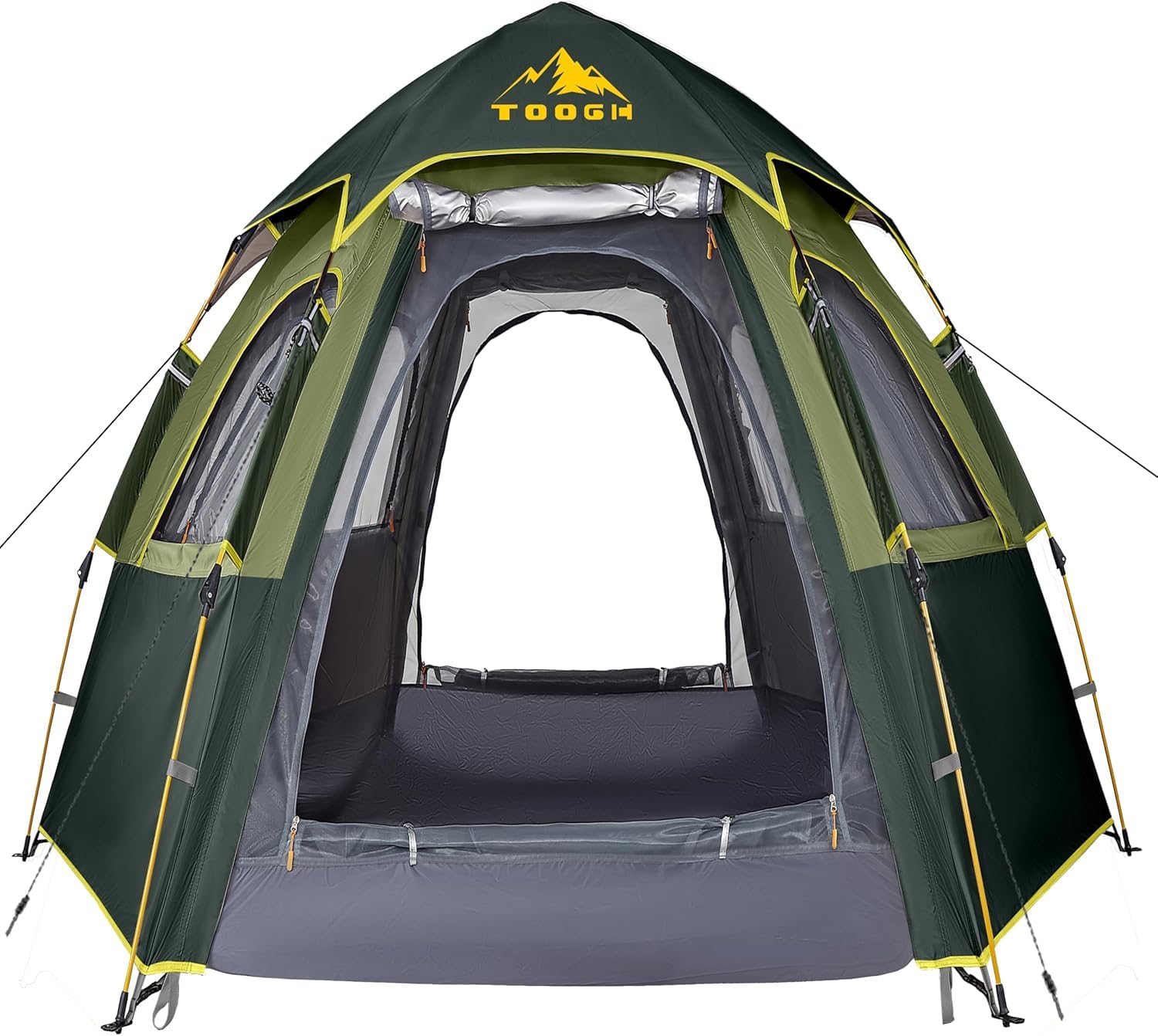
The Toogh Hexagon Pop Up rewrites the rulebook for convenience without sacrificing structural integrity. The pre-attached poles mean you unfold the tent, lift the top, and it locks into place in under 60 seconds — no pole sleeves to thread, no clips to fumble with in the dark. The hexagon shape inherently handles wind better than square or rectangular domes because it presents multiple angled faces to gusts, and real-user reports confirm it survived 50 mph winds with no structural failure. The double-layer design with an inner mesh body and a 210D Oxford rainfly (rated 3000 mm) creates an air gap that stops condensation dripping on your face, a common complaint in single-wall pop-up tents.
Interior volume is generous for a 3-man design: 87 inches long by 51 inches wide with a 66-inch peak height. That peak height allows a person of average stature to stand upright near the center, a rare feature in this price tier. The dual doors are both full-size, and both layers of all four windows can be fully opened — not just zipped halfway — which delivers exceptional cross-ventilation on warm nights. The front door includes two metal poles to prop it open as a vestibule, giving you covered storage for muddy boots or wet gear without dragging debris inside the sleeping area.
The included kit is unusually complete: 14 aluminum ground stakes, 8 guy-out ropes, two door poles, and a high-density Oxford carry bag that does not shred after a few trips. The trade-off is packed weight — at roughly 12-14 pounds, this is a car-camping tent, not a backpacking shelter. The rainfly is on the smaller side for a full-coverage design, and some users report the included stakes bend under hard soil. Still, for the speed of setup, interior space, and proven weather resistance, this is the most practical overall choice for families and weekend car campers.
Why it’s great
- Instant 60-second setup with pre-attached poles
- Double-layer design prevents condensation drip
- Four windows open fully for max ventilation
- Proven wind resistance up to 50 mph
Good to know
- Heavy (12+ lbs) — not for backpacking
- Rainfly coverage is partial, not full ground extension
- Included stakes are serviceable but not heavy-duty
2. ALPS Mountaineering Zephyr 3-Person Tent

The ALPS Mountaineering Zephyr is engineered specifically for the camper who battles humidity and heat more than cold. The defining feature is the pre-bent 7000 series aluminum poles that create steeper, more vertical walls than a standard dome — boosting interior volume without adding packed weight. Combined with the full-mesh inner tent, this design maximizes headroom and airflow simultaneously. The rainfly is a 75D 185T polyester with a 1500 mm coating, which is on the lower end of waterproof ratings but adequate for moderate rain. The real strength here is condensation control: the full mesh body paired with a fully removable fly lets hot, moist air escape freely, making it one of the most breathable 3-man tents available.
Setup is straightforward with snap-on pole clips rather than sleeves, and the freestanding design means you can move the tent to a better spot before staking. The dual doors with two vestibules provide 40 square feet of floor area — a realistic 2-person-plus-gear setup rather than a tight squeeze for three. Real-user reports confirm the tent handled 40-knot winds with freezing rain while keeping gear dry under the vestibules. The included stakes are 7075 aluminum (light and strong), and the guy-out points are well-placed for securing the fly taut in wind.
Packed weight hovers around 5.5 to 6 pounds with the fly and poles, making it light enough for short backpacking trips, though the packed size is moderate rather than ultra-compact. A known quirk is that the rainfly lacks color-coded corners, so first-time setup requires a few minutes of orientation. Some units arrive with pinhole openings at floor corner seams that require additional seam sealer. The floor fabric is also on the thinner side, so using a separate footprint or tarp is recommended for rocky sites. For campers prioritizing ventilation and humidity management over arctic-level waterproofing, the Zephyr is a standout performer.
Why it’s great
- Pre-bent poles create steep walls for more headroom
- Full mesh inner tent eliminates condensation in humid climates
- Sub-6 pound packed weight for 3-person shelter
- Dual doors with spacious vestibules for gear storage
Good to know
- Rainfly waterproof rating (1500 mm) is lower than premium competition
- Floor corners may need additional seam sealing out of the box
- Floor fabric is thin — a footprint is strongly advised
3. Naturehike Cloud Up 3 Person Backpacking Tent
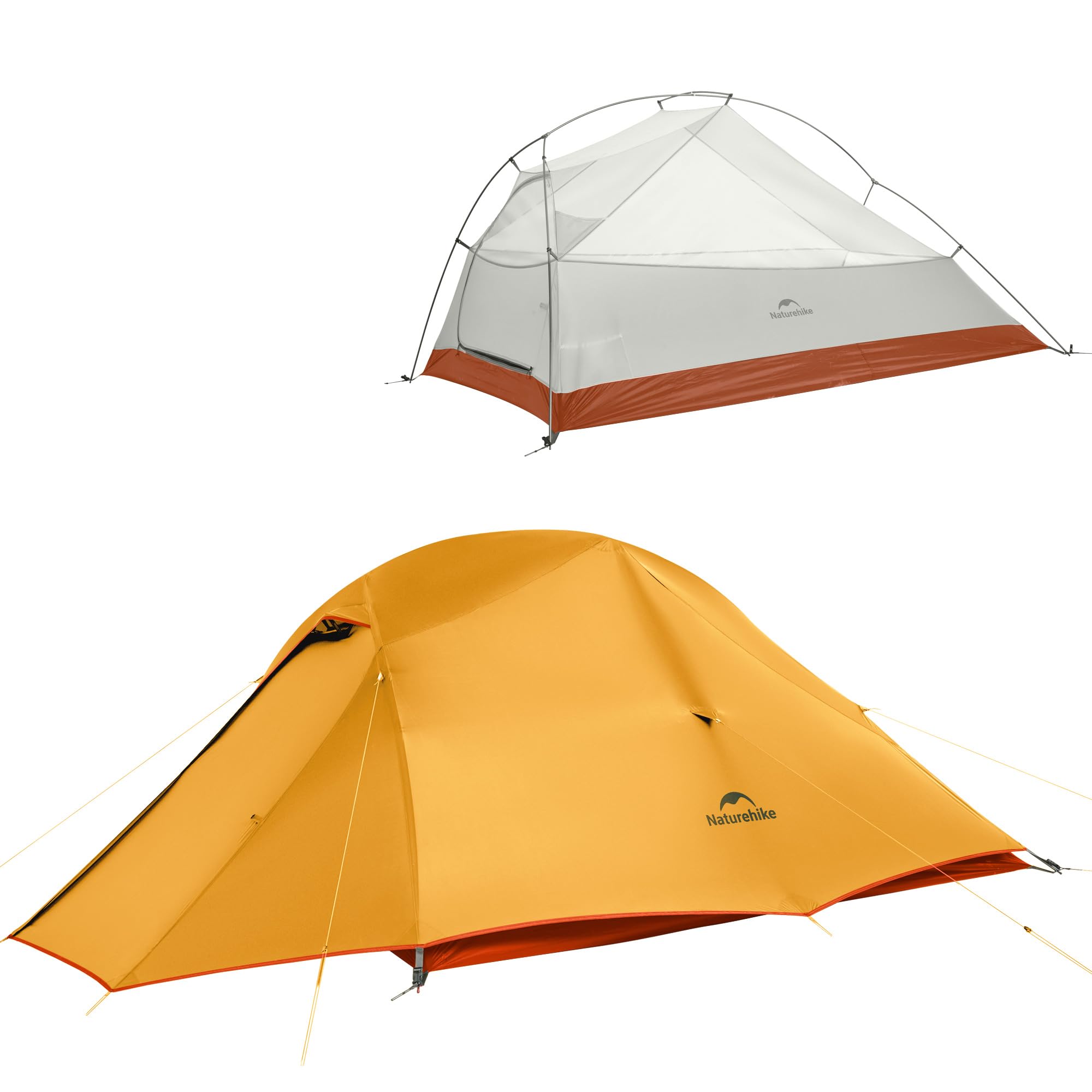
The Naturehike Cloud Up 3 is the updated version of one of the most popular budget ultralight tents on the market. The core upgrade is the floor dimensions: 116.1 inches long by 82.7 inches wide, with a peak height of 45.3 inches. That width is generous enough for three standard sleeping pads with almost no overlap, and the length accommodates tall sleepers without touching the end wall. The dual-Y aluminum pole structure (8.5 mm diameter) strikes an effective balance between weight savings and stability, and the freestanding design makes site selection easy. Packed weight is under 6.3 pounds, and the packed size shrinks to 16.9 inches by 6.7 inches — small enough to stow vertically inside a 50-liter pack.
Waterproofing hardware includes a 210T ripstop polyester rainfly (PU 3000 mm) and a floor with the same rating, plus an included footprint with a PU 5000 mm coating for extra ground protection. The double-wall design uses high-density B3 mesh for the inner tent, and the upgraded wing design increases the air gap between the inner and outer tent to reduce condensation. The rainfly can also be pitched separately as a sun shade, adding versatility. User reports confirm the tent stayed completely dry during continuous heavy rain, though some noted condensation was manageable as long as the vents remained open.
A common complaint is the single-door entry — the Cloud Up 3 has only one door, which creates a bottleneck when three people need to get in and out. The single vestibule also limits gear storage compared to dual-vestibule designs. The pole tips have been known to disconnect from the pole sections during setup, requiring careful attention during assembly. The floor is also on the thinner side despite the 3000 mm rating, so careful site selection is necessary to avoid punctures from sharp rocks. For backpackers who prioritize weight and packability and can tolerate the single-door limitation, this is a compelling value.
Why it’s great
- Under 6.3 lbs packed weight with large floor area
- Includes footprint (PU 5000 mm) at no extra cost
- Wing design improves airflow gap to reduce condensation
- Rainfly can be used as standalone sun shelter
Good to know
- Single door creates congestion with three occupants
- Pole tips may disconnect during setup
- Floor is thin despite high waterproof rating
4. Naturehike Cloud River 2/3 Person Backpacking Tent
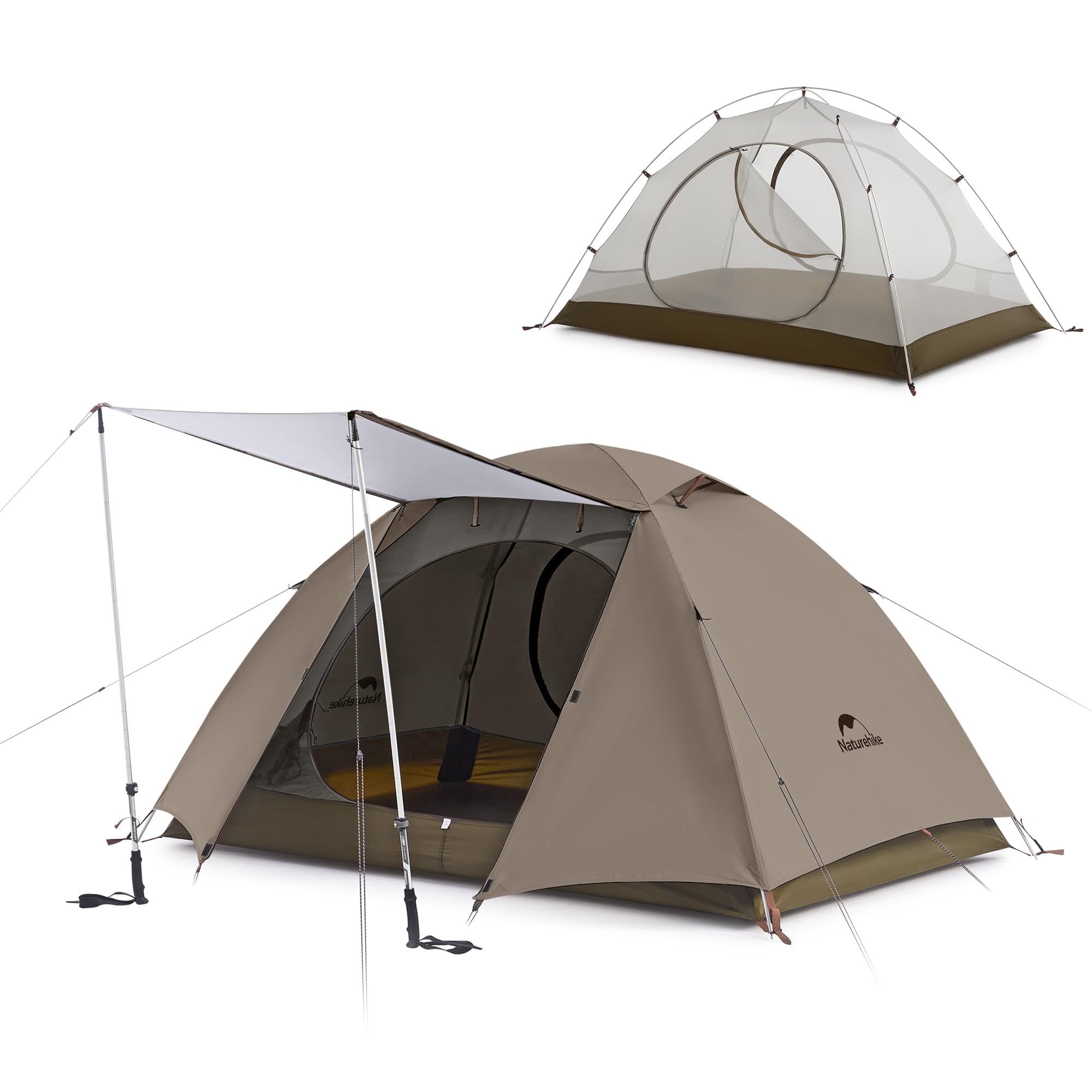
The Naturehike Cloud River is positioned as a lightweight 3-person option that prioritizes ventilation and panoramic visibility. The entire inner tent is constructed from mesh panels, allowing 360-degree views and exceptional airflow — perfect for warm-weather camping where condensation and stuffiness are the primary enemies. The X-cross 7001 aluminum alloy pole structure is tough and lightweight, and setup can be completed in roughly five minutes by a single person. Floor dimensions measure 86.6 inches long by 70.9 inches wide with a 49.2-inch peak height — sufficient space for two adults with gear or two adults and one child, though three adults would be a tight fit width-wise.
Waterproofing is handled by a 210T polyester rainfly with a silver coating rated at 2000 mm, which includes UPF 50+ sun protection for the fabric. User reports consistently praise the ventilation performance, with many noting that the full mesh body combined with the two-door entry and two ceiling vents kept the interior dry even in humid conditions. The double-wall design allows the inner mesh tent to be used alone for stargazing on clear nights, and the rainfly pitches separately as a tarp-style shelter. The lightweight build — under 7 pounds — makes it feasible for backpacking, and the packed size (20.5 x 6.3 x 6.3 inches) is manageable for most packs.
The main limitation is the floor area rating: three adults will find the 70.9-inch width restrictive, making this a comfortable 2-person plus child shelter in practice. The floor fabric is also on the thinner side, and multiple users recommend using an additional ground tarp to prevent punctures. The included stakes are standard aluminum but not the most durable for hard-packed ground. The rainfly’s 2000 mm rating is adequate for moderate rain but may struggle in sustained heavy downpours. For campers who prioritize ventilation and weight savings over squeezing in a third adult, the Cloud River delivers strong value at its price point.
Why it’s great
- Full 360-degree mesh inner tent for peak ventilation
- 7001 aluminum alloy poles are lightweight and durable
- X-cross setup is fast and intuitive for solo pitching
- Rainfly offers UPF 50+ sun protection
Good to know
- 70.9-inch width is tight for three adults
- Floor is thin — an additional ground tarp is recommended
- Rainfly rating (2000 mm) is entry-level for heavy rain
5. Camppal 2/3 Person Backpacking Tent

The Camppal 2/3 Person Tent is built with a “weather-first” philosophy, using some of the highest waterproof ratings in its segment. The rainfly is rated at PU 3500 mm, and the bathtub floor uses 300D Oxford fabric with a PU 4000 mm rating — numbers that typically belong to tents costing significantly more. The seam taping extends to the zipper tracks, velcro pole wraps, and all four floor corners, creating a fully sealed envelope that has survived sustained rain and freezing conditions in real-user reports. The aluminum pole structure (two crossing poles) is simple and robust, and the freestanding design allows relocation without full disassembly.
The interior space measures 6.89 feet by 5.91 feet with a peak height of 4.27 feet. This is a realistic 2-person with gear tent rather than a comfortable 3-person shelter, though three would fit in a pinch. The double-door design with two vestibules provides cross-ventilation and covered storage for packs and boots. The included gear loft and five storage pockets help organize small items off the floor. User reports confirm the tent handled wind and rain in sub-30-degree Fahrenheit conditions without issues, and the zippers remained smooth after extended use. The UPF 50+ rating on the rainfly adds sun protection for alpine use.
The primary drawback is packed weight — 8.07 pounds makes this tent better suited for car camping or short carries rather than long backpacking trips. Some users reported a strong chemical smell from the fabric that persisted through multiple uses, and the tent is noticeably less breathable than full-mesh designs because the rainfly coverage is substantial. The packed size (20.48 x 7.09 inches) is manageable but not ultralight territory. The included stakes are 7-inch spikes that are too short for loose sand or rocky soil. For campers who prioritize absolute waterproofing and can tolerate the weight penalty, this is a serious weather shelter.
Why it’s great
- Exceptional waterproof ratings (PU 3500 mm fly, PU 4000 mm floor)
- Fully taped seams including zipper tracks and floor corners
- Two vestibules provide covered gear storage
- Gear loft and five pockets for organization
Good to know
- 8.07 lbs packed weight — heavy for backpacking
- Strong chemical smell reported from new fabric
- Limited breathability compared to full-mesh designs
- Included 7-inch stakes too short for loose terrain
6. Bessport Camping Tent for 2/3 Person

The Bessport 3 Person tent delivers solid entry-level performance at a price point that undercuts most of the competition while still using 8.5 mm aluminum poles — not the fiberglass poles found on many budget tents. The dual D-shaped doors provide easy entry and exit from either side, and the two vestibules offer covered storage for packs. Interior floor dimensions are 88.4 by 72.7 inches with a peak height of 47.2 inches, which is roomy enough for two adults with gear or two adults and a child. The packed weight of 7.16 pounds places it in the car-camping category, though it is light enough for short backpacking trips if weight is split among the group.
Waterproofing uses a fully taped seam construction with a rating over 3000 mm on the rainfly. The four guylines and the redesigned 8.5 mm poles provide better wind resistance than typical budget tents, and real-user reports confirm the tent survived a two-day thunderstorm without leaks. The ventilation setup includes a large mesh window with two ceiling vents on the upper portion of the tent, and the high-density mesh skylight allows stargazing when the fly is off. Setup is achieved with a single aluminum pole and clip structure that several users report completing in under 90 seconds with two people.
The main limitations center on fit and finish. The zippers can catch on the fabric if not guided carefully, and some users found the stakes bent on rocky ground. The interior height of 47.2 inches is sufficient for sitting up but not standing, and the walls slope inward at the foot, reducing usable space near the ends. The rainfly coverage is adequate but not full ground extension, so wind-driven rain could spray under the fly in exposed campsites. A small percentage of units arrived with minor quality-control issues such as loose stitching or missing attachment clips. For budget-conscious campers who want aluminum poles and dual doors, the Bessport provides a functional platform at a minimal cost.
Why it’s great
- 8.5 mm aluminum poles at an entry-level price point
- Two D-shaped doors with vestibules for easy access and storage
- Waterproof rating over 3000 mm with fully taped seams
- Quick setup with single-pole clip structure
Good to know
- Zippers can catch on fabric if not aligned
- Included stakes are basic and bend on hard ground
- Rainfly coverage is partial, not full ground extension
- Some units have minor quality-control inconsistencies
7. Coleman Sundome Camping Tent 2/3/4 Person

The Coleman Sundome is the most recognizable name in entry-level camping, and the 3-person version continues the legacy of functional, no-surprises design. The WeatherTec system — welded corners and inverted seams — is Coleman’s proprietary approach to water resistance, and it works well in light to moderate rain. The dome form factor stands freely without stakes, which is convenient for temporary placement. The continuous pole sleeve system allows setup in roughly 10 minutes, and the 35-square-foot floor area provides enough room for a queen air mattress with some space left over for gear. The polyguard base and tarp-style floor material are durable for packed campground soil, though not for rocky alpine terrain.
The ventilation setup includes a ground vent, two windows, and a door awning that can be propped open. The rainfly covers the mesh roof panels but does not extend to the ground, leaving the lower walls exposed. In real-world use, the tent handles temperatures down to around 50 degrees Fahrenheit well, with adjustable airflow through the rainfly gap. Users consistently praise the ease of setup and the straightforward, intuitive design that requires almost no instruction reading. The carry bag is functional, and the packed weight is manageable for car camping transport.
The main compromises are inherent in the budget positioning. The rainfly coverage is minimal compared to full-coverage designs, leaving the tent vulnerable to wind-driven rain that can spray through the mesh. The floor is a thin tarp material that is not suitable for rocky sites without an additional ground cloth. The peak height is lower than most competitors, making it awkward for sitting up fully. The included stakes are generic and considered replaceable by most users. Despite these limitations, the Sundome has sold millions of units for a reason: it works predictably in fair-weather conditions, and the price point leaves room in the budget for upgrades like a footprint and better stakes.
Why it’s great
- WeatherTec system with welded corners and inverted seams
- Easy setup in under 10 minutes with continuous pole sleeves
- Free-standing design for easy relocation
- Proven reliability for fair-weather car camping
Good to know
- Rainfly coverage is partial, not full ground extension
- Thin tarp floor requires separate ground cloth on rough sites
- Lower peak height than competitors — sitting posture is cramped
- Included stakes are generic and should be upgraded
FAQ
Will a 3-man tent actually fit three adults with sleeping bags?
What is the difference between a double-wall and single-wall tent for a 3-man shelter?
How do I prevent condensation inside a 3-man tent?
Is it worth paying extra for pre-bent poles in a 3-man tent?
Can I use a 3-man tent for backpacking?
Final Thoughts: The Verdict
For most users, the best 3 man camping tent winner is the Toogh Hexagon Instant Pop Up because it combines lightning-fast setup, double-layer moisture control, and interior volume that actually accommodates three people with their gear. If you want a lightweight backpacking shelter that packs small and includes a footprint, grab the Naturehike Cloud Up 3. And for humid-weather camping where condensation is your main enemy, nothing beats the breathable full-mesh design of the ALPS Mountaineering Zephyr.