
Our readers keep the lights on and the weekend projects moving. As an Amazon Associate, I earn from qualifying purchases.
Specs are compiled from manufacturer listings and verified buyer reviews and can change over time — please confirm the key details on the product page before buying.
You and two friends are finally on the trail, but the moment you unzip the tent it is a squeeze, and by midnight you feel the damp from the floor seeping in. A real three-person hiking tent must balance a livable floor area with a weight your back can handle, plus a waterproof rating that handles sudden mountain downpours. Even experienced campers often bring the wrong choice — the tent that looked roomy in the store is a coffin on the trail, or the ultralight shelters that shave ounces by shaving inches.
I’m Rikta — the founder and writer behind FitlyFast. This guide is built by comparing the manufacturers’ published specifications and the patterns across verified customer reviews, so you get each pick’s real strengths and trade-offs instead of marketing spin.
Every tent here meets the three critical tests for a true 3-season backpacking shelter: enough floor area for three adults, a packed weight that makes sense for trail miles, and a waterproof coating that actually keeps things dry. Whether you are looking for the best value, a premium ultralight shelter, or a rugged all-weather basecamp, this breakdown of the 3 man hiking tent category cuts through the noise to the tents worth carrying.
Our Picks at a Glance
How To Choose The Best 3 Man Hiking Tent
Picking a tent for three hikers involves three non-negotiable decisions: how much floor area you actually get per person, the total weight your legs will carry, and the waterproofing that keeps a storm out. Here is what each spec means for your hike.
Floor Area and Livable Space
A tight 3-person tent gives each person about 20 inches of width — that is narrower than a twin mattress. Look for a floor width of at least 70 inches if you want three adults to sleep without touching the walls. The total square footage matters too; anything around 41 to 43 square feet feels spacious, while below 38 you are stacking gear outside.
Packed Weight vs. Trail Weight
A true hiking tent for three people sits between 4.5 pounds and 7.5 pounds. Every pound you bring is a pound you carry uphill. Freestanding double-wall tents are heavier but easier to pitch on rocky ground; single-wall or trekking-pole tents save weight but need more skill to set up.
Waterproofing and Seam Sealing
The rainfly and floor need a hydrostatic head rating — the PU number you see. PU3000mm+ is the baseline for reliable rain protection. PU4000mm+ buys you confidence in sustained downpours. Look for taped or sealed seams, because that is where water sneaks in first.
Quick Comparison
| Model | Best For | Floor Area | Trail Weight | Waterproof Rating | Amazon |
|---|---|---|---|---|---|
| Naturehike Cloud Up 3★ Best Overall | Best Overall Value | 42.6 sq ft | 6.3 lbs | PU3000mm+ | Amazon |
| CANTUO 2/3 PersonBudget Champion | Budget Ultralight | 31.6 sq ft | 4.1 lbs | PU4000mm+ | Amazon |
| Naturehike Mongar Upgraded | Awning & Storage | 43.3 sq ft | 7.5 lbs | PU3000mm+ | Amazon |
| Kelty Far Out 3P | Easy Setup Starter | 40.0 sq ft | 5.2 lbs | 1500mm HH | Amazon |
| Big Agnes Copper Spur HV UL3 | Premium Lightweight | 41.0 sq ft | 5.5 lbs | 1200mm | Amazon |
| Big Agnes Copper Spur UL 3 | Top-Tier Ultralight | 45.8 sq ft | 5.5 lbs | 1500mm | Amazon |
In‑Depth Reviews
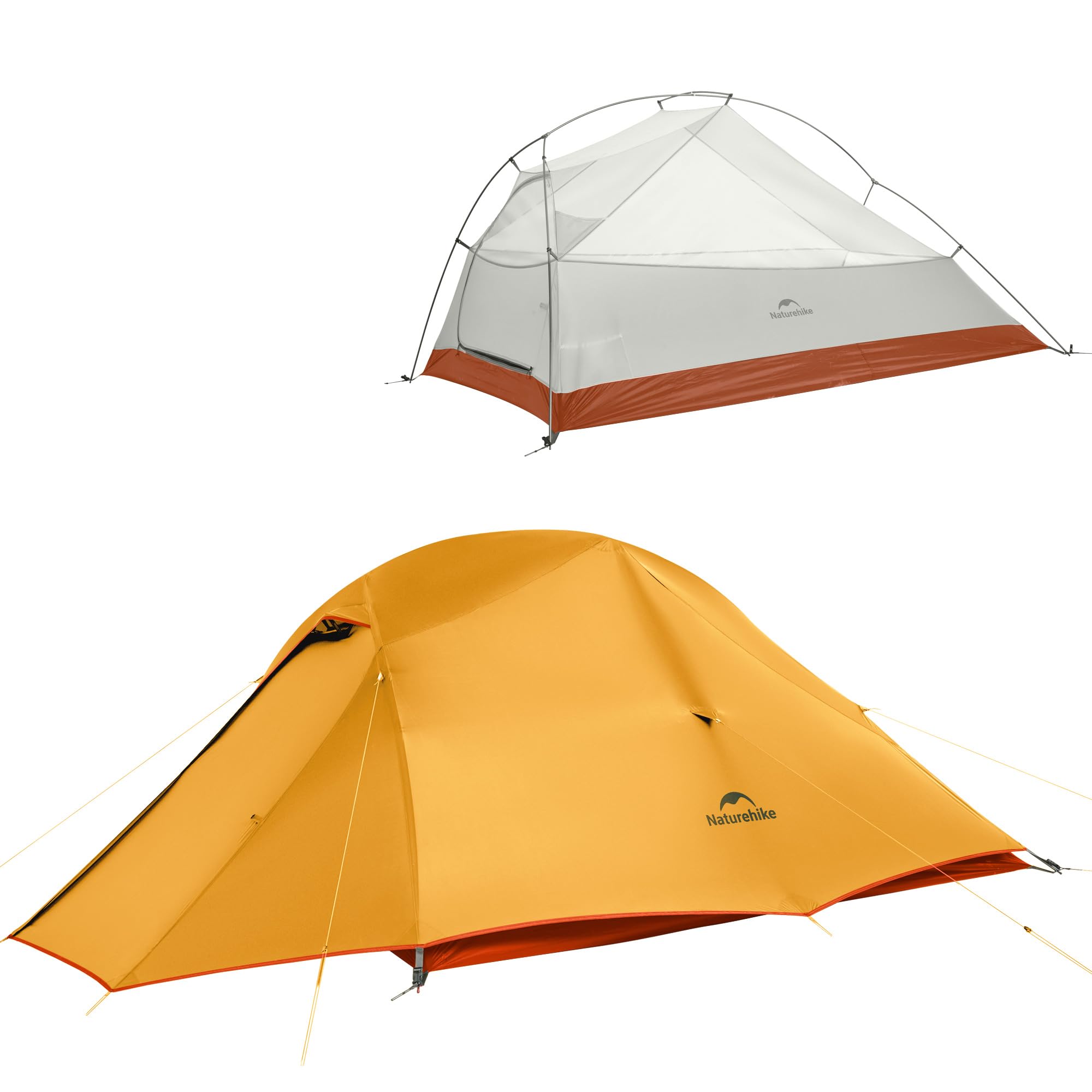
1. Naturehike Cloud Up 3 Person Backpacking Tent with Footprint
Our pick — over 4.5★ from 900+ verified ratings; the strongest balance of quality and price.
The spacious dome that swallows three without weighing you down.
This tent delivers the rare combination of a wide, livable footprint and a weight you can actually carry. The floor spans 116.1 inches long by 82.7 inches wide — that is a full 42.6 square feet, at 82.7 inches width versus the CANTUO’s 55.1 inches, so three sleeping pads fit without anyone touching the mesh wall. At just over six pounds packed, it is not the lightest on this list, but the interior volume makes the weight completely worth it when you can sit up at 45.3 inches and spread your gear in the vestibule.
The thing everyone raves about is the quality — 54 owners single it out — and it is no surprise when you look at the materials: the fly and floor are 210T ripstop polyester with a PU3000mm+ coating, and the poles are 8.5mm aluminum alloy. As buyers report, it “survived heavy rain and 40°F nights without condensation,” and the double-layer design with a high-density B3 mesh inner tent keeps airflow moving even when the fly is sealed. The included footprint with a PU5000mm+ coating adds another layer of ground protection, which is good because the floor is a bit thin for rough gravel.
Setup is straightforward thanks to the freestanding dual-Y aluminum pole structure — you can pitch it solo in about ten minutes, though a few campers note the poles lack front and rear markings, so you have to eyeball the orientation. The recurring gripe is the oversized footprint: it extends slightly past the tent walls, so in heavy rain you need to fold it under to avoid pooling. Still, this is the tent that balances space, weather protection, and price better than anything else on the market right now.
Spacious shelter: The floor area beats the CANTUO by a wide margin — 82.7 inches of width versus 55.1 inches — and the fly holds up to real storms.
Floor care needed: The thin floor does not handle gravel well; always use the included footprint and site the tent on soft ground.
Reach for this if: you need a genuine three-person tent where everyone sleeps comfortably and the weather stays out.
Think twice if: you are an ultralight gram-counter; the 6.3-pound pack weight is higher than the 4.1-pound CANTUO for a similar price.
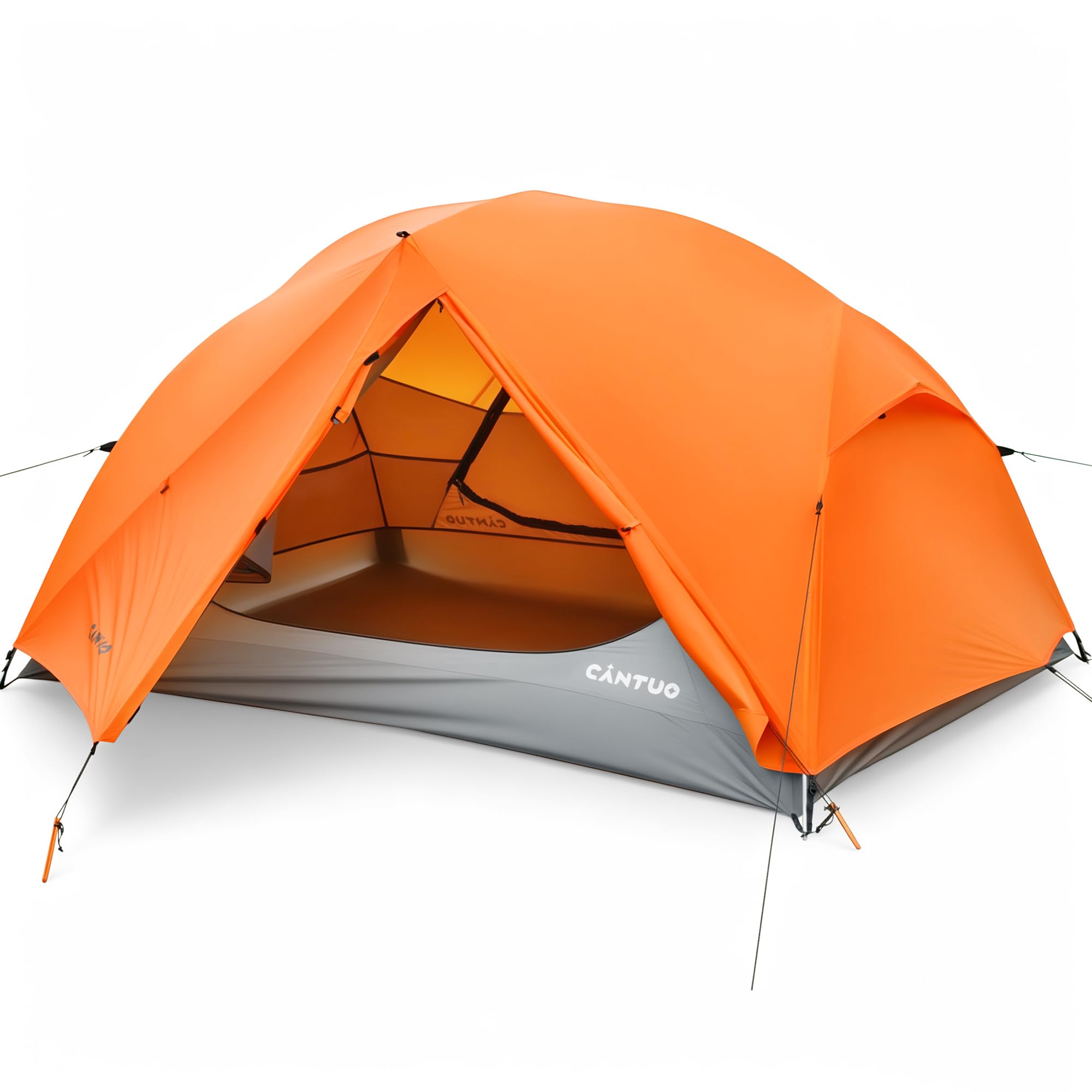
2. CANTUO 2/3 Person Tent Backpacking Tent with Footprint Ultralight 20D
The featherweight that punches above its price tag in stormy weather.
At 4.12 pounds packed, this is the lightest tent on the list, and the PU4000mm+ waterproof coating is also the highest — a 33% higher rating than the Naturehike Cloud Up 3’s PU3000mm+. That means you can take this into sustained rain without worrying about seepage through the fly or floor. The 20D ripstop nylon fabric is the kind of material you usually find on tents costing twice as much, and the 7001 aluminum alloy poles weigh only 1.2 pounds themselves, keeping the total carry weight low.
What wins people over is the ease of setup — 7 owners note it — and the fact that you get a custom footprint and high-quality stakes in the box. The interior measures 82.7 inches long by 55.1 inches wide, which fits two 25-inch sleeping pads side by side with extra room for gear. But here is the honest trade-off: this is really a two-person tent with breathing room. A third person would be a tight squeeze, and the 43.3-inch peak height is fine for sitting up but not for changing clothes. As owners mention, it is “lightweight (~4 lbs), compact, easy setup” and handles Colorado mountain weather well.
The double-layer design uses eight vents and B3 mesh to cut condensation, and the dual vestibules with independent entries give each person their own gear storage zone. The main drawback is that the 55.1-inch floor width means you are not getting a true three-person floor — the Naturehike Cloud Up 3 offers 82.7 inches of width, versus the CANTUO’s 55.1 inches. But if you primarily hike as a pair and occasionally need to squeeze a third person or a dog, the weight savings and waterproofing make this a compelling choice.
Ultralight winner: At 4.12 pounds with a PU4000mm+ fly, this is the tent to grab when every ounce counts and the forecast looks wet.
Not a true 3P: The 55.1-inch width is best for two; a third person makes it feel like a bivy.
Grab this for: solo or duo backpacking where the highest waterproof rating and lightest carry weight are the priorities.
Skip this if: you need a genuine three-adult floor; the Naturehike Cloud Up 3 gives you 82.7 inches width versus the CANTUO’s 55.1 inches.
3. Naturehike Mongar Upgraded 1/2/3 Person Backpacking Tent with Footprint
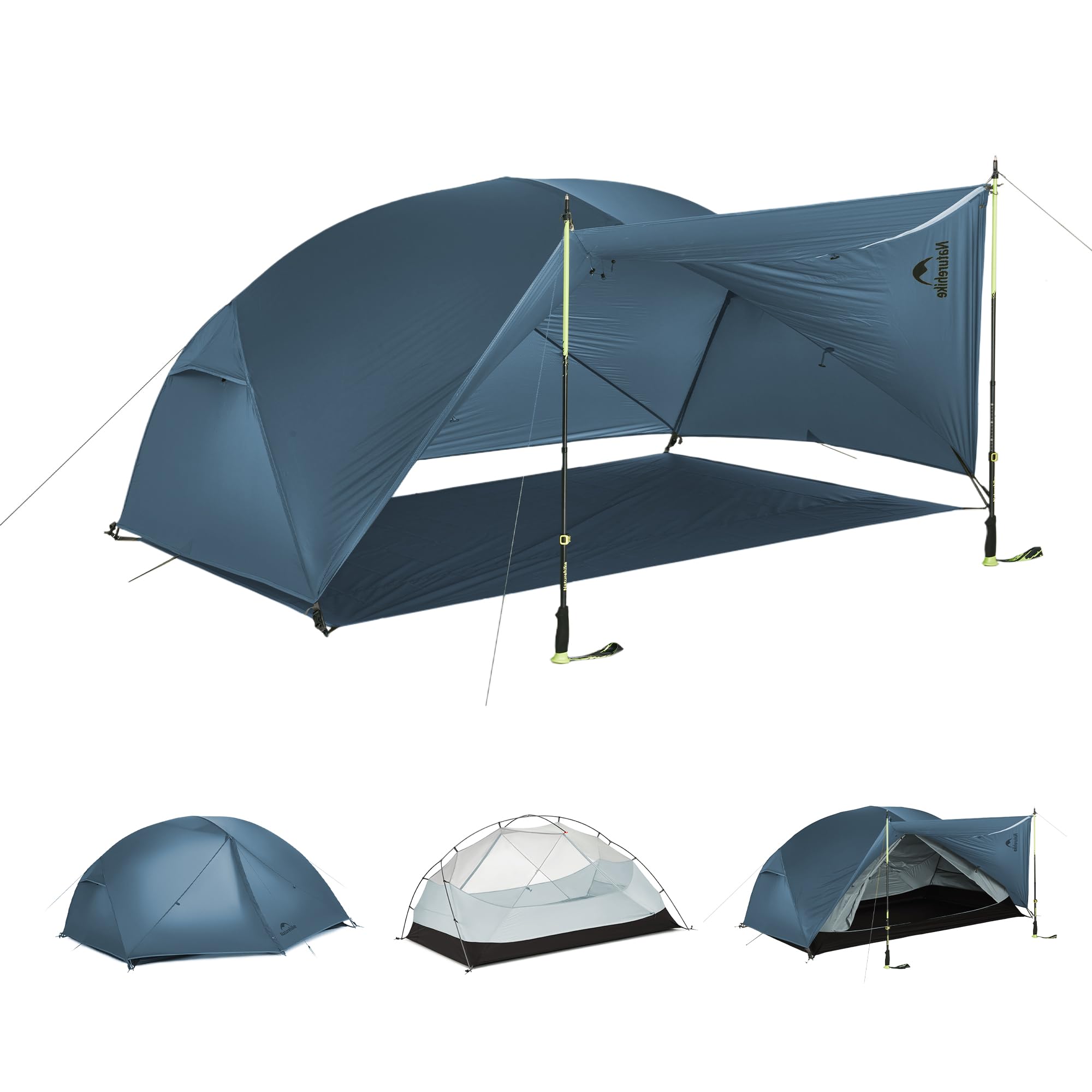
The camp shelter that doubles as a gear garage and rain break.
This is the tent that solves the age-old problem of where to cook when it is spitting rain. The expandable awning — a design unique among these picks — creates a covered porch area that keeps your stove and pack out of the weather while you stay dry inside. The interior itself is roomy at 86.6 inches long by 72.8 inches wide with a peak height of 43.3 inches, giving three people 43.3 square feet of floor space. The outer tent footprint is even larger at 90.6 by 120.1 inches, which means the fly fully covers the doors and vestibules even in wind-driven rain.
The weight is the obvious compromise: 7.5 pounds is the heaviest tent here, and that is before you add the footprint to the carry bag. But the extra pounds bring extra features: two doors, two vestibules, long end pockets, triangular ceiling pockets, a light clip, and a hanging cord for drying socks. Multiple owners praise the storage as “excellent,” and the setup is surprisingly fast for a tent this large — about three minutes solo once you get the hang of the clip system. The 210T plaid ripstop polyester with a PU3000mm+ coating held up well in 20 to 30 mile-per-hour gusts and thunderstorms during testing reported by owners.
The catch is the zippers: at least one owner found that the zippers do not completely close, leaving a gap large enough for mosquitoes to enter. This appears to be a quality-control issue rather than a design flaw, so inspect the zipper track before you head into bug-heavy areas. The awning also tends to puddle if left up in rain without a slight angle — a simple trekking pole adjustment fixes it. For car campers or kayak-campers who value a real living space over ultralight ounces, this is a standout design.
Awning advantage: The expandable porch keeps cooking and gear-staging dry, which no other tent here offers from the start.
Weight penalty: At 7.5 pounds, this is for shorter hikes or basecamp-style trips where comfort beats ounces.
Ideal for: groups who want a basecamp shelter with real covered living space and don’t mind carrying an extra 1-2 pounds.
Look elsewhere if: you are hiking more than five miles per day; the Naturehike Cloud Up 3 saves you over a pound.
4. Kelty Far Out Backpacking Tent + Tent Footprint Package 3 Person

The tent that makes first-time backpackers feel like pros on the trail.
Kelty designed the Far Out with beginners in mind, and it shows in every detail. The color-coded stake points and clips mean you cannot accidentally attach the fly backwards, and the shark-mouth stuff sack opens at a 45-degree angle so the tent slides in without the usual swearing and stuffing. The 3-person model weighs 5 pounds 3 ounces and offers 40 square feet of floor space with a 43-inch peak height, which is enough room for two adults plus gear or three lean hikers. The 68D polyester fly and floor carry a 1500mm HH waterproof rating — the lowest on this list, so you want to avoid setting up in a gully during a thunderstorm.
What stand out are the two large vestibules and the Stargazer fly, which lets you roll the rainfly halfway off from inside the tent to see the stars while still keeping the head end covered. Owners consistently praise the quality — 14 call it out — and the intuitive assembly. The tent uses lightweight aluminum poles and DAC stakes, which are nicer than the generic stakes in most budget tents. The free-standing design pitches quickly on dirt, gravel, or forest duff. A few taller campers over six feet found the floor length tight for stretching out fully, and at least one owner reported a pole breaking after three uses, though feedback on durability is mixed overall.
For the price, you get the tent, a matching footprint, and a storage sack — a complete kit that saves you the to you would spend on a footprint separately. The fly uses DWR/PFC-free fabrics, which is a nice environmental bonus. This is not the tent for extreme alpine conditions, but for weekend trips on established trails where you want something that sets up fast and packs down easily, it is a fantastic entry point.
New backpacker’s dream: Color-coded clips and a wide-mouth sack make this the easiest tent here to pitch and pack.
Weather ceiling: The 1500mm HH rating handles light rain but is not enough for sustained downpours in exposed areas.
Choose this if: you are buying your first backpacking tent and want a kit that includes everything and is impossible to set up wrong.
Pass if: you regularly hike in heavy rain or need to fit three tall adults; the Naturehike Cloud Up 3 has better waterproofing and more length.
5. Big Agnes Copper Spur HighVolume Ultralight Backpacking and Camping Tent 3 Person

The high-volume interior that makes two-person trips feel luxurious.
Big Agnes aims this tent at backpackers who want ultralight specs without the cramped feel of a traditional minimalist shelter. The HighVolume (HV) architecture gives you 41 square feet of floor space with a floor width of 6.4 feet — wide enough that two people can each have a 25-inch pad and still have room between them for a jacket or a book. The pre-bent span poles create near-vertical side walls, so your shoulders do not brush the mesh when you roll over. At 5.5 pounds, it is competitive with the Kelty Far Out while using a lighter nylon ripstop fabric with a PU1200mm coating.
The awning-style vestibules are a clever touch: you can roll the fly back to create a covered entry area that doubles as gear storage. The TipLok system combines the pole tip, rainfly attachment, and stake-out tension in one buckle, which streamlines setup. One owner sat out a severe hail and rain storm with the entire campsite submerged in two inches of water and reported the tent stayed completely dry inside. On the downside, the door flap hold ripped after one use according to one camper, and the fly is notorious for being loud in wind — a snapping, popping noise that can disturb light sleepers. Also, the dedicated footprint is expensive and hard to find separately, which is frustrating for a tent at this price.
This is a tight fit for three adults; most owners recommend buying the 3-person model for two people who want generous space. The convenience of the design — fast fly setup, easy stake-down, and the mtnGLO lighting system on some versions — makes it a joy to use on long trips. If you can tolerate the wind noise and can find the footprint, the livable space-to-weight ratio is excellent.
Luxury for two: The near-vertical walls and wide floor make this the most comfortable two-person tent on the list.
Wind noise issue: The fly snaps and pops in gusty conditions, which is the most common owner complaint.
Ideal for: couples or solo-plus-dog setups who want premium ultralight construction with real interior space.
Skip if: you sleep in windy alpine zones regularly; the noise may drive you to the Kelty or Naturehike options instead.
6. Big Agnes Copper Spur UL Backpacking Tent 3 Person
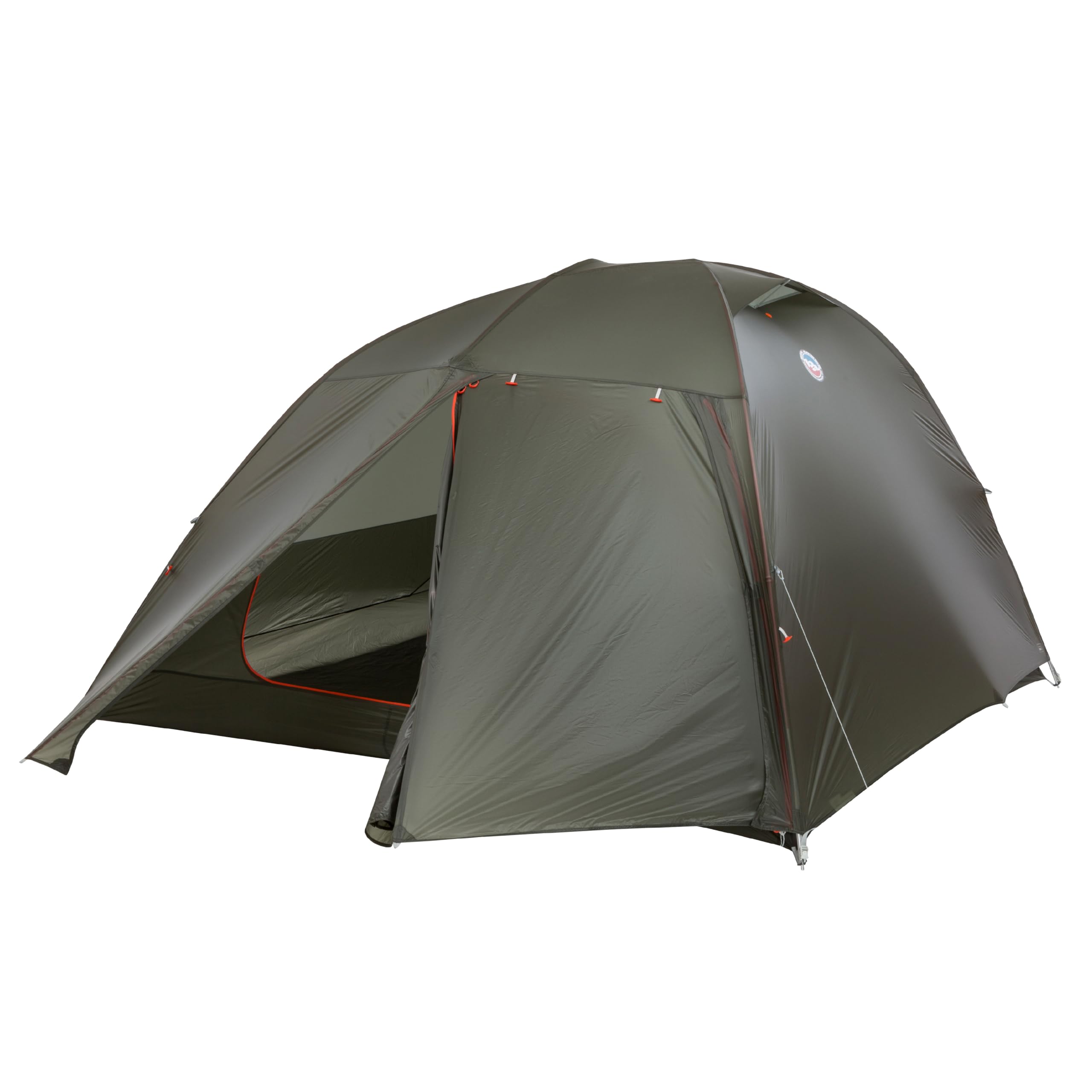
The flagship ultralight that costs more but delivers true 3-person space at 5.5 pounds.
This is the top-shelf option for a reason. The Copper Spur UL 3 gives you a generous 86-inch floor width and 96-inch floor length with a 50-inch peak height — that is 45.8 square feet of livable area, the largest floor on this list. Despite the spacious interior, it weighs just 5.5 pounds thanks to the 15D and 20D nylon ripstop fabric and the HyperBead fly treatment, which sheds water without added chemical coatings. The PFAS-free waterproof coating is rated to 1500mm, matching the Kelty Far Out but using a lighter fabric that packs much smaller. The DAC green anodized aluminum poles are the lightest in the test and clip into the TipLok buckles for a tool-free setup.
The awning-style doors work the same way as the Copper Spur HV — you can prop the fly open for stargazing and still have overhead cover. The interior organization is excellent: multiple mesh pockets on the walls and ceiling, a light clip for your headlamp, and reflective guylines that keep you from tripping at night. Customers note that it handles wind well and packs down small enough to fit in a bike pannier. However, the ultralight floor is thin — at least one owner poked a hole through the floor and footprint on their first trip by pitching on small gravel. You absolutely need meticulous site prep and the proprietary footprint (not included) to avoid damage.
The biggest sticking point is the price: this is the most expensive tent here by a wide margin. The performance is real — the HyperBead fabric, the DAC poles, and the smart clip system all justify the cost if you are an ultralight purist who counts every gram and expects a three-season tent to last. But for most buyers, the Naturehike Cloud Up 3 offers 42.6 square feet and a PU3000mm+ floor for a fraction of the cost, making the Copper Spur UL 3 a specialist tool rather than a general recommendation.
Ultralight benchmark: At 5.5 pounds with 45.8 square feet and 50 inches of headroom, this is the roomiest lightweight tent in the test.
Fragile floor: The thin 20D floor demands a footprint and careful site selection to avoid punctures — an occasional unit arrives with damage from gravel.
Buy this if: you are an ultralight backpacker who demands premium materials, maximum space per ounce, and does not balk at the investment.
Choose the Naturehike instead if: you want comparable space and better waterproofing for hundreds less; the cost gap is hard to justify for casual use.
Understanding the Specs
Waterproof Rating (PU/mm)
This number tells you how much water pressure the tent fabric can stand before it leaks. PU3000mm+ means the fabric can hold a 3000mm column of water — enough for moderate to heavy rain. PU4000mm+ handles sustained downpours. The Kelty Far Out’s 1500mm HH is fine for light rain but not trust for a stormy night.
Floor Dimensions & Area
The width and length in inches tell you who actually fits. A floor width of 70 inches or more gives three adults comfortable side-by-side sleeping. Anything below 55 inches is tight for two. Total square footage (floor area) is the most honest comparison — 42-45 sq ft feels spacious, 31-33 sq ft is three people packed like sardines.
FAQ
What is the difference between a 3-season and 4-season tent?
How do I know if a 3-person tent actually fits three adults?
Can I use a 3-person tent alone?
What packed weight is reasonable for a 3-person hiking tent?
Is it worth spending more for a Big Agnes tent over a Naturehike?
What does “freestanding” mean for a tent?
Does the footprint need to be exact for the tent?
How do I set up a double-wall tent in the rain without getting the inside wet?
Final Thoughts: The Verdict
For most people, the 3 man hiking tent winner is the Naturehike Cloud Up 3 because it delivers a genuine three-person floor at 42.6 square feet, reliable PU3000mm+ waterproofing, and a pack weight under 6.3 pounds — all for a price that leaves budget-friendly options in the dust. If you want the absolute lightest carry and do not need to fit three adults, the CANTUO 2/3 Person at 4.12 pounds with a PU4000mm+ coating is a fantastic duo shelter. And for basecamp comfort with a covered cooking area, the Naturehike Mongar Upgraded with its expandable awning is the pick for groups that value living space over ounces.
How We Picked
We do not accept paid placement. Every pick is matched to a real buyer and a real use-case; we do not hands-on test units.
Sources & Methodology
Specifications: manufacturer listings and product documentation. Review insights: verified customer reviews, as of July 2026. Pricing: not shown on this page (it changes often); check the current price via the retailer link.
As an Amazon Associate, FitlyFast earns from qualifying purchases. This does not affect which products we feature.