
Choosing a 300-watt solar panel means navigating a field where rated power often differs from real-world output, and where portability, cell technology, and connector type can make or break your off-grid setup. Whether you’re topping off an RV battery bank, running a portable power station during a blackout, or building a permanent cabin system, the panel’s conversion efficiency and build quality determine how many usable watts you actually get from the sun.
I’m Rikta — the co-founder and writer behind FitlyFast. I’ve spent years analyzing monocrystalline cell layouts, bifacial backsheet designs, and MC4 versus SAE connector reliability to help buyers separate marketing specs from actual performance.
After evaluating dozens of models on efficiency ratings, frame durability, and real-user output data, I’ve assembled a focused guide to the best 300 watt solar panel options for every application from portable camping kits to fixed roof arrays.
How To Choose The Best 300 Watt Solar Panel
A 300W solar panel is a common sweet spot for RVs, cabins, and backup systems, but not all panels deliver 300W under real sun. Focus on these criteria to match the panel to your load profile and mounting situation.
Cell Technology and Conversion Efficiency
Standard monocrystalline panels hover around 20-22% efficiency, while newer N-type cells with 16 busbars can push past 25%. Higher efficiency means more watts per square foot — critical if your RV roof has limited space. Bifacial panels add a transparent backsheet that captures reflected light, boosting total harvest by up to 30% in bright environments.
Construction: Rigid vs. Foldable Portable
Rigid panels with anodized aluminum frames and tempered glass are best for permanent mounts, offering wind and snow load ratings of 2400 Pa and higher. Portable suitcase panels use ETFE-coated folding designs that weigh as little as 18 pounds, making them ideal for campers who set up and break down daily. Check the IP rating: IP67 is fully dust-tight and submersible; IP65 handles rain but not immersion.
Connector Type and Voltage Compatibility
MC4 connectors are the universal standard for permanent arrays and most quality portable units. SAE and XT60 connectors are common on budget portable panels but can overheat or loosen under sustained load. Verify your charge controller or power station’s input voltage range — a 300W panel typically outputs 18V to 40V, and some small power stations cap input at 150-200W regardless of panel size.
Quick Comparison
On smaller screens, swipe sideways to see the full table.
| Model | Category | Best For | Key Spec | Amazon |
|---|---|---|---|---|
| BougeRV Bifacial N-Type 300W | Premium Rigid | High-efficiency roof mount | 25% efficiency, 16BB, 32.8 lbs | Amazon |
| Renogy 300W Suitcase | Premium Portable | Portable camp/RV setup | 25% N-Type, 18.74 lbs, IP67 | Amazon |
| PECRON 300W Foldable | Mid Portable | Power station companion | 23.5% efficiency, MC4 | Amazon |
| JJN 300W Kit | Mid Rigid Kit | DIY starter system | 22% monokit, 40A PWM incl. | Amazon |
| WUZECK 300W (2x150W) | Mid Rigid 2-pack | Fixed off-grid array | 23% PERC, MC4, IP65 | Amazon |
| DOKIO 300W Foldable | Value Portable | Budget RV/emergency backup | 15.3 lbs, separate PWM controller | Amazon |
In‑Depth Reviews
1. BougeRV Bifacial N-Type 300W Solar Panel
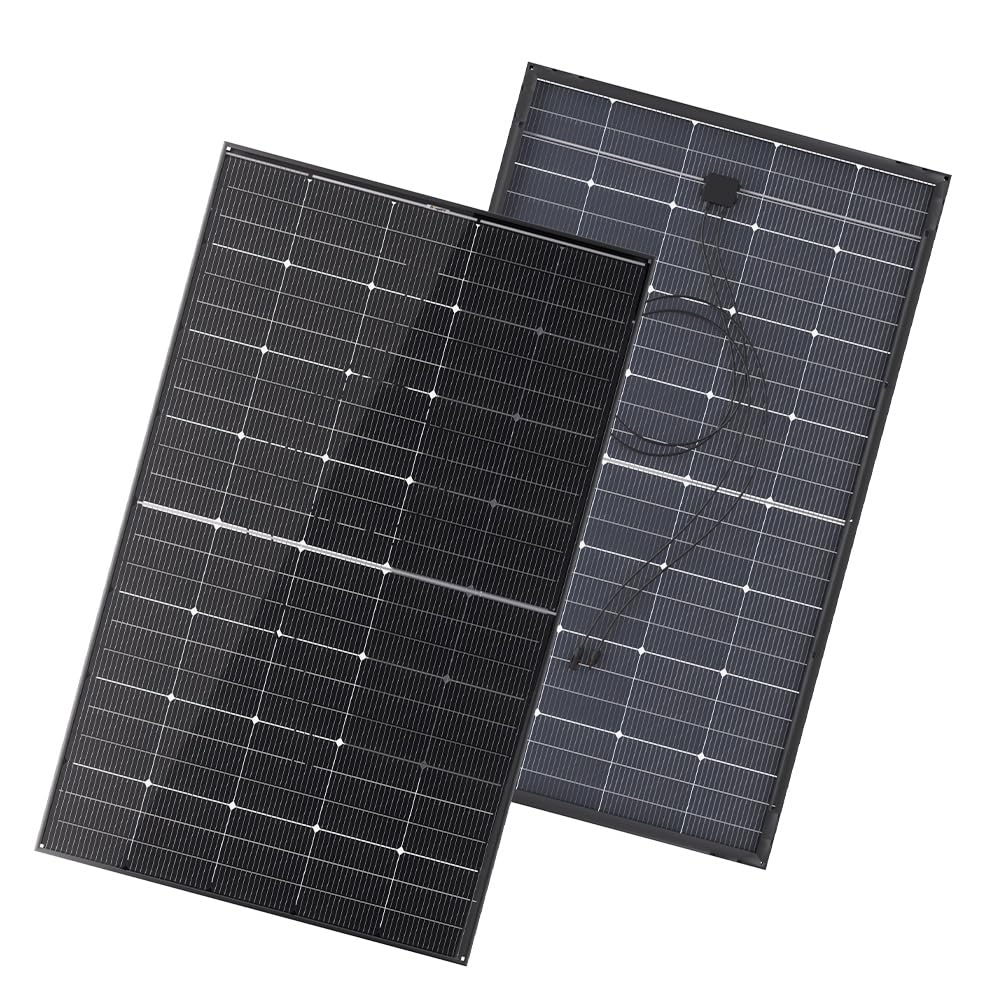
This panel uses N-type bifacial cells with a transparent backsheet that captures reflected light from the ground or roof surface, boosting real-world output by up to 30% compared to a monofacial panel of the same rating. The 16 busbar design and 25% conversion efficiency are among the highest available at this wattage, and the 37.6V maximum voltage pairs well with MPPT controllers.
At 32.8 pounds with a 61.3×37.4-inch footprint, it’s best suited for permanent roof mounts on RVs, marine vessels, or off-grid sheds. The IP68-rated junction box and pre-installed diodes provide reliable weather protection. Some users report unit-to-unit variance, with a small percentage of panels falling slightly below the 300W STC rating under ideal conditions.
For buyers who want maximum harvest from a single rigid panel and have the roof space, this BougeRV model delivers class-leading efficiency. Pair it with an MPPT controller to unlock the full bifacial benefit, especially on light-colored or reflective mounting surfaces.
Why it’s great
- 25% conversion rate with 16BB N-type cells is top-tier
- Bifacial rear sheet captures ambient light for extra yield
- IP68 junction box for harsh outdoor conditions
Good to know
- Some units report output variance below STC rating
- Requires sufficient roof space at 61 x 37 inches
2. Renogy 300W Portable Solar Panel Suitcase
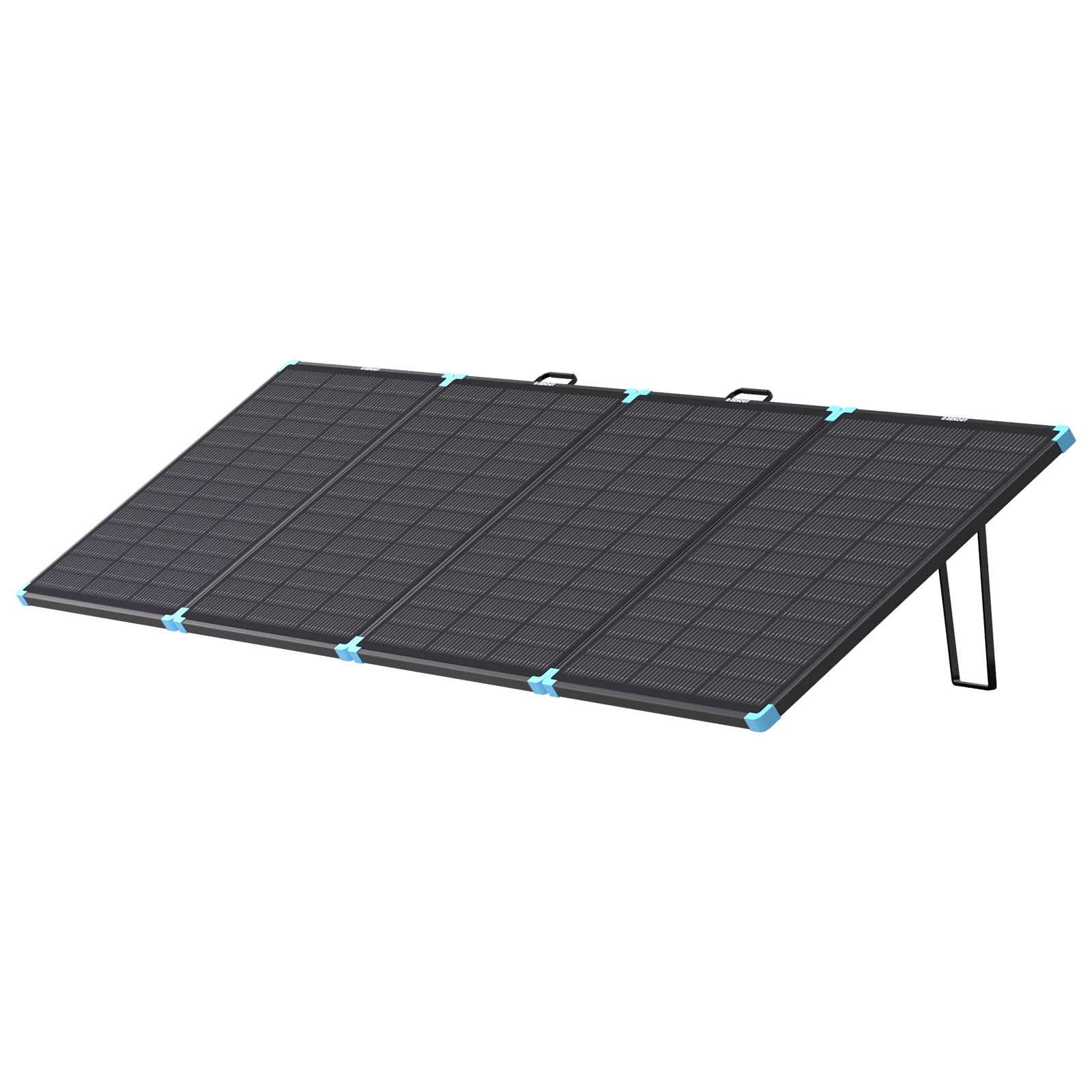
The Renogy Suitcase leverages the same N-type 16BB cell technology as high-end rigid panels but packages it into a foldable 18.74-pound frame with built-in kickstands. The IP67 waterproof rating and ETFE coating resist hail, snow, and temperatures from -40°F to 185°F, making it one of the most durable portable options on the market.
Setup takes about one minute — unfold, extend the rust-proof kickstands, and connect via IP68 connectors to your power station. Real-world output from multiple users lands in the 250-280W range in full sun, with some reporting momentary peaks above 300W. The case does not include MC4 cables or a charge controller, so you’ll need to supply those separately.
This is the best choice for campers and van-lifers who want premium efficiency in a portable format. The parallel wiring design also minimizes power loss from partial shading, which is a common frustration with series-wired portable panels.
Why it’s great
- Lightweight at 18.74 lbs with 25% N-type efficiency
- IP67 and ETFE-coated for extreme weather resistance
- Parallel wiring retains output under partial shade
Good to know
- No cables or charge controller included
- Kickstand angle is fixed and may be too steep for some latitudes
3. PECRON 300W Foldable Solar Panel
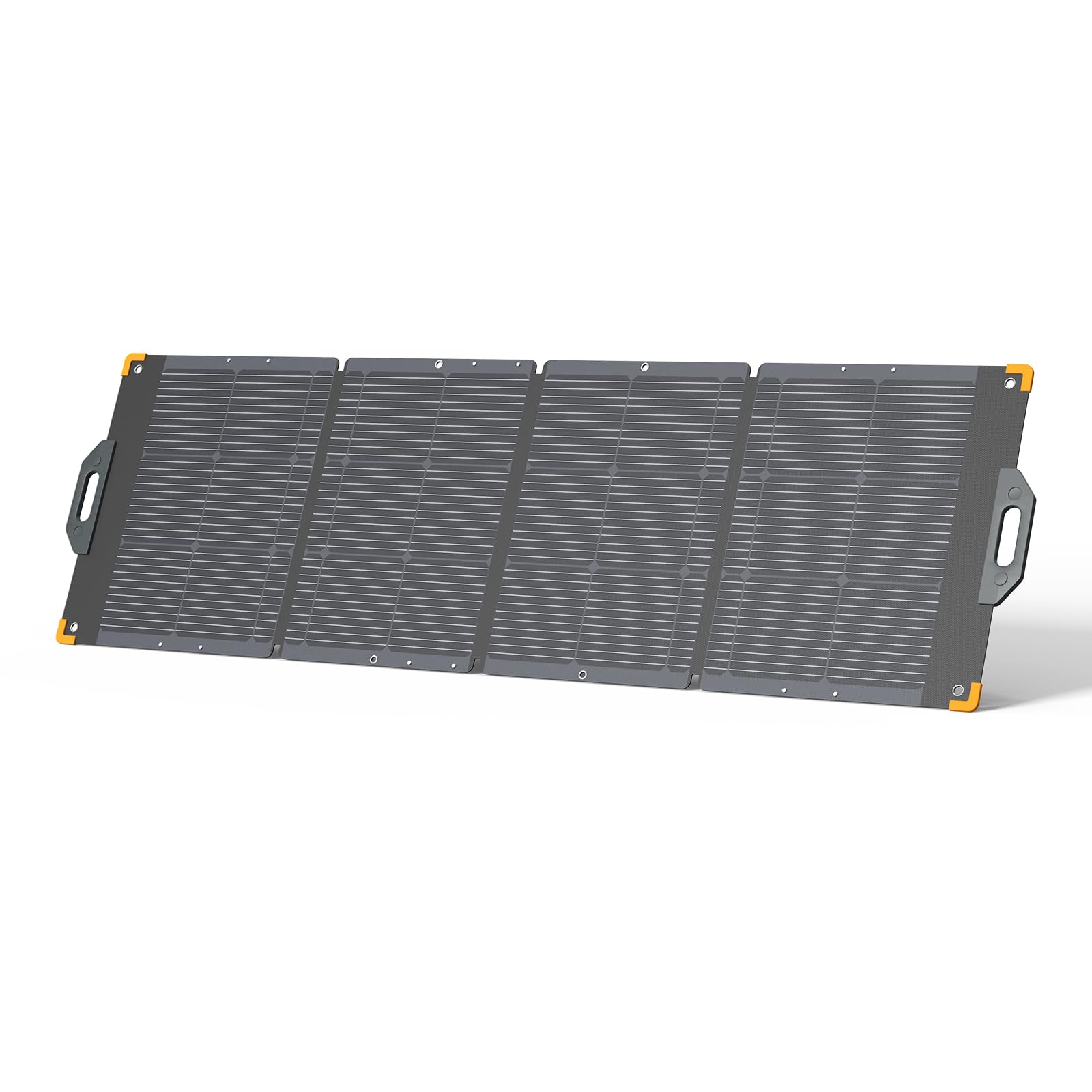
PECRON pairs this 300W foldable panel with their own power station line, but the MC4 output and included adapters make it compatible with most major brands. The 23.5% conversion rate is slightly below the N-type leaders but still well above budget panels, and users report realistic sustained output in the 260-285W range under optimal sun.
The panel uses aluminum, monocrystalline silicon, and tempered glass construction with a foldable design that packs relatively compact. At least one user noted a delamination spot under the surface — PECRON’s customer service addressed the issue promptly, which suggests decent warranty support. The 15-16 foot cable gives flexibility for positioning the panel in sun while keeping the controller shaded.
This is a solid mid-range portable option for those who already own or plan to buy a PECRON power station and want a matched system. The build quality is good, but you should confirm the maximum input voltage of your specific power station before purchasing.
Why it’s great
- MC4 connectors with adapters fit most power stations
- Decent real-world output near 285W in full sun
- Responsive customer service for warranty issues
Good to know
- Some panels develop surface delamination spots
- Efficiency (23.5%) is a step behind N-type panels
4. JJN 300W Solar Panel Kit

This kit bundles a rigid 300W monocrystalline panel with a 40A PWM charge controller, two pairs of solar cables, Z brackets, and a 4-way connector — everything a first-time installer needs for a 12V off-grid system. The half-cut cell technology reduces internal resistance and improves performance under partial shading compared to conventional full-cell panels.
The 22% conversion rate is standard for this price tier, and the 45-pound weight confirms a sturdy aluminum frame with tempered glass. Users in Texas report roughly 92W output in late afternoon, suggesting the panel meets expectations. The included PWM controller has LiFePO4 battery settings, but the display lacks a backlight and its load activation feature may require a small battery to function properly.
For under , this kit offers exceptional value for beginners building a small cabin, shed, or RV system. The 25-year power output warranty from JJN adds long-term confidence, though you may eventually want to upgrade from the PWM to an MPPT controller for higher harvest.
Why it’s great
- Complete kit with controller, cables, and brackets
- Half-cut cell design for better shade tolerance
- 25-year power output warranty
Good to know
- PWM controller is basic; MPPT upgrade recommended
- Aluminum frame may arrive slightly bent from shipping
5. WUZECK 300W Solar Panel (2x150W)
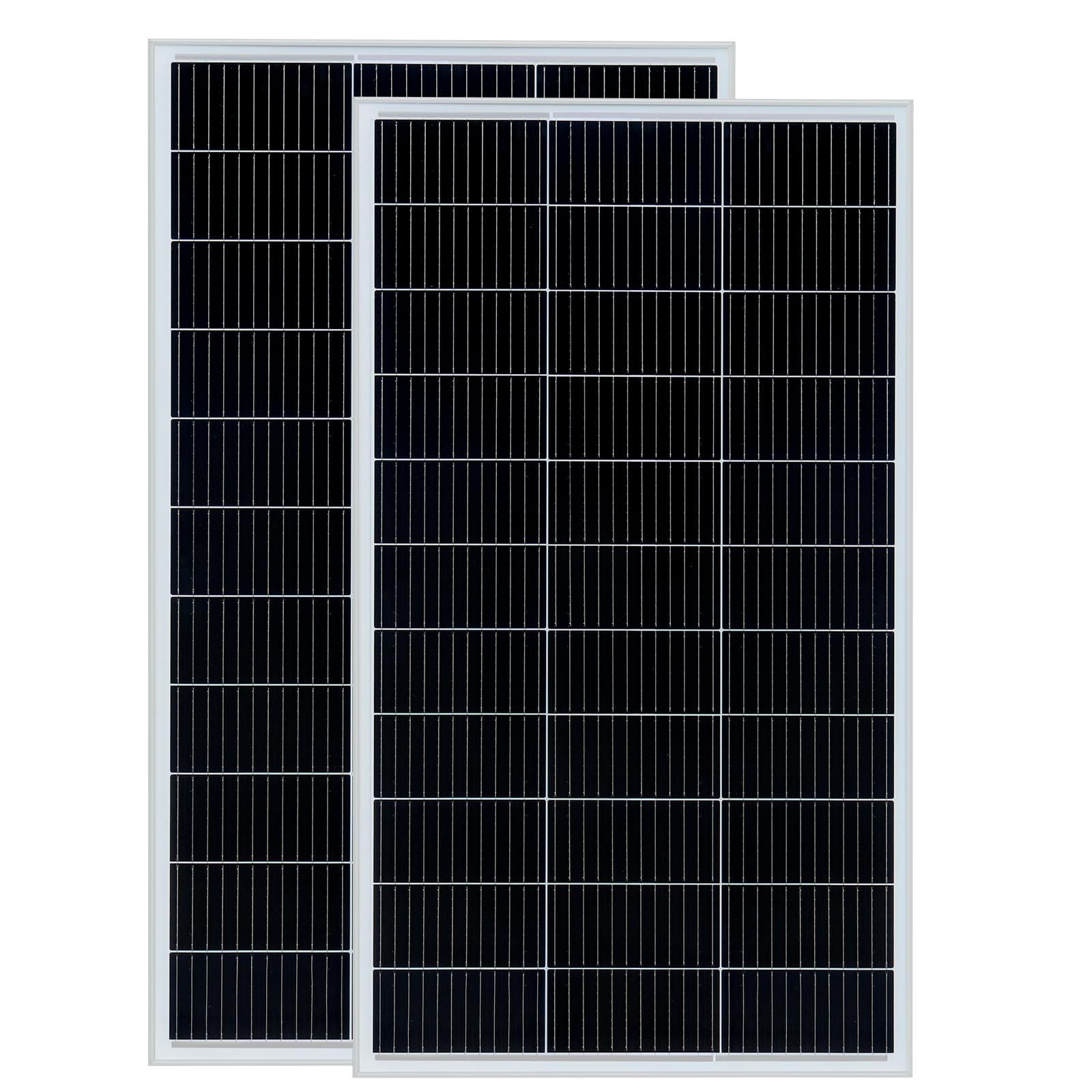
This kit delivers two 150W PERC monocrystalline panels that can be wired in parallel for a 12V system or in series for 24V. Each panel measures about 48.6 x 26.8 inches and is lighter than a single 300W rigid panel, making them easier for one person to lift and position. The IP65 waterproof rating and corrosion-resistant aluminum frame handle moderate outdoor exposure.
User reports on actual output are mixed: some see performance on par with more expensive panels, while others report only 160W total from the 300W string. The panels use MC4 connectors, so they integrate easily with standard off-grid wiring. Build quality has been described as “flimsy until mounted,” so proper installation on a solid surface is important.
This 2-panel configuration works well for split roof installations where a single large panel won’t fit, or for users who want wiring flexibility between 12V and 24V battery banks. Just set your expectations realistically about the peak output, as the real-world wattage may fall short of the full 300W rating.
Why it’s great
- Split into two smaller panels for flexible mounting
- PERC cell technology for 23% efficiency
- Can be wired in series or parallel for 12V/24V
Good to know
- Real-world output often well below 300W total
- Construction can feel fragile before mounting
6. DOKIO 300W Portable Foldable Solar Panel

DOKIO’s 300W foldable panel is one of the lightest portable options at 15.3 pounds, folding down to a slim 20x38x1.1 inches for easy storage. It includes a separate PWM charge controller with reverse polarity and overcharge protection, plus dual USB ports for small device charging when connected to a battery. The 9.84-foot cable allows flexible placement between the panel and controller.
Real-world output peaks around 160W in ideal conditions, roughly half the rated 300W, which is typical for portable panels that rely on a PWM controller and less-than-optimal sun angles. Multiple users confirm it works well for maintaining an RV battery or supplementing a larger power station, especially on partly sunny days. The panel’s SAE connectors are non-standard and can soften in heat, so some users switch to MC4 alternatives.
This is a budget-friendly entry-level portable panel for emergency backup, tent camping, or occasional RV use where maximum wattage isn’t critical. It won’t replace a rigid array for full-time off-grid living, but it offers respectable portability at a low investment.
Why it’s great
- Very light and compact for portable use
- Includes charge controller and USB ports
- Good value for occasional battery maintenance
Good to know
- Real-world output reaches only about half the rated 300W
- SAE connectors may soften and lose connection in heat
FAQ
Why does my 300W solar panel only produce 200W in full sun?
Can I mix a 300W panel with my existing 100W panels?
Should I get a rigid or a foldable 300W panel for my RV?
Final Thoughts: The Verdict
For most users, the best 300 watt solar panel winner is the BougeRV Bifacial N-Type 300W because it combines 25% efficiency with bifacial rear capture that can push real-world output well past monofacial competitors. If you want a portable setup that packs up easily and delivers premium performance at the campsite, grab the Renogy 300W Suitcase. And for a complete starter kit with controller and brackets at a low investment, nothing beats the JJN 300W Kit.