
Nothing matches the anticipation of winding a roll of 35mm film, pressing the shutter, and waiting days to see if that fleeting moment was captured right. But wading through the choices between disposable single-use cameras, clunky vintage SLRs, and modern re-issues can feel like a gamble on which one actually delivers that sharp, nostalgic look without breaking the bank or your back.
I’m Rikta — the co-founder and writer behind FitlyFast. I’ve spent years researching and comparing the hardware specs, build quality, and optical performance of film cameras to cut through the noise and find the real shooters worth your time.
This guide builds a clear, category-specific breakdown of the absolute best performers in the 35mm film point and shoot camera space, from disposable multi-packs and budget entries to premium half-frame and mechanical classics.
How To Choose The Best 35mm Film Point And Shoot Camera
Choosing your first or next film point-and-shoot is less about chasing resolution and more about understanding the type of shooting experience you want. The lens, the focusing system, and the film transport mechanism define the camera’s character more than any other spec.
Lens Quality and Focal Length
A glass multi-element lens produces sharper, more contrast-rich images than a plastic single-element lens. Most fixed-lens point-and-shoots use a 28mm to 37mm equivalent focal length, which is great for street photography and group shots. The Pentax 17 features a 25mm F3.5 HD-coated lens, while the Kodak Snapic A1 uses a 3-element glass lens — both are significant steps up from disposable units.
Focusing Mechanism: Zone vs. Auto vs. Manual
Point-and-shoot cameras typically use either zone focusing (selecting a distance range via icons) or passive/active autofocus. Zone focus systems are simpler and more reliable in low light but require you to estimate distance. Autofocus systems like the 7-point system in the Canon Rebel 2000 lock onto subjects quickly but may hunt in dim conditions. For beginners, a reliable auto system is generally more forgiving.
Film Format and Frame Size
Standard 35mm cameras capture a 24x36mm frame. Half-frame models like the Pentax 17 and Fujifilm X-Half capture two 17x24mm images per standard 35mm frame, effectively doubling your shots per roll. This is a huge advantage for casual shooters who want more mileage from each roll of film and is a key differentiator in the point-and-shoot category today.
Quick Comparison
On smaller screens, swipe sideways to see the full table.
| Model | Category | Best For | Key Spec | Amazon |
|---|---|---|---|---|
| Pentax 17 | Half-Frame | Doubling shots per roll | 25mm F3.5 HD coated lens | Amazon |
| Fujifilm X-Half | Digital Sim | Digital simulation of film | 1″ 17MP sensor, film modes | Amazon |
| Canon AE-1 | SLR | Manual creative control | TTL metering, FD lenses | Amazon |
| Canon Rebel 2000 | SLR | Everyday autofocus SLR | 7-point autofocus system | Amazon |
| Canon EOS Kiss | SLR | Reliable hobbyist camera | Wide-area autofocus | Amazon |
| Kodak Snapic A1 | Point & Shoot | Step up from disposable | 3-element glass lens | Amazon |
| Fujifilm QuickSnap 4-Pack | Disposable | Events, parties, travel | 27 exposures, ISO 400 | Amazon |
| Kodak PIXPRO FZ45 | Digital | Budget digital alternative | 16MP sensor, 4x optical zoom | Amazon |
| Panasonic LUMIX ZS99 | Digital | Long zoom travel camera | 30x optical zoom, 4K video | Amazon |
In‑Depth Reviews
1. Pentax 17

The Pentax 17 is the most exciting modern point-and-shoot in years, combining a retro magnesium alloy body with a thoughtful half-frame design that delivers 72 shots per standard 36-exposure roll. Its 25mm F3.5 HD coated lens produces sharp, characterful images with excellent contrast, and the six-zone focus system is intuitive once you get the hang of distance estimation. The manual film advance lever recreates the tactile satisfaction of classic film cameras without the unreliability of vintage electronics.
This camera is built for the photographer who wants a reliable, repairable, and genuinely fun shooting experience without chasing rare 1990s compacts on eBay. It supports ISO 50 to 3200, and the automatic exposure system handles most lighting conditions gracefully. The lightweight build makes it truly pocketable, and the quiet shutter is ideal for candids and street photography.
The main trade-off is the zone focus learning curve — if you struggle with distance estimation, some shots may come out soft. It is also the priciest option on this list, but you are paying for a brand-new, warrantied camera with modern reliability. For the film shooter who hates wasting frames, this is a near-perfect daily companion.
Why it’s great
- Half-frame design doubles your film mileage
- HD-coated 25mm glass lens delivers sharp, pleasing images
- Solid magnesium alloy build, lightweight and pocketable
Good to know
- Zone focusing requires practice and distance estimation
- Fixed lens — no zoom or interchangeable options
- Premium price point compared to used vintage models
2. Fujifilm X-Half Compact

The Fujifilm X-Half takes a unique approach: it is a digital camera that simulates the half-frame 35mm experience, complete with a manual film advance lever and 26 analog-inspired film simulations. It uses a 1-inch 18MP sensor and captures JPEG images in a vertical 3:4 aspect ratio, giving photos an authentic half-frame aesthetic. The dial-based controls feel solid and intentional, and the camera is genuinely pocketable.
Where this camera shines is in its creative freedom — you can choose film simulations like Classic Chrome, Acros, and Velvia before shooting, and the “no preview” film mode forces you to commit to each frame, recreating the discipline of shooting film. You can also print directly to a compatible Instax printer or share wirelessly via the app, bridging the gap between analog mindset and modern convenience.
The downsides are that it shoots JPEG only with no RAW support, and the thumb lever lacks the satisfying tension and sound of a real film winder. The viewfinder is slightly off-center, and the price is steep for a digital camera that deliberately limits your editing flexibility. It is a niche creative tool, not a replacement for a true film camera, but for the right person it is incredibly rewarding.
Why it’s great
- 26 analog film simulations with no post-processing needed
- Pocketable metal build with satisfying dial controls
- Wireless sharing and direct Instax printing
Good to know
- JPEG only — no RAW files for heavy editing
- Film advance lever lacks tactile feedback
- Expensive for a digital compact with limited zoom
3. Canon AE-1

The Canon AE-1 is one of the most beloved 35mm SLRs ever made, and a renewed copy from a reputable refurbisher offers a reliable gateway into manual film photography. Its built-in Through-The-Lens (TTL) metering provides accurate exposure readings, and the shutter priority auto mode makes it easy to shoot without full manual guesswork while still giving you aperture control via lens rings. The 50mm f/1.8 lens is sharp, fast, and widely available.
The metal body is durable and heavy enough to feel substantial without being cumbersome. It accepts the entire Canon FD lens lineup, so you can grow into wide-angle, telephoto, or macro shooting without buying a new camera body. The shutter speed range from 2 seconds to 1/1000 plus Bulb mode offers real creative flexibility for long exposures and night shots.
The catch is that the AE-1 is not a true point-and-shoot — it requires manual focusing and film winding, making it slower to operate. Renewed units vary in quality; the built-in light meter is known to fail on aging electronics, so buying from a trusted refurbisher is essential. It rewards patience but will frustrate anyone expecting instant grab-and-go results.
Why it’s great
- TTL metering delivers accurate exposures in varied light
- Interchangeable FD lens system for future growth
- Classic metal build with mechanical feel
Good to know
- Manual focus and film advance — not a true point-and-shoot
- Aging electronics may require servicing
- Renewed quality depends heavily on seller
4. Canon Rebel 2000
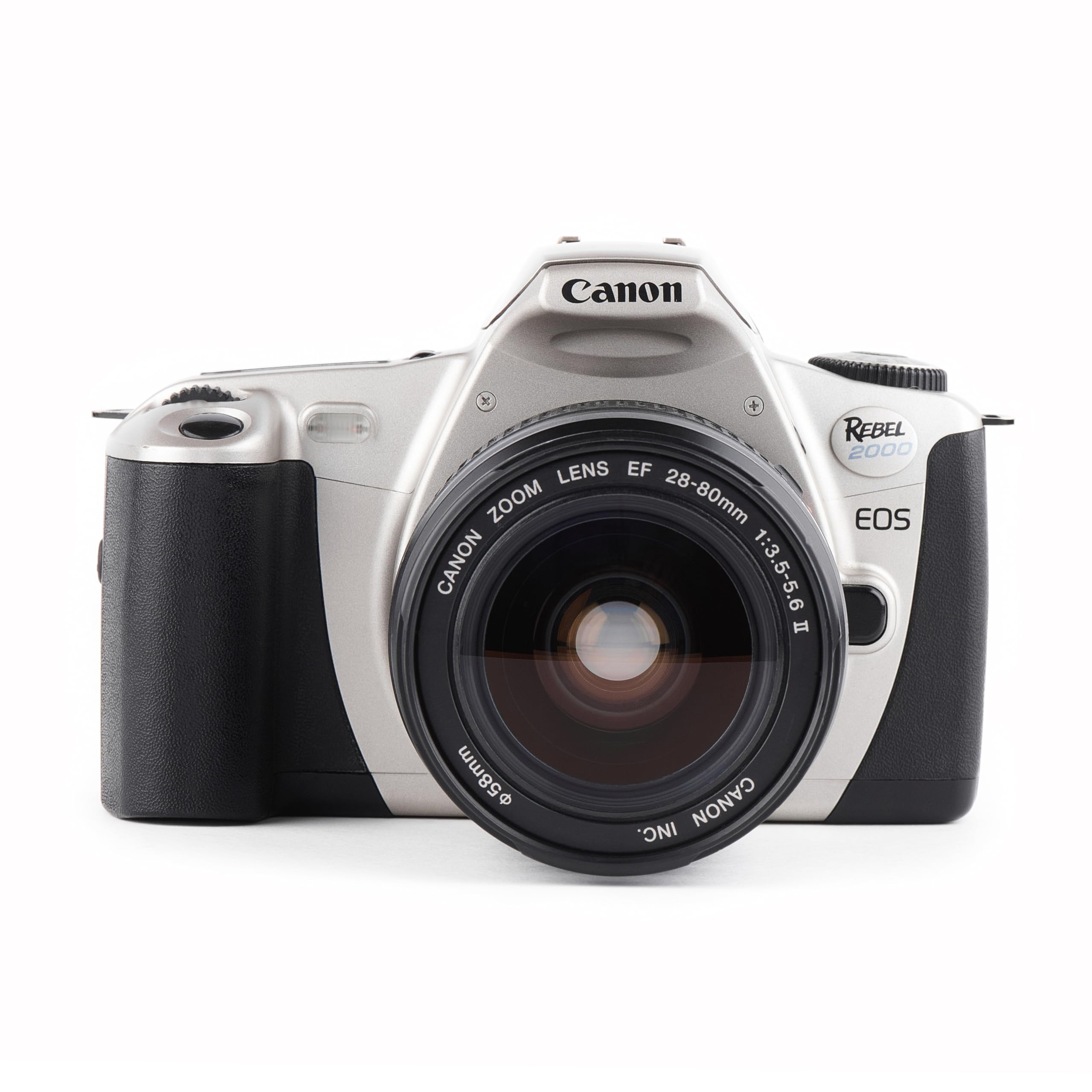
The Canon Rebel 2000 is a superb entry-level autofocus SLR that simplifies film photography without sacrificing control. Its 7-point autofocus system locks onto subjects quickly, and the automatic film transport means you never have to wind or rewind manually. The included 28-80mm EF lens provides a versatile zoom range suitable for portraits, landscapes, and everyday snapshots.
Exposure modes range from full Program Auto to Aperture Priority, Shutter Priority, and Manual, giving beginners a clear path to learning the exposure triangle. The built-in pop-up flash is effective for fill light or low-light situations, and the camera is lightweight enough to carry all day. The Canon EF lens mount ensures compatibility with a vast selection of affordable lenses.
The trade-off is that the Rebel 2000 is made primarily of plastic, which lacks the premium feel of metal-bodied cameras. Some renewed units may show wear or missing accessories, and the autofocus can struggle in very dark conditions. It is an excellent daily driver for someone who wants SLR quality with minimal fuss, but it will not win any design awards.
Why it’s great
- Reliable 7-point autofocus for quick, sharp shots
- Automatic film loading, advance, and rewind
- Versatile 28-80mm zoom lens included
Good to know
- Plastic build feels less durable than vintage metal cameras
- Autofocus hunts in very low light
- Renewed units may have missing cords or wear
5. Canon EOS Kiss (Rebel G)

The Canon EOS Kiss — sold as the Rebel G in North America — is a compact, lightweight autofocus SLR that delivers excellent results for hobbyists and students. Its wide-area autofocus point keeps composition flexible, and the intuitive LCD display and dial-based controls make adjusting settings straightforward even for newcomers. The included 35-80mm EF lens offers a practical range for everyday shooting.
The camera offers full auto, program, aperture priority, and shutter priority modes, giving you room to experiment as you learn. It accepts EF lenses, so you can upgrade to prime or telephoto glass later. Battery life is reportedly strong, and the built-in flash provides reliable fill light. Renewed units from good sellers often arrive in excellent condition with minimal wear.
The main limitation is that it lacks manual exposure mode, which advanced shooters may miss. The plastic body is light but does not feel as substantial as the Rebel 2000. It is a fantastic value option for someone who wants a dependable, low-cost entry into film SLR photography without the complexity of vintage mechanical cameras.
Why it’s great
- Wide-area autofocus for flexible composition
- Simple, intuitive controls with clear LCD display
- Good battery life and reliable performance
Good to know
- No full manual exposure mode
- Plastic build feels less premium
- Limited to EF mount lenses (no EF-S)
6. KODAK Snapic A1
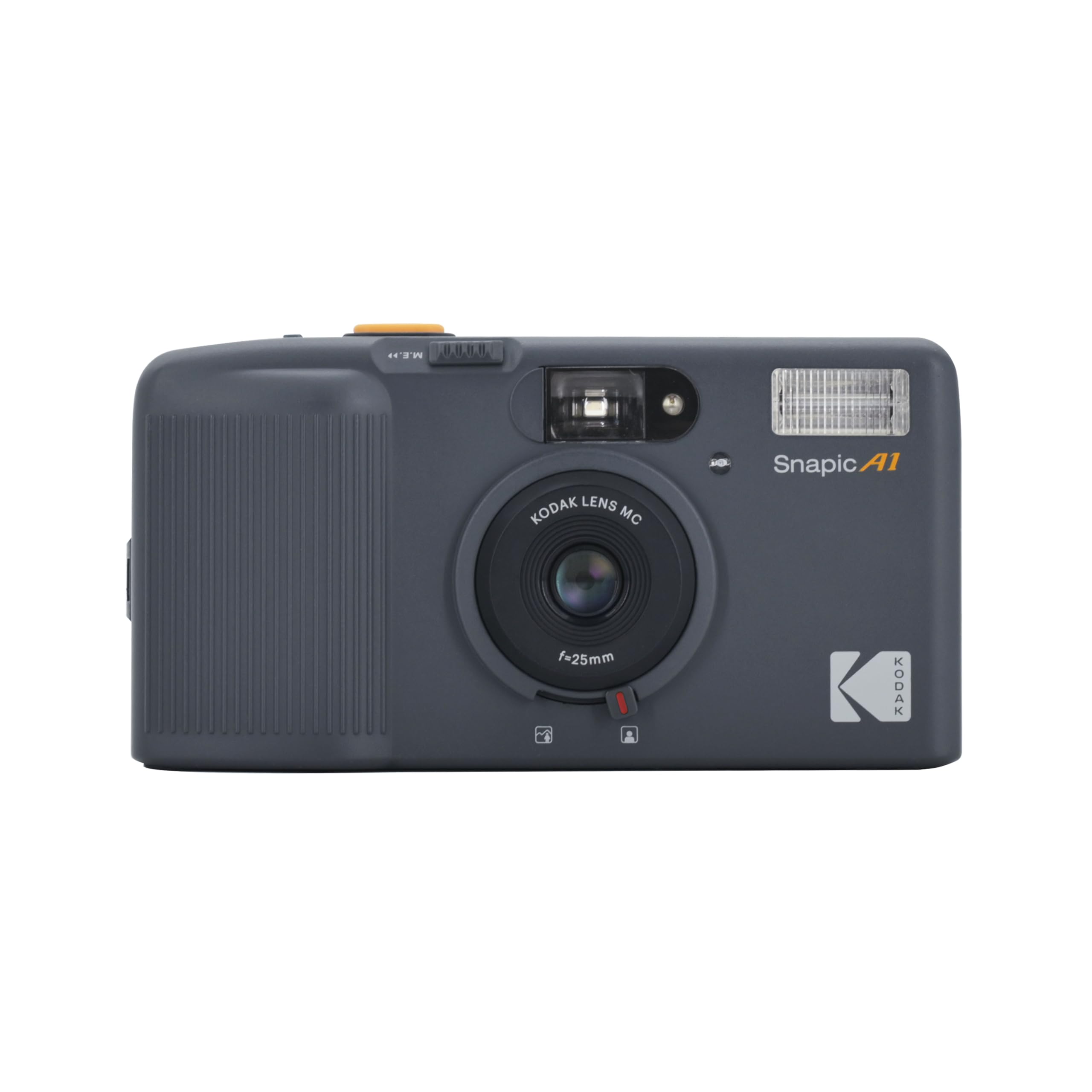
The KODAK Snapic A1 is the ideal step up from disposable cameras, offering a 3-element glass lens that produces sharper and more detailed images than single-use plastic optics. It features a built-in auto flash with red-eye reduction and a 2-zone focus system that lets you switch between close and distance shooting. The multiple exposure function adds a creative layer for blending two scenes onto one frame.
This camera is fully automatic with auto wind and rewind, making it as simple as a disposable but reusable with your choice of 35mm film. It is lightweight and compact, fitting easily into a pocket or small bag. Users report good results with Kodak Gold 200 in daylight, and the flash is effective for indoor shots up to a reasonable distance.
The main issue is that the flash button can be pressed accidentally, and the camera only works with alkaline batteries, not NiMH rechargeables. Night shots tend to be underexposed. It is a solid entry-level point-and-shoot for beginners, but experienced film shooters may want a more robust autofocus system and a faster lens.
Why it’s great
- 3-element glass lens for noticeably sharper images than disposables
- Multiple exposure mode for creative double shots
- Auto wind, rewind, and flash with red-eye reduction
Good to know
- Flash button easily pressed accidentally
- Only works with alkaline — not NiMH rechargeables
- Night shots can be underexposed
7. Fujifilm QuickSnap Flash 400 4-Pack

The Fujifilm QuickSnap Flash 400 is the benchmark disposable camera, beloved for its consistent color rendering, reliable flash, and sheer simplicity. This 4-pack with hand straps and microfiber cloths is perfect for weddings, parties, or group trips where you want everyone to shoot without worrying about gear. Each camera is pre-loaded with 27 exposures of Fujifilm Superia X-TRA 400 film, known for vibrant colors and fine grain.
The flash is effective up to 10 feet, and the camera is truly point-and-shoot — no batteries to replace, no settings to configure. Users consistently praise the nostalgic look of the prints and how easy it is to hand to anyone. The included microfiber cloth is a thoughtful touch for keeping lenses clean.
The obvious downside is that these are single-use — once you finish a roll, the entire camera is disposed of, which increasing waste and cost per shot. The plastic lens is not as sharp as a glass lens, and you have zero control over exposure or focus. They are fantastic for the experience but not a sustainable shooting solution.
Why it’s great
- Classic Fujifilm color science and fine-grain film
- Reliable flash reaches subjects up to 10 feet
- Incredibly simple — anyone can use it instantly
Good to know
- Single-use — high long-term cost and waste
- Plastic lens is less sharp than glass alternatives
- No control over exposure or focus
8. Kodak PIXPRO FZ45 Digital Camera

The Kodak PIXPRO FZ45 is a digital point-and-shoot that offers a 16MP sensor, 4x optical zoom from a 27mm wide angle, and 1080p video recording — all at a very accessible price. It is a solid choice for budget-conscious users who want a dedicated camera for vacations and family events without the cost and complexity of film development. The 2.7-inch LCD screen makes framing and reviewing shots easy.
Image quality in good lighting is decent for the price, with natural colors and reasonable sharpness. The 4x optical zoom gives flexibility between wide landscapes and closer portraits. It uses two AA batteries, which are readily available anywhere, and supports SD cards up to 512GB for ample storage. The included alkaline batteries are low quality and should be replaced with rechargeable Eneloops or lithium AAs.
The main drawbacks are that it is a digital camera, not a film camera — so you miss the analog look and process entirely. Video quality is poor compared to modern smartphones, and the autofocus can be slow. For someone specifically seeking the 35mm film experience, this is not the right path, but as an ultra-budget digital companion it works.
Why it’s great
- 16MP sensor and 4x optical zoom for versatile casual shooting
- Uses common AA batteries, easy to power anywhere
- Very affordable entry point for a dedicated camera
Good to know
- Digital — does not produce analog film grain or look
- Included alkaline batteries die quickly
- Video quality is poor, AF can be slow
9. Panasonic LUMIX ZS99

The Panasonic LUMIX ZS99 is a compact digital camera that packs a stunning 30x optical zoom (24-720mm equivalent) into a pocketable body, making it the king of reach among point-and-shoots. The Leica-branded lens delivers sharp results across the zoom range, and the 5-axis Hybrid OIS stabilizes handheld shots effectively. It records 4K video at 30p and 4K Photo bursts at 30fps, plus HD slow-motion at 120fps.
The 1,840k-dot tiltable touchscreen is useful for low-angle shooting, and USB Type-C charging means you can top up power from the same cable as your phone. Bluetooth 5.0 and Wi-Fi enable quick image transfer to your smartphone. For travel, concerts, and wildlife, this is arguably the most versatile compact digital camera in its size class.
The critical downsides for film enthusiasts are that it is a digital camera with a small sensor, so image quality in low light does not match modern smartphones or larger-sensor cameras. 4K recording is capped at 15 minutes before overheating, and the battery lasts only about 6 hours of moderate use. It is a specialist tool for reach, not for pocketability nor film simulation.
Why it’s great
- 30x optical zoom captures distant subjects clearly
- Leica lens with 5-axis stabilization for steady shots
- USB-C charging and wireless image transfer
Good to know
- Small sensor struggles in low light vs. phones
- 4K video limited to 15-minute clips
- Battery life is moderate at best
FAQ
What is the difference between a fixed lens and interchangeable lens 35mm point and shoot?
Are half-frame cameras worth it for beginners?
What ISO film should I use in a point and shoot 35mm camera?
Final Thoughts: The Verdict
For most users, the 35mm film point and shoot camera winner is the Pentax 17 because it combines a modern, reliable build with a creative half-frame format that saves you money on film while delivering sharp, character-rich images. If you want the tactile, manual control of a classic SLR with interchangeable lenses, grab the Canon AE-1. And for the no-fuss, grab-and-go film experience that anyone can pick up instantly, the Fujifilm QuickSnap 4-pack still delivers that raw, nostalgic joy.