
Our readers keep the lights on and the weekend projects moving. As an Amazon Associate, I earn from qualifying purchases.
Shooting a 360-degree video only to watch it back and find the stitching is off, the horizon tilts mid-turn, or the low-light footage is unusable is a frustrating reality for many. The wrong camera introduces editing headaches and limits your creative freedom, making the choice between sensor size, stabilization, and resolution a critical one before you buy.
I’m Rikta — the co-founder and writer behind FitlyFast. I’ve spent countless hours digging into the specifications, user reports, and side-by-side comparisons of 360 cameras to understand what actually separates a usable daily driver from a one-trip gadget.
Whether you are a travel vlogger, a real estate agent capturing immersive tours, or an outdoor enthusiast, the right choice comes down to matching hardware to your shooting environment. This guide breaks down each model to help you find the perfect fit among the best 360 camera options available today.
How To Choose The Best 360 Camera
A 360 camera captures the entire sphere around you, allowing you to reframe shots and choose perspectives long after the action ends. The market has matured beyond novelty, offering tools from entry-level budget cameras to pro-level imaging machines. Focus on three areas: video resolution and sensor size, stabilization and horizon lock, and the editing ecosystem.
Sensor Size & Low-Light Performance
A 1-inch sensor (found on DJI Osmo 360 and Ricoh Theta Z1) collects significantly more light than smaller 1/2-inch sensors, translating to cleaner video at dusk or indoors. If you frequently shoot golden hour skiing or city night walks, prioritize a camera with dual 1-inch sensors. The 1/1.28-inch sensors on the Insta360 X5 strike a strong balance with AI-driven noise reduction, while the 1/2-inch sensors on budget options like the AKASO 360 will struggle once the sun dips.
Stabilization & Horizon Lock
FlowState Stabilization (Insta360) and HyperSmooth (GoPro) deliver gimbal-like smoothness without extra hardware. A true 360° Horizon Lock keeps your footage level even when the camera spins or flips — critical for action sports. Check that the camera offers this in both 360 mode and single-lens mode, as some models restrict it to specific resolutions.
Editing Ecosystem and Workflow
360 footage is unviewable in its raw spherical form. The companion app determines how quickly you can reframe and export. Insta360’s app, DJI Mimo, and GoPro Quik all offer AI-powered reframing and object tracking. If you prefer desktop editing, check for Adobe Premiere or Final Cut Pro plugins. The Theta Z1 supports Lightroom Classic for RAW stitching, a must for real estate professionals.
Quick Comparison
On smaller screens, swipe sideways to see the full table.
| Model | Category | Best For | Key Spec | Amazon |
|---|---|---|---|---|
| DJI Osmo 360 (Standard) | Action | Best Overall | 8K / 1-inch Sensor / 105GB | Amazon |
| Insta360 X5 | Action | Low Light & AI | 8K / 1/1.28″ Dual Sensor | Amazon |
| DJI Osmo 360 (Essential) | Action | Extended Battery | 8K / 1-inch Sensor / 2 Bat. | Amazon |
| GoPro MAX2 | Action | Replaceable Lenses | True 8K / 29MP / 6-Mic | Amazon |
| Ricoh Theta Z1 51GB | Pro Imaging | Real Estate Photos | 23MP / 1-inch CMOS / 51GB | Amazon |
| Ricoh Theta X | Pro Imaging | High-Res Stills | 11K / 60MP / GPS | Amazon |
| GoPro MAX | Action | Dual Mode | 5.6K / 16.6MP / 1/4-20 | Amazon |
| AKASO 360 | Action | Budget Entry | 5.7K / 48MP / 128GB | Amazon |
| Owl Labs Meeting Owl 3 | Conference | Hybrid Meetings | 1080p / 18-ft Mic | Amazon |
In‑Depth Reviews
1. DJI Osmo 360 Camera Standard Combo
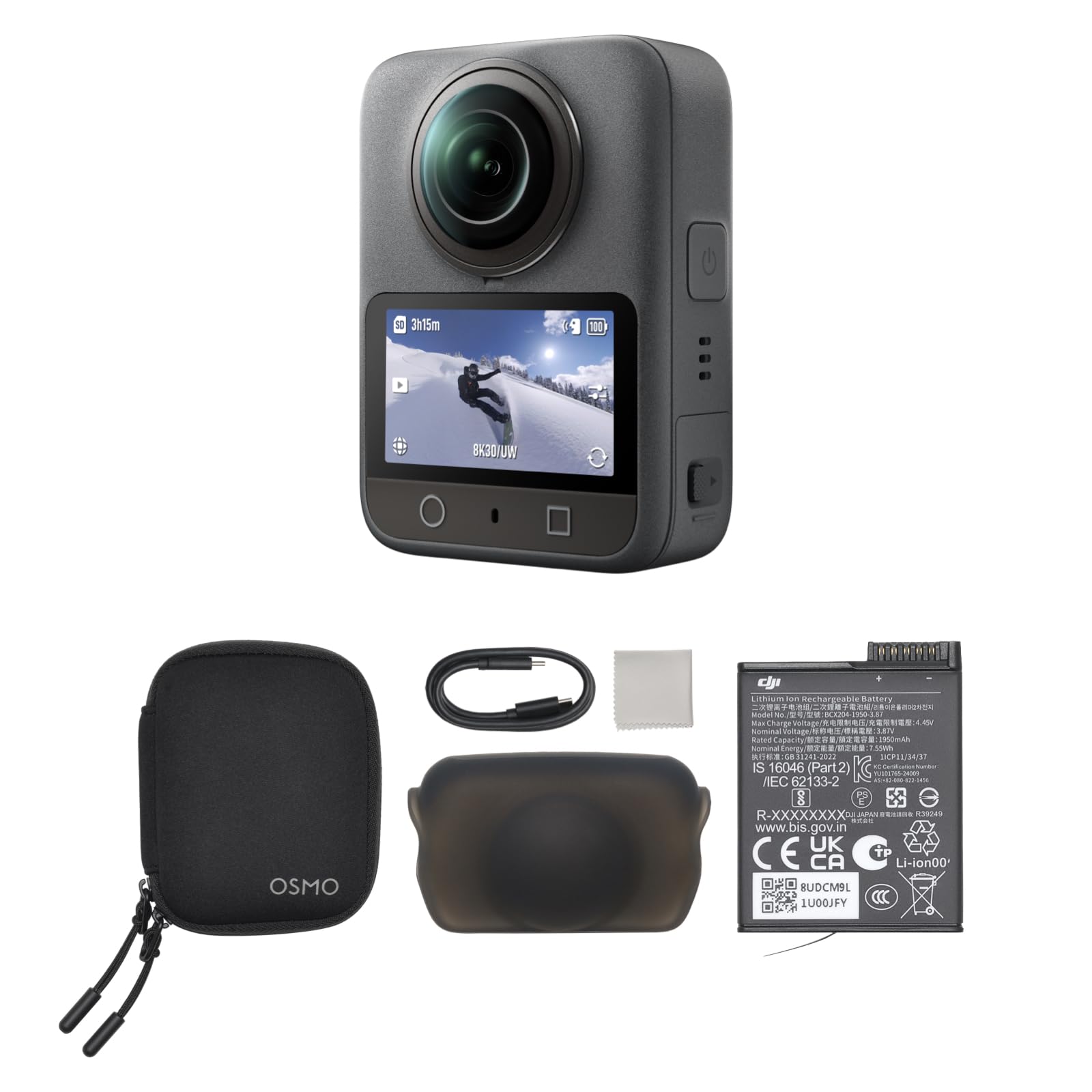
The DJI Osmo 360 sets a new benchmark for 360 action cameras by pairing groundbreaking 1-inch 360° imaging with native 8K video. The dual 1-inch sensors deliver exceptional dynamic range and low-light clarity, producing sharper details than any other action 360 camera at this tier. The 1.2m Invisible Selfie Stick and 4 microphones with direct DJI Mic transmitter support make third-person shots and clean audio effortless.
With 105GB of built-in storage, you can shoot immediately without buying a microSD card — it stores hours of 8K footage. The magnetic quick-release system and included 1950mAh battery ensure fast transitions and reliable runtime. The DJI Mimo app streamlines reframing with tools like Pano Dewarp and auto subject tracking, eliminating tedious manual editing.
Some users note the exposed lenses require care without a dive case, and the camera can heat up under extended high-resolution recording. However, for the combination of 1-inch sensor quality, heat dissipation through a well-ventilated body, and a polished software suite, this is the most complete 360 action package on the market.
Why it’s great
- Best-in-class low light with 1-inch sensors
- 105GB internal storage eliminates SD card dependency
- Direct DJI Mic transmitter connection
Good to know
- Lenses exposed without optional dive case
- DJI Mimo app removed from Google Play
- Thermal buildup during prolonged 8K shooting
2. Insta360 X5 Essentials Bundle

The Insta360 X5 tackles the most common complaint against previous 360 cameras — poor low-light performance — with a triple AI chip design that powers advanced noise reduction. The dual 1/1.28-inch sensors capture 8K30fps 360° video with noticeably better clarity in dim conditions compared to smaller-sensor rivals. The InstaFrame mode lets you export a ready-to-share flat video directly from the camera, bypassing the editing queue.
Durability sees a major upgrade with fully replaceable, scratch-resistant lenses and a 49-foot waterproof rating without a housing. The 208-minute battery life and fast charging (80% in 20 minutes) make it the longest-lasting 360 camera for all-day adventures. The new 4-mic array with advanced Wind Guard isolates voice clearly during skiing or cycling vlogs.
While the X5 matches the DJI Osmo 360 in 8K resolution, the 1/1.28-inch sensors don’t quite match the 1-inch sensor’s dynamic range in extreme contrast scenes. The AI editing in the app is excellent but requires an internet connection for the most advanced features. For action shooters who need low-light confidence, a durable build, and quick exports, this is a top contender.
Why it’s great
- Triple AI chip for excellent low-light noise reduction
- Replaceable lenses and 49-ft waterproof
- 208-minute battery with fast charging
Good to know
- Dual 1/1.28-inch sensor smaller than true 1-inch
- Advanced AI editing features may require internet
- No built-in storage; requires microSD
3. DJI Osmo 360 Essential Combo
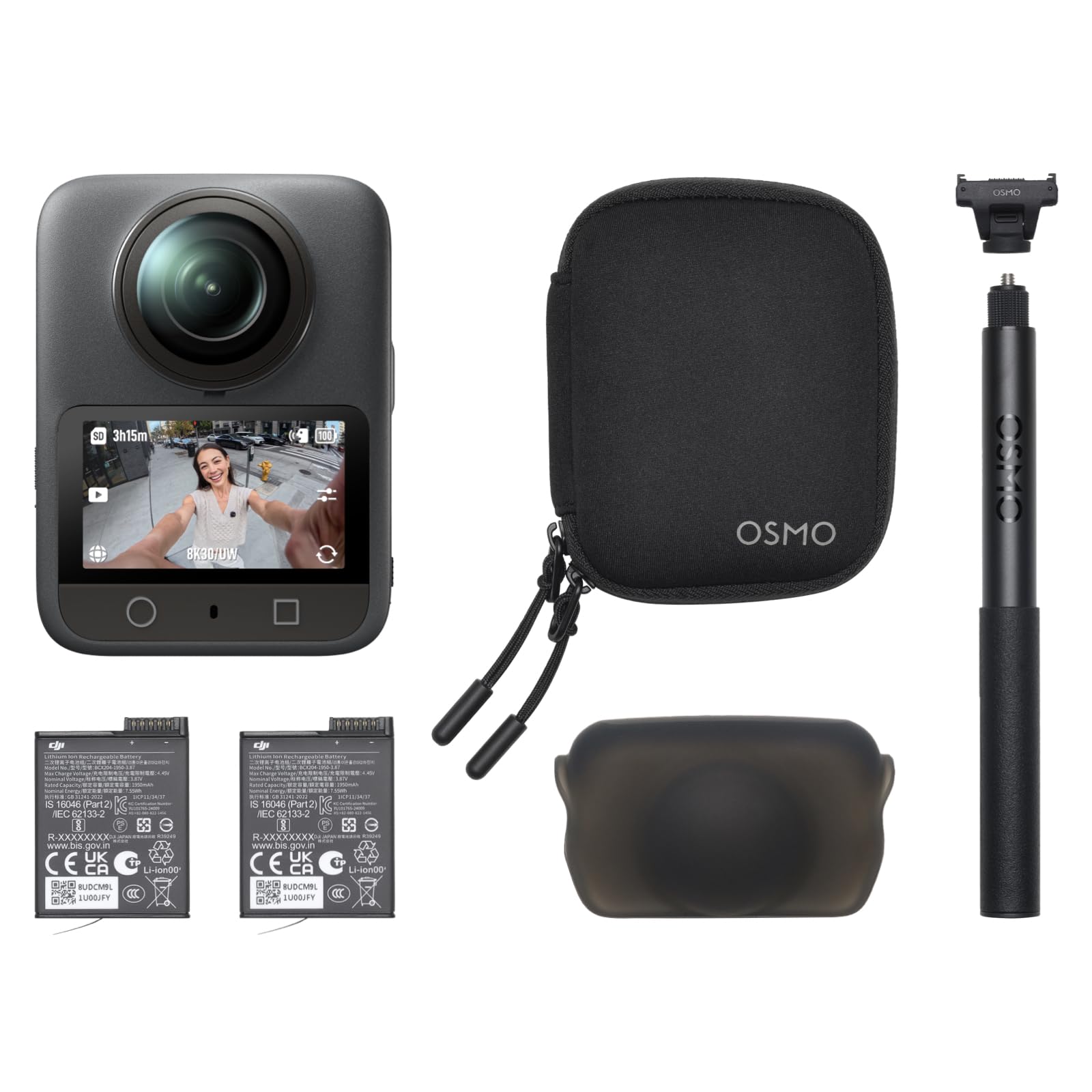
The DJI Osmo 360 Essential Combo is identical to the Standard Combo in core imaging — 8K30fps 360° video, 1-inch sensors, and 120MP photos — but adds the 1.2m Invisible Selfie Stick Kit and an extra 1950mAh battery. This bumps total runtime to roughly 190 minutes of normal shooting, ideal for full-day ski trips, motorcycle rides, or travel vlogging where charging opportunities are scarce.
The 105GB built-in storage still carries over, so you never fumble with lost microSD cards mid-shot. The magnetic quick-release, single-lens vlog mode, and 4-mic stereo recording with OsmoAudio are all retained. Users report the dual-battery setup as the deciding factor when comparing the two combos — you can hot-swap and keep rolling without a power bank tethered to the camera.
The only trade-off is price: the Essential Combo sits at a premium tier due to the included accessories. If you already own a selfie stick and don’t need the second battery immediately, the Standard Combo offers better value. For heavy shooters who refuse to stop for charging, the Essential Combo is the practical choice.
Why it’s great
- Two batteries for extended all-day shooting
- Same 1-inch sensor and 8K quality as Standard Combo
- 1.2m Invisible Selfie Stick included
Good to know
- Higher cost than Standard Combo
- Some users may not need dual batteries
- DJI Mimo not on Google Play
4. GoPro MAX2
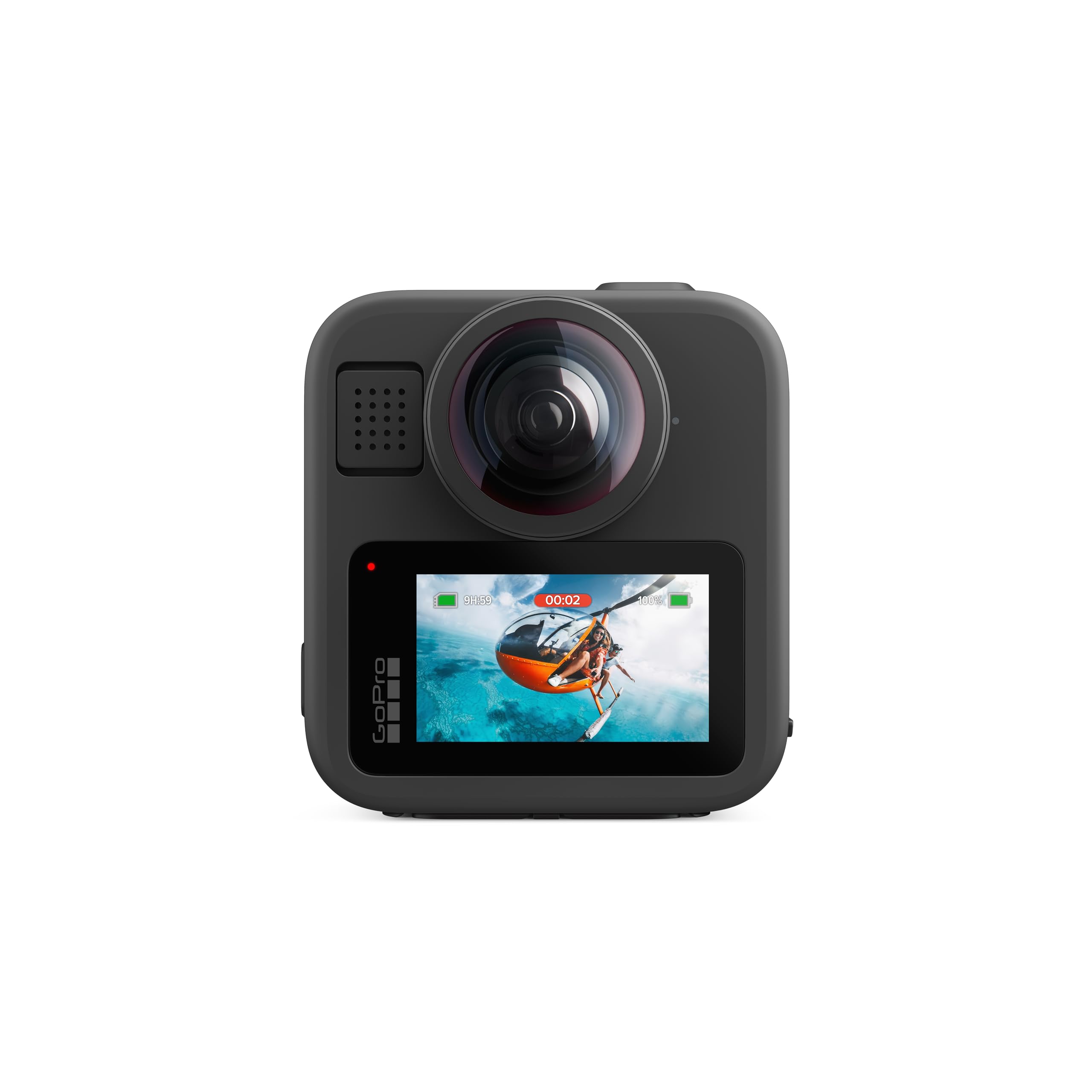
GoPro’s MAX2 delivers True 8K 360 video with 21% more spherical resolution than the previous generation, meaning cleaner reframes to 4K 16:9. The replaceable glass lenses with water-repelling coating are a massive practical upgrade — if you scratch a lens (common in action use), you swap it out instead of replacing the entire camera. The 6-microphone array captures ambisonic audio that shifts focus as you reframe a shot.
HyperSmooth stabilization and Horizon Lock keep footage perfectly level even during aggressive spins or tumbles. The 1/4-20 mounting threads make it compatible with standard tripods and extension poles, and the instant toggle to Hero mode (single-lens 1080p/1440p) offers versatility without switching cameras. The 1960mAh Enduro battery provides solid runtime, though heavy 8K recording drains it in about an hour.
Some users report the camera runs hot during extended 8K recording, and the GoPro Quik app can require a monthly subscription for cloud storage of large 360 files. If you prioritize replaceable lenses, robust waterproofing without a housing, and GoPro’s proven durability ecosystem, the MAX2 is a strong premium choice.
Why it’s great
- Replaceable water-repelling glass lenses
- True 8K with 21% more spherical resolution
- 6-mic ambisonic audio shifting
Good to know
- May require cloud subscription for large files
- Thermal buildup during long 8K sessions
- Battery drains faster than competitors
5. Ricoh Theta Z1 51GB

The Ricoh Theta Z1 remains the gold standard for 360 still photography, using dual 1-inch back-illuminated CMOS sensors and a high-precision stitching process to produce 23MP images (7K) with natural blending. The 51GB internal memory stores approximately 900 RAW+JPEG pairs, a necessity for real estate photographers and virtual tour creators who need consistent quality. HDR image processing handles interior/exterior dynamic range better than any action-oriented 360 camera.
Professional features include aperture-priority, shutter-priority, and full manual exposure control, plus RAW (DNG) support with Adobe Lightroom Classic via the dedicated RICOH THETA Stitcher plug-in. The magnesium alloy body feels dense and premium, and the USB 3.0 Type-C port ensures fast file transfer for 4K 360 video with in-camera stabilization.
The biggest drawback is the non-replaceable battery — once it degrades, the entire unit needs service, and battery life hovers around one hour of active use. There is also no touchscreen; you operate via the OLED mini-display or the smartphone app. For virtual tours, architectural photography, and professional 360 stills, the Z1’s image quality is unmatched in its class.
Why it’s great
- Best 360 still image quality in class
- 51GB internal storage, RAW/DNG support
- Lightroom Classic plug-in for expert editing
Good to know
- Non-replaceable battery, ~1 hour life
- No touchscreen interface
- Video only 4K, not 8K
6. Ricoh Theta X 360° Camera

The Ricoh Theta X pushes still resolution to 11K (60 megapixels) using dual 48MP lenses, making it the highest-resolution 360 still camera on this list. The large OLED touchscreen eliminates the need for a smartphone during setup, preview, or playback — a genuine workflow improvement for field use. Built-in GPS (QZSS) embeds location data into your photos, enabling automated Google Blue Line tours directly from the files.
Video capture tops out at 5.7K30 with enhanced stabilization, which is adequate for vlogging and social media but trails the 8K action cameras. The HDR-DNG 16-bit RAW format gives you professional-level editing latitude in Adobe DNG-compatible software. The interchangeable battery and expandable microSD card slot allow long shooting sessions if you carry spares, though real-world battery life with the screen active is around 30 minutes.
Low-light performance is average for its class; details vanish after sunset, and stitching artifacts sometimes appear along the seam. The Theta X is physically fragile — several users report damage from drops that would be shrugged off by a GoPro or Insta360. It is a specialized tool best suited for real estate, Google Street View contributors, and still-focused creative workflows where resolution matters more than ruggedness.
Why it’s great
- 60MP 11K still resolution
- Built-in GPS for location tagging
- Large touchscreen for standalone operation
Good to know
- 5.7K video only, not 8K
- Fragile build, not for action use
- Poor low-light video quality
7. GoPro MAX

The GoPro MAX is a proven dual-mode camera that captures 5.6K30 spherical video and 16.6MP photos, with the option to switch to single-lens Hero mode for standard 1080p/1440p widescreen footage. The 1/4-20 mounting threads are ideal for tripods and extension poles, and the invisible selfie stick stitching is reliable. The Enduro battery improves cold-weather performance, and the Quik app provides object tracking and reframing tools.
Image quality is solid in daylight but shows noticeable noise in low light compared to newer 8K sensors. The lens glass on previous MAX models was notoriously easy to scratch; this version includes two protective lens caps in the box. The 5.6K resolution means reframed 1080p exports retain good detail, but 4K reframes will look softer than 8K-captured footage from more recent cameras.
The MAX is now a mid-range option that still delivers excellent value for GoPro ecosystem users. It’s a reliable choice for vloggers and casual adventurers who want both traditional action cam and 360 capabilities without jumping to a premium price tier. If you need 8K or better low light, the MAX2 is a significant step up.
Why it’s great
- Dual Hero and 360 mode flexibility
- Reliable invisible selfie stick stitching
- 1/4-20 mounting compatibility
Good to know
- 5.6K video limits 4K reframe quality
- Lens glass scratches easily
- Low-light performance is average
8. AKASO 360 Action Camera Creator Combo
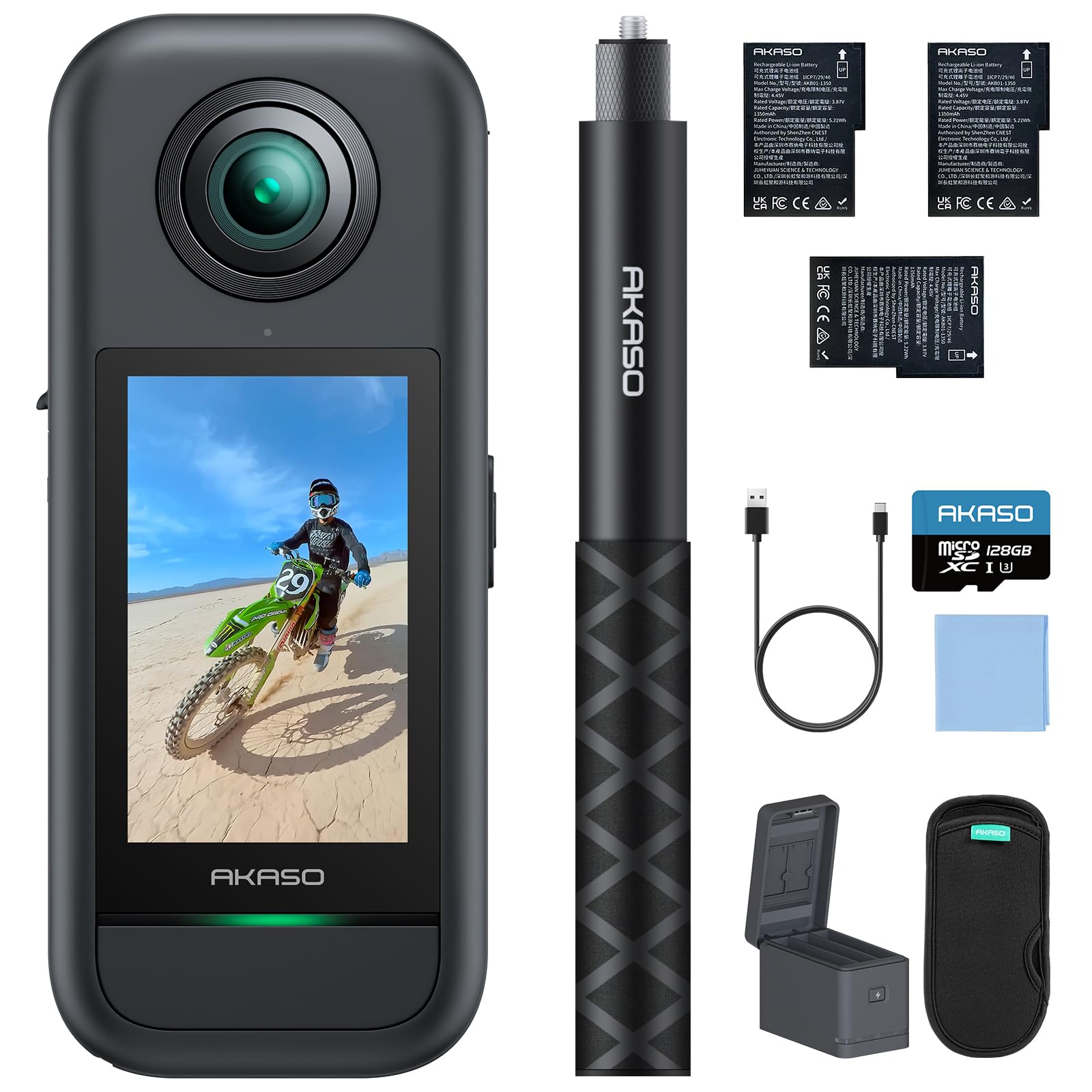
The AKASO 360 is the most affordable entry point into 360 video, offering 5.7K30 spherical capture, 72MP photos via dual 1/2-inch 48MP sensors, and a generous 128GB microSD card included in the box. The in-app stabilization smooths out handheld jitters, and the 360° Horizon Lock keeps your footage level during spins. The 1.2m Invisible Selfie Stick vanishes from the footage automatically, delivering third-person shots that look far more expensive than the camera costs.
Build quality is weatherproof but not fully waterproof — the touchscreen is responsive until it gets wet, and the included accessories are functional but basic. The AKASO 360 Studio app offers useful reframing and editing tools, but lacks text overlays and advanced transitions found in Insta360 or DJI software. The camera supports recording while charging via USB-C, a practical perk for long motorcycle trips or time-lapses.
Low-light performance is the biggest compromise here; users consistently report evening video looks grainy and loses fine detail. For daytime hiking, daytime bike rides, and beginners testing whether 360 video suits their workflow, the AKASO 360 provides immense value. Upgrading to a U3-rated microSD (up to 512GB) and buying extra batteries are recommended to overcome the main limitations.
Why it’s great
- Lowest entry price for 360 video
- 128GB microSD card included
- Records while charging via USB-C
Good to know
- Poor low-light video quality
- App lacks advanced editing features
- Not waterproof, weather resistant only
9. Owl Labs Meeting Owl 3

The Meeting Owl 3 is a specialized 360° conference camera for hybrid workspaces, not a camera for action sports or creative content. It captures 1080p HD 360° video of the entire room while its Owl Intelligence System uses visual and audio cues to automatically zoom in on whoever is speaking. The 18-foot (5.5m) microphone pickup covers a small-to-medium meeting room clearly, and the smart speaker-framing improves hybrid meeting engagement significantly.
Setup is genuinely plug-and-play — unbox to first meeting in about six minutes. It is certified for Microsoft Teams and works with Zoom, Google Meet, Webex, and most web-conferencing platforms. The USB connection and included 6-ft USB-C cable make it portable and easy to integrate. Users who have deployed it report dramatic improvements in remote participant inclusion compared to simple webcams.
The primary limitation is the 1080p video resolution, which looks soft on large conference room TVs. At its price tier, some expect 4K, though the 360 stitching and speaker-tracking AI perform well. The Meeting Owl ecosystem supports pairing two Owls or adding expansion mics for larger rooms. For companies that need reliable, simple-to-use 360 videoconferencing, this is the best device available.
Why it’s great
- AI auto-speaker tracking works reliably
- Plug-and-play setup under 6 minutes
- Universal platform compatibility
Good to know
- Limited to 1080p video, no 4K
- Best for small-to-medium rooms
- Not designed for outdoor or action use
FAQ
Is 8K 360 video worth the extra cost over 5.7K?
Can a 360 camera replace my regular action camera?
What SD card speed do I need for 8K 360 video?
How important is the Invisible Selfie Stick feature?
Final Thoughts: The Verdict
For most users, the best 360 camera winner is the DJI Osmo 360 Standard Combo because it pairs groundbreaking 1-inch sensors with 8K video, 105GB internal storage, and a polished app workflow at a mid-range price. If you want class-leading low light and the most durable build for extreme action, grab the Insta360 X5 Essentials Bundle. And for professional real estate stills and virtual tours where image quality is non-negotiable, nothing beats the Ricoh Theta Z1 51GB.