
Our readers keep the lights on and the weekend projects moving. As an Amazon Associate, I earn from qualifying purchases.
A 360Hz gaming monitor is a specialized tool built for one purpose: eliminating motion blur at the highest level of competitive play. Unlike standard high-refresh monitors that merely feel smooth, a 360Hz panel updates the image every 2.78 milliseconds, giving you the ability to track fast-moving targets with a clarity that 144Hz or even 240Hz simply cannot match. The difference isn’t subtle—it’s a measurable edge in reaction time and visual tracking.
I’m Rikta — the co-founder and writer behind FitlyFast. I’ve spent countless hours analyzing panel technologies, response time measurements, and real-world motion clarity data to separate marketing hype from genuine performance gains in the 360Hz space.
This guide breaks down the best options, from budget-friendly 1080p esports monitors to premium OLEDs that combine speed with stunning image quality, helping you find the perfect 360hz gaming monitor for your setup and budget.
How To Choose The Best 360Hz Gaming Monitor
Choosing the right 360Hz monitor goes beyond just looking at the refresh rate. You need to consider the panel technology, resolution, and the specific games you play most. A 360Hz monitor is an investment in competitive performance, and the wrong choice can leave you with subpar colors or a resolution that doesn’t suit your graphics card.
Panel Technology: TN, Fast IPS, or OLED?
The panel type is the most critical decision. TN panels, like those from BenQ’s Zowie line, prioritize absolute motion clarity and have the lowest input lag, making them the gold standard for professional esports. Fast IPS panels offer a better balance, with superior colors and viewing angles while still hitting 360Hz or higher. OLED panels, particularly QD-OLED, deliver unmatched contrast, infinite blacks, and near-instantaneous 0.03ms response times, but they come at a premium price and require burn-in management.
Resolution: Native 1080p vs. Dual Mode vs. 1440p
A native 1080p 360Hz monitor, like the ASUS ROG Strix XG259QNS, is the purest choice for competitive shooters where every millisecond counts. Dual-mode monitors, such as the Samsung Odyssey G7 G70F, offer versatility by letting you switch between a high-detail 4K mode and a high-refresh 360Hz FHD mode. For a middle ground, 1440p 360Hz OLEDs like the MSI MPG 271QRX provide excellent clarity and speed for both competitive and visually rich games, but they demand a very powerful GPU to drive high frame rates.
Adaptive Sync and Motion Blur Reduction
Look for monitors with either AMD FreeSync Premium or NVIDIA G-Sync compatibility to eliminate screen tearing and stutter. For the purest motion clarity, some monitors feature backlight strobing technologies like BenQ’s DyAc 2 or ASUS’s ELMB Sync, which reduce perceived motion blur. However, these technologies can sometimes introduce flicker or lower overall brightness, so it’s worth understanding the trade-off before committing to a monitor that relies on them.
Quick Comparison
On smaller screens, swipe sideways to see the full table.
| Model | Category | Best For | Key Spec | Amazon |
|---|---|---|---|---|
| Alienware AW2725DF | OLED | All-Round 1440p Speed | 0.03ms / 360Hz / QD-OLED | Amazon |
| LG 32GX850A-B | OLED | 4K Immersion & Speed | 4K 165Hz / FHD 330Hz Dual Mode | Amazon |
| MSI MPG 271QRX | QD-OLED | Vivid Color Competitive Play | 0.03ms / 360Hz / True Black 400 | Amazon |
| Samsung Odyssey OLED G6 | QD-OLED | Anti-Glare Competitive OLED | 0.03ms / 360Hz / Glare Free | Amazon |
| ASUS ROG Strix XG27ACDNG | QD-OLED | Burn-In Protection + Speed | 0.03ms / 360Hz / Custom Heatsink | Amazon |
| Philips Evnia 27M2N8500 | QD OLED | Factory Calibrated Colors | 0.03ms / 360Hz / 4-Year Warranty | Amazon |
| BenQ Zowie XL2566X+ | Fast TN | Pro Esports Motion Clarity | 400Hz / DyAc 2 / 24.1″ | Amazon |
| LG 27G810A-B | Fast IPS | High-Res & Competitive Balance | 4K 180Hz / FHD 360Hz Dual Mode | Amazon |
| Alienware AW2524HF | Fast IPS | Maximum Refresh Rate | 500Hz OC / 0.5ms / 24.5″ | Amazon |
| Samsung Odyssey G7 G70F | Fast IPS | Dual Mode Value | 4K 180Hz / FHD 360Hz / 27″ | Amazon |
| ASUS ROG Strix XG259QNS | Fast IPS | Pure 1080p Esports | 380Hz OC / 0.3ms / 24.5″ | Amazon |
In‑Depth Reviews
1. Alienware AW2725DF OLED Gaming Monitor

The Alienware AW2725DF is the quintessential 360Hz monitor, perfectly balancing the blistering speed required for competitive gaming with the stunning image quality of a QD-OLED panel. Its 0.03ms gray-to-gray response time virtually eliminates any perceptible ghosting, while the 360Hz refresh rate at 1440p provides a level of motion clarity that makes fast-paced shooters feel almost preternaturally smooth. The infinite contrast ratio and VESA DisplayHDR True Black 400 certification deliver deep blacks and vibrant highlights that mid-range IPS panels simply cannot reproduce.
This monitor is a jack of all trades, excelling in both frantic multiplayer arenas and immersive single-player campaigns. The fully adjustable stand—offering height, tilt, swivel, and pivot—ensures you can find the perfect ergonomic position for those long sessions. With AMD FreeSync Premium Pro and VESA AdaptiveSync, screen tearing is a non-issue, and the 99.3% DCI-P3 color coverage means games look incredibly rich and lifelike straight out of the box.
On the downside, the QD-OLED panel can exhibit minor text clarity issues due to its unique subpixel layout, which may be noticeable for productivity work. It also requires periodic pixel refresh cycles to mitigate burn-in risk, though Alienware’s 3-year burn-in warranty provides peace of mind. The slightly purple-tinted anti-glare coating is also a minor aesthetic quibble for some users. Overall, it is a phenomenal choice for gamers who want top-tier speed without sacrificing image quality.
Why it’s great
- Exceptional 360Hz + 0.03ms response with perfect OLED blacks.
- Excellent color accuracy and HDR performance for an immersive experience.
- Fully ergonomic stand and generous 3-year burn-in warranty.
Good to know
- QD-OLED subpixel layout can cause minor text fringing.
- Requires periodic pixel refresh to prevent image retention.
- Anti-glare coating has a slight purple tint in bright rooms.
2. LG 32GX850A-B UltraGear
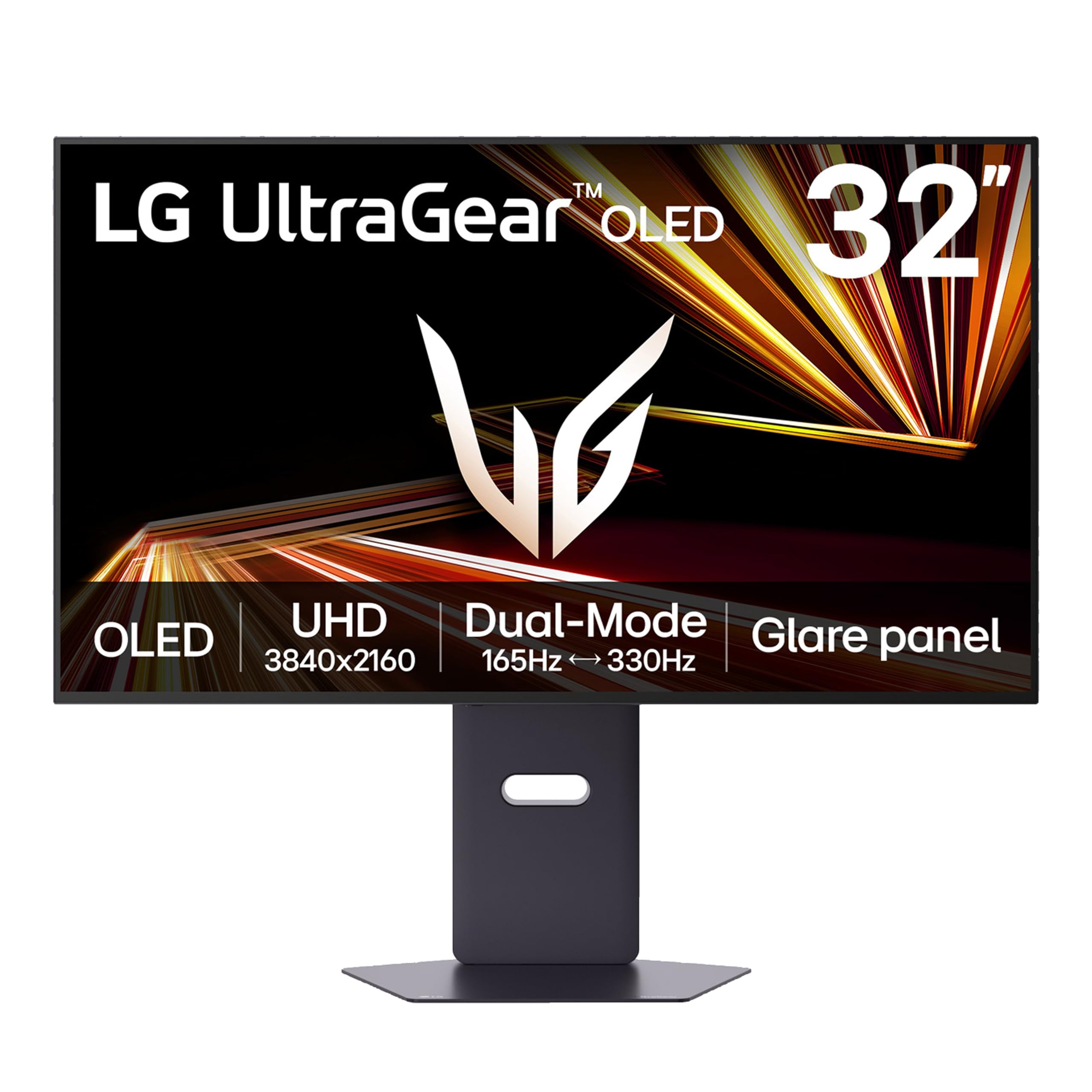
The LG 32GX850A-B brings a 32-inch glossy WOLED panel to the 360Hz conversation, offering a unique blend of cinematic immersion and dual-mode flexibility. In 4K UHD, it runs at a smooth 165Hz for story-driven titles, but a hotkey drop to Full HD unlocks a 330Hz mode for competitive play. The Micro Lens Array+ technology delivers a peak brightness of 275 nits, making it noticeably punchier than older WOLEDs, while the VESA DisplayHDR True Black 400 certification ensures deep, inky blacks.
Image quality is a standout feature here. The glossy finish enhances perceived contrast and vibrancy without the grainy haze of a matte coating, making colors pop in a way that flat IPS panels cannot match. The 0.03ms response time is instantaneous, and the combination of NVIDIA G-Sync compatibility and AMD FreeSync Premium Pro guarantees tear-free performance. The build quality is excellent, with a metal bezel and a fully adjustable stand that includes height, tilt, swivel, and pivot.
The main trade-off with the glossy OLED is reflectivity, making it less ideal for brightly lit rooms without careful light management. Some users have also reported minor text clarity and banding issues, which are common to WOLED technology. While the dual-mode is useful, the 330Hz FHD mode is not quite the native 360Hz of other monitors on this list. For gamers who prioritize deep contrast and immersive visuals but still want a high-refresh option for esports, this is a compelling premium choice.
Why it’s great
- Stunning glossy OLED with deep blacks and high vibrancy.
- Useful dual-mode for 4K immersion and FHD high-refresh.
- Superb build quality with a fully ergonomic metal stand.
Good to know
- Glossy screen is highly reflective in bright environments.
- FHD mode is 330Hz, not native 360Hz.
- Minor text clarity and banding issues typical of WOLED.
3. MSI MPG 271QRX QD-OLED

The MSI MPG 271QRX is a 27-inch QD-OLED powerhouse that delivers a spectacularly vivid image alongside a 360Hz refresh rate. The QD-OLED panel achieves a Delta E ≤ 2 color accuracy out of the box, meaning colors are not only vibrant but also incredibly precise, which is a rare treat for a monitor built for speed. The 0.03ms GtG response time is flawless, and the VESA DisplayHDR True Black 400 certification ensures that dark scenes in games like *Alan Wake 2* or *Cyberpunk 2077* are rendered with stunning depth and no distracting blooming.
MSI has included its OLED Care 2.0 suite, which intelligently reduces the risk of burn-in through pixel shifting and logo detection, making this monitor more practical for daily use than first-gen OLEDs. It also features a KVM function, allowing you to control multiple devices with a single keyboard and mouse, which is a significant productivity bonus. The HDMI 2.1 port with full 48 Gbps bandwidth ensures future-proof compatibility with next-gen consoles.
On the practical side, the stand offers only tilt and height adjustment, which is less flexible than the Alienware’s fully articulated stand. The 250-nit brightness is good for an OLED but may not be overwhelming in very bright rooms. The included Gaming Intelligence app provides easy access to settings, though the OSD menu can be a bit cluttered. For those who prioritize peak color volume and HDR performance alongside esports-level speed, this monitor is nearly unmatched.
Why it’s great
- Superb Delta E ≤ 2 color accuracy and vibrant QD-OLED image.
- Excellent OLED Care 2.0 features for burn-in prevention.
- KVM switch and HDMI 2.1 with full 48 Gbps bandwidth.
Good to know
- Stand only offers tilt and height; no swivel or pivot.
- Peak brightness is moderate at 250 nits.
- OSD menu can be cluttered to navigate.
4. Samsung Odyssey OLED G6 (G60SD)

The Samsung Odyssey OLED G6 (G60SD) is a 27-inch QD-OLED monitor that cleverly addresses a common OLED complaint: reflections. Its advanced Glare Free technology significantly cuts down on distracting reflections, making the perfect blacks and vibrant colors of the QD-OLED panel far more usable in a typical living room or brightly lit gaming den. This monitor retains the core speed of the 360Hz class, with a 0.03ms response time and support for AMD FreeSync Premium Pro, ensuring buttery-smooth gameplay in competitive titles.
Samsung has also introduced a Pulsating Heat Pipe in its Dynamic Cooling System, which diffuses heat five times better than traditional graphite sheets, directly targeting the burn-in risk that plagues OLED monitors. Additional burn-in mitigation comes from Logo and Taskbar Detection, which automatically dims static elements, and a Screen Saver that activates after 10 minutes of inactivity. The design is sleek, with a slim 3.9mm profile and CoreLighting for ambient mood lighting.
A significant caveat is that the monitor uses HDMI 2.0 rather than the advertised HDMI 2.1, which means it relies on Display Stream Compression (DSC) to reach 360Hz over HDMI, causing a 1-2 second black screen when alt-tabbing. This is a notable inconvenience for desktop users. The stand is ergonomic but not the most feature-rich, and the menu system can be complex. For gamers who need a 360Hz OLED that works well in a non-dark room, the G6 is a solid choice despite the HDMI limitation.
Why it’s great
- Excellent Glare Free coating for use in bright environments.
- Dynamic Cooling System with Pulsating Heat Pipe for longevity.
- Vibrant QD-OLED colors with deep blacks and 360Hz speed.
Good to know
- HDMI is 2.0, not 2.1, requiring DSC for 360Hz.
- DSC causes a brief black screen when alt-tabbing.
- Menu system is complex and stand could be more adjustable.
5. ASUS ROG Strix XG27ACDNG

The ASUS ROG Strix XG27ACDNG is a 26.5-inch QD-OLED monitor that prioritizes reliability alongside its 360Hz performance. It features a highly efficient custom heatsink and advanced airflow design that actively manage heat to reduce the risk of burn-in. ASUS also backs this with its OLED Care+ suite and a comprehensive 3-year warranty that includes burn-in coverage, making it one of the safest OLED investments on the market. The 0.03ms response time and 360Hz refresh rate deliver the fluid motion expected from a top-tier competitive display.
Visual performance is excellent, with a 99% DCI-P3 color gamut and true 10-bit color depth that produce vibrant, lifelike images. The ROG-exclusive OLED Anti-flicker technology helps maintain stability during variable refresh rate fluctuations, a common complaint on some other OLED monitors. The DisplayWidget Center software allows for easy adjustment of monitor settings and OLED Care functions with a mouse, bypassing the often-clunky OSD. The internal power brick is a clean touch for cable management.
The monitor is not without its quirks. The stand height adjustment range is somewhat limited compared to competitors, and the mandatory pixel cleaning pop-up can break immersion during gameplay. Some older games may not display correctly on this panel. For competitive gamers who are nervous about OLED burn-in and want the peace of mind of a robust cooling solution and warranty, this ASUS monitor is a top contender.
Why it’s great
- Custom heatsink and OLED Care+ for excellent burn-in protection.
- 3-year warranty with burn-in coverage for peace of mind.
- Anti-flicker technology and DisplayWidget Center software.
Good to know
- Height adjustment range on the stand is limited.
- Pixel cleaning pop-up can be intrusive during gaming.
- Incompatibility with some older game titles.
6. Philips Evnia 27M2N8500
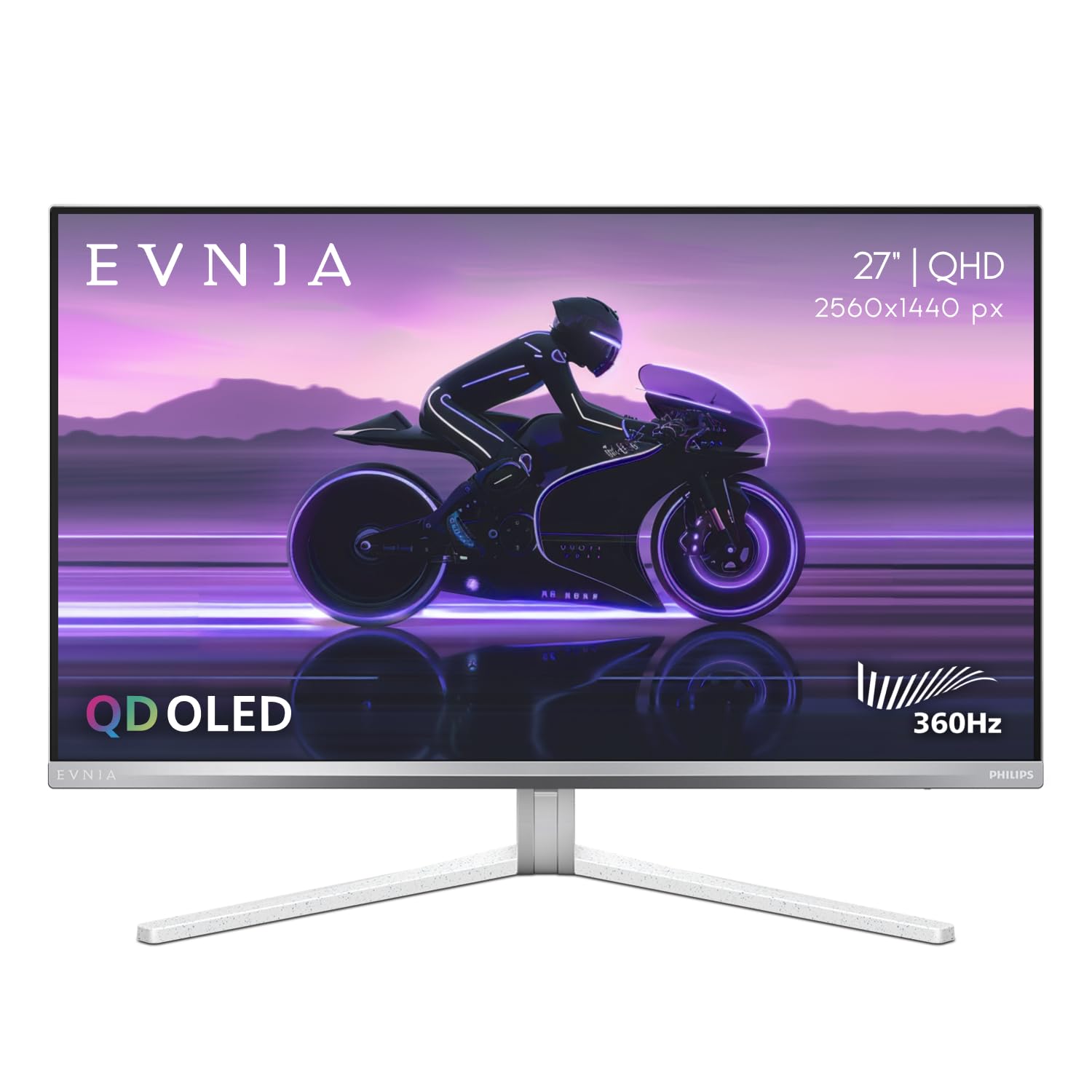
The Philips Evnia 27M2N8500 delivers the core QD-OLED experience—stunning contrast, vibrant colors, and a 0.03ms response time at 360Hz—without the typical “gamer” aesthetic. Its factory-calibrated color modes for DCI-P3, Adobe RGB, and sRGB make it a strong choice for users who need color accuracy for creative work alongside their gaming. The VESA DisplayHDR True Black 400 certification provides the deep blacks and bright highlights that make HDR gaming truly pop.
A standout feature is the Ambiglow technology, which projects a halo of light around the monitor that matches on-screen colors, significantly reducing eye strain during long sessions and creating a more immersive atmosphere. The build quality is excellent, featuring a solid metal stand with smooth swivel and height adjustments, plus a cleverly integrated headphone hanger. Philips goes a step further with a 4-year Advance Replacement warranty, which is one of the most generous in this category.
The main drawback reported by users is inconsistent packaging, with some units arriving scratched or damaged. The silver/white design may also clash with traditional black-out battlestations. While the on-screen image is fantastic, the OSD navigation can be a bit slow. For those looking for a professional-looking QD-OLED monitor for both creative work and competitive gaming, the Philips Evnia offers fantastic value and a superior warranty.
Why it’s great
- Factory-calibrated colors perfect for gaming and creative work.
- Useful Ambiglow backlight reduces eye strain.
- Excellent 4-year Advance Replacement warranty.
Good to know
- Packaging has been inconsistent; some units arrive damaged.
- Silver/white design may not suit all setups.
- OSD navigation can feel a bit slow.
7. BenQ Zowie XL2566X+
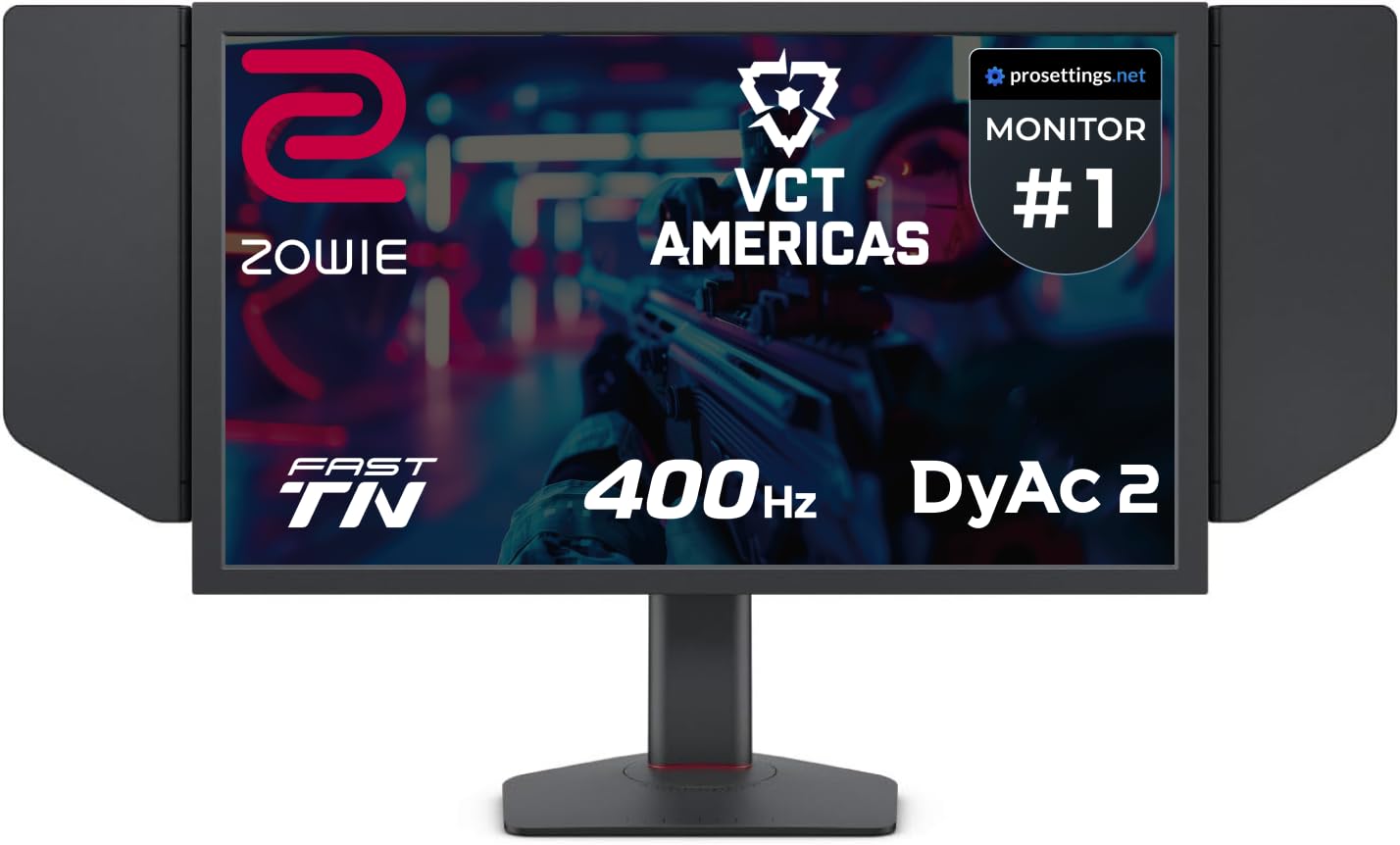
The BenQ Zowie XL2566X+ is a purpose-built esports tool that prioritizes motion clarity above all else. Using a Fast TN panel with BenQ’s proprietary DyAc 2 (Dynamic Accuracy) technology, this monitor provides an unmatched level of perceived motion clarity for competitive shooters like *Counter-Strike 2* and *Valorant*. The double-backlight strobe of DyAc 2 dramatically reduces motion blur, making it easier to track enemies during fast flicks and spray transfers. The native 400Hz refresh rate is a step above the 360Hz standard, and the 24.1-inch size is a favorite among pro players for its compact, focused field of view.
Every aspect of the Zowie XL2566X+ is tuned for tournament play. It includes a detachable shielding hood to block out peripheral distractions, an industrial-grade ball bearing height adjustment stand that is incredibly smooth and durable, and the XL Setting to Share feature, which allows you to save and transfer your exact color and performance settings between monitors. The color performance on this Fast TN panel has been improved over previous generations, offering more vibrant hues and better clarity for identifying enemies.
The trade-off is significant. TN technology inherently has poor viewing angles and inferior color saturation compared to IPS or OLED panels. The monitor is also a native 1080p resolution, which may not look sharp for desktop use or story-driven games. Without DyAc 2 enabled, motion clarity is less impressive. This monitor is not a jack-of-all-trades; it is a master of one specific, hardcore task: competitive first-person shooter performance.
Why it’s great
- Industry-leading motion clarity with DyAc 2 backlight strobing.
- Perfect 24.1″ size and native 1080p for pro esports titles.
- Detachable shield and robust, adjustable stand for tournament use.
Good to know
- Poor viewing angles and color saturation compared to IPS/OLED.
- 800p resolution is a downgrade for desktop use or non-comp games.
- Relies heavily on DyAc 2 for its unique value proposition.
8. LG 27G810A-B Ultragear
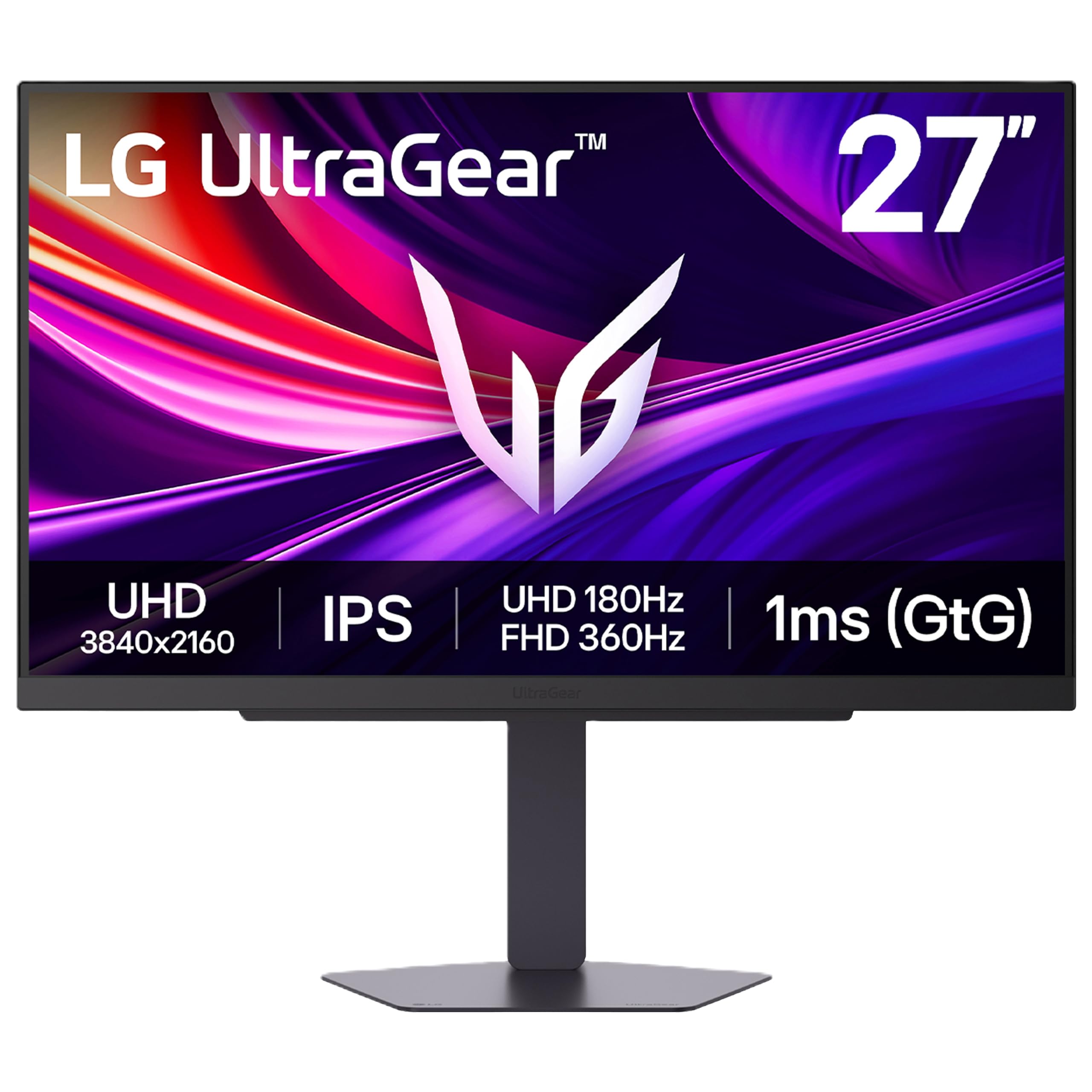
The LG 27G810A-B is a fantastic dual-mode monitor that stands out for its versatility. It can deliver a crisp 4K UHD experience at 180Hz for immersive single-player games and desktop productivity, then instantly switch to a Full HD 360Hz mode for competitive multiplayer. This makes it an ideal choice for gamers who play a wide variety of genres and don’t want to compromise on either visual fidelity or raw speed. The Fast IPS panel provides excellent color coverage at 95% DCI-P3, and the VESA DisplayHDR 400 certification adds a noticeable boost to contrast for a non-OLED display.
LG has packed it with gamer-friendly features like Dynamic Action Sync for reducing input lag, a Black Stabilizer for revealing enemies in dark corners, and a Crosshair overlay for improved aim in FPS games. The monitor also supports both AMD FreeSync Premium and NVIDIA G-Sync Compatibility, ensuring a smooth, tear-free experience regardless of your GPU brand. The stand is fully ergonomic, offering height, tilt, swivel, and pivot adjustments for a comfortable viewing angle.
The primary drawback is that it is an IPS monitor, meaning its black levels and contrast ratio cannot match the deep, inky blacks of an OLED. Some users have noted the wake-from-sleep time is a bit slow. The 4K to FHD switch, while convenient, is a resolution drop that some may find jarring. For a high-quality IPS panel that truly excels at being a jack-of-all-trades, the LG 27G810A-B is a smart choice that offers incredible flexibility.
Why it’s great
- Versatile dual-mode: 4K 180Hz and FHD 360Hz.
- Excellent Fast IPS color reproduction (95% DCI-P3).
- Fully adjustable ergonomic stand and robust feature set.
Good to know
- IPS black levels are not as deep as OLED alternatives.
- Slow wake from sleep compared to some competitors.
- Resolution drop when switching to FHD mode can be distracting.
9. Alienware AW2524HF

The Alienware AW2524HF is a pure speed machine, offering a native 480Hz refresh rate that can be overclocked to 500Hz. For the competitive gamer who demands the absolute highest frame rates possible, this monitor delivers the smoothest motion available on a Fast IPS panel. The 0.5ms gray-to-gray response time (in Extreme mode) effectively minimizes blurring and ghosting, ensuring that every frame is crisp and clear. The 99% sRGB color coverage ensures colors are accurate and consistent, a nice bonus for a monitor built for raw performance.
It features AMD FreeSync Premium Technology and is VESA AdaptiveSync certified, which guarantees a tear- and stutter-free gaming experience. The monitor also includes TUV ComfortView Plus, a hardware-based low blue light solution that reduces eye strain during marathon gaming sessions without washing out the colors. The build includes a fully adjustable stand with height, tilt, swivel, and pivot adjustments. Alienware includes a 3-year Advanced Exchange warranty, which is a nice layer of protection.
To reach the full 500Hz, you must use a DisplayPort 1.4 connection. Some users have reported quality control issues, such as receiving used or damaged units, though the core product is well-regarded. There is also a report of the monitor’s performance degrading after several months of heavy use. The monitor is a native 1080p resolution, which is fine for esports but lacks the sharpness of a 1440p panel. For the player who wants nothing but the highest possible refresh rate, this is a compelling, albeit niche, option.
Why it’s great
- Blistering 500Hz overclocked refresh rate for ultimate smoothness.
- Fast 0.5ms GtG response time with minimal ghosting.
- Hardware-based low blue light solution for eye comfort.
Good to know
- Requires DisplayPort 1.4 to achieve the full 500Hz.
- Some quality control issues reported with packaging.
- 1080p resolution is not as sharp as 1440p.
10. Samsung Odyssey G7 G70F
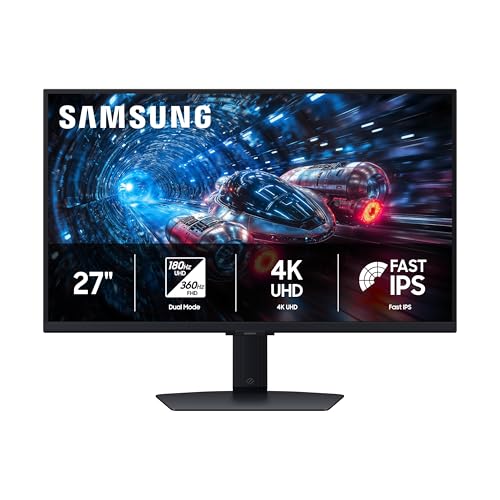
The Samsung Odyssey G7 G70F is a budget-friendly entry into the 360Hz space, offering a dual-mode setup similar to the LG 27G810A-B but at a more accessible price point. It features a 27-inch Fast IPS panel that can run at 4K 180Hz for day-to-day use and single-player games, and then switch to FHD 360Hz for competitive titles. With HDR10 support and a 99% color gamut, the image quality is vibrant and sharp for an IPS panel, offering a significant step up from budget 1080p monitors.
The monitor is well-equipped for gaming, featuring both NVIDIA G-Sync compatibility and AMD FreeSync Premium to eliminate screen tearing. The 1ms GtG response time is solid for its class. Samsung also includes the Auto Source Switch+ feature for seamless switching between connected devices, and the ergonomic stand offers height, tilt, and pivot adjustments. The matte finish effectively reduces reflections, making it usable in various lighting conditions.
The main limitation is the brightness, which peaks at 350 cd/m², and the contrast ratio is a standard 1000:1 for IPS. It also lacks built-in speakers, which is common but worth noting. While it doesn’t have the infinite contrast of an OLED, the G70F is a fantastic value proposition for gamers who want the flexibility of dual-mode operation and a solid 360Hz experience without breaking the bank. It’s a strong, practical choice for a balanced gaming setup.
Why it’s great
- Excellent value for a dual-mode 4K/FHD 360Hz monitor.
- Vibrant Fast IPS panel with a wide 99% color gamut.
- Fully ergonomic stand with a practical matte finish.
Good to know
- Standard IPS contrast and brightness (350 cd/m²).
- No built-in speakers.
- Wakes slowly from sleep mode.
11. ASUS ROG Strix XG259QNS

The ASUS ROG Strix XG259QNS is a purpose-built 24.5-inch esports monitor that provides a premium competitive experience without the OLED price tag. With a native 360Hz refresh rate that can be overclocked to 380Hz and an incredibly fast 0.3ms response time (minimum), it offers some of the lowest input lag of any IPS monitor available. The ASUS Fast IPS technology ensures sharp, clear visuals with minimal ghosting, making it a top choice for players of *Valorant*, *Overwatch*, and *Rainbow Six Siege*.
It features ASUS’s Extreme Low Motion Blur Sync (ELMB SYNC) technology, which can be used in conjunction with variable refresh rate to eliminate both ghosting and tearing. The 110% sRGB color gamut provides punchy, vibrant colors that enhance in-game visibility. The DisplayWidget Center software makes adjusting OSD settings with a mouse a breeze, and the stand is highly adjustable with height, tilt, swivel, and pivot. It also includes a handy ROG pouch and sticker for the enthusiast.
The monitor is strictly 1080p, which is ideal for competitive gaming but may feel limiting for desktop use or story-driven games. Some users recommend against using the 380Hz overclock as it offers no perceptible difference but can introduce instability. The built-in power adapter is a bit large and clunky. For the serious FPS player looking for a monitor that prioritizes speed, response, and a highly adjustable setup, the ASUS XG259QNS is a very capable and well-rounded choice.
Why it’s great
- Exceptionally low 0.3ms response time and 380Hz OC capability.
- ELMB Sync works with VRR to eliminate ghosting and tearing.
- Fully ergonomic stand and useful DisplayWidget software.
Good to know
- 1080p resolution is less sharp for non-gaming tasks.
- 380Hz overclock can cause instability with no real benefit.
- Power adapter is bulky and external.
FAQ
Do I need a 360Hz monitor if I only play single-player games?
Can an RTX 4060 or RX 7600 run games at 360Hz?
Is there a big visual difference between 240Hz and 360Hz?
Final Thoughts: The Verdict
For most users, the 360hz gaming monitor winner is the Alienware AW2725DF because it perfectly combines the motion clarity of a 360Hz refresh rate with the stunning visual fidelity of a QD-OLED panel, making it ideal for both competitive and immersive gaming. If you want the absolute pinnacle of motion clarity for professional esports, grab the BenQ Zowie XL2566X+ with its unique DyAc 2 technology. And for a versatile, dual-mode option that balances 4K and 360Hz on one screen, nothing beats the LG 27G810A-B Ultragear.