
Our readers keep the lights on and the weekend projects moving. As an Amazon Associate, I earn from qualifying purchases.
A part that slumps, deforms, or delaminates the first time it sits in a sunlit car engine bay or near a hot end is not just a failed print — it’s wasted material and lost hours. Choosing a filament that holds its geometry under sustained thermal load separates a functional prototype from a permanent component. The right selection depends on knowing the glass transition temperature, heat deflection point, and the realistic chamber requirements each polymer demands.
I’m Rikta — the co-founder and writer behind FitlyFast. I’ve spent hundreds of hours cross-referencing manufacturer datasheets, verified heat deflection ratings, and real-world printing feedback to build a guide that cuts through the marketing noise around thermal performance.
After evaluating spools across ASA, carbon-reinforced PETG, polycarbonate, nylon composites, and PPS blends, the strongest contenders for sustained heat exposure have surfaced. Here is the definitive analysis of the 3d filament for heat resistance.
How To Choose The Best 3D Filament For Heat Resistance
Thermal resistance is never a single number. Three distinct measurements — glass transition temperature (Tg), heat deflection temperature (HDT), and continuous service temperature — define the upper operating limit. A filament with a high Tg may still creep under sustained load at lower temperatures if its HDT is not proportionally elevated. You must match the polymer’s thermal profile to both the peak ambient temperature and the mechanical load the part will carry.
Tg vs HDT vs Continuous Service Temperature
Glass transition temperature marks the point where the polymer softens from a rigid state to a rubbery one. Heat deflection temperature (HDT) measures deformation under a specific load (typically 0.45 MPa or 1.82 MPa). A filament such as standard PLA has a Tg around 60°C, making it unsuitable for any engine-bay or hot-cup contact. ASA lifts Tg to roughly 100°C, while polycarbonate and PPA-CF push toward 150°C and beyond. For parts exposed to continuous heat exceeding 100°C, a carbon fiber-reinforced nylon or PPS-based filament becomes necessary.
Enclosure Requirements and Printability Trade-Offs
Every heat-resistant filament demands a higher nozzle temperature, and most require a heated chamber to prevent warping. ASA prints well in an enclosed printer at 80–120°C bed temperature, whereas polycarbonate (PC) requires a chamber stabilized around 50°C. Nylon-based composites like PA612-CF are less sensitive to moisture but still need drying before printing. PPS-CF pushes the requirement further — a 340°C capable hotend and a chamber above 50°C are non-negotiable. Beginners often make the mistake of buying a high-heat filament without first confirming their printer can maintain the necessary chamber and hotend temperatures.
Carbon Fiber Reinforcement as a Thermal Aid
Carbon fiber does not increase the polymer’s Tg, but it does raise the HDT by providing a rigid skeletal structure that resists deformation under load. A PETG-CF blend, for example, exhibits significantly better heat resistance than standard PETG because the carbon fibers carry the stress that would otherwise cause the softer PETG matrix to sag. The trade-off is increased nozzle abrasion — a hardened steel nozzle is required — and a matte surface finish that hides layer lines but can make post-processing difficult.
Quick Comparison
On smaller screens, swipe sideways to see the full table.
| Model | Category | Best For | Key Spec | Amazon |
|---|---|---|---|---|
| ERYONE PPS-CF10 | PPS-CF | Extreme heat + chemical resistance | HDT 238°C @ 0.45MPa | Amazon |
| Siraya Tech Fibreheart PPA-CF | PPA-CF | High-temp structural parts | HDT 195°C | Amazon |
| OVERTURE PC Professional | Polycarbonate | Electronics housings, outdoor | Heat resistance up to 180°C | Amazon |
| Polymaker Fiberon PA612-CF15 | CF Nylon | Low-moisture, high-strength parts | Low moisture sensitivity | Amazon |
| FLASHFORGE PETG-CF | PETG-CF | Easy-print high-temp alternative | Carbon fiber reinforced | Amazon |
| SUNLU ASA | ASA | Outdoor UV/rain exposure | Print temp 230–260°C | Amazon |
| ANYCUBIC ASA | ASA | Budget outdoor functional parts | HDT up to 90°C | Amazon |
In‑Depth Reviews
1. ERYONE Fiberon PPS-CF10 Filament 1.75mm 0.5kg
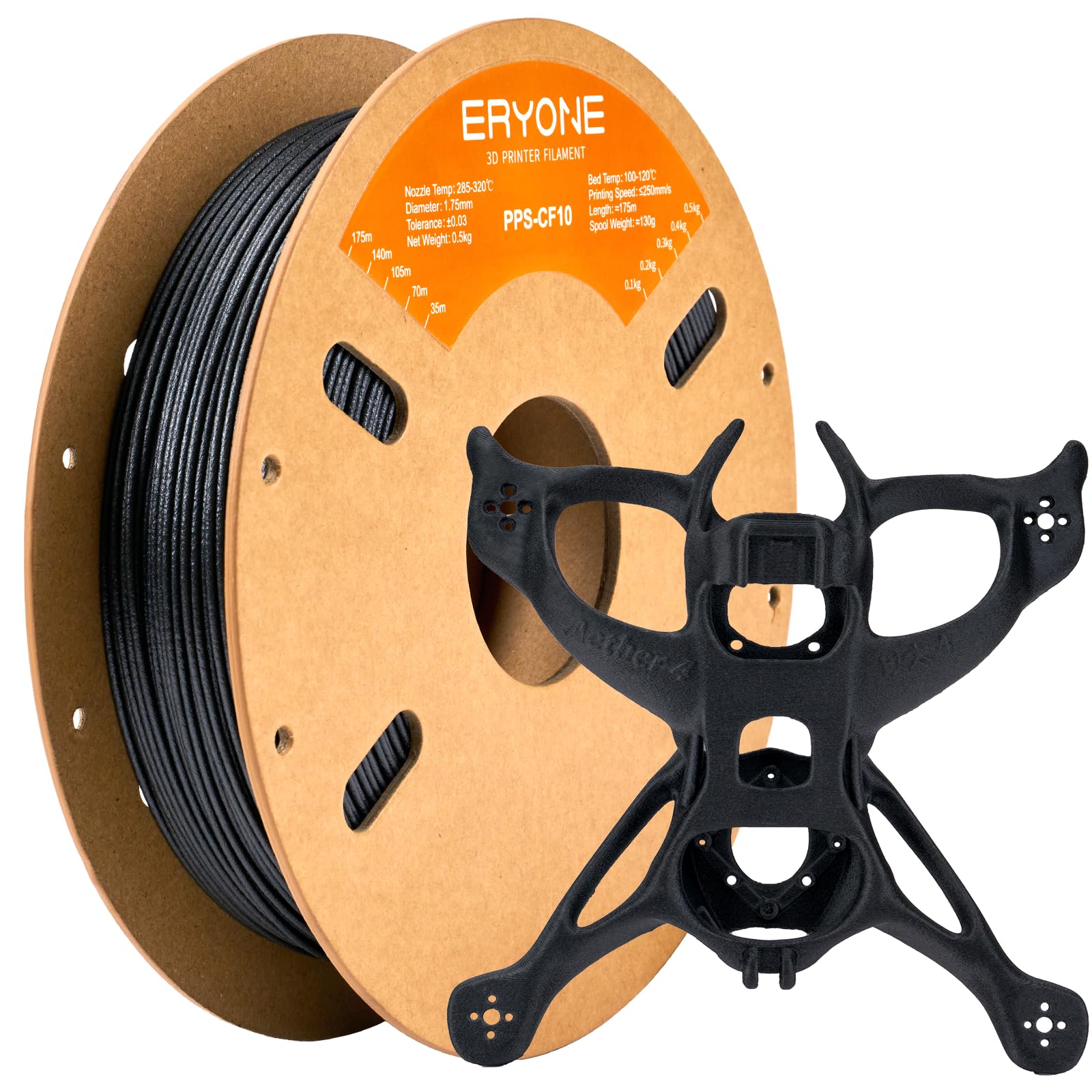
The ERYONE PPS-CF10 earns the top spot because its heat deflection temperature of 238°C at 0.45MPa is the highest measured value among all filaments reviewed here. The 10% carbon fiber loading increases stiffness and dimensional stability at temperatures that would soften or destroy ASA, PC, or nylon-based materials. This is a true engineering-grade filament for tooling fixtures, automotive brackets near the engine block, and electronic enclosures that must resist sustained heat without creeping.
Printing this material demands a capable printer with a hotend rated for 340°C, a bed at 110°C, and an enclosed chamber maintained above 50°C. The carbon fiber content produces a matte, delicate surface that hides layer lines, and users report zero warping when the chamber is properly stabilized. The 0.5kg spool is smaller than standard 1kg rolls, reflecting the premium composition and the fact that high-heat prints are typically smaller functional parts rather than large decorative objects.
Users consistently note that the filament produces a metallic ring when tapped, indicating the rigidity of the finished part. The flame retardancy and chemical stability further extend its application range into aerospace and industrial machinery. The trade-off is the need for thorough drying — 24 hours at 85°C is recommended — and a hardened steel nozzle to survive the abrasive carbon fiber content. For applications where standard polymers fail within minutes, this filament delivers reliable performance at extreme thermal exposure.
Why it’s great
- Unmatched HDT of 238°C for extreme heat environments
- Zero warping with proper chamber temperature
- Flame retardant and chemically stable
Good to know
- Requires 340°C hotend and heated enclosure
- Only available in 0.5kg spool size
- Must be dried 24+ hours before use
2. Siraya Tech Fibreheart PPA-CF 3D Printing Filament 1kg
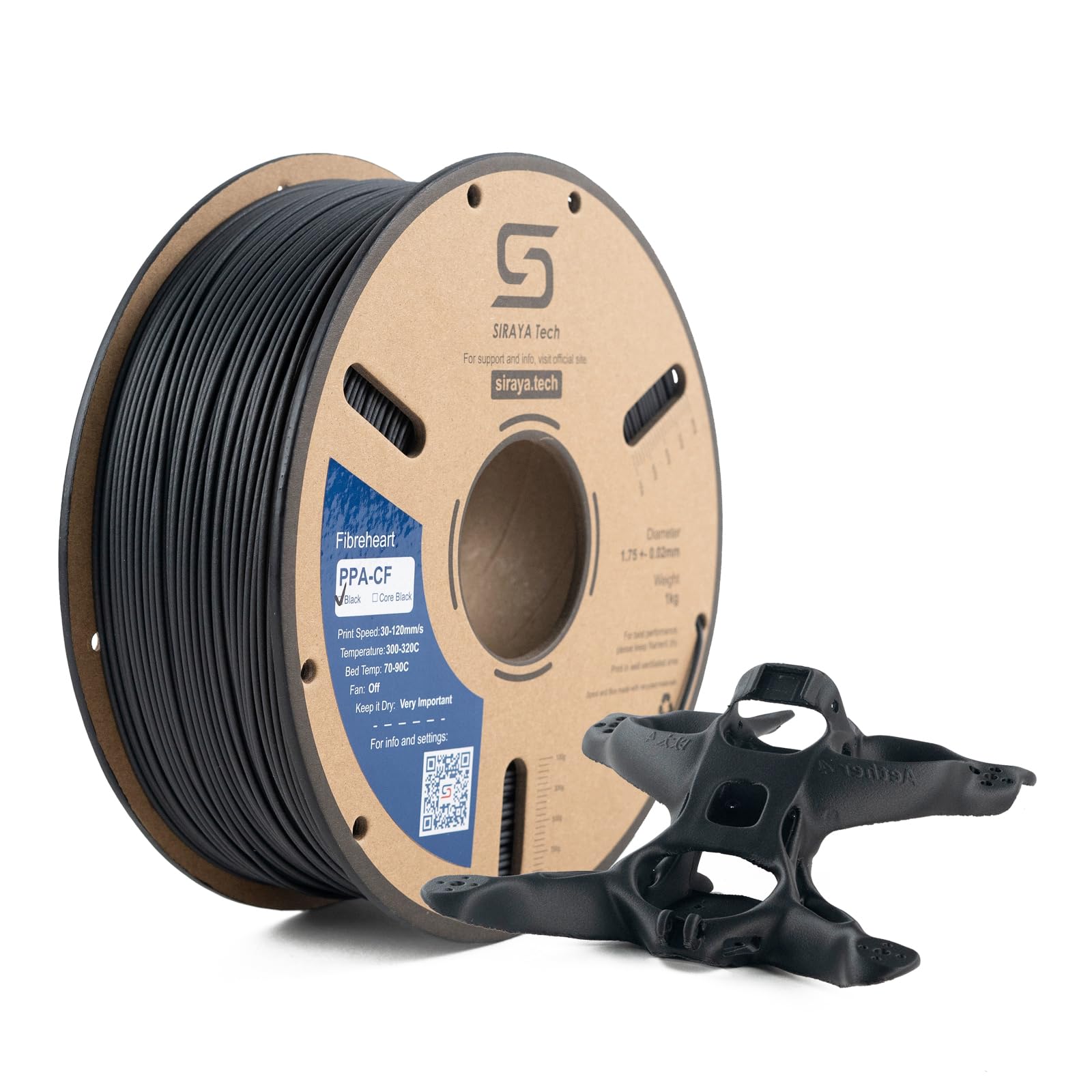
The Siraya Tech Fibreheart PPA-CF brings a heat deflection temperature of 195°C, placing it just behind the PPS-CF but ahead of standard polycarbonate and nylon filaments. The 15% chopped carbon fiber reinforcement delivers exceptional stiffness — roughly three times that of PLA — and five times the tensile strength. This makes it suitable for load-bearing structural parts that must survive both high ambient temperatures and mechanical stress, such as jigs, fixtures, and automotive under-hood components.
One of the standout features is the ultra-low moisture absorption, which is significantly lower than standard nylon filaments. Users report that the filament prints reliably straight from the sealed pouch without the lengthy drying process that PA6 or PA12 composites typically require. The recommended nozzle temperature ranges from 290°C to 320°C with a bed temperature of 80–110°C and a heated enclosure. The surface finish is a dark gunmetal gray satin that minimizes visible layer lines.
Users praise the interlayer adhesion as the strongest they have tested across dozens of filament types, with one reviewer noting that a printed lathe tool cut steel without deflection. The main downsides are the extreme abrasiveness — a hardened steel nozzle is mandatory, and even that may wear after 1,600 hours — and the tendency to droop on overhangs exceeding 40 degrees. This filament is not suitable for printers without hardened extruder gears and a direct-drive system capable of handling the coil memory of the stiff material.
Why it’s great
- 195°C HDT with exceptional stiffness
- Low moisture absorption compared to standard nylons
- Best-in-class interlayer adhesion
Good to know
- Very abrasive — hardened nozzle mandatory
- Not suitable for AMS/CFS due to coil memory
- Difficult with overhangs above 40 degrees
3. OVERTURE PC Professional Filament 1kg
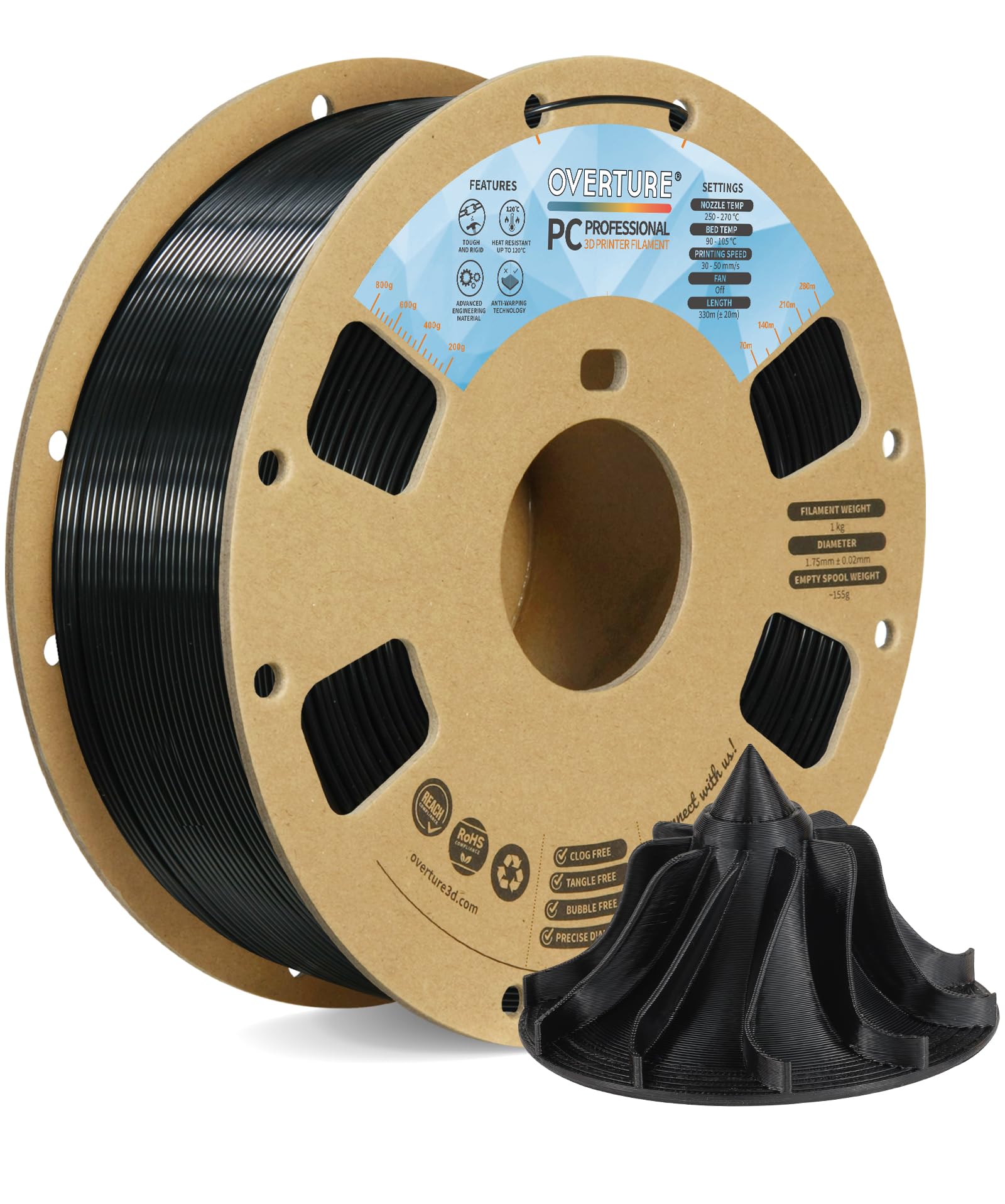
The OVERTURE PC Professional is a polycarbonate-based filament that offers heat resistance up to 180°C, which is a significant jump from the 100°C ceiling of ASA. It is formulated to reduce warping and odor during printing, two pain points that typically plague standard polycarbonate filaments. The material maintains good impact resistance and thermal stability across a wide temperature range (-60°C to 120°C), making it a versatile engineering plastic for electronic enclosures, lamp shades, and outdoor components.
Printing this filament requires a closed chamber — ideally stabilized around 50°C — and a bed temperature of 110°C. Users report excellent layer adhesion and detail on parts with small features, such as tiny pins printed with a 0.4mm nozzle. The filament does not emit the strong fumes associated with ABS, though adequate ventilation is still recommended. The cardboard spool is fully recyclable, aligning with sustainable packaging practices.
Some users note that the tuning window for first layer adhesion and fine details is narrower than PETG or ASA. The filament is slightly more viscous at the recommended nozzle temperature of 270°C, which can cause stringing if retraction settings are not dialed in. Despite these adjustments, the combination of 180°C heat resistance and 1kg spool at a moderate cost makes this the best entry point for users transitioning from PLA or PETG into high-temperature printing.
Why it’s great
- Heat resistance up to 180°C — strong value for the price
- Low warping and odor compared to standard PC
- Recyclable cardboard spool
Good to know
- Requires closed chamber at 50°C
- Narrow tuning window for first layer
- More viscous at 270°C — may need retraction tuning
4. Polymaker Fiberon PA612-CF15 Carbon Fiber Nylon 0.5kg

The Polymaker Fiberon PA612-CF15 is a carbon fiber-reinforced nylon that addresses the biggest frustration with standard nylon filaments: moisture sensitivity. PA612 has a lower water absorption rate than PA6 or PA66, meaning the filament stays printable longer after opening and requires less aggressive drying before each print. The 15% carbon fiber loading increases the HDT and stiffness, making this filament suitable for industrial tooling, automotive parts, and functional end-use components that must resist both heat and mechanical load.
Printing recommendations center around a nozzle temperature of 260–290°C and a bed temperature of 80–110°C. Users report excellent first layer adhesion and no jamming or warping when the filament is properly dried. The surface finish has a rough texture typical of carbon fiber composites, and the resulting parts exhibit a glassy rigidity that produces a metallic sound when struck. The 0.5kg spool is smaller than standard, reflecting the premium nature of the material.
Reviewers emphasize that this filament prints well with stock presets on printers like the Bambu X1C and Elegoo Centauri Carbon, requiring minimal tinkering. The main drawback is the cost per gram compared to standard nylons, though the reduced waste from moisture-related failures offsets some of the premium. Users seeking to print strong, heat-resistant parts without the extreme requirements of PPS or PPA will find this filament a reliable middle ground.
Why it’s great
- Lower moisture absorption than standard PA6/66 nylons
- Excellent layer adhesion and stiffness
- Prints well with stock presets on common printers
Good to know
- 0.5kg spool — less material per purchase
- Requires hardened steel nozzle
- Higher cost per gram than standard nylon
5. FLASHFORGE Carbon Fiber PETG Filament 1.75mm 1kg
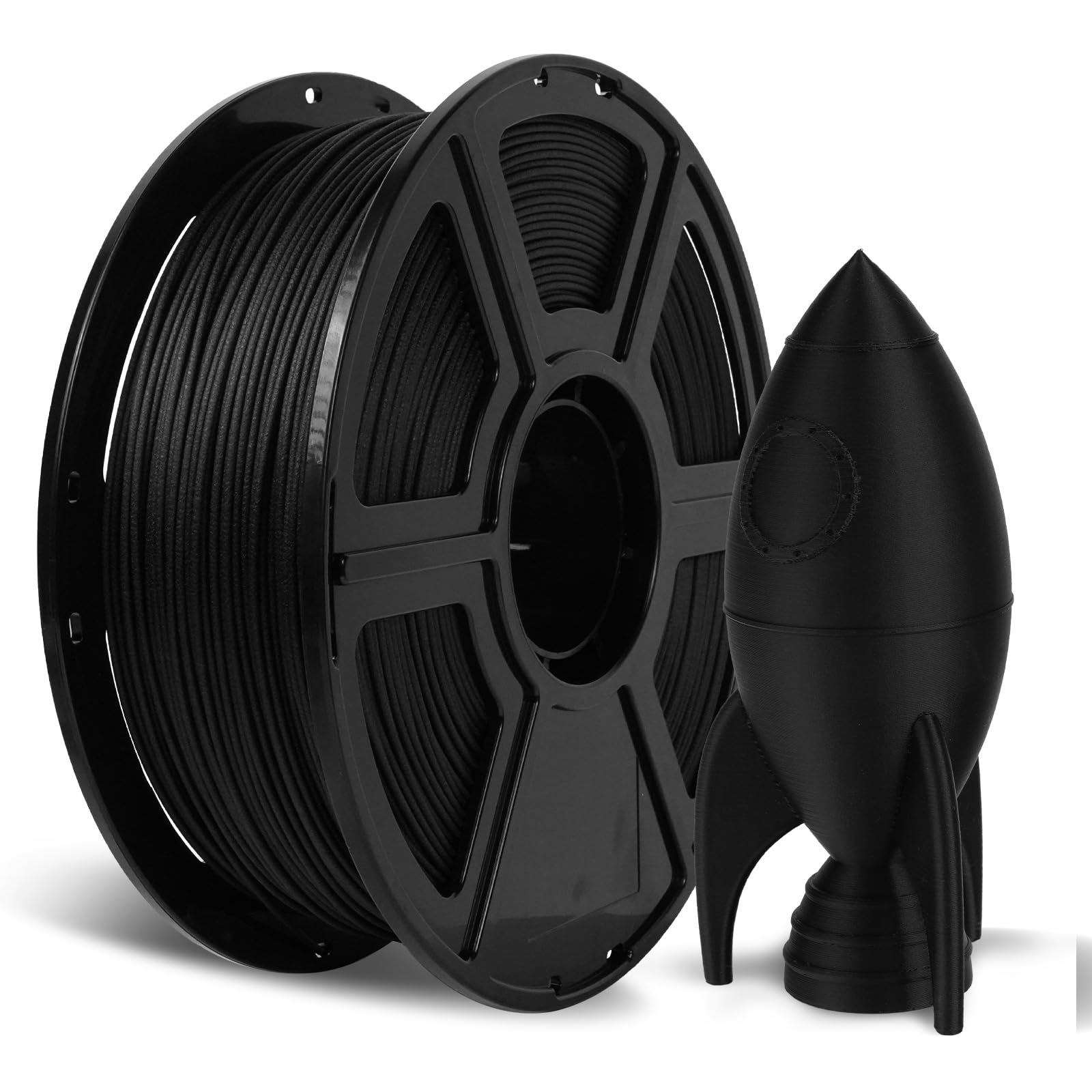
The FLASHFORGE PETG-CF brings carbon fiber reinforcement to the easy-to-print PETG platform, offering improved heat resistance over standard PETG without the warping and odor challenges of ABS or ASA. The carbon fiber content increases the material’s stiffness, tensile strength, and wear resistance, making it a good fit for gears, bearings, sliders, and RC car components that need to withstand moderate heat and continuous friction. The printing behavior remains forgiving — users report no clogging, no stringing, and excellent bed adhesion on textured PEI sheets.
The recommended nozzle temperature range is 230–260°C with a bed temperature of 70–80°C. Unlike many carbon fiber filaments, this PETG-CF does not require a heated enclosure, though a stable ambient temperature helps. Users note that the filament produces a slight sheen and good layer adhesion, with no warping even on larger flat parts. The AMS compatibility is a notable advantage for users with multi-material systems, as the filament feeds smoothly without the extreme stiffness of nylon-based CF blends.
Reviewers consistently place this filament above Overture and Polymaker PETG-CF alternatives, citing consistent quality and easier printing. The primary limitation is that the heat resistance, while improved over standard PETG, does not reach the levels of polycarbonate or PPS-CF. For applications with sustained temperatures below 90°C, this filament offers a hassle-free bridge between standard materials and true high-temperature composites.
Why it’s great
- Easy to print — no enclosure required
- Good heat resistance improvement over standard PETG
- AMS compatible for multi-material setups
Good to know
- Heat ceiling below PC and PPS-CF filaments
- Requires hardened steel nozzle
- Slower speeds (60mm/s) produce best results
6. SUNLU ASA Filament 1.75mm 1kg

The SUNLU ASA filament is the go-to choice for outdoor prints that must resist UV radiation, rain, and moderate heat. ASA shares ABS’s strength and toughness but adds superior weather resistance, making it suitable for house numbers, garden tools, Voron printer parts, and automotive trim pieces that sit in direct sunlight. The recommended nozzle temperature of 230–260°C and bed temperature of 80–120°C are achievable on most enclosed printers without requiring a full high-temperature upgrade.
Users report strong layer adhesion and minimal odor compared to ABS, with no clogging or bubbling. The filament is vacuum-sealed and arrives dry, though some users note that the vacuum seal can be inconsistent — a few spools have arrived with air in the bag, necessitating a drying cycle before use. The spool has been redesigned with a multi-hole drying structure and is compatible with AMS and AMS Lite systems, a convenience not always found in ASA filaments.
The heat resistance of ASA caps around 90–100°C, which is adequate for outdoor summer heat but insufficient for engine bays or high-temperature industrial applications. Users specifically praise the dimensional accuracy (+/- 0.02mm) and the consistency of the filament diameter, which prevents feeding issues. This filament is the most accessible entry point for users who need weather-resistant prints without stepping into the more demanding PC or nylon categories.
Why it’s great
- Excellent UV and rain resistance for outdoor parts
- Low odor compared to ABS
- AMS compatible spool design
Good to know
- Heat ceiling around 100°C — not for extreme heat
- Inconsistent vacuum seal on some spools
- Requires enclosure to prevent warping
7. ANYCUBIC ASA Filament 1.75mm 1kg

The ANYCUBIC ASA filament offers a cost-effective entry into heat-resistant outdoor printing. With a heat deflection temperature of up to 90°C — notably higher than PETG’s 63°C and PLA’s 53°C — this filament can handle direct sunlight and warm ambient conditions without deforming. The material is formulated to resist UV radiation, water, and aging, making it a viable choice for plant pots, garden tools, and car accessories that remain outdoors year-round.
Printing behavior is similar to ABS but with less warping and cracking, especially when printed on a textured PEI bed heated to 100–110°C. Users recommend drying the filament for at least three hours at 80°C before use to eliminate moisture that can cause bubbling. The spool is neatly wound with consistent diameter tolerance (+/- 0.02mm), ensuring smooth extrusion across most FDM printers. The black color is rich and uniform, providing a professional finish on functional parts.
The main limitation is the heat ceiling — 90°C is sufficient for outdoor use but falls short of the 180°C+ capabilities of polycarbonate or PPS blends. Users also note that the filament benefits from slower print speeds to avoid warping on larger flat surfaces. For budget-conscious buyers who need weather-resistance and moderate heat tolerance without moving into the premium tier, this filament delivers reliable performance at the lowest cost per spool.
Why it’s great
- Budget-friendly entry into heat-resistant ASA
- Good UV and water resistance for outdoor use
- Consistent diameter with smooth extrusion
Good to know
- 90°C HDT — not for extreme heat applications
- Requires drying before use
- Slower speeds needed to avoid warping
FAQ
Can I print carbon fiber reinforced filament on a stock Ender 3?
How long should I dry ASA filament before printing?
Does heat-resistant filament require an enclosure?
What does carbon fiber do to the heat resistance of a filament?
Final Thoughts: The Verdict
For most users, the 3d filament for heat resistance winner is the ERYONE PPS-CF10 because its 238°C heat deflection temperature covers the widest range of extreme heat applications without compromise. If you want excellent structural strength with lower printer requirements, grab the Siraya Tech Fibreheart PPA-CF. And for cost-effective outdoor parts that resist UV and rain, nothing beats the SUNLU ASA.