
Our readers keep the lights on and the weekend projects moving. As an Amazon Associate, I earn from qualifying purchases.
Specs are compiled from manufacturer listings and verified buyer reviews and can change over time — please confirm the key details on the product page before buying.
You want a projector that delivers real 3D — crisp, deep, and without the washed-out mess that leaves you squinting. The difference is in three measurable specs: brightness (how many lumens it throws), contrast ratio (how dark the blacks go), and how it handles the 3D signal. This guide breaks down six projectors that support 3D natively, comparing the specs that decide whether you see a sharp, punchy image or a dim, ghosty blur.
I’m Rikta — the founder and writer behind FitlyFast. This guide is built by comparing the manufacturers’ published specifications and the patterns across verified customer reviews, so you get each pick’s real strengths and trade-offs instead of marketing spin.
After breaking down the brightness, resolution, and contrast specs across six models, the right 3d home cinema projector becomes clear based on whether you prioritize raw lumens for a daytime living room, native 4K resolution, or a deep contrast ratio for a dark dedicated theater room.
Quick Picks
- Valerion VisionMaster Pro 4K Laser Projector — Best Overall
- Valerion VisionMaster Max 4K Laser Projector — Flagship Performer
- BenQ TH575 1080p Indoor Gaming Projector — Best Bright Value
- JMGO N1S Ultimate Triple Laser 4K Projector — Ultra-Portable Laser
- Epson Home Cinema 3000 1080p 3D 3LCD Projector — Mid-Range Contrast King
- Dangbei DBOX02 Laser Projector 4K GTV — All-in-One 4K Laser
How To Choose The Best 3D Home Cinema Projector
Picking the right one starts with one hard fact: 3D projection cuts the brightness you see by about half. Your active shutter glasses block one eye at a time, so a projector that looks plenty bright for 2D movies can look dim and lifeless in 3D. The single most important spec is brightness — measured in ANSI lumens or ISO lumens. The second is how black the projector can go — its contrast ratio.
Brightness: The 3D Deciding Factor
For a watchable 3D experience in a room with some ambient light (lamps on, curtains open partway), you want at least 2500 lumens. A 1080p projector like the BenQ TH575 sits at 3800 lumens, so it keeps 3D scenes punchy even in a semi-lit family room. A higher-end laser model like the Valerion VisionMaster Max hits 3500 ISO lumens, which is plenty for a larger screen at 120 inches or more. The lower the lumens, the darker your room needs to be for 3D to look good.
Contrast Ratio and 3D Depth
In a dark 3D scene — a night sky, a shadowy corridor — a projector with a higher contrast ratio keeps blacks looking black and dark details separate. The Epson Home Cinema 3000 leads here with a 60000:1 contrast ratio, which buyers report delivers “theater-quality 3D”. Compare that with the Dangbei DBOX02 at 5000:1, where black levels are more of a dark grey. A higher contrast ratio gives 3D scenes more perceived depth because the bright parts and dark parts stay further apart visually.
Resolution: 1080p vs 4K for 3D
Most 3D projectors accept a 1080p 3D signal (frame packing). A native 4K projector like the JMGO N1S Ultimate or Valerion VisionMaster Max will display that 1080p 3D signal and upscale it, but the 3D resolution stays at 1080p per eye because the projector splits the 4K chip to deliver separate left-eye and right-eye images. You get better overall picture quality in 2D from a 4K projector, but the sharpness of 3D is largely the same between a good 1080p and a good 4K projector when playing 3D content.
DLP vs LCD vs Laser for 3D
3D compatibility is not the same across all projector technologies. DLP projectors like the BenQ TH575 can use DLP-Link to sync with active shutter glasses without an extra emitter box. LCD projectors like the Epson Home Cinema 3000 also use active shutter glasses and may use an external infrared emitter. Laser projectors such as the Dangbei DBOX02 and JMGO N1S Ultimate support 3D as well, but the exact sync method and setup details can vary by model.
Quick Comparison
| Model | Best For | Brightness | Resolution | Contrast Ratio | Amazon |
|---|---|---|---|---|---|
| Valerion VisionMaster Pro | Hardcore Gaming + Movie Mix | 2500 ISO Lumens | 3840 x 2160 | 15000:1 | Amazon |
| Valerion VisionMaster Max | Dedicated Dark Room Theater | 3500 ISO Lumens | 3840 x 2160 | 50000:1 | Amazon |
| JMGO N1S Ultimate | Flexible Placement / Living Room | 3300 ISO Lumens | 3840 x 2160 | 1600:1 | Amazon |
| Dangbei DBOX02 | Built-in Smart TV Experience | 2450 ISO Lumens | 3840 x 2160 | 5000:1 | Amazon |
| BenQ TH575 | Value Gaming / Bright Room 3D | 3800 Lumens | 1920 x 1080 | 15000:1 | Amazon |
| Epson Home Cinema 3000 | Best Contrast on a Budget | 2500 Lumens | 1920 x 1080 | 60000:1 | Amazon |
In‑Depth Reviews
1. Valerion VisionMaster Pro 4K Laser Projector
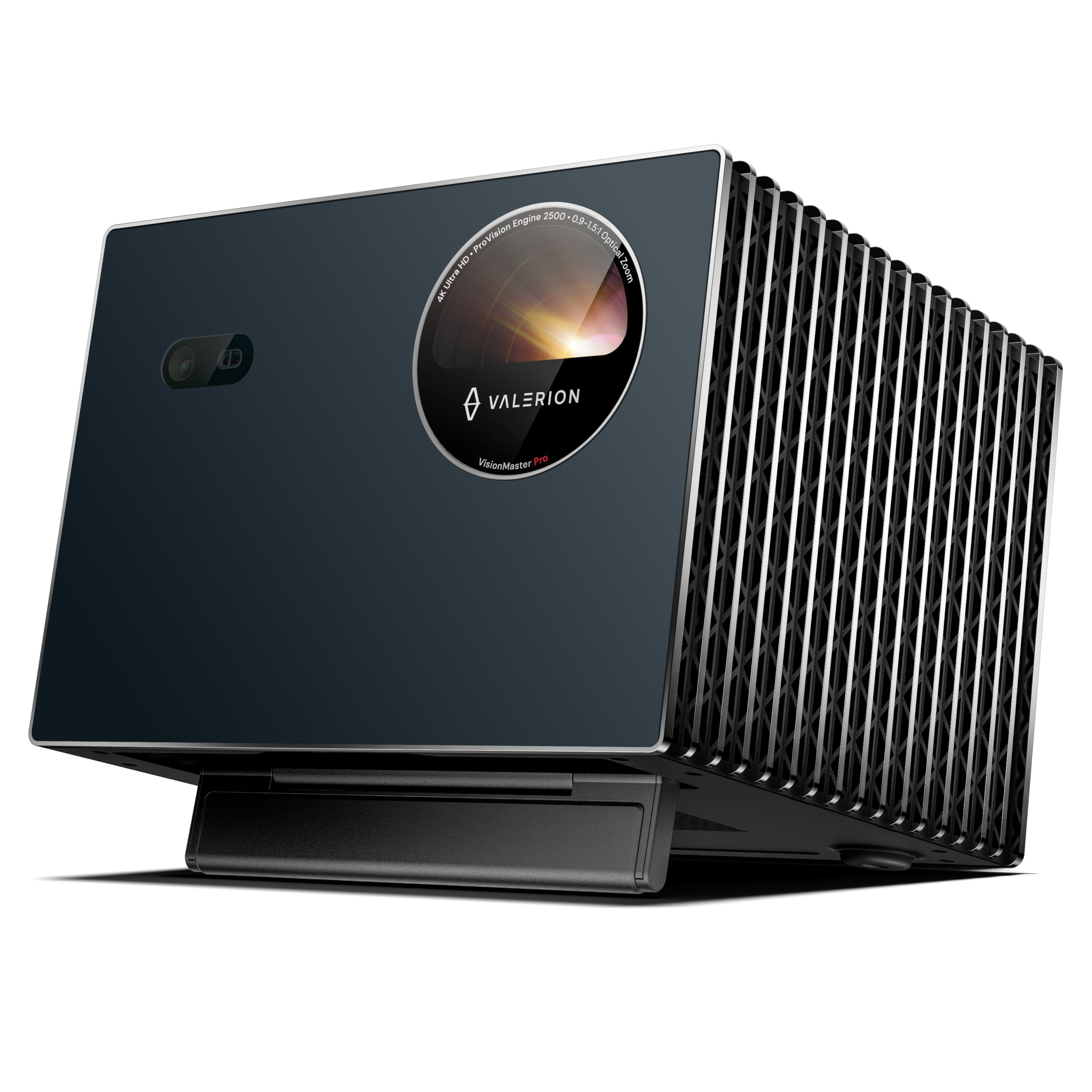
The projector that does not make you choose between 4ms gaming and serious 3D cinema.
A 240Hz refresh rate with 4ms input lag is rare in any projector, let alone one that also supports 3D and Dolby Vision. The VisionMaster Pro delivers a 15000:1 contrast ratio with Enhanced Black Level (EBL) technology, so deep blacks in a dark 3D scene remain black without washing into grey. Customers note the picture quality rivals a high-end TV, with one owner noting “crisp, vibrant, detailed even with ambient light.”
The OpticFlex Lens System with a 0.9-1.5x optical zoom lets you fit a 100-inch or 300-inch image without moving the projector, and the auto keystone correction handles off-center placement better than most. At 2500 ISO lumens, the 3D brightness sits in the usable balance — not quite the raw punch of the BenQ TH575 at 3800 lumens, but enough for a dim-to-moderate room. The trade-off here is the faint light spill on the sides of the screen that some buyers mention, but that is a minor visual nitpick against an otherwise feature-complete package.
Three reasons to pick it
- 240Hz/4ms gaming mode is genuinely smooth for fast shooters and racing games.
- Optical zoom and lens shift give flexible placement without digital distortion.
- Google TV built-in means you do not need a separate streaming stick.
Two things to know
- Standard throw ratio means you need about 9-15 feet for a 100-inch image.
- Built-in speakers are okay but a soundbar or AV receiver improves the experience significantly.
Best for the buyer who wants: one projector that handles competitive gaming at 240Hz and 3D movies with deep blacks, all in a mid-range budget.
Look elsewhere if: you need the absolute highest contrast for a dark dedicated theater — the VisionMaster Max has a 50000:1 contrast ratio that beats this by a wide margin.
2. Valerion VisionMaster Max 4K Laser Projector
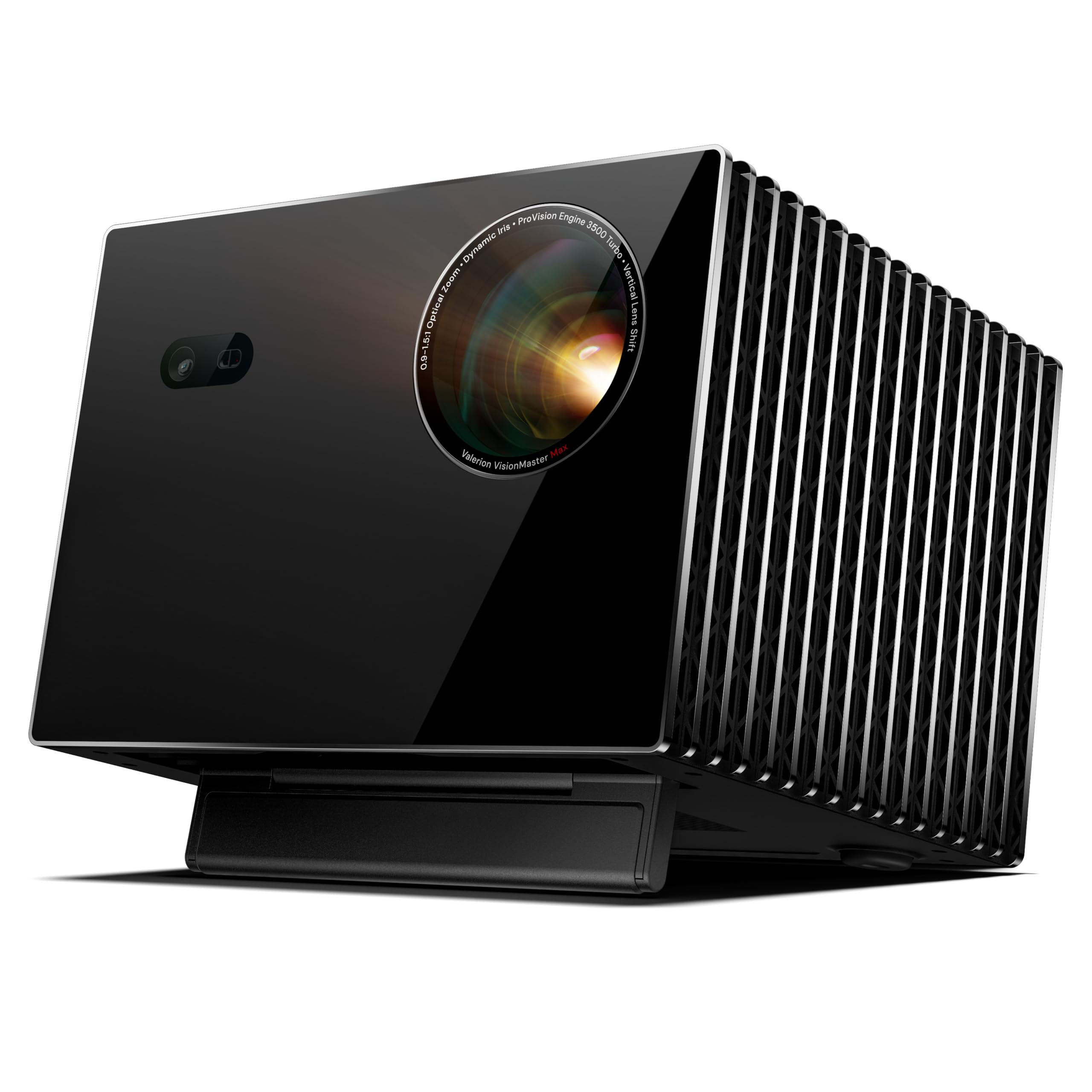
The light-cannon that delivers cinema-level blacks without needing a bat-cave room.
At 3500 ISO lumens with a 50000:1 contrast ratio (using EBL and a precision IRIS aperture), the VisionMaster Max goes further than the VisionMaster Pro in both brightness and black depth — a noticeable step up when you watch a dark 3D scene like the caverns in “The Descent.” The contrast gap between the VisionMaster Max and the Dangbei DBOX02 is enormous: 50000:1 versus 5000:1, which makes a real difference in perceived depth. Buyers upgrading from an Epson 5040 UBe report “stunning 4K HDR with deep blacks, rich colors, and high brightness.”
The Anti-Rainbow Effect (RBE) technology is notable here because DLP projectors can produce a flash of rainbow colors in bright high-contrast scenes, and sensitive viewers find it distracting. Valerion claims this reduces rainbow effects by 99.99%, and reviewers confirm the problem is virtually eliminated. For 3D specifically, the Max supports Active 3D and Dolby Vision, which is rare — most projectors handle HDR10 or HDR10+ but skip Dolby Vision. One caveat from a reviewer: the 3D resolution may need a firmware update to tune, so check for the latest software before installation.
What makes it stand out
- 50000:1 contrast ratio with iris creates black levels that rival OLED TVs in a dark room.
- 3500 ISO lumens keep 3D bright even on a 150-inch screen with ambient light.
- Dolby Vision and IMAX Enhanced support for premium HDR content.
The honest trade-offs
- Premium price tag puts it in the high-end category, not for casual buyers.
- Requires careful placement — the ±105% vertical lens shift needs accurate mounting.
Ideal if: you are building a dedicated home theater room and want the best contrast and HDR support available under four thousand dollars.
Skip it for: a living room with lots of ambient light where the cheaper BenQ TH575 at 3800 lumens matches the brightness for less.
3. BenQ TH575 1080p Indoor Gaming Projector

The 1080p workhorse that blasts enough light to keep 3D watchable with the lamps on.
With 3800 ANSI lumens, the BenQ TH575 is brighter than the Dangbei DBOX02 at 2450 lumens. That brightness advantage is critical for 3D: even after the active shutter glasses reduce perceived light, you still get a vivid image in a room with windows or overhead lights. Buyers describe a “clear 1080p image, excellent 3D with high refresh rate, balanced contrast, wide color palette” — exactly what you want from a projector under. The 16ms input lag at 1080p/60Hz is low enough for console gaming, though it does not hit the 4ms of the Valerion models.
The contrast ratio sits at 15000:1 (FOFO), which is strong for a DLP model at this price. Dark scenes in 3D movies show decent depth without crushing shadow detail. But the 1080p resolution means you are getting a full HD 3D image rather than the upscaled 1080p-per-eye from a native 4K chip — and that is fine for most 100-inch screens, where the pixel density is still sharp. The TH575 lacks smart features like built-in streaming, so you need an external Fire Stick or Roku. One practical note from owners: the projector runs quiet and stays cool, but cleaning the internal dust requires professional service.
Why it wins for value
- 3800 lumens is the highest brightness in this roundup, best for rooms with ambient light.
- 16ms low latency makes it a solid pick for Nintendo Switch and PS5 gaming.
- 3-year warranty offers confidence at this price point.
The compromises
- 1080p native resolution, not 4K — no upscaling beyond Full HD.
- No smart platform built-in, requires an external streaming device.
Reach for it when: your priority is the brightest possible 3D image under, and you already own a Fire Stick or Apple TV for streaming.
Pick something else: if you need native 4K resolution for 2D movies and the latest HDR formats — step up to the JMGO or Valerion models.
4. JMGO N1S Ultimate Triple Laser 4K Projector

A triple-laser 4K projector on a gimbal that aims anywhere in the room in seconds.
The N1S Ultimate pushes 3300 ISO lumens from a triple-laser light source, covering 110% of the Rec. 2020 color gamut — that is a wider, more accurate color range than the Dangbei DBOX02 or the BenQ TH575. Reviewers point out “great brightness even in moderate daytime,” which backs up the lumen rating in real-world use. The built-in 20W subwoofer with 45Hz ultra-bass means the audio has real punch for a projector, though some owners still recommend Bluetooth speakers for a fuller soundstage.
The gimbal design is unique: the projector rotates 360° horizontally and 135° vertically, so you can aim the 100-inch image onto a wall or ceiling without moving the unit. The auto keystone and focus system using a 3D-TOF sensor and CMOS camera reacts quickly when you tilt the gimbal. For 3D, this projector supports Blu-ray 3D via DLP-Link, but the 1600:1 contrast ratio is noticeably lower than the Epson Home Cinema 3000 at 60000:1 — so blacks in a dark 3D scene look more grey than deep black. One reviewer noted that HDR10 is fine but Dolby Vision content looks odd because the projector lacks Dolby Vision support.
what separates it
- 360° gimbal allows ceiling projection and flexible placement without a mount.
- Triple-laser engine delivers wide color gamut (110% Rec. 2020) with excellent color accuracy (ΔE<1).
- Built-in Google TV with certified Netflix — no external streamer required.
Where it falls short
- 1600:1 contrast ratio is the lowest in this roundup; blacks are not deep enough for a dark theater room.
- No optical zoom — relies on digital zoom, which can soften the image slightly.
Buy it for: a flexible living room setup where you move the projector between the living room and bedroom, and you want 4K HDR with excellent color.
Avoid it if: contrast matters more than portability — the VisionMaster Max or Epson Home Cinema 3000 will give you much deeper blacks for dedicated theater use.
5. Epson Home Cinema 3000 1080p 3D 3LCD Projector

The old-school LCD machine that still beats many laser projectors on black depth in 3D.
A 60000:1 contrast ratio on a 1080p projector is exceptional — compared with the Dangbei DBOX02 at 5000:1 and the BenQ TH575 at 15000:1. In a dark room, the Epson produces blacks that look genuinely deep, giving 3D scenes a sense of volume and separation that cheaper DLP projectors struggle to match. Buyers call it an “excellent 1080p/3D starter projector” with “amazing brightness even with lights on, rivals LCD TV.” The 3LCD technology eliminates the rainbow effect entirely — something DLP projectors can produce — which matters if you are sensitive to RBE.
The brightness sits at 2500 lumens (color and white brightness are identical at 2300 lumens, which is rare), so 3D is watchable in a dim room but not as punchy as the 3800-lumen BenQ TH575 in a bright room. The lens shift (60% vertical, 24% horizontal) is a real advantage for installation — you can mount it off-center and still get a square image without digital keystone distortion. The catch is reliability: a longer-term owner reported a lamp ignition failure after 4 years and an auto iris error that eventually killed the unit, so this is a risk to weigh if you plan to keep it for many years.
The reasons to consider it
- 60000:1 contrast ratio delivers deep, cinematic blacks in a dark room — better than any DLP in this list.
- Lens shift makes installation flexible compared to the fixed-position digital keystone of cheaper models.
- 3LCD means zero rainbow effect for sensitive viewers.
The downsides
- 2500 lumens is the lowest brightness here; you need a dark room for good 3D.
- Long-term reliability concerns reported — some units fail after several years.
Pick this if: you have a dedicated dark room and want black levels that rival projectors costing three times as much — the contrast performance is the real standout here.
Look elsewhere if: you need bright 3D in a living room with ambient light — the BenQ TH575 at 3800 lumens will serve you better.
6. Dangbei DBOX02 Laser Projector 4K GTV

The Netflix-licensed 4K laser that packs Google TV into a compact chassis.
At 2450 ISO lumens, the DBOX02 is the least bright projector in this roundup, which means 3D viewing requires a darker room than the BenQ TH575 or the JMGO N1S Ultimate. The contrast ratio is 5000:1, so blacks tend toward grey in dark scenes — a limitation compared to the 15000:1 of the BenQ or the 60000:1 of the Epson. Where this projector shines is convenience: Google TV is built in with official Netflix licensing, so you do not need a separate streaming box, and the ALPD laser technology eliminates the speckle effect that some laser projectors show.
A buyer noted that “3D works well after software update; glasses button corrects reversed 3D” — a specific quirk to be aware of. The audio setup includes dual 12W speakers with Dolby Audio and DTS:X, which is decent for casual viewing but not enough to fill a large theater room. One advantage over many competitors: the auto obstacle avoidance and screen alignment make setup simple to use in under a minute. But the 2450 lumen brightness at this price point is the trade-off — you are paying for the integrated smart experience and compact size rather than raw light output.
The main selling points
- Officially licensed Netflix with one-touch activation — no workaround needed.
- ALPD laser technology avoids the speckle effect common in traditional laser projectors.
- Auto setup features (focus, keystone, obstacle avoidance) make it beginner-friendly.
What holds it back
- 2450 lumens is the lowest brightness in this list; 3D needs a dark or dim room.
- 5000:1 contrast ratio means black levels are not deep — grey blacks in dark 3D scenes.
Best suited for: a casual buyer who wants a simple out-of-box 4K projector with Netflix built-in and is willing to dim the lights for 3D.
Not the right pick if: you prioritize bright 3D or deep contrast — the BenQ TH575 or Epson Home Cinema 3000 beat it in those areas at a lower price.
Understanding the Specs
Brightness (Lumens)
Lumens measure how much light the projector throws at the screen. For 3D, you need more lumens than for 2D because the active shutter glasses block about half the light. A projector with 3800 lumens (the BenQ TH575) can still produce a bright 3D image with some ambient light in the room, while a 2450-lumen model (the Dangbei DBOX02) will look noticeably dimmer in 3D unless the room is completely dark. The standard to compare is ANSI lumens (used by BenQ and Epson) or ISO lumens (used by Dangbei, JMGO, and Valerion). They are different measurement standards, so compare the published numbers with that in mind.
Contrast Ratio
This number tells you how dark the blacks are compared to the brightest whites. A higher contrast ratio gives 3D scenes more depth because the shadows stay dark and the highlights stay bright. The Epson Home Cinema 3000 leads at 60000:1, which means a night sky in a 3D movie looks properly black rather than washed-out dark grey. The Dangbei DBOX02 at 5000:1 produces a noticeably flatter image in dark scenes. For a dedicated dark room theater, prioritize a high contrast ratio. For a living room where light hits the screen, brightness matters more than contrast.
DLP-Link vs External Emitter for 3D Sync
DLP-Link is a method where the projector flashes a white frame between the left and right eye images to tell the glasses which eye to darken. Some DLP projectors use DLP-Link, which works without an extra box. LCD projectors like the Epson Home Cinema 3000 can use an external infrared emitter that plugs into the projector and broadcasts the sync signal. DLP-Link is simpler but some people see the white flash as a faint flicker.
Active Shutter Glasses Compatibility
All projectors in this roundup use active shutter glasses — battery-powered glasses that alternately darken each lens in sync with the projector’s left-eye/right-eye frames. The glasses need to match the sync method (DLP-Link or IR emitter). DLP-Link glasses work with any DLP-Link projector regardless of brand. IR glasses are specific to the emitter frequency, so you usually need to buy the same brand or a compatible universal model. Most projectors do not include the glasses in the box, so factor that cost into your budget — a pair of basic DLP-Link glasses costs around to per pair.
FAQ
Will any 3D projector work with my existing DLP-Link glasses?
How bright does a projector need to be for good 3D in a living room?
Can I watch Blu-ray 3D discs on these projectors?
Do I need a special screen for 3D projection?
Is 1080p resolution enough for 3D on a 120-inch screen?
Does DLP rainbow effect affect 3D viewing?
How long do laser projector light sources last compared to lamp projectors?
Can I use these projectors for 3D gaming on PS5 or Xbox?
Why does my 3D image look dimmer than the 2D image?
Do I need to buy glasses separately for each projector model?
Final Thoughts: The Verdict
For most buyers, the 3d home cinema projector that balances price, gaming performance, and 3D depth is the Valerion VisionMaster Pro because it delivers 4ms 240Hz gaming, a sharp 4K image with Google TV, and enough contrast (15000:1) to make 3D scenes look deep while staying affordable. If you want the absolute best black levels for a dedicated dark theater room, grab the Valerion VisionMaster Max with its 50000:1 contrast ratio and 3500 ISO lumens. And for bright-room 3D on a budget, the BenQ TH575 at 3800 lumens is the brightest and most affordable way to get a vivid 3D image without needed a pitch-black room.
How We Picked
We do not accept paid placement. Every pick is matched to a real buyer and a real use-case; we do not hands-on test units.
Sources & Methodology
Specifications: manufacturer listings and product documentation. Review insights: verified customer reviews, as of July 2026. Pricing: not shown on this page (it changes often); check the current price via the retailer link.
As an Amazon Associate, FitlyFast earns from qualifying purchases. This does not affect which products we feature.