
Our readers keep the lights on and the weekend projects moving. As an Amazon Associate, I earn from qualifying purchases.
A 3D printer that claims high accuracy is easy to find. One that actually delivers repeatable, tight-tolerance prints across dozens of materials, without endless tinkering, is far rarer. The difference between a hobby-grade toy and a reliable precision tool comes down to a handful of engineering decisions: motion system rigidity, firmware-level compensation algorithms, and the mechanical quality of the Z-axis and extruder path.
I’m Rikta — the co-founder and writer behind FitlyFast. I’ve spent hundreds of hours analyzing the mechanical specs, firmware features, and real-world print outputs of these machines to separate genuine high-precision designs from marketing claims.
This guide breaks down the best options in the category by examining layer resolution, motion compensation, auto-leveling accuracy, and thermal stability so you can confidently choose the right 3d printer for accuracy.
How To Choose The Best 3D Printer For Accuracy
Accuracy in 3D printing is not a single spec. It is a combination of mechanical precision, motion control, and thermal management working together. Beginners often assume that a low micron layer height alone guarantees a precise print, but dimensional fidelity depends just as much on a rigid frame, backlash-free lead screws, and effective vibration damping. Focus your evaluation on four key areas: motion system type, firmware compensation, leveling reliability, and material-specific extruder capability.
Motion System and Frame Rigidity
A CoreXY design minimizes the moving mass on the gantry, allowing higher accelerations without introducing mechanical slop. The frame material matters equally — die-cast aluminum or reinforced steel absorbs high-frequency vibrations that would otherwise show up as ghosting on vertical walls. Look for printers with linear rails instead of V-slot wheels for better long-term repeatability.
Firmware-Level Motion Compensation
Input shaping, pressure advance, and resonance compensation are what differentiate a fast printer from a fast and accurate one. These algorithms adjust extrusion rates and motor acceleration in real time to counteract ringing and over-extrusion at sharp corners. A printer without these features will show visible artifacts at speeds above 200 mm/s.
Auto-Leveling and Z-Axis Precision
An inductive or mechanical probe that maps the bed in multiple points is essential for a flawless first layer, but the Z-axis itself must have backlash-free lead screws or a ball screw. Micro-step interpolation on the Z stepper motor also helps achieve consistent layer heights below 0.04 mm without skipping.
Quick Comparison
On smaller screens, swipe sideways to see the full table.
| Model | Category | Best For | Key Spec | Amazon |
|---|---|---|---|---|
| Original Prusa MK4S | FDM — Premium | Industrial-grade repeatability | Input shaping + 0.05 mm layer resolution | Amazon |
| Bambu Lab P1S | FDM — Premium | Enclosed multi-material precision | 500 mm/s + 20000 mm/s² acceleration | Amazon |
| Bambu Lab A1 Combo | FDM — Mid-Range | Multi-color with quiet operation | Active flow rate compensation | Amazon |
| ELEGOO Centauri Carbon | FDM — Mid-Range | Carbon fiber reinforced prints | Die-cast frame + vibration compensation | Amazon |
| ELEGOO Mars 5 Ultra | Resin — Premium | Micro-detail resin miniatures | 9K (8520×4320) XY resolution | Amazon |
| Phrozen Sonic Mini 8K S | Resin — Mid-Range | Entry-level resin precision | 22 µm XY resolution | Amazon |
| Bambu Lab A1 Mini Combo | FDM — Mid-Range | Compact desktop multi-color | 10,000 mm/s² acceleration | Amazon |
| FLASHFORGE Adventurer 5M Pro | FDM — Mid-Range | Fast turnkey prototyping | 600 mm/s with vibration compensation | Amazon |
| FLASHFORGE Adventurer 5M | FDM — Budget | Budget-friendly high speed | CoreXY + dual cooling fan | Amazon |
In‑Depth Reviews
1. Original Prusa MK4S High-Speed 3D Printer
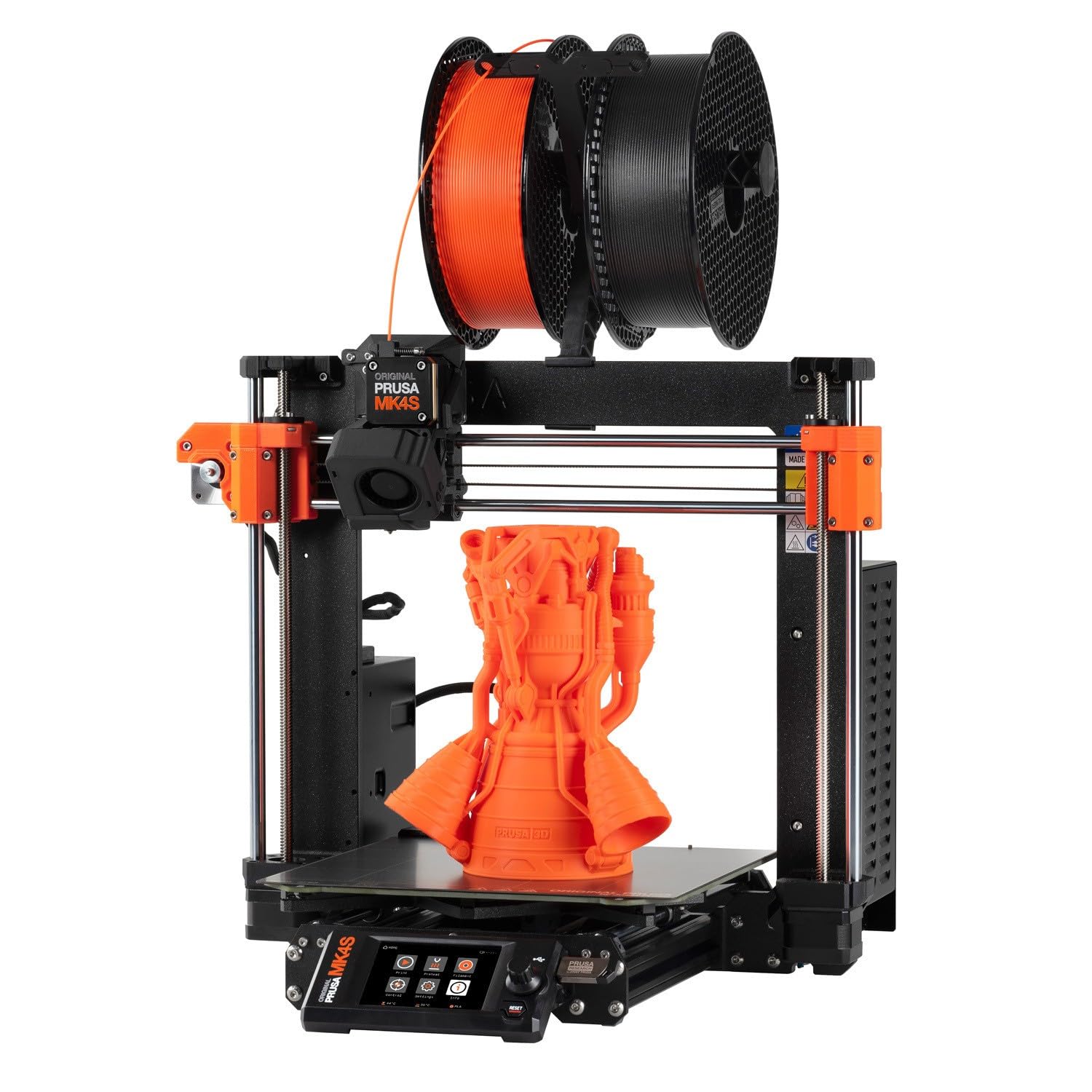
The MK4S sets the benchmark for dimensional accuracy in an FDM printer. Its input shaping algorithm actively cancels ringing across the entire speed range, meaning sharp corners stay sharp even at high accelerations. The dual-gear extruder with a short filament path ensures consistent extrusion rates, eliminating under-extrusion artifacts that ruin dimensional fidelity.
Prusa’s automated bed leveling uses a load cell on the nozzle tip rather than an inductive probe, giving sub-micron repeatability on first-layer height. The included Prusament PLA Galaxy Black profiles in PrusaSlicer are pre-tuned to the machine, so out-of-the-box prints show nearly zero elephant’s foot or warping. Users report flawless 12-hour prints with zero supports, a testament to the motion system’s rigidity.
While the premium price reflects the Czech engineering and lifetime support, the open-source firmware and upgradeable design protect against obsolescence. For professionals who need a reliable tool for functional prototypes and end-use parts, this is the standard to measure against.
Why it’s great
- Load cell auto-leveling delivers unmatched first-layer consistency
- Open-source ecosystem with long-term firmware support
Good to know
- Build volume (9.84 x 8.3 x 8.6 in) limits large single-piece prints
- No built-in camera or enclosure for advanced materials
2. Bambu Lab P1S 3D Printer

The P1S combines a fully enclosed chassis with CoreXY kinematics to maintain stable chamber temperatures for ABS and ASA — materials prone to warping when ambient drafts cause uneven cooling. The firmware’s resonance compensation maps the specific vibration profile of the machine during the first print, then actively cancels it during subsequent jobs.
Auto bed leveling uses an inductive sensor that probes 16 points before each print, and the Z-axis employs dual lead screws with a synchronization belt to prevent binding. Users report that the auto-leveling is exceptionally reliable, scoring high marks for bed adhesion even after swapping build plates. The enclosed design also reduces noise and contains fumes, making it suitable for a home workshop.
The ability to connect up to four AMS units for 16-color prints is impressive, but the real value is the consistent layer alignment across tall prints. The P1S prints complex geometries with sharp overhangs and clean bridges thanks to its powerful part-cooling fan, making it a top choice for functional prototyping and multi-material projects.
Why it’s great
- Enclosed design stabilizes temperature for warp-prone filaments
- Multi-material printing up to 16 colors with AMS system
Good to know
- TPU and flexible filaments are not recommended due to extruder path
- Firmware is closed-source, limiting custom tuning
3. Bambu Lab A1 Combo + LED Lamp Kit
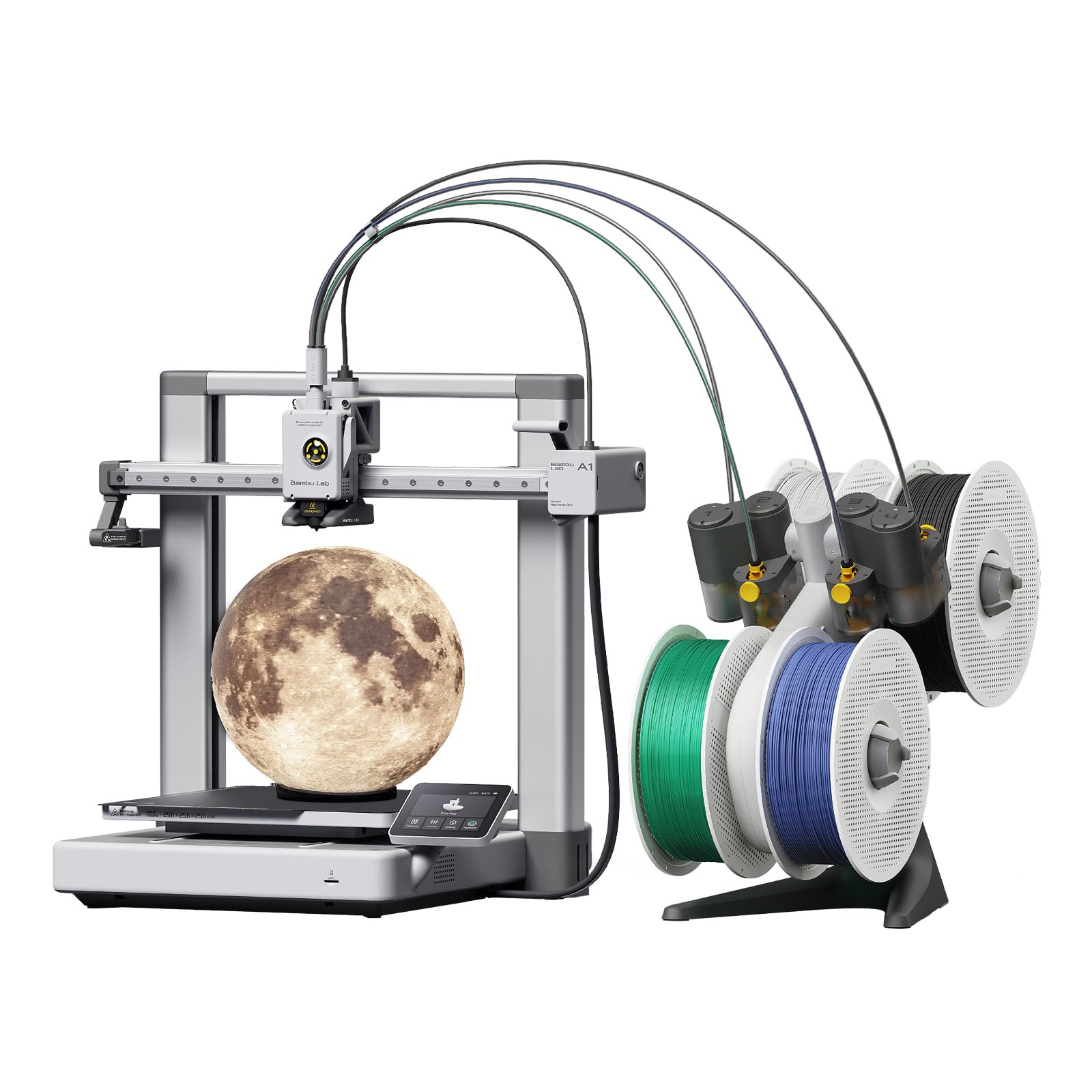
The A1 Combo brings Bambu Lab’s precision algorithms to a larger bed format (23 x 21 x 16.8 inches) without sacrificing accuracy. Active flow rate compensation adjusts extrusion in real time based on sensor feedback, preventing over-extrusion at seams and under-extrusion on long travel moves. The full-auto calibration sequence covers Z-offset, bed leveling, and vibration compensation in one pass.
The AMS Lite system supports up to four spools, enabling multi-color prints with minimal waste. The printer’s noise-canceling motor drivers keep operation at or below 48 dB, which means it can run overnight in a shared space without disturbing sleep. Users praise the plug-and-play setup, noting that the phone app provides remote monitoring, time-lapse capture, and direct print initiation from a library of free designs.
The included LED Lamp Kit adds a functional lighting element to compatible prints, but the real draw is the accuracy consistency across long multi-day jobs. The A1 handles tall prints without introducing Z-band artifacts, a common issue on open-frame designs. For makers who want color versatility and precise layers in a single machine, this combo is a strong pick.
Why it’s great
- Active flow rate compensation for consistent extrusion
- Quiet operation suitable for 24/7 printing
Good to know
- Open-frame design requires stable surface for best results
- AMS Lite increases filament waste during color changes
4. ELEGOO Centauri Carbon 3D Printer

Precision in high-temperature materials demands a machine that doesn’t flex under thermal stress. The Centauri Carbon uses a die-cast aluminum frame that maintains its geometry even when the chamber is heated for carbon-fiber-reinforced filaments. Automatic vibration compensation and pressure advance algorithms ensure that the fast 500 mm/s speed does not produce ghosting on large flat surfaces.
The all-metal hotend reaches 320°C, allowing the printer to handle abrasive materials without degrading nozzle life. A built-in chamber camera with dual LED lighting enables real-time monitoring, and the dual-sided PEI platform offers a dedicated PLA surface that provides excellent adhesion without glue stick. Users note that setup is truly out-of-the-box, with the machine arriving fully assembled and pre-calibrated.
While the enclosed carbon-fiber aesthetic is striking, the real benefit is the temperature stability for materials like ASA and PET-CF. The die-cast frame combined with automatic resonance mapping means that even at ludicrous speed settings, layer lines remain consistent across the entire build volume. This is a machine built for engineers who demand accuracy from engineering-grade materials.
Why it’s great
- Rigid die-cast frame eliminates vibration at high speeds
- 320°C hotend handles carbon fiber and other composites
Good to know
- Tech support response times can be slow for advanced issues
- Heavy 38.5 lb design limits portability
5. ELEGOO Mars 5 Ultra 9K MSLA Resin 3D Printer

The Mars 5 Ultra achieves its exceptional accuracy through a 9K monochrome LCD with a native XY resolution of 8520×4320 pixels, producing a pixel size of 18 µm. This allows the printer to render textures, jewelry filigree, and facial features on miniatures with a level of detail that FDM cannot match. The tilt-release mechanism reduces peel forces, which minimizes layer shifting and improves edge sharpness on overhangs.
A built-in AI camera detects print failures such as a detached model or warping and alerts the user, preventing wasted resin. The smart mechanical sensor automatically detects the build plate height and compensates for any foreign objects on the vat film. Users report that once the resin temperature is stabilized — using a space heater or build plate warmer — the success rate is near 100% with crisp, fully cured details.
WiFi cluster printing allows multiple Mars 5 Ultras to be managed from a single interface, which is valuable for production runs of identical parts. The 9H tempered glass screen protector adds durability to the LCD, and the COB light source provides 92% uniformity across the build area. For applications demanding extreme surface finish and fine detail, resin is the only path, and this machine delivers it at a mid-range price.
Why it’s great
- 9K XY resolution captures microscopic detail in miniatures and jewelry
- AI-driven failure detection saves resin and time
Good to know
- Resin and build plate require active heating in cold rooms
- Chitubox slicer has a steeper learning curve for beginners
6. Phrozen Sonic Mini 8K S LCD Resin 3D Printer

The Sonic Mini 8K S offers a 7.1-inch monochrome LCD with a 22 µm XY resolution, making it one of the most affordable entry points for sub-30-micron printing. The precise Z-axis calibration ensures consistent layer height even across the full 6.5-inch build height, a spec that prevents stair-stepping on tall models. The compact footprint (11.4 x 11.4 x 16.9 inches) fits easily on a desk while still accommodating action figures and dental models.
Phrozen designed this printer with open-source compatibility in mind — it works with Lychee, Chitubox, and Tango slicers without proprietary restrictions. The acrylic frame and metal components provide adequate rigidity for the build size, and users report that the workhorse nature of the printer makes it reliable for repeated production runs. Customer support has been praised for quickly addressing build plate damage issues that can occur during first use.
The primary trade-off is the requirement to use a USB drive for file transfer, as the printer lacks WiFi connectivity. For a resin printer in this price tier, however, the ratio of detail to cost is exceptional. Beginners looking to experience the precision of resin printing without a large investment will find this model hard to beat.
Why it’s great
- 22 µm XY resolution delivers fine detail at a budget-friendly price
- Compatible with multiple third-party slicers
Good to know
- No WiFi connectivity — file transfer requires USB drive
- Included scraper can damage the build plate if used incorrectly
7. Bambu Lab A1 Mini Combo

Despite its small footprint, the A1 Mini Combo packs the same active flow rate compensation and full-auto calibration found in its larger sibling. The 10,000 mm/s² acceleration is backed by a dedicated microcontroller that processes accelerometer data and applies real-time corrections to the motor current. This means even small, high-detail prints — like gear mechanisms with tight tolerances — come out with smooth tooth engagement.
The AMS Lite enables four-color printing, which opens up layered signage and multi-material functional parts. The printer’s noise level stays at or below 48 dB, and the quick-swap nozzle design allows switching between 0.4 mm and 0.2 mm nozzles for finer detail without recalibrating the entire machine. Users report that setup takes roughly 20 minutes, and auto-leveling works flawlessly on the first attempt.
The trade-off is a smaller build volume (16.77 x 14.82 x 19.5 inches), which limits large prints. Additionally, the machine needs a solid, rigid surface — a carpeted floor or flimsy desk will introduce wobble that degrades accuracy. For a bedroom or small apartment, though, the size and silence are major advantages.
Why it’s great
- Active flow rate compensation ensures extrusion accuracy at high speeds
- Automatic calibration sequence handles Z-offset and bed leveling
Good to know
- Small build volume limits large-scale projects
- Requires rigid surface to prevent vibration artifacts
8. FLASHFORGE Adventurer 5M Pro 3D Printer

The Adventurer 5M Pro targets speed without sacrificing geometric precision through its CoreXY all-metal frame and vibration compensation firmware. The 600 mm/s travel speed, combined with a 20000 mm/s² acceleration, allows rapid iteration on prototype designs. The pressure-sensing auto-leveling mechanism measures platform height at multiple points to dial in the first layer without user intervention.
Dual-channel active cooling fans prevent stringing and improve overhang quality, which directly affects dimensional accuracy on complex models. The 0.25 mm nozzle option enables very fine detail work, while the 0.8 mm nozzle is available for rapid vase-mode prints. The HEPA and activated carbon filtration system reduces fume exposure during long prints, making it a safer choice for indoor use.
Some users have experienced software compatibility issues with newer macOS versions, and the FlashMaker app registration process can feel cumbersome. Once printing, though, the results are consistent: sharp corners, clean bridges, and minimal ghosting. For makers who need fast, reliable prototypes with good surface finish, this machine delivers excellent value.
Why it’s great
- Interchangeable nozzle sizes (0.25-0.8 mm) for precision or speed
- HEPA carbon filtration reduces fumes in indoor environments
Good to know
- Software setup may require a compatible computer with older OS
- Initial unit quality control can be inconsistent
9. FLASHFORGE Adventurer 5M 3D Printer

The base Adventurer 5M shares the same CoreXY motion system and 600 mm/s speed as the Pro model, making it the most budget-friendly way to access fast CoreXY printing. Its built-in vibration compensation reduces the ringing that typically plagues affordable printers at high speeds, and the 280°C direct extruder supports a wide range of materials including PLA, PETG, and TPU.
One-click auto leveling eliminates the manual bed-screwing dance that many entry-level printers require. The dual-sided PEI flexible plate makes print removal easy, and the quick-detachable nozzle allows swapping sizes in seconds. Users note that the setup time is around 10 minutes, and the Flash Maker app provides remote monitoring and parameter adjustment.
On the downside, the included filament sample is minimal, and beginners may need to tune adhesion settings with the provided glue stick. The lack of an enclosure limits material options for ASA and PC, but for PLA and PETG prototypes, the accuracy-to-price ratio is excellent. It is a strong entry point for budget-conscious makers who want real precision without the premium price tag.
Why it’s great
- CoreXY motion system delivers smooth, high-speed prints
- Quick-detach nozzle enables fast size changes
Good to know
- A glue stick may be required for consistent first-layer adhesion
- No enclosure limits printing with advanced filaments
FAQ
Is a 0.4 mm nozzle accurate enough for detailed prints or do I need a 0.2 mm nozzle?
How does chamber temperature affect dimensional accuracy in FDM printing?
Why does my FDM printer produce a bump at the start of each layer (Z-seam) and how can I reduce it?
Final Thoughts: The Verdict
For most users, the 3d printer for accuracy winner is the Original Prusa MK4S because its load cell auto-leveling and input shaping deliver unmatched repeatability across hundreds of prints. If you want enclosed multi-material precision, grab the Bambu Lab P1S. And for micro-detail resin work where surface finish is everything, nothing beats the ELEGOO Mars 5 Ultra.