
Our readers keep the lights on and the weekend projects moving. As an Amazon Associate, I earn from qualifying purchases.
Architectural model making demands a printer that delivers razor-sharp detail, dimensional accuracy, and a build volume large enough for scaled building components. Resin printers excel at capturing fine window mullions, stair threads, and structural lattice work, while FDM printers offer larger build areas for bigger site context models. The wrong choice results in mushy details, misaligned parts, or a failed print halfway through a massing study.
I’m Rikta — the co-founder and writer behind FitlyFast. My market research analyzes hardware specifications, layer resolution metrics, and print reliability data across dozens of FDM and MSLA machines to find the models that serve professional architecture studios and serious hobbyists building scale replicas.
This guide evaluates eleven printers on build size, XY resolution, material compatibility, and reliability — helping you choose the right 3d printer for architectural models for your next presentation board or competition entry.
How To Choose The Best 3D Printer For Architectural Models
Selecting a printer for architectural models starts with defining the scale at which you work most often. A 1:200 site model of a city block requires a huge build volume, while 1:50 sections of a facade need ultra-fine detail. Your material choice — resin for crisp detail or filament for structural parts — also dictates the technology you need.
Prioritize XY Resolution Over Layer Height
Architectural models live in the XY plane — window frames, brick patterns, and railing posts are all defined by how tightly the printer can position its light source or nozzle in the X and Y axes. A 4K screen at 50 microns pixel size loses the crisp edges you get from a 14K or 16K screen at 20 microns. Look for printers with an XY resolution of 50 microns or less for small-scale details.
Match Build Volume to Project Scope
A printer with a small build area forces you to cut big models into pieces, which adds alignment issues and visible seams. For table-top building massing at 1:500, a 200 mm cube FDM printer works fine. For full facade sections or site context at 1:200, look for build volumes exceeding 250 mm on the longest axis, or move to large-format resin printers with a 300 mm height capacity.
Quick Comparison
On smaller screens, swipe sideways to see the full table.
| Model | Category | Best For | Key Spec | Amazon |
|---|---|---|---|---|
| Phrozen Sonic Mega 8K S | Premium Resin | Large production batches | 15-inch 8K (43 µm) | Amazon |
| Original Prusa MK4S | Premium FDM | Reliable prototyping | 250×210×220 mm build | Amazon |
| ELEGOO Jupiter 2 | Large Resin | Large single-piece models | 302×162×300 mm build | Amazon |
| Original Prusa MK4 | FDM Kit | Learning & custom builds | 250×210×220 mm build | Amazon |
| ANYCUBIC Photon Mono M7 MAX | Large Resin | Tall architectural elements | 298×164×300 mm build | Amazon |
| ANYCUBIC Photon P1 | Mid Resin | High-detail sections | 14K (16.8×24.8 µm) | Amazon |
| Creality Halot Mage S 14K | Mid Resin | Fast high-detail prints | 14K (16.8×24.8 µm) | Amazon |
| Bambu Lab A1 Combo | FDM | Multi-color presentation models | 256×256×256 mm build | Amazon |
| FlashForge Adventurer 5M Pro | FDM | Fast PLA/PETG models | 600 mm/s travel speed | Amazon |
| Creality Halot-X1 Combo | Resin | Ultra-fine details | 16K (14×19 µm) | Amazon |
| ELEGOO Centauri Carbon | FDM | Entry-level rapid prints | 500 mm/s speed | Amazon |
In‑Depth Reviews
1. Phrozen Sonic Mega 8K S

The Phrozen Sonic Mega 8K S is a production-grade resin printer built for architectural firms that need to batch-print dozens of building iterations or site components in a single run. Its 15-inch 8K LCD delivers a 43 micron XY resolution — sufficient for capturing window mullions and facade textures at 1:100 scale — while the massive 330 x 185 x 300 mm build volume handles full building massing models without assembly seams.
The integrated ACF film and high-speed resin support up to 10x faster print cycles than standard mid-size resin printers, reducing the turnaround time for client review models. The lift-up lid design saves vertical clearance in tight workshop spaces, and the built-in drip hanger minimizes resin waste during post-processing.
Owners report solid reliability after initial setup, but the auto-refill mechanism can be finicky and the build plate’s large size prevents flex plate upgrades. Customer support for warranty claims has been inconsistent, making this a stronger pick for experienced users who can handle minor hardware hurdles.
Why it’s great
- Massive build volume fits full building massing models in one piece
- High-speed printing with ACF film for fast batch production
- Space-saving lift-up lid design
Good to know
- Auto-refill mechanism can be unreliable
- No flex plate support due to large build plate
- Warranty support has inconsistent turnaround times
2. Original Prusa MK4S
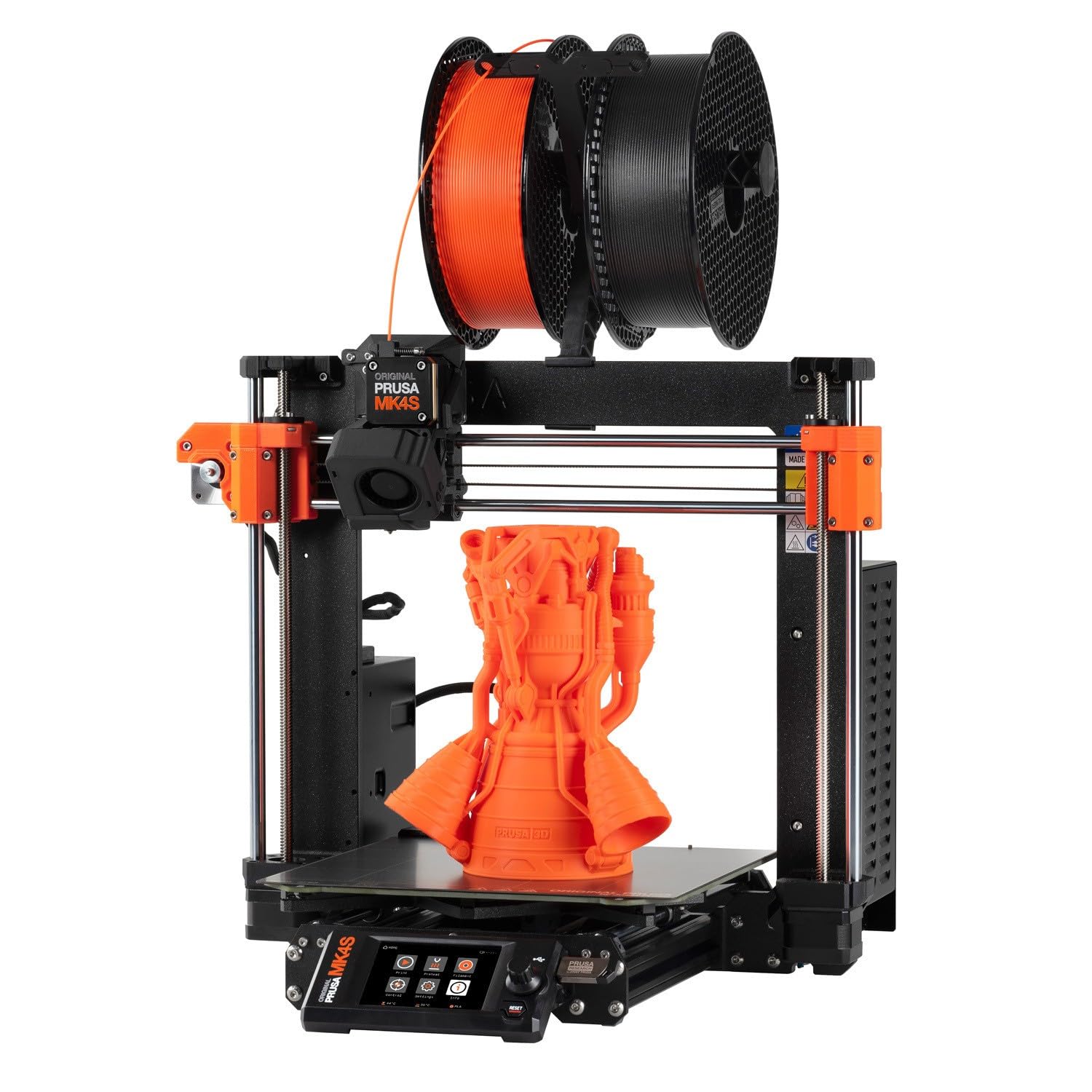
The MK4S represents the peak of open-source FDM engineering for architectural prototyping. Its Input Shaper effectively cancels ringing artifacts at high speeds, producing clean right-angle corners and sharp edges essential for architectural geometry. The 250 x 210 x 220 mm build volume is ideal for 1:200 scale building sections and site context models that fit on a standard presentation board.
The printer comes fully assembled and tested, which saves days of calibration time compared to the DIY kit version. The Nextruder extruder with load cell sensor delivers a perfect first layer every time, eliminating warping issues that plague budget FDM printers when printing large flat base plates. Prusa Connect allows remote monitoring — useful for overnight prints of multi-part facade assemblies.
Owners consistently praise the reliability and print quality, though the price is undeniably a significant investment compared to entry-level FDM machines. Some users note that the build area feels small for larger context models, requiring sectioning for anything beyond a single building elevation.
Why it’s great
- Input Shaper eliminates ringing for clean architectural geometry
- Reliable first layer with load cell auto-leveling
- Fully assembled and tested out of the box
Good to know
- Build volume may require sectioning larger context models
- Premium pricing for an FDM machine
- Kit version also available if you prefer assembly
3. ELEGOO Jupiter 2
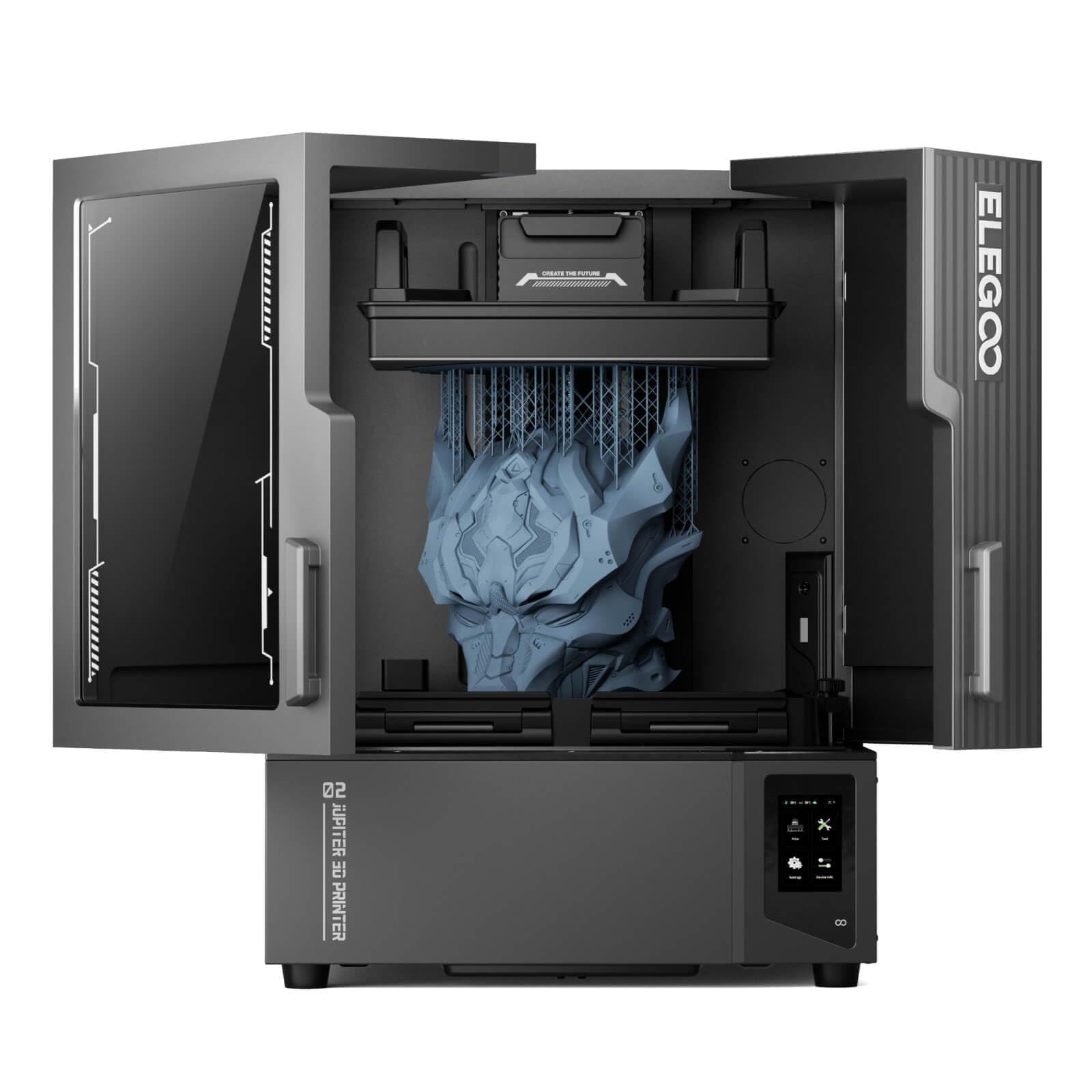
The Jupiter 2 is a large-format MSLA resin printer that offers a 16K resolution (20 x 26 micron XY pixels) across a massive 302 x 162 x 300 mm build volume. For architectural modelers, this means printing a full 1:100 building massing in one piece without cutting the model into separate sections that introduce alignment errors. The fully enclosed design with a double-door front panel minimizes resin fume exposure in studio environments.
Smart features like multi-point auto leveling, a heated resin vat that maintains 30°C, and an automated resin feeder keep print runs consistent over long hours. The built-in camera with HDR imaging supports real-time monitoring and time-lapse recording — useful for documenting the print progression of complex structural details. The OTA firmware update capability ensures the printer stays current.
Reviewers who have logged over 1000 hours report excellent reliability and beautiful detail on large prints. However, the sheer size of the printer and its 63.8-pound weight require a dedicated sturdy workbench. The lack of a flip-top lid and the ungainly build platform access can make the post-processing workflow slightly cumbersome.
Why it’s great
- Huge build volume for single-piece building massing prints
- 16K resolution captures fine facade details
- Heated vat and auto-leveling improve print success rate
Good to know
- Very heavy and requires a large work area
- Build plate access is less convenient than flip-lid designs
- Not a beginner-friendly machine due to size
4. Original Prusa MK4

The MK4 DIY kit is the cornerstone for architectural designers who want to understand every component of their printer. The kit builds up over several hours but provides foundational knowledge for troubleshooting and modifications down the line. The load cell sensor on the Nextruder eliminates manual bed leveling entirely — the printer compensates for any slight tilt automatically, ensuring a perfect first layer for base plates and site topography.
The 250 x 210 x 220 mm build volume handles most 1:200 scale building sections comfortably. The machine runs with PrusaSlicer, which offers detailed control over wall count, infill density, and support placement — essential for modeling structural lattice work and overhanging roof forms. The printer supports PLA, PETG, and ASA filaments, making it versatile for both presentation models and functional prototype parts.
Owners love that the MK4 can be upgraded with the MK4S parts later, extending the printer’s life. The trade-off is the assembly time — plan for a weekend build — and the initial learning curve with PrusaSlicer’s expert settings. Still, for those who want a repairable, long-lasting machine, this is the benchmark.
Why it’s great
- Kit assembly teaches full machine mechanics
- Load cell auto-leveling ensures perfect first layers
- Upgradeable design extends lifespan
Good to know
- Assembly takes several hours to complete
- PrusaSlicer has a steep learning curve for tuning
- No heated chamber for exotic filaments
5. ANYCUBIC Photon Mono M7 MAX

The Photon Mono M7 MAX is purpose-built for architectural modelers who need to print tall structural elements like high-rise building towers, bridge supports, or column arrays in a single orientation. Its 298 x 164 x 300 mm build volume accommodates pieces up to 300 mm tall, while the COB LighTurbo 3.0 light source delivers over 90% light uniformity across the build plate to prevent inconsistent curing near the edges.
The flip-open lid design saves desk space and allows one-handed access to prints, while the dynamic heated resin vat maintains optimal temperature for consistent layer curing. The automatic resin fill and one-key recycling system reduce material waste during iterative prints. The built-in camera enables remote monitoring for overnight jobs.
Reviewers note that the machine is rock-solid once dialed in, printing “ridiculously fast” with excellent accuracy. However, some units have arrived with quality control issues like misaligned Z-axis rails or warped build plates — early adopters should test alignment immediately and contact support if needed. The internal cooling fans are also reported as loud during operation.
Why it’s great
- Tall 300 mm build volume for high-rise models
- Heated vat and auto-resin system for consistent prints
- Flip-open lid saves workspace
Good to know
- QC issues reported with Z-axis alignment on some units
- Internal fans can be loud during printing
- 7K resolution is lower than other large-format resin printers
6. ANYCUBIC Photon P1
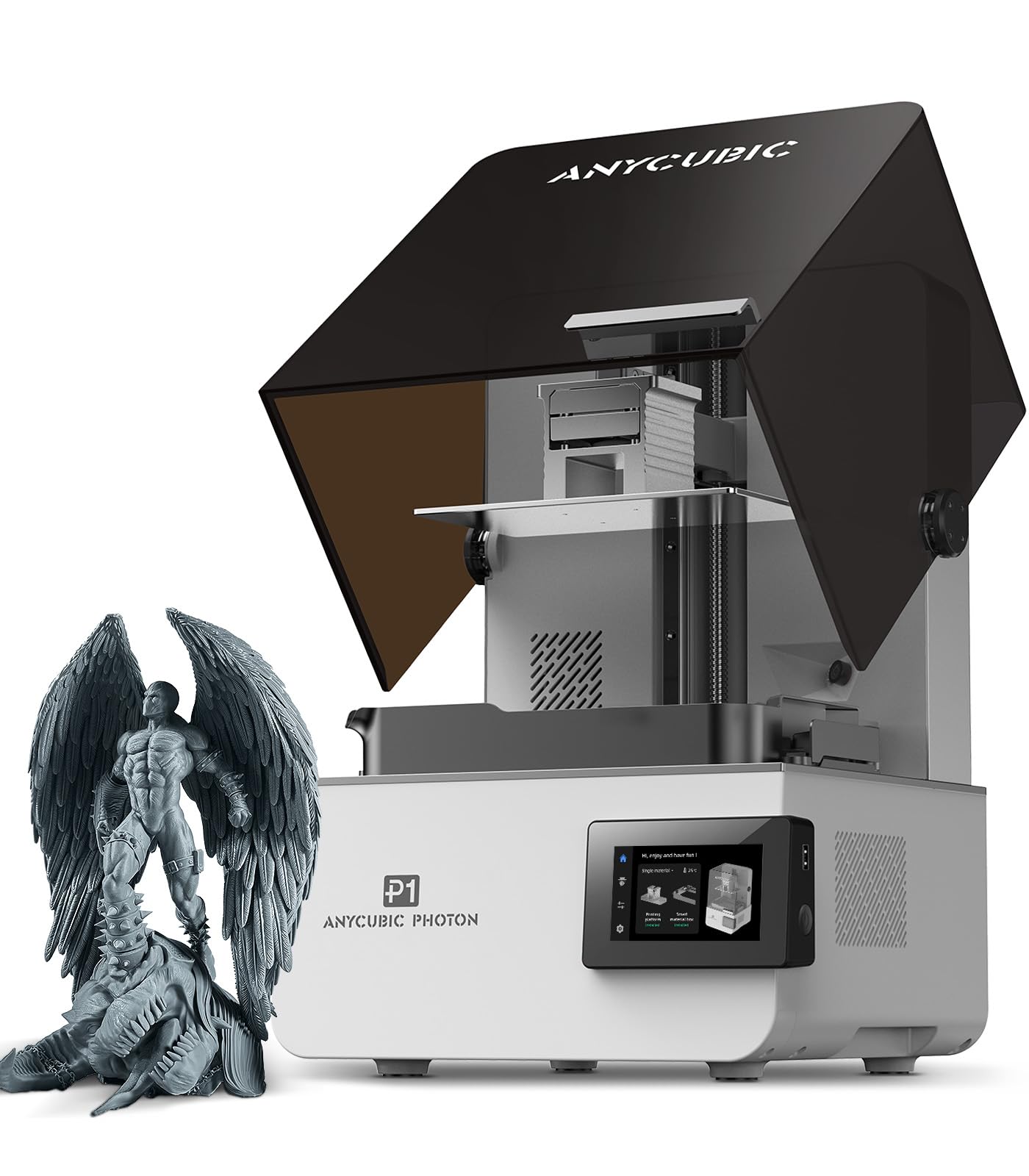
The Photon P1 is a mid-range resin printer that punches well above its weight class for architectural detailing. Its 14K mono LCD delivers a 16.8 x 24.8 micron XY pixel size — tight enough to reproduce delicate window frames, decorative cornices, and fine brick textures at 1:50 scale. The ball screw and precision guide rail combination minimizes Z-axis wobble, which is a major source of layer misalignment in cheaper resin printers.
Wave Release Technology reduces the peel force by 60% between layers, lowering the failure rate on tall, thin-walled architectural elements like columns and railings. The AI monitoring system checks for build plate installation errors, resin levels, and vat residues before and during the print, acting as a safety net for unattended overnight runs. The printer handles high-viscosity industrial resins up to 8000 cps, opening the door to engineering-grade materials for structural test models.
Owners upgrading from 8K printers report visibly sharper edges and smoother vertical surfaces. The built-in camera and resin level monitoring are strong features for a printer in this range. Some units, however, have arrived with defective UV LED arrays, so a thorough test print on arrival is essential.
Why it’s great
- Excellent 14K resolution for fine architectural detail
- Ball screw Z-axis reduces layer misalignment
- AI monitoring for unattended operation safety
Good to know
- Some units ship with defective UV LEDs
- Flat build plate retains resin drips during removal
- Voltage selector must be set manually
7. Creality Halot Mage S 14K

The Halot Mage S 14K is designed for architectural modelers who need speed without sacrificing resolution. With Dynax+ mode, the printer achieves 150 mm/h vertical print speed — roughly 3-4 times faster than standard resin printers — while maintaining a 14K XY resolution of 16.8 x 24.8 microns. This makes it possible to print a 150 mm tall facade section in about one hour, ideal for iterative design reviews.
The Integral Light Source 3.0 delivers consistent UV intensity across the entire 10.1-inch LCD, preventing overexposure in the center and underexposure at the edges — a common cause of warped or mis-dimensioned architectural details. The laser-carved build plate provides exceptional adhesion, which is crucial when printing tall, thin model elements with a high aspect ratio.
Users praise the print quality and speed out of the box, but some have experienced LCD screen degradation after around six months, with replacement costs approaching the price of a new entry-level printer. The proprietary Halot Box slicer has also been reported to crash during slicing of complex STL files, which may be a workflow blocker for experienced users.
Why it’s great
- Fast 150 mm/h printing for rapid iteration
- 14K resolution captures sharp architectural details
- Laser-carved build plate for strong adhesion
Good to know
- LCD screen may degrade after 6 months
- Proprietary slicer can crash on complex files
- Screen replacement cost is high
8. Bambu Lab A1 Combo
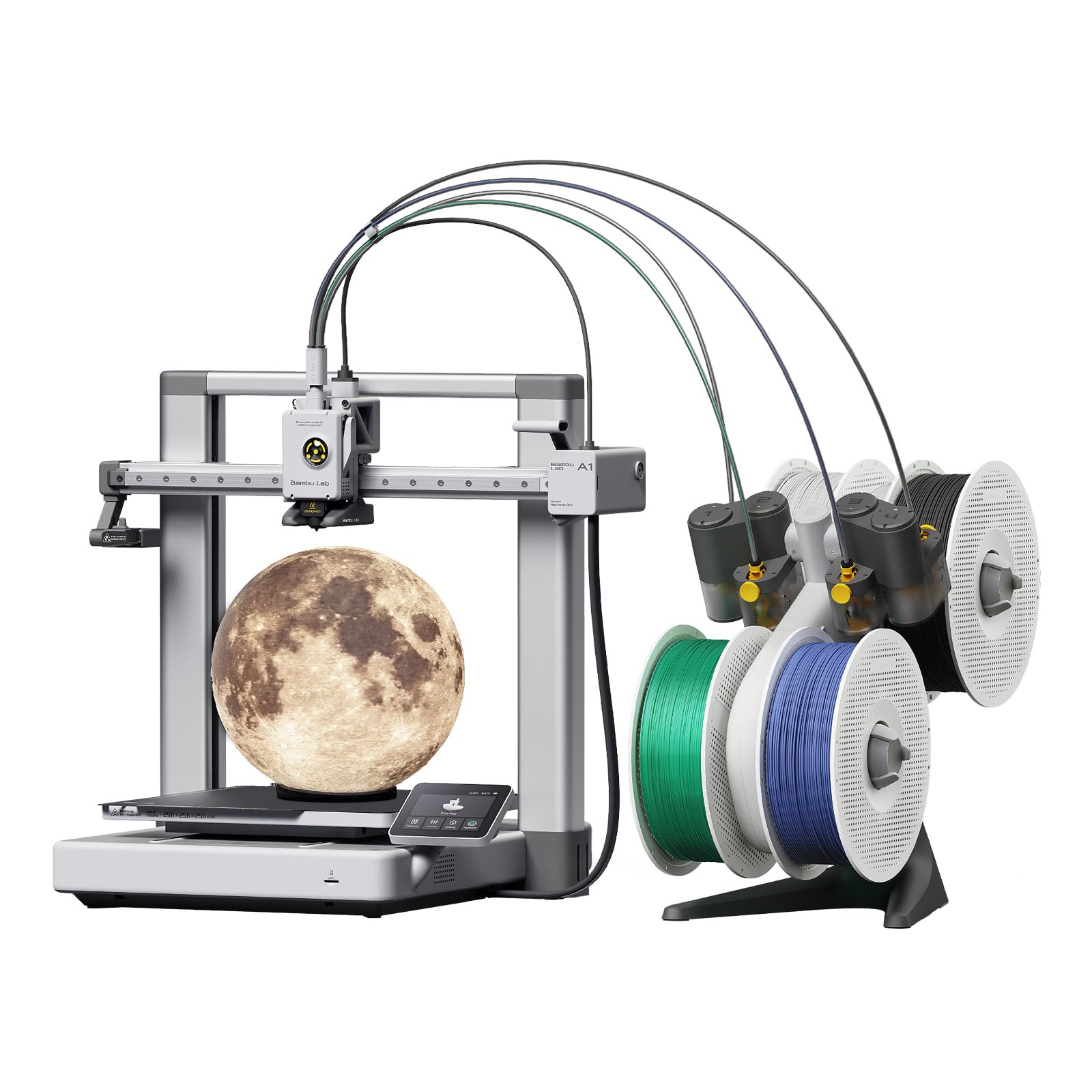
The Bambu Lab A1 Combo is an FDM printer that brings multi-color capability to architectural presentation models. The AMS lite system allows you to print facades with different color materials for glazing, cladding, and structural elements without manual filament swapping. The 256 x 256 x 256 mm build volume handles 1:150 scale building massing, and the 10,000 mm/s² acceleration delivers fast turnaround times for model revisions.
Active flow rate compensation ensures that colored filament transitions are clean and consistent, preventing color bleeding in areas like window frames that sit next to wall sections. The full-auto calibration handles everything from Z-offset to bed leveling, making this one of the most user-friendly FDM machines available — a strong advantage when multiple team members need to operate it.
Owners report that the printer is reliable right out of the box, with many running it 24/7 for days straight without issues. The noise level at 48 dB or below is low enough for a shared studio environment. Keep in mind that multi-color printing is slower than single-color printing, and the AMS lite works best with Bambu Lab filament spools without adapters.
Why it’s great
- Multi-color printing for presentation-ready models
- Full-auto calibration simplifies operation for teams
- Quiet enough for shared studio spaces
Good to know
- Multi-color printing reduces overall print speed
- AMS lite may require adapters for off-brand spools
- Smaller build volume limits large context models
9. FlashForge Adventurer 5M Pro

The Adventurer 5M Pro is a fast FDM printer that prioritizes speed for architectural prototyping without breaking the bank. Its Core XY structure can travel at 600 mm/s with 20,000 mm/s² acceleration, meaning a small site context model prints in under an hour. The all-metal frame keeps the machine stable at these speeds, reducing ghosting on vertical wall surfaces.
This printer supports multiple nozzle sizes — 0.25 mm for fine detail, 0.4 mm standard, and 0.8 mm for fast infill — so you can tailor the resolution per part. The HEPA and carbon filter system reduces plastic fumes, making it suitable for an office environment. The PEI flex plate allows models to pop off easily, saving time between prints.
Reviewers highlight the ease of setup and the fast first print, but some units have arrived damaged or with calibration errors. The software (FlashPrint and Orca-Flashforge) has had compatibility issues with newer macOS versions, potentially requiring a compatible computer for slicing. Overall, for the price, the speed and print quality are compelling for early-stage architectural models.
Why it’s great
- Fast 600 mm/s travel speed for quick prototypes
- HEPA and carbon filter for reduced fume exposure
- Interchangeable nozzle sizes for different detail levels
Good to know
- Some units arrive with physical damage or calibration errors
- Software compatibility issues with newer Mac systems
- Build volume 220x220x220 mm limits larger models
10. Creality Halot-X1 Combo
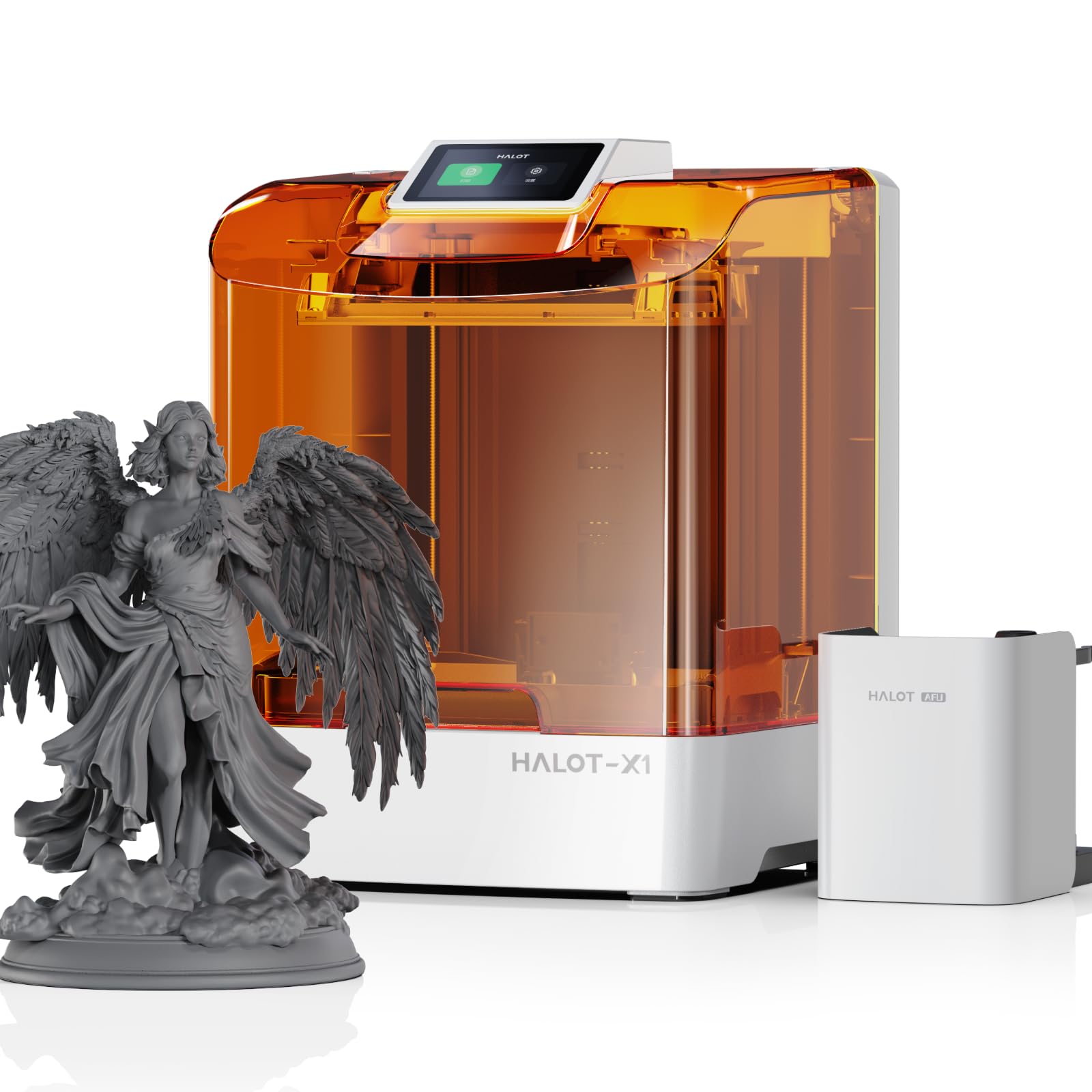
The Halot-X1 Combo pushes resolution boundaries with a 16K mono LCD that achieves 14 x 19 micron pixels — the finest XY resolution in this lineup. For architectural detail reproduction, this means window mullions at 1:100 scale appear as clean, distinct vertical elements rather than fused blobs. The 211 x 118 x 200 mm build volume is ideal for smaller details like joinery, ornamentation, or structural connection details.
The Intelligent AFU Resin Management System heats the resin to 30-45°C within three minutes to reduce viscosity and improve layer adhesion. RFID tag recognition automatically loads resin parameters, while the laser-based level detection handles feeding and recycling of leftover resin. The twist-to-release build plate simplifies model removal without scraping the platform.
Users report it is easy to learn and produces excellent results with default settings. However, the Halot Box slicer has stability issues that can cause crashes during slicing, and Creality’s support for software issues has been slow. The print area is relatively small compared to other resin printers in a similar price range, limiting the size of architectural elements you can produce in one shot.
Why it’s great
- Finest 16K XY resolution at 14×19 µm for ultimate detail
- Heated resin management system improves success rates
- Twist-release build plate for easy model removal
Good to know
- Halot Box slicer can crash during complex slicing
- Build volume is small at 211×118×200 mm
- Software support from Creality can be slow
11. ELEGOO Centauri Carbon

The Centauri Carbon is an entry-level FDM printer that delivers impressive speed for its price, making it a strong candidate for architecture students or small practices on a tight budget. Its CoreXY structure supports 500 mm/s print speeds with 20,000 mm/s² acceleration, allowing a 1:200 building massing model to print in under two hours. The 256 x 256 x 256 mm build volume is generous for its class.
The printer arrives fully assembled and pre-calibrated with auto bed leveling and vibration compensation — reducing the time from unboxing to first print to minutes. The 320°C nozzle can handle carbon fiber reinforced filament, which is useful for printing durable jigs or brackets for structural models. The built-in camera supports remote monitoring and time-lapse recording.
Owners praise the value proposition and speed, with many printing complex parts like vacuum forming molds without issues. However, some units have experienced failures within days of use, and support turnaround for replacement parts can stretch several weeks. The printer vibrates noticeably at high speeds, so a stable, heavy table is necessary to prevent print artifacts.
Why it’s great
- High-speed CoreXY printing for fast model turnaround
- Fully assembled and pre-calibrated out of the box
- Can print carbon fiber reinforced filaments
Good to know
- Some units fail early; support can be slow
- Vibrates heavily at high speeds
- Bed adhesion may require tuning for some filaments
FAQ
What XY resolution in microns do I need for architectural window details at 1:100 scale?
Should I use resin or FDM for architectural massing models?
How tall can I print a single building model with a 300 mm build volume?
What is the effect of heated resin vats on architectural model quality?
Final Thoughts: The Verdict
For most users, the 3d printer for architectural models winner is the ELEGOO Jupiter 2 because its massive 16K resolution and 300 mm build volume produce single-piece presentation-ready building massing without seams. If you want the fastest iteration speed for facade details and small sections, grab the Creality Halot Mage S 14K. And for a reliable, multi-color FDM machine that produces presentation-ready models straight off the bed, nothing beats the Bambu Lab A1 Combo.