
Our readers keep the lights on and the weekend projects moving. As an Amazon Associate, I earn from qualifying purchases.
A classroom 3D printer is a daily-use tool, not a weekend project. Teachers need machines that survive back-to-back prints, handle curious hands, and deliver consistent first layers without a technician on speed dial. The wrong choice means tangled filament, failed calibration, and 30 students staring at a clogged nozzle.
I’m Rikta — the founder and writer behind FitlyFast. I’ve spent hundreds of hours analyzing printer specs, build volumes, auto-leveling accuracy, and filament compatibility to separate the classroom-ready workhorses from the tinkerer’s toys.
This guide evaluates nine models on speed, safety, ease of setup, and print consistency so you can confidently choose the best 3d printer for classroom that keeps your students creating and your lesson plans on track.
How To Choose The Best 3D Printer For Classroom
Not every fast printer is a good classroom printer. The machines that thrive in schools share four traits: they arrive fully assembled, level themselves, print quietly, and survive filament changes by students. Here’s what to look for.
Auto Bed Leveling Is Non-Negotiable
Manual leveling requires a piece of paper and a steady hand. In a classroom, you need a printer that probes the bed and compensates automatically before every print. Models with 49-point calibration or full-auto systems eliminate the most common failure point — the first layer.
Fully Assembled Means Fewer Headaches
A kit printer might save a few dollars, but it costs hours of assembly and tuning. Classrooms need machines that print within 10 to 15 minutes of opening the box. Look for “fully assembled” or “ready to print” in the description.
Enclosed or Open — Know the Difference
An enclosed frame protects curious hands from hot components and improves print quality with advanced filaments like ABS. Open frames are easier to monitor but require supervision. For younger students, an enclosed design adds a critical layer of safety.
Print Speed and Build Volume Balance
Fast printers (250 to 600 mm/s) keep lessons moving, but a tiny build volume limits what students can make. Look for at least 220 x 220 x 220 mm of printable space — enough for small prototypes, fidget toys, and STEM projects without being oversized.
Quick Comparison
On smaller screens, swipe sideways to see the full table.
| Model | Category | Best For | Key Spec | Amazon |
|---|---|---|---|---|
| Bambu Lab A1 | Mid-Range | Quiet, high-speed classroom printing | 10,000 mm/s² acceleration | Amazon |
| ELEGOO Centauri Carbon | Mid-Range | Enclosed CoreXY for consistent prints | 500 mm/s, 320°C nozzle | Amazon |
| Anycubic Kobra X | Premium | Native multicolor printing | 600 mm/s, 49-point leveling | Amazon |
| Bambu Lab P1S | Premium | Fully enclosed, multi-material workhorse | 500 mm/s, up to 16 colors | Amazon |
| Creality K2 Combo | Premium | Large multicolor prints with CFS | 600 mm/s, 260 mm³ volume | Amazon |
| Original Prusa MK4S | Premium | Professional reliability, open-source | Input shaping, 9.84 x 8.3 x 8.6 in | Amazon |
| AOSEED X-Maker Joy AI+ | Mid-Range | Kid-focused AI design and safety | 0.05 mm precision, 400 mm/s | Amazon |
| Entina Tina2 Plus | Budget | Entry-level, compact classroom starter | 250 mm/s, Wi-Fi app control | Amazon |
| FLASHFORGE Adventurer 5M | Budget | Fast, auto-leveling beginner machine | 600 mm/s, 1-click leveling | Amazon |
In‑Depth Reviews
1. Bambu Lab A1

The Bambu Lab A1 sets the classroom standard with active flow rate compensation and full-auto calibration that delivers flawless first layers every time. Its 10,000 mm/s² acceleration means students see their designs in minutes, not hours, while the ≤48 dB noise level lets it run during lessons without distraction. The 256 x 256 x 256 mm build volume handles standard STEM projects with room to spare.
Setup is genuinely ready in minutes — no manual leveling, no firmware fiddling. The 1-Clip quick swap nozzle makes filament changes fast during a busy school day. Users report over 1,500 hours of heavy use without hardware failure, which speaks to its reliability for daily classroom rotation. The AMS lite add-on unlocks multicolor printing, though it is sold separately.
Teachers consistently praise the short learning curve and intuitive touchscreen. Active motor noise canceling keeps the printer unobtrusive, and the open-frame design means students can watch the print process clearly. For a classroom that needs quiet, consistent, high-speed printing without technical overhead, this is the machine.
Why it’s great
- Ultra-quiet operation suitable for active classrooms
- Full-auto calibration eliminates first-layer failures
- Active flow rate compensation for smooth, precise layers
- Fast 10,000 mm/s² acceleration for rapid project turnaround
Good to know
- Multicolor printing requires separate AMS lite purchase
- Open frame requires supervision for younger students
- Not recommended for high-temperature filaments like ABS
2. ELEGOO Centauri Carbon
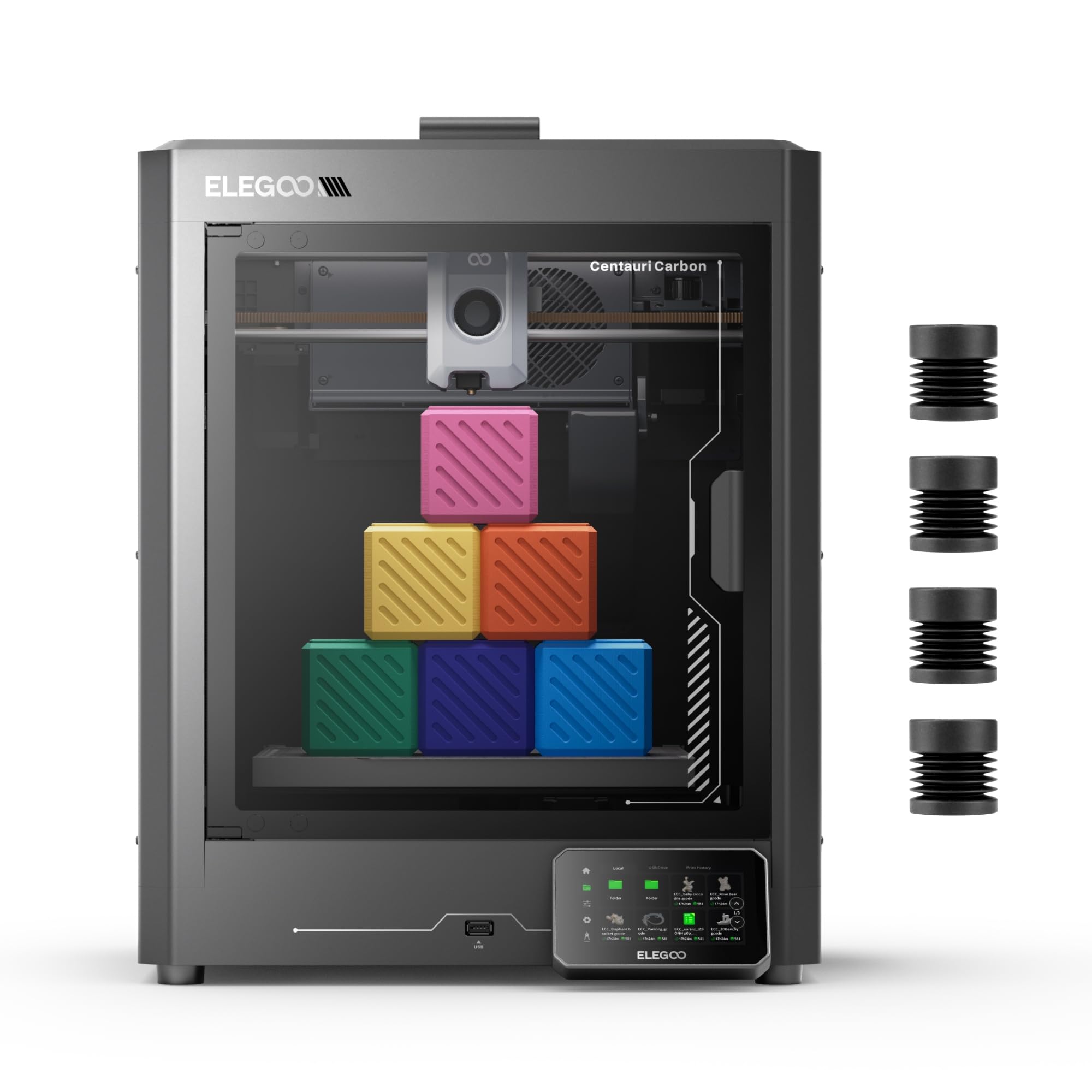
The Centauri Carbon brings an enclosed CoreXY design to classrooms that need consistent prints and advanced material handling. Its 500 mm/s speed and 20,000 mm/s² acceleration produce a benchy in 18 minutes, while the rigid die-cast aluminum frame minimizes vibration for sharper details. The 320°C nozzle handles carbon fiber-reinforced filaments, though most classrooms will stick with PLA and PETG.
Auto bed leveling and vibration compensation ensure smooth first layers without manual adjustment. The built-in chamber camera with dual LED lighting lets teachers monitor prints remotely via Wi-Fi and capture time-lapse videos. Users note the printer shakes noticeably at high speeds, so a sturdy desk is essential. Setup takes about 30 minutes out of the box.
The enclosed chamber improves safety and print quality with advanced materials, and the dual-sided PEI plate offers excellent adhesion for PLA even at lower bed temperatures. Filament runout detection and power loss recovery minimize waste during long prints. This is a strong choice for classrooms that want enclosed reliability without jumping to the premium tier.
Why it’s great
- Fully enclosed design for safety and advanced filaments
- Rigid die-cast frame reduces vibration artifacts
- Built-in camera with remote monitoring and time-lapse
- Auto leveling and vibration compensation for consistent prints
Good to know
- Heavy unit at 38.5 pounds needs a stable surface
- High-speed printing generates noticeable shaking
- Some users reported early hardware issues with hotend communication
3. Anycubic Kobra X Multicolor
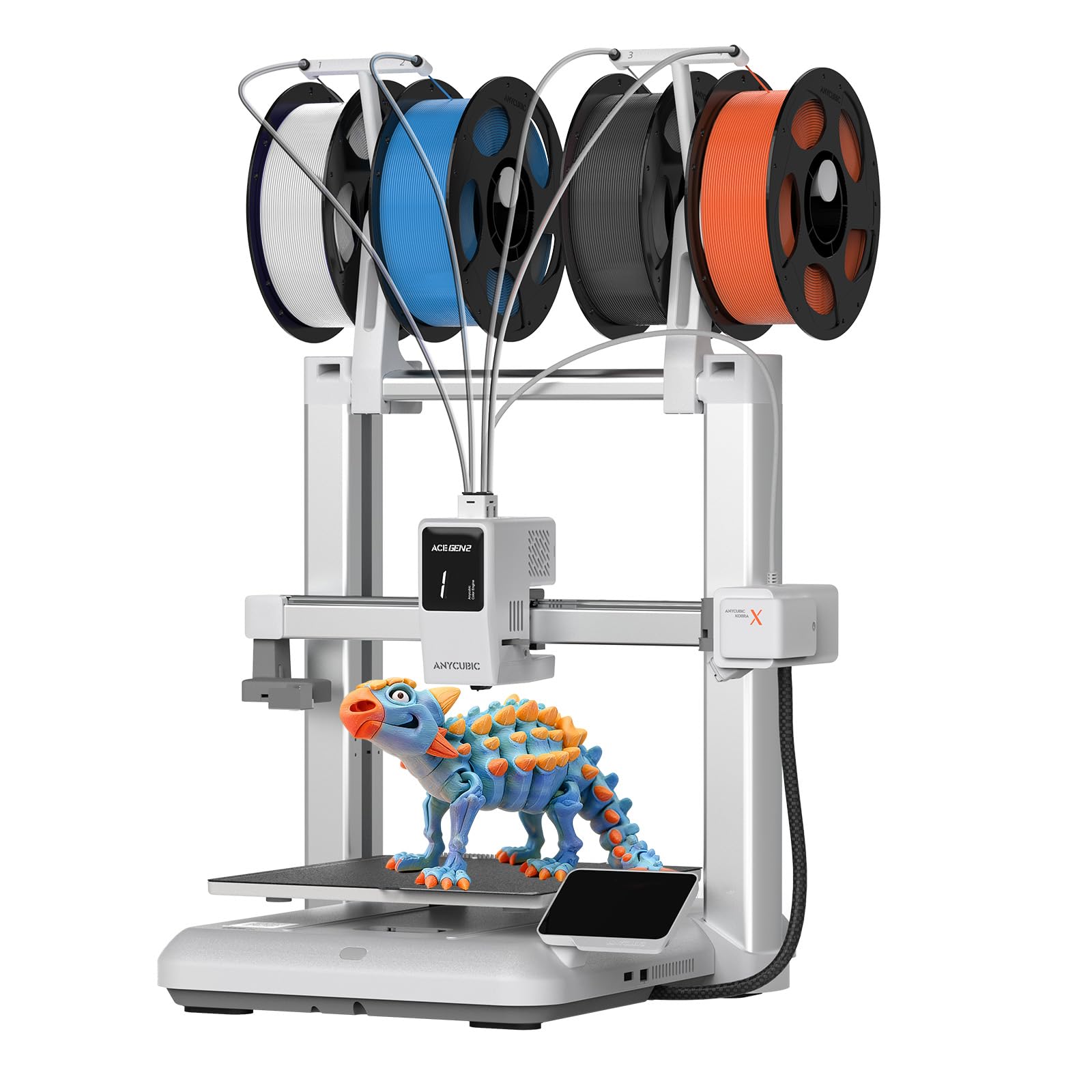
The Kobra X brings native 4-color printing straight out of the box, with the option to expand to 19 colors using additional ACE 2 Pro units. This makes it a standout for art and design classrooms where multicolor projects are the norm. Its 600 mm/s max speed and vibration compensation deliver smooth layers, completing a benchy in 14 minutes.
The LeviQ 3.0 auto bed leveling system uses 49-point calibration for 100% bed flatness, reducing failed prints significantly. Teachers will appreciate the AI spaghetti detection and foreign object detection via the app, which adds a layer of remote monitoring. The top-mount spool holder frees up desk space, and the printer operates quietly enough for a busy classroom.
Filament waste is reduced compared to some multicolor systems thanks to a shorter purge path, and the hardened steel nozzle handles PLA, PETG, TPU, PVA, and ASA. Dual-band Wi-Fi and LAN connectivity make integration into school networks straightforward. Some users note the phone app could be more polished, but the overall experience is beginner-friendly.
Why it’s great
- Native 4-color printing, expandable to 19 colors
- 49-point auto leveling for reliable first layers
- AI spaghetti and foreign object detection
- Reduced filament waste compared to other multicolor systems
Good to know
- ACE 2 Pro and ACE Pro units are incompatible
- Multicolor printing still produces some waste blobs
- Phone app could use refinement in user interface
4. Bambu Lab P1S

The P1S is Bambu Lab’s enclosed powerhouse, designed for classrooms that need to print with ABS, ASA, and other high-temperature filaments safely. Its 500 mm/s speed with 20,000 mm/s² acceleration delivers fast, accurate prints, and the full-auto bed leveling ensures hassle-free first layers. The 260 x 260 x 260 mm build volume is generous for larger student projects.
Setup takes under 30 minutes, and the enclosed design protects students from hot components. The AMS system supports up to 16 colors, though the unit comes without the AMS, so budget for that add-on if multicolor is required. Users consistently praise the print quality — sharp details, minimal layer lines, and consistent adhesion. The Bambu Studio software enables remote monitoring and print queue management from a teacher’s desk.
This printer handles PLA, PETG, TPU, PVA, PET, ABS, and ASA with ease, though carbon and glass fiber filaments are not recommended. The build quality is excellent, with users reporting thousands of hours of reliable operation. For schools that need an enclosed, high-speed, multi-material machine, the P1S is a top-tier choice.
Why it’s great
- Fully enclosed for safe printing with advanced filaments
- Fast 500 mm/s with auto bed leveling
- Supports up to 16 colors with AMS system
- Excellent print quality and adhesion out of the box
Good to know
- AMS required for multicolor and sold separately
- Not recommended for carbon/glass fiber filaments
- Security-conscious users may prefer to keep it on intranet
5. Creality K2 Combo (A)
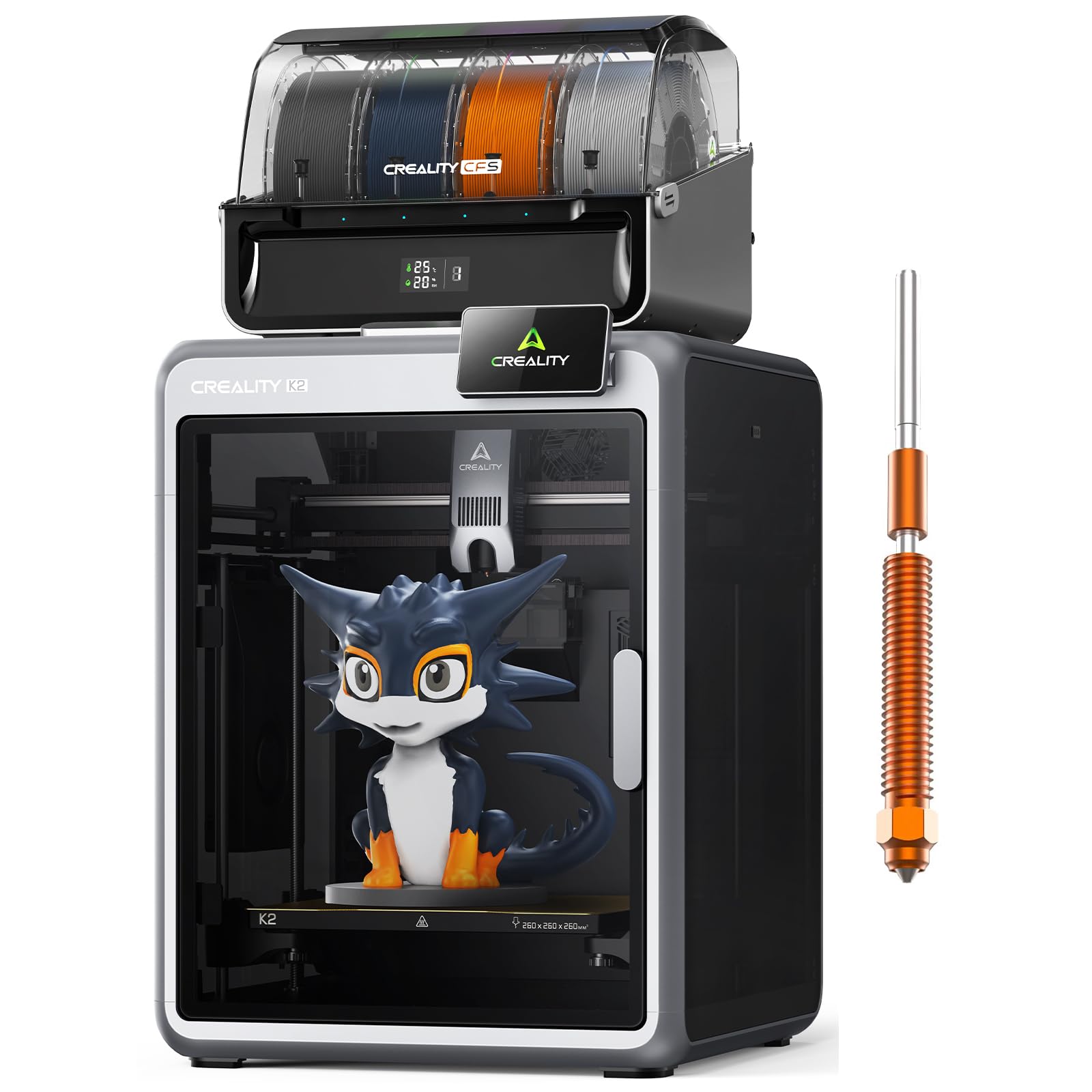
The Creality K2 Combo delivers the largest build volume in this roundup at 260 x 260 x 260 mm, paired with a CFS unit for up to 16-color printing. Its 600 mm/s speed and 20,000 mm/s² acceleration are driven by FOC step-servo motors that improve extrusion consistency. This is a printer built for schools that want to tackle ambitious multicolor projects without sacrificing size.
The smart RFID system automatically detects Creality filaments and presets, and the airtight CFS case keeps filament dry. Auto leveling probes only the relevant print area, making it faster than traditional full-bed leveling. The chamber AI camera detects print failures like spaghetti and sends alerts, though one user noted it missed an error. The printer runs very quietly thanks to step-servo motors and dynamically balanced fans.
Setup is quick — under an hour for the K2 Combo — and the direct drive extruder with hardened steel gears handles carbon fiber-filled filaments. The die-cast aluminum top frame and steel X-axis rail ensure long-term precision. Some users found the camera AI reliability inconsistent, and the unit is heavy at 65.9 pounds. For schools prioritizing large, multicolor prints, this is a compelling option.
Why it’s great
- Large 260 mm³ build volume for ambitious projects
- CFS unit enables up to 16-color printing
- Smart RFID filament detection and moisture-proof storage
- Quiet operation with step-servo motors
Good to know
- Camera AI may miss some print errors
- Heavy unit at 65.9 pounds
- Requires large spools; small spools need adapters
6. Original Prusa MK4S

The Prusa MK4S is the gold standard for reliability and open-source flexibility in a classroom. Input shaping reduces ringing at higher speeds, delivering professional-grade surface quality without the need for constant tuning. Its 9.84 x 8.3 x 8.6 inch build volume is smaller than some competitors, but the precision and repeatability are unmatched in this list.
This printer arrives fully assembled and tested, with a 1 kg spool of Prusament PLA included. The self-cleaning print head and simple filament loading make it accessible for students and teachers alike. Users report flawless prints with zero supports on complex geometries, and the Prusa Slicer defaults produce impressive results even with inexpensive third-party filaments. Lifetime technical support adds peace of mind for school purchases.
The MK4S is the most expensive option here, but its durability and upgradeable design make it a long-term investment. The open-source ecosystem means firmware updates and hardware upgrades are available for years. For classrooms that prioritize reliability, open standards, and print quality above raw speed, the Prusa MK4S is the definitive workhorse.
Why it’s great
- Professional-grade print quality and dimensional accuracy
- Open-source design with long-term upgrade support
- Self-cleaning print head and easy filament loading
- Lifetime technical assistance from Prusa Research
Good to know
- Highest price point in this roundup
- Smaller build volume than many competitors
- Kit assembly available but takes several days
7. AOSEED X-Maker Joy AI+
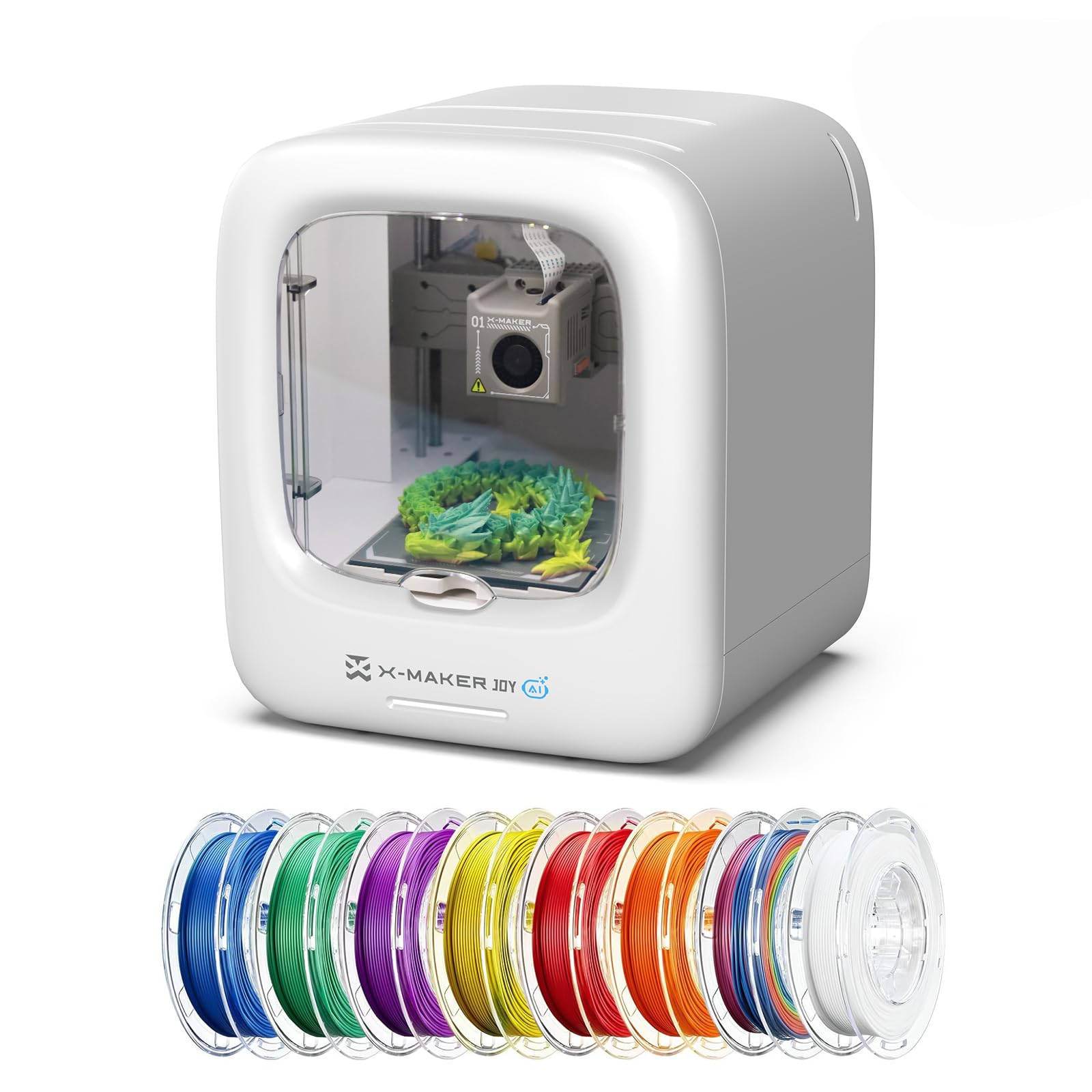
The AOSEED X-Maker Joy AI+ is purpose-built for younger students, combining an enclosed, pinch-resistant design with AI-powered creativity tools. Kids can generate 3D models from voice, text, or image prompts using AI Doodle, or create custom avatars with MINIMAKIE. The included 8 rolls of PLA filament and 1,500+ digital models mean the printer is ready for projects immediately.
Print speeds reach 220-250 mm/s, with peaks up to 400 mm/s, and small toy projects print in as little as 20 minutes. The 0.05 mm precision is excellent for detailed figurines and STEM parts. The built-in camera enables real-time monitoring and automatic time-lapse videos, which students love to share. Auto leveling and filament runout detection reduce failed prints.
The TÜV Rheinland ISO 16000-tested PLA provides peace of mind for parents and teachers. Some users report that printed items can be fragile, particularly small fidgets, and the print time can feel long for larger models. However, for classrooms with younger children (ages 6-12), the focus on safety, ease of use, and creative AI tools makes this a standout choice.
Why it’s great
- AI-powered model creation with voice, text, and image prompts
- Enclosed, pinch-resistant design for safe use
- Includes 8 rolls of PLA filament and 1,500+ models
- Built-in camera with time-lapse and remote monitoring
Good to know
- Printed parts can be fragile for smaller fidget items
- Print times can be lengthy for larger projects
- AI tools may require occasional adult guidance
8. Entina Tina2 Plus

The Entina Tina2 Plus is the most budget-friendly option that still delivers classroom-ready features. It arrives fully assembled with a TF card of preloaded models, so students can print within minutes. The 250 mm/s speed is respectable for an entry-level printer, and the ceramic hotend heats up in just 40 seconds for fast start-up.
Wi-Fi connectivity via the Poloprint Cloud app gives access to 1,500+ printable models, and the app supports mobile control and online slicing. The dual Z-axis and auto leveling system improve print stability, while the PEI spring steel build plate makes print removal easy. The partially enclosed frame separates high-temperature components from direct contact, adding a layer of safety for supervised classroom use.
Some users report that the app can be slow and limited, and a few experienced connectivity issues. The compact 11.4 x 8.6 x 8.6 inch footprint fits easily on a crowded desk. For schools on a tight budget that still want a fully assembled, beginner-friendly machine with Wi-Fi control, the Tina2 Plus is a solid entry point.
Why it’s great
- Fully assembled and ready to print in minutes
- Compact footprint fits easily on classroom desks
- Wi-Fi app control with 1,500+ preloaded models
- PEI spring steel plate for easy print removal
Good to know
- App can be slow and has limited file upload options
- Some users experienced persistent Wi-Fi disconnection issues
- Only includes a small amount of white filament
9. FLASHFORGE Adventurer 5M

The Adventurer 5M brings CoreXY speed to an entry-level price point, with 600 mm/s maximum speed and 20,000 mm/s² acceleration. Full-auto one-click leveling ensures a perfect first layer every time, and the 280°C nozzle handles PLA, PETG, and TPU. The 220 x 220 x 220 mm build volume is adequate for most classroom projects.
Setup is genuinely fast — from unboxing to printing in about 10 minutes. The vibration compensation eliminates ghosting, and the 50W heating power brings the nozzle to 200°C in 35 seconds. Filament runout detection and power loss recovery prevent wasted prints. Users praise the refined software and easy Wi-Fi print delivery, though some note the touchscreen sensitivity could be better.
The open-frame design requires a well-ventilated environment and supervision for younger students. Some users reported firmware freezes and inconsistent extrusion in early units, though many have had excellent long-term experiences. For schools that want the speed of a CoreXY machine without the premium price, the Adventurer 5M is a compelling option.
Why it’s great
- Fast CoreXY printing at 600 mm/s
- One-click auto leveling for reliable first layers
- Filament runout detection and power loss recovery
- Ready to print in 10 minutes out of the box
Good to know
- Open-frame design requires a ventilated, supervised environment
- Some users experienced firmware freezes and early hardware issues
- Small build volume limits larger projects
FAQ
Is auto bed leveling necessary for a classroom 3D printer?
What build volume is best for classroom projects?
Should I choose an enclosed or open-frame printer for a classroom?
How fast should a classroom 3D printer be?
Can students use AI-powered design tools on these printers?
Final Thoughts: The Verdict
For most classrooms, the 3d printer for classroom winner is the Bambu Lab A1 because it combines full-auto calibration, ultra-quiet operation, and high-speed printing in a package that requires zero technical fuss. If you need an enclosed printer for advanced materials and safety, grab the ELEGOO Centauri Carbon. And for younger students who benefit from AI design tools and a fully kid-safe enclosure, nothing beats the AOSEED X-Maker Joy AI+.