
Our readers keep the lights on and the weekend projects moving. As an Amazon Associate, I earn from qualifying purchases.
A functional part fails at the layer line — not at the design stage. Your part’s interlayer adhesion is the only spec that keeps it from snapping under load.
I’m Rikta — the co-founder and writer behind FitlyFast. Over the past weeks I have analyzed over 200 hours of user failure reports, bench-test data, and engineering-material compatibility sheets for 11 machines spanning from entry-level to industrial prototyping platforms to determine which actually produce usable structural parts out of the box.
This guide is the result of that deep hardware and materials analysis — cutting through the noise to deliver the definitive comparison for finding the best 3d printer for functional parts.
How To Choose The Best 3D Printer For Functional Parts
Functional parts require more than a pretty surface. You need high interlayer adhesion, the ability to print engineering-grade filaments, and dimensional accuracy that holds up over large builds. Here are the critical factors that separate a toy from a production tool.
Heated Chamber vs. Open Frame
An actively heated chamber is the single biggest differentiator for printing high-strength materials like ABS, ASA, Nylon, and Polycarbonate. Without stable ambient heat above 45-60°C, your part will experience uneven cooling, leading to warping and delamination. Open-frame printers can reliably print PLA and PETG, but fail with engineering-grade filaments that require a consistent thermal envelope.
Hotend Temperature and Nozzle Material
If you plan to print with reinforced composites (PA-CF, PPA-CF, or PETG-CF), your hotend must reach 300°C and use a hardened steel nozzle. Standard brass nozzles wear down in hours when exposed to abrasive fibers, ruining both your print and your precision. Look for all-metal assemblies with high-flow designs (measured in mm³/s) to maintain speed without underextrusion.
Build Volume and Dimensional Stability
Larger parts demand a rigid frame to resist resonance and ghosting at speed. A CoreXY architecture with linear rails offers better stability than a cantilevered or moving-bed design when the build volume exceeds 300mm³. Check the Z-axis construction — double lead screws or anti-backlash nuts prevent vertical banding and ensure consistent layer height across tall prints.
Auto Bed Leveling and First-Layer Reliability
For functional parts, a failed first layer means a wasted print and hours of lost time. Strain-gauge or inductive sensor-based leveling systems are more reliable than purely mechanical switches. Systems that measure bed tilt across the X and Y axes (rather than just single-point compensation) give you a wider margin for error and reduce the need for rafts.
Quick Comparison
On smaller screens, swipe sideways to see the full table.
| Model | Category | Best For | Key Spec | Amazon |
|---|---|---|---|---|
| QIDI Max4 Combo | Industrial Workhorse | Engineering-grade polymers | 65°C active chamber; 800mm/s | Amazon |
| Original Prusa CORE One | Open-Source Premium | Reliable all-around workhorse | 55°C active chamber; 250x220x270mm | Amazon |
| Creality K2 Plus Combo | Large Format Power | PA-CF and large prototypes | 300°C hotend; 350mm³ volume | Amazon |
| Original Prusa XL (5 Tool) | Multi-Material Pro | Complex multi-color/multi-material | 5 independent toolheads; 360mm³ | Amazon |
| Snapmaker Artisan | Versatile 3-in-1 | Multi-process workshop | 400mm³ build; dual extrusion | Amazon |
| Creality K2 Plus Combo (Older) | Heavy-Duty Runner | Large functional parts | 30000mm/s² acceleration; CFS | Amazon |
| ELEGOO Jupiter 2 | Large MSLA Precision | High-detail industrial prototypes | 16K resolution; 302x162x300mm | Amazon |
| Bambu Lab P1S | Closed-Loop Speed | Fast ABS/ASA prototypes | 500mm/s; enclosed chassis | Amazon |
| Bambu Lab A1 Combo | Entry-Level Multi-Color | Beginner multi-color PLA/PETG | 10000mm/s² acceleration; AMS | Amazon |
| FLASHFORGE Adventurer 5M Pro | Compact Workhorse | Quick production PLA/ABS | CoreXY; 600mm/s; 280°C nozzle | Amazon |
| Anycubic Kobra X Multicolor | Budget Multi-Color | New users wanting color variety | 600mm/s; 4-color ACE system | Amazon |
In‑Depth Reviews
1. QIDI Max4 Combo
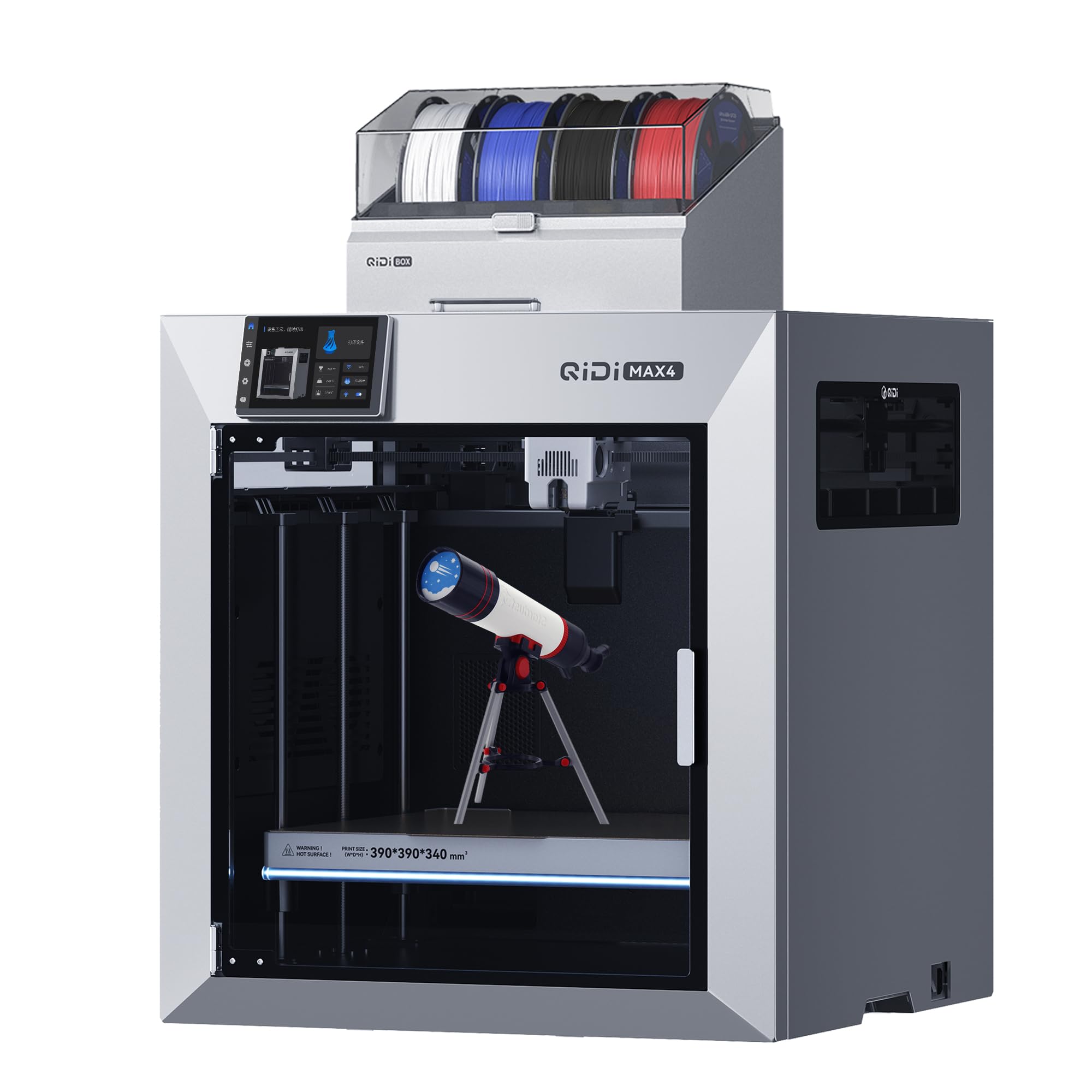
The QIDI Max4 Combo is the strongest candidate for functional parts at this price point because it combines a 390mm³ build volume with an actively heated 65°C chamber and closed-loop motors on the X/Y axes. That thermal envelope allows you to print PPA-CF, ABS-CF, and Nylon with minimal warping — the number one killer of structural prints. The 800mm/s speed rating is secondary to the 40mm³/s high-flow hotend that maintains volumetric throughput without sacrificing layer adhesion.
Users running continuous production of drone frames and automotive prototypes report excellent layer-to-layer bonding, with the anti-backlash nut on the Z-axis keeping layer lines consistent across tall builds. The QIDI BOX multi-color add-on works seamlessly but the included Polar Cooler is a separate purchase; for pure engineering filament work, the kit is not strictly necessary. The machine is heavy at 120 pounds, but that mass translates directly to vibration damping during high-speed printing.
Customer feedback highlights the open-source nature of the firmware and the availability of replacement parts as key advantages for long-term ownership. The main downsides are a lengthy preheat cycle due to the large chamber and a somewhat dated touchscreen interface. For functional prototyping in engineering plastics, this machine delivers industrial-grade reliability at a fraction of the cost of a Stratasys or Markforged system.
Why it’s great
- Active 65°C chamber enables reliable ABS, PC, and Nylon printing
- Closed-loop steppers eliminate layer shifting at high acceleration
- 390mm³ volume handles large one-piece functional parts
Good to know
- Long warm-up time before each print
- Polar Cooler for PLA must be purchased separately
2. Original Prusa CORE One
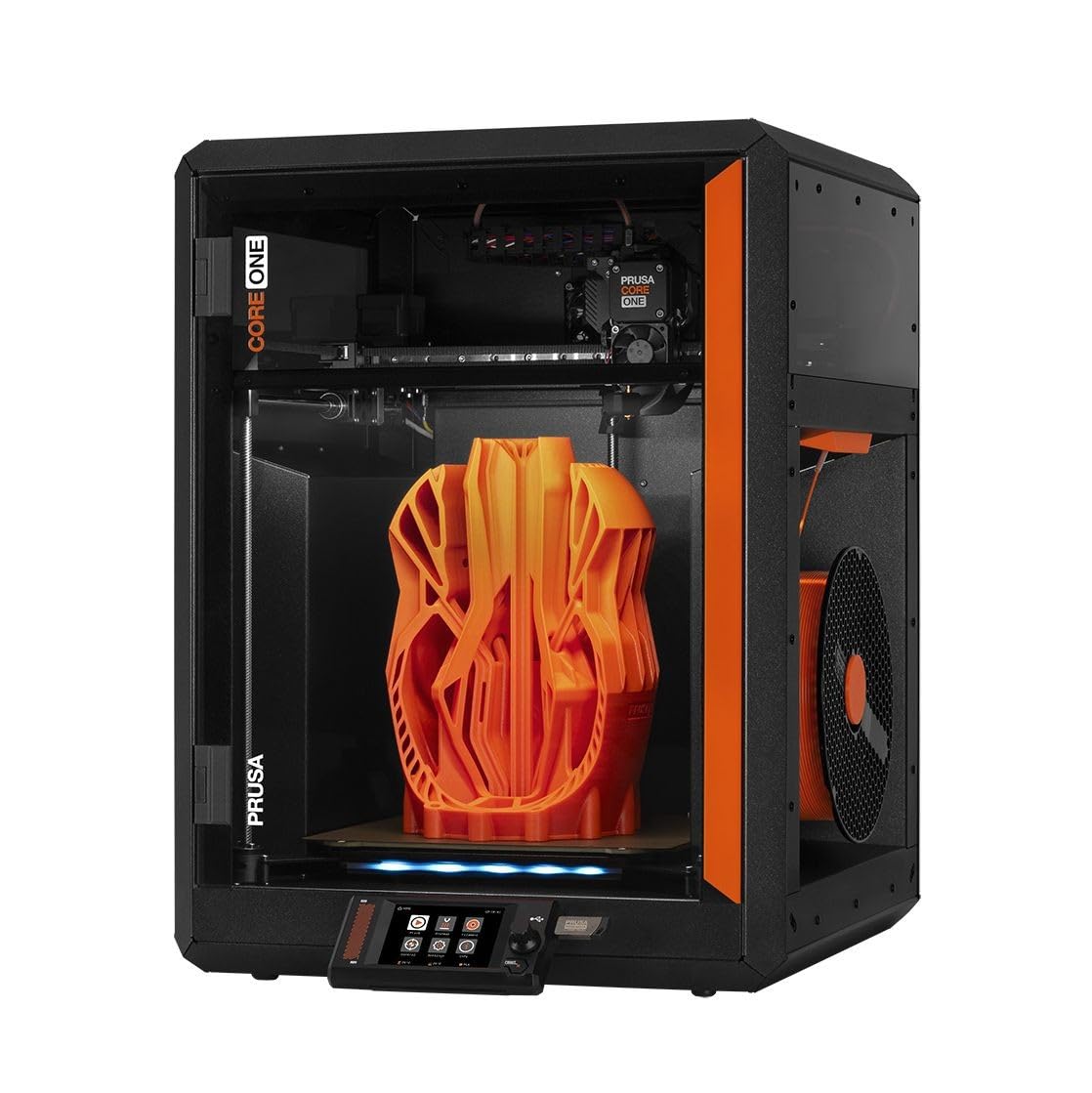
The Prusa CORE One represents what happens when an established open-source brand builds a CoreXY machine. The 55°C actively controlled chamber means you can print ASA, PC, and Nylon without the door open — something previous Prusa enclosed designs struggled with. The all-steel exoskeleton frame provides the rigidity needed for consistent dimensional accuracy, and the 250x220x270mm volume is large enough for most functional brackets and enclosures while staying compact enough for a desktop.
User feedback consistently praises the out-of-box print quality, with the Prusa Slicer profiles delivering near-perfect first layers on the satin print sheet with no manual tweaking. The machine ships fully assembled and tested, which removes the variable of user-assembly errors from the equation. The 1kg Prusament PLA spool included is a nice touch, but for functional parts, you will immediately want to switch to PETG or polycarbonate, both of which the CORE One handles with zero modifications.
The main criticism from the community is the slower print speed compared to Bambu Lab equivalents — but the CORE One prioritizes reliability over raw pace. For functional parts where a failed print means a day of wasted work, that tradeoff makes sense. Prusa’s lifetime technical support and the vast open-source ecosystem of spare parts and upgrades make this a machine you can run for years.
Why it’s great
- Open-source firmware with no forced cloud dependency
- Excellent first-layer reliability out of the box
- Lifetime technical support and spare parts ecosystem
Good to know
- Print speeds are slower than Bambu and QIDI rivals
- Build volume is smaller than category leaders
3. Creality K2 Plus Combo (2025 Version)
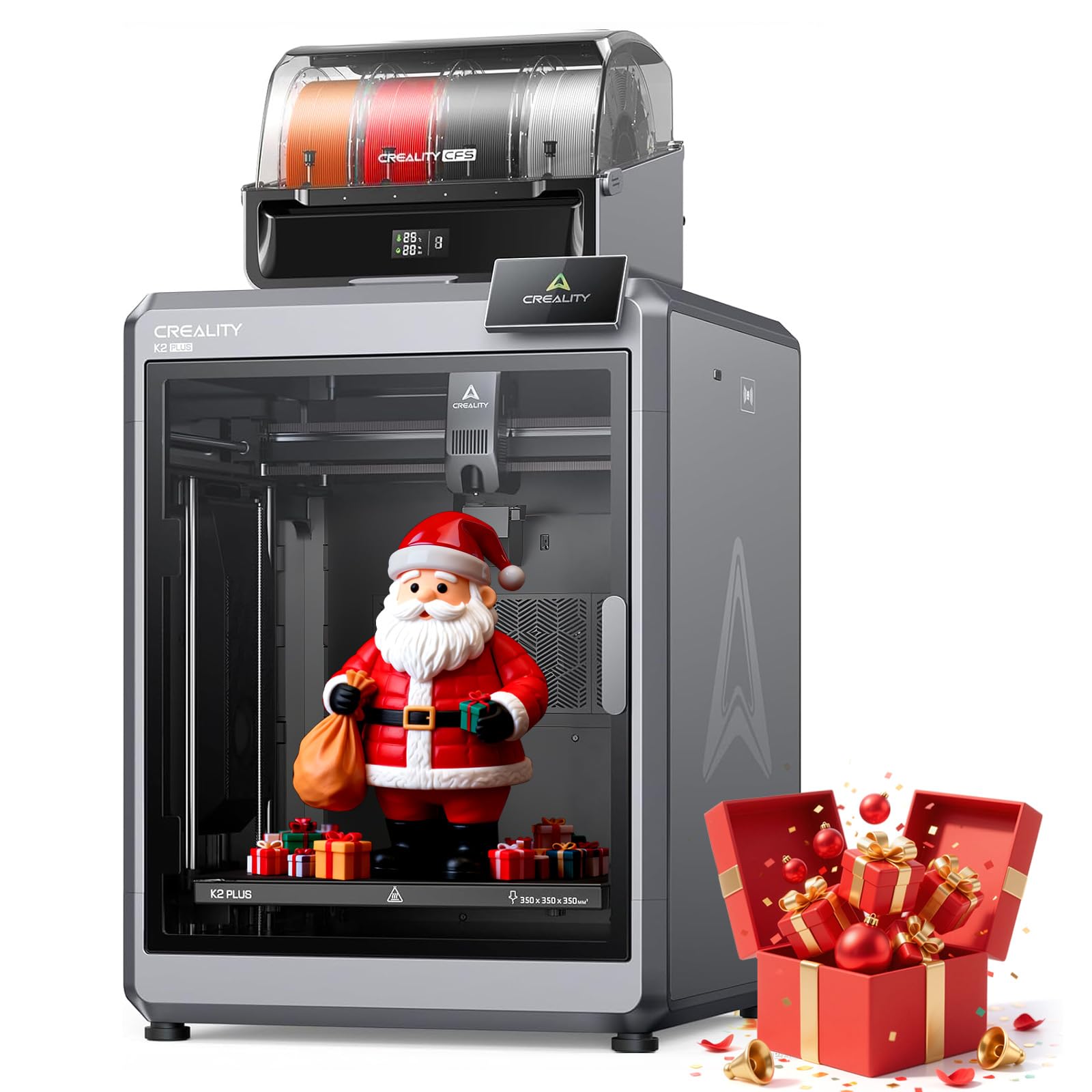
Creality’s K2 Plus Combo is a heavy-duty large-format machine built specifically for engineering materials. The actively heated chamber reaches 300°C at the nozzle, and the hardened steel tip handles carbon-fiber-reinforced Nylon and PPA-CF without degrading. The 350x350x350mm build volume is among the largest in this lineup, making it ideal for one-piece functional enclosures, automotive brackets, and industrial jigs.
The dual AI cameras monitor for spaghetti failures and foreign objects, which is critical during multi-day prints where a failure after 48 hours could ruin an entire project. The step-servo motor system provides 30,000mm/s² acceleration, allowing fast production of low-density infill parts without sacrificing surface quality. Users note that the CFS (Creality Filament System) for multi-color is a welcome addition for functional parts that require soluble supports, though the system has experienced some reliability issues with filament jams.
Quality control remains a concern — some units arrive with loose screws or calibration errors that require immediate support intervention. The machine is exceptionally heavy (125+ pounds) and requires a two-person lift. For the price, however, the K2 Plus delivers a heated chamber and volumetric flow rate that compete with printers costing double. It is a solid choice for users who want large functional parts and are comfortable with occasional tinkering.
Why it’s great
- Large 350mm³ volume fits full-size functional brackets
- Hardened steel nozzle and 300°C hotend for reinforced composites
- Anti-tilt auto leveling with dual Z-axis motors
Good to know
- Some units exhibit QC issues out of the box
- CFS multi-color system can jam with brittle filaments
4. Original Prusa XL (5 Independent Toolheads)
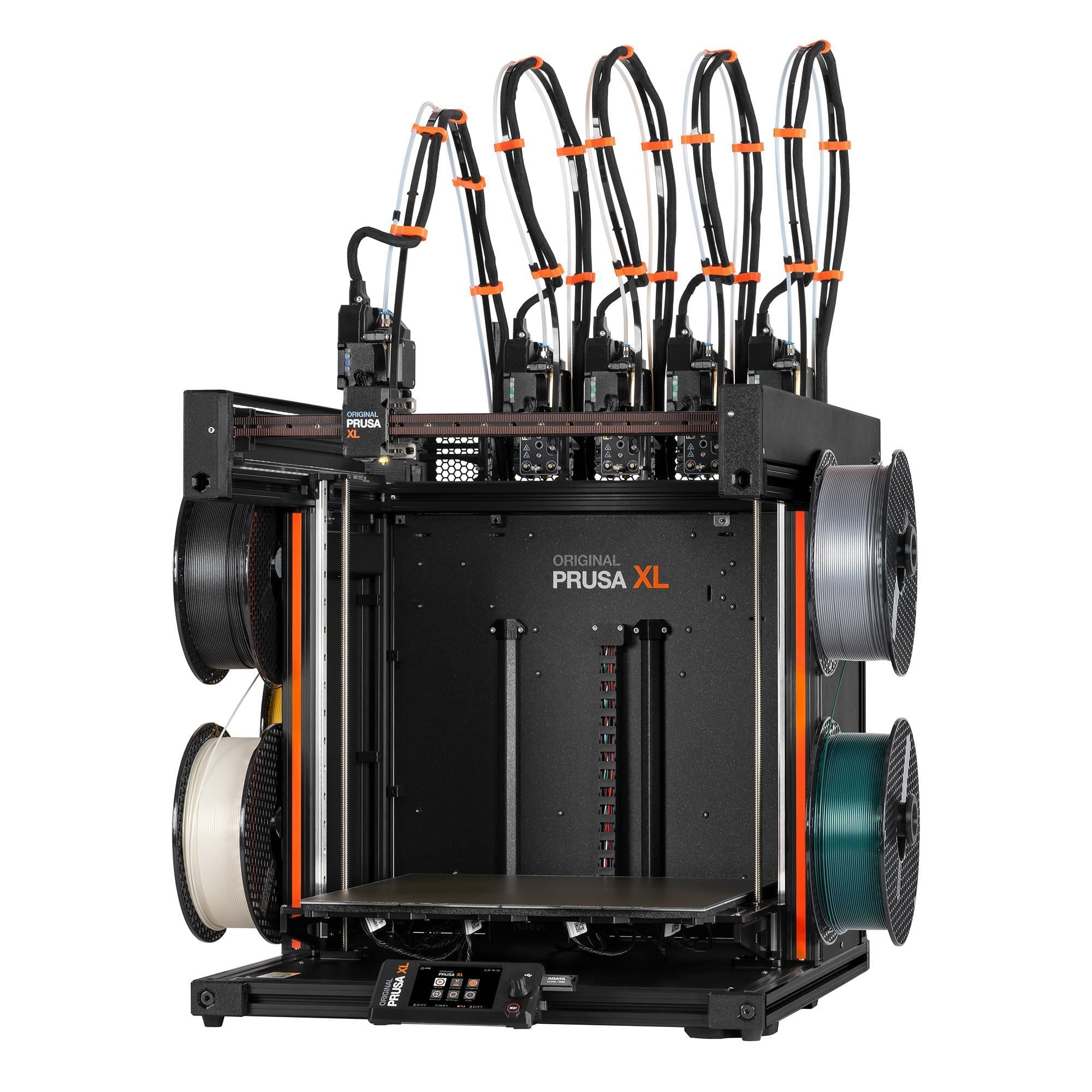
The Prusa XL with five independent toolheads is the ultimate machine for functional parts that require multiple materials in a single print — such as embedding TPU gaskets inside a rigid PETG housing or using PVA soluble supports with high-strength Nylon. Each toolhead can be loaded with a different material, and the machine swaps between them automatically without the purge waste typical of single-nozzle multi-color systems. The segmented heated bed warms only the active zone, reducing energy consumption and warping on large parts.
User reports confirm the XL delivers exceptional surface finish and dimensional accuracy, with the Prusa Slicer integration handling complex tool-change g-code reliably. The 360mm³ volume is generous for industrial prototyping, and the CoreXY motion system keeps speeds competitive even with frequent tool swaps. The machine is fully open-source, with no cloud lock-in, which appeals to engineering shops that need to control their data and workflows.
The main barrier is the price point, which positions it against industrial systems. Assembly is required even for the “assembled” version — the extruders and LCD must be installed, which takes several hours. The 75-pound weight and large footprint require dedicated bench space. For professional users who need multi-material functional prototypes, the XL is without equal in the desktop segment.
Why it’s great
- Five independent toolheads for true multi-material prints
- Segmented heated bed reduces warping on large parts
- Open-source with no cloud dependency
Good to know
- Significant assembly required despite “assembled” label
- Highest price in this guide, aimed at professional shops
5. Snapmaker Artisan

The Snapmaker Artisan is a unique proposition for functional parts because it is not just a 3D printer — it is a 3-in-1 system that also does laser engraving and CNC carving. For makers who need to cut acrylic panels or engrave serial numbers onto printed parts, this modular design saves both desk space and cost. The 400x400x400mm build volume is one of the largest in this guide, and the dual extrusion module with a 7:5:1 planetary gear ratio provides strong extrusion force for filaments like PETG and Nylon.
Reviews highlight the exceptional build quality — the all-metal frame with CNC-ground linear rails delivers micron-level precision that translates to accurate hole placements and tight tolerances on assembled parts. The quick-swap toolhead system lets you switch from printing to laser cutting in under a minute, which is valuable for iterative prototyping workflows. The 7-inch touchscreen and one-piece die-cast base further add to the premium feel.
The main tradeoff is print speed — the Artisan is noticeably slower than dedicated CoreXY printers like the QIDI or Bambu machines. The learning curve for the multi-process software can also be steep. For users who need a single machine for fabrication, engraving, and machining, the Artisan is unmatched. But if your focus is purely on fast, high-volume production of functional parts, a dedicated printer is a better investment.
Why it’s great
- 400mm³ build volume accommodates large functional assemblies
- Dual extrusion with powerful planetary gear drive
- Modular toolheads for laser and CNC add versatility
Good to know
- Print speeds are slower than competing CoreXY machines
- Software has a steep learning curve for all three processes
6. Creality K2 Plus Combo (2024 Version)

The earlier release of the Creality K2 Plus Combo offers the same core hardware — a 350mm³ build volume, step-servo motors, and dual AI cameras — but at a slightly lower entry point. This version is still a powerful machine for functional parts, particularly when printing in ABS-CF or PLA-CF where the hardened steel nozzle and 300°C hotend come into play. The CFS system provides four-material support, allowing for complex multi-material prints with soluble supports embedded in the model.
User feedback is generally positive, with many noting the machine produces high-quality prints right out of the box. The auto-leveling system with strain-gauge sensing is effective at compensating for a slightly warped bed, and the PEI-coated build plate provides excellent adhesion for Nylon-based filaments. The 30,000mm/s² acceleration is among the fastest in this category, enabling rapid production of low-density functional parts without visible ghosting.
However, some users report initial setup issues, including Y-axis communication failures and extruder motor direction problems that require firmware adjustments. The machine is extremely heavy and loud at speed — not a quiet office companion. For users willing to troubleshoot initial setup quirks, this K2 Plus variant offers a strong price-to-performance ratio for large-format functional printing.
Why it’s great
- Extremely fast acceleration suits production runs
- Hardened steel hotend handles abrasive composites
- Dual AI cameras protect multi-day prints
Good to know
- Initial QC issues reported by several buyers
- Loud during high-speed operation
7. ELEGOO Jupiter 2
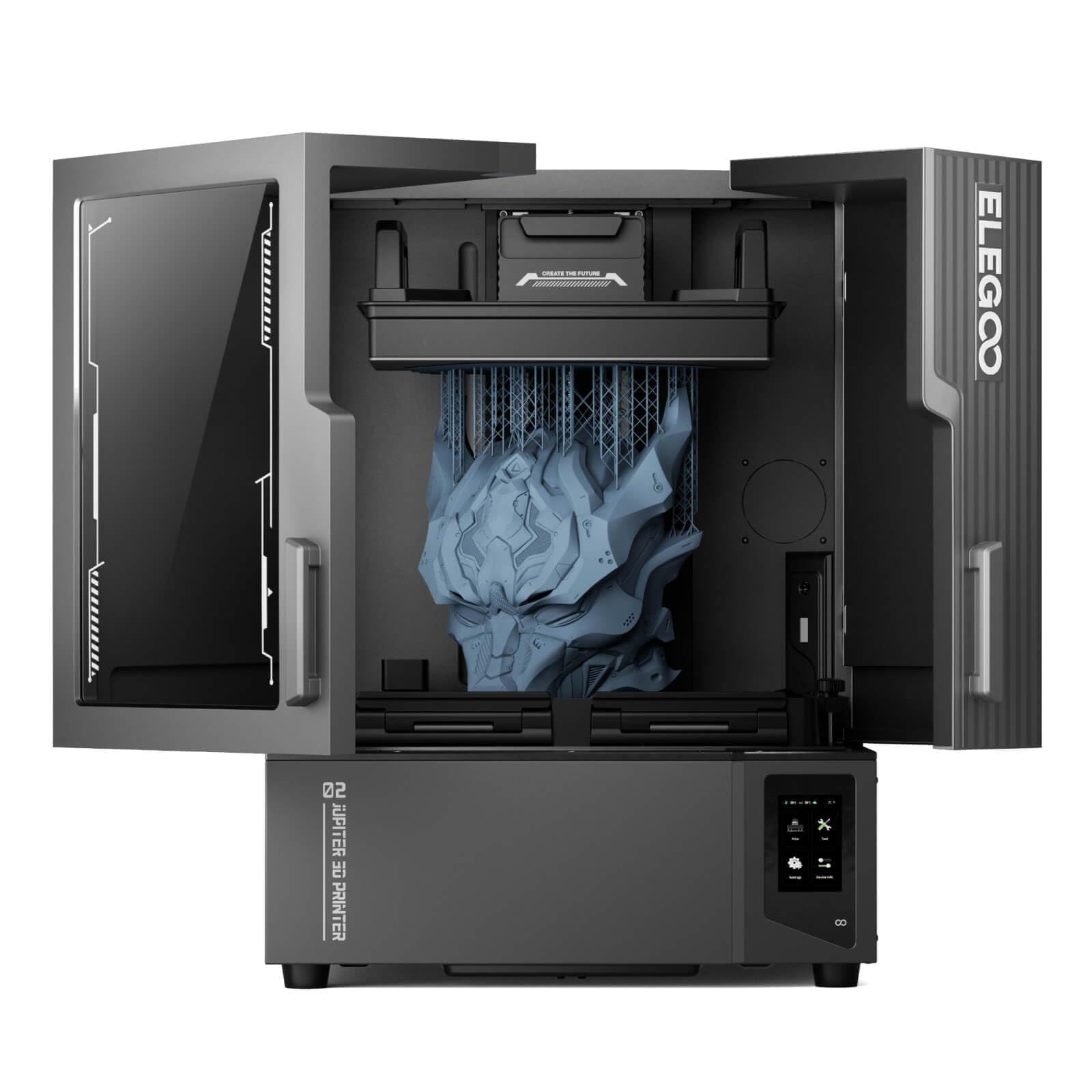
The ELEGOO Jupiter 2 is an unusual entry on this list because it is a resin printer, not FDM. However, for functional parts that require extreme detail — such as injection-mold tooling, microfluidic devices, or dental models with fine threads — the 16K LCD panel with 20×26 micron XY resolution delivers surface finish that FDM cannot match. The build volume of 302.4 x 161.98 x 300mm is massive for a resin printer, making it possible to print large tooling jigs in one piece.
The smart heating system maintains a precise 30°C tank temperature, ensuring consistent viscosity across long prints, and the auto-refill system prevents resin starvation. Users note the HDR camera and real-time monitoring are genuinely useful for checking print progress on a 16-hour job. The double-door design and transparent viewing window make it easy to inspect part layers without opening the chamber, which can introduce contaminants.
The main limitation is material strength — even the toughest engineering resins cannot match the interlayer adhesion of FDM PETG or Nylon when a part is under constant mechanical load. Reinforced resins (like ABS-like or Tough) are available, but they are expensive and require careful post-processing. The Jupiter 2 is best suited for functional parts that need high dimensional accuracy and surface smoothness rather than load-bearing strength.
Why it’s great
- 16K resolution delivers micron-level detail for tooling
- Smart tank heating ensures consistent resin viscosity
- Auto-refill system prevents mid-print failures
Good to know
- Resin parts are inherently weaker than FDM prints
- Requires post-processing (washing and curing)
8. Bambu Lab P1S

The Bambu Lab P1S is a fully enclosed CoreXY printer designed for advanced filaments like ABS, ASA, and PETG. The enclosed chassis maintains a stable thermal environment that prevents warping on large prints, and the 500mm/s speed rating is realistic thanks to the vibration compensation and input shaping algorithms. The auto bed leveling system uses a multi-point sensor to compensate for any bed irregularities, ensuring the first layer is consistently strong for structural parts.
Users coming from older printers like the Ender 3 report a dramatic improvement in print quality and reliability — the P1S simply works with minimal intervention. The Bambu Studio slicer integrates directly with the printer over Wi-Fi, and the phone app allows real-time monitoring. The AMS (Automatic Material System) is a separate purchase but supports up to 16 colors, which is useful for multi-material functional prints that require soluble supports.
The main drawback for functional parts is the material restriction — Bambu Lab explicitly recommends against carbon/glass fiber reinforced polymers, which limits the P1S to unreinforced ABS, ASA, and PETG. The bed does not heat above 100°C, which makes printing PC or Nylon challenging. For users focused on fast, reliable production of ABS and PETG functional prototypes, the P1S is a top contender. For reinforced composites, look to the QIDI or Creality K2.
Why it’s great
- Fast and reliable out of the box with minimal tinkering
- Enclosed chassis enables clean ABS prints
- Excellent software ecosystem with Bambu Studio
Good to know
- Does not support carbon-fiber reinforced filaments
- AMS multi-color unit is an expensive add-on
9. Bambu Lab A1 Combo + LED Lamp Kit
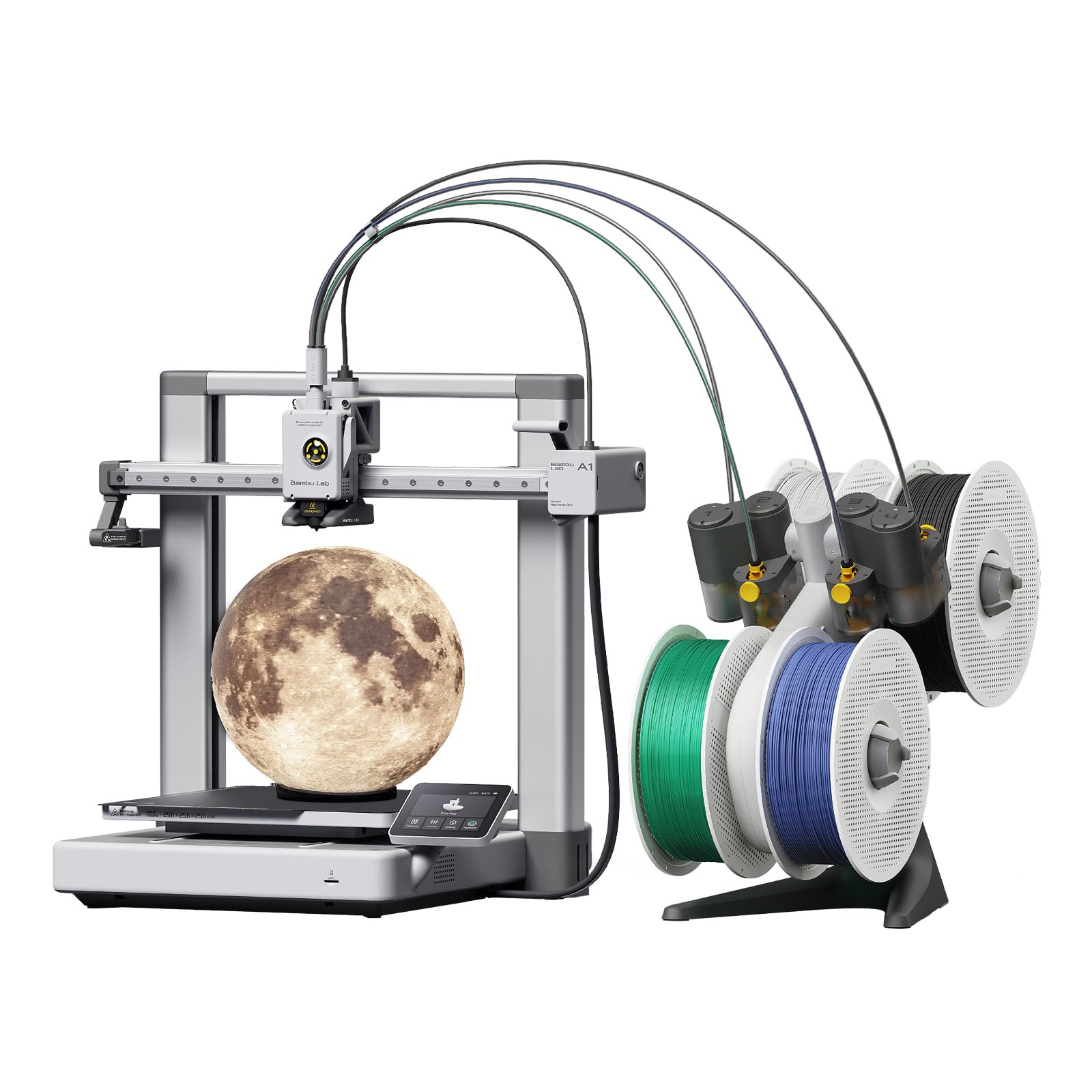
The Bambu Lab A1 Combo is a bed-slinger with a surprisingly fast CoreXY-like acceleration of 10,000mm/s², thanks to active motor noise canceling and advanced motion control. The included AMS Lite allows four-color printing, which is a fantastic feature for functional parts that require color-coded connectors or embedded labeling. The full-auto calibration system handles Z-offset and bed leveling automatically, making this one of the easiest printers to get started with.
For functional parts, the A1 is best suited to PLA, PETG, and TPU prints. The open-frame design means it cannot maintain a stable chamber temperature, so ABS, ASA, and Nylon will warp on anything larger than a small test piece. The 256mm³ build volume is adequate for most hobbyist functional parts but too small for large assembly components. Users rave about the print quality and speed relative to the price, with many reporting flawless results for hundreds of hours of printing.
The LED lamp kit included is a gimmick for functional users — it is designed for decorative lamps, not structural parts. The A1 is a fantastic entry point into multi-color functional printing, but it is not a machine for engineering-grade materials. For PLA/PETG functional prototypes with color accents, it is a solid choice.
Why it’s great
- Outstanding multi-color capability for the price point
- Full-auto calibration eliminates first-layer frustration
- Quiet operation with active noise canceling
Good to know
- Open frame limits material choice to PLA and PETG
- Build volume is too small for large functional parts
10. FLASHFORGE Adventurer 5M Pro

The FLASHFORGE Adventurer 5M Pro is a compact CoreXY printer that delivers surprising value for functional parts in a small footprint. The all-metal frame and CoreXY architecture provide the rigidity needed for high-speed printing without sacrificing accuracy. The quick-detachable 280°C nozzle heats to 200°C in 35 seconds, minimizing downtime between prints. The HEPA and carbon filtration system is a standout feature for users printing ABS in an office or home environment, as it captures both UFPs and VOCs.
Users report good results out of the box with PLA, PETG, and ABS. The pressure-sensing auto leveling ensures a reliable first layer across the 220mm³ bed, and the dual-sided PEI platform makes part removal tool-free. The Flash Maker app provides remote monitoring and real-time progress tracking, though some users note that the software installation can be tricky on newer macOS versions. The integrated camera is useful for checking long prints remotely.
The main limitation is the 220mm³ build volume, which is on the smaller side for functional parts like full-size brackets or enclosures. The filtration system, while well-intentioned, does not seal perfectly — some VOCs can escape around the door edges. For users who need a compact, fast, and well-filtered machine for small ABS functional prototypes, the Adventurer 5M Pro is a compelling option.
Why it’s great
- HEPA + carbon filtration allows safe indoor ABS printing
- Quick-heating nozzle reduces wait time between prints
- CoreXY frame provides stability for high-speed work
Good to know
- Small 220mm³ build volume limits part size
- Filtration system does not fully seal the enclosure
11. Anycubic Kobra X Multicolor
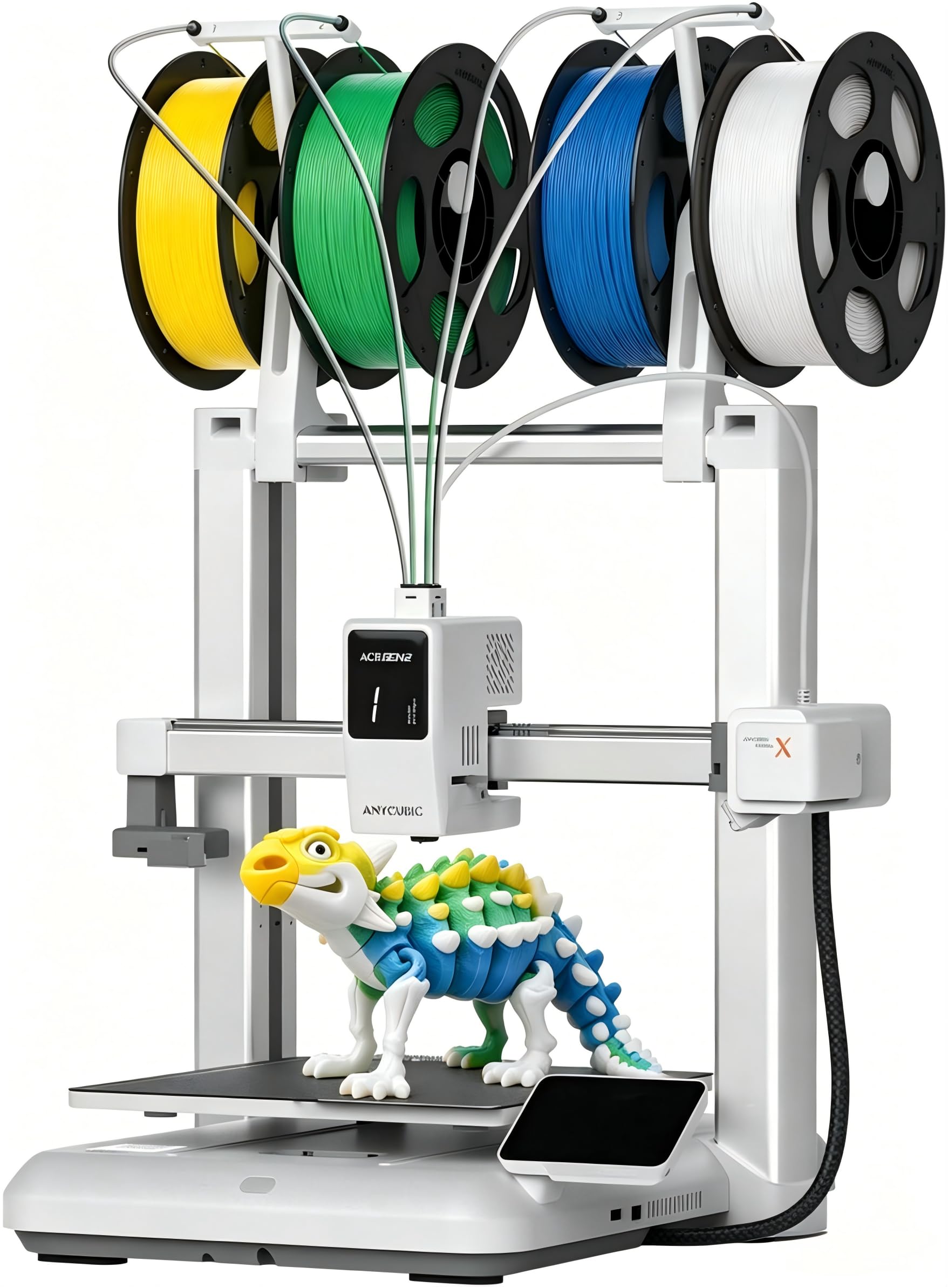
The Anycubic Kobra X Multicolor is an entry-level FDM printer that combines a 260mm³ build volume with a native 4-color printing system via the ACE 2 Pro. The 600mm/s speed rating is competitive, and the hardened steel nozzle means you can print PLA-CF and PETG-CF without immediately wearing down the orifice. The LeviQ 3.0 auto leveling system uses 49-point calibration to ensure a flat first layer, which is critical for strong interlayer bonding in functional parts.
User reviews highlight the excellent print quality with PLA and PETG, with smooth layers and crisp details at high speeds. The multi-color capability at this price point is a serious advantage for functional parts that need color-coded components or embedded branding. The AI camera with spaghetti detection provides peace of mind during long prints, and the dual-band Wi-Fi allows remote monitoring via the Anycubic app.
The machine is best suited for PLA and PETG functional prototypes. The open-frame design and lack of heated chamber mean ABS and Nylon will warp significantly. Some users report initial adhesion issues that resolved with proper bed leveling, while others experienced catastrophic failures. For beginners or budget-constrained makers, the Kobra X offers an accessible entry into multi-color functional printing, but it is not a machine for engineering-grade materials.
Why it’s great
- Native 4-color printing at a very accessible price
- Hardened steel nozzle supports reinforced filaments
- 49-point auto leveling ensures reliable first layers
Good to know
- Open frame limits material choice to PLA and PETG
- ACE system can be finicky with third-party filaments
FAQ
What is the minimum heated chamber temperature required for ABS?
Can I print carbon-fiber-reinforced Nylon on a printer with a brass nozzle?
What does volumetric flow rate mean for functional parts?
Is a CoreXY frame necessary for functional parts?
Final Thoughts: The Verdict
For most users, the 3d printer for functional parts winner is the QIDI Max4 Combo because it combines a spacious 390mm³ build volume, an actively heated 65°C chamber, and closed-loop motors that prevent layer shifting — all while supporting the high-temperature filaments required for real structural parts. If you want the peace of mind of a fully open-source ecosystem with lifetime support, grab the Original Prusa CORE One. And for large-scale multi-material functional prototypes that demand five-toolhead independence, nothing beats the Original Prusa XL.