
Our readers keep the lights on and the weekend projects moving. As an Amazon Associate, I earn from qualifying purchases.
The promise of a 3D printer on your desk sounds simple until you unbox a machine that demands hours of bed-leveling, adhesive experimentation, and YouTube troubleshooting before producing its first usable layer. For home use, the gap between “ready to print” and “ready to tinker” is the single factor that decides whether the machine becomes a creative tool or a closet ornament. The right choice comes down to build volume, print speed, nozzle temperature range, and whether the auto-leveling actually works on the first power-up — not just on launch day.
I’m Rikta — the founder and writer behind FitlyFast. I’ve spent years analyzing desktop manufacturing hardware, comparing motion systems, extruder designs, and firmware ecosystems to separate the plug-and-play winners from the weekend projects.
After reviewing nine machines spanning budget mini units to premium enclosed workhorses, the 3d printer for home use that fits your space and skill level depends on how much speed, material versatility, and maintenance-free operation you actually need.
How To Choose The Best 3D Printer For Home Use
A home 3D printer sits somewhere between an appliance and an instrument. The machines that excel in this category arrive fully assembled, level their own bed within seconds, and accept common filaments without requiring firmware edits. Three specifications separate the home-friendly models from the workshop-grade machines that demand constant calibration.
Motion System: CoreXY vs. Bed Slinger
Bed slingers move the print bed forward and backward while the print head moves side to side. They are mechanically simpler and cheaper to manufacture but create visible layer lines at high speeds because the heavy bed oscillates. CoreXY printers keep the bed stationary and move only the print head in both axes using a belt system. This allows faster acceleration — 10,000 to 20,000 mm/s² — without introducing ringing artifacts. For home use where speed and surface finish matter equally, CoreXY machines dominate the mid-range and premium tiers.
Auto Bed Leveling and First Layer Reliability
The most common failure point for new 3D printer owners is the first layer. Machines that use inductive, capacitive, or strain-gauge sensors to probe the bed at multiple points before each print eliminate the need for paper-trick leveling entirely. Look for printers that perform auto leveling as part of the startup routine, not just a one-time calibration stored in firmware. Bambu Lab and ELEGOO models implement this well, while budget mini printers sometimes lose leveling data after power cycles.
Nozzle Temperature Range and Material Compatibility
Standard PLA prints at 190–220 °C and does not require a heated chamber. If you want to print PETG (230–250 °C) or ABS (240–270 °C), the nozzle must reach at least 280 °C, and the machine should have a fully enclosed frame to prevent warping from drafts. Machines with all-metal hotends and nozzles rated above 300 °C, such as the ELEGOO Centauri Carbon at 320 °C, unlock carbon-fiber reinforced filaments and polycarbonate for functional parts. For most home projects — toys, organizers, spare parts — PLA works fine, but owning a printer that handles PETG without modifications adds real flexibility.
Quick Comparison
On smaller screens, swipe sideways to see the full table.
| Model | Category | Best For | Key Spec | Amazon |
|---|---|---|---|---|
| Bambu Lab A1 | Mid-Range FDM | Silent multi-color home printing | 10,000 mm/s² acceleration | Amazon |
| ELEGOO Centauri Carbon | Premium CoreXY | High-speed enclosed printing | 320 °C nozzle, 500 mm/s | Amazon |
| FLASHFORGE Adventurer 5M | Mid-Range CoreXY | Beginners wanting speed and auto-leveling | 600 mm/s, 32 mm³/s flow | Amazon |
| Bambu Lab P1S | Premium Enclosed | Multi-color ABS and PETG | Enclosed, 16-color AMS | Amazon |
| Creality K2 Combo | Premium Flagship | Multi-color production and large builds | 260 mm³ volume, 600 mm/s | Amazon |
| Original Prusa MK4S | Pro-Grade FDM | Reliability and open-source upgradability | Input shaping, 9.84×8.3×8.6 in | Amazon |
| ELEGOO Saturn 4 Ultra 16K | Premium Resin | Ultra-detailed miniatures and jewelry | 16K LCD, 150 mm/h speed | Amazon |
| Entina Tina2 Plus | Entry-Level Mini | Kids and beginners, small projects | 250 mm/s, 40s ceramic hotend | Amazon |
| Geeetech M1S | Budget Mini | Ultra-compact desk and classroom use | 16-point auto-leveling, PEI plate | Amazon |
In‑Depth Reviews
1. Bambu Lab A1

The Bambu Lab A1 delivers the closest experience to a home appliance among desktop FDM printers. Its fully automatic calibration handles Z-offset, bed leveling, and flow rate compensation before every print, which means you load filament, select a file on the touchscreen, and walk away. The active motor noise cancelation keeps operation quiet enough to run on the same desk where you work — something the loud cooling fans on competing CoreXY machines cannot match.
At 256 mm³ build volume, the A1 handles most home projects from cable organizers to articulated dragons without sacrificing speed. The 10,000 mm/s² acceleration produces clean surface finishes even at high speeds, and active flow rate compensation prevents under-extrusion during rapid direction changes. For multi-color prints, the optional AMS Lite adds four filament slots that auto-swap mid-print without manual intervention.
Users with over 1,500 hours of heavy use report consistent quality on PLA, PETG, and TPU, though high-temperature materials like polycarbonate push the stock hotend beyond its comfort zone. The A1 is the clear choice for home users who want to print, not troubleshoot.
Why it’s great
- Full-auto calibration eliminates first-layer failures entirely
- Active noise cancelation makes it the quietest printer in its class
- Multi-color printing via AMS Lite costs a fraction of competing systems
Good to know
- Open frame limits material selection for ABS and ASA
- AMS Lite cannot dry filament, requiring separate storage for hygroscopic materials
2. ELEGOO Centauri Carbon
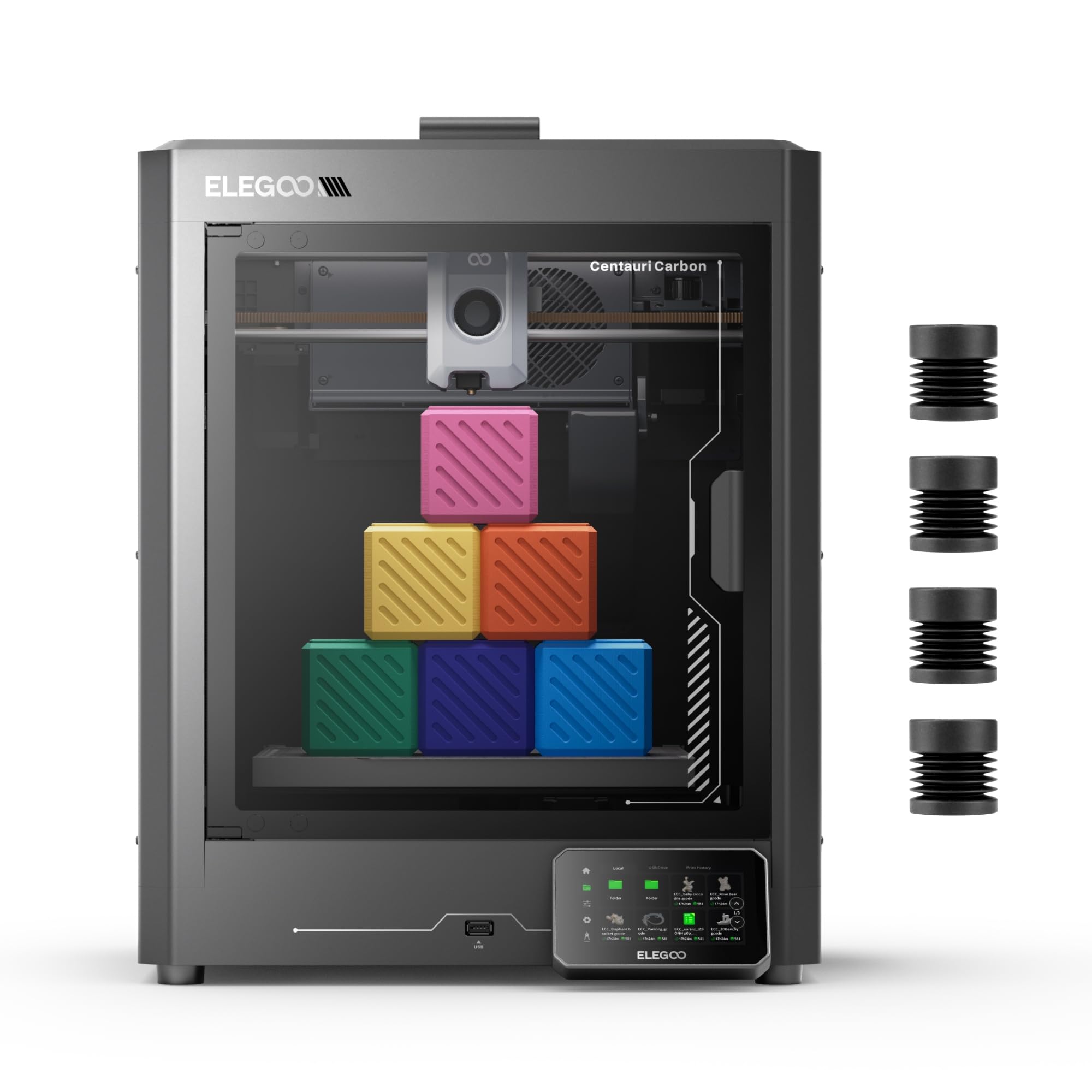
The Centauri Carbon brings a fully enclosed CoreXY design with a 320 °C hotend to a price point that previously required assembly and tuning. Out of the box, the auto bed leveling, vibration compensation, and pressure advance are pre-configured — users report starting their first print within 30 minutes of unboxing. The die-cast aluminum frame minimizes vibrations at speeds up to 500 mm/s, producing sharp corners without ghosting on functional parts.
The built-in chamber camera with dual LED lighting enables real-time monitoring and time-lapse capture without an external Raspberry Pi setup. The dual-sided build plate uses a PLA-specific surface on one side that provides excellent adhesion at lower bed temperatures, reducing energy consumption and warping risk. For users who want to print carbon-fiber reinforced filaments, the hardened steel nozzle handles abrasive materials without degradation.
Reviewers note that the machine shakes noticeably on unstable surfaces at high acceleration, and the USB-C port placement on a moving cable chain raises durability questions on units that see constant use. Still, for a home user who wants enclosed, high-speed printing without jumping to the premium tier, the Centauri Carbon delivers the best balance of speed and build quality.
Why it’s great
- Enclosed 320 °C hotend enables advanced filaments out of the box
- Die-cast frame provides exceptional stability for high-speed prints
- Built-in camera with time-lapse simplifies remote monitoring
Good to know
- Heavy 38.5-pound frame needs a sturdy dedicated table
- First-run defect rate appears slightly higher than Bambu Lab models
3. FLASHFORGE Adventurer 5M

The Adventurer 5M integrates a CoreXY motion system — rare at its price — with one-click fully automatic leveling that calibrates the entire bed before each print. The 600 mm/s maximum speed and 20,000 mm/s² acceleration place it among the fastest machines in the mid-range segment, and the 32 mm³/s flow rate from the 50W hotend means you can actually sustain those speeds without underextruding on larger models.
Flashforge includes a filament runout sensor and power loss recovery, two features that save prints from common home-use interruptions. The removable PEI steel plate works well with PLA, PETG, and TPU out of the box, and the open frame design keeps the printer accessible for maintenance and troubleshooting — an advantage for beginners who want to understand the mechanics without disassembling an enclosure.
Long-term users report excellent reliability over one year of use, though the small 220 mm³ build volume limits projects larger than a helmet or vase. The Wi-Fi connectivity is functional but less polished than Bambu Lab’s implementation, and some units ship with firmware that causes occasional touchscreen slowdowns. For the price, the Adventurer 5M offers the fastest print speeds available without requiring a premium budget.
Why it’s great
- CoreXY motion at a bed-slinger price point
- One-click leveling and fast 35-second nozzle heat-up
- Filament runout sensor and power loss recovery as standard
Good to know
- Build volume is restrictive for larger practical projects
- Wi-Fi and touchscreen firmware can be inconsistent out of the box
4. Bambu Lab P1S

The P1S upgrades the Bambu Lab formula with a fully enclosed body that handles ABS and ASA without draft-induced warping. Setup takes under 30 minutes, and the auto bed leveling routine runs before every print, ensuring consistent first layers even when moving the machine between rooms. The CoreXY motion system reaches 500 mm/s with 20,000 mm/s² acceleration, printing a benchy in about 18 minutes with minimal visible layer lines.
The integrated AMS (Automatic Material System) supports up to 16 colors using four daisy-chained units, though the multi-color transition still produces some waste from filament purging. Bambu Studio includes pre-tuned filament profiles for PLA, PETG, TPU, PVA, ABS, and ASA, with user profiles for PA and PC showing good results. The enclosed chamber also dampens noise noticeably compared to open-frame designs.
Reviewers with multiple printers rank the P1S as more reliable than previous-generation Creality and Prusa models, with one user calling it the most reliable FDM workhorse they have owned. The main trade-off is that TPU flexible filaments sometimes struggle with the AMS feeder path, and the stock hotend does not officially support carbon-fiber composites. For home users who print primarily in PLA and PETG but want the option of enclosed ABS, the P1S is a strong upgrade from the open-frame A1.
Why it’s great
- Fully enclosed design enables reliable ABS and ASA printing
- Auto leveling and filament runout detection are fully automatic
- Bambu Studio ecosystem simplifies workflow from file to print
Good to know
- AMS multi-color printing generates noticeable filament waste
- Some users report TPU feed issues with the AMS path
5. Creality K2 Combo
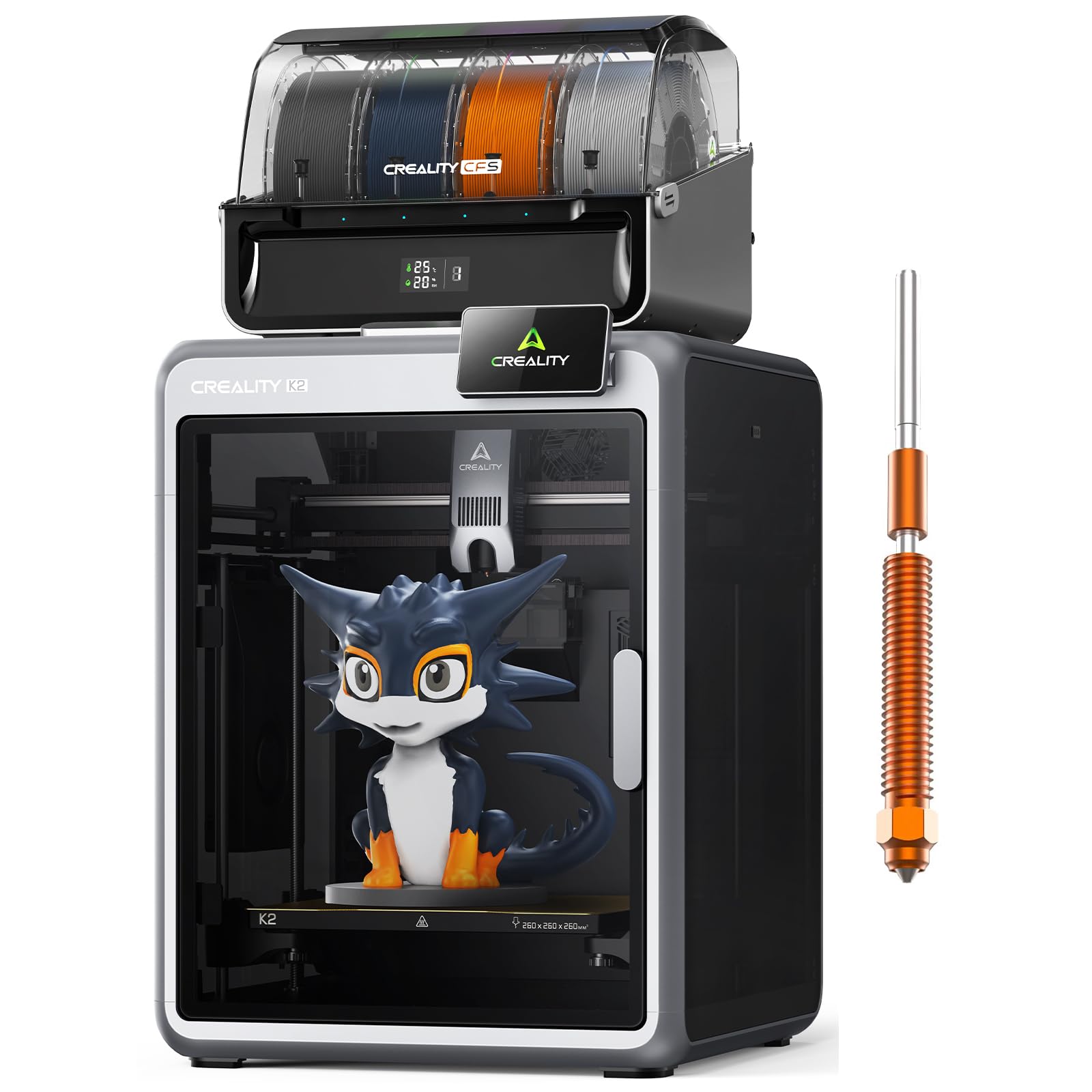
The K2 Combo is Creality’s flagship home printer, packing a 260 mm³ build volume and multi-color printing via the CFS (Creality Filament System) into a pre-assembled frame that requires only screen installation before first use. The step-servo motors on the extruder and X/Y axes provide smoother extrusion than traditional stepper motors, reducing visible layer lines at speeds up to 600 mm/s. The RFID system auto-detects Creality filaments and loads the correct print profile, removing the need to manually set temperature and retraction values.
The enclosed chamber and hardened steel drive gears handle PLA, PETG, ABS, and carbon-fiber reinforced filaments, making the K2 one of the most versatile material platforms in this price tier. The chamber AI camera detects print failures like spaghetti tangles and sends a notification to your phone, though the detection algorithm occasionally triggers false positives during rapid travel moves.
Some users note that the price on Amazon runs significantly higher than Creality’s direct store, and the CFS dryer function works only with Creality RFID spools — third-party filament requires manual drying. The 65-pound weight also demands a dedicated furniture setup. For home users who need the largest build volume in this list and want multi-color capability without Bambu Lab’s AMS premium, the K2 Combo delivers clear value.
Why it’s great
- Largest build volume in this comparison at 260 mm³
- Step-servo motors produce exceptionally smooth surface finishes
- CFS multi-color system auto-switches filament without manual intervention
Good to know
- AI failure detection has a higher false-positive rate than Bambu Lab’s system
- Significant price difference between Amazon and direct store channels
6. Original Prusa MK4S

The Prusa MK4S represents the opposite design philosophy from the appliance-like Bambu Lab approach: an open-source, fully upgradeable platform where every component can be serviced or replaced by the user. Input shaping — Prusa’s term for vibration compensation — allows the MK4S to print at higher speeds without ringing, producing sharp corners and clean overhangs that rival machines costing less. The 9.84 x 8.3 x 8.6 inch build volume is smaller than most CoreXY competitors, but the precision and consistency are exceptional.
Prusa includes a 1 kg spool of Prusament PLA Galaxy Black and lifetime technical support, which matters for home users who want a reliable backup channel rather than forum-based troubleshooting. The open ecosystem means firmware updates and hardware upgrades — like the upcoming Nextruder v2 — keep the machine relevant for years. The self-cleaning nozzle routine and intuitive menu system make it approachable for users who have never sliced a file.
Reviewers consistently praise the print quality out of the box, with one user calling it the best purchase ever despite the premium price compared to Bambu Lab and Creality flagships. The downsides are clear: the MK4S costs roughly twice as much as equivalently fast printers, and the build volume feels restrictive for home users who want to print helmets, vases, or large functional brackets. For users who prioritize reliability, repairability, and print quality over raw speed or volume, the MK4S remains the gold standard.
Why it’s great
- Industry-leading print quality with minimal post-processing needed
- Fully open-source design with long-term upgrade path
- Lifetime technical support and active community
Good to know
- Premium price, roughly double comparable speed-optimized printers
- Build volume is limited for larger home projects
7. ELEGOO Saturn 4 Ultra 16K
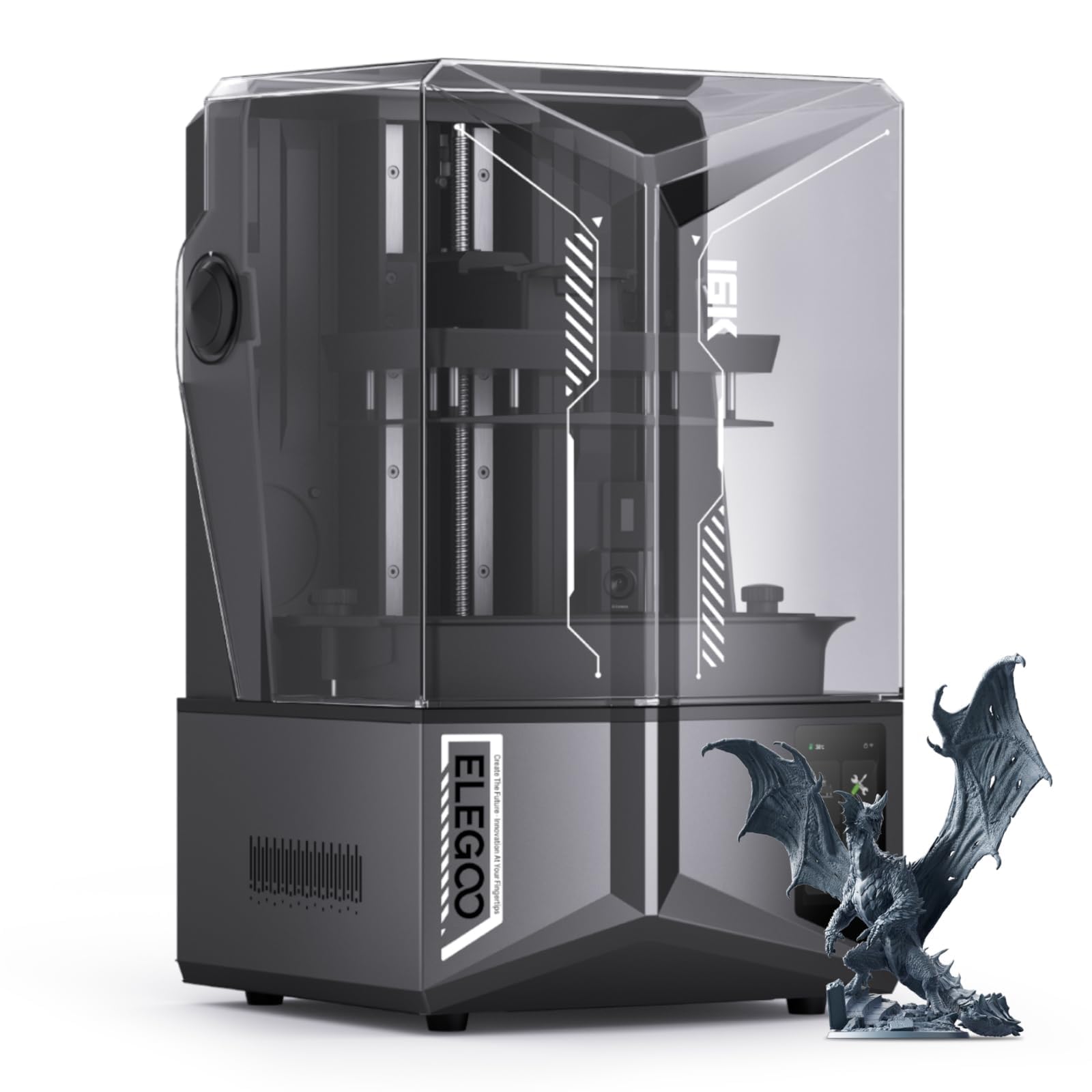
The Saturn 4 Ultra 16K shifts from FDM to resin printing, delivering layer resolutions measured in microns rather than millimeters. The 10-inch 16K monochrome LCD exposes each layer at 150 mm/h — fast for resin — while the tilt release mechanism peels each cured layer from the FEP film without the traditional slow lift-and-peel cycle. The result is miniatures, jewelry molds, and dental models with smooth surfaces that require no sanding.
Smart tank heating keeps the resin at a stable 30 °C, reducing viscosity-related defects like bubbles and layer separation. The AI camera monitors the build plate and alerts you if a print detaches or if resin runs low, though detection accuracy varies with lighting and resin color. Auto leveling is genuinely plug-and-play — the machine calibrates itself on first power-up without any manual screw adjustment.
Resin printing introduces trade-offs that home users must accept: post-processing requires washing and UV curing, resin has a distinct odor that demands ventilation, and disposal of liquid resin waste follows specific protocols. Reviewers with Zero prior 3D printing experience report fantastic detail out of the box, but the Saturn 4 Ultra is best suited for home users who specifically need high-detail models — tabletop gaming, cosplay props, or prototyping intricate geometries — rather than general-purpose printing.
Why it’s great
- 16K resolution delivers detail unmatched by any FDM printer
- Smart tank heating reduces failed prints from cold resin
- Tilt release technology enables faster print speeds than traditional resin printers
Good to know
- Post-processing and ventilation requirements are more involved than FDM
- Build volume is smaller than most FDM competitors in its price tier
8. Entina Tina2 Plus

The Tina2 Plus removes every barrier to entry for a first-time 3D printer owner. It arrives fully assembled — no frame building, no belt tensioning, no wiring — and with a TF card preloaded with models, a child can start printing within minutes. The 40-second ceramic hotend heats up faster than most metal hotends, keeping short attention spans engaged. The partially enclosed frame separates moving and hot components from direct contact, making it safer for supervised home use with kids.
The Poloprint Cloud app provides access to over 1,500 models designed for STEM learning, including articulated animals, gears, and name tags. The dual Z-axis and PEI spring steel build plate improve adhesion and stability compared to older mini printers. Print speeds reach 250 mm/s, which is competitive with larger machines despite the compact 11.4 x 8.6 x 8.6 inch footprint.
However, the Tina2 Plus relies heavily on its companion app for WiFi printing, and several users report the app becoming unavailable or failing to register the printer after a few prints. Without the app, the printer still works via TF card, but the WiFi functionality that makes it convenient becomes a frustration point. For families who want a supervised, low-risk introduction to 3D printing, the Tina2 Plus works well as long as you treat the app as a bonus rather than the primary control method.
Why it’s great
- Truly ready out of the box with no assembly required
- Fast 40-second hotend heating reduces idle time
- Compact design with protective frame is safer for kid-supervised use
Good to know
- WiFi app connectivity is unreliable after initial setup
- Limited to small projects due to compact build volume
9. Geeetech M1S
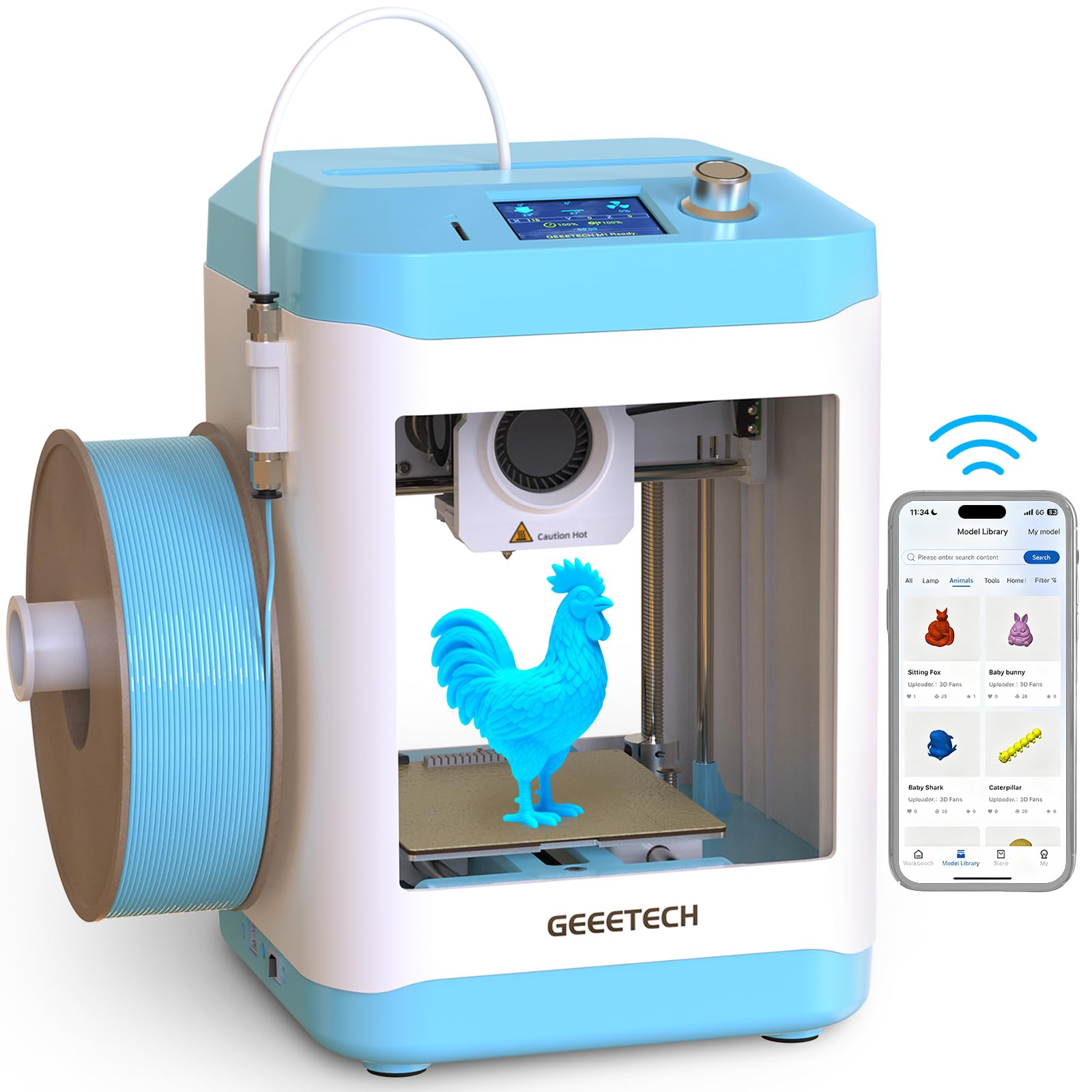
The Geeetech M1S is the smallest printer in this comparison — its 100 x 110 x 100 mm build volume fits in a desk drawer — and it is designed for users with extremely limited space. The dual-drive metal extruder with a 1:5 gear ratio provides enough torque to print flexible TPU filaments, a capability rarely seen in mini printers. The 16-point full-auto leveling system measures the bed across more points than most full-size machines, ensuring a uniform first layer despite the tiny platform.
The 2.4-inch color LCD screen and high-brightness LED lighting make the printing process visible and accessible for children and classroom settings. The magnetic PEI build plate flexes for easy model removal without scraping. Geeetech includes a 12-month free repair warranty and lifetime technical support, which is unusually generous for the entry-level segment.
The M1S ships with a 0.5 kg spool holder, and STL files for a 1 kg holder are available online — something buyers should factor into their planning. The app-based printing worked well for most reviewers, though WiFi reconnection after a power cycle sometimes required waiting 36-48 hours before the printer reappeared. For home users who want the absolute smallest footprint possible and do not need to print objects larger than a chess piece, the M1S offers reliable entry-level performance at a budget-friendly price.
Why it’s great
- Tiniest footprint in this category — fits on any desk or shelf
- 16-point auto-leveling ensures consistent first layers on a small bed
- 12-month warranty and lifetime support above entry-level norms
Good to know
- Build volume limits projects to very small models
- WiFi reconnection can take days after power interruption
FAQ
Can a 3D printer sit on a regular desk without causing damage?
What is the difference between FDM and resin printing for home use?
Do I need an enclosure for a home 3D printer?
How much filament should I buy with my first printer?
Is it safe to leave a 3D printer running overnight?
Final Thoughts: The Verdict
For most users, the 3d printer for home use winner is the Bambu Lab A1 because it combines full-auto calibration, quiet operation, and multi-color capability in a package that requires zero technical knowledge to operate. If you want enclosed high-speed printing with advanced materials, grab the ELEGOO Centauri Carbon. And for budget-conscious families introducing kids to 3D printing for the first time, nothing beats the pre-assembled simplicity of the Entina Tina2 Plus.