
Pushing nylon filament through a standard 3D printer is often a recipe for clogs, layer separation, and curled corners that ruin a day’s work. The high extrusion temperature and hygroscopic nature of PA materials demand hardware that most entry-level machines simply cannot provide. A dedicated setup with a hardened hotend, actively heated chamber, and precise flow control turns this frustrating material into a reliable workhorse.
I’m Rikta — the co-founder and writer behind FitlyFast. I’ve spent months dissecting extruder designs, chamber thermal profiles, and motion system rigidity to pinpoint which printers truly handle nylon without constant babysitting.
This guide ranks nine machines that can reliably process PA, PA-CF, and other high-temp nylons, helping you identify the core specs that separate a capable printer from a constant failure point. I’ve evaluated each model for its ability to print 3d printer for nylon applications without warping or jamming.
How To Choose The Best 3D Printer For Nylon
Selecting a printer for nylon means looking past the marketing specs and focusing on the thermal and mechanical requirements that PA filaments demand. Not every enclosed printer is ready for the consistent 260-290°C extrusion and the slow, temperature-stable environment nylon needs.
Nozzle Temperature Ceiling
A standard PTFE-lined hotend degrades above 240°C, releasing fumes and causing clogs. For nylon, you need an all-metal hotend that reaches at least 300°C. A hardened steel nozzle is also critical because many nylon blends contain abrasive carbon or glass fibers that wear out brass tips within a few spools.
Chamber Enclosure and Active Heating
Nylon shrinks aggressively as it cools, leading to warping and layer delamination. A passive enclosure helps trap ambient heat, but an actively heated chamber that maintains 50-60°C provides the stable thermal envelope necessary for large nylon parts. Printers without chamber heating can still print small nylon objects if the room is warm and drafts are blocked.
Motion System Rigidity and Drying Support
Nylon absorbs moisture from the air within minutes, which causes bubbling and weak layer adhesion during printing. A printer with an active filament drying system or support for a drybox keeps the material in its optimal state. Additionally, a rigid frame — whether CoreXY or a reinforced gantry — minimizes vibration artifacts that become visible in nylon’s translucent layers.
Quick Comparison
On smaller screens, swipe sideways to see the full table.
| Model | Category | Best For | Key Spec | Amazon |
|---|---|---|---|---|
| ELEGOO Centauri Carbon | Mid-Range | CoreXY Speed & Value | 320°C Nozzle | Amazon |
| FLASHFORGE Adventurer 5M Pro | Mid-Range | Beginner-Friendly Entry | 280°C Nozzle | Amazon |
| FLASHFORGE AD5M Pro (Updated) | Mid-Range | Quick-Swap Nozzles | 280°C Nozzle | Amazon |
| Anycubic Kobra S1C | Mid-Range | Multi-Color & Drying | Built-in Filament Dryer | Amazon |
| Bambu Lab P1S Combo | Premium | Reliable Closed Ecosystem | Enclosed 500mm/s CoreXY | Amazon |
| Creality K2 Combo | Premium | Multi-Color Engineering | 300°C Nozzle, CFS | Amazon |
| Creality K2 Plus Combo | Premium | Large-Format Nylon Parts | 350mm Active Chamber | Amazon |
| Raise3D E2 | Pro | IDEX Dual-Material | IDEX, 300°C Nozzle | Amazon |
| Original Prusa XL 5T | Industrial | 5-Tool Multi-Material | 360mm Segmented Bed | Amazon |
In‑Depth Reviews
1. Bambu Lab P1S Combo
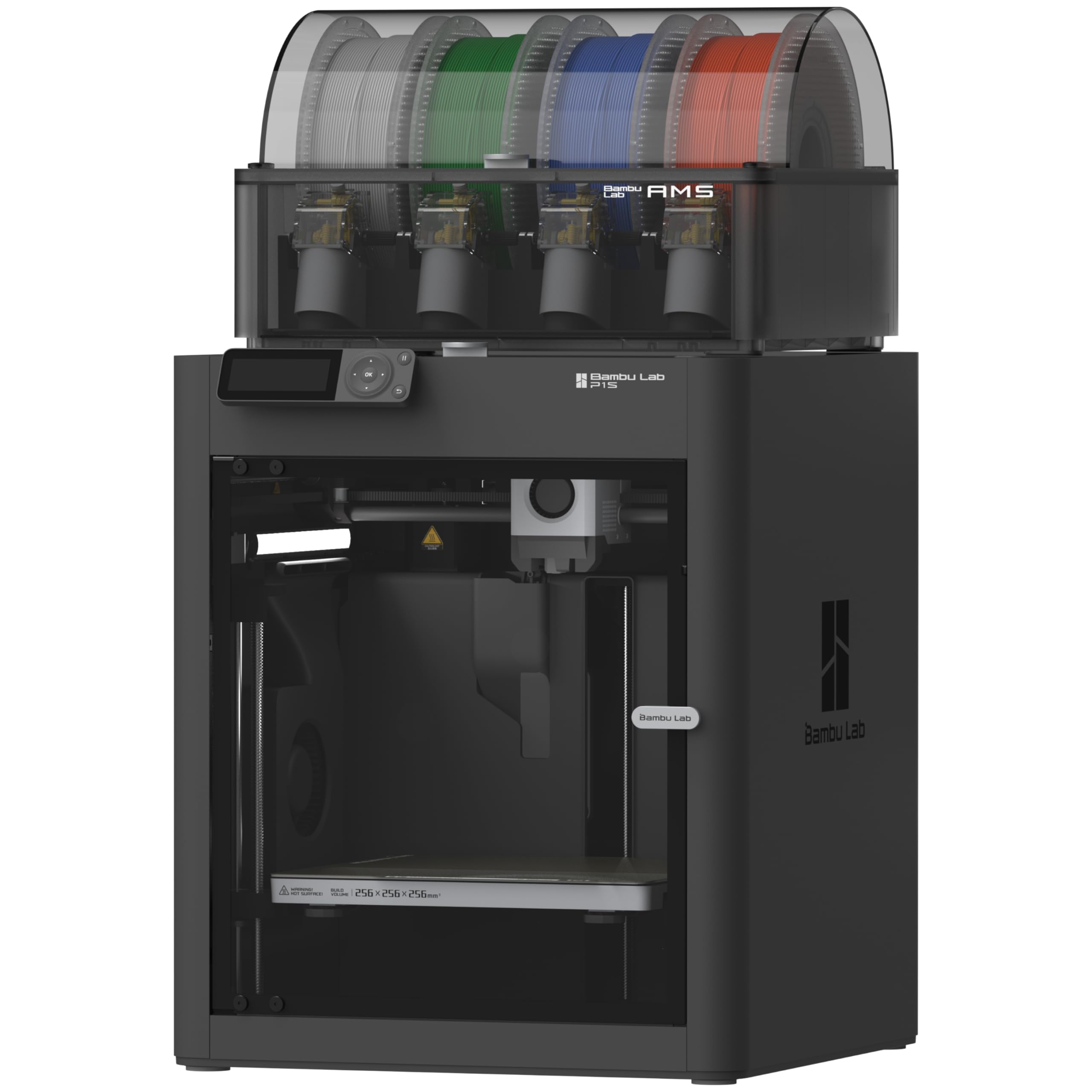
The Bambu Lab P1S Combo is the most plug-and-play solution for printing nylon in a home shop or small office. Its fully enclosed CoreXY frame reaches 500mm/s, and the 300°C capable all-metal hotend handles PA and PA-CF without modification. The automatic bed leveling and 15-minute setup let you focus on material tuning rather than printer calibration.
The inclusion of the AMS unit is a bonus for multi-material prints, but the real nylon-specific advantage is the thermal stability the enclosure provides. Users report consistent first-layer adhesion with PA at 260°C and a bed temperature of 100°C. The P1S is rated for PA and PC, but the manufacturer explicitly warns against carbon or glass fiber reinforced polymers, which limits its abrasive-filament versatility.
For a mid-market price, you get a rigid chassis, excellent software ecosystem, and near-zero failure rate out of the box. The P1S isn’t the cheapest option, but the reliability it offers makes it the strongest mid-range value for nylon enthusiasts who want to skip the tuning phase.
Why it’s great
- Fully enclosed design with excellent thermal retention for nylon.
- Fast 500mm/s speed without sacrificing layer quality.
- AMS enables seamless multi-color and support-material printing.
Good to know
- Not recommended for carbon/glass fiber reinforced filaments.
- Closed ecosystem may limit advanced user modifications.
2. Creality K2 Combo
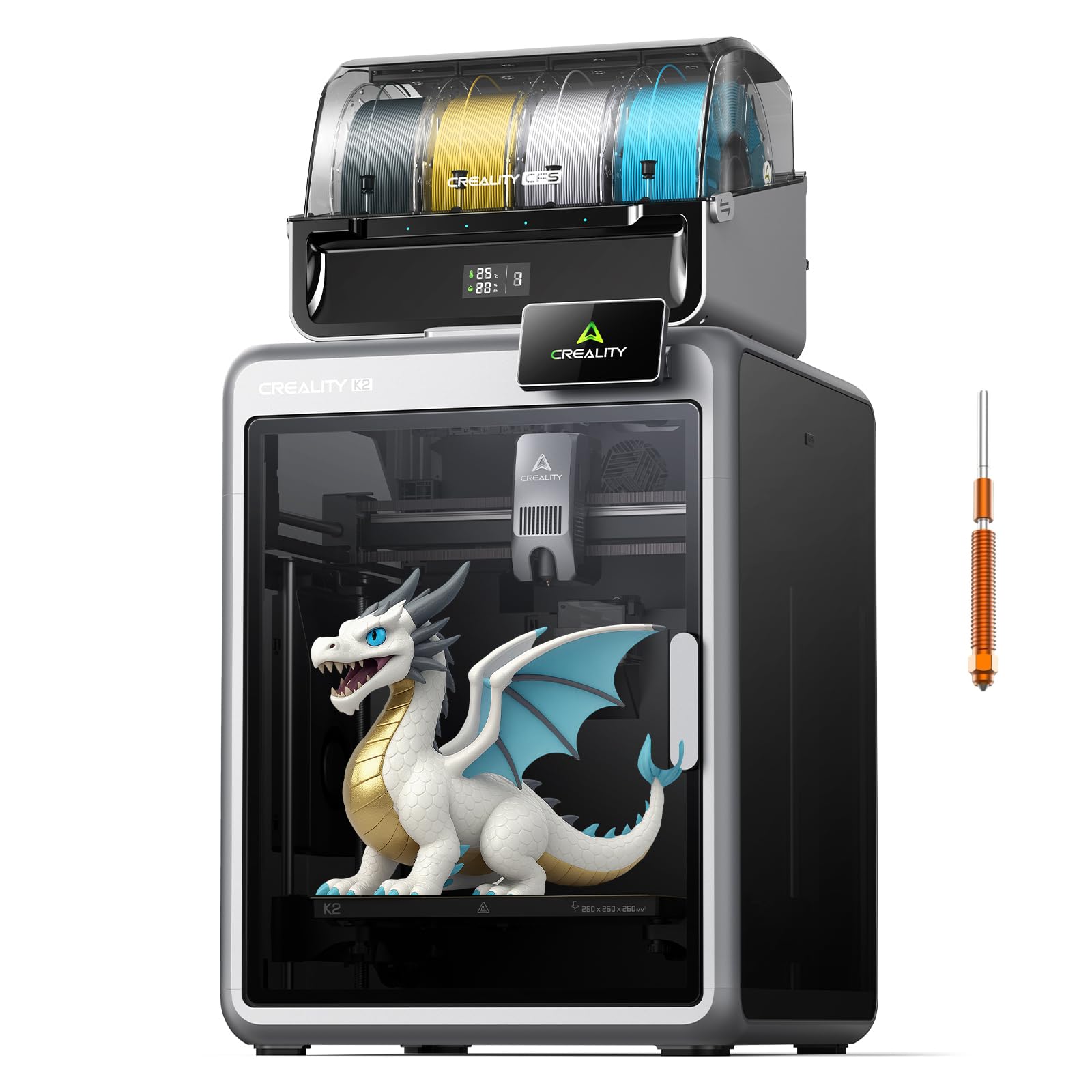
Creality’s K2 Combo brings a well-rounded package for nylon users who also want multi-color capability. The 300°C hardened steel nozzle and high-flow hotend (40 mm³/s) directly support PA and PA-CF, while the CFS filament system automatically identifies material and manages drying. The enclosed chamber and smart auto-leveling significantly reduce the setup friction that nylon printers typically cause.
The 600mm/s maximum speed and 20,000 mm/s² acceleration are paired with an aerospace-grade aluminum frame that minimizes vibration artifacts on large nylon parts. The AI camera adds real-time failure detection, which is particularly useful during long overnight prints. Users praise the reliable first-layer calibration and the quiet Silent Mode operation.
Some early units have reported XY calibration errors, though the support process resolves most issues. The K2 Combo strikes a strong balance between speed, material versatility, and user-friendly automation, making it a top contender for both hobbyists and prototyping workflows.
Why it’s great
- Hardened steel nozzle at 300°C handles abrasive nylon blends.
- CFS provides automatic filament drying and color switching.
- Rigid frame and smart leveling ensure consistent first layers.
Good to know
- Occasional calibration reports from early adopters.
- Noise level is acceptable but not silent at full speed.
3. Creality K2 Plus Combo

The K2 Plus Combo is purpose-built for large-format nylon prints where warping is the biggest obstacle. Its actively heated chamber maintains a stable 50-60°C environment, which dramatically reduces the internal stress that causes PA parts to curl. The 350mm cubic build volume is one of the largest available for a desktop printer, letting you produce end-use components without scaling down designs.
Dual AI cameras monitor for spaghetti failures and idling, sending alerts when something goes wrong during long prints. The step-servo motor system delivers 30,000 mm/s² acceleration while maintaining silent operation. The CFS unit supports up to 16 materials, so you can print nylon alongside water-soluble supports for complex geometries. Users moving from an Ender 3 or 5 report the K2 Plus is a night-and-day upgrade in reliability.
Assembly requires two people due to its heavy frame, and some documentation gaps exist for initial setup. Once dialed in, the K2 Plus is a production-grade machine capable of handling PA-CF and PPA-CF at industrial speeds without layer defects.
Why it’s great
- Actively heated chamber prevents nylon warping on large prints.
- 350mm cubic build volume for jumbo functional parts.
- Handles PA-CF and PPA-CF without modification.
Good to know
- Heavy machine that requires two people to unpack.
- Setup documentation could use more detail.
4. ELEGOO Centauri Carbon

The ELEGOO Centauri Carbon packs surprising nylon capability into a budget-friendly CoreXY package. With a 320°C brass-hardened steel nozzle and enclosed chamber, it supports carbon fiber reinforced nylon right out of the box. The die-cast aluminum frame minimizes vibration at 500mm/s, delivering smooth first layers even on tall prints. Users report excellent bed adhesion and minimal warping when using the pre-configured ABS profiles as a baseline for PA tuning.
Auto bed leveling and pressure advance compensation are standard, removing the most common sources of first-layer failure with nylon. The built-in camera captures time-lapses and allows remote monitoring through the ELEGOO ecosystem. The dual-sided build plate features a PLA-specific surface on one side and a textured PEI surface on the other, giving you options for different nylon blends.
Some units have experienced hotend communication failures within the first week, and support response times are slower than ideal for US customers. Despite these early reliability concerns, the Centauri Carbon offers the highest nozzle temperature in its class, making it a strong candidate for budget-constrained nylon experimentation.
Why it’s great
- 320°C hardened nozzle handle abrasive nylons without upgrades.
- Die-cast frame provides vibration-free printing at high speeds.
- Fully assembled and pre-calibrated right out of the box.
Good to know
- Some early units reported hotend failures within first week.
- Tech support response is slow for North American customers.
5. Anycubic Kobra S1C

Anycubic’s Kobra S1C tackles the biggest hidden problem in nylon printing — moisture absorption — with a built-in active filament drying system. The printer uses dedicated drying parameters for various materials, keeping PA spools in peak condition before they reach the hotend. This is critical for nylon, which turns brittle and stringy after just a few hours in humid air. The enclosed chamber maintains a stable temperature for ABS and ASA as well, making it a versatile choice for engineering materials.
The 600mm/s CoreXY motion system combined with one-click auto-leveling and vibration compensation produces sharp nylon parts without manual tweaking. The quick-swap nozzle design allows for 3-second changes between standard and hardened steel tips, so you can switch between PLA and PA-CF without downtime. The ACE Pro unit supports up to 8-color multi-material printing for complex support structures.
Some users find the ACE Pro has difficulty with matte PLA and bent filament ends, and the camera resolution is lower than ideal for detailed monitoring. Overall, the built-in dryer is a game-changer for those who don’t want to invest in a separate filament dehydrator.
Why it’s great
- Integrated filament dryer prevents moisture-related print failures.
- 600mm/s CoreXY speed with excellent vibration compensation.
- Quick-swap nozzles enable fast material transitions.
Good to know
- ACE Pro has known issues with matte PLA and bent filament tips.
- Camera is low resolution for detailed remote monitoring.
6. FLASHFORGE Adventurer 5M Pro

The FlashForge Adventurer 5M Pro is designed for users who want to print nylon without a steep learning curve. Its 280°C all-metal hotend and direct-drive extruder handle PA at lower temperatures than some competitors, but this also means you’re restricted to non-abrasive nylon blends. The CoreXY frame and 600mm/s travel speed produce fast results, and the automatic bed leveling ensures a consistent first layer.
The HEPA and dual circulation system filters VOCs during printing, making it suitable for indoor classrooms or apartments where nylon fumes are a concern. The Flash Maker mobile app provides remote monitoring and alerts, adding convenience for busy users. Setup takes about 30 minutes, and the printer is fully enclosed to maintain chamber warmth.
Software compatibility can be frustrating on the latest macOS versions, and some users report filament feeding issues with the direct-drive extruder on the first batch of units. The 280°C ceiling is also lower than ideal for high-temp PA blends like PA-G or PA-CF, limiting its future-proofing for advanced materials.
Why it’s great
- HEPA filtration system makes nylon printing safer indoors.
- Automatic bed leveling eliminates manual calibration for beginners.
- Quick 10-minute unbox-to-print experience.
Good to know
- 280°C hotend cannot handle carbon-fiber reinforced nylon.
- Software installation can be problematic on the latest macOS.
7. FLASHFORGE AD5M Pro (2025)

The updated FlashForge AD5M Pro iteration brings a 3-second quick-swap nozzle system that lets you switch between 0.4mm and 0.6mm tips for different nylon flow rates. This is especially useful when you want to rough-print a PA prototype with a 0.6mm nozzle for speed and then switch to a 0.4mm for detail. The CoreXY structure maintains 600mm/s speeds with built-in vibration compensation for consistent layer quality.
The fully enclosed chamber with dual-layer filtration blocks dust and smoke, making it classroom-friendly. The direct-drive extruder handles TPU smoothly but also works well with PA blends that require consistent filament tension. Users report excellent print quality for functional prototypes, with minimal maintenance required over extended use.
Some buyers experienced extruder failures within the first three prints, and customer support responses have been inconsistent. The 280°C temperature cap again limits compatibility with high-temperature or abrasive nylons. The AD5M Pro is a solid choice for PLA and standard PA users, but not for those pushing the material limits of nylon.
Why it’s great
- Quick-swap nozzles allow fast changes between material profiles.
- Dual-layer filtration for safer operation in enclosed spaces.
- Direct-drive extruder provides consistent pressure for flex materials.
Good to know
- Some units suffer from extruder failure within first few prints.
- Temperature ceiling too low for PA-CF and high-temp blends.
8. Raise3D E2

The Raise3D E2 is built for professional environments that need independent dual extruder (IDEX) capability for multi-material nylon parts. You can print two separate PA objects simultaneously in Duplication Mode, or mirror a model for symmetrical parts. The 300°C hotend is compatible with PA, PC, and carbon fiber infused nylon, and the flexible build plate simplifies removal of tough nylon prints that bond aggressively to the bed.
Auto bed leveling and video-assisted offset calibration guide users through the alignment process, which is critical when you’re printing with two extruders on the same gantry. The 7-inch touchscreen interface is intuitive, and the power-loss recovery and filament run-out sensors protect long overnight nylon jobs. The HEPA filtration system keeps the workspace clear of particulates.
Customer reviews reveal a split experience: some users call it a night-and-day upgrade from budget dual-extruder machines, while others report 90% failure rates and unresponsive support. The printer costs significantly more than most desktop options, making it a risky purchase for those who cannot afford downtime. For reliable IDEX nylon production, consider the Prusa XL as a more consistent alternative.
Why it’s great
- IDEX system lets you print two nylon parts simultaneously.
- 300°C hotend supports PA, PC, and carbon fiber blends.
- Intuitive 7-inch touchscreen with guided calibration.
Good to know
- Inconsistent quality control leads to high failure rates for some units.
- Support responsiveness is unreliable, especially for third-party purchases.
9. Original Prusa XL 5 Independent Toolhead
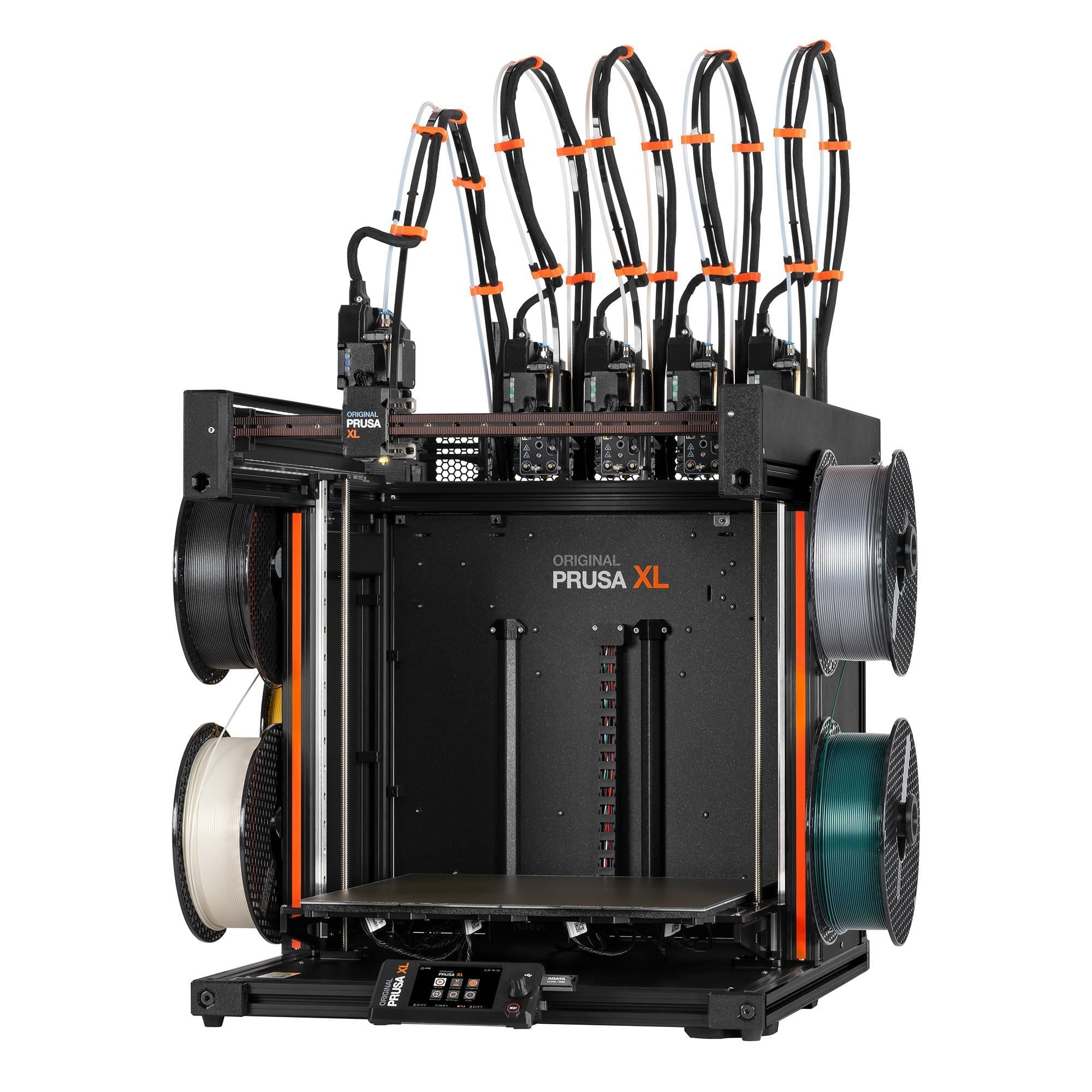
The Prusa XL 5 Independent Toolhead is the gold standard for multi-material nylon printing, with five independent extruders that can switch materials mid-print without cross-contamination. The 360mm cubic build volume is paired with a segmented heated bed that zones its energy output, reducing warping on large PA parts by only heating the area under the print. The CoreXY motion system maintains speed and precision even during frequent tool changes.
Prusa’s open ecosystem with no forced updates or logins gives full control to professional users who need to tune extrusion parameters for specialty nylons. The printer supports PA, PA-CF, and other engineering materials without restrictions, and the lifetime technical assistance from Prusa Research provides a safety net that budget brands lack. The ready-to-print package includes a satin print sheet and a spool of Prusament PLA for initial testing.
The assembly process is more involved than expected — the extruders, LCD, and Wi-Fi antenna ship separately for safe transport. Some units arrive with plastic parts broken in transit. The price is the highest in this roundup, but the Prusa XL justifies its cost through reliability, open-source software, and commercial-grade support infrastructure that keeps output consistent.
Why it’s great
- Five independent toolheads for true multi-material nylon parts.
- Segmented heated bed reduces warping on large-area prints.
- Open ecosystem with lifetime support and no forced updates.
Good to know
- Assembly requires half a day for proper setup.
- Highest price point in this category; not for casual use.
FAQ
Can I print nylon on an open-frame printer?
Is a hardened steel nozzle required for nylon?
Do I need a separate filament dryer for nylon?
Final Thoughts: The Verdict
For most users, the best 3d printer for nylon is the Creality K2 Combo because it combines a 300°C hardened nozzle, enclosed chamber, and multi-color CFS system at a price that undercuts premium competitors while delivering reliable PA output. If you want the most trouble-free out-of-box experience with proven community support, grab the Bambu Lab P1S Combo. And for large-format industrial nylon parts, nothing beats the Original Prusa XL 5T with its segmented bed, five independent toolheads, and lifetime technical support.