
The jump from a sub- clunker to a sub-$600 speed demon is larger than the price tag suggests. At this budget, you’re leaving behind the era of manual bed leveling and 50mm/s prints for CoreXY motion systems, auto-calibration, and print speeds that rival machines costing twice as much. The challenge is no longer *if* the printer works, but which specific trade-off—enclosure, build volume, multicolor capability—matters most to you.
I’m Rikta — the co-founder and writer behind FitlyFast. I’ve spent months analyzing the hardware specs, user firmware experiences, and real-world failure rates of the 3D printers that dominate this exact price bracket.
This guide breaks down nine of the best options, from beginner-friendly plug-and-play units to enclosed workhorses for advanced materials, so you can confidently choose the 3d printer under $600 that fits your actual workshop needs and skill level.
How To Choose The Best 3D Printer Under $600
The -$600 gap is where consumer 3D printers shed their hobbyist reputation and gain serious capabilities. You need to assess your material goals, acceptable noise levels, and how much tinkering you actually enjoy. The right choice hinges on three key differentiators.
CoreXY vs. Bedslinger Motion Systems
A bedslinger moves the print bed on the Y-axis, which limits speed as the bed’s mass increases, causing layer shifts. CoreXY printers move the print head using two synchronized belts on a stationary gantry, allowing much higher accelerations (up to 20,000 mm/s²) and speeds (600 mm/s) without sacrificing accuracy. For this budget, a CoreXY machine like the Sovol SV06 ACE or the FLASHFORGE Adventurer 5M is a clear choice if you value speed and stability.
Enclosed Chamber vs. Open Frame
An open-frame printer is fine for PLA and PETG, but it struggles with ABS, Nylon, or Polycarbonate, which require a stable, warm environment to prevent warping and layer separation. The QIDI Q2, with its 65°C heated chamber and advanced filtration, is the only true enclosed option at this price point. If you plan to print engineering-grade materials, the enclosure is not optional—it’s the spec that defines the machine’s capability.
Multicolor Printing: AMS vs. Manual Swaps
Multicolor capability adds significant complexity and cost. Dedicated systems like the Bambu Lab A1 Combo or the Anycubic Kobra X handle filament changes automatically. The Kobra X is native four-color, while the A1 uses the AMS Lite. These systems improve convenience but require more purge waste and maintenance. For single-color work, the Creality Ender 3 V3 Plus offers a larger build volume without the extra hardware.
Quick Comparison
On smaller screens, swipe sideways to see the full table.
| Model | Category | Best For | Key Spec | Amazon |
|---|---|---|---|---|
| Bambu Lab A1 Combo | Multicolor | Plug-and-play multicolor | 10,000 mm/s² acceleration | Amazon |
| QIDI Q2 | Enclosed Pro | Engineering materials | 65°C heated chamber | Amazon |
| Anycubic Kobra X | Multicolor | Native 4-color printing | 600mm/s, 19-color expandable | Amazon |
| Elegoo Centauri Carbon | CoreXY Fast | Speed & rigidity | Die-cast aluminum frame | Amazon |
| Creality Ender 3 V3 Plus | Large Build | Big prints & batches | 300mm³ build volume | Amazon |
| Sovol SV06 ACE | Open Source | Klipper & customization | 20,000 mm/s² acceleration | Amazon |
| Flashforge Adventurer 5M | Entry Speed | Ultra-fast first print | 600mm/s, 10 min setup | Amazon |
| Creality Ender 3 V3 KE | Bedslinger | Budget speed | 500mm/s, Sprite extruder | Amazon |
| Entina Tina2 Plus | Kids/Education | Beginners & classroom | 250mm/s, fully assembled | Amazon |
In‑Depth Reviews
1. Bambu Lab A1 Combo + LED Lamp Kit
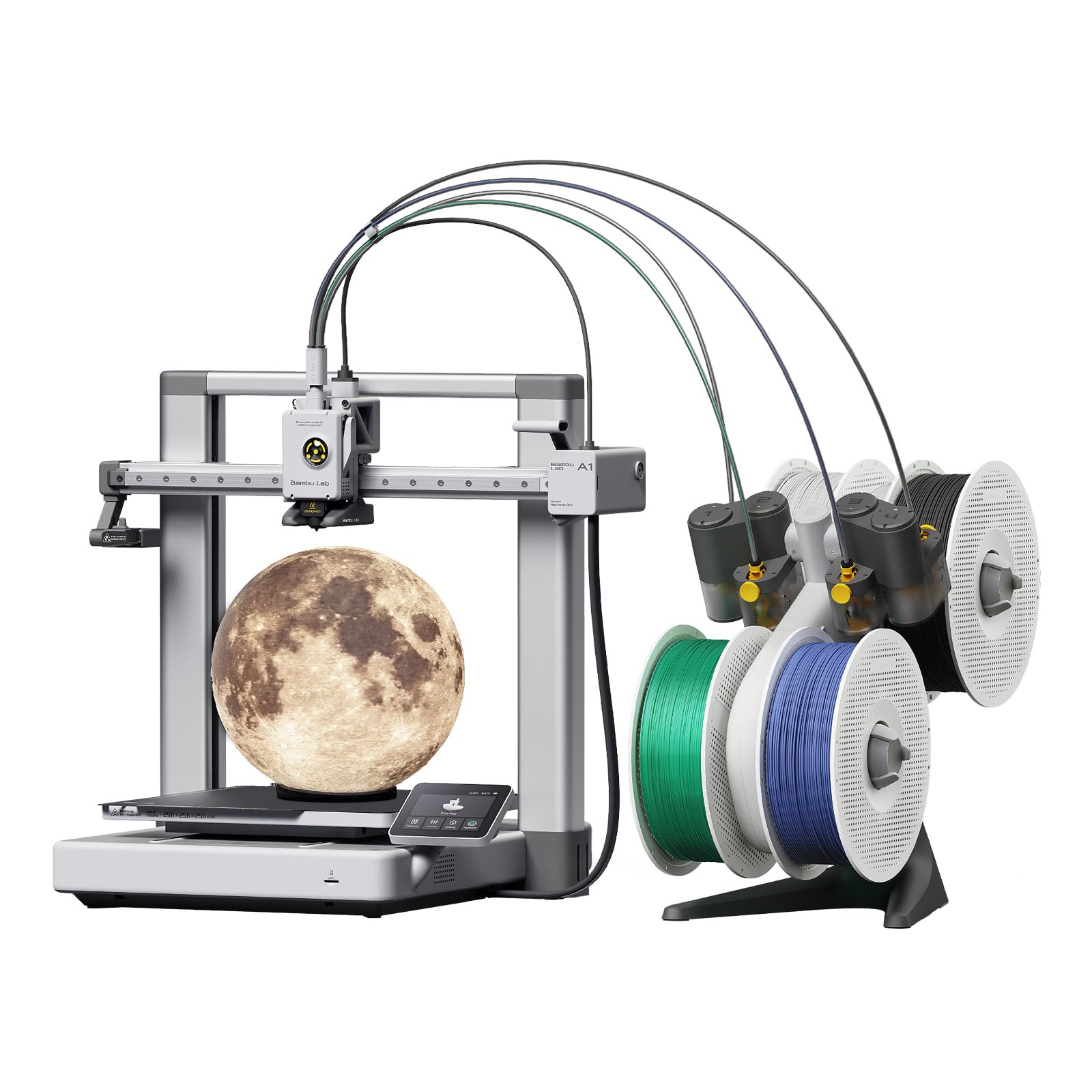
The Bambu Lab A1 Combo redefines the entry experience with its AMS Lite, enabling automatic filament swapping for four-color prints without manual intervention. Active motor noise cancelation keeps the machine whisper-quiet (under 48 dB), and the full-auto calibration handles everything from bed leveling to flow rate compensation, so you can spend time creating rather than tweaking.
Print quality is exceptional for an open-frame bedslinger; the 10,000 mm/s² acceleration delivers fast, detailed prints with smooth surface finishes. The included LED Lamp Kit adds a functional lighting project to your first prints, showcasing the machine’s capability right out of the box. The app-based monitoring with camera and time-lapse is genuinely useful for remote checks.
The AMS Lite works seamlessly with PLA and PETG, but it lacks a dry box, so humidity-sensitive materials like Nylon will need separate storage. Users report the printer is so reliable that they run it nonstop, but the included sample filament is minimal — order several spools of your preferred brand alongside the printer to avoid interruption.
Why it’s great
- Truly plug-and-play setup; prints right out of the box.
- Incredibly quiet operation for a FDM printer.
- Multicolor capabilities add immense creative potential.
Good to know
- AMS Lite is open, so filament absorbs humidity over long prints.
- Only includes one tiny sample spool of filament.
- Lacks a heated chamber for advanced materials.
2. QIDI Q2 3D Printer
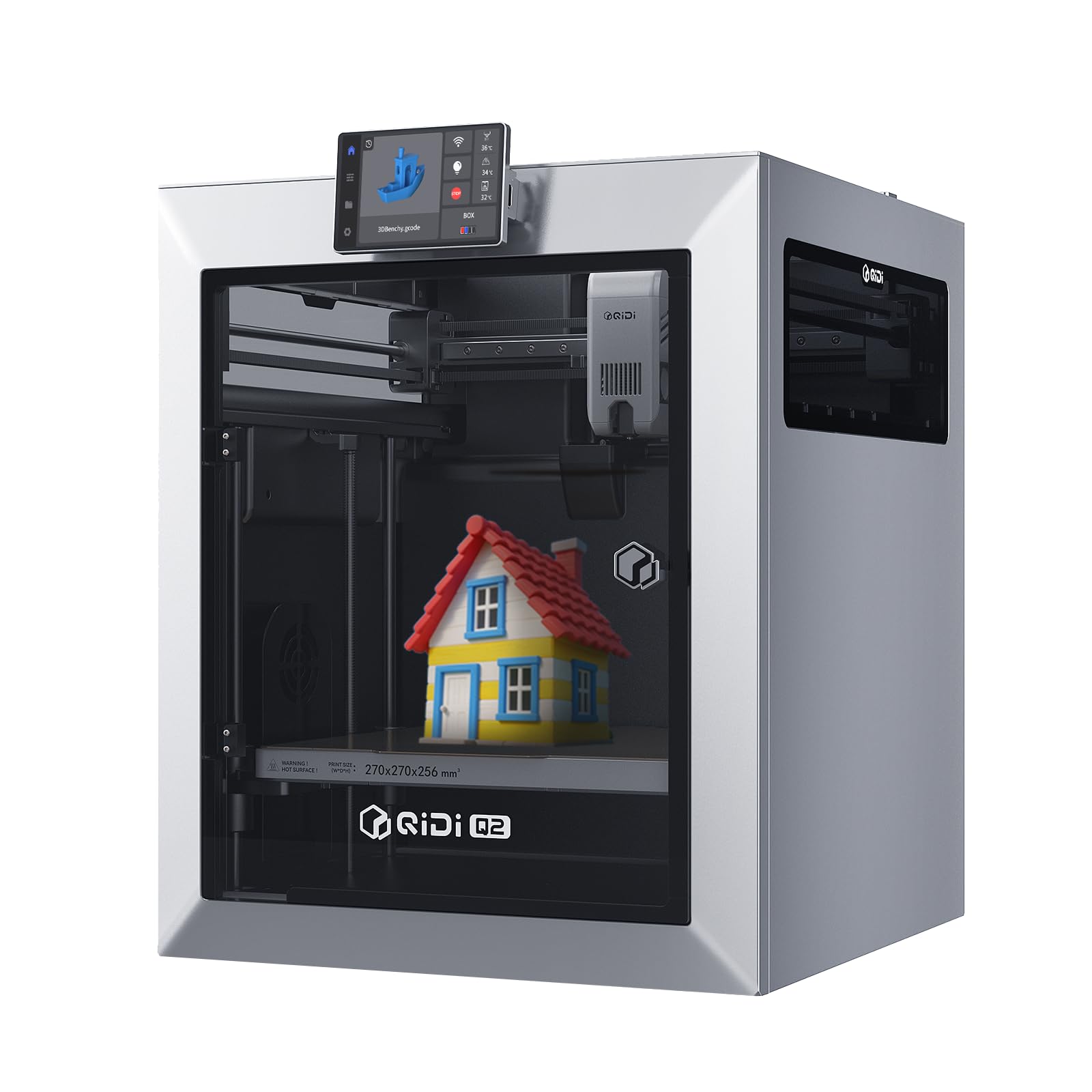
The QIDI Q2 is the only fully enclosed printer in this price range with a heated chamber, reaching 65°C to prevent warping on ABS, Nylon, and Polycarbonate. The full-metal CoreXY frame with 1.5GT synchronous belts and a 370°C nozzle makes it a legitimate workhorse for anyone moving beyond basic PLA prototypes into functional, heat-resistant parts.
Its triple filtration system (G3 pre-filter, HEPA, and activated carbon) makes it safe for indoor use even with materials that produce fumes. The AI camera detects failures like spaghetti tangles, though users report the detection is overly sensitive and sometimes stops good prints. Setup takes under 20 minutes, and the auto-leveling uses the nozzle as a sensor for exceptional first-layer accuracy.
When paired with the QIDI BOX, you can expand to 16-color multicolor printing with built-in desiccant drying. The Q2 ships with a 1080p camera and supports cloud connectivity via QIDI’s app. Users consistently praise the print quality and responsive customer support, though a few caution that the firmware UI has minor English translation quirks and the initial setup macro runs longer than expected.
Why it’s great
- Heated chamber unlocks engineering-grade materials.
- Triple filtration system for safe indoor use.
- High-temp 370°C nozzle for advanced composites.
Good to know
- AI spaghetti detection can produce false stops.
- Must remove foam blocks under the plate before first use.
- Heavier and bulkier than open-frame alternatives.
3. Anycubic Kobra X Multicolor
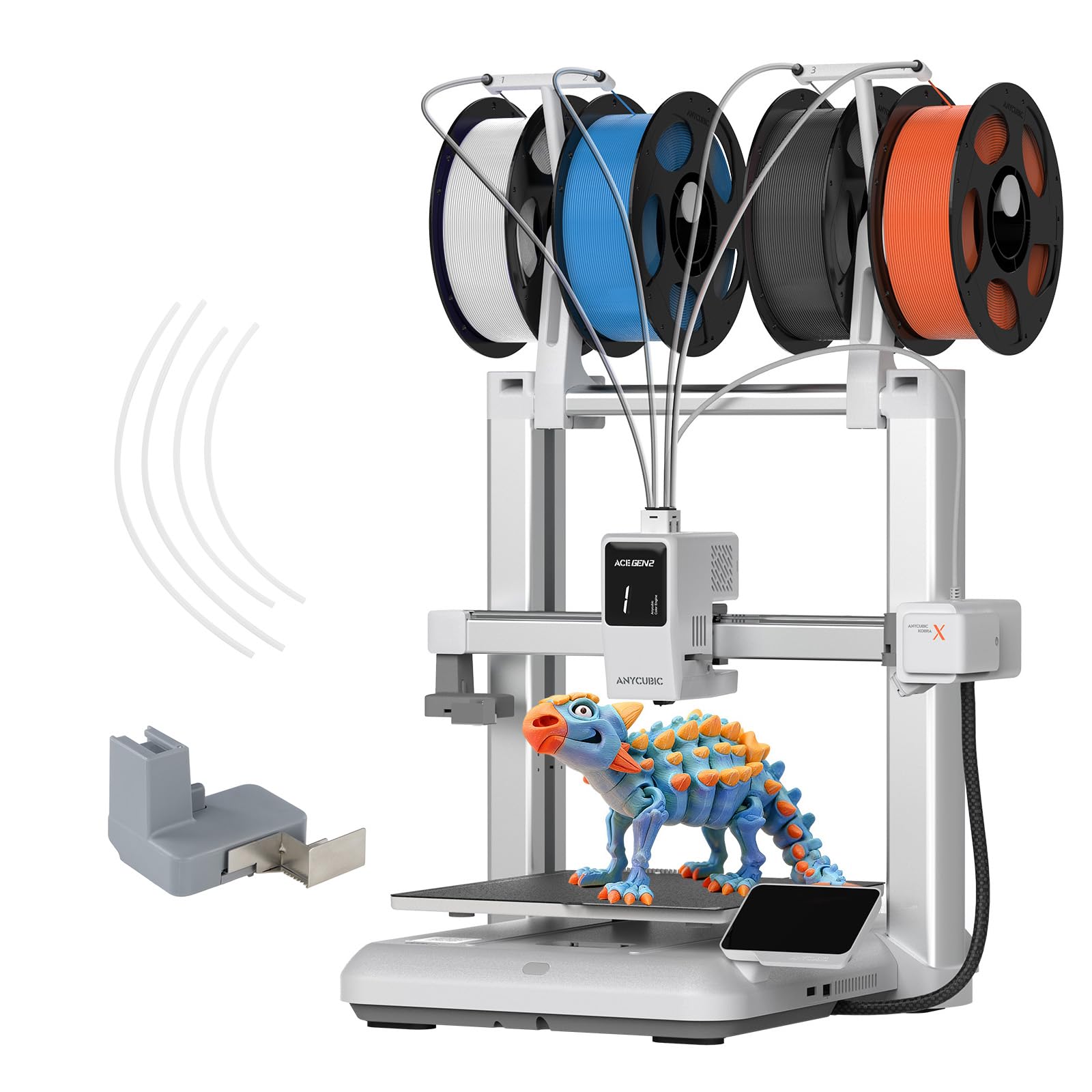
The Anycubic Kobra X stands out because it integrates a four-color printing system natively, without a bulky external unit. The built-in ACE 2 Pro system handles filament purging and swapping, reducing the machine and filament travel path by over 80%, which translates to vastly less waste compared to competing multicolor systems. The hardened steel nozzle resists wear from abrasive filaments.
Print quality at 600 mm/s remains crisp, thanks to vibration compensation and the LeviQ 3.0 auto-leveling system that uses 49-point bed calibration. The machine arrives partially pre-assembled, and users report being able to print within 15 minutes of opening the box. The AI camera offers spaghetti detection and remote monitoring through the Anycubic app.
Multicolor expansion is possible up to 19 colors with four additional ACE 2 Pro units (sold separately). The Kobra X is compatible with PLA, PETG, TPU, PVA, and ASA. The top-mount spool holder frees desk space, though some users note the phone app could be more polished. A few units have arrived with defective filament sensors, so inspect the hardware early in the return window.
Why it’s great
- Native 4-color printing with minimal purge waste.
- Fast 600mm/s speed with excellent layer adhesion.
- Easy 15-minute setup with 49-point auto leveling.
Good to know
- App user interface could be more intuitive.
- ACE 2 Pro system is not backward compatible with ACE Pro.
- Some units have sensor defects; inspect promptly.
4. ELEGOO Centauri Carbon
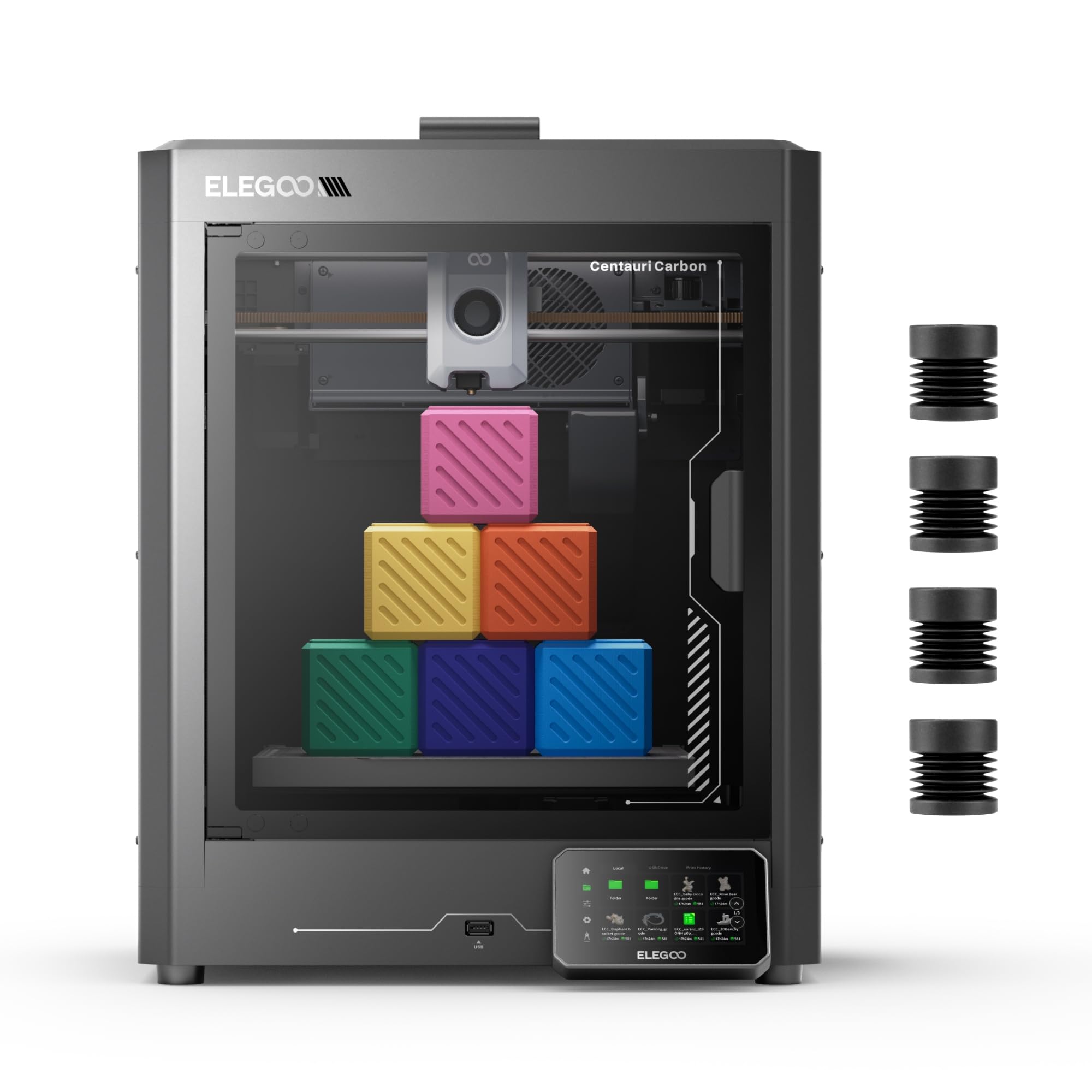
The ELEGOO Centauri Carbon uses a rigid, integrated die-cast aluminum frame that absorbs vibration better than extruded aluminum frames found on many competitors. This construction allows it to maintain print quality at 500 mm/s with 20,000 mm/s² acceleration. The 320°C brass-hardened steel nozzle and enclosed chamber with enhanced cooling make it ready for PLA, PETG, and even carbon fiber reinforced filaments.
Setup is truly unbox-and-print — the machine arrives pre-calibrated with auto bed leveling, and the intuitive touchscreen guides the initial workflow. The built-in chamber camera with dual LED lighting enables time-lapse capture and remote monitoring through the ELEGOO slicer. The dual-sided PEI plate has a specific PLA side that offers excellent adhesion with minimal heat needed.
While the machine is relatively heavy at 38.5 pounds, this mass contributes to stability. Some users have reported that the first unit arrived with a faulty hotend, but ELEGOO’s support was responsive in sending replacements. The USB-C cable design for the camera is recessed and can be tricky to connect. For pure speed and rigidity in an open-source ecosystem, this is a top contender.
Why it’s great
- Die-cast aluminum frame provides exceptional stability.
- 300°C+ nozzle ready for carbon fiber filaments.
- Built-in camera with time-lapse recording.
Good to know
- Initial batch had some hotend quality control issues.
- Heavy machine; needs a sturdy table.
- No built-in multicolor capability.
5. Creality Ender 3 V3 Plus

The Creality Ender 3 V3 Plus delivers a massive 300mm³ build volume — the largest in this roundup — making it capable of printing full-size helmets, large cosplay props, or dozens of smaller parts in a single batch. Its CoreXZ motion system with Y-axis dual motors achieves 600 mm/s and 20,000 mm/s² acceleration, matching the fastest machines in the category.
The direct drive extruder uses a spring-loaded lever and powder metallurgy lever to prevent gear deformation over time. The tri-metal “Unicorn” nozzle integrates the nozzle and throat into a single piece for easier swapping and clog-free extrusion. Auto-calibration handles bed leveling, Z-offset, and input shaping automatically, making the large build volume accessible even to beginners.
Users consistently praise the print quality and reliability, noting that the machine runs for months without issues. The dual 500mN.m Y-axis motors handle the heavier bed well, minimizing layer wobble even during high-speed moves. Some units have had gantry alignment defects from shipping, so inspect the frame squareness before use. The fans are noticeably loud during operation, which is a trade-off for the larger build platform.
Why it’s great
- Best build volume in the sub-$600 category.
- Fast 600mm/s speed with large print capacity.
- Unicorn nozzle simplifies maintenance and reduces clogging.
Good to know
- Fans are loud during high-speed printing.
- Large bed can be difficult to keep clean and level over time.
- Some buyers report frame alignment issues from shipping.
6. Sovol SV06 ACE

The Sovol SV06 ACE is the open-source enthusiast’s dream in this price bracket, running a 64-bit Klipper setup that gives you full control over every print parameter. The planetary dual gear extruder with a 1:7.5 gear ratio delivers consistent, powerful extrusion, and the 600 mm/s max speed with 20,000 mm/s² acceleration puts it among the fastest machines here. Build volume is a compact 220mm³.
Assembly takes about 15 minutes, and the one-click self-check verifies all components before the first print. The upgraded X and Y axes use dual-profile metal bearings instead of traditional linear bearings, reducing noise over time and improving structural rigidity. OTA firmware updates mean you don’t need a computer to keep the printer current — a feature most competitors lack.
The built-in camera works with the Obico app for remote monitoring, and the open-source nature means you can modify the printer extensively. Users report excellent print quality with PLA, PETG, and TPU, though the manual is sparse and the build plate can arrive with a warped center. A common tip is to remove the foam block under the build plate before printing to prevent layer shifting. Customer support is responsive, addressing issues like missing screws quickly.
Why it’s great
- Klipper firmware with OTA updates for full control.
- Planetary dual gear extruder for reliable extrusion.
- Fast 600mm/s speed with excellent stability.
Good to know
- Build plate can have warping issues from factory.
- Manual needs significant improvement for detailed guides.
- Compact build volume limits large projects.
7. FLASHFORGE Adventurer 5M

The FLASHFORGE Adventurer 5M is built to demonstrate what high-speed printing looks like in a sub- package. With a 600 mm/s max speed and 20,000 mm/s² acceleration, it achieves a time from unboxing to first print of just 10 minutes. The full-auto one-click leveling handles the bed with a single button press, ensuring a perfect first layer every time.
The direct extruder reaches 200°C in 35 seconds thanks to a 50W heater, and the flow rate of 32mm³/s supports fast, consistent extrusion. Vibration compensation eliminates ghosting in prints, and the filament run-out sensor and power-loss recovery provide worry-free operation. The open-frame design requires a well-ventilated space for filaments like ABS, but it handles PLA and PETG perfectly.
Users with prior 3D printing experience call the Adventurer 5M “the best value CoreXY” they’ve used, noting it matches the performance of printers costing twice as much. The small footprint makes it desk-friendly, and the PEI steel plate offers excellent adhesion. Some users have reported firmware freezes and a lack of a proper enclosure kit, but FLASHFORGE’s support is responsive and will replace faulty sensors quickly. The 220mm³ build volume is adequate but not generous.
Why it’s great
- Insanely fast 10-minute setup from unboxing.
- CoreXY motion for high speed and stability.
- Excellent vibration compensation for clean prints.
Good to know
- Open frame is not suitable for ABS without ventilation.
- Firmware can occasionally freeze during operation.
- Build volume is smaller than some competitors.
8. Creality Ender 3 V3 KE

The Creality Ender 3 V3 KE is a high-speed bedslinger that brings the Sprite direct extruder, a CR Touch sensor for auto-leveling, and 500 mm/s print speeds to a budget-friendly package. The 60W ceramic heater and bi-metal heatbreak allow 300°C printing, supporting PLA, PETG, ABS, TPU, and ASA. The X-axis carriage uses ball bearings for smoother motion and reduced wear.
Setup is quick at about 10 minutes for the essential assembly, and the intuitive touch UI screen with real-time model preview simplifies operation. Smart algorithms actively mitigate vibrations to reduce ringing and ghosting, while dual cooling fans keep the model solid during fast prints. The build volume of 220 x 220 x 250 mm is standard for the class.
Users praise the out-of-box reliability and the ability to upgrade components like the bed into a glass surface or stiffer springs for improved stability. The printer is loud — the fans are the most common complaint — but the print quality and speed outweigh the noise for most buyers. Some units have had gantry squareness issues from the factory, so inspect the frame during assembly. The Ender 3 ecosystem offers tremendous community support for troubleshooting and modding.
Why it’s great
- Sprite direct extruder handles flexible filaments well.
- Fast 500mm/s speed with CR Touch auto-leveling.
- Strong community support and upgrade ecosystem.
Good to know
- Loud fans during operation.
- Some units have gantry alignment defects from shipping.
- Not as fast as CoreXY competitors at similar prices.
9. Entina Tina2 Plus

The Entina Tina2 Plus is a fully assembled mini 3D printer that prioritizes safety and ease of use for children and classroom settings. The partially enclosed frame separates high-temperature components from direct contact, and the auto-leveling system with dual Z-axis structure ensures print stability without any manual adjustment. The PEI spring steel build plate makes removing prints easy for small hands.
The 250 mm/s print speed is faster than typical entry-level machines, and the ceramic hotend reaches temperature in 40 seconds. The Poloprint Cloud app provides access to over 1,500 printable models, and built-in WiFi lets parents or teachers send prints from a phone. The compact footprint (11.4 x 8.6 x 8.6 inches) fits easily on a desk or classroom shelf.
Users confirm the Tina2 Plus works well for beginners but note the app is slow and has a limited model library beyond the preloaded selection. The printer only accepts small spools — larger rolls require a printed adapter. Some customers experienced WiFi connectivity issues and unhelpful customer service. For supervised family fun or an educational first printer, it’s a solid choice, but experienced users will outgrow its limitations quickly.
Why it’s great
- Fully assembled, ready to print in minutes.
- Safety enclosure for supervised kid use.
- WiFi cloud printing with large model library.
Good to know
- App is slow and can have connectivity issues.
- Customer support can be difficult to reach.
- Small build volume limits project size.
FAQ
What is the actual difference between a bedslinger and a CoreXY printer at this budget?
Can I print ABS or Nylon with an open-frame printer under $600?
How much purge waste does multicolor printing actually produce?
Final Thoughts: The Verdict
For most users, the 3d printer under $600 winner is the Bambu Lab A1 Combo because it combines effortless multicolor printing with near-silent operation and reliability that rivals premium machines. If you want a heated chamber for engineering materials like ABS and Nylon, grab the QIDI Q2. And for the largest build volume and batch printing capability, nothing beats the Creality Ender 3 V3 Plus.