
Our readers keep the lights on and the weekend projects moving. As an Amazon Associate, I earn from qualifying purchases.
The gap between a digital model and a wearable cosplay prop feels like miles of sanding and filling when your printer delivers rough layer lines or dimensional inaccuracy. A resin printer captures fine textures and crisp edges for weapons and jewelry, while a large-format FDM machine tackles helmets, armor plates, and gauntlets in fewer seams. Choosing the wrong technology wastes hours you could spend on weathering and detailing.
I’m Rikta — the founder and writer behind FitlyFast. I research printer specifications with a focus on XY resolution, layer height consistency, maximum build volume, and material compatibility to help cosplayers select machines that produce convention-ready results.
This guide evaluates eleven printers across both resin and FDM categories, weighing speed against surface finish and build size against cost, to help you find the best 3d printers for cosplay that match your prop and armor workflow.
How To Choose The Best 3D Printers For Cosplay
Picking between a resin printer for high-surface-quality props and an FDM printer for large armor pieces is the first decision. Beyond that, you need to look at the size of your typical project, hidden material costs, and how much post-processing you can stomach.
Build volume — helmet-size or partial
A build volume of 300 x 300 x 400 mm on the Longer LK5 Pro 3 can swallow a full Mandalorian helmet in one piece. The IdeaFormer IR3 V2 offers infinite Z-axis length, so a full-length katana prints in one continuous run. If your cosplay involves many small detailed accessories, a resin printer with a 200 mm height like the Creality Halot-X1 Combo may be the better fit.
Surface finish priorities — layer lines versus sanding sessions
Resin printers such as the ANYCUBIC Photon Mono 4 Ultra and ELEGOO Saturn 4 Ultra 16K achieve pixel sizes as small as 17×17 µm, producing near-invisible layer lines straight out of the vat. FDM machines require sanding, filler primer, and often epoxy coating to eliminate visible ridges. If you hate sanding, resin suits weapons, jewelry, and helmets if your build volume fits.
Material strength for wearable props
PLA is cheap and easy to print but cracks under stress. For armor plates that flex during a con weekend, PETG or ABS — handled well by the enclosed QIDI Q2 — provide better toughness. Resins designed for engineering strength exist but cost more per kilo. Match the material to the prop: rigid for display pieces, impact-resistant for parts that take bumps.
Quick Comparison
On smaller screens, swipe sideways to see the full table.
| Model | Category | Best For | Key Spec | Amazon |
|---|---|---|---|---|
| Prusa MK4S | FDM | Reliable workshop prints | 250 x 210 x 220 mm build | Amazon |
| IdeaFormer IR3 V2 | FDM Belt | Infinite length props | 250 x 250 x ∞ mm build | Amazon |
| ELEGOO Saturn 4 Ultra 16K | Resin | Detailed decorative props | 10.1″ 16K mono LCD | Amazon |
| Creality Halot-X1 Combo | Resin | Smart resin management | 16K 15120×6230 resolution | Amazon |
| QIDI Q2 | FDM | High-temp engineering materials | 270 x 270 x 256 mm build | Amazon |
| Anycubic Kobra S1 Combo | FDM | Multi-color printing | 250 x 250 x 250 mm build | Amazon |
| FLASHFORGE Adventurer 5M Pro | FDM | Beginner-friendly enclosed FDM | 220 x 220 x 220 mm build | Amazon |
| Creality Ender 3 V3 Plus | FDM | Large volume on a budget | 300 x 300 x 330 mm build | Amazon |
| Longer LK5 Pro 3 | FDM | Budget large-format helmet prints | 300 x 300 x 400 mm build | Amazon |
| ELEGOO Centauri Carbon | FDM | Speed with carbon fiber filaments | 256 x 256 x 256 mm build | Amazon |
| ANYCUBIC Photon Mono 4 Ultra 10K | Resin | Entry-level resin detail work | 10K 9024×5120 mono LCD | Amazon |
In-Depth Reviews
1. Original Prusa MK4S High-Speed 3D Printer

The Prusa MK4S operates as a predictable daily machine that produces sharp edges and uniform layers across long multi-part runs. Its input shaping firmware compensates for vibration, so you can push speeds higher without sacrificing the surface quality needed for gauntlet segments and weapon handles. The included 1 kg spool of Prusament PLA lets you start a test print immediately after unboxing.
Owners transitioning from cheaper FDM machines report that the MK4S eliminates hours of troubleshooting. The self-cleaning nozzle and pre-configured profiles for dozens of materials — PLA, PETG, ASA — reduce prep time significantly. The 250 x 210 x 220 mm build volume suits larger props if you split the model into two or three pieces, though full helmets require slicing.
The best scenario for this printer is a cosplay workshop that values reliability over raw speed. You can print a weekend’s worth of armor components across multiple runs with minimal supervision, and the quiet operation makes it tolerable in a shared space.
Why it’s great
- Minimal first-layer issues even with tricky overhangs
- Large community and open-source ecosystem for custom mods
- Consistent dimensional accuracy across a full build plate
Good to know
- Build volume requires splitting full helmets into multiple prints
- Premium price compared to similar-spec machines
2. IdeaFormer-3D IR3 V2 Conveyor Belt 3D Printer

The belt-based design of the IR3 V2 redefines build volume for cosplay. A full-length buster sword, spear, or staff prints continuously on the 45-degree angled belt with no height limit. The PEI-coated metal belt provides good adhesion, and the Klipper firmware handles high-speed motion at up to 400 mm/s while keeping XY stability tight enough for smooth weapon shafts.
Multiple owners note that this is a second or third printer for seasoned makers. The 45-degree overhangs require manual support placement in the slicer, and the machine demands more tinkering than a Bambu or Prusa. Once dialed in, the belt system excels at both low-volume production of long items and mass production of smaller parts that drop off automatically.
If your project list includes iconic long props like Sephiroth’s Masamune or a staff, this machine cuts print time from days to hours. The machine is large and heavy at 44 pounds, so plan for a permanent dedicated spot.
Why it’s great
- Infinite Z-axis for weapons and staffs in one continuous print
- Klipper-based system for flexible tuning and web control
- Mass production capability for small parts
Good to know
- Steep learning curve for first-time 3D printer users
- Belt bed requires manual support placement for overhangs
3. ELEGOO Saturn 4 Ultra 16K Resin 3D Printer
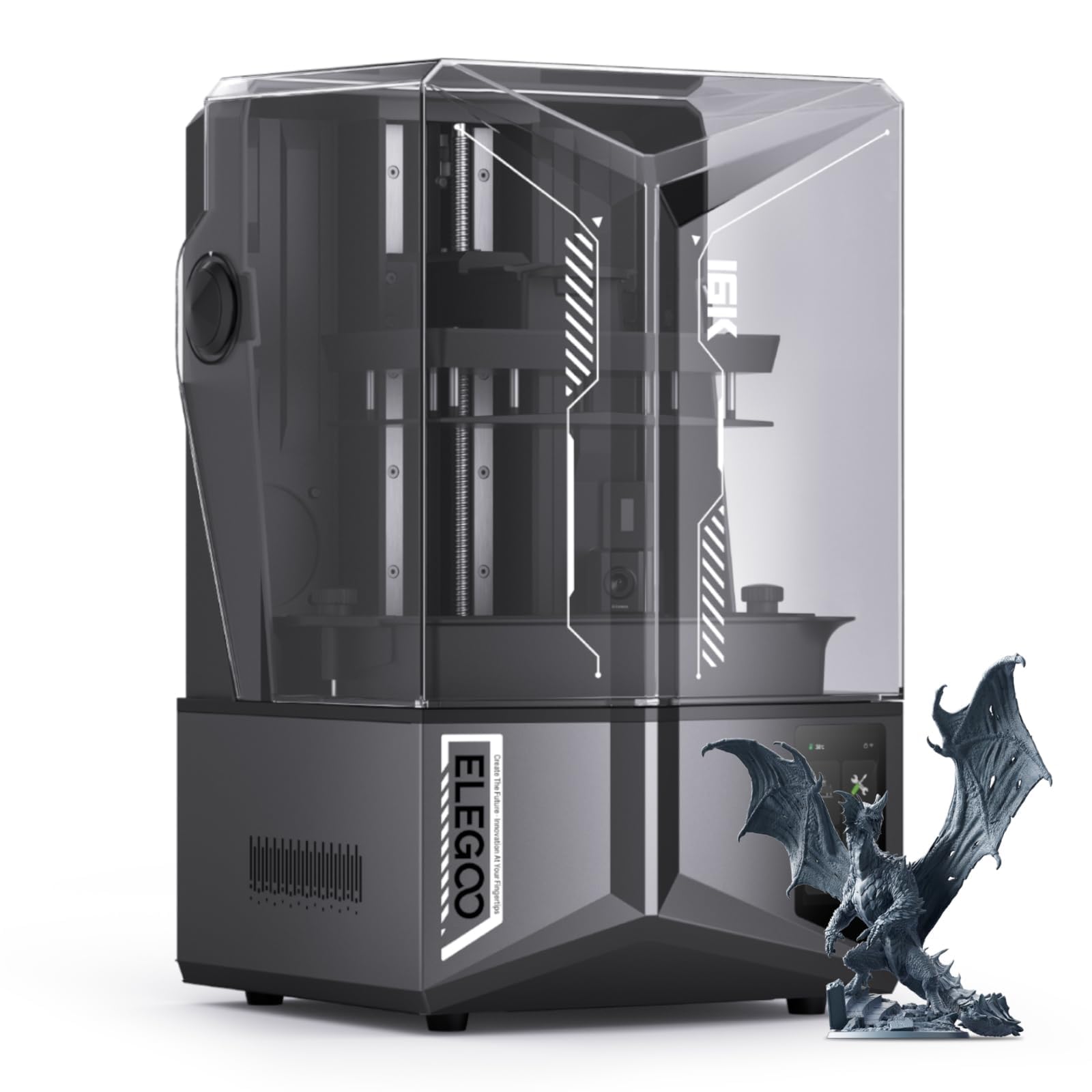
The Saturn 4 Ultra 16K packs a 10.1-inch mono LCD with a 16K resolution, translating to visibly smoother surfaces on small accessories like pauldron clasps, belt buckles, and face masks. The tilt release mechanism peels the print from the FEP film with less force than traditional lift systems, so delicate features like claws or filigree emerge intact. The heated resin vat maintains 30°C to reduce viscosity, improving detail fidelity in cooler rooms.
Users report crisp hair textures and fabric weave patterns right off the build plate with default settings. The AI camera provides real-time monitoring and alerts for failed prints, but detection accuracy depends on lighting and resin opacity. The build volume of 8.33 x 4.66 x 8.86 inches limits single-piece helmet prints but fits masks, ears, and decorative armor trim.
For cosplayers who prioritize surface finish over all else, the Saturn 4 Ultra 16K delivers the highest detail-per-dollar ratio in the resin category. It fits props that require zero layer lines — gemstones, rune engravings, or textured handguards.
Why it’s great
- Near-invisible layer lines at default resolution
- Heated resin vat improves consistency in cool environments
- Plug-and-play auto-leveling with minimal setup
Good to know
- Small build volume restricts single-piece prints to medium props
- Resin, wash, and cure costs add up over time
4. Creality Halot-X1 Combo Resin 3D Printer
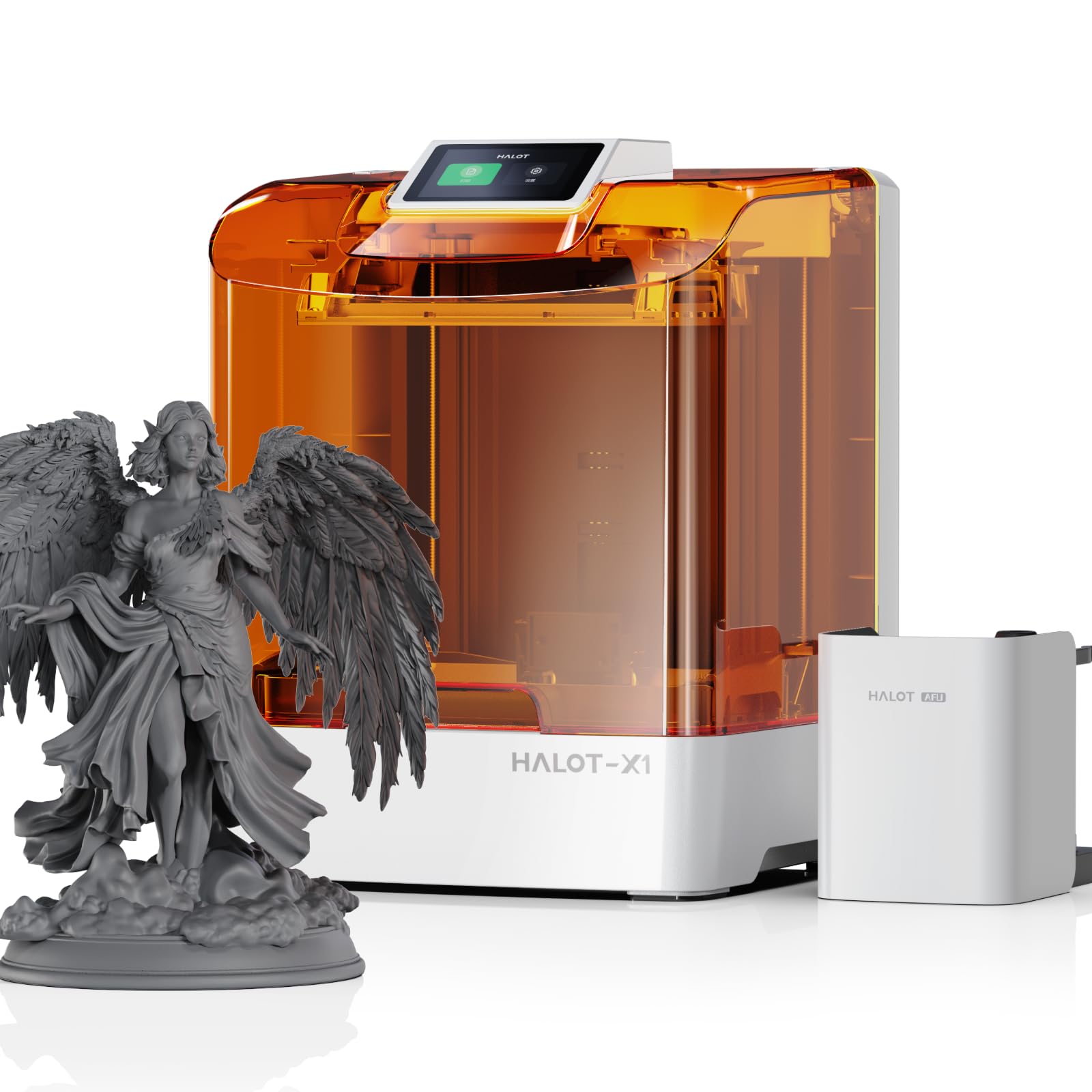
The Halot-X1 Combo distinguishes itself with a resin management system that reduces waste on large cosplay runs. RFID tags on Creality resin bottles automatically load print profiles, and the machine heats the vat to 45°C in three minutes to keep low-viscosity resin flowing through intricate details. The 16K mono LCD with a 14×19 µm pixel size captures crisp edges even on 100 mm tall masks.
Reviewers highlight the twist-to-release build plate that pops finished prints off without scraping or tools. The dual linear rails and lead screws deliver 0.01 mm Z-axis positioning, critical for maintaining sharp layers across tall props. Several users report early software issues with the Halot Box slicer that have not been fully resolved, so compatibility with third-party slicers should be verified before purchase.
The intelligent exposure feature activates UV LEDs only where needed, extending screen life and reducing overexposure. This makes it a good match for cosplayers who run frequent small-batch prints of identical decorative elements.
Why it’s great
- RFID auto-loading saves time on repeat resin types
- Fast resin heating reduces print failure from cold material
- Twist-release build plate simplifies post-processing
Good to know
- Proprietary slicer software had reported stability issues
- Price point suited for dedicated resin workstations
5. QIDI Q2 3D Printer 2025 Upgrade
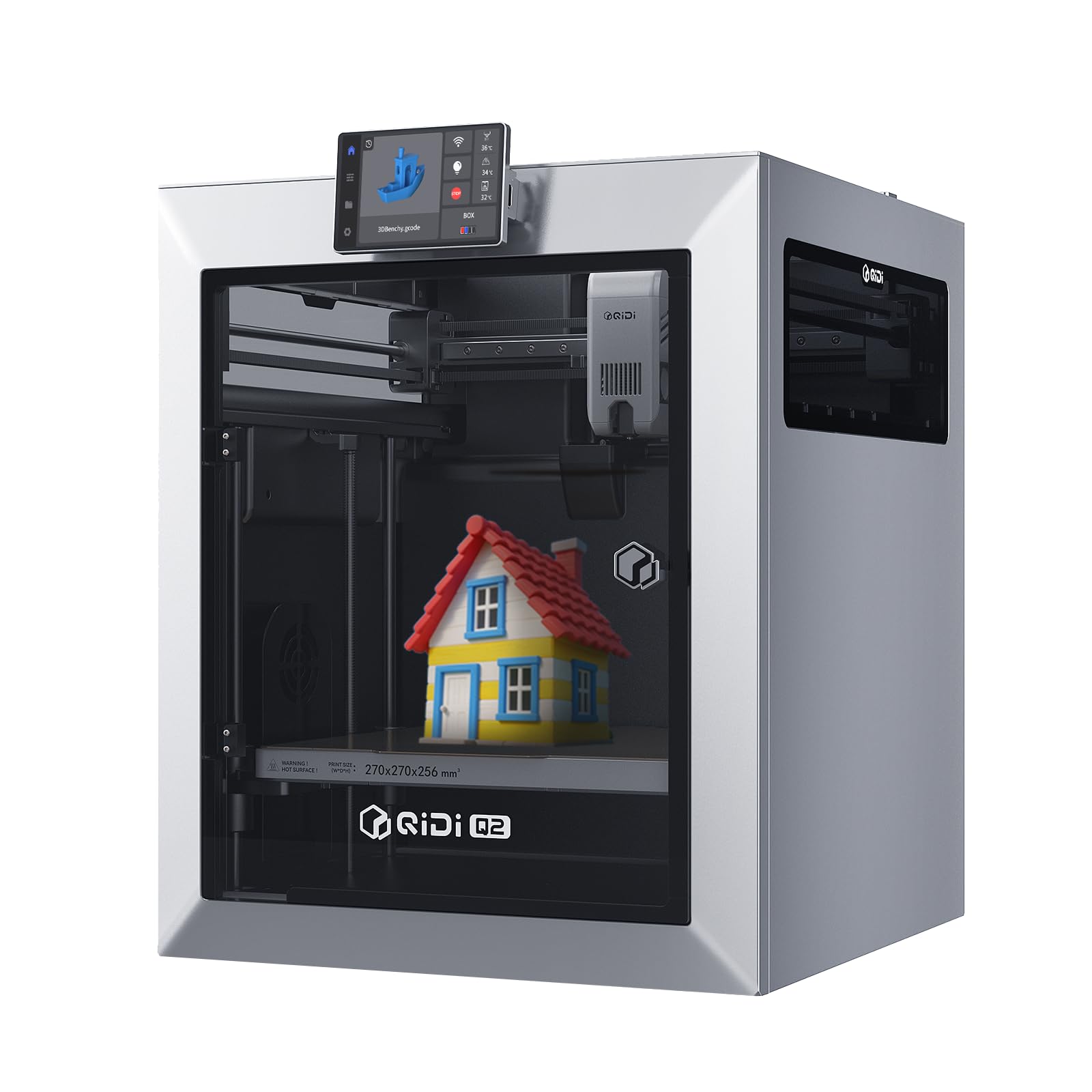
The QIDI Q2 encloses a 65°C heated chamber, enabling warp-free ABS prints for armor plates that need structural integrity. The triple filtration system — G3 pre-filter, H12 HEPA, and activated carbon — captures fumes from ABS and nylon, making it safer for indoor use. The CoreXY structure with linear rails reaches 600 mm/s yet maintains the dimensional accuracy needed for gear meshing tracks on moving props.
Owners with engineering-grade prints praise the auto-leveling system that uses the nozzle itself as the sensor, delivering a perfect first layer without manual Z offset. The 1.5GT synchronous belt reduces visual artifacts, so tall prints like greaves and thigh plates show uniform surface quality. The QIDI Box accessory enables up to 16-color multi-material swaps, though early user reports indicate mixed reliability.
If your costume includes load-bearing parts — think exo-skeleton frames or hinged shoulder pads — the Q2 prints carbon-fiber-reinforced nylon and polycarbonate without warping. That capability justifies the premium tier pricing for serious prop builders.
Why it’s great
- Heated chamber eliminates ABS warping for large armor parts
- HEPA and carbon filtration for safer fume management
- Full-metal construction for long-term durability
Good to know
- Initial firmware required updates to resolve language and connectivity bugs
- Heavy 39.8-pound unit needs sturdy table
6. Anycubic Kobra S1 Combo Multi-Color 3D Printer
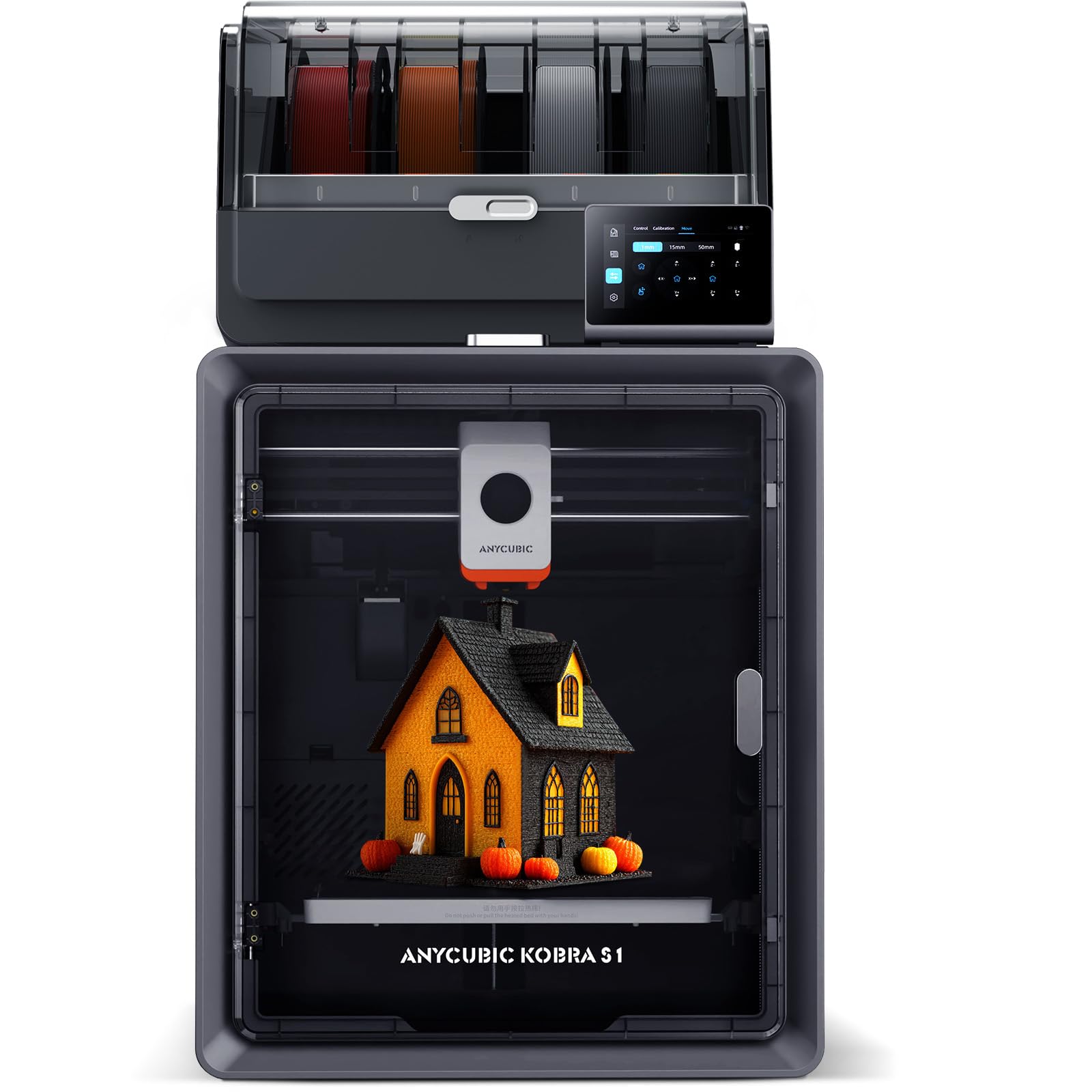
The Kobra S1 Combo integrates a 4-color ACE PRO system that simplifies multi-filament cosplay props without manual color swaps mid-print. Two ACE PRO units linked together support eight colors, useful for patterned shields or layered text on armor emblems. The dual PTC drying module keeps hygroscopic filaments like PETG and TPU at optimal moisture levels during long prints.
The CoreXY frame achieves 600 mm/s with flow compensation that minimizes material overflow on color transitions. Anycubic’s slicer, a fork of Orca, offers presets tuned to the printer, reducing tuning needs. However, early units experienced clogging from PTFE tubes inside the hot end, a design flaw later replaced on newer units. Enthusiasts who use the machine daily note that the print quality matches higher-priced competitors once slicer settings are adjusted for speed.
For conventions where you want layered color details — gradient pauldrons, two-tone weapons — the Kobra S1 Combo saves hundreds of paint hours. The print volume of 250 x 250 x 250 mm fits helmet halves and gauntlet sets.
Why it’s great
- Integrated filament dryer prevents moisture-related failures
- Multi-color system eliminates manual filament swaps
- Aggressive speed without sacrificing surface smoothness
Good to know
- Early units had hot end clogging from internal PTFE tube
- WiFi connectivity and app integration still maturing
7. FLASHFORGE Adventurer 5M Pro 3D Printer

The Adventurer 5M Pro arrives as a fully enclosed unit with a HEPA and carbon filtration system that makes PLA and PETG printing safer in small rooms. The CoreXY all-metal frame stabilizes 600 mm/s motion, and the nozzle heats to 200°C in 35 seconds, so a test print of a small prop — a keychain emblem or eye piece — starts within ten minutes of unboxing. The dual-sided PEI platform releases prints tool-free, saving effort on cleanup.
Reviewers highlight the pressure-sensing auto-leveling that eliminates manual Z calibration, a genuine convenience for beginners. The Flash Maker mobile app enables remote video monitoring and progress checks, which helps during long overnight prints. The 220 x 220 x 220 mm build restricts full helmet prints but fits gauntlets, shoulder bells, and weapon toppers easily.
The Adventurer 5M Pro works best as a first enclosed printer for cosplayers who want reliable quality without deep technical knowledge. The trade-off is a smaller build volume compared to open-frame alternatives at a similar price.
Why it’s great
- Fully enclosed with effective fume filtration
- No manual leveling required
- Fast nozzle heat-up for quick job turnaround
Good to know
- Small 220 mm cube prevents single-piece helmets
- Software installer had compatibility issues with macOS
8. Creality Ender 3 V3 Plus 3D Printer

The Ender 3 V3 Plus expands the familiar Ender line to 300 x 300 x 330 mm, a nearly cubic build volume that swallows full helmets without splitting. The CoreXZ architecture with dual Y-axis motors maintains stability during high-speed runs up to 600 mm/s, so large armor plates finish faster than earlier Ender models. The tri-metal nozzle resists wear from abrasive filaments, and auto calibration handles Z offset and input shaping without manual paper leveling.
Users who upgrade to a PEI sheet and stiffer springs report dramatically better first-layer adhesion across the full bed. The open-source community provides extensive modding documentation, from firmware tweaks to fan upgrades. The machine ships 90% pre-assembled, but the touchscreen mount design drew criticism for a missing screw guide that complicated installation.
For large-volume cosplay prints on a mid-range budget, the Ender 3 V3 Plus delivers the best cubic-inch-to-price ratio. The trade-off is louder fan noise and intermittent first-layer calibration variance that requires occasional re-leveling.
Why it’s great
- 300 mm cubic build fits full helmets and large shoulder pieces
- Fast 600 mm/s speed reduces large print turnaround
- Robust community support for mods and tuning
Good to know
- Fans are loud during extended runs
- Touchscreen mount assembly needed improvising
9. Longer LK5 Pro 3 3D Printer

The LK5 Pro 3 offers the largest build volume in this guide — 300 x 300 x 400 mm — at a budget-friendly price. That Z height prints an entire Mandalorian helmet in one piece, and the wide base accommodates full pauldrons. The silicon carbide glass bed distributes heat evenly across the 300 mm surface, reducing edge warping on large flat armor panels. The TMC2209 stepper drivers operate quietly, a rare advantage in large-format budget machines.
Multiple users report successful prints across PLA, PETG, ABS, and TPU after basic calibration. The manual bed leveling system, however, was criticized for inconsistent knob feel that makes repeatable leveling challenging. Some owners added a BLTouch sensor after purchase, though wiring and firmware updates require technical comfort. The 0.1 mm XY precision is adequate for costume pieces but not for decorative miniatures.
If your cosplay list includes oversized structures like wings, a full chest plate, or a large shield, the LK5 Pro 3 minimizes seams. The slow 180 mm/s speed means long print times, but the open-source firmware lets you tweak acceleration for faster production once dialed in.
Why it’s great
- 400 mm Z-height for one-piece helmet prints
- Silent TMC2209 drivers reduce noise fatigue
- Open-source firmware for custom tuning
Good to know
- Manual bed leveling requires patience and repeat checks
- Slow stock speed extends large project turnaround
10. ELEGOO Centauri Carbon 3D Printer
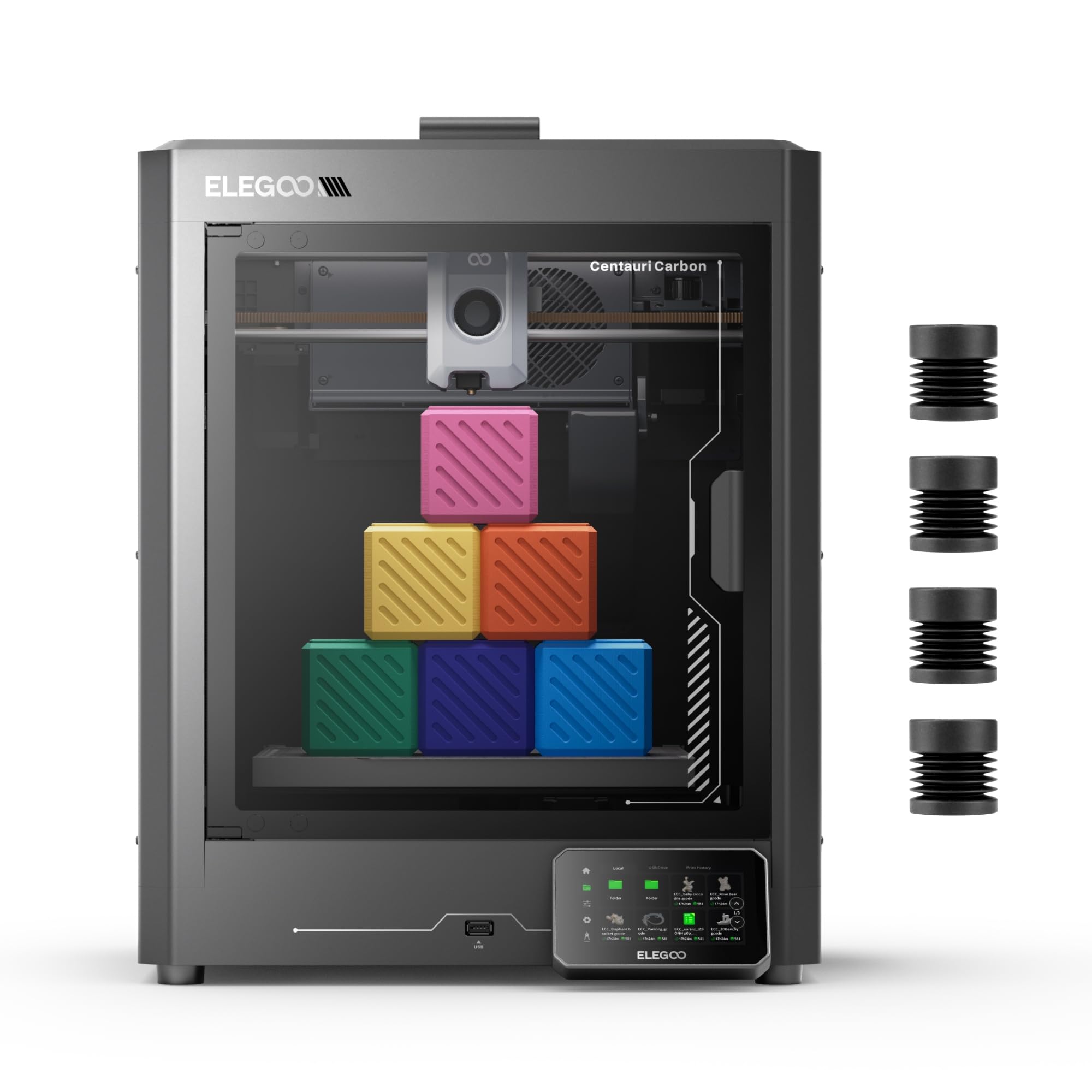
The Centauri Carbon marries a CoreXY motion system with a hardened steel nozzle rated to 320°C, enabling prints in carbon-fiber-reinforced filaments that produce lightweight, rigid armor panels. The 256 x 256 x 256 mm build volume sits between compact and large, fitting medium props and smaller helmets. The die-cast aluminum frame minimizes vibration even at 500 mm/s, and automatic vibration compensation and pressure advance smooth first layers.
Reviewers appreciated the out-of-box setup time of 30 to 45 minutes and the built-in chamber camera for remote monitoring. The Centauri Carbon printed a benchy in 18 minutes at high speed without visible layer issues. The dual-sided build plate features a PLA-specific surface for strong adhesion with minimal heat, reducing energy consumption during long prints. Several users noted that the unit shakes noticeably during high-speed runs, though print quality remains stable.
For cosplayers building dynamic armor pieces — wings, jetpacks, or articulated gloves — the 320°C nozzle unlocks composites that combine high strength with low weight. The budget-friendly price makes it an attractive entry point for high-temp materials.
Why it’s great
- 320°C nozzle for carbon fiber and glass fiber filaments
- Fast 500 mm/s speed without vibration artifacts
- Integrated camera for remote monitoring
Good to know
- Physical shaking at high speed could disturb nearby tools
- Early units had cable management tightness issues
11. ANYCUBIC Photon Mono 4 Ultra 10K Resin 3D Printer

The Photon Mono 4 Ultra brings 10K resolution to an accessible price point, with a 7-inch mono screen that packs 9024 x 5120 pixels. The XY pixel size of 17 x 17 µm captures fine details — skull engravings, circuit lines, or scale pattern textures — without visible stepping. The ACF release film reduces peeling force, so thin, delicate features like spider silk strands or small horns print without breaking.
Users transitioning from older monochrome printers called the speed increase significant, with the Intelligent Release Algorithm pushing print speeds to 120 mm/h. The five intelligent detection systems monitor resin levels, failed prints, and residual resin, reducing wasted material during unattended runs. Strong resin odor is the most common complaint, and an enclosure with a carbon filter is strongly recommended for room printing.
This printer suits cosplayers who need a resin machine for small, detail-heavy accessories — intricate rings, rune-covered gauntlet accents, or decorative mask filigree — without paying for a larger build plate they won’t use. The small 6.04 x 3.42 x 6.49 inch build volume limits its role to secondary parts.
Why it’s great
- 10K resolution captures ultra-fine detail for small props
- Fast 120 mm/h speed for resin class
- Affordable entry into high-resolution resin printing
Good to know
- Small build volume restricts use to accessories and accents
- Strong resin odor requires ventilation or enclosure
FAQ
Should I get a resin or FDM printer for cosplay props?
What build volume do I need for a full helmet?
Is a heated chamber necessary for cosplay printing?
How long does a typical cosplay prop print take?
Final Thoughts: The Verdict
For most users, the best 3d printers for cosplay winner is the ELEGOO Saturn 4 Ultra 16K because it delivers the highest surface finish per dollar with minimal post-processing for detailed props and accessories. If you want large one-piece helmet and armor prints, grab the Longer LK5 Pro 3. And for multi-color props that skip painting steps, nothing beats the Anycubic Kobra S1 Combo.