
Our readers keep the lights on and the weekend projects moving. As an Amazon Associate, I earn from qualifying purchases.
A 3D projector that dims during action sequences or forces you to hunt through sub-menus to activate the glasses every time is a non-starter. The real test isn’t the headline brightness — it’s how that projector handles the dual-frame 3D signal at 1080p without washing out the image or introducing crosstalk. You need a light source that holds its luminance through the polarized or DLP-link shutter cycle, and a processing engine that doesn’t choke on the side-by-side or frame-sequential formats that Blu-ray and streaming 3D still rely on.
I’m Rikta — the founder and writer behind FitlyFast. I’ve spent years mapping the intersection of laser brightness curves, DLP refresh rates, and 3D sync compatibility across the most popular projector platforms, so you know exactly which unit keeps the image crisp when the depth kicks in.
This guide breaks down the key specs — from native contrast ratios to active shutter latency — that determine whether your home setup actually delivers immersive 3D or just a washed-out gimmick. finding the best 3d projector means matching your room’s ambient light to a model that maintains punchy, ghost-free stereoscopic depth frame after frame.
How To Choose The Best 3D Projector
Not every projector that says “3D Ready” actually delivers a watchable stereoscopic experience. The real differentiators are how the projector handles frame rate, sync method, and light source modulation when pushing two separate images to your eyes.
Active Shutter vs. Passive 3D: Sync Method Matters
Active shutter 3D (used by DLP-link projectors) alternates left/right frames at 120Hz or 144Hz, requiring battery-powered glasses that sync via an IR or RF signal from the projector. Passive 3D (polarized) splits the resolution per eye and uses inexpensive, lightweight glasses, but is rare on consumer projectors outside of specific UST models like the NexiGo Aurora Pro. For pure depth without ghosting in a home theater, active shutter DLP-link offers higher per-eye resolution — but you must check whether the projector’s refresh rate drops in 3D mode. Many budget DLP units halve the frame rate to 60Hz, which introduces visible flicker and crosstalk during fast motion.
Brightness Loss in 3D: The Lumen Penalty
A 3000-lumen 2D projector can drop to 600 effective lumens per eye in active shutter 3D. That’s a 70–80% reduction. Laser projectors (ALPD or RGB triple laser) generally retain higher color volume and brightness through the shutter cycle compared to lamp-based units. Look for projectors that advertise a dedicated 3D brightness mode or a high native lumen output (1200+ ISO lumens minimum for 3D in a dark room, 2000+ if you want usable 3D with ambient light). The Dangbei DBOX02 (2450 ISO lumens) and XGIMI Horizon 20 (3200 ISO lumens) are strong candidates here.
Format Compatibility: Frame Sequential vs. Side-by-Side
Blu-ray 3D uses frame-sequential packing (full 1080p per eye at 24Hz times two), while streaming 3D content is typically side-by-side (half resolution per eye). The best 3D projectors automatically detect the incoming format and adjust the DLP-link sync without manual intervention. If a projector requires you to dig into an obscure settings menu to toggle 3D mode (a common complaint on the Dangbei Atom), it disrupts the viewing experience. Models like the Valerion VisionMaster Pro2 and the Hisense C2 Ultra auto-detect 3D content seamlessly.
Gaming in 3D: Input Lag and Refresh Rate
If you plan to game in 3D on a PS4, PS5, or PC, you need a projector with a refresh rate of at least 120Hz true (not interpolated) and sub-20ms input lag in 3D mode. The BenQ TK710 delivers 4ms response at 1080p/240Hz in 2D, but always check if the 3D mode locks the refresh rate to 60Hz. Console gamers should confirm that the projector accepts a 3D frame-packing signal over HDMI 1.4 or higher — not all “3D Ready” projectors do over modern HDMI 2.0/2.1 ports without an EDID override.
Quick Comparison
On smaller screens, swipe sideways to see the full table.
| Model | Category | Best For | Key Spec | Amazon |
|---|---|---|---|---|
| Valerion VisionMaster Pro2 | Triple Laser | Cinema-grade 3D & gaming | 15,000:1 contrast with EBL | Amazon |
| XGIMI Horizon 20 | RGB Triple Laser | Bright room 3D movies | 3200 ISO lumens, 100,000:1 | Amazon |
| Hisense C2 Ultra | Triple Laser | Large screen 3D & Xbox | 3000 ANSI, 240Hz gaming | Amazon |
| JMGO N1S Ultimate | Triple Laser | Flexible angle 3D viewing | 3300 ISO lumens, 3D Blu-ray | Amazon |
| BenQ TK710 | Laser DLP | Competitive gaming 3D | 4ms 1080p/240Hz response | Amazon |
| NexiGo Aurora Pro | UST Tri-Color Laser | Active 3D ultra-short throw | 3000:1 native, Dolby Vision | Amazon |
| Dangbei DBOX02 | ALPD Laser 4K | Blu-ray 3D at great value | 2450 ISO lumens, Netflix OK | Amazon |
| XGIMI Horizon Pro | DLP 4K | 3D with excellent sound | 1500 ISO lumens, Harman | Amazon |
| Hisense M2 Pro | Triple Laser | Portable 3D outings | 1300 ANSI, Dolby Vision | Amazon |
| Dangbei Atom | ALPD Laser | Ultra-portable 3D setup | 1200 ISO, 2.82 lbs weight | Amazon |
| BenQ TH575 | Lamp DLP | Budget 3D gaming entry | 3800 ANSI, 16ms lag | Amazon |
In‑Depth Reviews
1. Valerion VisionMaster Pro2

The VisionMaster Pro2 sets the benchmark for 3D performance at a premium level. Its triple laser DLP engine delivers 3000 ISO lumens and a 15,000:1 contrast ratio with Enhanced Black Level technology, meaning 3D scenes retain deep black floors and vibrant color volume even after the active shutter cuts per-eye brightness. The 0.9-1.5x optical zoom and auto keystone let you position it without resolution loss — critical for maintaining sharpness on a 150-inch screen during 3D playback.
Gamers get 4ms input lag at 1080p/240Hz, and the projector auto-detects frame-sequential 3D from Blu-ray players without needing to hunt through menus. The built-in Google TV+ interface supports Netflix and other streaming apps natively, but the real star is the HDR10+ with Dynamic Tone Mapping, which optimizes luminance on a per-scene basis in 3D mode — a feature most projectors reserve for 2D HDR content.
Owners consistently praise the lack of rainbow effect and the fluid motion on fast sports and action movies in 3D. The only consideration is that the upward projection angle is calibrated for floor placement rather than ceiling mount, so you may need a low table or a gimbal accessory. The included carrying bag adds portability for moving between rooms.
Why it’s great
- Outstanding 15,000:1 contrast keeps 3D blacks deep
- Auto 3D detection with zero menu hunting
- 4ms lag at 240Hz for competitive 3D gaming
Good to know
- Best used on a low table, not ceiling-mounted
- Premium investment, but future-proofed with 128GB storage
2. XGIMI Horizon 20
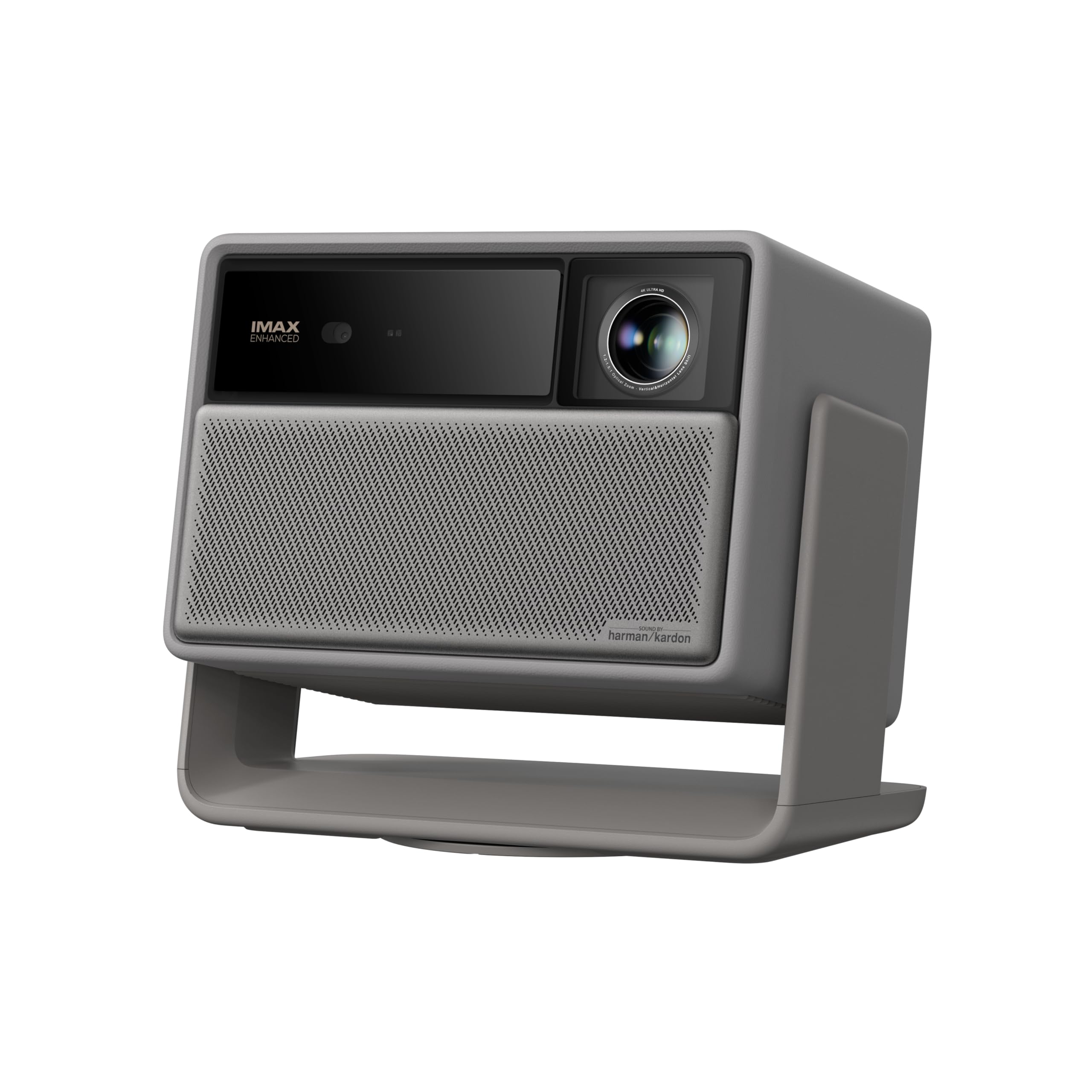
The Horizon 20 is one of the few projectors that can render a watchable 3D image with some ambient light in the room. Its RGB triple laser system pushes out 3200 ISO lumens with a 100,000:1 contrast ratio, which means the per-eye brightness on active shutter 3D stays comfortably above the flicker threshold even on a 200-inch screen. The IMAX Enhanced and Dolby Vision certification carry over into 3D mode, so you get the same tone-mapping precision that you would in 2D HDR.
Setup flexibility is a strong point: the lens shift and optical zoom let you place the unit on a shelf or ceiling mount without distorting the 3D geometry. The integrated Harman Kardon speakers are adequate for dialog but you’ll want a soundbar with an eARC connection to match the visual depth. Owners note that the auto-keystone occasionally fails at extreme off-axis angles, but manual correction is straightforward.
The Horizon 20 includes a 2-year warranty, double the standard coverage. For buyers who want a premium all-in-one with minimal accessory spending, this unit’s built-in stand and Google TV interface make it a turnkey 3D solution.
Why it’s great
- Extremely bright even in 3D mode with lights on
- Lens shift and optical zoom avoid geometry issues
- Dolby Vision and IMAX Enhanced for superior 3D HDR
Good to know
- Auto keystone can miss at extreme angles
- Speakers are good but not home-theater grade
3. Hisense C2 Ultra

The C2 Ultra pushes the 3D envelope to 300 inches with a triple laser light source that delivers 3000 ANSI lumens and a 2000:1 native contrast ratio. Its 1.67x optical zoom means you can throw a massive image from a shorter distance without sacrificing 4K pixel integrity — a rare feature that benefits 3D sharpness on big screens. The 110% BT.2020 color gamut ensures that the red/cyan separation required for active shutter 3D doesn’t skew color balance.
Designed specifically for Xbox compatibility, the C2 Ultra auto-detects game input and reduces latency, supporting up to 240Hz at 1080p. The gimbal mount with 360° horizontal and 135° vertical rotation means you can project onto a ceiling or wall without moving the base — ideal for rooms where screen placement isn’t fixed. The embedded JBL speakers are loud enough for a living room, but the real win is the Dolby Vision and IMAX Enhanced support that applies tone mapping to 3D content as well.
Some users note that black levels in 3D mode are weaker during daytime even with blinds closed, but the image remains crisp and the AI upscaler improves lower-resolution 3D sources like streaming side-by-side content.
Why it’s great
- 1.67x optical zoom preserves 4K clarity in 3D
- Gimbal mount offers extreme placement flexibility
- 240Hz gaming with Xbox-specific tuning
Good to know
- Black levels in 3D mode weaker with ambient light
- Requires more distance for 100-inch than some competitors
4. JMGO N1S Ultimate

The N1S Ultimate is built around a 360° horizontal and 135° vertical gimbal, allowing you to project 3D content onto walls, screens, or ceilings without needing to reposition the unit. Its 3300 ISO lumens from a triple RGB laser system are among the highest in this class, which directly translates into usable 3D brightness even when the active shutter splits the output. The 110% Rec.2020 color gamut prevents the color shift that often plagues 3D HDR material.
Blu-ray 3D playback is native — the projector accepts frame-sequential signals over HDMI and syncs without manual intervention. The FlexiSmart 2.0 system uses a 3D-TOF sensor and CMOS camera for real-time auto keystone and focus, which is particularly useful when you’re projecting from odd angles using the gimbal. The 20W subwoofer provides bass that adds physical weight to 3D explosions and ambient effects, though you’ll want an external system for critical audio.
Owners praise the OLED-like clarity and depth that the triple laser produces, noting that it outperforms higher-lumen lamp-based projectors in real-world contrast. The one limitation is the lack of optical zoom — digital zoom works, but purists may miss the lossless scaling.
Why it’s great
- Full gimbal mount for 3D on walls or ceilings
- 3300 ISO lumens maintains brightness in 3D mode
- Real-time auto keystone using TOF sensor
Good to know
- No optical zoom, digital zoom only
- UI can feel sluggish on the Google TV interface
5. BenQ TK710

The TK710 is laser-driven gaming projector that doesn’t compromise on 3D. With 3200 ANSI lumens and a 600,000:1 dynamic contrast ratio, it delivers the kind of punch you need for active shutter 3D in a living room with some ambient light. The 4ms response time at 1080p/240Hz is the fastest in this roundup, making it the clear choice for anyone playing competitive shooters or racing sims in 3D on PC.
Corner adjustment and 3D keystone are a cut above many competitors — you can dial in the geometry precisely without losing pixel alignment, which is critical when projecting a 3D image off-axis. The laser light source eliminates lamp replacement concerns, and the HDR10/HLG support ensures that 3D Blu-ray discs with HDR metadata are tone-mapped correctly. BenQ includes ARC/eARC support, so you can pipe 3D audio to a receiver without an extra HDMI run.
Long-time BenQ owners upgrading from the W1070 series report a massive jump in brightness and color uniformity. The trade-off is that the native smart features are minimal — you’ll need an external streaming device for apps, which is a non-issue for most home theater builders who already use a dedicated player.
Why it’s great
- 4ms response time ideal for 3D gaming
- Excellent corner adjustment for off-axis 3D
- Zero lamp maintenance with laser source
Good to know
- No built-in smart platform, external device needed
- Shorter throw means you may need to reposition
6. NexiGo Aurora Pro

The Aurora Pro stands out as one of the few ultra-short-throw projectors that supports active 3D with genuine commitment. Its ALPD 4.0 RGB+ laser delivers 2400 lumens with a native 3000:1 contrast ratio, and the dynamic laser dimming technology reduces black levels by over 60% in 3D mode — a vital feature because UST projectors typically struggle with perceived contrast in stereoscopic content. The 60W built-in sound system (two 15W woofers and two 15W tweeters) with Dolby Atmos support means you get a full audio ecosystem without an external receiver.
Dolby Vision and HDR10+ are both supported, which is rare for a UST 3D projector, and the active 3D works with standard DLP-link glasses. The 4K@120Hz input capability and tested 8ms input lag make it viable for gaming, though the ultra-short throw design requires a specific screen or a perfectly flat wall to avoid distortion in 3D.
However, reliability reports are inconsistent — several owners report dead pixels developing after a year and challenges with customer support. This makes the Aurora Pro a high-risk, high-reward choice best suited for buyers comfortable with potential out-of-warranty repairs.
Why it’s great
- Active 3D with Dolby Vision on a UST form factor
- Dynamic laser dimming improves 3D black levels
- 60W speaker system with Dolby Atmos
Good to know
- Mixed long-term reliability reports
- Customer support responsiveness varies
7. Dangbei DBOX02

The DBOX02 brings ALPD laser brightness (2450 ISO lumens) and official Netflix licensing together with dedicated Blu-ray 3D support at a mid-range price point. The ALPD technology eliminates the speckle effect that plagues some RGB laser projectors, resulting in a smoother image during 3D playback. The dual 12W speakers with Dolby Audio and DTS:X provide a convincing soundstage without an external system for casual viewing.
Setup is quick thanks to InstanPro AI with auto focus, auto keystone, and obstacle avoidance. The Google TV interface gives you access to 10,000+ apps including Netflix, YouTube, and Prime Video. For 3D, the projector accepts frame-sequential signals from Blu-ray players and works with Dangbei’s own active shutter glasses — a button on the glasses allows you to swap left/right if the sync is reversed, an elegant fix that competitors don’t offer.
Some users report that out-of-box settings are too aggressive with motion smoothing, so you’ll want to disable that for 3D content. The non-adjustable feet can also cause light leakage around the image edge, but a minor tilt or a small swivel stand resolves it.
Why it’s great
- ALPD laser eliminates speckle in 3D
- Glasses sync button solves reversed 3D instantly
- Official Netflix and Google TV included
Good to know
- Motion smoothing needs disabling for 3D
- Non-adjustable feet can cause edge light leak
8. XGIMI Horizon Pro

The Horizon Pro is a 4K DLP projector that balances 1500 ISO lumens of brightness with an integrated Harman Kardon sound system. While it’s not the brightest for 3D, in a dark or dim room the image retains solid depth and color saturation thanks to the X-VUE 2.0 image engine and HDR10/HLG support. The 60Hz MEMC motion compensation helps smooth out the 24fps frame-sequential 3D content, reducing judder during pans.
The auto keystone and obstacle avoidance make setup plug-and-play, and Android TV 10.0 gives you access to streaming apps. Note that Netflix is not natively supported on this model, so you’ll need an external streaming stick for Netflix in 3D. The dual 8W speakers are surprisingly room-filling for a compact unit and handle dialog clearly in 3D movies.
Long-term reliability reports are strong — one owner reported daily use for five years with no dead pixels or color shift. The lack of native 1080p upscaling for 3D content is a minor drawback, but the overall build quality and audio integration make it a solid mid-range choice.
Why it’s great
- Excellent Harman Kardon speakers save external spend
- Proven long-term reliability and build quality
- Auto keystone and obstacle avoidance simplify setup
Good to know
- Netflix not natively supported
- Brightness limited to dark-room 3D viewing
9. Hisense M2 Pro
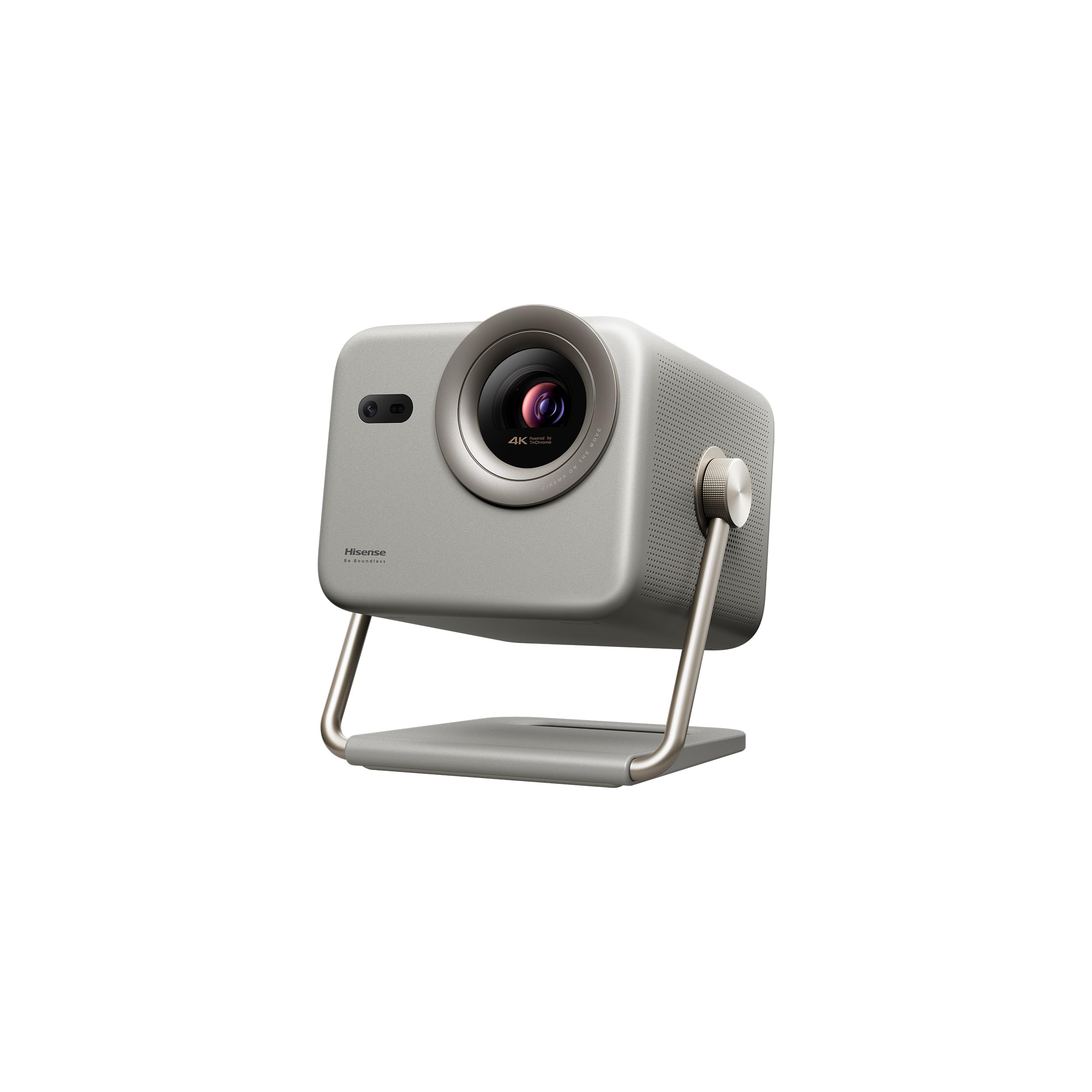
The M2 Pro is a portable triple laser projector that packs 1300 ANSI lumens and Dolby Vision support into a lightweight chassis that fits in a carrying case. The optical zoom (1.0-1.3 ratio) keeps 4K resolution intact as you adjust the image size, which is unusual at this size class. For 3D, the projector supports DLP-link active shutter glasses, and the triple laser color ensures that the 3D image doesn’t look washed out despite the lower lumen count.
The VIDAA smart OS is snappy and includes Netflix and YouTube natively. The built-in auto keystone and focus work accurately most of the time, though some users report that the auto adjustment occasionally overshoots on textured walls. Gaming at 4K feels responsive thanks to the low input lag, and the 3D mode is automatically detected without manual switching.
At 1300 lumens, 3D is best reserved for dark room or dusk conditions. The speakers are decent for a portable unit but lack the bass weight for immersive 3D audio. The M2 Pro is ideal for someone who wants a take-anywhere 3D projector that doesn’t sacrifice triple-laser color quality.
Why it’s great
- Optical zoom maintains 4K sharpness in 3D
- Triple laser delivers vivid color even in 3D mode
- Compact and portable with easy setup
Good to know
- 1300 lumens requires dark room for 3D
- Built-in speakers lack bass for cinematic 3D audio
10. Dangbei Atom

The Atom is the most portable laser projector on this list at just 2.82 pounds and 1.87 inches thin, yet it delivers 1200 ISO lumens with ALPD laser technology. The laser source gives it a color advantage over budget lamp projectors, and the 1080p resolution (accepting 4K input) ensures sharp 3D playback up to a 180-inch screen. The Google TV interface with built-in Netflix makes it a turnkey streaming device.
3D performance is surprisingly solid for the size — the DLP-link sync works with standard active shutter glasses, and users report brighter 3D images than expected due to the laser’s efficiency. However, the 3D setup process is unintuitive: you need to charge glasses, navigate multiple menus to enable 3D mode, disable auto focus (which interferes with the sync), and adjust screen size per scene on consoles. It works well once configured, but the initial friction is real.
The auto keystone is the weakest point — it struggles at extreme projection angles and after the unit is bumped. Manual keystone is easy enough, but buyers expecting a set-and-forget 3D experience may find it frustrating. For portable 3D with laser brightness at a mid-range price, the Atom delivers but requires patience.
Why it’s great
- Extremely portable with laser 3D quality
- Crisp autofocus and bright for its size
- Built-in Netflix and Google TV
Good to know
- 3D setup is multi-step and unintuitive
- Auto keystone unreliable at off-angles
11. BenQ TH575

The TH575 is the entry-level champion for 3D gaming on a budget. Its 3800 ANSI lumens (lamp-based DLP) is the highest raw lumen count in this roundup, which translates to exceptional 3D brightness even on a 150-inch screen at dusk or in a room with controlled ambient light. The 16ms input lag at 1080p/60Hz is low enough for competitive console gaming, and the 15,000:1 contrast ratio (FOFO) provides solid black levels for a lamp projector.
3D support is labeled as “3D Ready,” and the projector accepts frame-sequential and side-by-side formats over HDMI. Owners confirm that the high refresh rate of the DLP chip keeps crosstalk to a minimum during fast 3D action sequences. The standard throw design means you need about 10.8 feet for a 100-inch image, which works well for dedicated game rooms. Auto vertical keystone is included but manual lens shift is absent.
The trade-offs are the lamp replacement cycle (around 4,000 hours in normal mode, 15,000 in SmartEco) and the lack of smart features — you’ll need an external player for streaming. But for a pure 3D gaming projector that won’t break the bank, the TH575 delivers the highest per-dollar lumen output with consistent BenQ reliability.
Why it’s great
- 3800 ANSI lumens delivers bright 3D on a budget
- Low 16ms input lag for console 3D gaming
- Trusted BenQ build and 3-year warranty
Good to know
- Lamp-based, needs periodic replacement
- No smart platform, external device required
FAQ
Do I need special glasses for every 3D projector?
Why does my 3D picture look dim compared to 2D?
Can I stream 3D content from Netflix or other apps?
What causes crosstalk or ghosting in 3D projection?
Does a higher resolution (4K) improve 3D quality?
Final Thoughts: The Verdict
For most users, the best 3d projector overall is the Valerion VisionMaster Pro2 because it combines the highest native contrast ratio (15,000:1 with EBL) with 3000 ISO lumens and a 4ms gaming response — covering both cinematic 3D depth and competitive play without compromise. If you want a lighter, more portable option with surprisingly bright 3D, grab the Hisense M2 Pro. And for pure value with a huge lumen output that powers through 3D dimming, nothing beats the BenQ TH575.