
Our readers keep the lights on and the weekend projects moving. As an Amazon Associate, I earn from qualifying purchases.
A 400-watt solar panel represents a serious step into energy independence, whether you’re outfitting an RV roof, powering a shed, or building a home backup system. The difference between a panel that actually delivers and one that falls short often comes down to cell technology, temperature coefficient, and real-world shading tolerance — not just the wattage number on the listing.
I’m Rikta — the co-founder and writer behind FitlyFast. I’ve spent countless hours analyzing the electrical specs, cell architectures, and user-reported performance data across dozens of models to determine which 400-watt panels genuinely earn their spot in a real-world setup.
The market now offers everything from budget-oriented rigid panels built with basic monocrystalline cells to premium bifacial models that pull power from reflected light, making a deep dive into the best 400 watt solar panel options essential for anyone serious about off-grid power.
How To Choose The Best 400 Watt Solar Panel
Selecting a 400-watt panel isn’t just about matching the voltage of your system. You need to evaluate cell efficiency, construction quality, and how the panel behaves in the real-world conditions of your specific installation site. The wrong choice can mean hundreds of lost watt-hours every day.
Cell Technology: N-Type vs. P-Type
The solar cell type is the heart of the panel. N-Type cells, particularly those with multi-busbar designs (16BB or 18BB), offer superior electron flow, lower Light Induced Degradation (LID), and better performance in high heat compared to standard P-Type cells. Many premium and mid-range panels now exclusively use N-Type cells for their longevity and efficiency.
Bifacial vs. Monofacial
A bifacial panel captures sunlight from both its front and back surfaces, using a transparent backsheet. This can boost total energy yield by 10-30% when installed over reflective ground like gravel, snow, or a light-colored roof. Monofacial panels have an opaque back and only collect front-side light. Choose bifacial if your mounting surface allows light to hit the rear.
Temperature Coefficient and Degradation Rate
Solar panels lose efficiency as they get hot. A low temperature coefficient (ideally -0.3%/°C or better) means less power loss on scorching days. Similarly, a panel with a first-year degradation of 1% or less and a linear 25-year warranty (guaranteeing 80-85% output) is a sign of a durable, long-term investment.
Quick Comparison
On smaller screens, swipe sideways to see the full table.
| Model | Category | Best For | Key Spec | Amazon |
|---|---|---|---|---|
| Renogy N-Type 400W | Mid-Range Rigid | Class B van roofs | 49.7 x 30.1 x 1.2 inch | Amazon |
| Callsun N-Type 16BB 400W | Premium Bifacial Rigid | Ground-mount & high yield | Up to 30% extra from bifacial | Amazon |
| EcoFlow 400W Portable | Premium Portable | EcoFlow power station pairing | 63 x 42 inch unfolded | Amazon |
| ZOUPW 450W Portable | Premium Portable | High-voltage power stations | 29.5 lbs, 45.9V Voc | Amazon |
| Anker SOLIX PS400 | Premium Portable | 4-angle adjustable setup | IP67 waterproof, ETFE coat | Amazon |
| JJN Bifacial 400W | Premium Bifacial Rigid | Large fixed installations | 94.6 lbs, 30-year warranty | Amazon |
| DOKIO 400W Mono | Mid-Range Rigid | Off-grid sheds & greenhouses | 67.8 x 44.6 x 1.2 inch | Amazon |
| AeternaSol 18BB 400W | Budget Rigid | Rooftop & trailer systems | 18BB, IP68 junction box | Amazon |
| AeternaSol 18BB Bifacial 400W | Budget Bifacial Rigid | Entry-level bifacial upgrade | 18BB N-Type, 52.8 x 26.4 inch | Amazon |
In‑Depth Reviews
1. Renogy N-Type 400 Watt Solar Panel

The Renogy N-Type panel is specifically engineered for Class B vans, offering a compact footprint of 49.7 by 30.1 inches that is 7.5 percent smaller than its predecessor while maintaining full 400-watt output. It uses 16BB N-Type cell technology to achieve 25 percent efficiency with a low temperature coefficient, making it an excellent choice for hot climates where standard panels lose significant output.
Users consistently report meeting or exceeding rated output during peak sun hours, with many appreciating the reduced micro-crack risk from the advanced busbar layout. The panel’s open-circuit voltage sits at 37.44 volts, which requires careful consideration when series-wiring with 12-volt panels to avoid wasting performance.
The panel includes a 25-year performance warranty guaranteeing 80 percent output, backed by Renogy’s established customer support network. Its anodized aluminum frame and tempered glass construction provide reliable outdoor durability without excessive weight, keeping the install manageable for a solo builder.
Why it’s great
- Compact size perfect for tight RV roofs
- Low degradation rate (1% first year, 0.4% annually)
- Proven brand with responsive support
Good to know
- Higher Voc can complicate series wiring with 12V panels
- Not a bifacial panel
2. Callsun N-Type 16BB 400W Bifacial Solar Panel
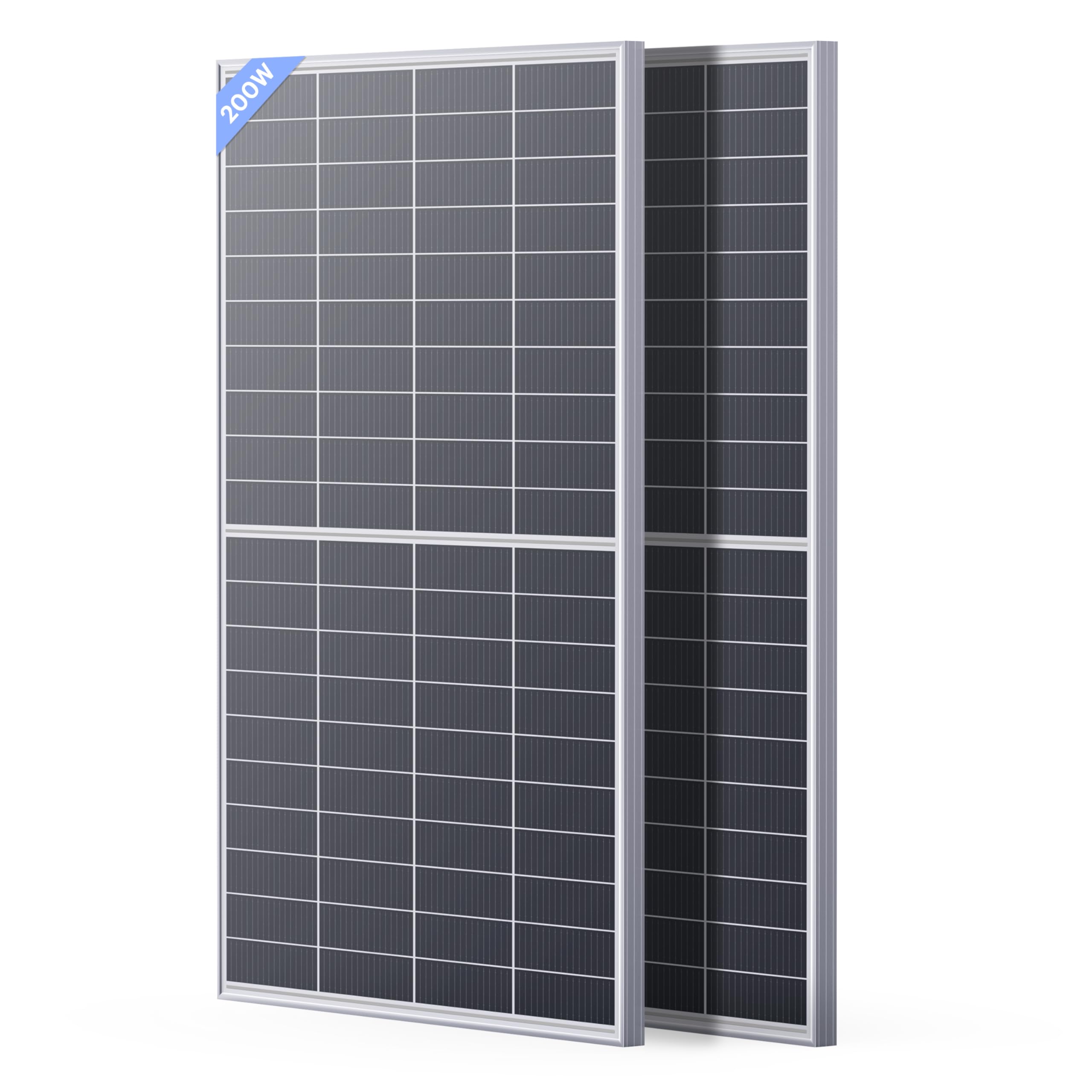
The Callsun panel stands out for its bifacial design, which uses a transparent backsheet to capture reflected light and can boost total energy yield by up to 30 percent compared to standard monofacial panels. Its TwinCell anti-shade technology splits the panel into two independent halves, so partial shading on one section doesn’t cripple the entire output — a huge advantage for ground-mounted or rooftop setups with intermittent obstacles.
Customer reviews consistently mention the panel overproducing its rated wattage, with many users reporting peak outputs above 420 watts thanks to the strong bifacial gain from concrete driveways or light-colored ground. The N-Type 16BB cells deliver 25 percent efficiency with an excellent temperature coefficient of -0.3 percent per degree Celsius, minimizing power loss during hot afternoons.
At 23.8 pounds per 200-watt panel and dimensions of 51.3 by 30.3 inches, these modules fit comfortably on Class B vans while leaving room for airflow. The 25-year performance warranty guarantees 84.5 percent output, signaling strong long-term reliability from a relatively new brand in the U.S. market.
Why it’s great
- Consistent overproduction above rated 400W
- Excellent shading tolerance from TwinCell design
- Low -0.3%/°C temp coefficient
Good to know
- Bifacial gain requires reflective mounting surface
- Brand is newer than established competitors
3. EF ECOFLOW 400W Portable Solar Panel

The EcoFlow 400W Portable Solar Panel is designed for seamless integration with the EcoFlow Delta series power stations, featuring integrated MPPT algorithm tuning when paired with the brand’s ecosystem. It folds into a compact rectangular case with a carry handle, weighs 35.3 pounds, and unfolds to a large 93.1 by 41.7-inch surface area that captures sunlight efficiently.
Users report real-world peak output around 348 watts per panel in clear midday conditions, with the adjustable kickstand case allowing for angle optimization without additional mounting hardware. The panel’s IP68 waterproof rating means the main body can withstand rain and splashes, though connectors should not be submerged. It uses monocrystalline cells and achieves a 22.4 percent conversion rate.
The built-in zippered carrying case doubles as a stand, protecting the panel during transport and deployment. Some users note the included MC4 cables could be longer for flexible placement in sunny yard spots, but the portability and rugged build make it a top choice for campers and emergency backup where permanent roof mounting isn’t an option.
Why it’s great
- Excellent portability with integrated carry case
- Optimized MPPT performance with EcoFlow stations
- Rugged, weather-resistant build for outdoor use
Good to know
- Peak output lower than some rigid panels
- Requires EcoFlow ecosystem for best results
4. ZOUPW 450W Portable Solar Panel
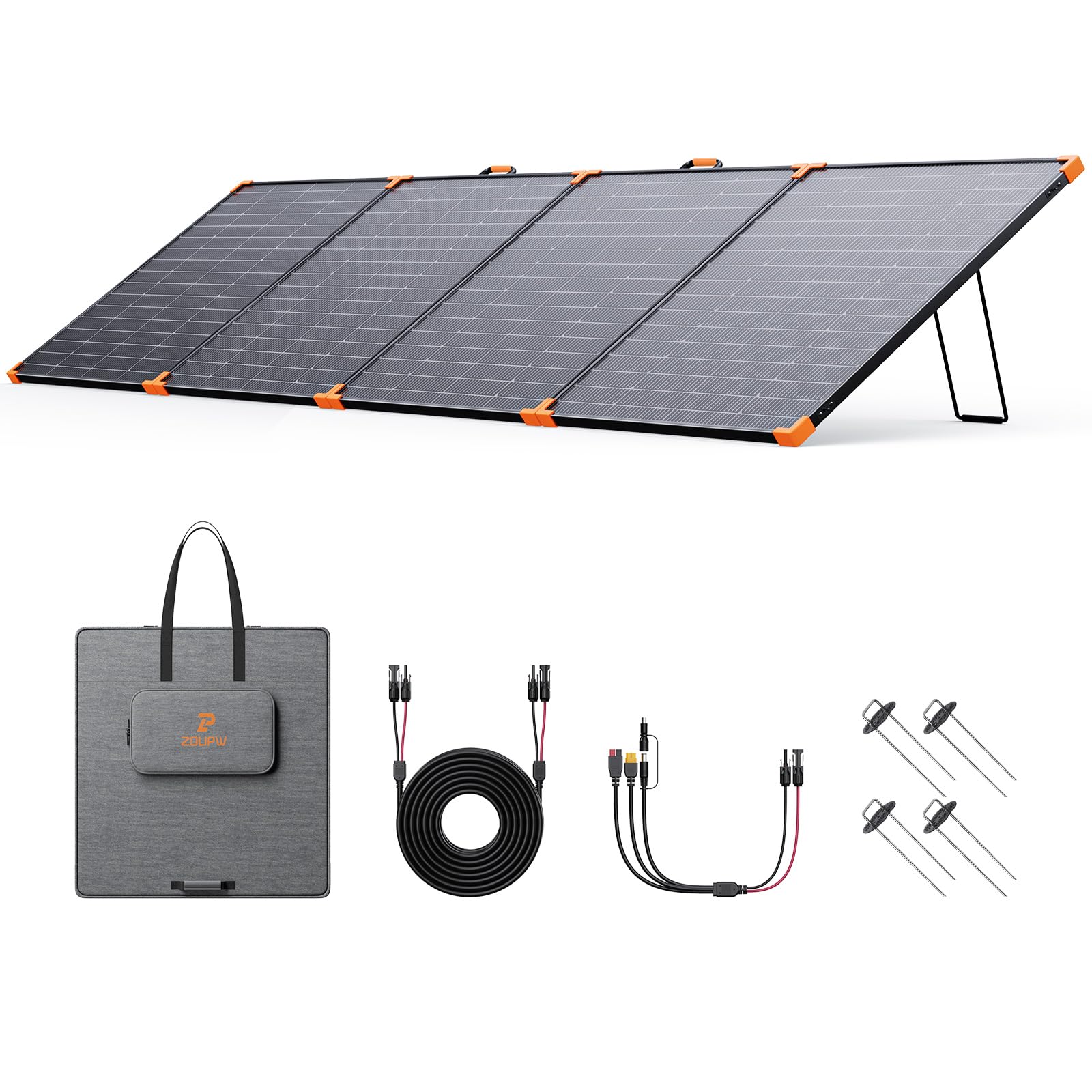
The ZOUPW 450W panel uses an aerospace-grade fiberglass structure to achieve a remarkably light 29.5 pounds — about 30 percent lighter than comparable rigid 400-watt panels. Its high open-circuit voltage of 45.9 volts makes it specifically compatible with 40-60 volt input power stations like the EcoFlow Delta series, Anker C1000, and Bluetti Elite 100, but it is not suitable for low-voltage units under 30 volts.
Users report the panel consistently exceeding its 450-watt rating, with some peaking above 500 watts in winter conditions due to the excellent low-temperature performance of its N-Type 16BB cells. The IP68-rated ETFE coating provides robust protection against weather and scratches, while four reinforced kickstands allow for adjustable 45-degree angling without additional accessories.
The package includes a versatile 4-in-1 adapter cable covering XT60, Anderson, DC7909, and DC8020 connectors, plus four ground stakes and a storage bag. A 36-month warranty and 30-day money-back guarantee back the investment, making this a strong premium portable option for those with compatible high-voltage stations.
Why it’s great
- Extremely light for its wattage class
- Consistently overproduces rated 450W
- Versatile multi-connector adapter included
Good to know
- Not compatible with low-voltage (<30V) power stations
- Severe voltage drop with even minimal shading
5. Anker SOLIX PS400 Solar Panel

The Anker SOLIX PS400 folds into a compact 35.9 by 26.9 by 2-inch package and features an adjustable kickstand with four preset angles — 30, 40, 50, and 80 degrees — allowing you to optimize sunlight capture regardless of the season or latitude. Its 23 percent conversion efficiency comes from high-quality monocrystalline cells, and the ETFE outer coating provides excellent scratch and dust resistance for long-term outdoor use.
Users generally report strong build quality and reliable performance, though several note the panels are heavy at 35 pounds each and require careful handling due to the somewhat flimsy handle design. Real-world peak output from two panels in parallel has been observed around 550 watts total on peak sun days, which is reasonable for a portable panel but below the combined 800-watt theoretical maximum.
The included two 9.8-foot MC4 extension cables and an MC4 to XT-60 adapter provide flexibility for distance from the power station. Anker’s reputation for robust customer service adds confidence, though one user did report difficulty with warranty support regarding the handle. This panel is ideal for Anker power station owners seeking a seamless, adjustable portable solution.
Why it’s great
- Four adjustable angles for year-round optimization
- ETFE coating protects against scratches
- Anker ecosystem compatibility and support
Good to know
- Heavy for a portable panel at 35 lbs
- Handle can be flimsy for lifting
6. JJN Bifacial 400 Watt Solar Panel
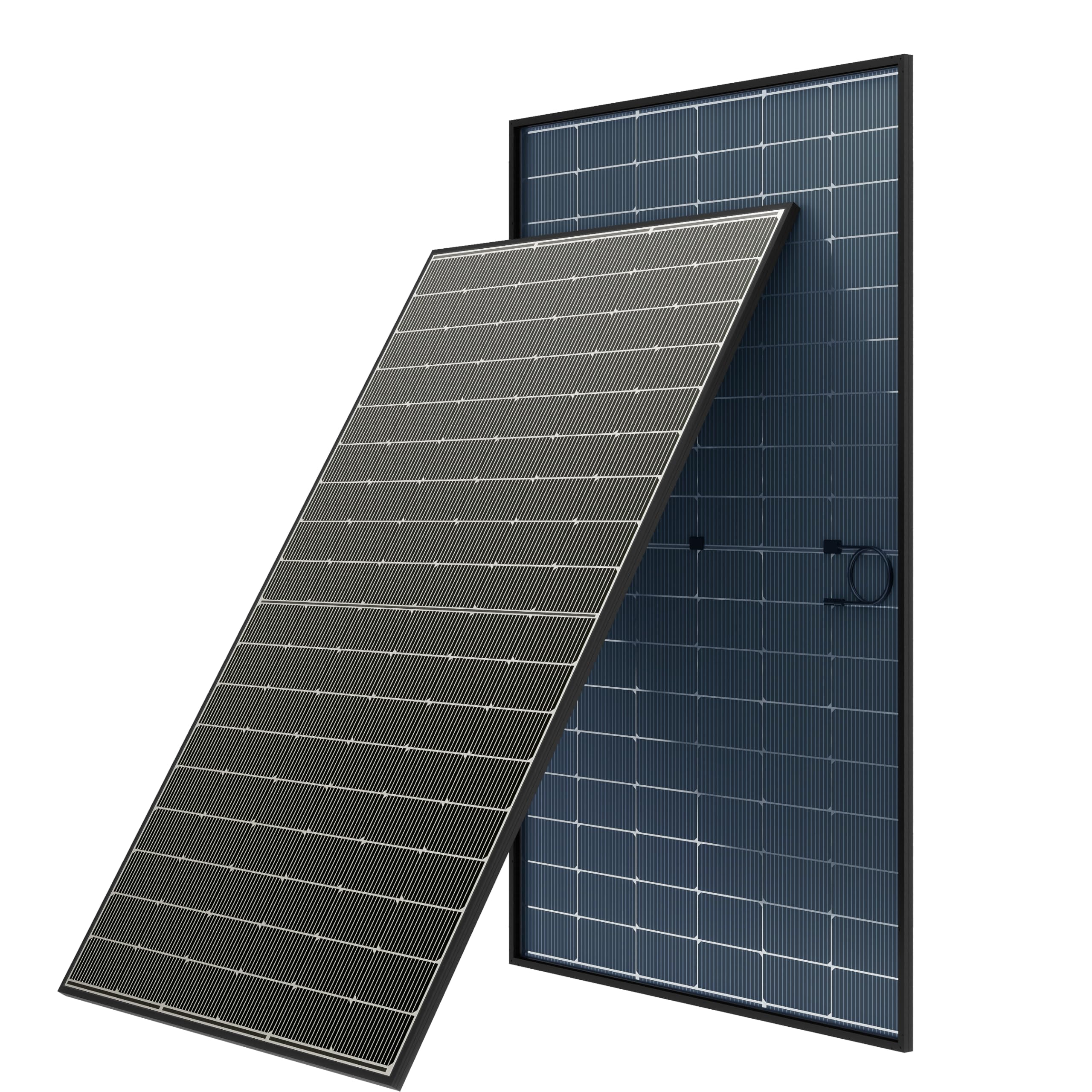
The JJN Bifacial panel is a heavy-duty rigid module built for permanent installations where maximum energy harvest is the priority. Weighing 94.6 pounds with dimensions of 67.8 by 44.7 by 1.2 inches, it uses N-Type 16BB cells with a transparent backsheet to capture reflected light, boosting total efficiency by up to 25 percent over standard panels. It’s designed for 12-volt, 24-volt, and 48-volt systems.
Users report impressive real-world output, with a single panel consistently producing 380 watts or more and full arrays of 10 panels delivering over 1060 watts peak in spring conditions. The bifacial design shows particular strength on cloudy days, with some users noting 100 watts output even under heavy overcast — far outperforming portable alternatives. The panel’s 30-year transferable power output warranty is among the longest in the market.
The IP65 junction box and IP68-rated connectors provide robust waterproofing, while the corrosion-resistant aluminum frame withstands 2400Pa wind loads and 5400Pa snow loads. The sheer weight and size make installation a two-person job, and some units have arrived with minor micro-cell blemishes, though these haven’t affected performance in reported cases.
Why it’s great
- Exceptional cloudy-day performance from bifacial design
- Industry-leading 30-year transferable warranty
- Consistent overproduction on sunny days
Good to know
- Very heavy at nearly 95 lbs
- Large footprint limits roof placement options
7. DOKIO 400W Mono Solar Panel

The DOKIO 400W panel is a single large-format rigid module measuring 67.8 by 44.6 by 1.2 inches, offering a clean one-panel solution that replaces the wiring complexity of four 100-watt panels. Its pre-attached 9.84-foot MC4 leads eliminate the need for extension cables in many setups, reducing connection points and potential failure spots. The monocrystalline cells provide efficient conversion for 12-volt and 24-volt systems.
Customer feedback highlights excellent packaging with corner protectors that prevent shipping damage, and real-world performance meeting expectations. One user with two panels in series reported 560 watts from an 800-watt array under partial shade, demonstrating reasonable real-world efficiency. The panel performs well for dedicated applications like shed lighting, greenhouse power, and off-grid battery charging.
The aluminum frame and tempered glass construction offer solid weather resistance for outdoor yard installations. While not the most compact or efficient option available, the DOKIO represents a straightforward, reliable entry point into 400-watt solar for users who prioritize simplicity and long built-in cables over cutting-edge cell technology.
Why it’s great
- Long factory-attached 9.84ft MC4 cables
- Single large panel simplifies wiring
- Excellent protective packaging in transit
Good to know
- Large size may be difficult to fit on small roofs
- Standard conversion efficiency, not N-Type
8. AeternaSol 18BB N-Type 400W Solar Panel
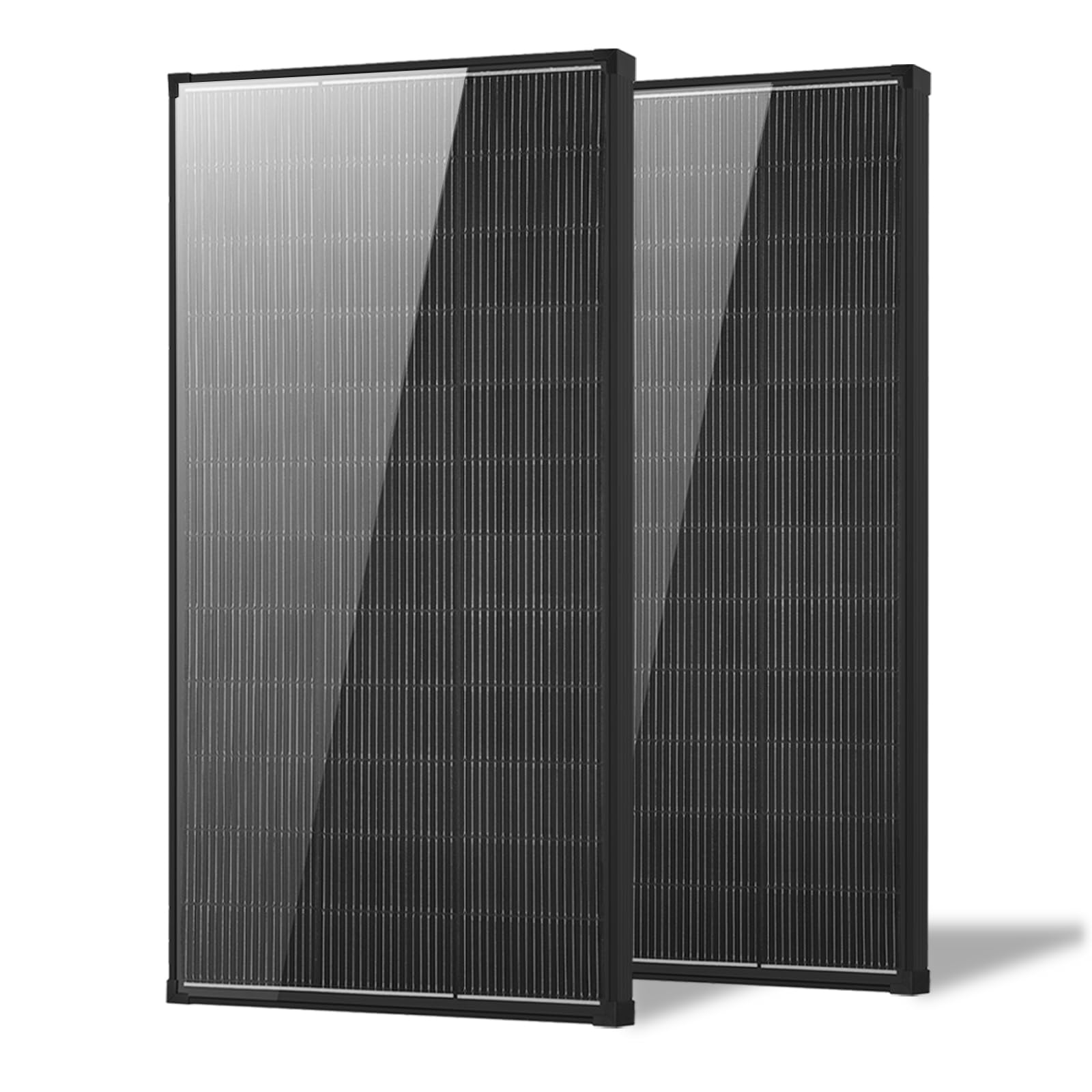
The AeternaSol panel punches above its price point by utilizing advanced 18BB silver-containing busbars on N-Type A+ monocrystalline cells, delivering up to 25 percent efficiency that rivals panels costing substantially more. The added busbars improve photoelectric conversion and reduce micro-crack risks, extending the panel’s useful lifespan. Both the front glass and the junction box carry IP68 certification for complete dust and water ingress protection.
Users report solid performance, with one verified customer measuring 92 watts per 200-watt panel at a suboptimal angle, suggesting strong real-world output. The panel uses 11 AWG 100 percent oxygen-free copper wire with a UV-resistant sheath for efficient power transmission, and the included reverse current blocking diode prevents night-time energy drain. The anodized aluminum frame withstands 2400Pa wind and 5400Pa snow loads.
At 52.8 by 26.4 by 1.2 inches per 200-watt panel, the total 400-watt system (two panels) maintains a manageable footprint ideal for RVs, trailers, and marine applications. The 1-year warranty with 24/7 tech support provides basic coverage, though longer peace-of-mind is available through third-party options. This is a compelling budget-friendly pick for users who want advanced cell tech without the premium markup.
Why it’s great
- 18BB busbar design at a budget price
- IP68 rated junction box for harsh weather
- Reverse current diode prevents night drain
Good to know
- MC4 junction box feels less robust
- Only 1-year warranty standard
9. AeternaSol 18BB N-Type Bifacial 400W Solar Panel
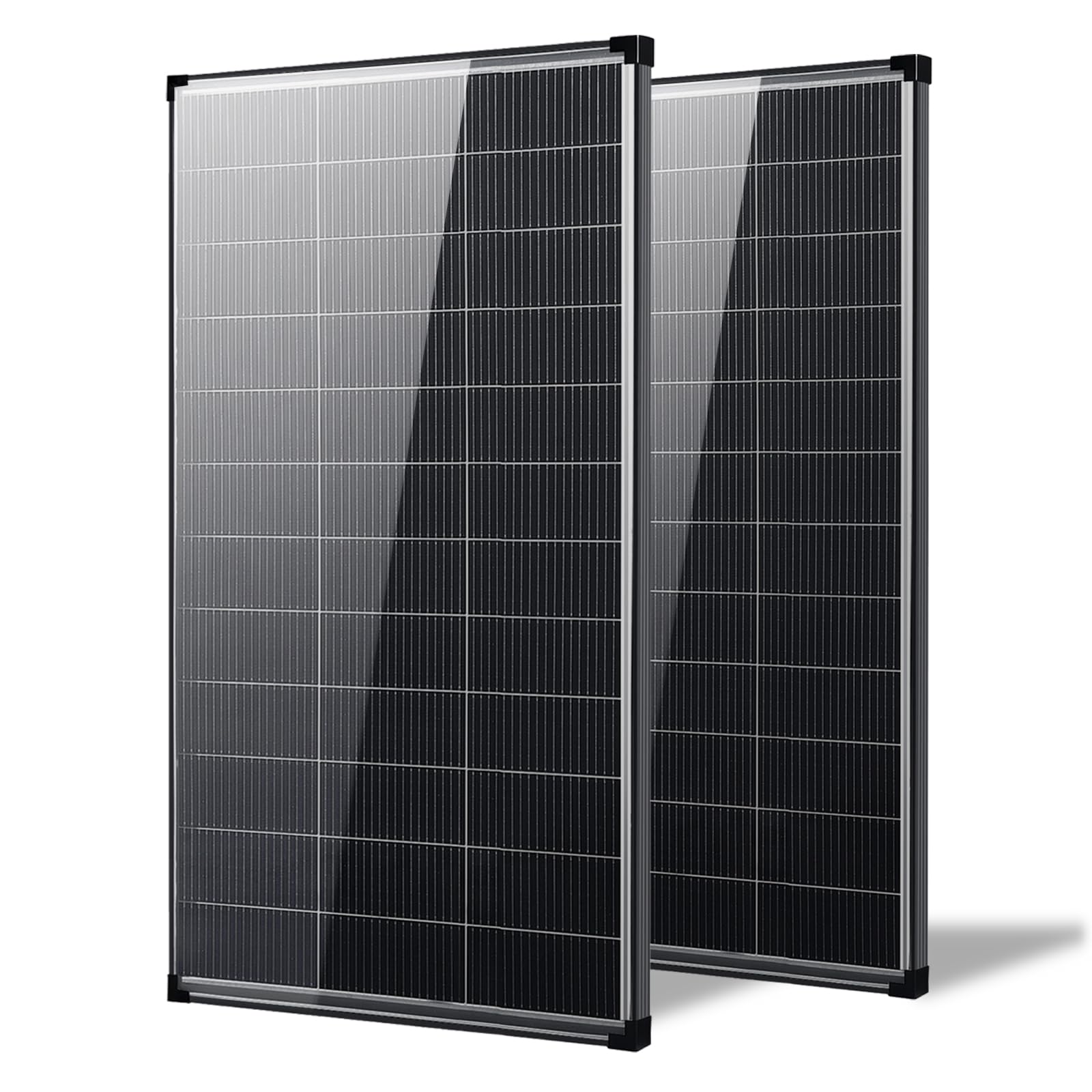
The bifacial version of AeternaSol’s 400-watt kit uses the same 18BB N-Type A+ cell foundation but adds a transparent backsheet, enabling power generation from both sides of the panel. This design can capture up to 30 percent more energy compared to monofacial panels when installed over reflective surfaces, making it an affordable entry point into bifacial technology for budget-conscious buyers.
Early user reports mirror the monofacial version’s performance, with 92 watts per 200-watt panel measured at a suboptimal angle and praise for the lightweight construction and multiple pre-drilled mounting points. The IP68 waterproof rating and reverse current blocking diode carry over, ensuring the bifacial model offers the same durability and night-time protection as its monofacial sibling. The panels weigh only 4.7 kilograms each.
At 52.8 by 26.4 by 1.2 inches per panel, the bifacial set maintains the same compact dimensions as the monofacial version, fitting easily on RV roofs and trailer racks. The 1-year warranty and 24/7 tech support are identical, positioning this as the most affordable way to experiment with bifacial gain. The MC4 junction box quality is a minor compromise at this price tier, but overall value is strong for the technology offered.
Why it’s great
- Most affordable bifacial 400W option
- Lightweight at 4.7 kg per panel
- Same advanced 18BB cells as pricier panels
Good to know
- MC4 connectors feel less premium
- Short 1-year warranty
FAQ
What size charge controller do I need for a 400-watt solar panel?
Can I mix a 400-watt panel with smaller panels in the same array?
How much power will a 400-watt panel produce on a cloudy day?
What gauge wire should I use for a 400-watt panel run?
How do I clean and maintain a 400-watt solar panel?
Final Thoughts: The Verdict
For most users, the best 400 watt solar panel winner is the Renogy N-Type 400W because it combines proven build quality, a compact footprint perfect for RV roofs, N-Type cell efficiency, and a reasonable price point in a single brand you can trust for support. If you want maximum energy harvest from a ground-mount or high-reflectance surface, grab the Callsun N-Type 16BB 400W Bifacial and enjoy the 30% boost from reflected light plus excellent shading tolerance. And for portable use with a high-voltage power station, nothing beats the ZOUPW 450W Portable for its featherlight fiberglass frame and consistent overproduction.