
Our readers keep the lights on and the weekend projects moving. As an Amazon Associate, I earn from qualifying purchases.
Every tenth counts in a one-lap race where the final straight demands a plate stiff enough to return every ounce of energy you put in. The wrong spike leaves you fighting the shoe instead of the clock.
I’m Rikta — the co-founder and writer behind FitlyFast. I’ve spent hundreds of hours analyzing spike plate geometry, spike pin configurations, and upper lockdown systems to separate true 400m tools from gear that only looks fast.
To own the curve and hammer the final 100 meters, you need a spike that balances snap off the blocks with enough forefoot rigidity to maintain top-end speed. This guide breaks down the best 400m track spikes for every budget and experience level.
How To Choose The Best 400m Track Spikes
A 400m spike is a different animal from a 100m or 800m shoe. The race demands explosive drive off the blocks combined with the ability to maintain stride frequency when lactate builds on the home straight. Three factors separate a true 400m spike from a jack-of-all-trades.
Plate Stiffness & Forefoot Rigidity
Look for a full-length or 3/4-length rigid plate — typically Pebax, TPU, or carbon-fiber infused. A stiff plate resists bending during the toe-off phase, returning more elastic energy. Softer plates feel comfortable during jogging but waste power over the final 200 meters when form deteriorates. For 400m, prioritize snap over plushness.
Spike Pin Configuration and Traction
A 6-pin or 7-pin spike plate provides the aggressive bite needed for wet tracks and aggressive curve running. Fewer pins (4 or 5) work for indoor or hardwood surfaces but slip on outdoor all-weather tracks during hard crossovers. The pin material matters — ceramic aluminum pins hold their edge longer than standard steel.
Upper Lockdown and Midfoot Containment
The final 100m is a battle against fatigue, and a loose upper turns every stride into a micro-slide. Look for a sprint web mesh or synthetic upper reinforced with a midfoot band that cinches the arch. Heel counters should be rigid, not collapsible. A secure lace system that doesn’t loosen mid-race is non-negotiable for the 400m.
Quick Comparison
On smaller screens, swipe sideways to see the full table.
| Model | Category | Best For | Key Spec | Amazon |
|---|---|---|---|---|
| Nike Air Zoom Maxfly 2 | Premium | Elite 400m racers chasing PRs | Full-length carbon-fiber plate + Zoom Air | Amazon |
| Nike Ja Fly 4 | Premium | Lightest spike for 60-400m | Revised stiff plate, 4.6 oz approx | Amazon |
| Nike Zoom Rival Sprint | Mid-Range | High school 400m racers | 3/4-length lightweight plate, 6-pin | Amazon |
| Nike Rival Sprint | Mid-Range | Versatile sprint events 100-400m | 3/4-length ceramic aluminum plate | Amazon |
| Adidas Adizero Sprintstar (2024) | Mid-Range | New sprinters needing 6-pin grip | Updated 6-pin TPU spike plate | Amazon |
| ASICS Hypersprint 8 | Value | Budget-friendly short sprint training | Resin propulsion plate, EVA sockliner | Amazon |
| adidas Sprintstar (Classic) | Value | Entry-level 400m for tight budgets | Pebax plate, sprint web mesh | Amazon |
In‑Depth Reviews
1. Nike Air Zoom Maxfly 2

The Maxfly 2 is the benchmark for elite 400m spikes, pairing a full-length carbon-fiber plate with a forefoot Zoom Air unit. This combination delivers the stiffest, most responsive toe-off in the category — critical for maintaining stride length when the lactic acid hits during the final 100 meters. The unibody construction eliminates energy leaks between the plate and the upper.
Users consistently report a secure, race-ready fit right out of the box, with the lightweight synthetic upper providing excellent breathability and heel lockdown. The aggressive spike plate configuration ensures you stay planted during the curve, and the Zoom Air returns energy on every toe strike without adding bulk. This is a PR machine for serious competitors.
Some buyers have noted instances of packaging concerns or missing spike tools, likely from third-party fulfillment. Verify authenticity with a Nike authorized seller. The premium build quality rewards athletes who can fully load the carbon plate — casual joggers will find it too rigid.
Why it’s great
- Carbon-fiber plate with Zoom Air delivers maximum energy return for the 400m kick
- Extremely lightweight and sturdy construction
- Heel lockdown and midfoot containment are world-class
Good to know
- Some units arrive without a spike wrench or carrying bag
- Premium price point — best suited for competitive athletes
2. Nike Ja Fly 4

The Ja Fly 4 is Nike’s lightest sprint spike, dropping weight without sacrificing plate stiffness. It is specifically designed for races from 60 to 400 meters, and the revised plate geometry provides a snappier toe-off than the previous generation. The updated upper eliminates unnecessary layers, improving ventilation and reducing water retention during wet track meets.
Athletes report immediate PRs after switching to this shoe, crediting the combination of negligible weight and aggressive plate return. The unisex fit works well for both men and women, though some reviewers recommend sizing up for wider feet. The midfoot band provides dynamic containment that keeps the foot stable during hard curve running.
Packaging inconsistencies have been flagged — some units ship without the original Nike box, raising authenticity concerns. Always verify you’re purchasing from a Nike-authorized retailer. For the weight-conscious 400m runner who still needs plate snap, the Ja Fly 4 is a top-tier choice.
Why it’s great
- Extremely low weight minimizes fatigue over 400m
- Revised plate delivers noticeable snap for the home straight
- Breathable upper keeps feet cool during long meet days
Good to know
- Some shipments lack the original Nike box or spike tool
- Runs narrow — consider sizing up for wider feet
3. Nike Zoom Rival Sprint

The Zoom Rival Sprint bridges the gap between entry-level spikes and pro models. Its 3/4-length lightweight plate provides enough stiffness for the 400m drive phase without the extreme rigidity of carbon-fiber options, making it an excellent step-up shoe for high school athletes transitioning from general running flats. The 6-pin configuration delivers reliable traction on outdoor all-weather tracks.
Reviewers consistently praise the grip and comfort, with many noting that the spikes are the correct depth for standard track surfaces — a common pain point with generic spikes that sit too long. The rubber heel section adds durability for the footstrike and provides good traction for post-race deceleration. The hot pink colorway is a standout on the track.
Some athletes with high-volume feet report a tight fit across the top of the foot, especially during the first few wears. The spike plate may feel slightly less snappy compared to full-length plates for heavy runners. For racers focused primarily on 400m, this is a solid mid-range workhorse.
Why it’s great
- Good stiffness balance for developing sprinters
- Spike depth is correct for standard tracks — no modification needed
- Durable rubber heel section for braking
Good to know
- Fit can be tight on high-volume feet
- Plate less aggressive than full-length carbon options
4. Nike Rival Sprint
The standard Rival Sprint shares the same robust upper and 3/4-length plate design as the Zoom variant but focuses on durability with a ceramic aluminum spike material that maintains its edge longer than steel. It is designed for athletes competing across the full sprint spectrum — 100m, 200m, and 400m — with the forefoot plate encouraging a constant toes-up running posture.
Multiple buyers have verified these spikes work exceptionally well for the 200m-800m range, noting the comfort and responsive feel during longer sprints. The reinforced upper provides the containment necessary to attack turns without the foot sliding laterally. The midfoot band creates a dynamic lace-up fit that adapts to varying arch heights.
A few users mention that the shoe runs slightly tight in the toe box for wider feet, and the 3/4-length plate lacks the extreme snap of longer plates preferred by elite 400m specialists. For the developing 400m runner who also races other distances, this is a versatile and durable choice.
Why it’s great
- Ceramic aluminum spikes hold their edge for many meets
- Comfortable for both short sprints and 400m-800m events
- Durable upper with excellent lateral containment
Good to know
- Toe box may be tight for wide-footed athletes
- Plate snap is moderate compared to full-length options
5. Adidas Adizero Sprintstar (2024)
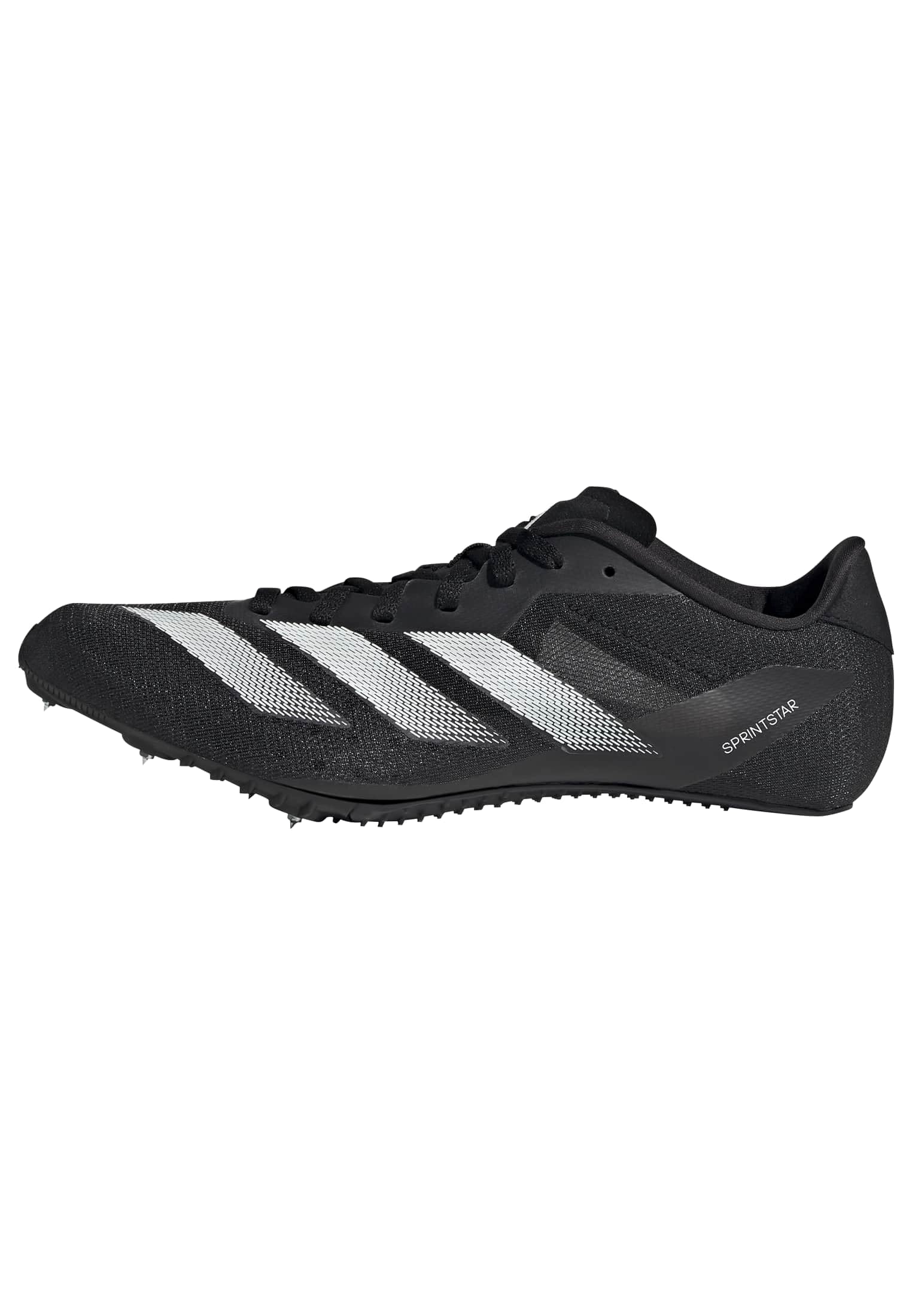
The 2024 Adizero Sprintstar represents a meaningful update with its new 6-pin TPU spike plate that digs aggressively into the track surface for explosive starts. The breathable synthetic mesh upper keeps feet cool, and the use of recycled materials is a sustainability bonus. The lightweight molded EVA cushioning provides just enough shock absorption without muddying ground feel.
Buyers consistently praise the extremely lightweight feel — many describe it as feeling like wearing only socks. The leather heel protection is a thoughtful detail that prevents injury from a teammate’s spike in crowded blocks. The shoe accommodates a regular fit, though some users with wider feet note the toe box runs slightly narrow.
This is a strong entry point for new sprinters or those on a mid-range budget. The 6-pin plate offers better traction than 5-pin competitors, but the TPU material may wear faster than ceramic aluminum options. For the 400m athlete looking to upgrade from general trainers, this is a worthwhile step.
Why it’s great
- Extremely lightweight with a sock-like fit
- 6-pin TPU plate provides aggressive bite
- Leather heel guard adds safety in crowded blocks
Good to know
- TPU spikes may wear faster than ceramic aluminum
- Toe box runs narrow for wider feet
6. ASICS Hypersprint 8
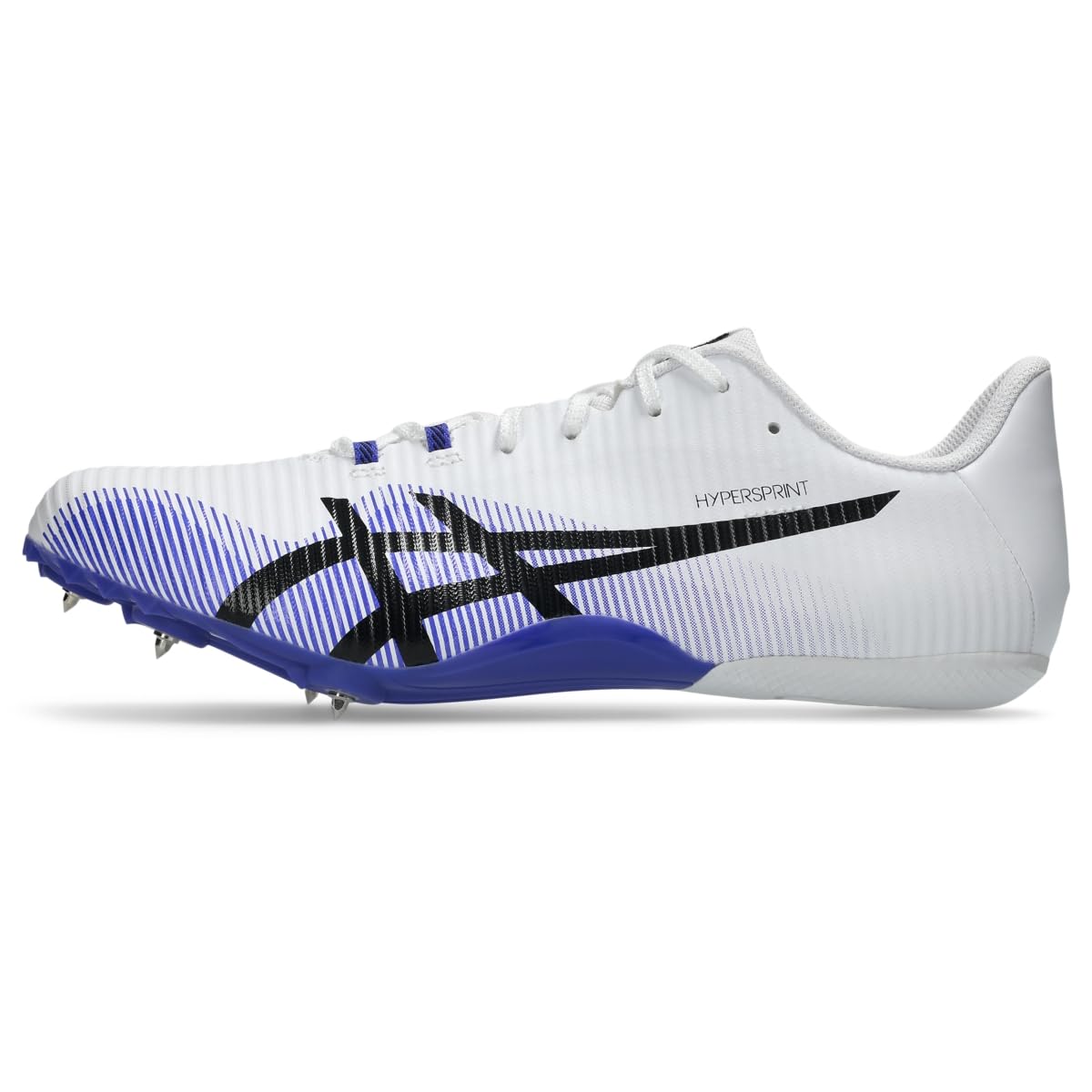
The Hypersprint 8 is engineered for short-distance sprinters on a budget. The resin plate improves propulsion and grip for high-velocity sprints, and the EVA sockliner provides a flexible fit with targeted arch support. It is a solid entry-level option for athletes testing the waters of track spikes or training in the 100m-200m range.
Many buyers report loving the lightweight feel and the fact that spikes come included. The vibrant orange-pink colorway is well-received, and the fit runs true to size for most foot shapes — though some recommend sizing up due to ASICS’ traditionally narrower last. For the price point, the propulsion is respectable.
A significant minority of users find the sole unusually stiff and rigid, describing the feel as running on plywood. Some have expressed concern about build quality during aggressive sprinting. These are best suited for developmental or training use rather than high-level 400m competition where plate snap and durability are paramount.
Why it’s great
- Very lightweight and includes spikes out of the box
- Good introductory propulsion for new sprinters
Good to know
- Resin plate can feel overly rigid with poor damping
- Some users question long-term durability for races
7. adidas Sprintstar (Classic)

The classic adidas Sprintstar remains a smart entry-level choice for athletes on a tight budget. It features a Pebax plate that delivers decent energy transfer for the price and a light, breathable sprint web mesh upper that locks the foot in place. It is explicitly designed for events up to 400 meters, so it meets the core requirement.
Buyers consistently note that these spikes offer great value compared to sports retail stores, often costing significantly less. The durable construction holds up well through a full season of training and competition. The snug fit is comfortable once the correct size is determined, though sizing requires careful attention due to unisex conversion charts.
The most common challenge is the unisex sizing — multiple users have ended up with shoes that are over an inch too long due to conversion errors. Measure your foot length in centimeters and compare directly with adidas’ size chart. For the price-conscious 400m newcomer, this is a functional, durable spike.
Why it’s great
- Great value with durable build quality
- Designed specifically for events up to 400m
- Comfortable and breathable mesh upper
Good to know
- Unisex sizing is very tricky — measure foot length carefully
- Pebax plate offers less snap than premium options
FAQ
Should I buy a 400m spike or can I use a general sprint spike?
How many spike pins do I need for outdoor 400m racing?
Do I need carbon-fiber plates for 400m or is TPU enough?
Final Thoughts: The Verdict
For most users, the best 400m track spikes winner is the Nike Air Zoom Maxfly 2 because its carbon-fiber plate and Zoom Air unit deliver unmatched energy return for the final 100-meter kick. If you want a slightly lighter build that still offers great plate snap, grab the Nike Ja Fly 4. And for a budget-friendly entry into 400m racing, nothing beats the value of the adidas Sprintstar.