
Our readers keep the lights on and the weekend projects moving. As an Amazon Associate, I earn from qualifying purchases.
Stepping into 4K video and high-resolution photography as a beginner can feel like navigating a maze of sensor sizes, frame rates, and stabilization systems. The right choice will accelerate your learning curve without overwhelming you with complex menus or draining your enthusiasm.
I’m Rikta — the co-founder and writer behind FitlyFast. After analyzing thousands of spec sheets and user experiences across the entry-level mirrorless and vlogging camera market, I’ve distilled what actually matters for a first-time 4K camera buyer.
Whether you are filming family moments, launching a YouTube channel, or capturing travel memories, finding the right 4k camera for beginners depends on understanding sensor size, stabilization quality, and ease of use hidden beneath the marketing claims.
How To Choose The Best 4K Camera For Beginners
Buying your first 4K camera is exciting, but the wrong specs can leave you with footage that looks worse than what your smartphone produces. Focus on these core differentiators to make a confident decision.
Sensor Size Is Your Foundation
The sensor physically captures light. A larger 1-inch or APS-C sensor will outperform a smaller smartphone sensor even at lower megapixel counts. Cameras with a 1-inch CMOS sensor (like the DJI Osmo Pocket 3) offer excellent low-light performance and shallow depth of field. APS-C sensors (found in the Canon EOS R100 and Sony Alpha ZV-E10) provide even more dynamic range and creative control, but require larger lenses.
Stabilization: Gimbal vs In-Body vs Digital
Shaky footage is the most common beginner mistake. A built-in 3-axis mechanical gimbal (like on the Xtra Muse or DJI Osmo Pocket 3) delivers cinema-smooth walking shots without any post-production work. In-Body Image Stabilization (IBIS), found on the Panasonic LUMIX G85 and OM SYSTEM E-M10 Mark IV, steadies the sensor itself and works with any lens you attach. Digital stabilization crops the image and can introduce artifacts, so prioritize optical or mechanical solutions for handheld shooting.
Autofocus System And Tracking
Beginners benefit enormously from fast, reliable autofocus. Look for cameras with phase-detection autofocus (PDAF) and subject-tracking features. The Sony Alpha 6100 locks focus in 0.02 seconds and tracks moving subjects with real-time eye detection. The Canon EOS R50 uses Dual Pixel CMOS AF II with 651 points for smooth, accurate focus during 4K video. Contrast-detection-only systems (common on older Micro Four Thirds models) can hunt and pulse in video mode, which frustrates new users.
Quick Comparison
On smaller screens, swipe sideways to see the full table.
| Model | Category | Best For | Key Spec | Amazon |
|---|---|---|---|---|
| DJI Osmo Pocket 3 Creator Combo | Premium Compact | Vloggers needing gimbal stabilization | 1-inch CMOS / 4K 120fps | Amazon |
| Sony Alpha ZV-E10 | Mirrorless Interchangeable | Versatile content creation & streaming | APS-C 24.2MP / 4K oversampled from 6K | Amazon |
| Sony ILCE6100KB Alpha 6100 | Mirrorless Interchangeable | Fast-action photography & video | APS-C 24.2MP / 0.02s AF | Amazon |
| Canon EOS R50 Bundle | Mirrorless Interchangeable | Complete beginner kit with accessories | APS-C 24.2MP / 651 AF points | Amazon |
| Canon EOS R100 | Mirrorless Interchangeable | Budget-friendly interchangeable lens start | APS-C 24.1MP / Dual Pixel CMOS AF | Amazon |
| Panasonic LUMIX G85 | Mirrorless Interchangeable | Weather-sealed hybrid shooting | MFT 16MP / 5-Axis IBIS | Amazon |
| OM SYSTEM E-M10 Mark IV | Mirrorless Interchangeable | Compact travel & selfie photography | MFT 20MP / 4.5-stop IBIS | Amazon |
| Panasonic LUMIX G100 | Mirrorless Interchangeable | Vlogging with advanced audio | MFT 20MP / 360-degree mic tracking | Amazon |
| DJI Osmo Nano Standard Combo | Action / POV Camera | Active outdoor and POV recording | 1/1.3-inch / 143° FOV / 200-min battery | Amazon |
| Xtra Muse Vlogging Camera | Pocket Gimbal | Stabilized vlogging on a budget | 1-inch CMOS / 4K 120fps / 3-axis gimbal | Amazon |
| Acuvar 4K/6K Camcorder Bundle | Budget Camcorder Kit | Entry-level all-in-one video kit | 6K upscaled / 18X digital zoom / WiFi | Amazon |
In‑Depth Reviews
1. DJI Osmo Pocket 3 Creator Combo

The DJI Osmo Pocket 3 is the benchmark for beginner vloggers and content creators. Its 1-inch CMOS sensor captures 4K video at 120fps with genuine 3-axis mechanical stabilization, eliminating the shaky footage that plagues new shooters. The rotating 2-inch touchscreen makes switching between horizontal and vertical framing instant, perfect for cross-platform creators.
The Creator Combo bundles the DJI Mic 2 transmitter, wide-angle lens, battery handle, and mini tripod, giving you a complete production kit in one box. ActiveTrack 6.0 keeps faces centered automatically, so you can focus on your subject rather than manual framing. The 10-bit D-Log M color profile allows for professional-grade color grading in post-production, something rare at this level.
Battery life hits roughly 166 minutes on a single charge, and the battery handle extends that significantly. The only real trade-off is the fixed camera design — you cannot swap lenses or upgrade the sensor. For pure video quality and stabilization in a pocket-friendly device, this remains the gold standard for beginners who prioritize video over photography.
Why it’s great
- Superb 3-axis gimbal stabilization eliminates the need for post-production smoothing
- Included DJI Mic 2 delivers broadcast-quality wireless audio right out of the box
- Compact form factor fits in a jacket pocket, ready anytime
Good to know
- Non-interchangeable lens limits creative flexibility as skills advance
- Gimbal is delicate; requires careful handling and the included protective case
2. Sony Alpha ZV-E10
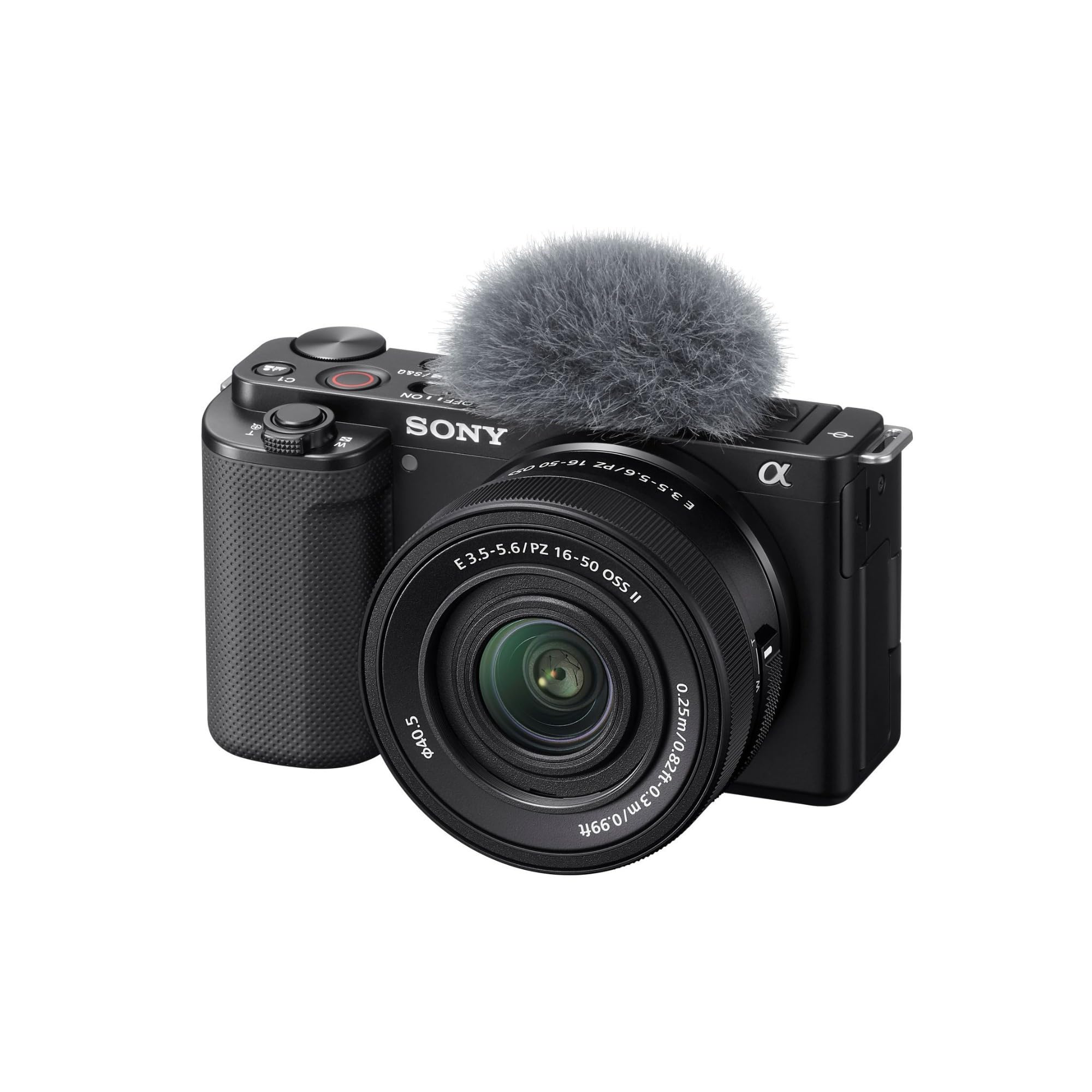
The Sony ZV-E10 brings APS-C sensor performance to a vlogging-oriented body at a remarkable entry point. Its 24.2MP Exmor CMOS sensor oversamples 4K video from a 6K readout, delivering sharper, more detailed footage than cameras that pixel-bin. The Product Showcase Setting instantly transitions focus from your face to an object held up to the lens, essential for review and tutorial creators.
The Background Defocus button gives one-touch bokeh control, and the E PZ 16-50mm power zoom lens offers smooth optical zoom via a rocker switch — ideal for slow pan-and-zoom shots. The side-articulating screen flips forward for self-recording, and the built-in 3-capsule microphone captures clear directional audio without an external mic.
USB streaming is seamless; connect the camera directly to your computer and it acts as a high-quality webcam without extra hardware. The interchangeable E-mount system means you can upgrade to Sony’s excellent prime lenses as you grow. The main downside is the lack of in-body stabilization — you will need stabilized lenses or a gimbal for smooth walking shots.
Why it’s great
- 4K oversampled from 6K produces noticeably sharper video than competitors at this price
- Product Showcase Setting is a unique feature for hands-on reviewers and educators
- Interchangeable E-mount opens a massive ecosystem of affordable lenses
Good to know
- No in-body image stabilization; rely on lens stabilization or external gimbals
- Kit lens (16-50mm) is decent but upgrading to a prime lens significantly improves low-light performance
3. Sony ILCE6100KB Alpha 6100

The Sony Alpha 6100 is built for speed. Its 0.02-second autofocus acquisition with Real-Time Eye Tracking for both humans and animals makes it the go-to choice for beginners shooting active children, pets, or sports. The 24.2MP Exmor sensor with front-end LSI delivers clean images up to ISO 51,200, keeping noise manageable in dim indoor environments.
4K video is oversampled from the full sensor width with no pixel binning, matching the ZV-E10’s quality. The 180-degree tiltable touchscreen is perfect for overhead or low-angle shots, though it does not articulate sideways for vlogging. The 11fps continuous shooting with AF/AE tracking ensures you capture the decisive moment, even in burst-heavy action sequences.
The Alpha 6100’s hybrid autofocus system combines 425 phase-detection points with 425 contrast-detection points, covering nearly the entire frame. The E PZ 16-50mm OSS II lens includes optical stabilization, partially compensating for the lack of IBIS. This camera is an older model, but its autofocus performance still rivals current mid-range Sony bodies, making it a smart pick for budget-conscious buyers who prioritize speed over the latest features.
Why it’s great
- Industry-leading 0.02-second autofocus locks onto fast-moving subjects instantly
- 11fps continuous shooting with full autofocus tracking captures critical action moments
- Excellent high-ISO performance (up to 51,200) for low-light shooting without flash
Good to know
- Tilt screen only — no side-articulating display for forward-facing vlogging
- Micro USB port instead of USB-C, which is becoming standard for faster transfers
4. Canon EOS R50 Bundle

The Canon EOS R50 bundle includes the camera body, RF-S 18-45mm lens, a 64GB Extreme PRO memory card, and the Canon 200ES shoulder bag — everything a beginner needs to start shooting immediately. The 24.2MP APS-C CMOS sensor paired with the DIGIC X processor delivers image quality that punches well above the camera’s price tier, with natural color science that Canon is known for.
Dual Pixel CMOS AF II covers 651 autofocus points across nearly the entire frame, with human, animal, and vehicle detection. The 15fps electronic shutter captures fast-moving subjects without blackout. The vari-angle 3-inch touchscreen rotates 180 degrees for selfies and vlogging, and the Vertical Movie Mode automatically rotates footage for Instagram and TikTok.
Movie for Close-Up Demos mode is a dedicated feature for product reviewers, automatically adjusting focus and exposure for handheld close-ups. The RF-S lens mount provides a clear upgrade path to Canon’s growing RF lens lineup. The bundle simplifies the shopping process, but the kit lens is relatively slow at f/4.5-6.3, so consider a fast prime like the RF 50mm f/1.8 for low-light shooting.
Why it’s great
- Complete kit with camera, lens, memory card, and bag removes guesswork for beginners
- 651-point Dual Pixel CMOS AF II provides smooth, reliable autofocus during video
- Vertical Movie Mode and Close-Up Demo enhance social media and product review workflows
Good to know
- Kit lens aperture (f/4.5-6.3) limits performance in low light without adding a prime lens
- The 4K 30fps maximum frame rate is capped compared to cameras offering 4K 60fps
5. Canon EOS R100

The Canon EOS R100 is the smallest and lightest body in the EOS R series, making it a truly portable entry point into the RF lens ecosystem. The 24.1MP APS-C CMOS sensor and DIGIC 8 processor produce sharp, color-accurate stills that rival much more expensive cameras. The included RF-S 18-45mm f/4.5-6.3 IS STM lens features optical image stabilization, helping handheld shots stay sharp.
Autofocus uses Dual Pixel CMOS AF with 143 zones, human face and eye detection, plus animal and vehicle detect AF — a surprising feature set for an entry-level body. Continuous shooting reaches 6.5fps in One-Shot AF, adequate for portraits and everyday scenes. 4K video records at up to 24fps with a crop factor, which is a notable limitation compared to the R50’s uncropped 4K 30fps.
The simplified interface with guided menus helps beginners learn manual controls without feeling lost. Weather-sealing is absent, so this isn’t a choice for rainy outdoor shoots. The lack of a vari-angle touchscreen also limits creative angle options. For pure photography beginners wanting an affordable path into Canon’s full mirrorless system, the R100 delivers excellent core image quality.
Why it’s great
- Lightest EOS R series body at just over 350g, ideal for all-day carry
- Animal and vehicle detection AF is rare at this price point, great for wildlife beginners
- Guided UI helps novices learn shutter speed, aperture, and ISO without intimidation
Good to know
- 4K video is limited to 24fps with a significant crop factor, not ideal for video-centric users
- Fixed 3-inch LCD lacks touch articulation for self-recording or odd angles
6. Panasonic LUMIX G85

The Panasonic LUMIX G85 stands out for its class-leading 5-axis in-body image stabilization combined with the lens-based Power O.I.S., giving you Dual I.S. 2.0 that compensates for camera shake in both photo and 4K video. This means handheld shots at slow shutter speeds remain sharp, and walking footage stays impressively smooth without a gimbal. The 16MP Micro Four Thirds sensor omits the low-pass filter, boosting fine detail capture.
The magnesium alloy body with weather sealing adds durability, allowing you to shoot in light rain or dusty conditions without worry. The 3-inch tilt-and-touch LCD and 2.36M-dot OLED electronic viewfinder provide clear composition in bright sunlight. 4K QFHD video recording (3840×2160) includes exclusive 4K Photo and Post Focus features, letting you extract 8MP stills from video or change focus points after pressing the shutter.
The G85’s 12-60mm lens covers a versatile 24-120mm equivalent range, suitable for everything from landscapes to portraits. The ergonomic grip and well-placed controls make it comfortable for extended shooting sessions. The trade-off is the 16MP resolution, which offers less cropping flexibility than 20MP or 24MP competitors, and autofocus in low-light video (contrast-detection) can hunt occasionally.
Why it’s great
- Dual I.S. 2.0 (in-body 5-axis + lens stabilization) delivers exceptional handheld smoothness
- Weather-sealed magnesium alloy body withstands challenging outdoor conditions
- 4K Photo mode and Post Focus are unique features for creative flexibility
Good to know
- 16MP sensor limits crop room compared to higher-resolution APS-C alternatives
- Contrast-detect AF can hunt in low-light 4K video, unlike phase-detect systems
7. OM SYSTEM Olympus E-M10 Mark IV

The OM SYSTEM E-M10 Mark IV combines a classic rangefinder aesthetic with modern 20MP Micro Four Thirds performance. Its 5-axis in-body stabilization offers 4.5 shutter speed steps of compensation, enabling handheld exposures up to 1 second without blur — a massive advantage for low-light cityscapes and indoor shots without a tripod. The flip-down monitor enables a dedicated selfie mode that instantly activates when you tilt the screen down.
The 14-42mm EZ pancake lens collapses to an extremely compact profile, making this one of the most jacket-pocketable interchangeable lens cameras on the market. The 121-point contrast-detect autofocus is fast and accurate for stills, though it does not match phase-detection systems for continuous video tracking. The camera includes 16 Art Filters (31 variations) including Instant Film for a nostalgic look straight out of camera.
Built-in Bluetooth and Wi-Fi connect to the OI Share app for instant image transfer and remote control. The Micro Four Thirds system gives you access to a vast library of lightweight, high-quality lenses from OM System, Panasonic, and third-party makers. Battery life is average at around 360 shots, and the lack of USB-C charging means you need an external charger, but the image stabilization per dollar ratio remains unmatched for beginners.
Why it’s great
- 4.5-stop in-body stabilization allows sharp handheld shots in very low light
- Flip-down selfie mode with dedicated adjustments simplifies vlogging
- Ultra-compact body and collapsing kit lens fit easily into everyday bags
Good to know
- Contrast-detect AF limits continuous tracking performance for video
- Lacks USB-C charging; requires the external battery charger for power
8. Panasonic LUMIX G100

The Panasonic LUMIX G100 is designed specifically for vloggers who prioritize audio quality. Its built-in microphone uses OZO Audio technology with 360-degree sound tracking that automatically adjusts focus to your voice, whether you are recording in a quiet room, a crowded event, or outdoors. The camera detects the direction of the subject and optimizes the audio field accordingly, dramatically improving spoken-word clarity without an external mic.
The 20MP Micro Four Thirds sensor captures 4K 24p/30p video with V-Log L recording for advanced color grading. The iA (intelligent auto) mode provides point-and-shoot simplicity for beginners, while full manual controls allow growth. The 12-32mm kit lens collapses to pancake size, keeping the camera compact enough for one-handed recording. The frame marker feature overlays social media aspect ratios (1:1, 16:9, 4:5) so you can compose specifically for Instagram or YouTube.
USB webcam functionality turns the G100 into a sharp 4K webcam for live streaming, video calls, and interviews. The main limitation is the enforced 4K recording limit — the camera stops recording after the standard 29-minute 59-second cap, which can interrupt longer sessions. The contrast-detect autofocus is adequate for vlogging but not as responsive as Sony or Canon phase-detect systems when tracking movement.
Why it’s great
- OZO 360-degree audio tracking captures clear directional sound without an external mic
- V-Log L recording gives beginners access to professional color grading workflows
- Compact, lightweight body with collapsing lens for easy one-handed vlogging
Good to know
- 4K video recording stops at the 30-minute limit, unsuitable for long event coverage
- Contrast-detect autofocus can hunt in low-light video situations
9. DJI Osmo Nano Standard Combo
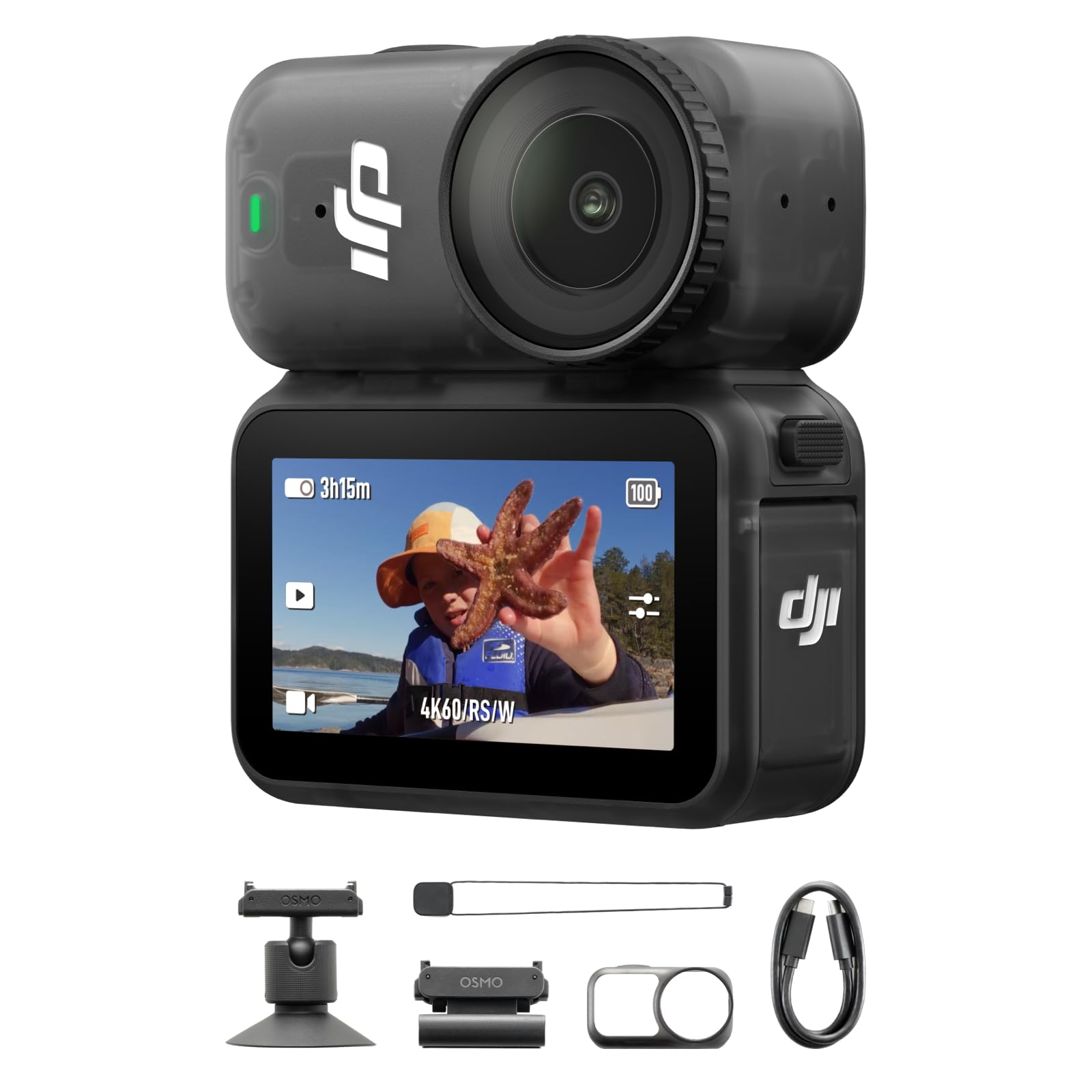
The DJI Osmo Nano is an ultra-compact action camera designed for hands-free POV recording. Its 1/1.3-inch sensor captures 4K video at 60fps with a wide 143° field of view, making it ideal for pet adventure shots, bike rides, runs, or travel vlogs where you want immersive perspective without holding a device. The magnetic mounting system (hat clip, lanyard, ball-joint mount) allows attachment to nearly any surface or accessory.
The 128GB built-in storage eliminates the immediate need for a memory card, and expandable microSD lets you double capacity. The Vision Dock provides up to 200 minutes of total battery life and includes splash-proof IPX4 protection, while the camera itself is waterproof to 10 meters without a housing. The 10-bit D-Log M color science matches the Osmo Pocket 3, giving you the same color grading flexibility in post-production.
OsmoAudio supports direct connection to two DJI Mic transmitters for clean, interference-free audio. The DJI Mimo app handles editing and sharing. The main compromise is the lack of a built-in screen — you frame shots using the phone app or the Vision Dock preview. The compact body can also heat up during extended 4K recording, triggering overheat protection. For beginners wanting a unique point-of-view perspective without carrying a large camera, the Osmo Nano delivers remarkable versatility.
Why it’s great
- Magnetic mounting system enables creative hands-free POV shots impossible with other cameras
- 128GB internal storage plus microSD expansion provides generous out-of-box capacity
- 10-meter waterproof rating allows underwater recording without extra housing
Good to know
- No built-in screen; all framing requires the smartphone app or Vision Dock
- Compact body can overheat and stop recording during prolonged 4K sessions
10. Xtra Muse Vlogging Camera

The Xtra Muse packs a 1-inch CMOS sensor and a built-in 3-axis gimbal into a pocket-sized body, offering stabilization quality that competes with cameras costing significantly more. It records 4K video at 120fps, giving you smooth slow-motion flexibility. The Master Follow feature keeps the subject centered automatically using face and object tracking, ideal for solo vloggers who move while recording.
The 2-inch touchscreen is bright and responsive, switching between horizontal and vertical orientation for social media content. The 10-bit X-Log color mode captures up to one billion colors, providing the same post-production headroom as premium cameras. The bundle includes a carrying bag, wrist strap, and a 1/4-inch threaded handle for tripod mounting. Battery life reaches approximately 161 minutes, sufficient for a full day of casual shooting.
Video quality is sharp and well-saturated in good lighting, with the gimbal delivering the most impactful improvement over phone footage. Low-light performance is decent for a 1-inch sensor but does not match larger APS-C cameras. The built-in software update enabling DJI microphone connectivity is a welcome addition for audio upgrades. This camera is a smart budget-conscious alternative to the DJI Osmo Pocket 3, sacrificing some overall polish but maintaining the gimbal stabilization core that matters most to beginners.
Why it’s great
- Built-in 3-axis gimbal delivers professional-level stabilization at a friendly price
- 1-inch CMOS sensor with 4K 120fps enables smooth slow-motion capture
- 10-bit X-Log color mode supports advanced grading normally found in pricier cameras
Good to know
- Low-light performance lags behind larger APS-C sensor cameras
- Software-dependent DJI mic connection may not be as reliable as native support
11. Acuvar 4K/6K Video Camera Camcorder

The Acuvar 4K/6K camcorder bundle is the most comprehensive beginner kit on this list, including the camera, two 64GB SD cards, an external microphone, LED fill light, 50-inch tripod, dual charger, card reader, cleaning kit, and more. This is a ready-to-stream solution for family event coverage, church services, sports recording, or classroom content. The 18X digital zoom brings distant subjects closer, though digital zoom degrades image quality compared to optical zoom.
The camera records up to 6K upscaled video and 64MP stills, with WiFi connectivity through the XDV PRO app for remote shooting and file transfer. The 2.4G wireless remote controls recording up to 65 feet away, ideal for tripod-based solo recording. The 4500mAh battery supports up to 3 hours of continuous recording with the ability to record while charging. The built-in webcam mode converts the camcorder for Zoom or Twitch streaming via USB.
Video resolution at maximum settings is softer than genuine 4K from a 1-inch or APS-C sensor, and the autofocus can struggle with rapid lens adjustments. The microphone picks up handling noise, so the included external shotgun mic is essential. Image quality outpaces phone video but does not match the interchangeable-lens mirrorless cameras on this list. For absolute beginners who want one box with every accessory included, this bundle removes all shopping friction.
Why it’s great
- Massive accessory bundle includes everything needed for immediate recording — tripod, microphones, lights, and cards
- 60fps recording with 18X digital zoom captures distant subjects in motion
- Webcam mode and WiFi remote control add streaming and self-recording convenience
Good to know
- Digital zoom degrades image quality; real 6K is upscaled, not native
- Autofocus system can hunt and struggle with fast scene changes
FAQ
Should I buy a dedicated camera or just use my smartphone for 4K video?
Is 4K at 24fps enough for a beginner, or do I need 60fps?
Do I need a gimbal for smooth footage, or can I rely on in-body stabilization?
What is the real difference between Micro Four Thirds and APS-C for a beginner?
Final Thoughts: The Verdict
For most users, the 4k camera for beginners winner is the DJI Osmo Pocket 3 Creator Combo because it combines professional-level 3-axis gimbal stabilization, a 1-inch sensor, and the essential accessories (wireless microphone, tripod, wide-angle lens) into a portable package that removes all technical friction. If you want interchangeable lenses and the creative flexibility of upgrading glass over time, grab the Sony Alpha ZV-E10 for its oversampled 4K quality and APS-C sensor performance. And for a budget-friendly vlogging start with gimbal stabilization, nothing beats the Xtra Muse Vlogging Camera for its value-to-feature ratio.